-
-
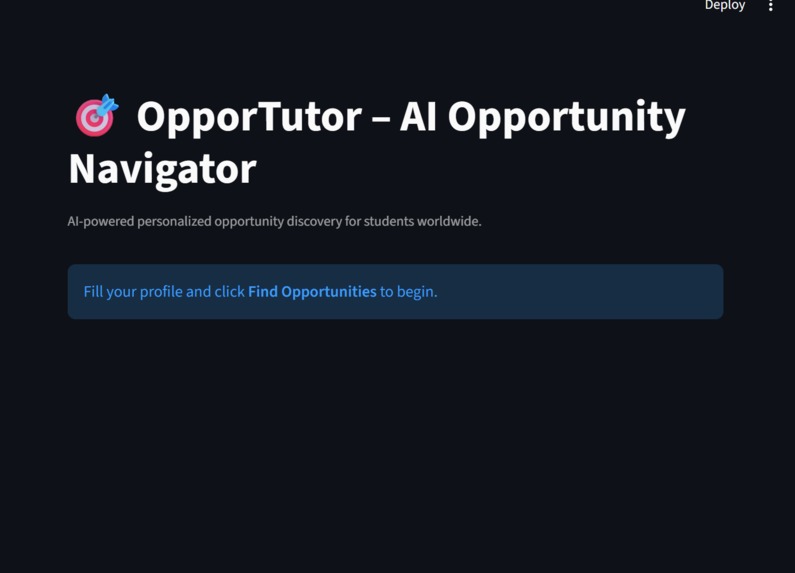
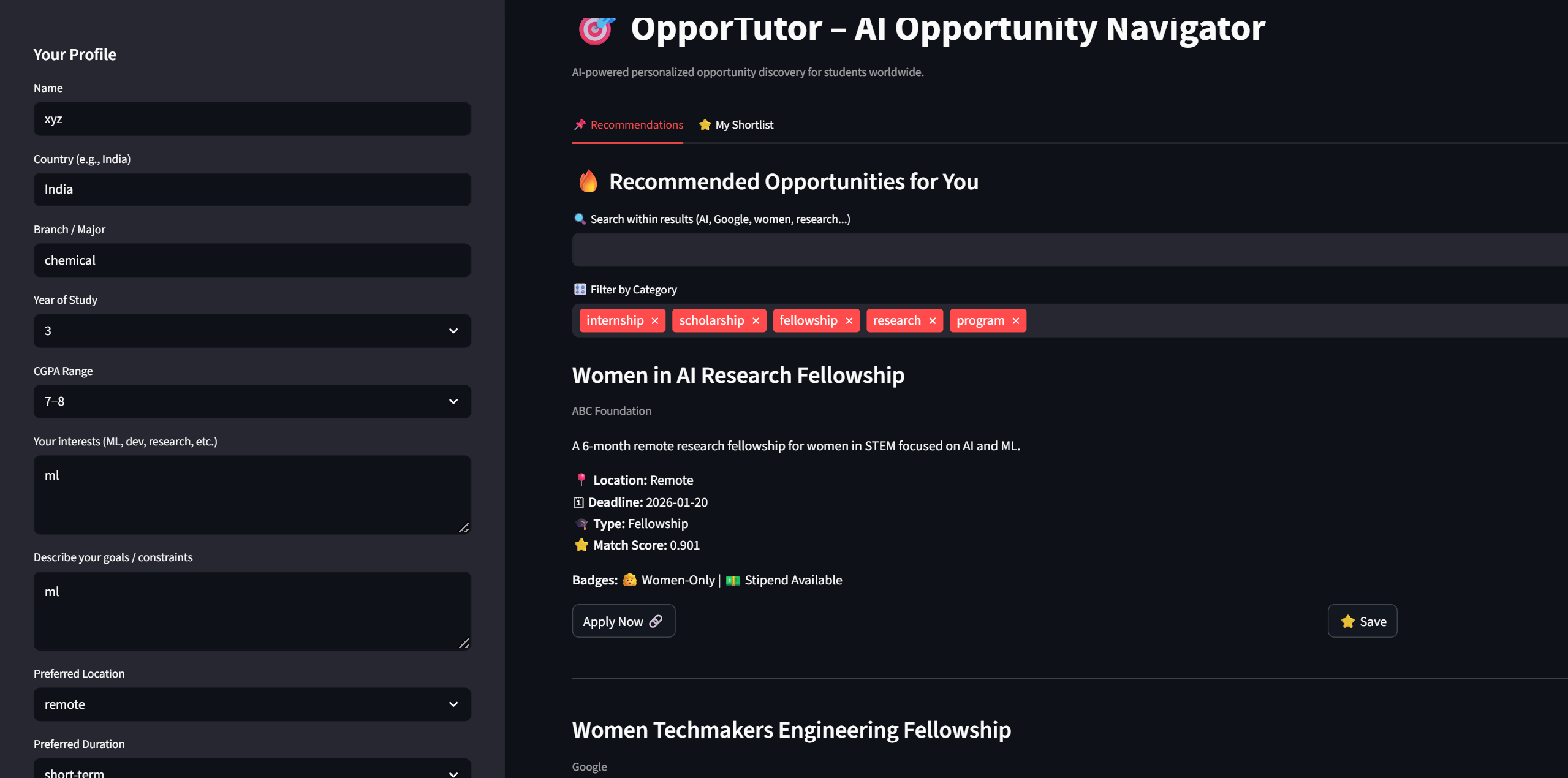
AI-powered platform for personalized opportunity discovery for students.
-
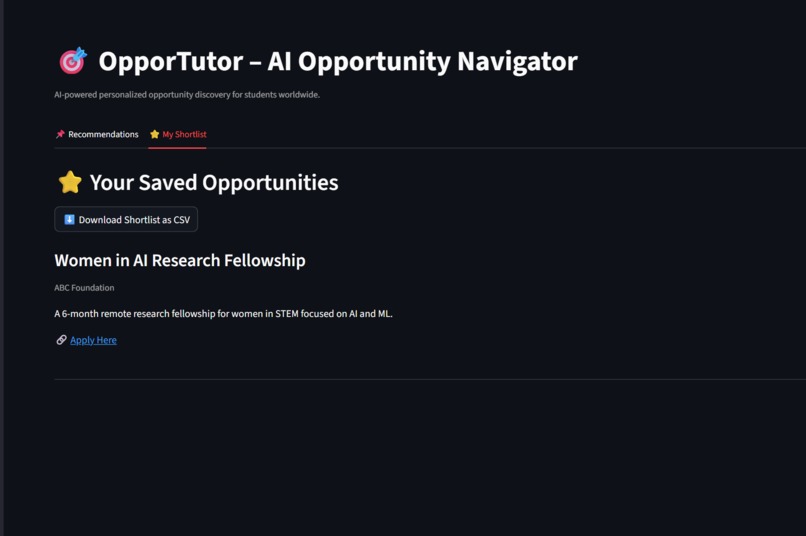
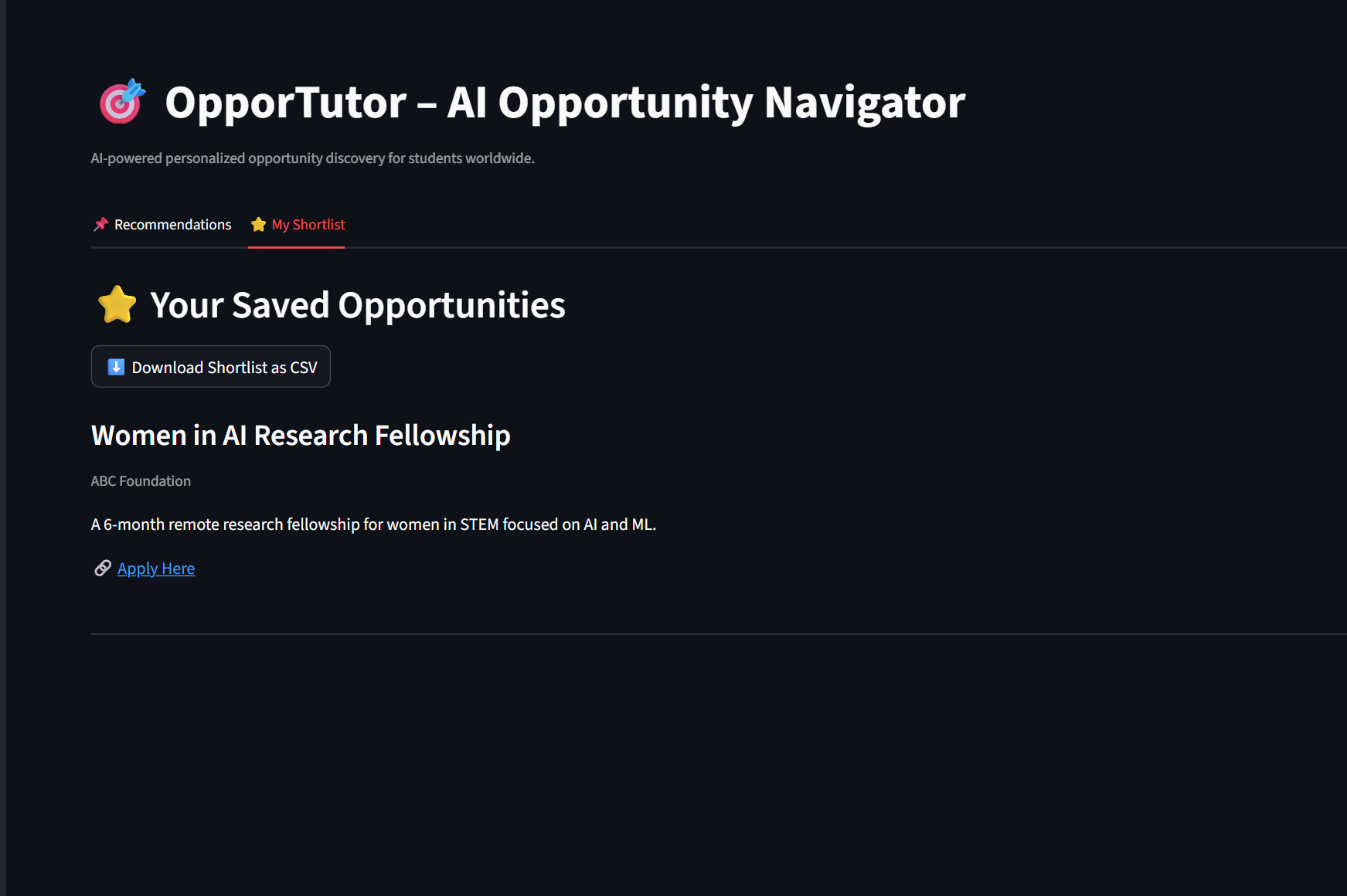
Save and manage shortlisted opportunities in one place.
-

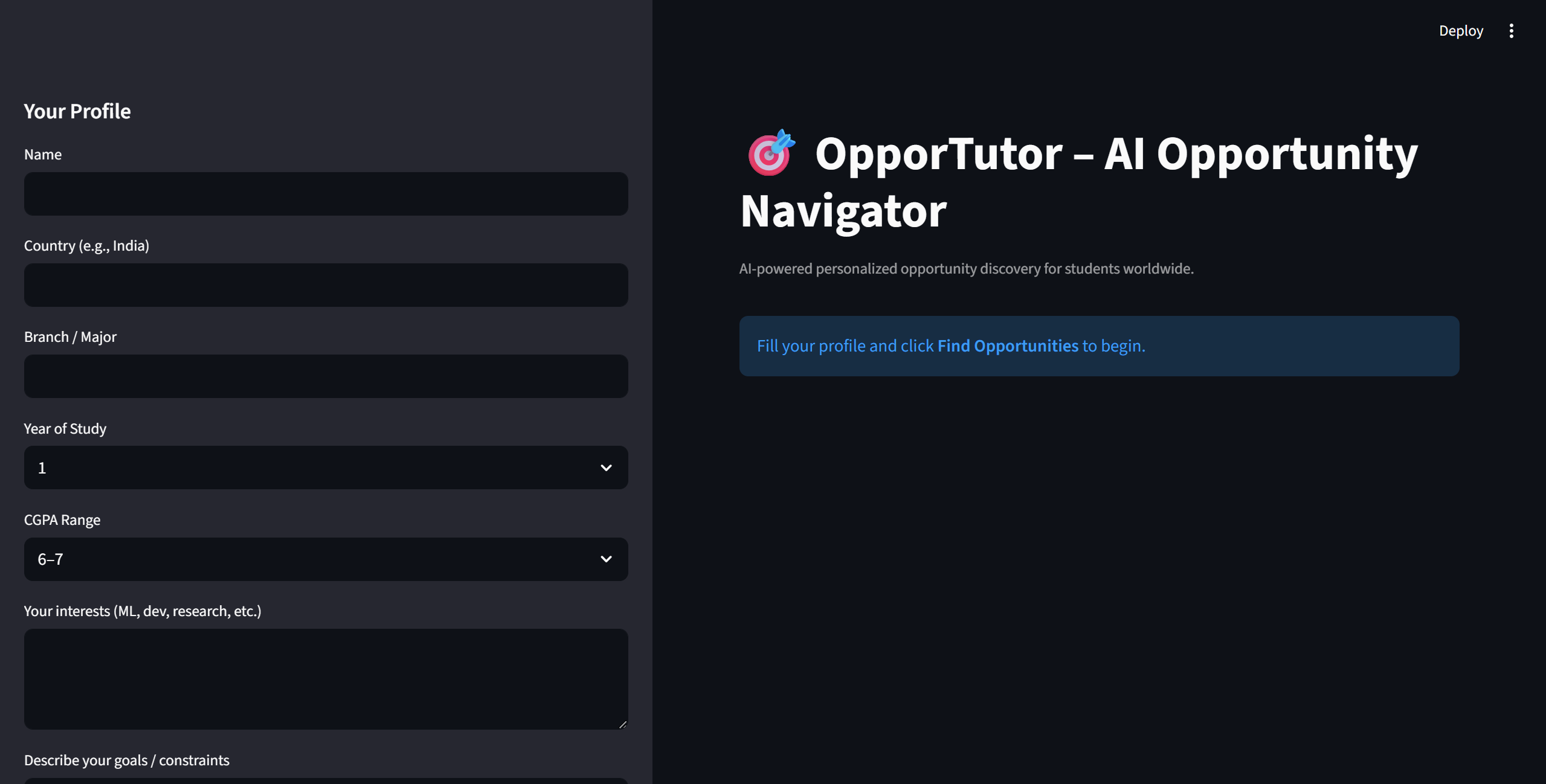
Students enter their background, interests, and constraints to personalize results.
-
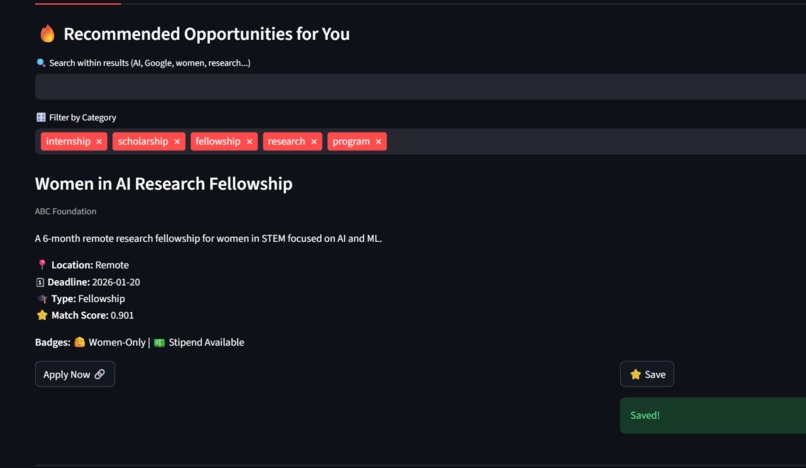
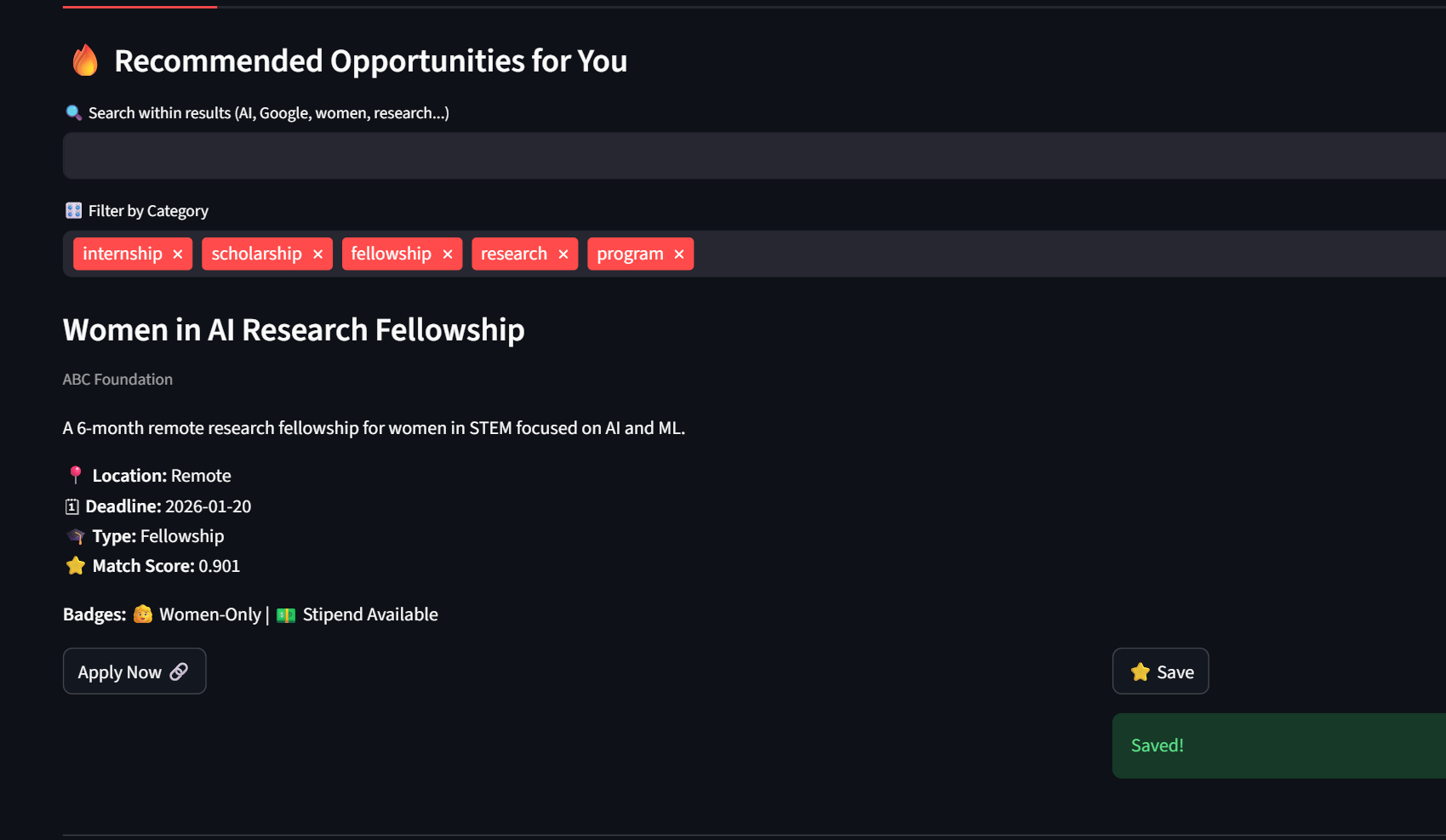
Search and filter opportunities by type, keyword, and preferences.
-
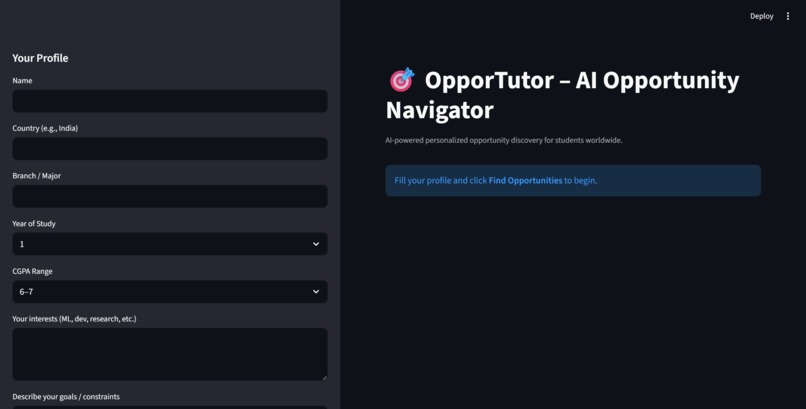
Students enter their background, interests, and constraints to personalize results.
-
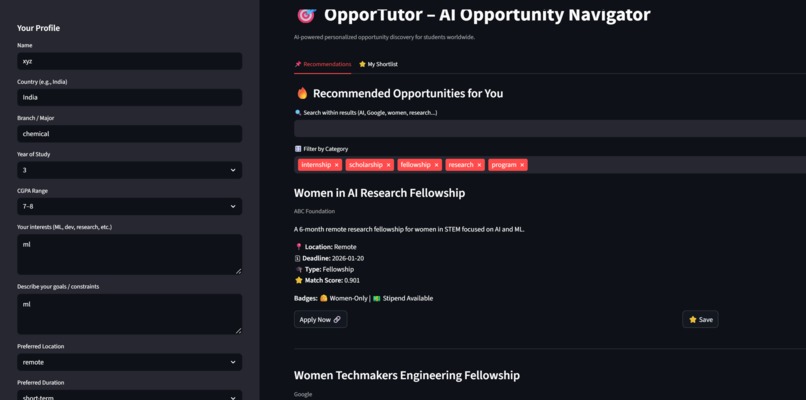
Ranked opportunities generated using AI-based semantic matching.

Inspiration
Students today face a paradox: there are thousands of internships, scholarships, and fellowships available, yet many still miss out on opportunities simply because information is scattered or inaccessible.
Through conversations with peers from different colleges and backgrounds, I observed that awareness often depends on privilege, networks, or luck rather than merit. This information inequality inspired me to build OpporTutor — an AI-powered system that helps students discover opportunities that actually fit their background, interests, and constraints.
What it does
OpporTutor – AI Opportunity Navigator is an AI-powered recommendation platform that helps students discover:
- Internships
- Scholarships
- Fellowships
- Research programs
based on their academic profile, interests, goals, and constraints.
Users can:
- Enter their background and preferences
- View ranked, personalized opportunity recommendations
- Filter opportunities by category and preferences
- Save opportunities to a shortlist for later
The goal is to replace scattered searching with a single, intelligent discovery experience.
How we built it
OpporTutor uses a semantic matching approach instead of simple keyword search.
- Each opportunity description is converted into a vector embedding using a sentence-transformer model.
- The student profile (interests + goals) is embedded using the same model.
Relevance is computed using cosine similarity:
similarity(u, o) = (u · o) / (||u|| × ||o||)
A custom scoring layer adjusts rankings based on real-world constraints such as:
- Academic year eligibility
- Location preference (remote / onsite)
- Stipend requirements
- Inclusion flags (e.g., women-only, low-income support)
The frontend is built using Streamlit, enabling a clean and interactive UI with filters, search, and shortlist functionality.
Challenges we ran into
A key challenge was balancing AI-driven semantic relevance with practical eligibility constraints. Pure similarity scores were not sufficient, so a hybrid scoring strategy was required.
Managing application state correctly (especially saving opportunities and filtering results) was another challenge. Additionally, designing a realistic dataset that was small enough for a hackathon demo but rich enough to demonstrate real-world impact required careful curation.
Accomplishments that we're proud of
- Built a complete end-to-end AI recommendation system
- Successfully combined machine learning with rule-based logic
- Created a clean, user-friendly interface without storing user data
- Designed the project with a strong focus on social good and accessibility
The project demonstrates how AI can be used responsibly to improve access to opportunities.
What we learned
This project helped me learn and apply:
- Semantic embeddings and similarity-based retrieval
- Recommender system design beyond keyword filtering
- Integration of ML models into user-facing applications
- Translating a real social problem into a technical solution
It also reinforced the importance of usability, fairness, and clarity in AI systems.
What's next for OpporTutor – AI Opportunity Navigator
Planned future improvements include:
- Expanding the dataset with real-time opportunity sources
- Resume-based and skill-based matching
- Multilingual support for wider accessibility
- Notifications for newly matched opportunities
- Deployment as a scalable, production-ready platform
OpporTutor has the potential to grow into a global opportunity discovery platform that helps students compete based on merit rather than access.
Built With
- json
- numpy
- python
- scikit-learn
- sentence-transformers
- streamlit


Log in or sign up for Devpost to join the conversation.