-
Analysis Results 2
-
Landing Page
-
Data Form 1
-
Data Form 2
-
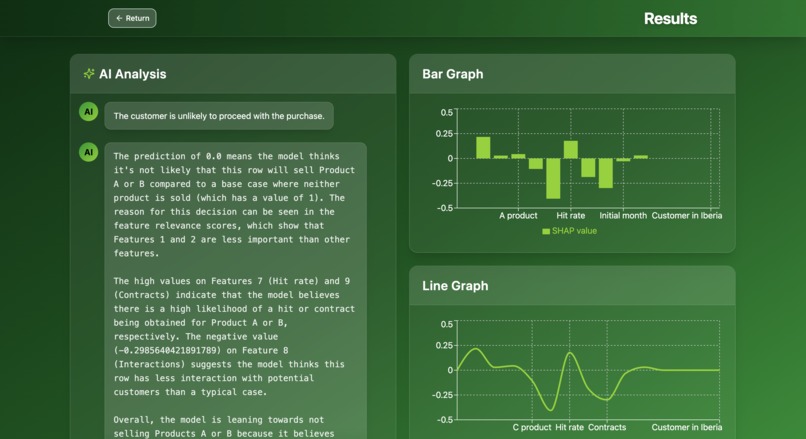
Analysis Results 1
-
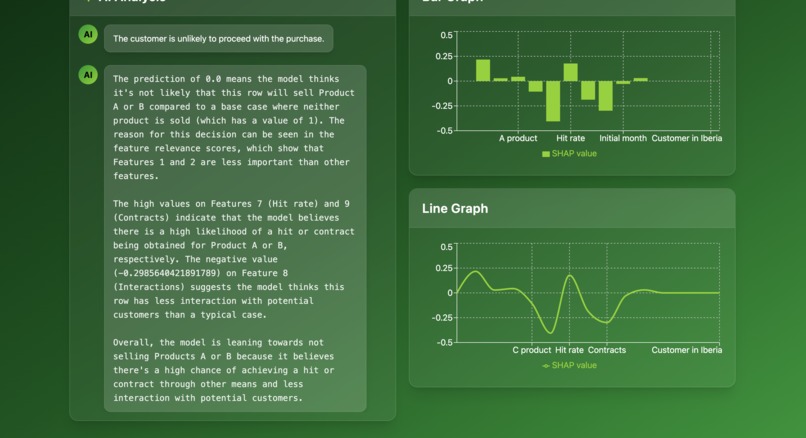
Analysis Results 3
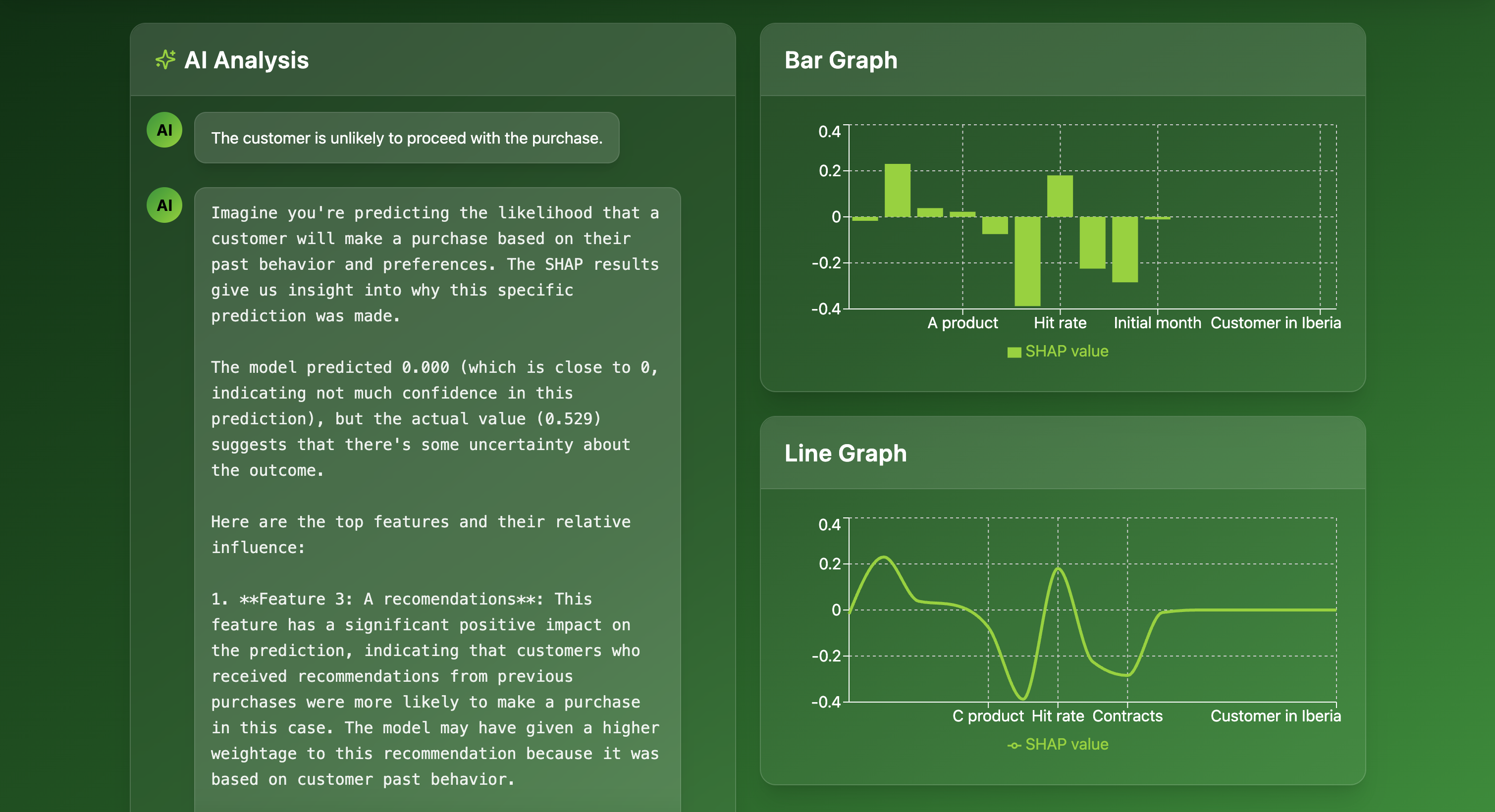
Inspiration
For the Schneider Electric Datathon 2025 challenge, we wanted to create a solution capable of helping businesses anticipate whether a customer is likely to convert in a sales opportunity. Our goal was to combine machine learning with explainability to make predictions not only accurate, but also transparent and easy to understand for non-technical users.
What it does
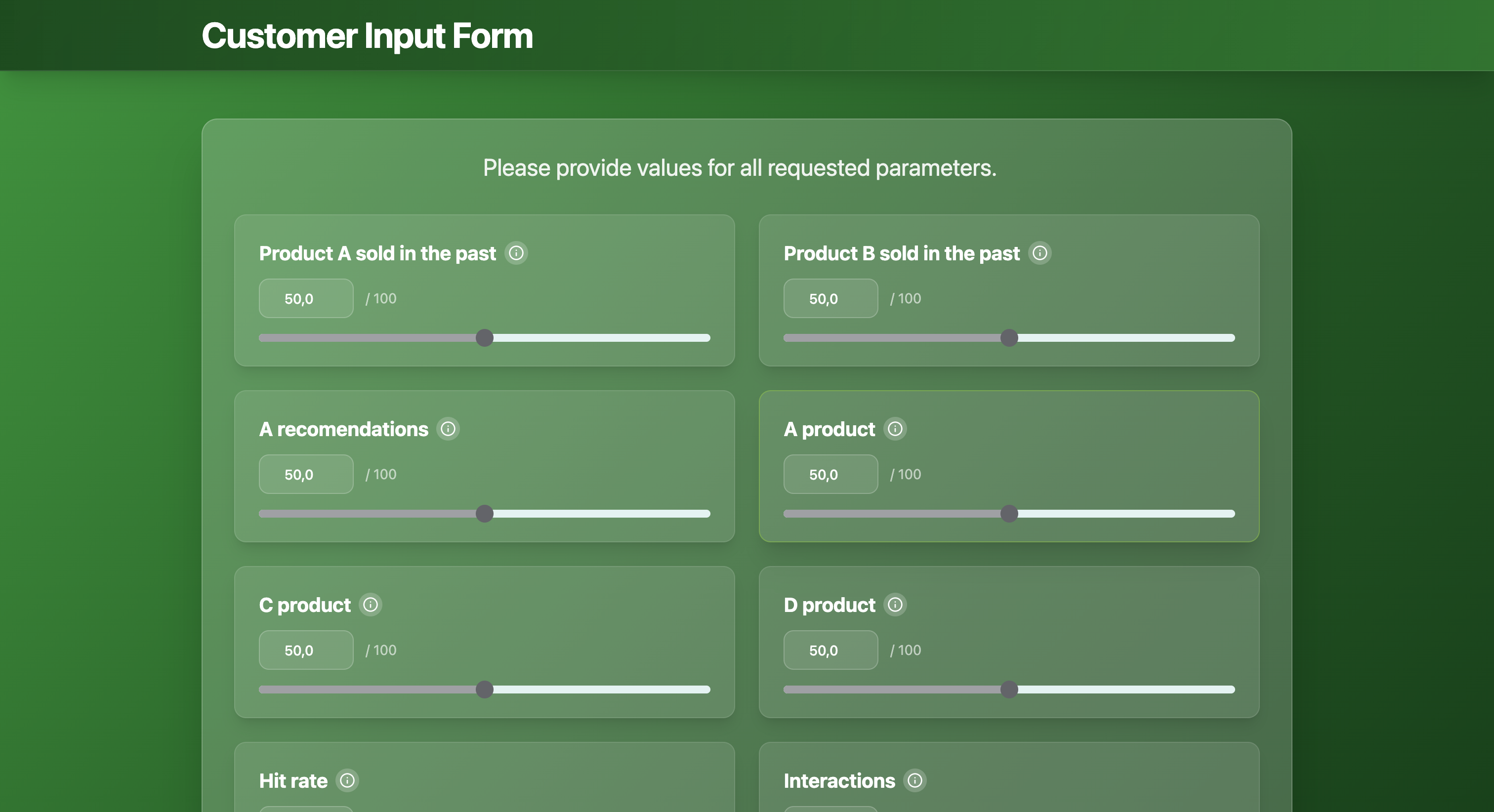
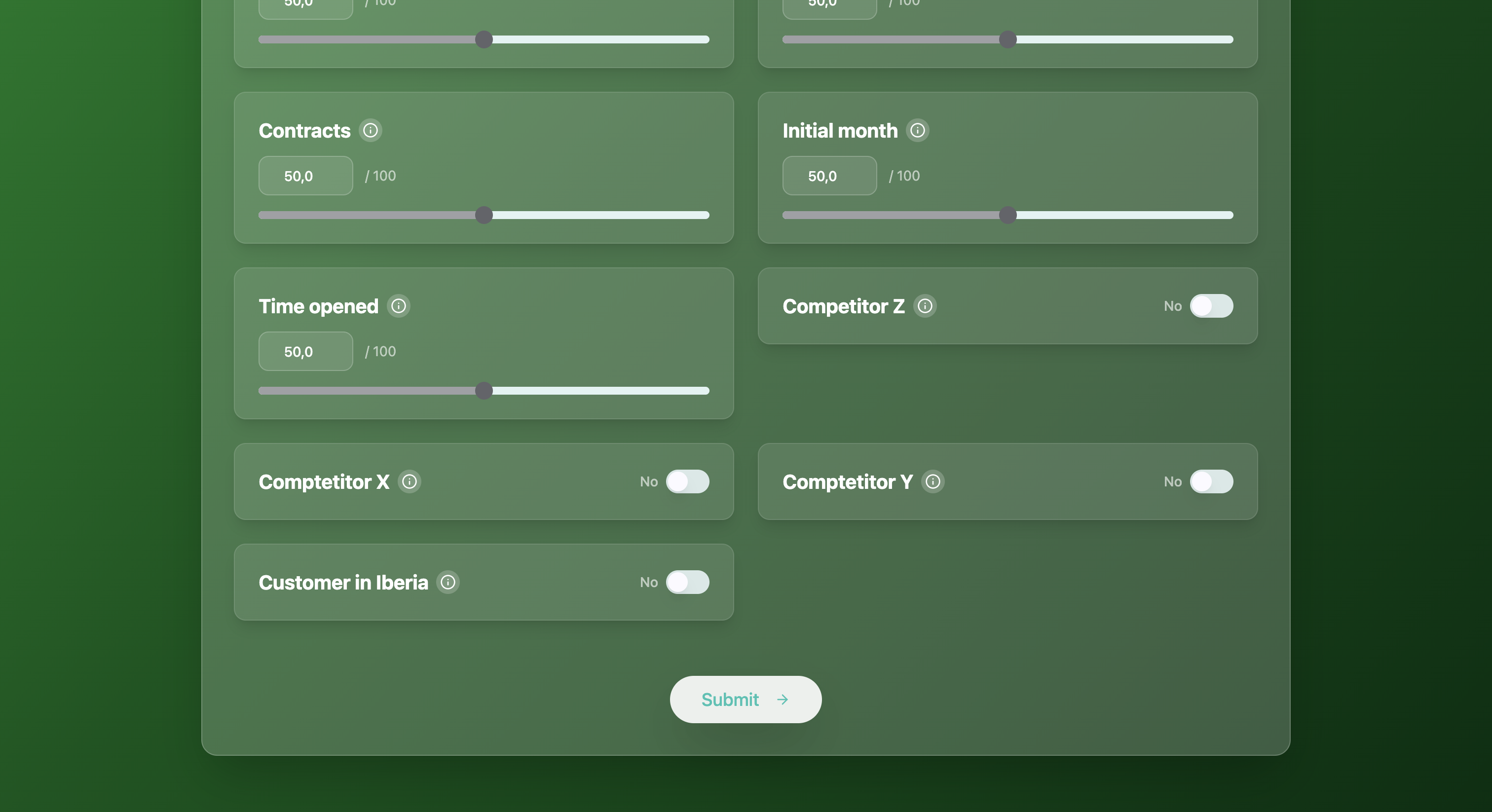
Opportunity XplAIn is an AI-powered web application that predicts whether a customer is likely to be profitable in a planned sale based on previous interactions. The system includes:
- A binary classification model achieving ~0.75 accuracy and F1-score.
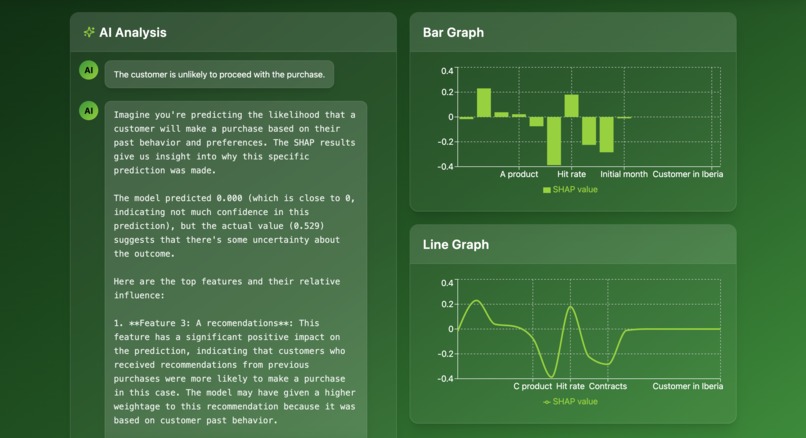
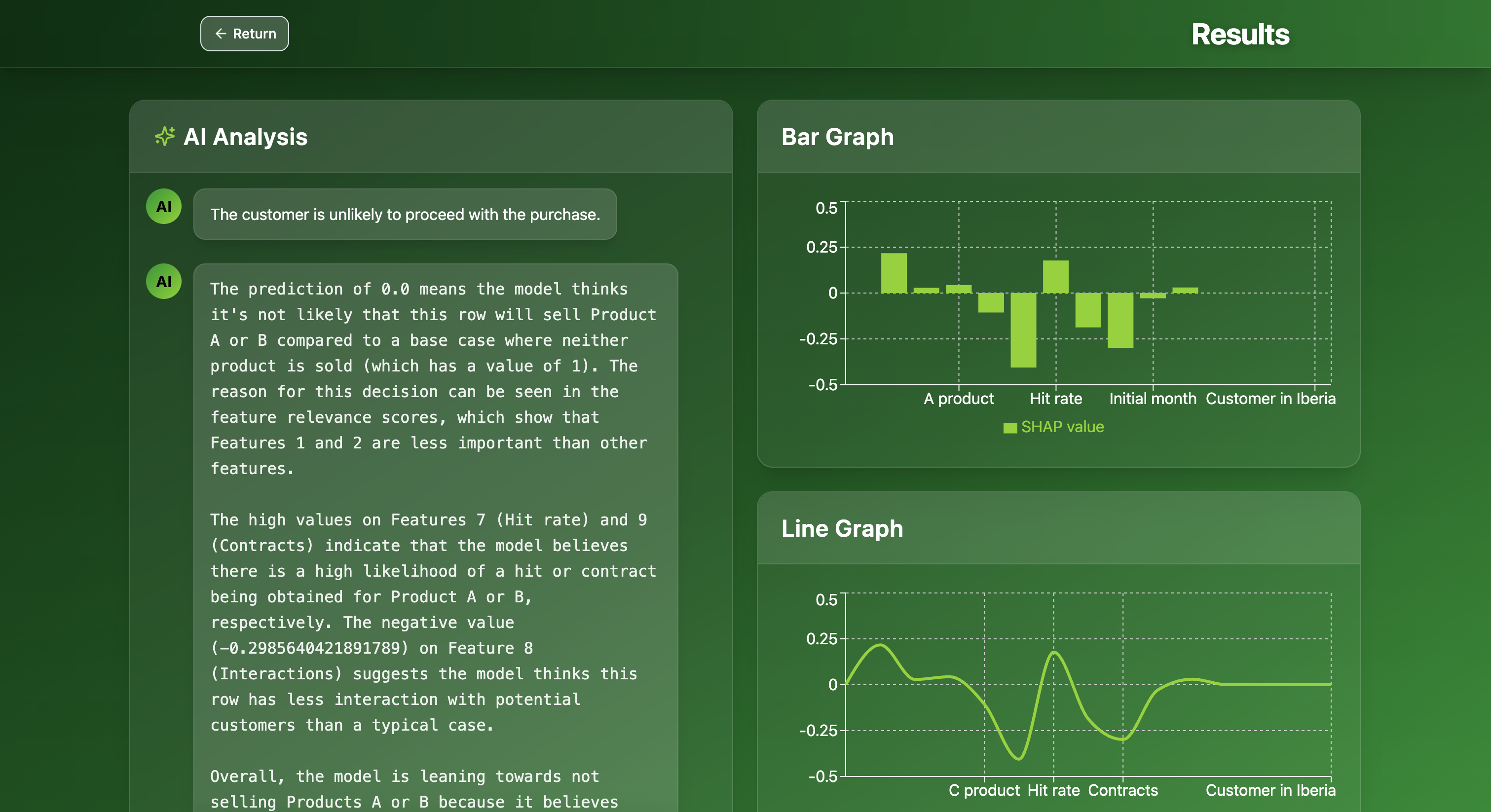
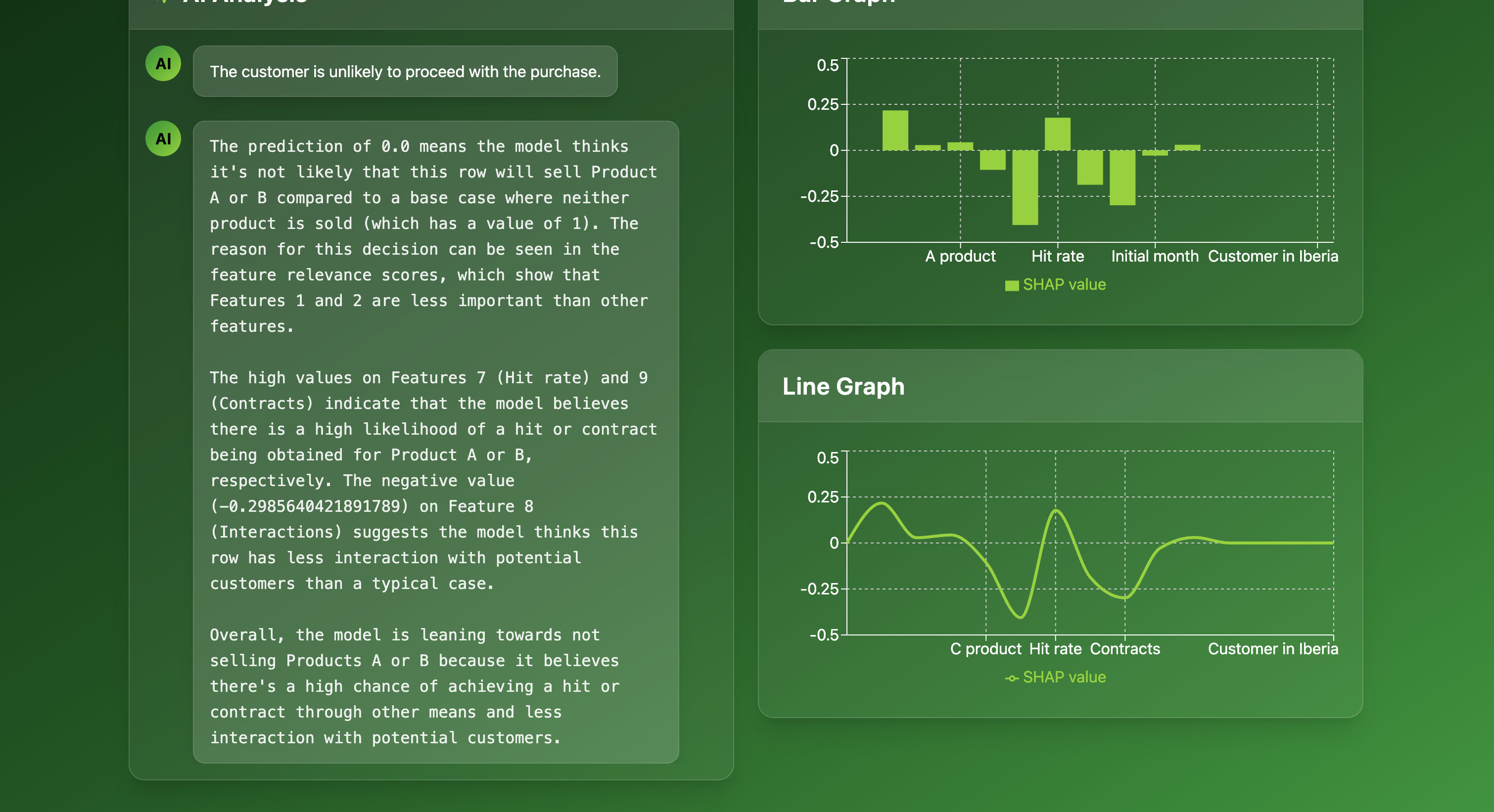
- A second LLM model that interprets SHAP values and generates a human-readable explanation of why the prediction was made.
- A user-friendly interface displaying both AI-generated explanations and intuitive graphs to help users understand the model’s reasoning.
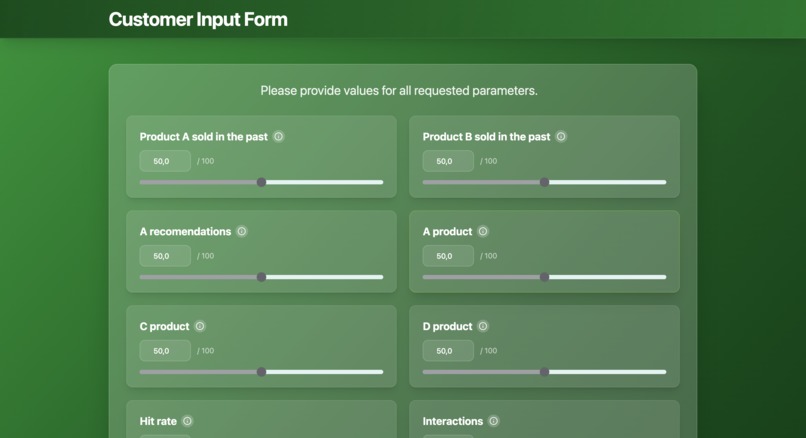
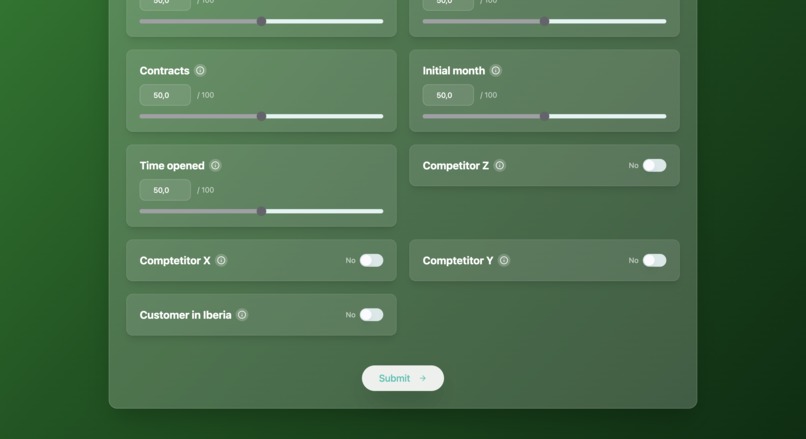
- Two data-entry modes for flexibility: percentage-based inputs and interactive sliders to adjust each variable visually.
How we built it
We built the system using a modern full-stack architecture:
- Machine Learning: Python, TensorFlow, SHAP, and interpretability techniques.
- Backend: FastAPI to expose prediction and explanation endpoints.
- Frontend: React + TypeScript with a custom UI for interacting with the model and visualizing results.
- DevOps: Git, GitHub, Docker, and Linux for development, version control, and containerization.
The ML model was trained on customer opportunity data, and then integrated with a secondary LLM (via Ollama) to generate structured natural-language explanations.
Challenges we ran into
- Ensuring TensorFlow compatibility and stable environment configuration.
- Managing SHAP outputs and translating them into readable explanations.
- Designing a smooth user experience that balances visual clarity with technical detail.
- Integrating two different AI components (ML model + LLM interpreter) within a unified backend.
- Handling input variations while keeping the interface intuitive and responsive.
Accomplishments that we're proud of
- Achieving strong predictive performance (~0.75 F1-score and accuracy).
- Successfully integrating SHAP with an LLM to produce high-quality explanations.
- Building a clean, modern web UI that makes complex ML results understandable.
- Delivering a fully functional end-to-end system during the Datathon timeframe.
- Designing flexible input mechanisms that simplify the user workflow.
What we learned
- Effective ways to combine traditional machine learning with large language models.
- Best practices for ML interpretability and SHAP visualization.
- How to build a scalable backend architecture using FastAPI.
- How to design a polished, intuitive UI for data-heavy applications.
- The importance of explainability and transparency in AI decision-making.
What's next for Opportunity XplAIn
- Adding more granular interpretability methods (e.g., feature interactions, waterfall plots).
- Improving prediction calibration and threshold optimization.
- Expanding the UI with richer visualizations and report-generation capabilities.
- Deploying the system as a fully cloud-hosted service for real-world testing.
- Exploring integrations into Schneider Electric’s internal workflow tools.
Built With
- css
- fastapi
- html
- javascript
- python
- shap
- tailwindcss
- tensorflow
- typescript


Log in or sign up for Devpost to join the conversation.