💡 Inspiration
As students at KIIT (Kalinga Institute of Industrial Technology), we lived this problem every day. Opportunities were buried in WhatsApp groups, scattered across notice boards, LinkedIn, and dozens of websites. We'd find out about a great internship after the deadline had passed. That frustration inspired us to build OpportUNITY — one place for every student opportunity, ever.
🔨 What We Built
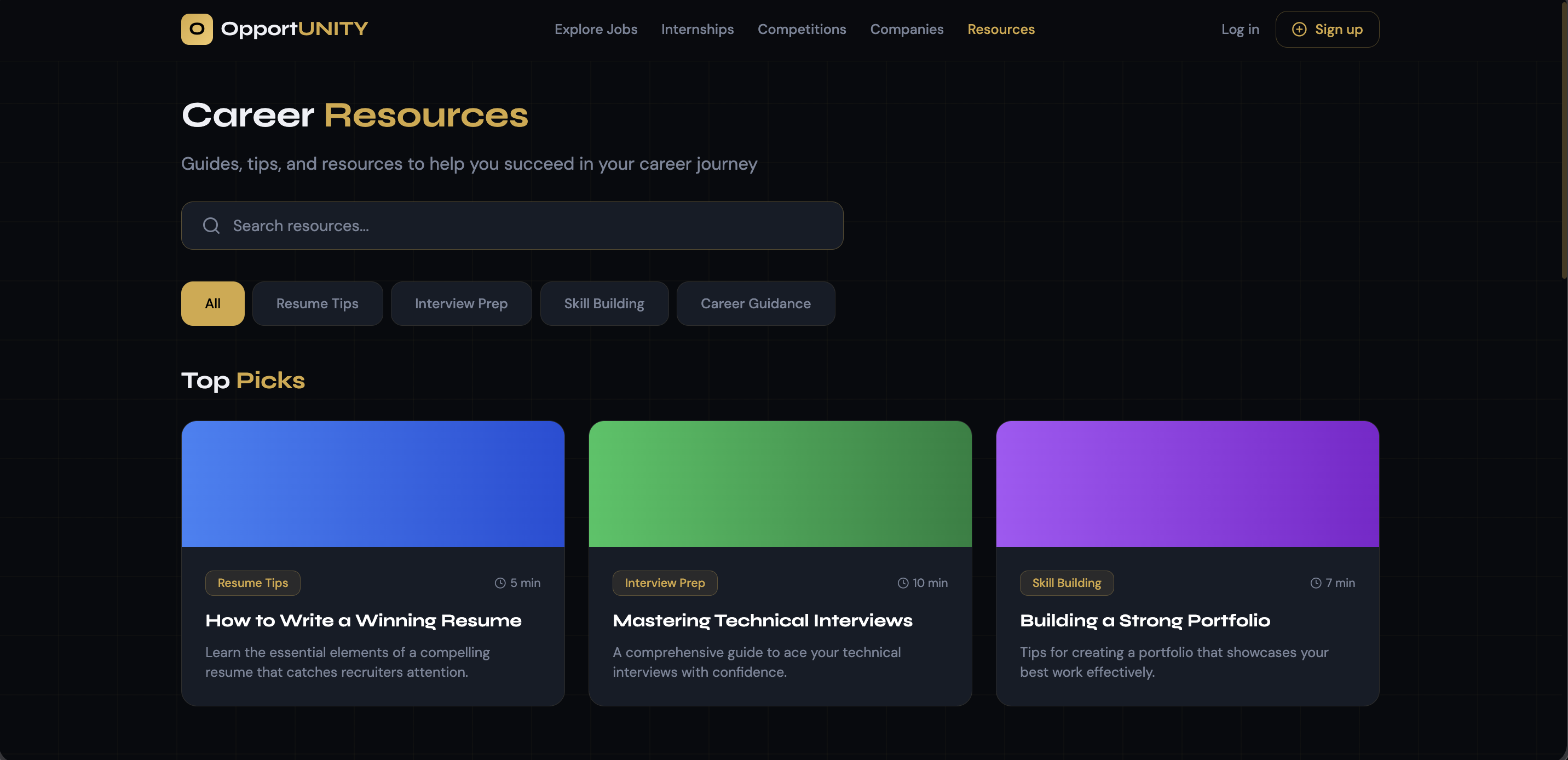
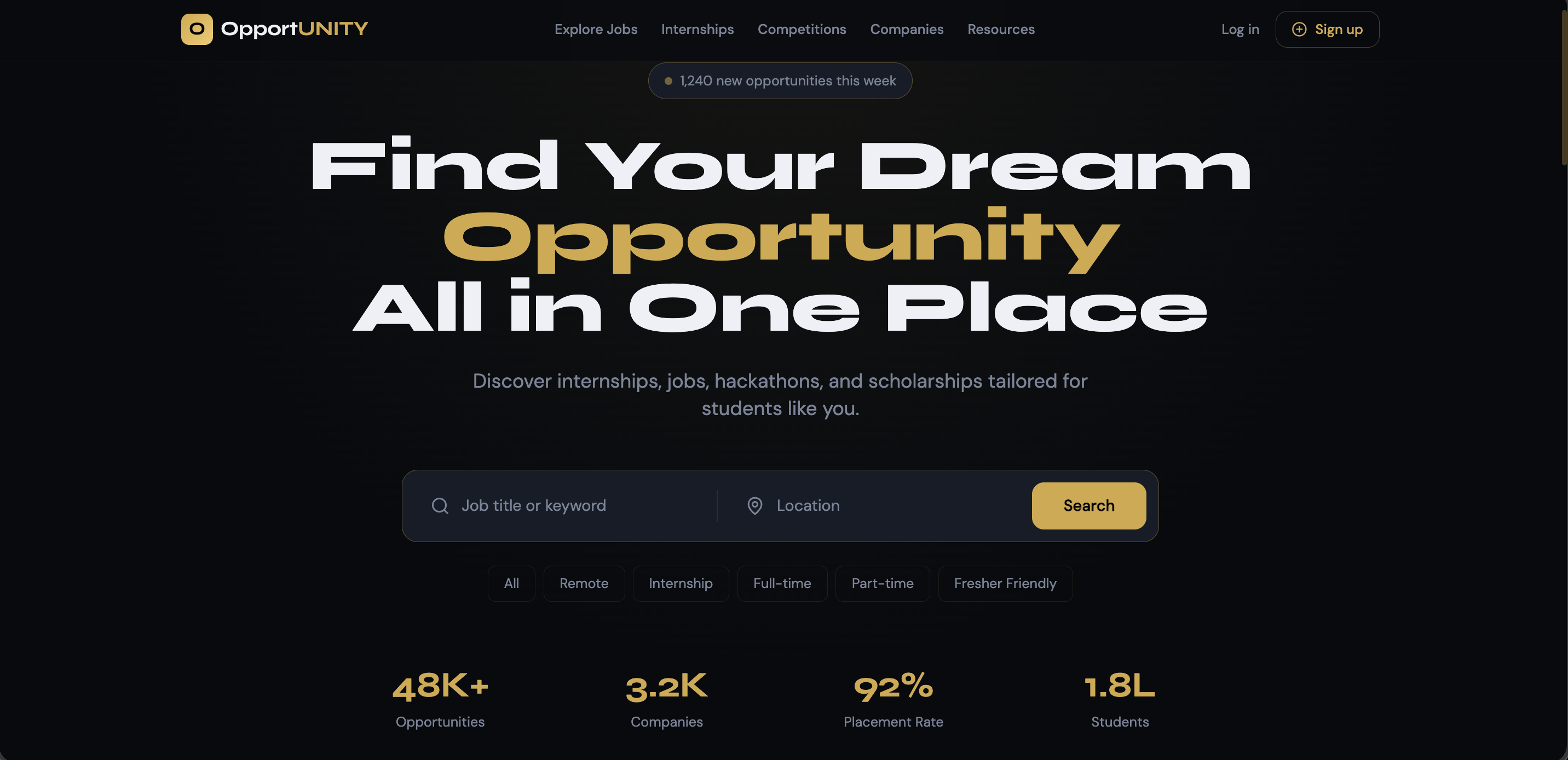
OpportUNITY is a centralized, student-first job board platform that aggregates jobs, internships, hackathons, and scholarships in one beautifully designed interface. Key features include:
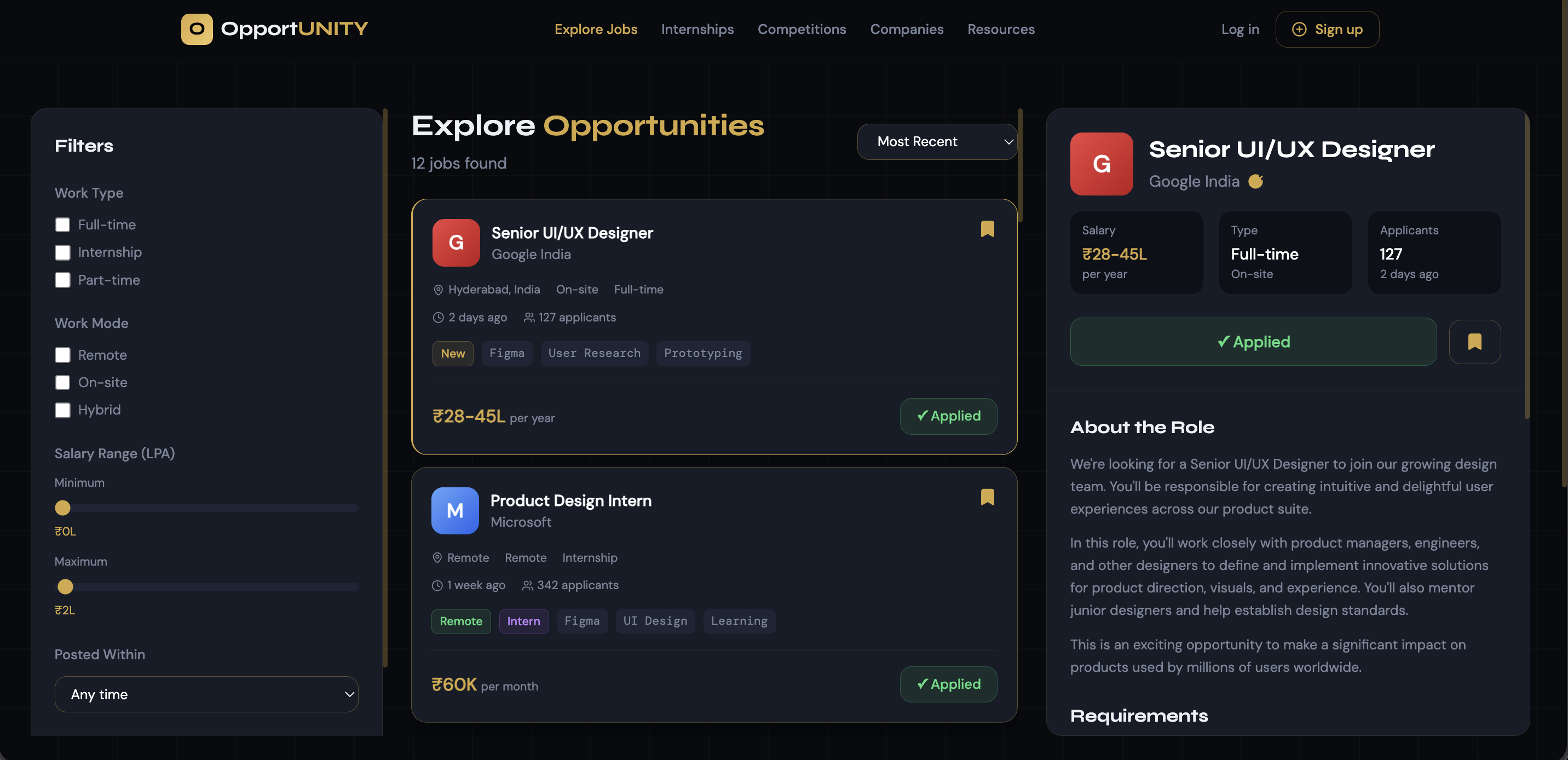
- 🔍 Advanced Search & Filtering — by role, location, work type, salary range, domain, and recency
- 📋 3-Column Job Board — filter sidebar + listings + live detail panel, all in one view
- ✅ One-Click Apply — with real-time application status tracking (Applied → Under Review → Shortlisted → Interview → Offer)
- 🔖 Save & Dashboard — personal dashboard with saved jobs, application analytics, and deadline countdowns
- 🏢 Company Profiles — with open positions and culture info
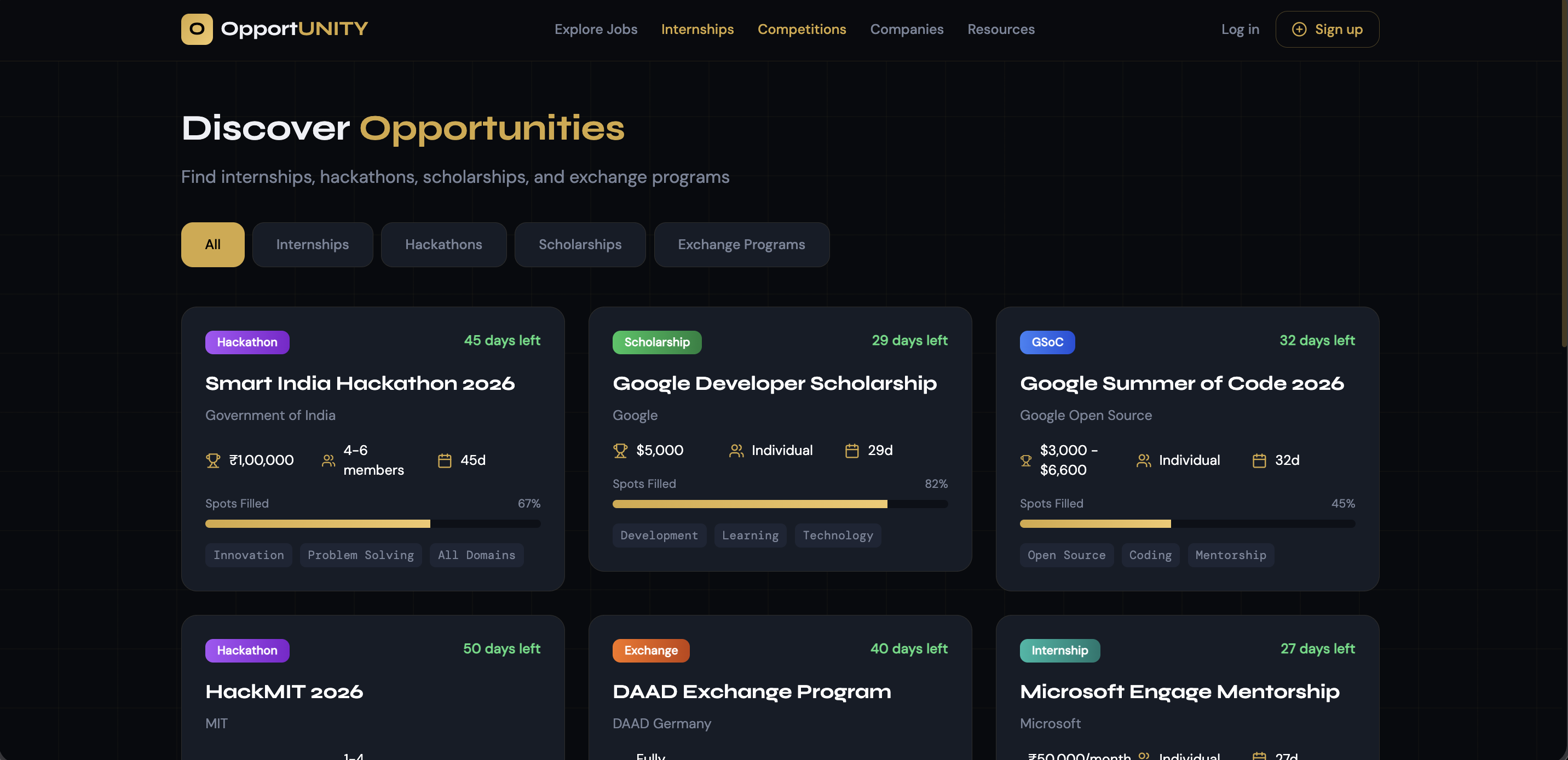
- 🏆 Opportunities Hub — hackathons, scholarships, GSoC, exchange programs with spot-fill progress bars
- 📊 Analytics Charts — application funnel visualization with Recharts
⚙️ How We Built It
We chose a modern, fully client-side React stack for rapid development and zero backend overhead:
- React 18 + React Router v6 for multi-page navigation
- Tailwind CSS for the dark gold luxury design system
- Framer Motion for page transitions and micro-animations
- Zustand for global state (applied jobs, saved jobs, filters, toasts)
- Recharts for the analytics dashboard
- Vite for lightning-fast builds
- Vercel for deployment
The design follows a dark luxury aesthetic — deep navy backgrounds,
gold accents (#D4A843), Syne display font, and DM Sans body text —
built to feel premium and trustworthy for students.
🚧 Challenges We Faced
1. Complex 3-Column Layout Building a sticky detail panel that scrolls independently while the sidebar and listings remain fixed required careful CSS grid, overflow, and max-height management across all screen sizes.
2. Cross-Page State Without a Backend Managing applied jobs, saved jobs, filters, and toast notifications across 10 pages with no backend required a carefully architected Zustand store with derived computed state.
3. Animation Performance
Balancing rich Framer Motion animations with performance on lower-end
devices required selective use of will-change, layout animation
guards, and stagger optimization.
4. Time Pressure Building a full 10-page production-grade app in hackathon timeframe meant every design and architecture decision had to be decisive and deliberate. No room for rework.
📚 What We Learned
- How to architect a scalable Zustand store for complex cross-page state
- Advanced Framer Motion patterns: staggered children, AnimatePresence, shared layout animations
- Designing accessible, high-contrast dark UIs with Tailwind CSS
- The importance of component-driven architecture for rapid iteration
🚀 What's Next
- AI-powered resume analyzer with job-match scoring
- Real recruiter posting portal with verification
- WhatsApp & email deadline alerts
- College-specific placement dashboards
- React Native mobile app
Built With
- css
- framer
- javascript
- motion
- react
- recharts
- router
- tailwind
- vercel
- vite
- zustand


Log in or sign up for Devpost to join the conversation.