Inspiration
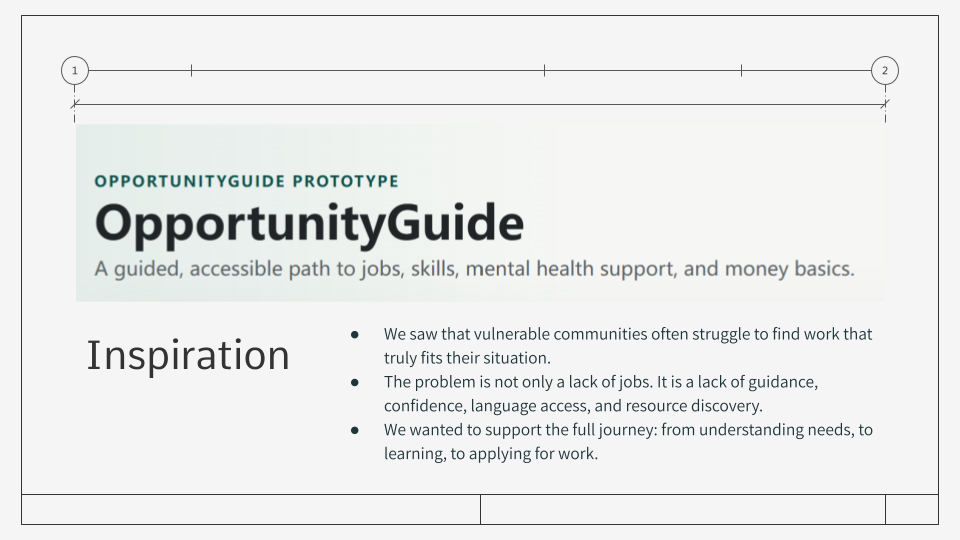
We realized that many underserved people struggle not only to find jobs, but also to know what kind of job fits their situation. Low-income users, disabled users, and people with limited education often need support before employment: basic skills, accessible options, mental health resources, financial literacy, and resume guidance. That inspired us to build an end-to-end path from growth to employment.
What it does
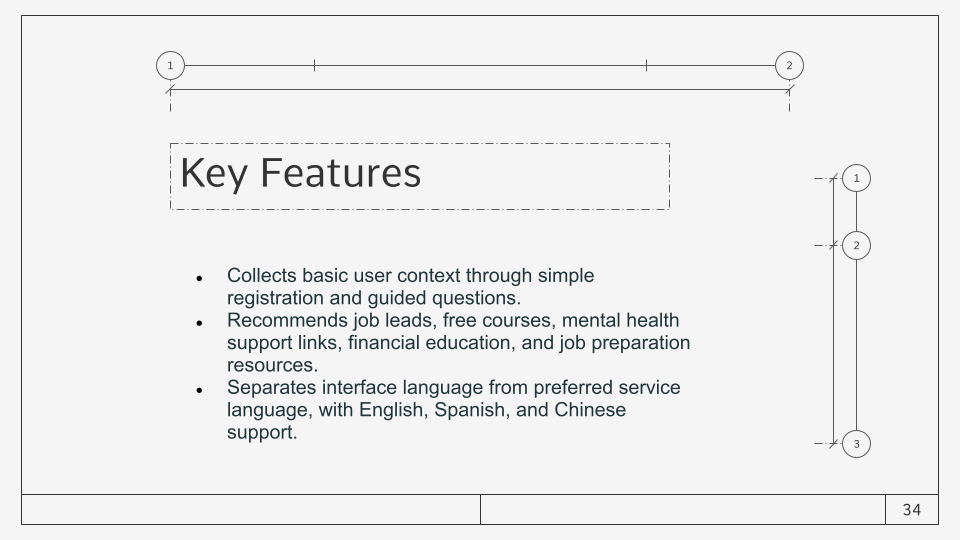
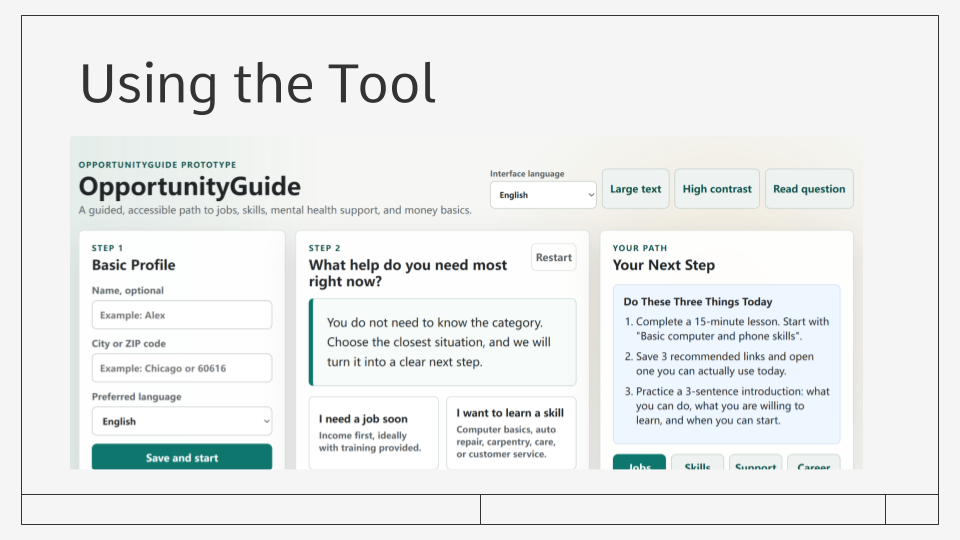
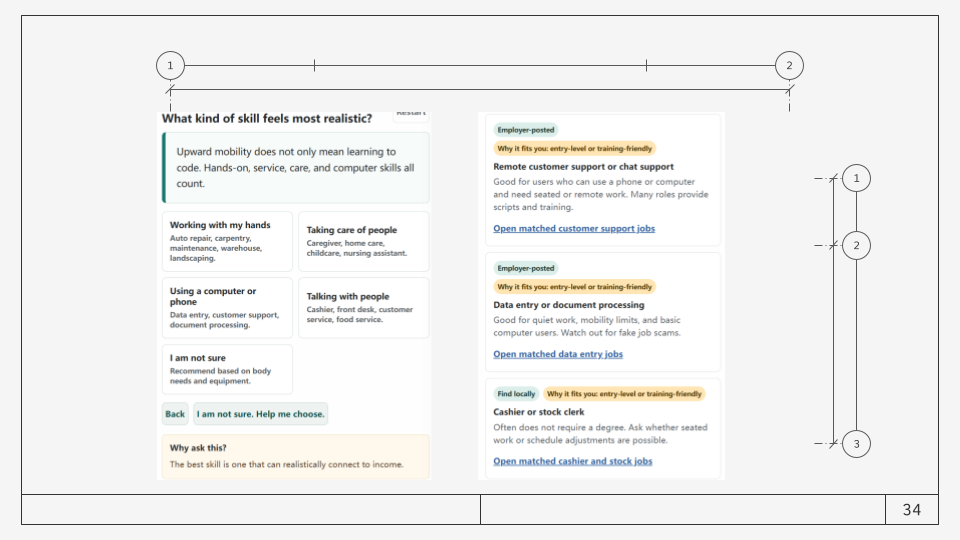
Opportunity Guide is a multilingual, accessibility-first opportunity navigator. It asks simple guided questions, then recommends personalized next steps:
- Entry-level and disability-friendly jobs
- Free skill-building courses
- Mental health support links
- Basic saving and budgeting resources
- Resume and interview guidance
Instead of asking users to search through confusing websites, it turns their situation into a clear action plan.
How we built it
We built a static web prototype using HTML, CSS, and JavaScript. The app uses a guided decision flow to collect user needs, classify barriers, and match users with relevant resources. We added English, Spanish, and Chinese language switching, accessibility controls, large text, high contrast mode, and a copyable action plan.
The core idea is:
Challenges we ran into
At first, we did not have a clear enough understanding of what underserved users actually need. We knew we wanted to help, but it was hard to define the exact support. We also struggled with finding useful, trustworthy resources and organizing them in a way that would not overwhelm users.
Another challenge was avoiding a generic job board. We wanted Opportunity Guide to guide people who may not even know what to search for.
Accomplishments that we're proud of
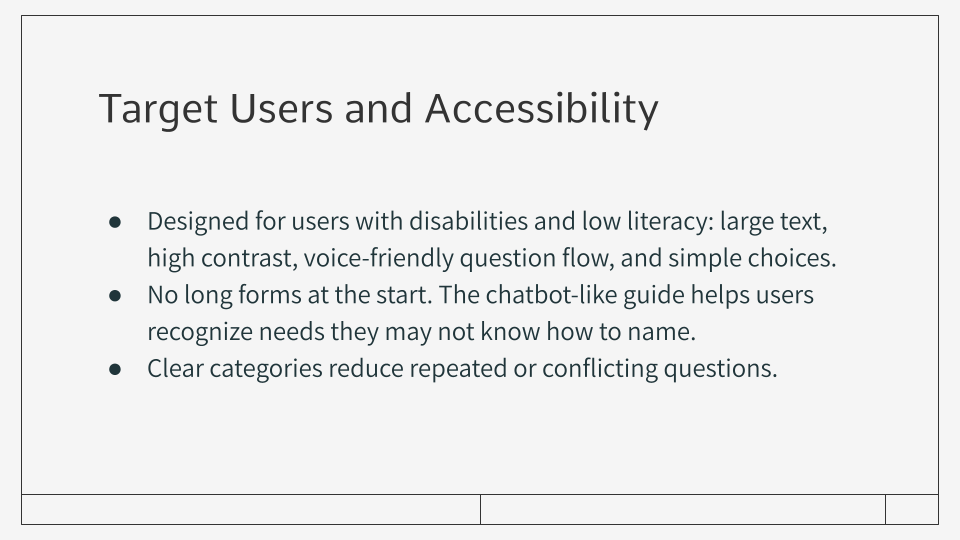
We are proud that the product is simple, multilingual, and accessible from the start. We created a full path from personal situation to recommended jobs, courses, support links, and daily tasks. We also made the interface friendly for people with low literacy or disabilities by using guided choices instead of complex forms.
What we learned
We learned that underserved people often need much more help than we first imagined. A job recommendation alone is not enough. Many users also need confidence, basic skills, mental health support, financial education, transportation-aware options, disability accommodations, and step-by-step guidance.
What's next for Opportunity Guide
Next, we want to add a conversational assistant that can guide users more naturally. We also want to expand to more languages, add more local resources, and build more features for different underserved groups. For sustainability, we could partner with nonprofits, workforce centers, schools, and employers who want to reach and support overlooked talent.
Built With
- codex
- css
- html
- javascript

Log in or sign up for Devpost to join the conversation.