Inspiration
I've been struggling with this myself — as a student, every time I search for internships or career advice, I either get generic results or end up spending hours going through multiple websites. I kept thinking, why isn't there something that actually understands my background and gives me specific, useful guidance? That frustration is what pushed me to build Opportuna.
What it does
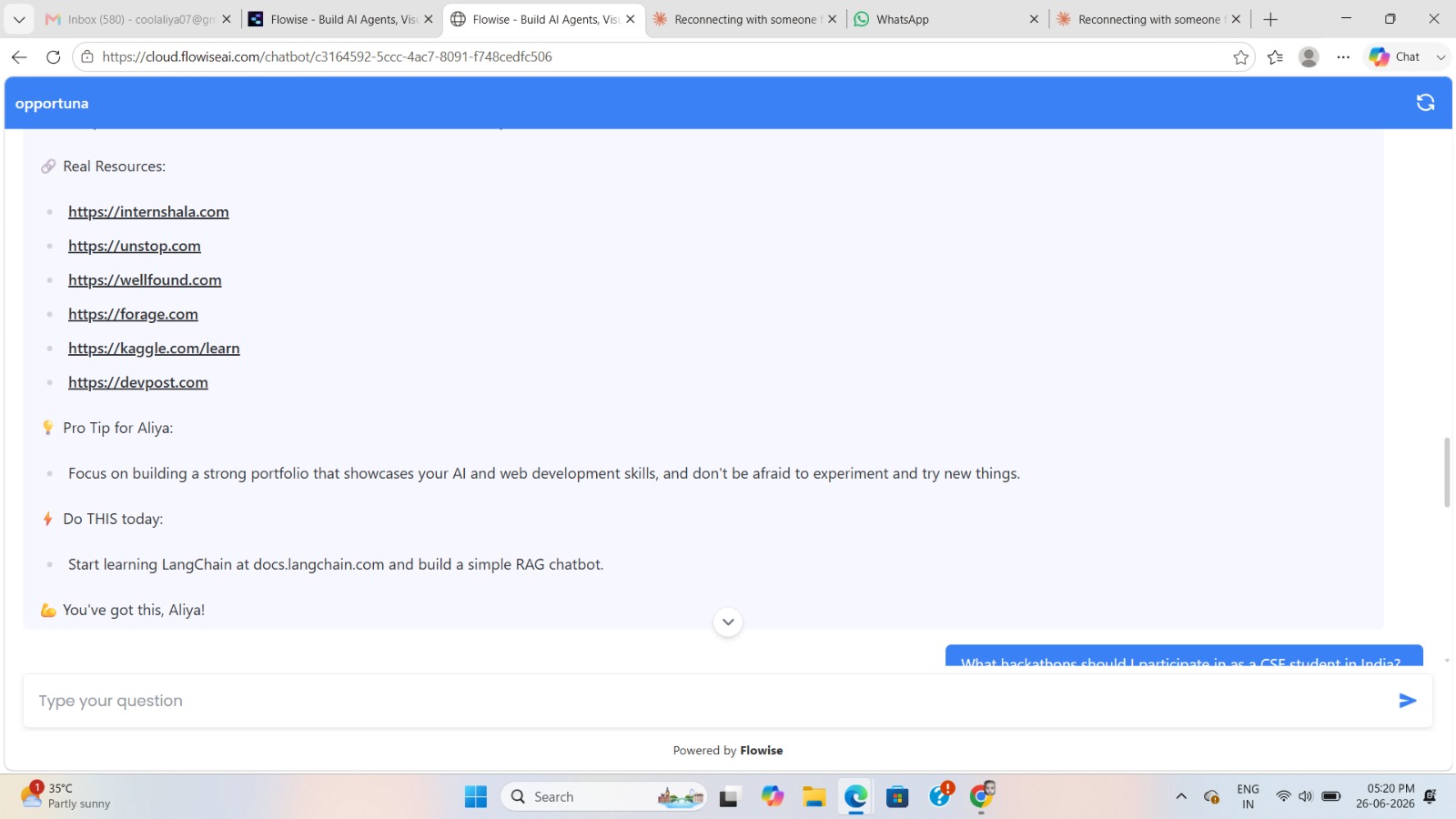
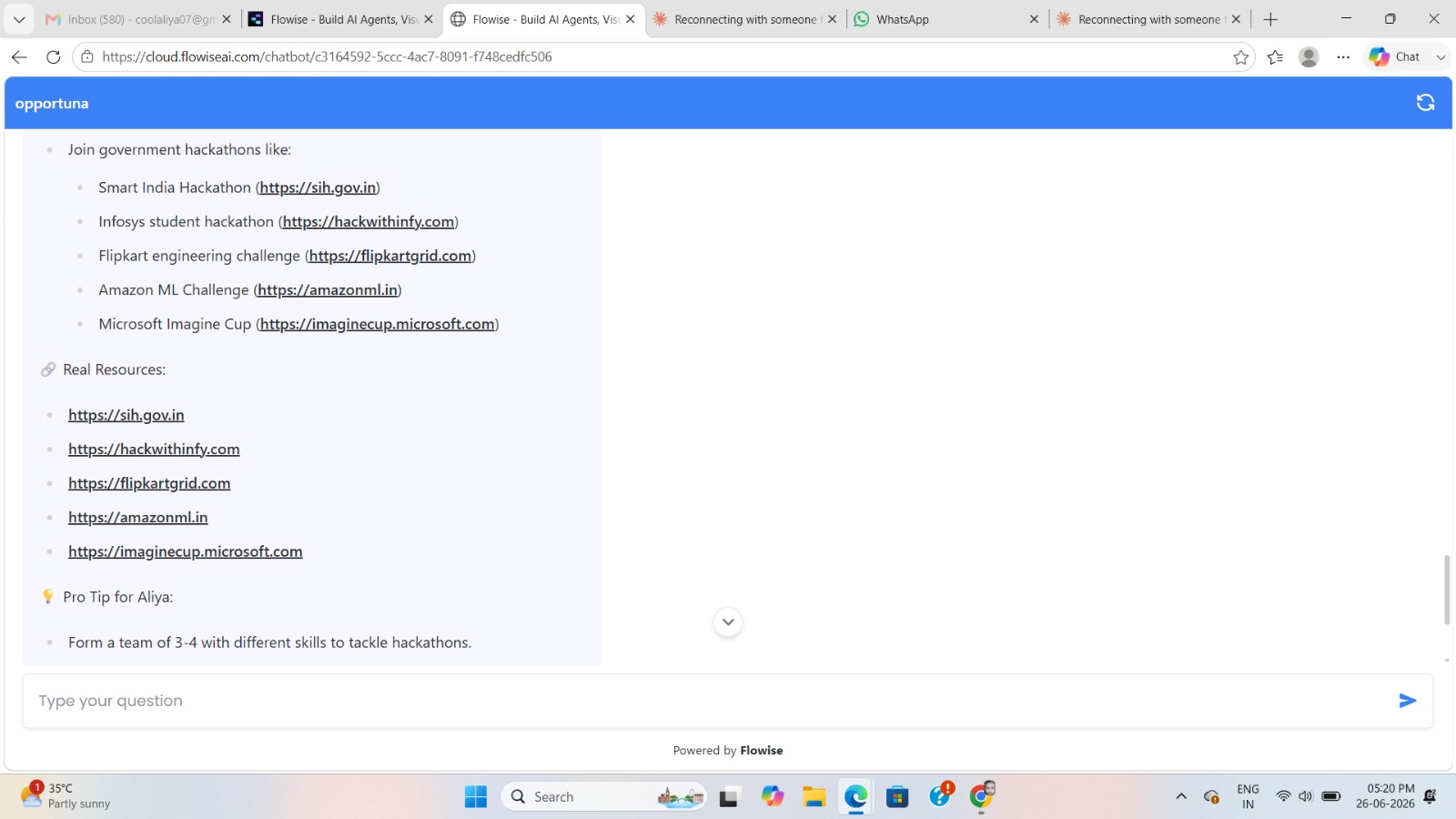
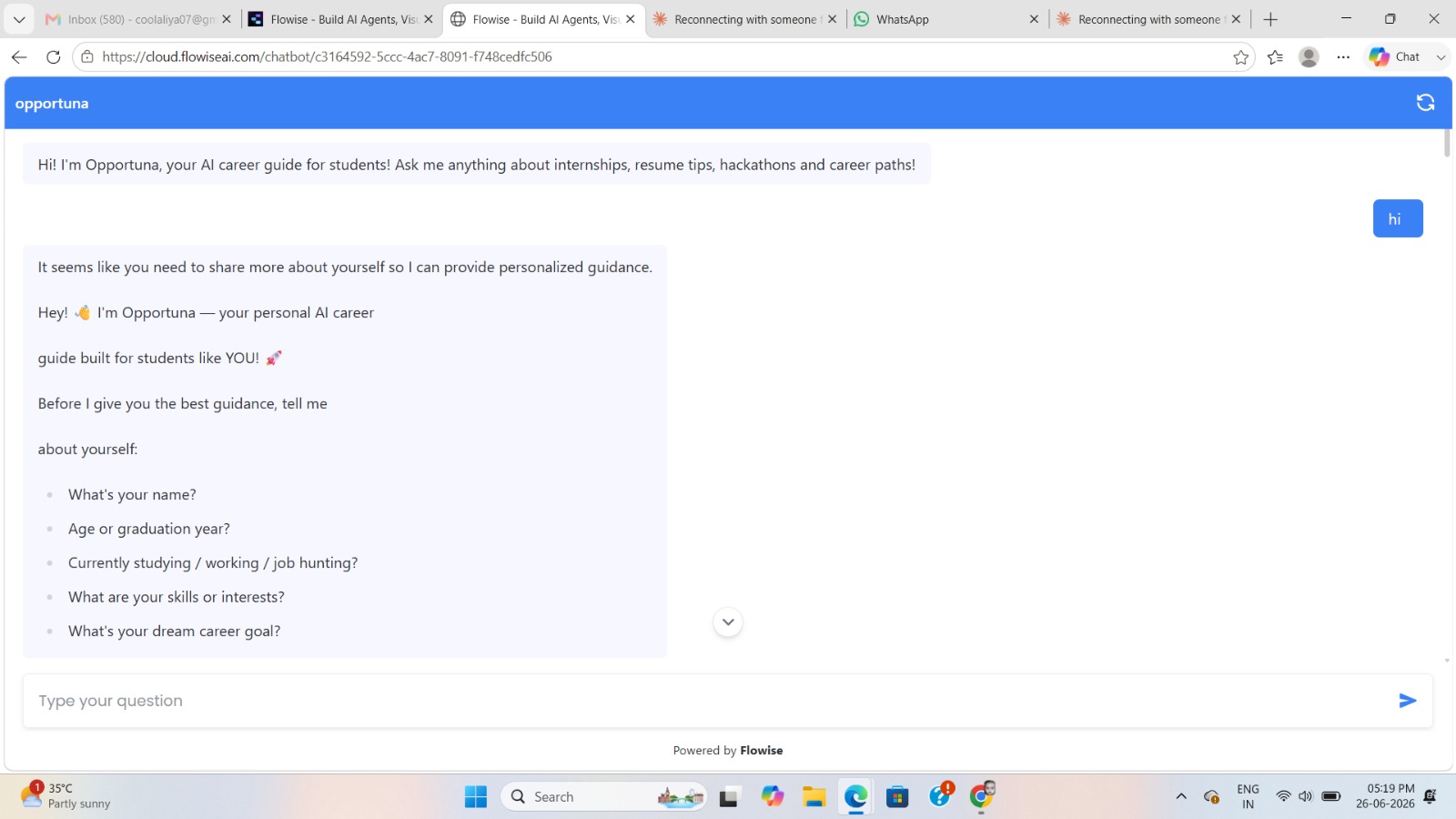
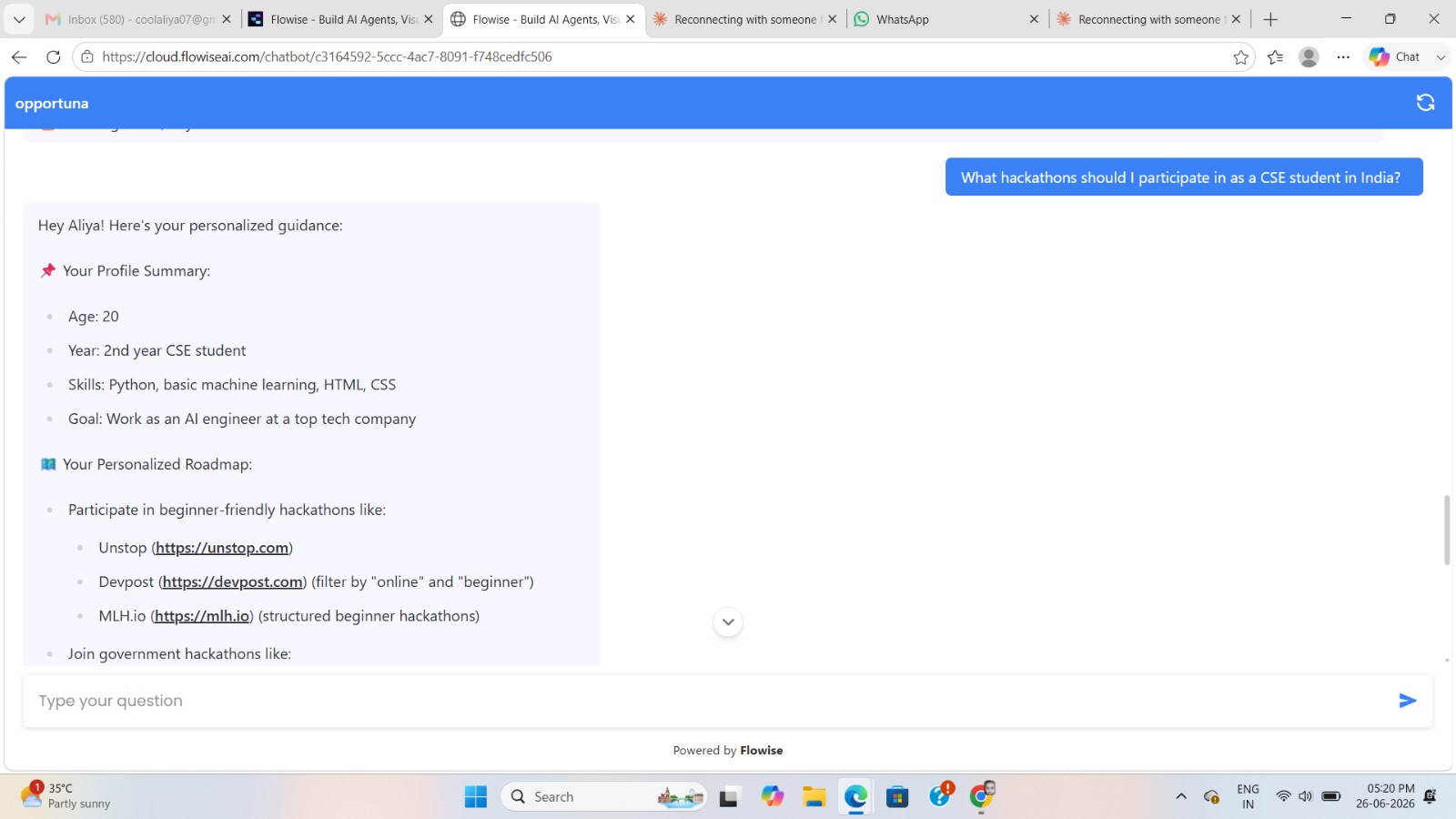
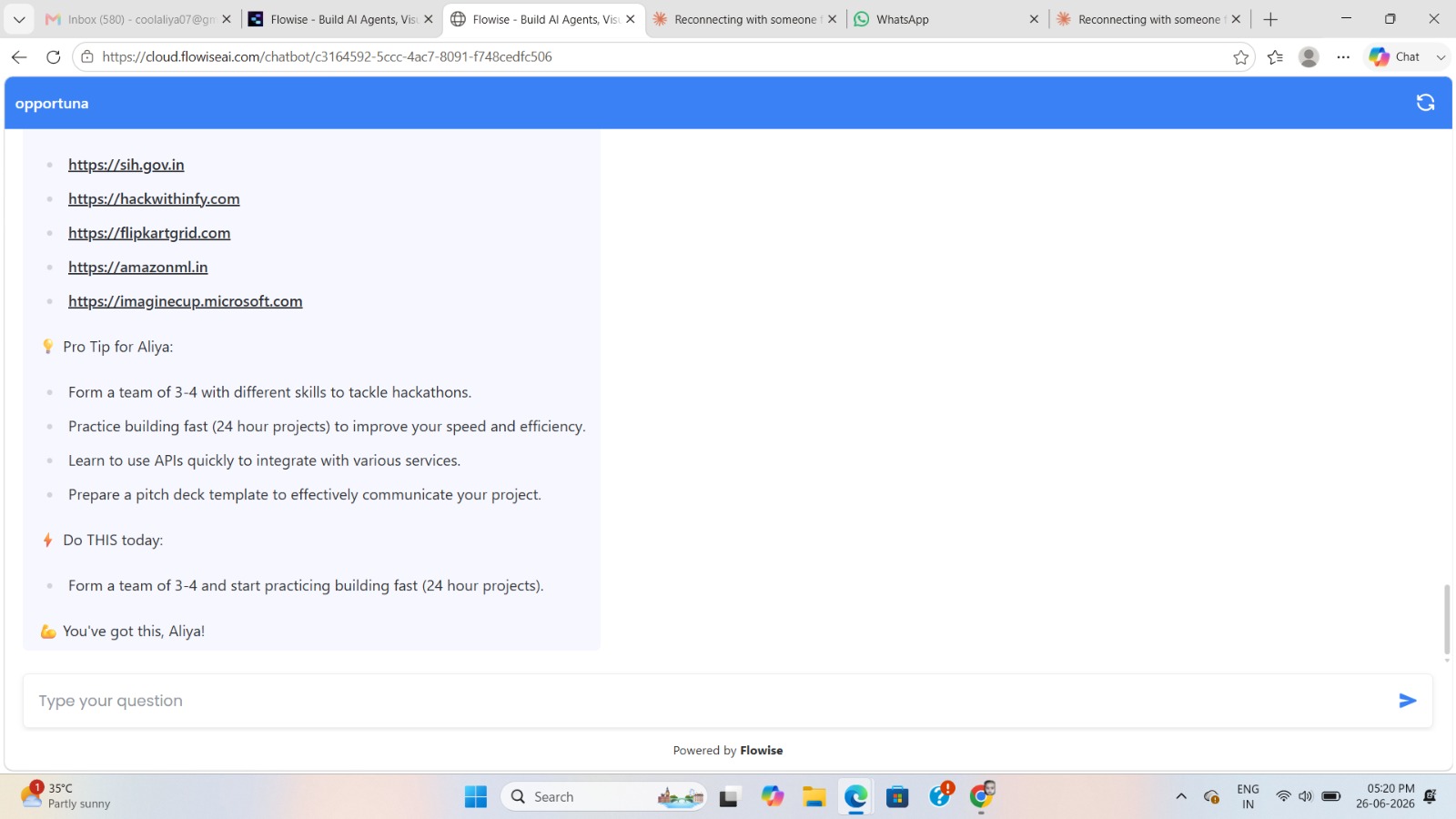
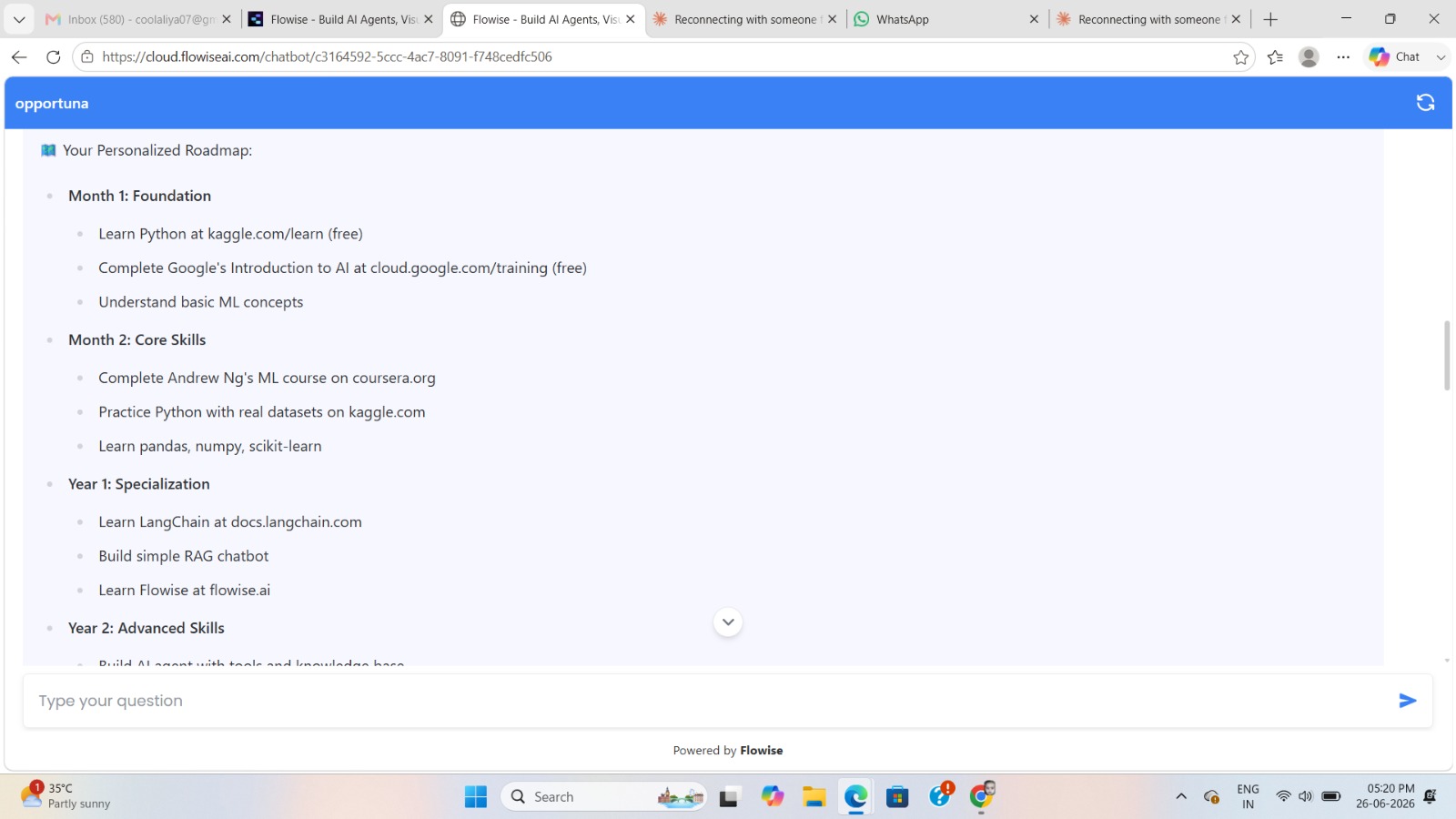
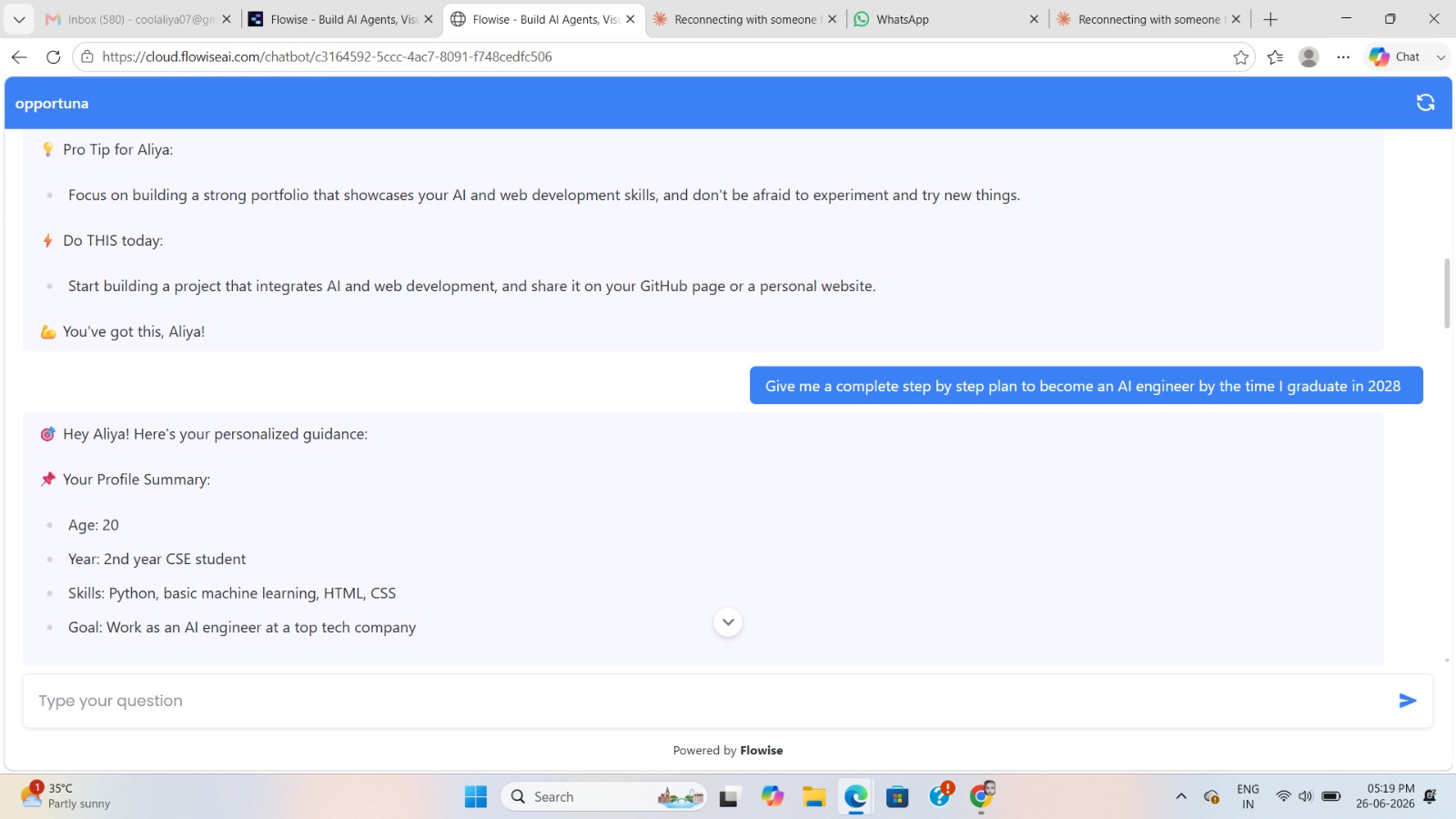
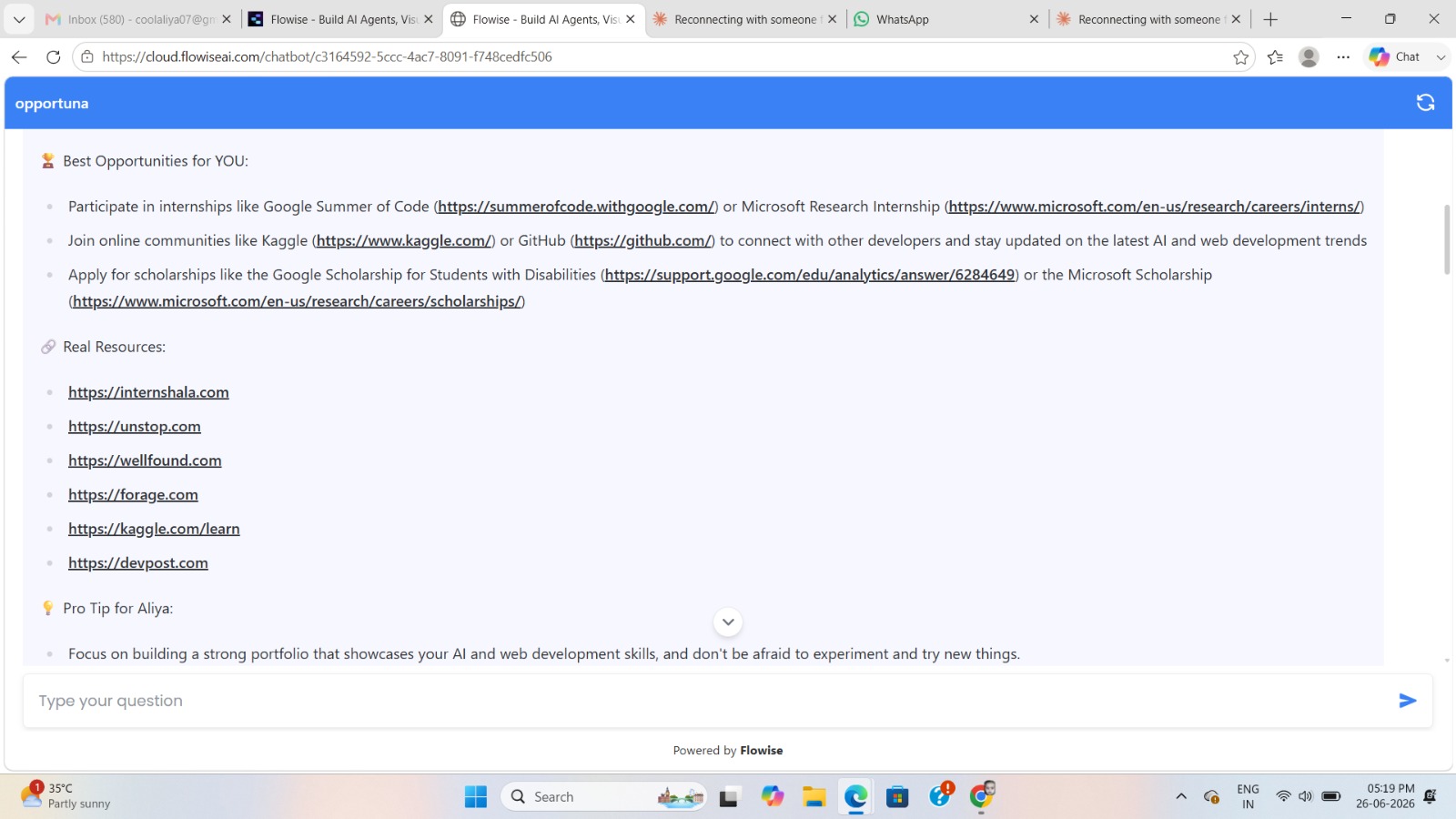
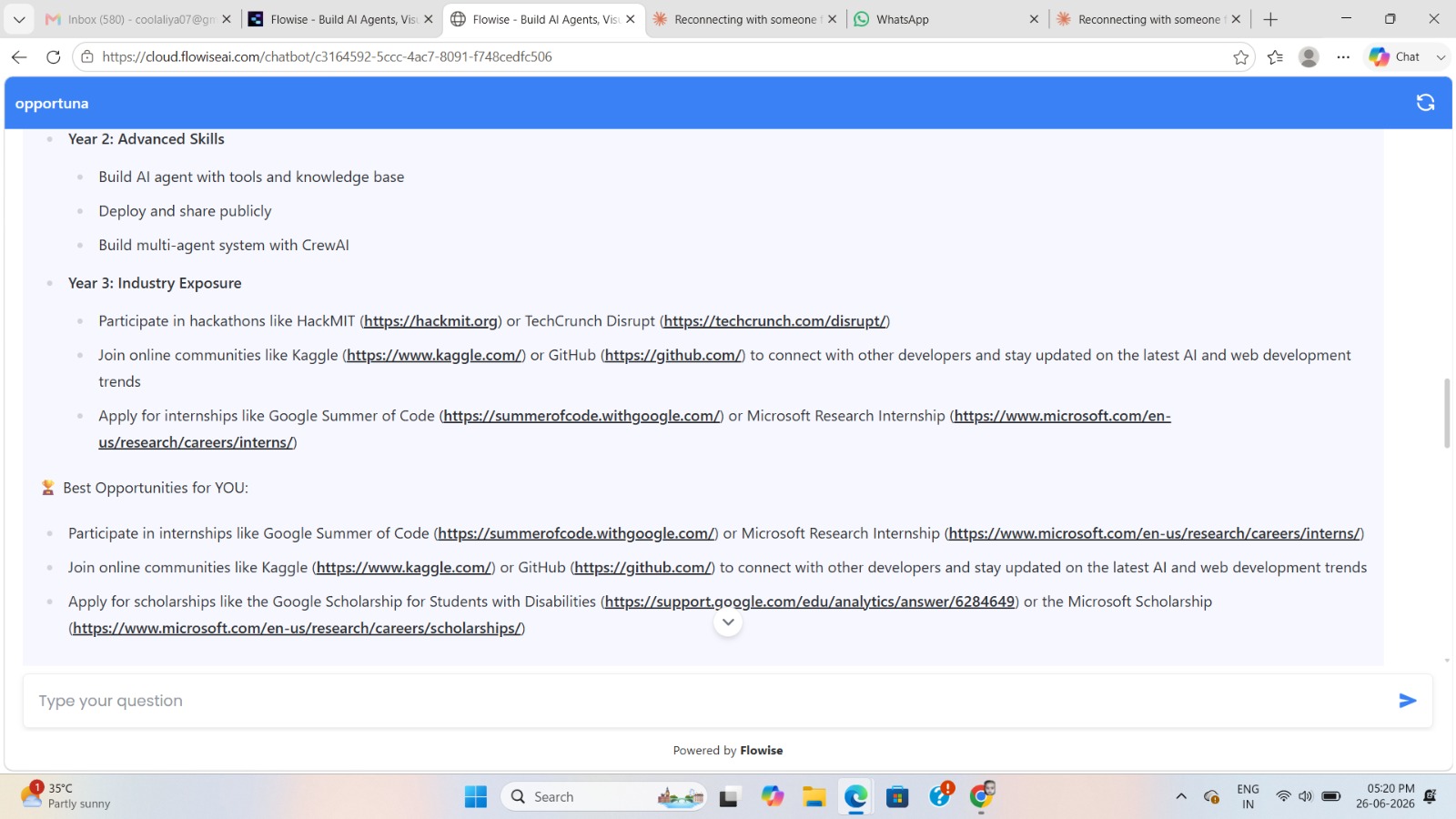
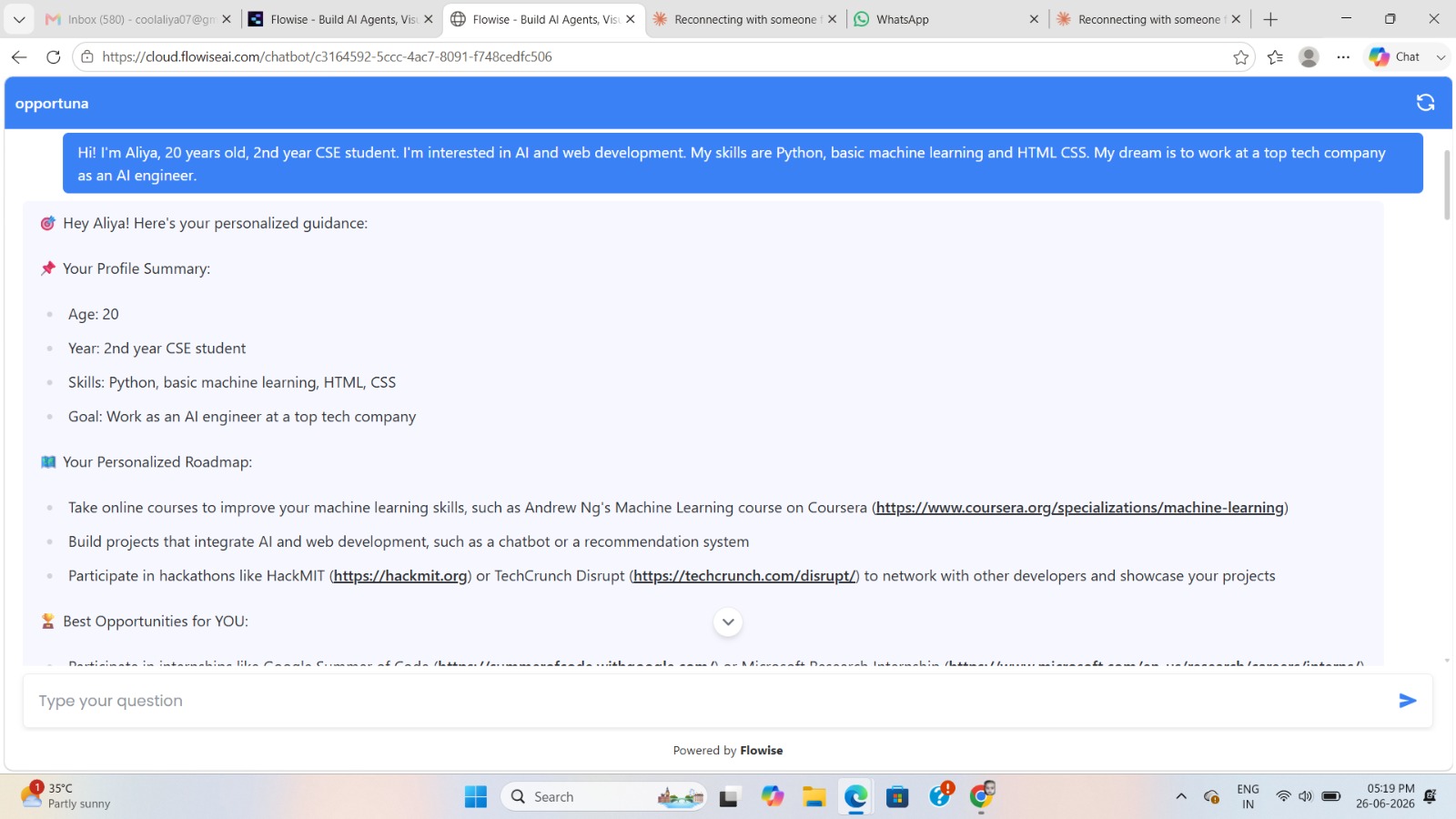
Opportuna is a career guidance agent built for students between 16 and 26. You just talk to it like you would a mentor. It helps you figure out what opportunities match your skills, what you should be learning next, and how to actually get started on a career path — without the overwhelming noise.
How we built it
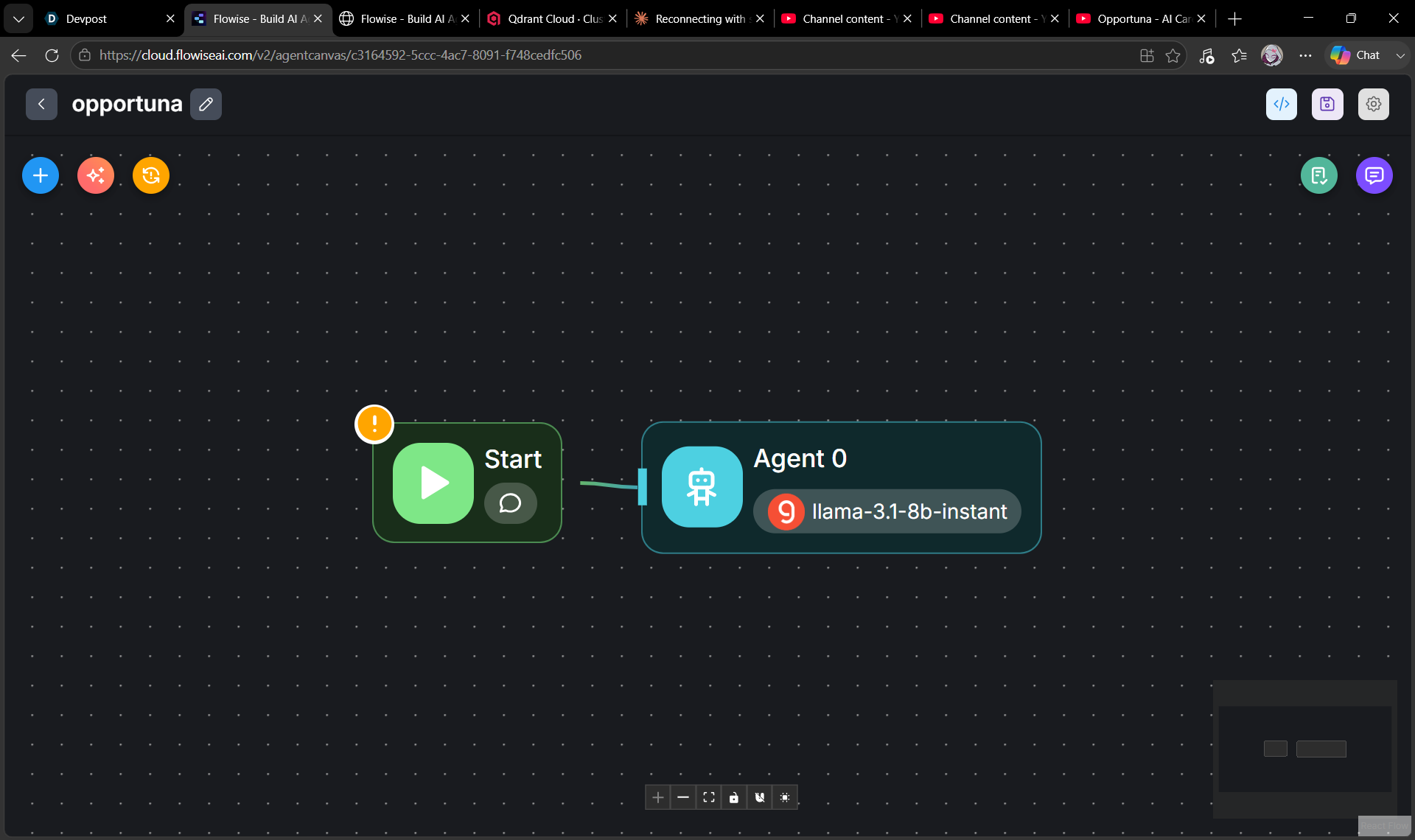
I built the entire agent pipeline on Flowise, which let me focus on the actual agent logic rather than infrastructure. For the AI, I used Llama 3.1 8B running on Groq for fast responses. The knowledge base is stored in Qdrant Cloud as a vector database using HuggingFace embeddings, so the agent can actually retrieve relevant career information rather than just making things up. The architecture is RAG — retrieval augmented generation — which means the agent searches the vector database first, then uses that context to give grounded, accurate answers.
Challenges we ran into
The biggest challenge was Flowise Cloud's free tier — it doesn't support parallel agent execution, so I had to simplify from a multi-agent pipeline to a single agent with a well-structured prompt and knowledge base. Getting the chunking and embedding right for the vector database also took a lot of trial and error before results were actually relevant.
Accomplishments that we're proud of
Getting the RAG pipeline to actually work end to end was a big deal for me. The moment I asked the agent a career question and it pulled back relevant, specific information from the vector database instead of hallucinating — that felt really good. I also managed to deploy a fully working AI agent without writing a single line of backend code, which I didn't think was possible before this.
What we learned
I learned how vector databases work — how text gets converted into embeddings, stored as high-dimensional vectors, and retrieved through cosine similarity search. I also learned how RAG architecture connects a knowledge base to an LLM, and why that matters for accuracy. Prompt engineering was another big one — small changes in how I framed the system prompt made a huge difference in response quality.
What's next for Opportuna
I want to expand the knowledge base with more curated opportunity data across different fields. Building a proper web interface is on the list too, so it feels less like a chatbot and more like a career platform. Eventually I want to move to a multi-agent setup where different agents specialize in different areas — one for tech careers, one for creative fields, one for scholarships — and an orchestrator routes the user to the right one.
Built With
- flowise
- groq
- hugging-face-embedding
- llama-3.1-8b
- qdrant
- rag-architecture


Log in or sign up for Devpost to join the conversation.