-
-
Logo, name, and tagline
-
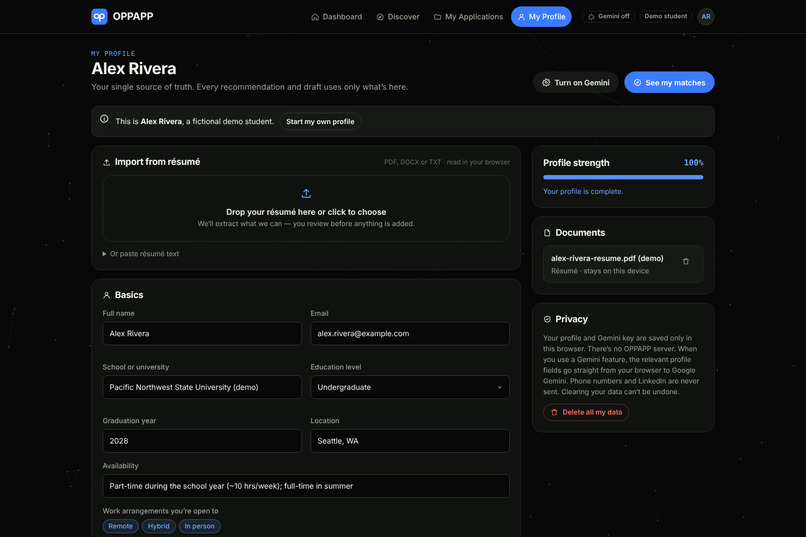
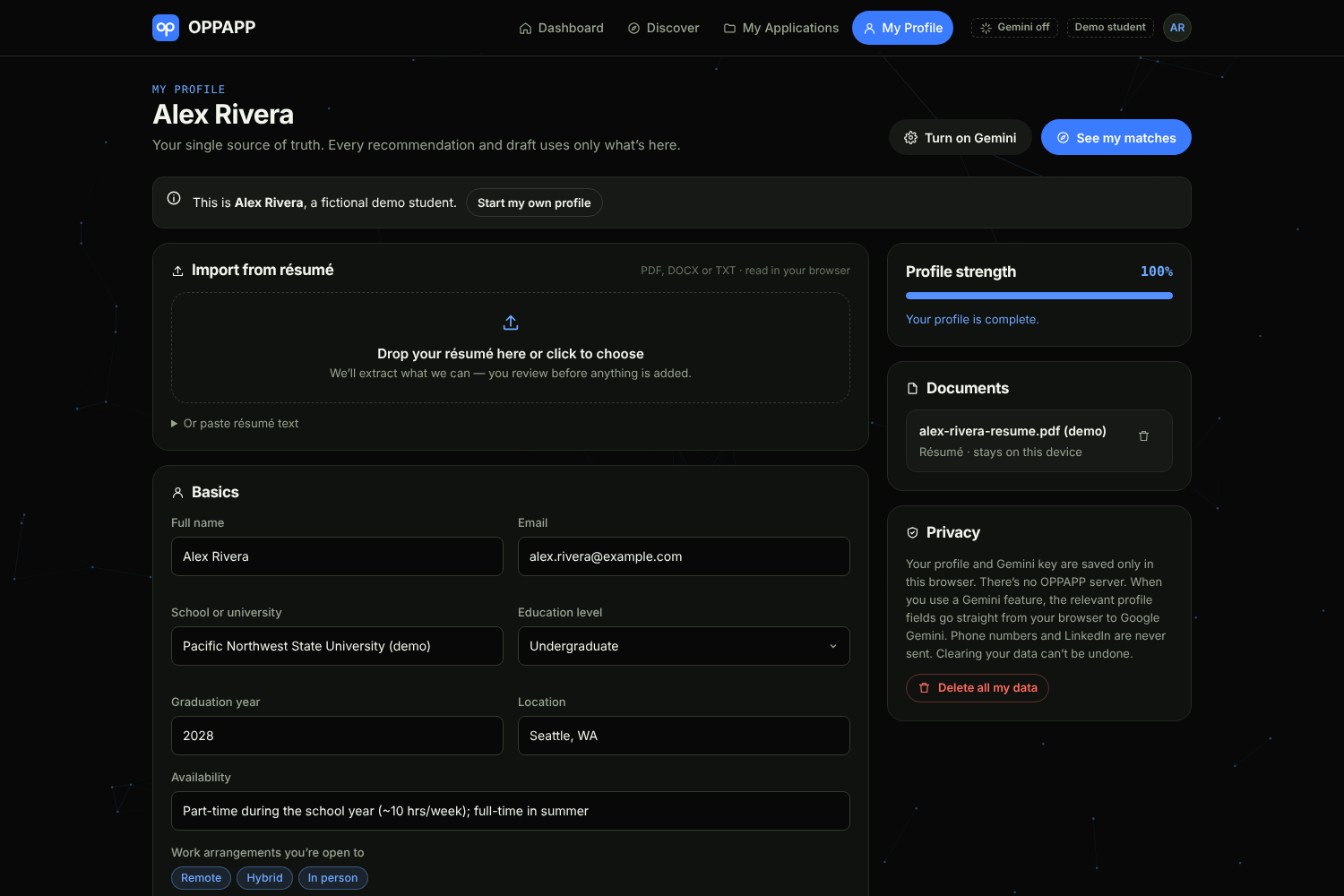
Demo student profile, 100% complete
-
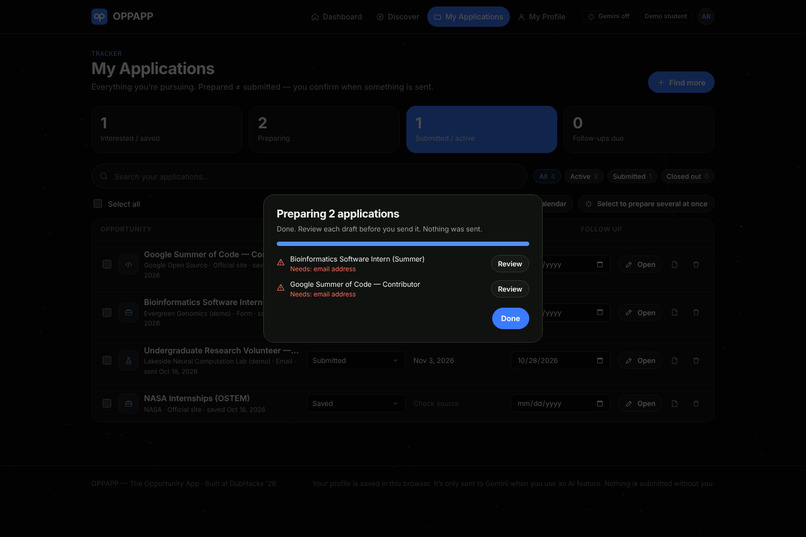
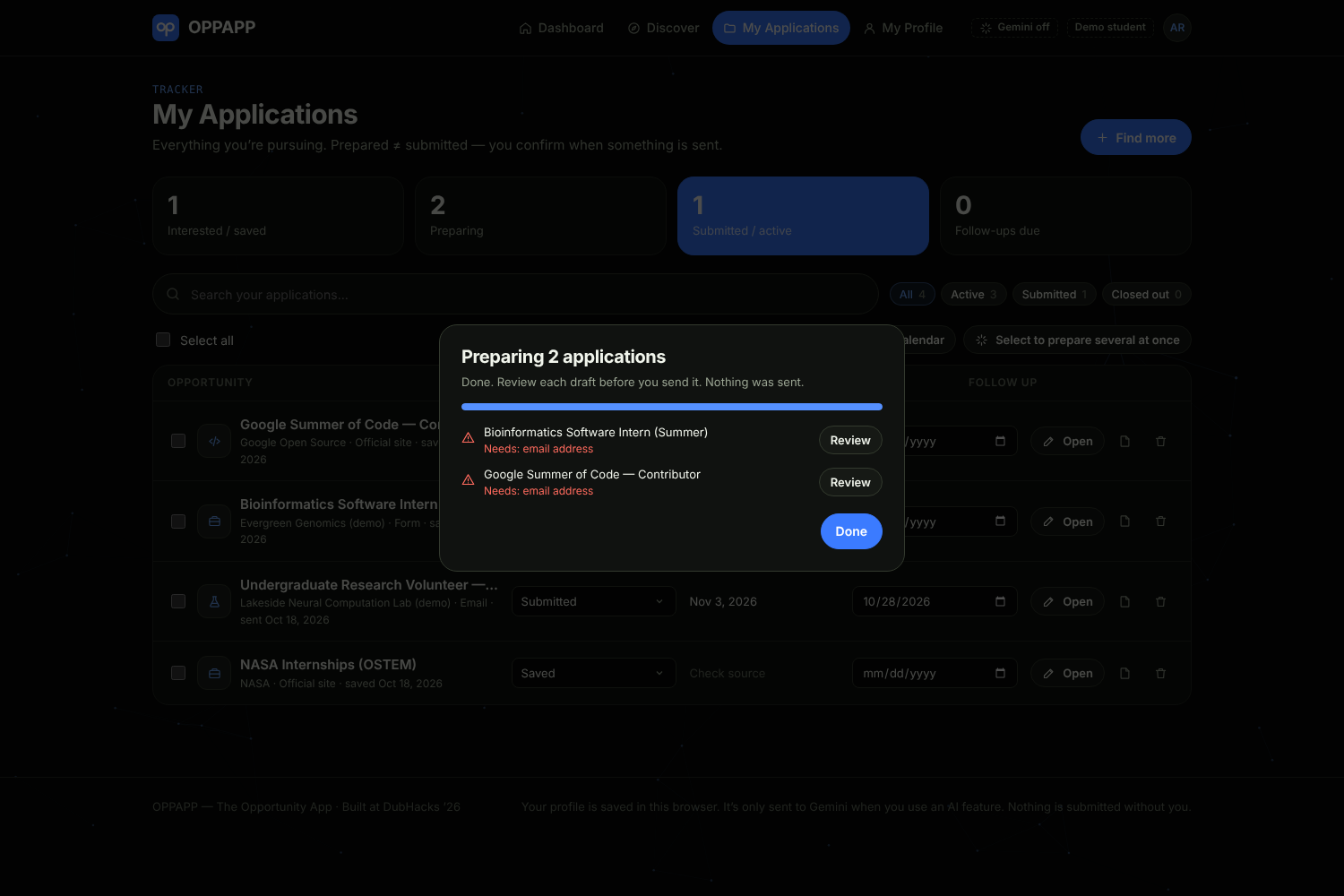
Preparing 2 applications at once
-
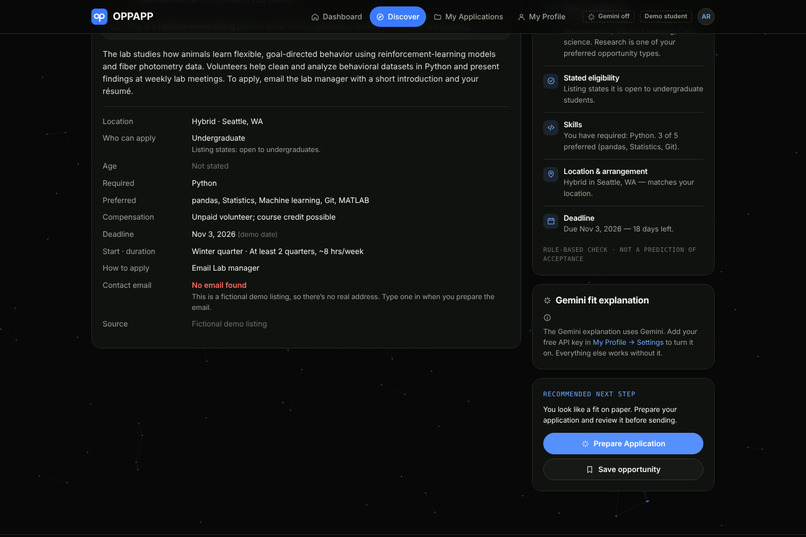
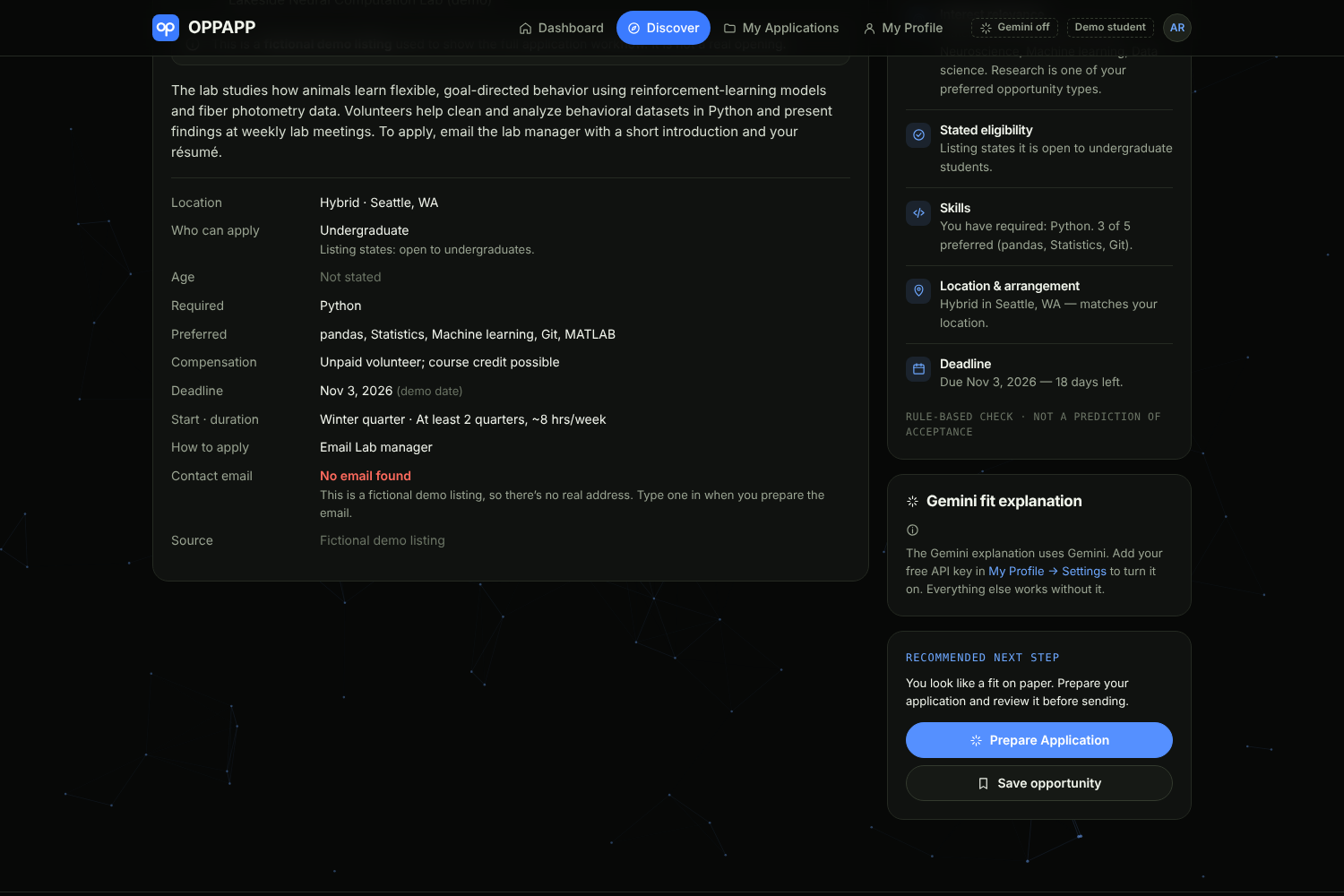
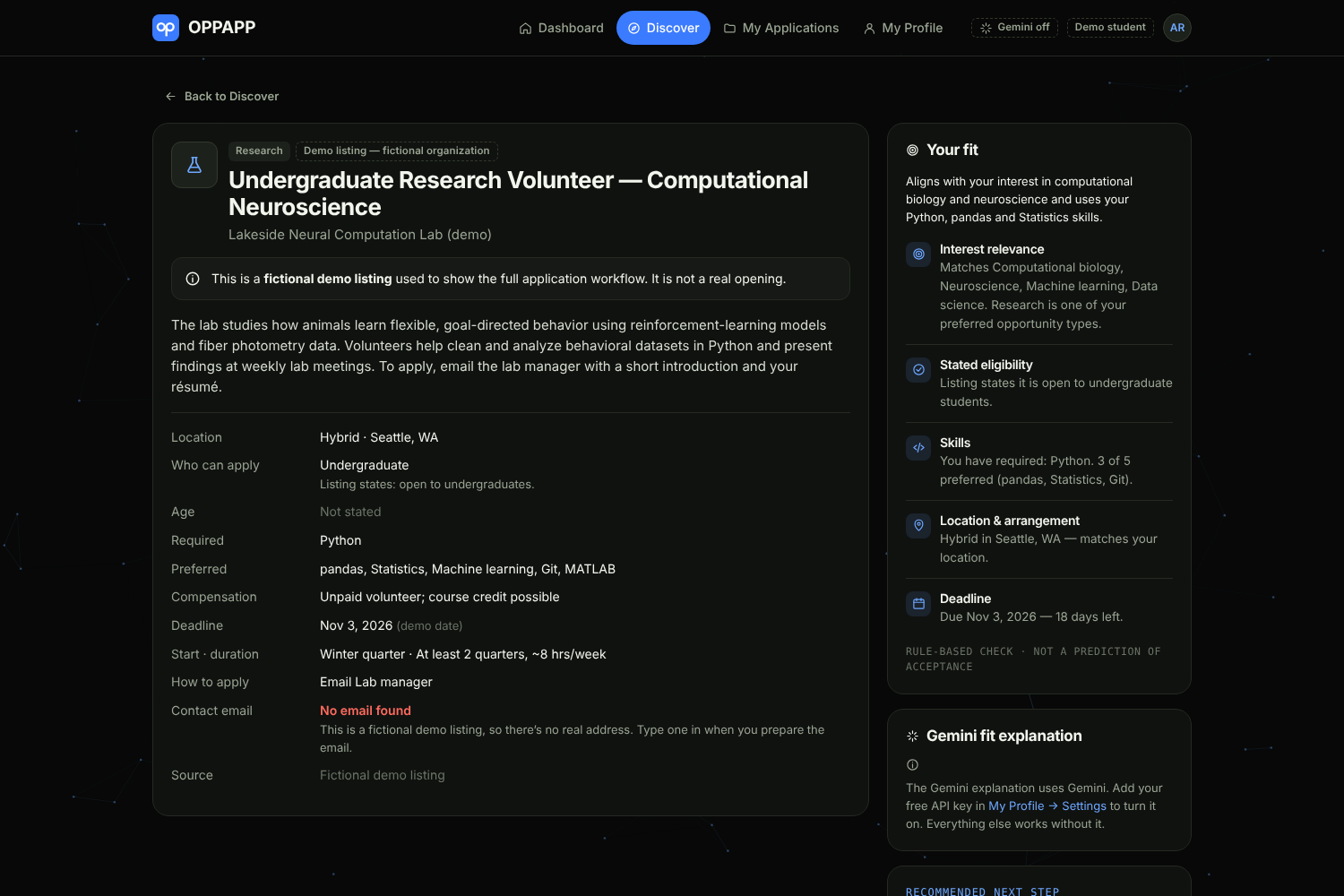
Listing details, with “No email found” in red
-
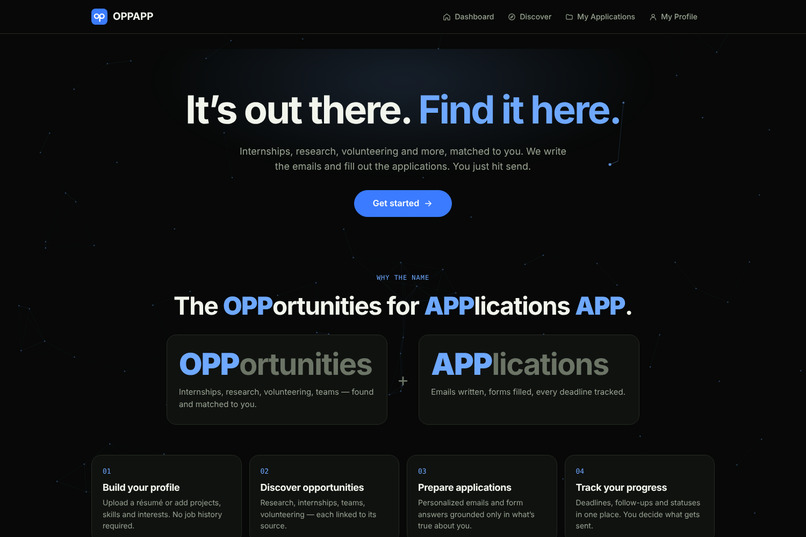
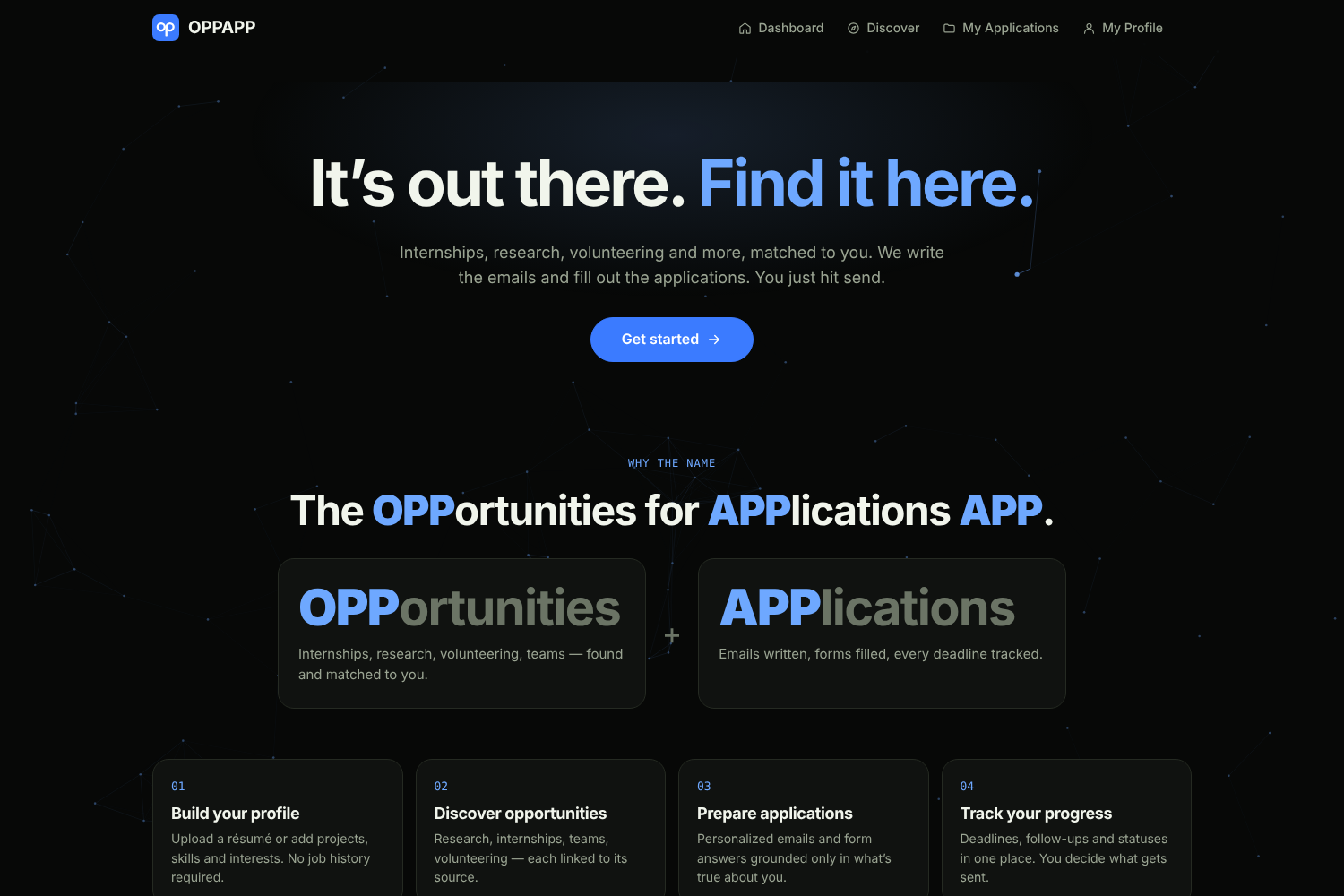
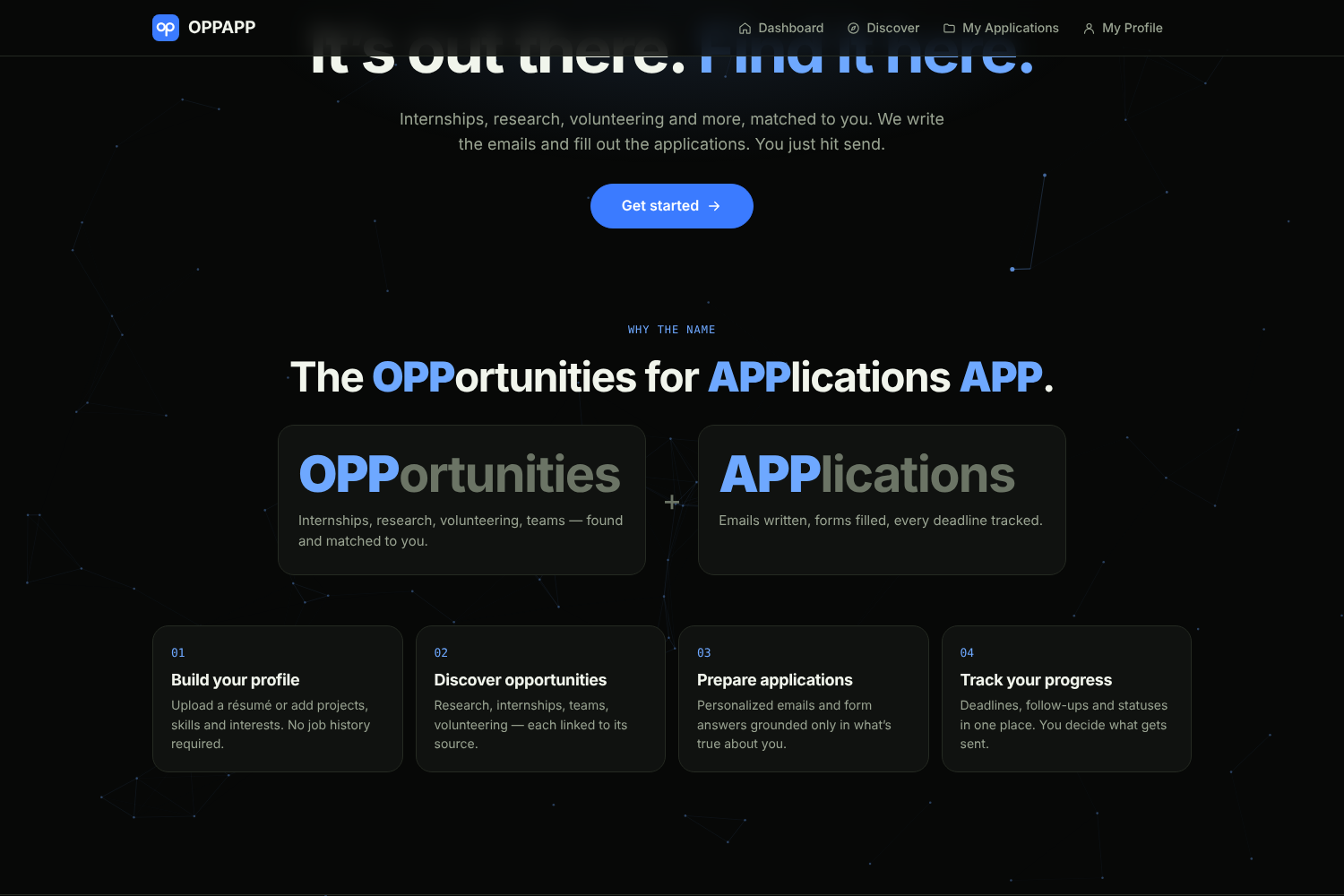
Home page headline and Get started button
-
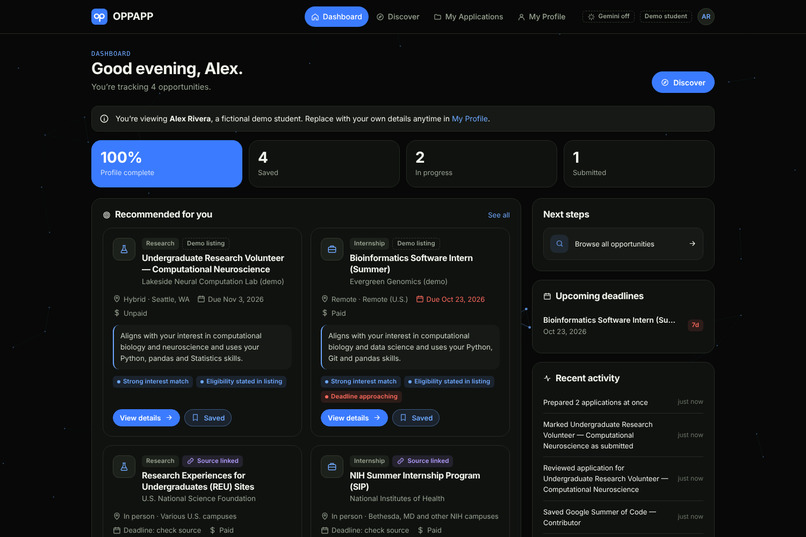
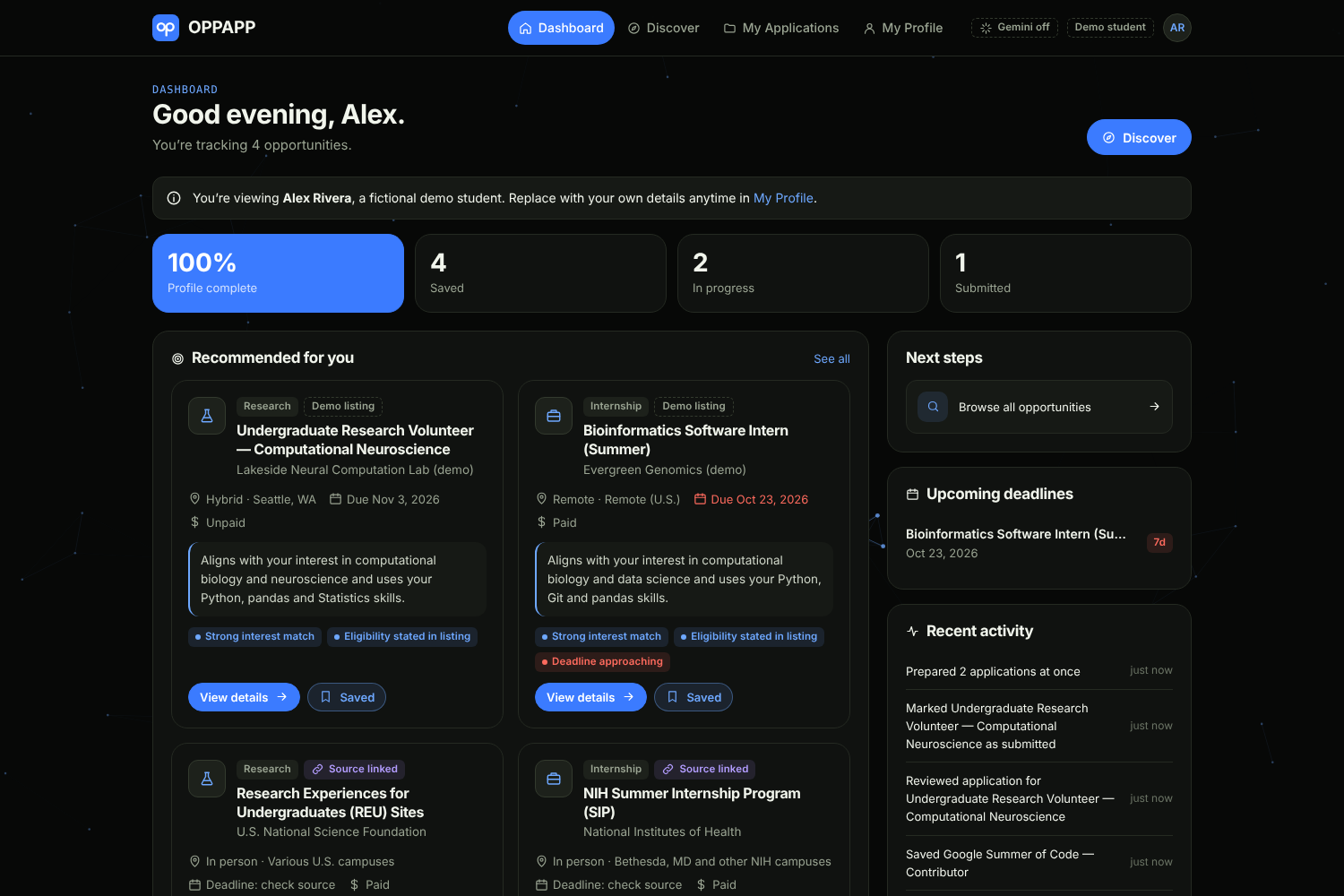
Dashboard overview
-
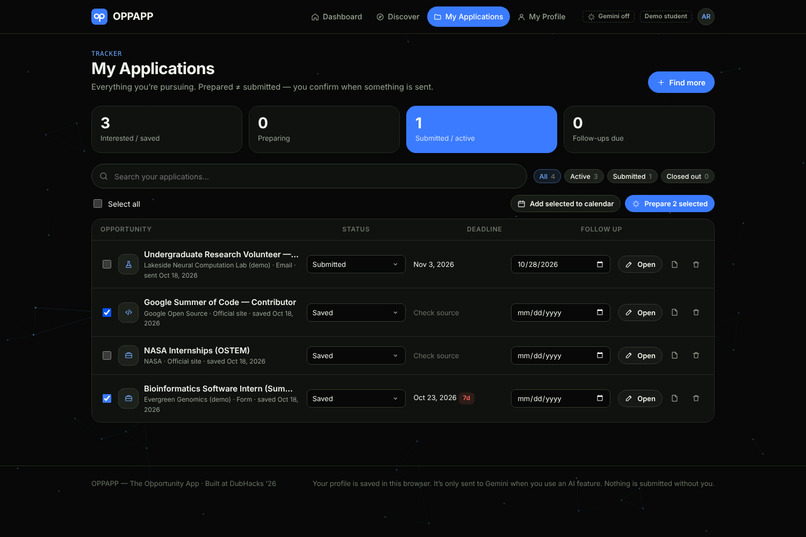
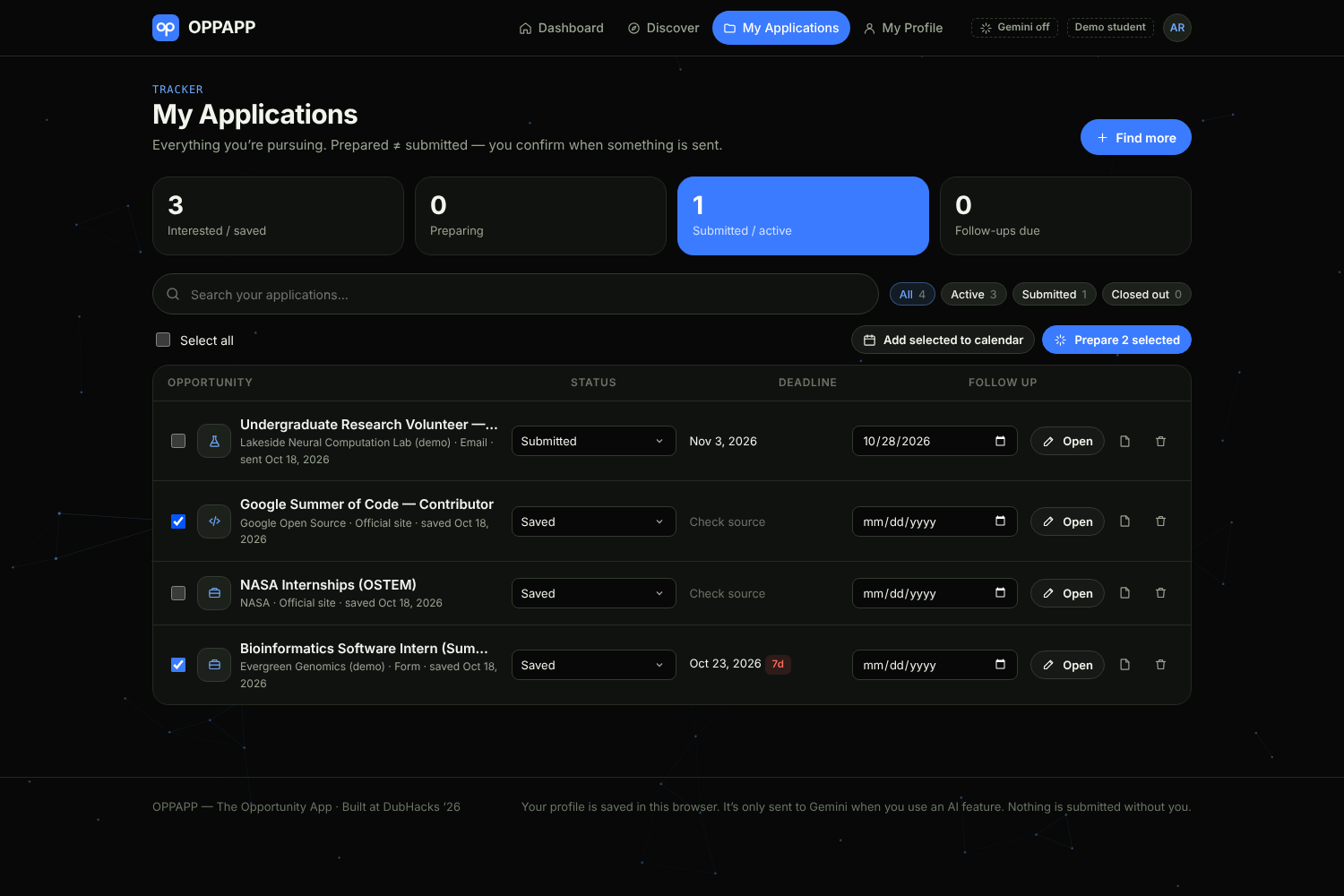
My Applications with two selected
-
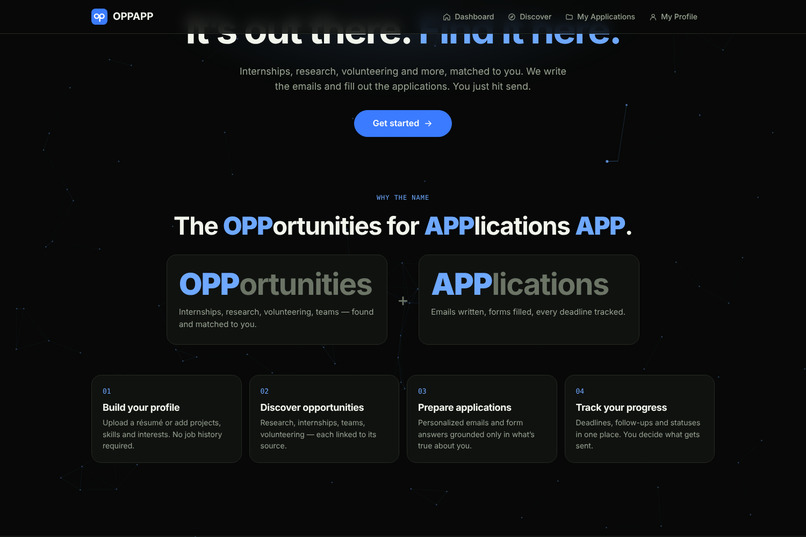
“The OPPortunities for APPlications APP” section
-
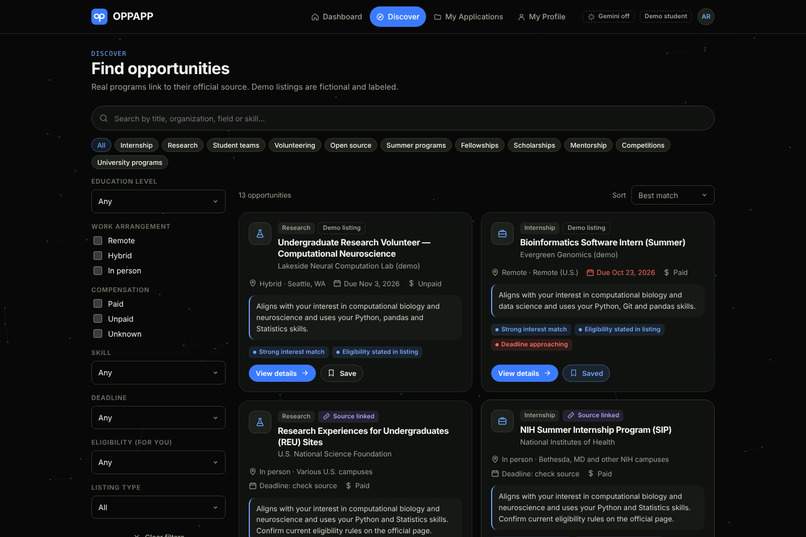
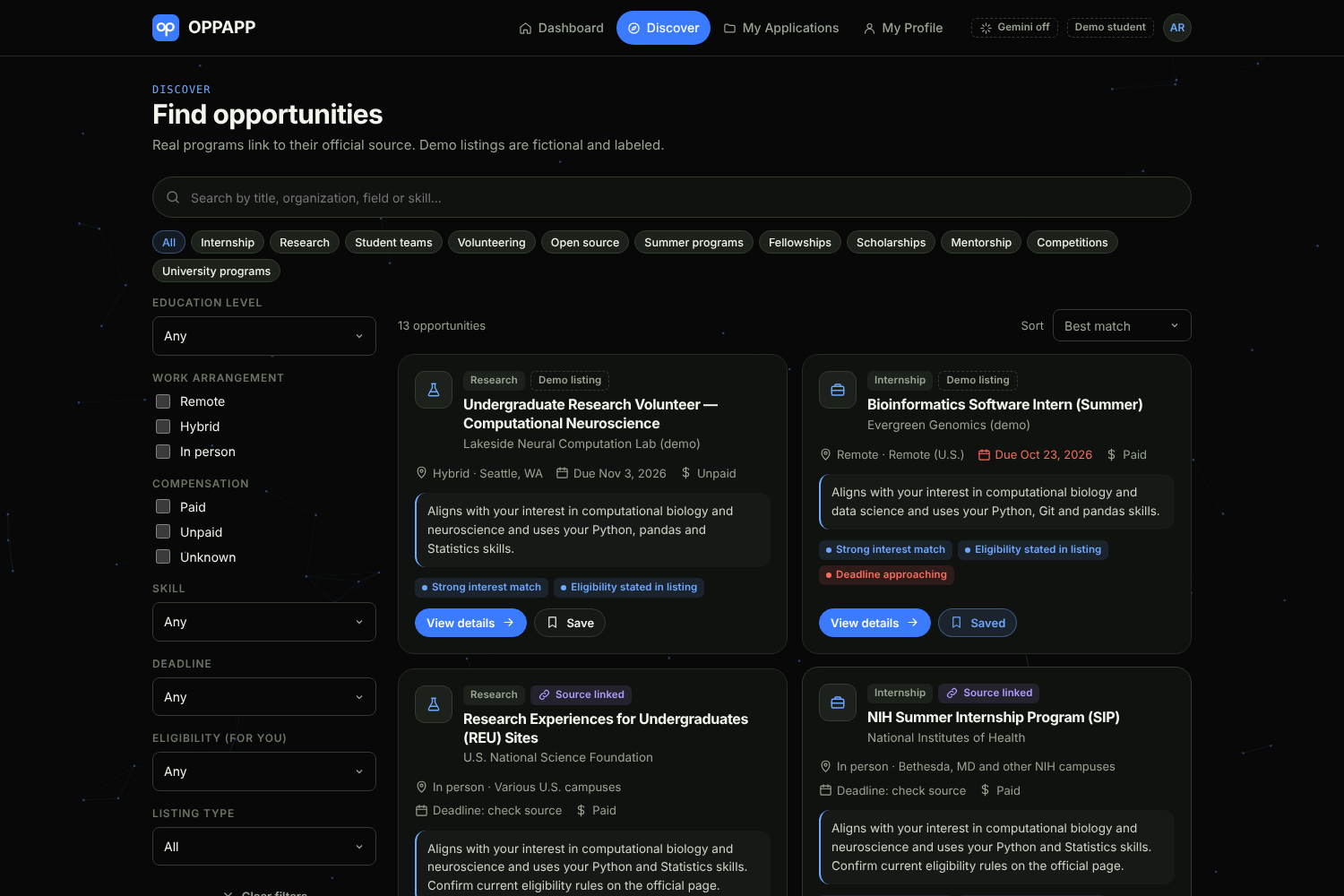
Opportunity search and filters
-
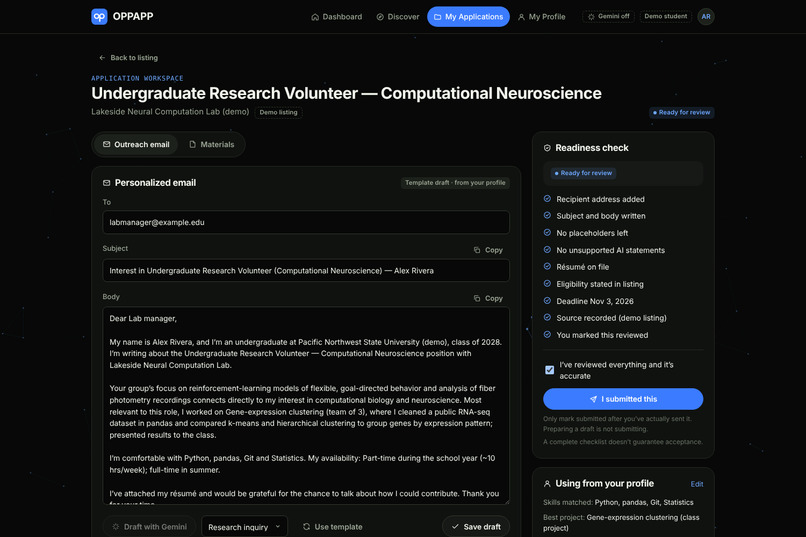
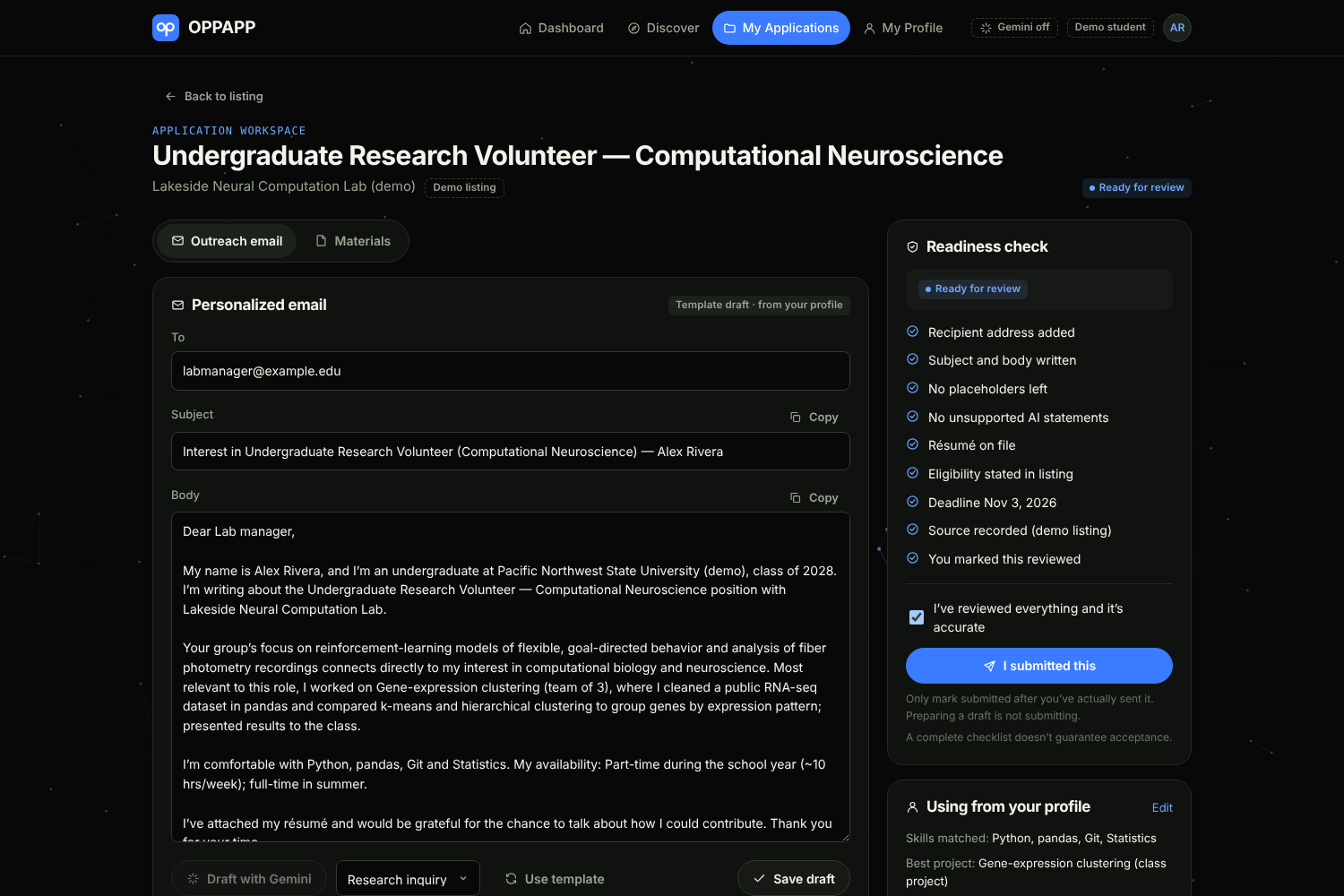
Drafted email and readiness check
-
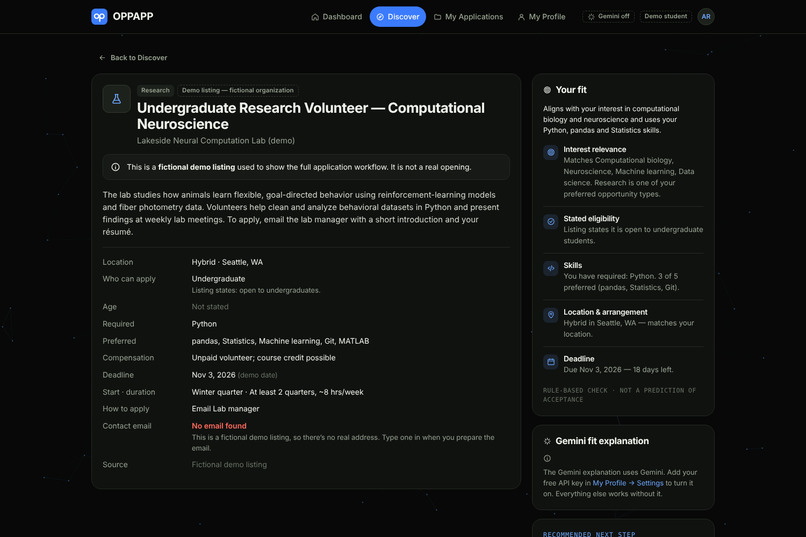
Fit check for an opportunity
Inspiration
Getting your first research position, internship, or volunteer role shouldn't depend on who you know. Students often spend hours searching university lab websites, job boards, and scattered listings, trying to figure out which opportunities they're eligible for, writing outreach emails from scratch or AIs like ChatGPT, filling out countless application forms, and tracking deadlines.
I wanted to change that.
What if students could simply tell OPPAPP about themselves once and have just one platform help them discover relevant opportunities, understand their fit, prepare applications, draft emails, and keep track of everything?
That's how OPPAPP — the OPPortunities for APPlications App — was built.
What It Does
OPPAPP brings the entire student opportunity journey into one place.
Build Your Profile: Upload a résumé in PDF, DOCX, or TXT format, or manually enter your education, skills, projects, and interests. Review extracted information before saving it. You don't need professional experience to get started—class projects, school courses, anything helps.
Discover Opportunities: Explore research positions, internships, open-source projects, student teams, competitions, and volunteering opportunities. Filter opportunities by relevant criteria and follow links to official program pages. Fictional demo listings are clearly labeled.
Understand Your Fit: See how an opportunity aligns with your interests, skills, eligibility, and preferences. Instead of relying on an unexplained match percentage, OPPAPP evaluates individual factors and explains them in plain English, including what's still unknown.
Prepare Applications: Generate personalized outreach emails and application drafts based on information in your profile. OPPAPP is designed to avoid inventing qualifications or guessing email addresses.
Track Your Progress: Keep saved opportunities, application statuses, deadlines, notes, and follow-ups organized in one place. An application is only marked as submitted when you confirm that you've sent it.
My goal: help students spend less time managing the process and more time pursuing opportunities.
How I Built It
OPPAPP is a single-page web application I built using HTML, CSS, and JavaScript, hosted on GitHub Pages.
Frontend: I used HTML, CSS, and JavaScript to build the interface and application workflows.
Résumé Parsing: I integrated pdf.js and Mammoth.js to handle résumé extraction directly in the browser for supported PDF and DOCX files.
Opportunity Matching: I built a transparent, rule-based matching engine that evaluates different dimensions of fit separately, helping students understand why an opportunity may be relevant.
Data Storage: I used browser
localStorageto store profile and application data, allowing the core experience to work without an account or backend.Interactive Design: I created an animated network background using HTML Canvas that reacts to the user's cursor.
My focus was to create a complete workflow connecting profile creation, opportunity discovery, fit evaluation, application preparation, and tracking in one application.
Challenges I Ran Into
My biggest challenge was trust.
It's easy to build a tool that confidently recommends opportunities. It's much harder to ensure those recommendations are honest and useful. Students may make important academic and career decisions based on what they see, so incorrect eligibility claims, invented qualifications, or misleading application statuses can have real consequences.
Throughout development, I kept returning to one question:
What do I actually know, and what remains uncertain?
That principle shaped my approach. I designed the matching experience to distinguish between relevant skills, eligibility, and unknown requirements. I kept application drafts grounded in the student's provided information and separated preparing an application from confirming its submission.
I also wanted OPPAPP to be useful for students who haven't had formal work experience. Students shouldn't have to wait until they have an impressive résumé to start exploring research, internships, and other opportunities.
Accomplishments I'm Proud Of
I'm proud to have brought the core opportunity application journey together:
Profile → Discover → Evaluate Fit → Prepare → Track
Instead of forcing students to jump between disconnected websites, documents, email drafts, and spreadsheets, I built OPPAPP to bring these steps into one streamlined workflow.
I'm especially proud of the emphasis on transparency. Rather than pretending to know everything, OPPAPP is designed to explain its reasoning and acknowledge uncertainty.
I wanted to build something that helps students pursue opportunities even when they don't have an established network, extensive experience, or hours to spend navigating the process.
What I Learned
I learned that building a useful application isn't just about automation. It's also about knowing when not to make assumptions.
Separating opportunity relevance from eligibility and skill alignment makes recommendations easier to understand. Acknowledging unknown information helps students make informed decisions. Distinguishing application preparation from actual submission makes the tracking experience more trustworthy.
Most importantly, I learned to design around the user's complete journey rather than solving just one isolated step.
What's Next for OPPAPP?
I envision OPPAPP becoming a personalized opportunity platform that helps students discover possibilities they might otherwise miss.
My next steps include:
Verified, live opportunity sources to keep listings and deadlines up to date.
AI-assisted application drafting grounded in students' actual experience.
User accounts and synchronization so students can access their profiles and applications across devices.
University and nonprofit partnerships to make research positions, internships, volunteering, and other opportunities easier to discover.
Smarter application workflows to help students organize follow-ups, manage deadlines, and understand what to do next.
My vision is a world where discovering and pursuing opportunities is less about having the right connections and more about having the tools to take the next step.
OPPAP
Built With
- css
- github
- html
- javascript
- localstorage
- mammoth.js
- pdf.js

Log in or sign up for Devpost to join the conversation.