
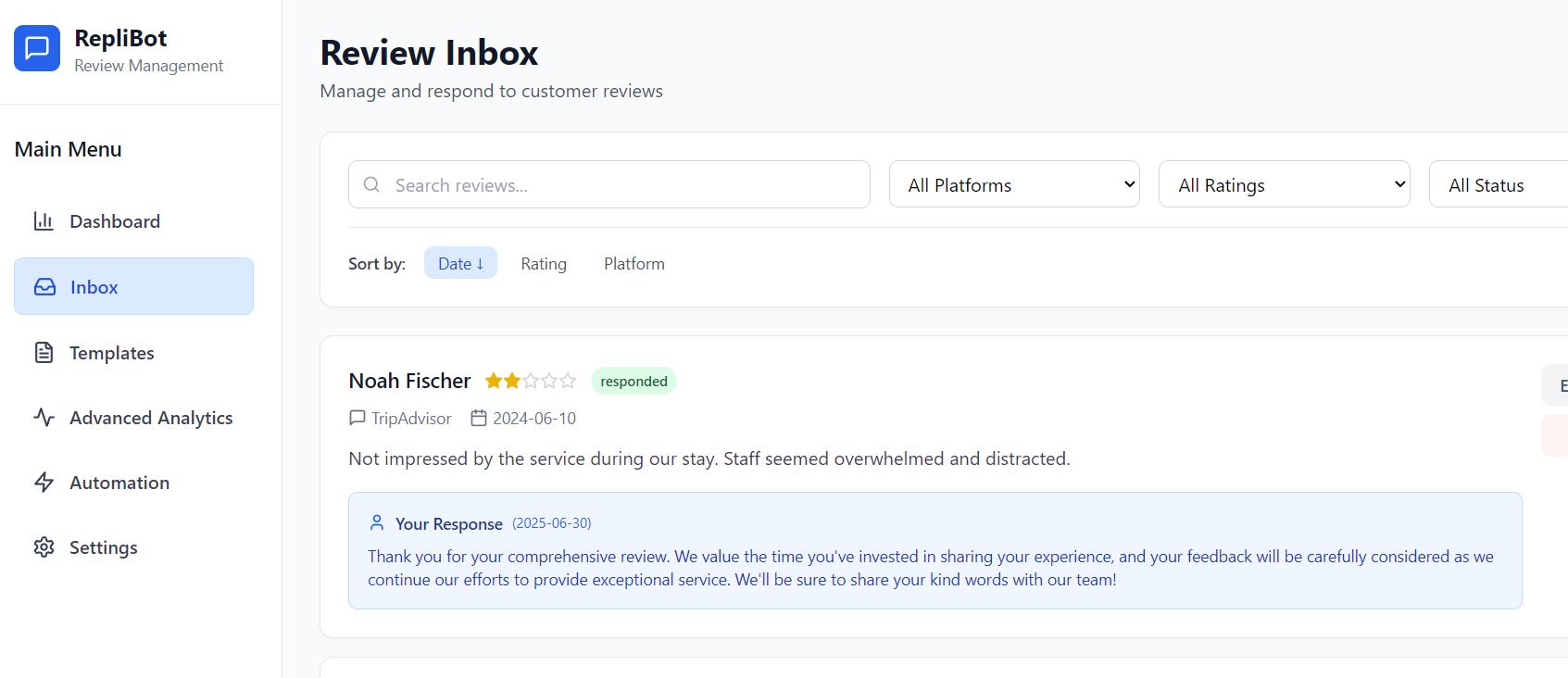
The Story of RepliBot: Revolutionizing Review Management Inspiration: The Unsung Heroes of Online Reputation In today's digital age, online reviews are the lifeblood of any business. They shape public perception, influence purchasing decisions, and directly impact revenue. However, for many businesses, managing these reviews is a daunting, time-consuming task. From small local shops to large enterprises, the sheer volume of feedback across platforms like Google, Yelp, Facebook, and Amazon can be overwhelming. Businesses struggle to respond promptly, maintain a consistent brand voice, and extract actionable insights from the vast sea of customer opinions.
This challenge was the core inspiration behind RepliBot. I envisioned a solution that would empower businesses to not just manage, but master their online reputation. A tool that could automate the mundane, personalize the generic, and provide deep, intelligent insights, freeing up valuable time for business owners and their teams to focus on what they do best: serving their customers. The goal was to transform review management from a reactive chore into a proactive strategy for growth and customer satisfaction.
How RepliBot Was Built: A Modern Stack for a Modern Problem RepliBot is built on a robust and modern technology stack designed for performance, scalability, and a seamless user experience.
Frontend Architecture: The application's user interface is crafted with React and TypeScript, providing a highly interactive and maintainable codebase. We leveraged Tailwind CSS for rapid and consistent styling, ensuring a beautiful and responsive design across all devices. Vite serves as our lightning-fast development server and build tool, enabling quick iterations and an optimized production bundle. For a clean and consistent visual language, we exclusively use icons from Lucide React, avoiding unnecessary external dependencies.
Backend and Database with Supabase: At the heart of RepliBot's data management and user authentication lies Supabase. This powerful open-source platform provides:
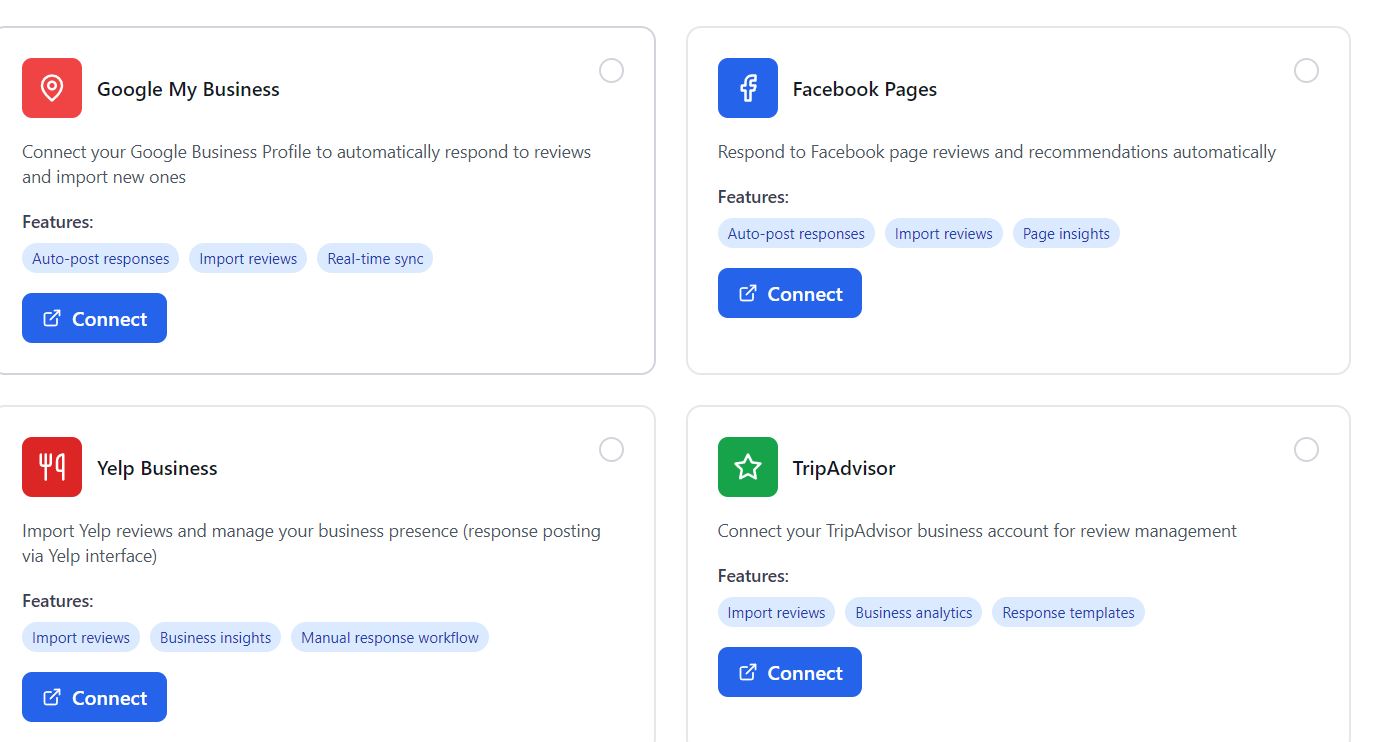
PostgreSQL Database: A robust and flexible relational database to store all application data, including user profiles, reviews, templates, platform integrations, and automation rules. The schema is carefully designed with rb_ prefixes to ensure clarity and prevent naming conflicts. Supabase Auth: Handles secure user registration, login, and session management, ensuring that user data is protected and accessible only to authorized individuals. Supabase Edge Functions: These serverless functions are crucial for handling sensitive operations like OAuth flows with external platforms (Google, Facebook, TripAdvisor) and securely interacting with third-party APIs (Yelp, Amazon). They also manage the automated posting of responses and bulk review imports. Key Feature Implementations:
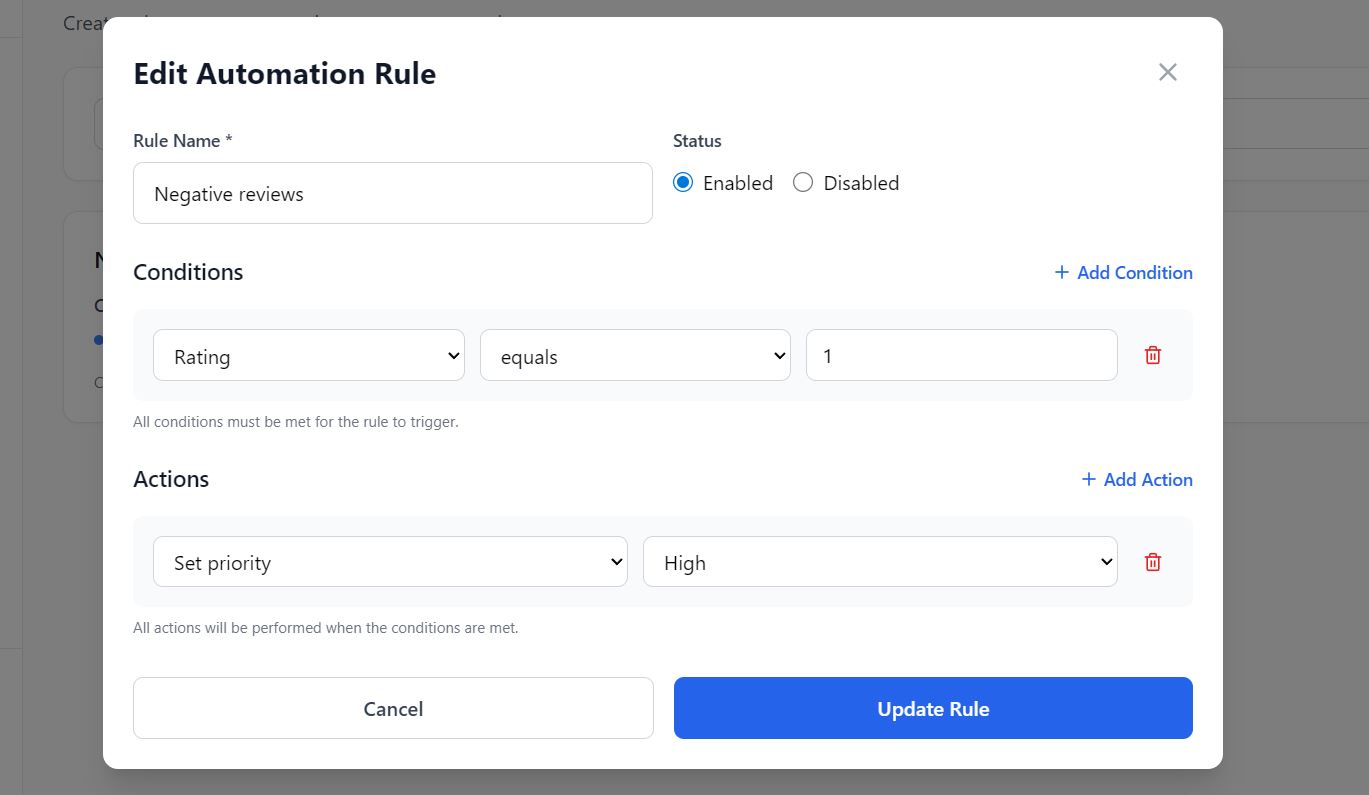
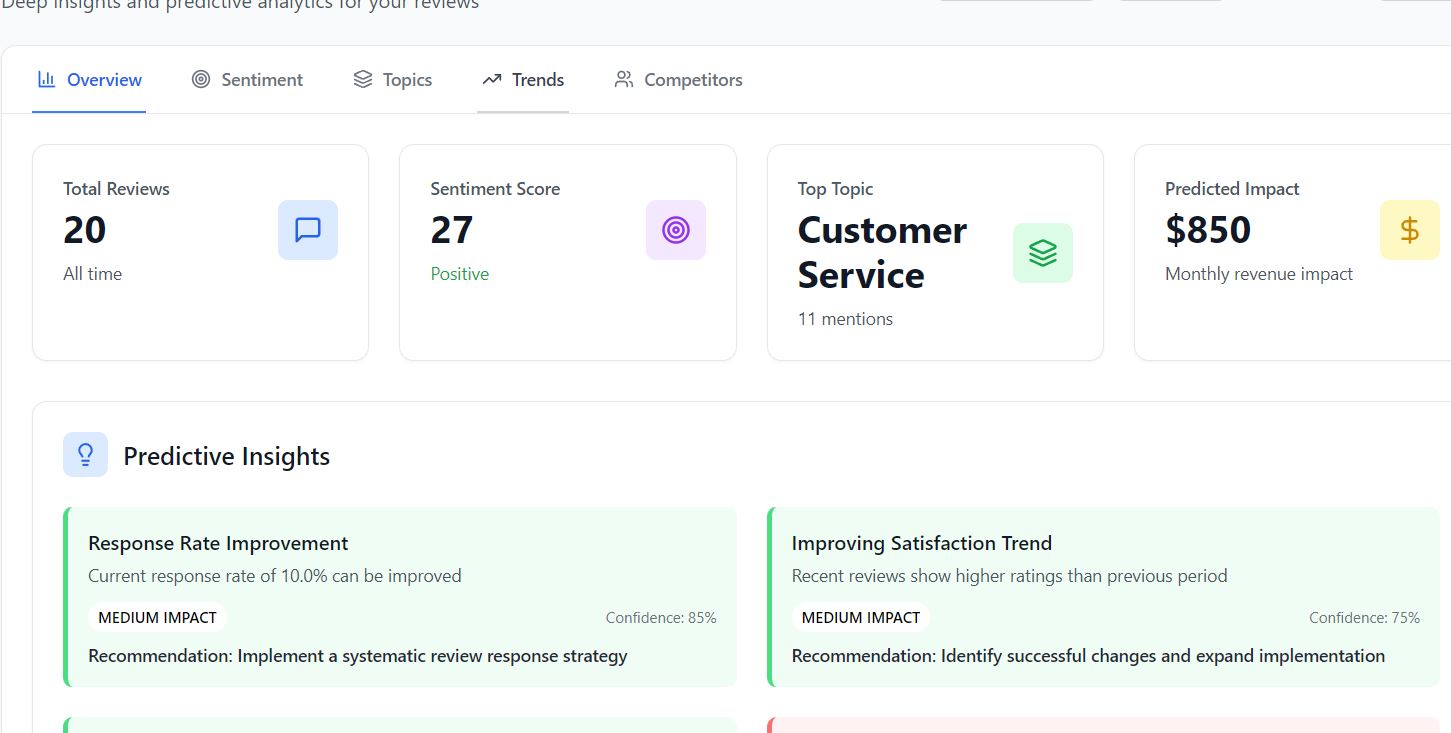
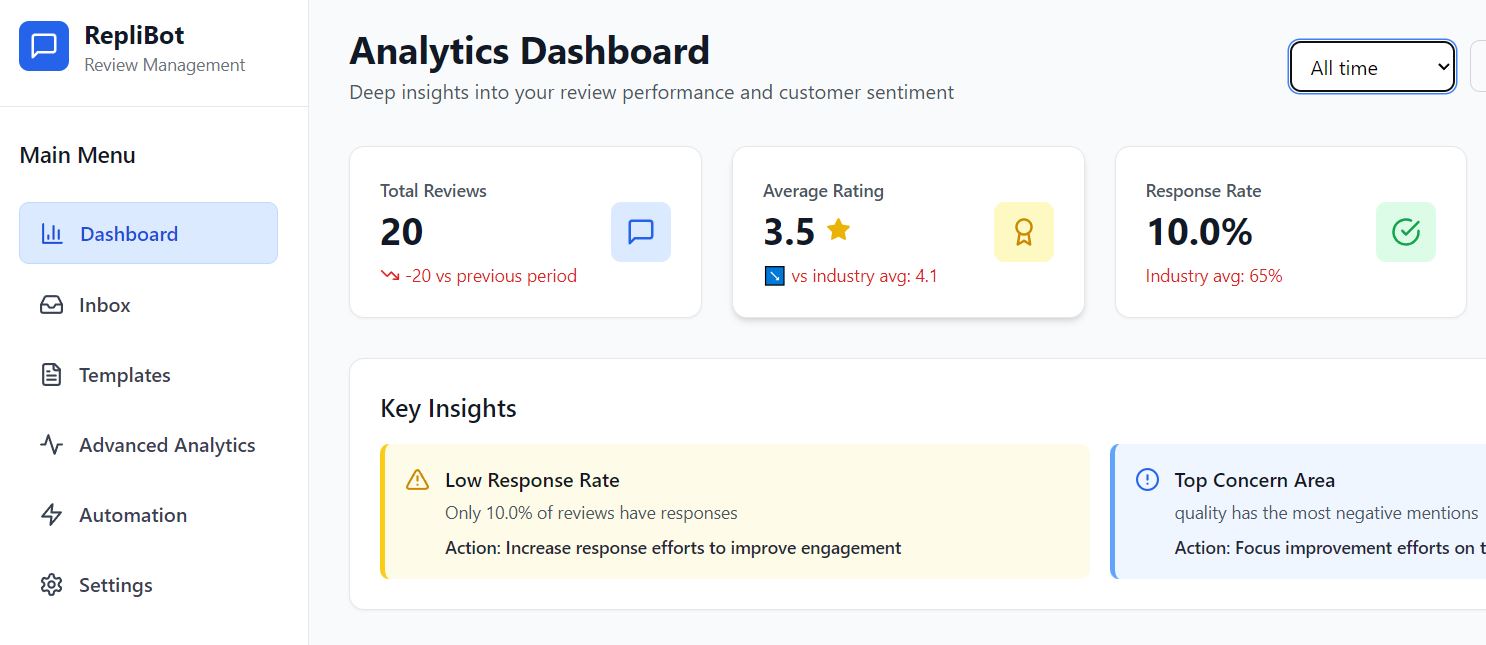
User Authentication & Profiles: Users can securely sign up and log in, with their profiles (rb_user_profiles) storing essential information and default settings for AI responses. Review Inbox & Management: Reviews (rb_customer_reviews) are centralized from various platforms, allowing users to filter, sort, and manage them efficiently. AI Response Generation: Leveraging advanced AI models, RepliBot generates personalized responses based on review content, sentiment, and user-defined configurations (tone, language, length). This is powered by a combination of client-side logic and Supabase Edge Functions for more complex AI interactions. Response Templates: Users can create and manage reusable response templates (rb_response_templates) categorized by sentiment, streamlining the response process. Platform Integrations: The rb_platform_integrations table securely stores encrypted access tokens and business identifiers for connected platforms. Supabase Edge Functions handle the intricate OAuth 2.0 flows and API calls to import reviews and, where supported, automatically post responses. Advanced Analytics: RepliBot provides deep insights into customer sentiment, key topics, predictive trends, customer journey analysis, and even revenue impact. Much of this analytical processing is performed client-side for immediate feedback and reduced backend load, with more complex computations offloaded to Supabase Edge Functions. Automation Rules: Users can define powerful automation rules (rb_automation_rules) to automatically tag, prioritize, assign, or even auto-respond to reviews based on predefined conditions (e.g., 1-star reviews with "rude" in the text are flagged as high priority). Team Management: (Simulated) The application includes a framework for managing team members and their roles, enabling collaborative review management. What Was Learned: Navigating Complexity and Embracing AI Building RepliBot was a journey filled with valuable learning experiences:
The Nuances of API Integration: Each review platform has its own API quirks, authentication methods (OAuth 1.0a, OAuth 2.0, API keys), rate limits, and data structures. Harmonizing these diverse interfaces into a single, cohesive system was a significant learning curve. AI Prompt Engineering: Crafting effective prompts for AI models to generate natural, varied, and contextually appropriate responses required extensive experimentation and refinement. Balancing creativity with consistency was key. Client-Side vs. Server-Side Processing: I learned to strategically offload heavy computational tasks (like complex analytics or external API calls) to Supabase Edge Functions to keep the client-side performant and responsive, while performing simpler analytics directly in the browser for instant feedback. Database Design for Scalability: Designing a flexible and performant PostgreSQL schema that could handle growing data volumes and complex queries was crucial. The use of RLS (Row Level Security) in Supabase was instrumental in ensuring data privacy and security. User Experience for Complex Workflows: Translating powerful backend features like automation rules and advanced analytics into an intuitive and user-friendly interface required careful thought and iterative design. Challenges Faced: Overcoming Hurdles The development of RepliBot presented several interesting challenges:
Standardizing Disparate Data: Reviews from different platforms come in wildly different formats. Normalizing this data into a single, consistent Review interface was a continuous challenge, especially when dealing with missing or inconsistent fields. Maintaining AI Response Quality: While AI is powerful, ensuring that generated responses consistently meet quality standards, avoid repetition, and truly sound human required constant fine-tuning of prompts and fallback mechanisms. Handling External API Rate Limits and Errors: Integrating with multiple external APIs meant constantly monitoring for rate limits, implementing robust error handling, and designing retry mechanisms to ensure reliable data flow. Security of Credentials: Securely storing and managing sensitive API keys and OAuth tokens was paramount. Supabase's built-in security features and the use of encrypted storage for tokens were critical in addressing this. Performance Optimization for Analytics: As the volume of reviews grew, ensuring that the analytics dashboard remained fast and responsive required careful optimization of data processing, including implementing client-side calculations and efficient data structures. Real-time Synchronization: Achieving near real-time synchronization of reviews and responses between RepliBot and external platforms, especially for auto-posting features, involved managing webhooks and background processes effectively. Despite these challenges, building RepliBot has been an incredibly rewarding experience, pushing the boundaries of what's possible in modern web application development and AI integration.
Built With
- portgresql
- react
- supabase
- tailwindcss
- typescript
- vite


Log in or sign up for Devpost to join the conversation.