Inspiration
When a web application breaks, users often have to explain the problem to customer support, and engineers must manually inspect errors and investigate the root cause. Traditional chatbots can suggest solutions, but they don't necessarily gather evidence or verify whether a fix actually worked.
This inspired me to build Operon, an AI-powered technical support agent designed to make troubleshooting more evidence-driven, controlled, and traceable.
What It Does
Operon connects a troubleshooting interface to an investigation backend through two entry points:
- Chrome Extension: Lets users initiate troubleshooting directly from their browser.
- SDK: Allows developers to integrate Operon's support experience into their web applications.
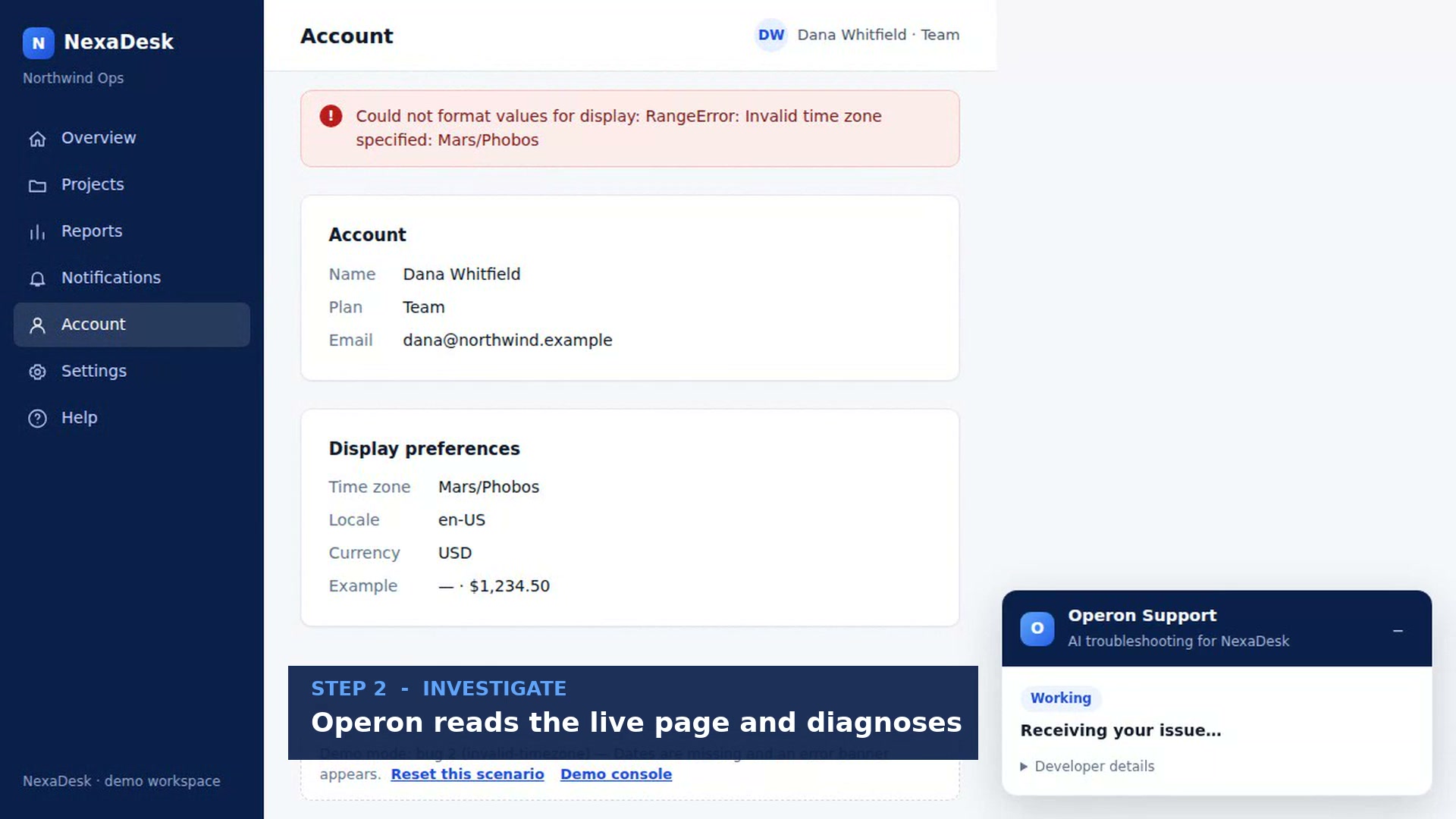
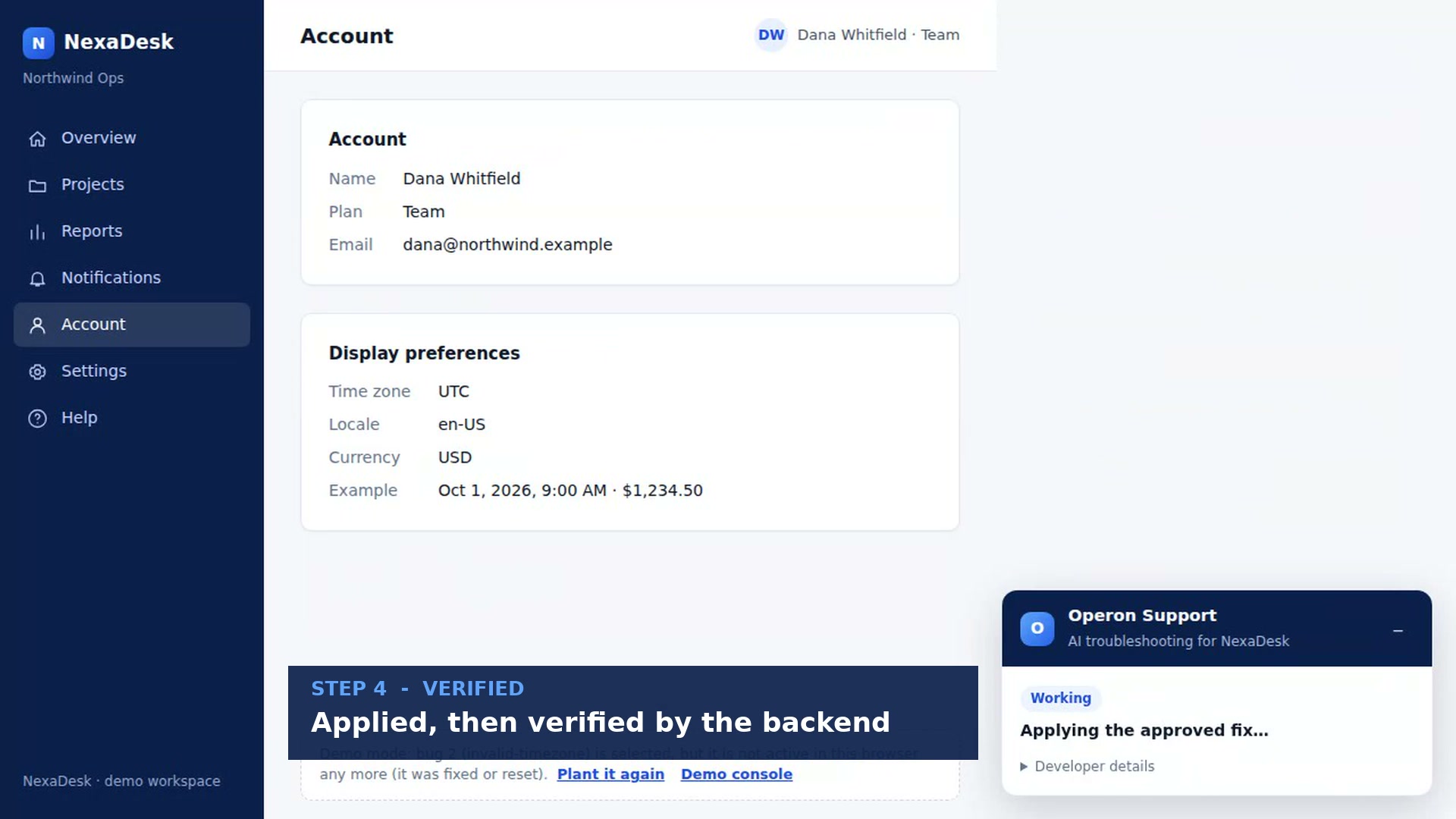
The backend coordinates investigation sessions, processes diagnostic evidence, retrieves relevant information using Retrieval-Augmented Generation (RAG), and supports AI-assisted diagnosis. It can propose controlled fixes, verify the resulting application state, and escalate unresolved issues.
I also built NexaDesk, an intentionally buggy SaaS demonstration platform with reproducible issues, to test the troubleshooting workflow end-to-end.
How I Built It
I used Python and FastAPI for the backend, Chrome Extension Manifest V3 for browser integration, and an SDK for application-level integration. The backend separates session management, evidence processing, knowledge retrieval, diagnosis, action planning, policy enforcement, and escalation into distinct responsibilities.
The project includes a knowledge-retrieval pipeline using embeddings and supports both rule-based fallback behavior and a configured live-model path. I tested the interfaces against intentional bugs to validate evidence collection, action approval and rejection, verification, and escalation.
Challenges
One major challenge was making the system reliable rather than simply generating plausible AI responses.
- Evidence quality: Diagnosis must be supported by relevant browser information rather than guesses.
- Browser safety: I fixed a wrong-tab issue that could cause an approved action to target an unrelated page.
- Concurrency: I added version-based conflict detection to help prevent simultaneous session updates from silently overwriting each other.
- Verification: A proposed fix must not be considered successful until the resulting application state is checked.
- Groundedness: I identified the need for stronger validation to ensure generated troubleshooting instructions preserve required Knowledge Base steps.
What I Learned
Building Operon taught me that an AI agent requires more than an LLM and a prompt. It needs structured workflows, evidence handling, retrieval, validation, action controls, failure recovery, and end-to-end testing.
The project has undergone extensive automated and browser-based testing across the SDK, Chrome Extension, backend, and demonstration platform.
What's Next
My next priorities are stronger step-by-step knowledge grounding, independent tracking of multiple issues, durable background processing for long-running investigations, and public deployment.
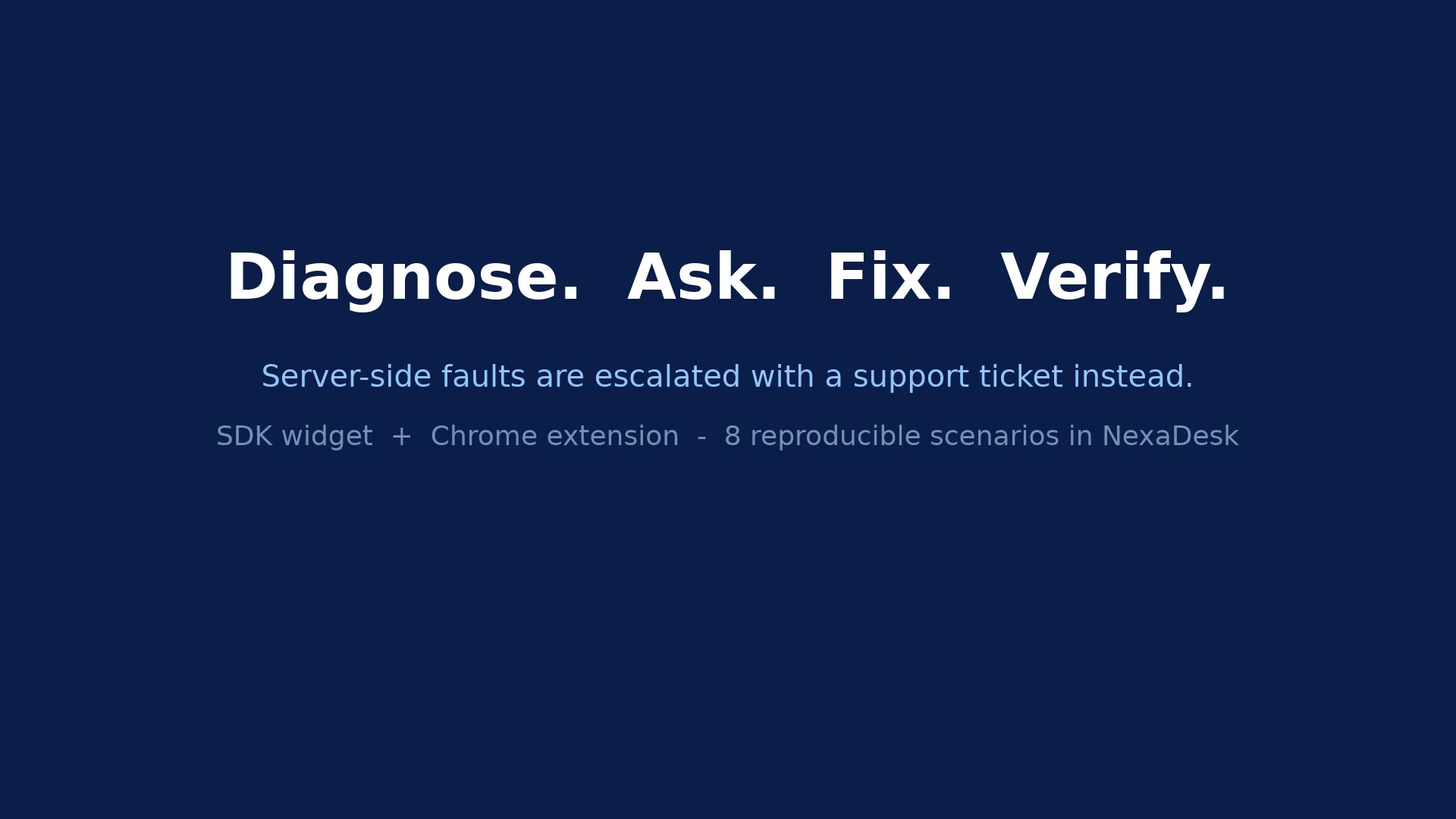
Operon's goal is to help users move from reporting a technical problem to investigating its cause, applying a controlled fix, and verifying the outcome.
Built With
- ai-agents
- api
- browser-automation
- chrome
- embeddings
- fastapi
- generative-ai
- html
- javascript
- large-language-models
- python
- retrieval-augmented-generation-(rag)
- software-testing
- typescript

Log in or sign up for Devpost to join the conversation.