-
Scenarios where it is implemented
-
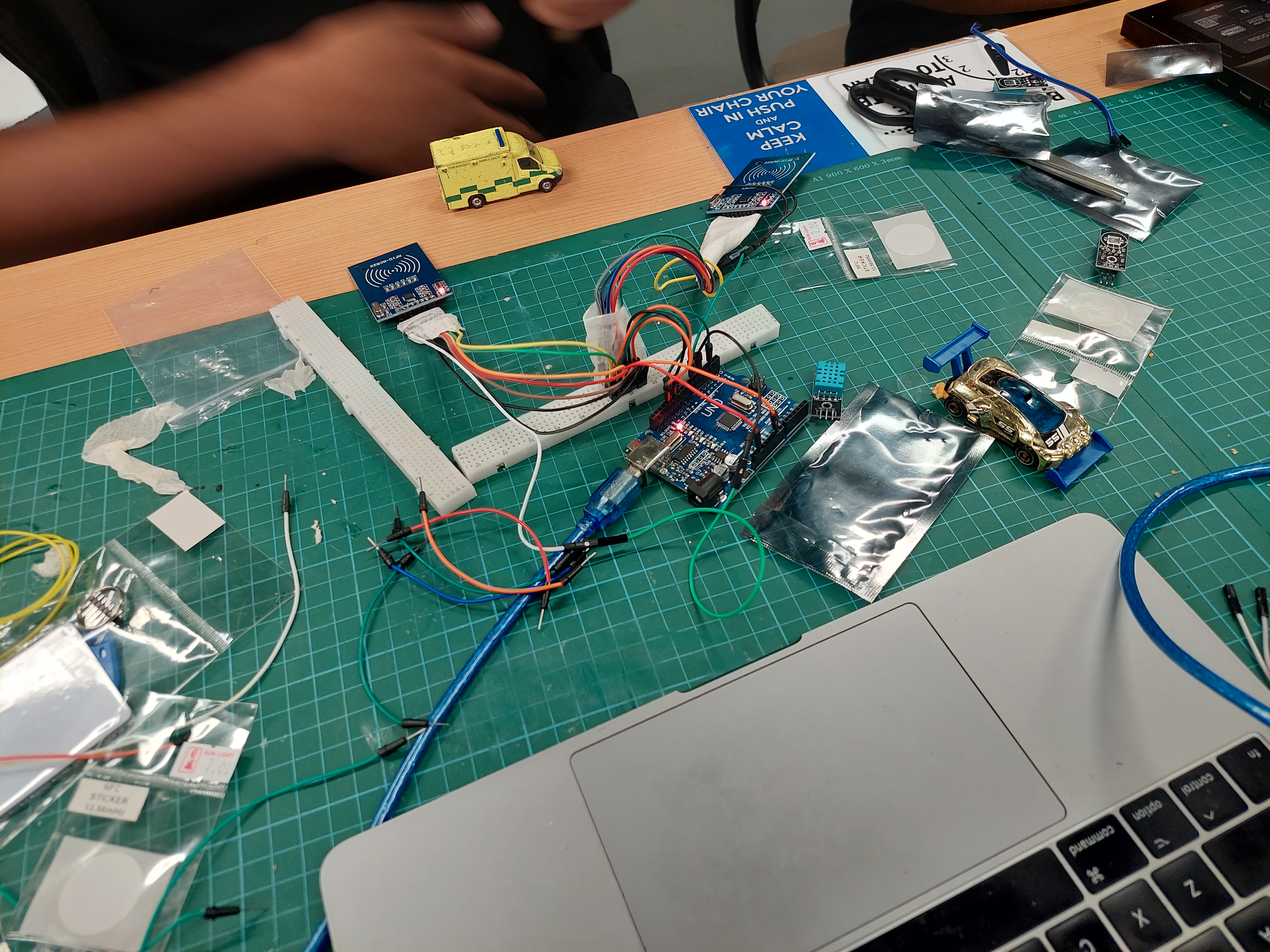
Multiple Rfid scanners being linked in parallel
-
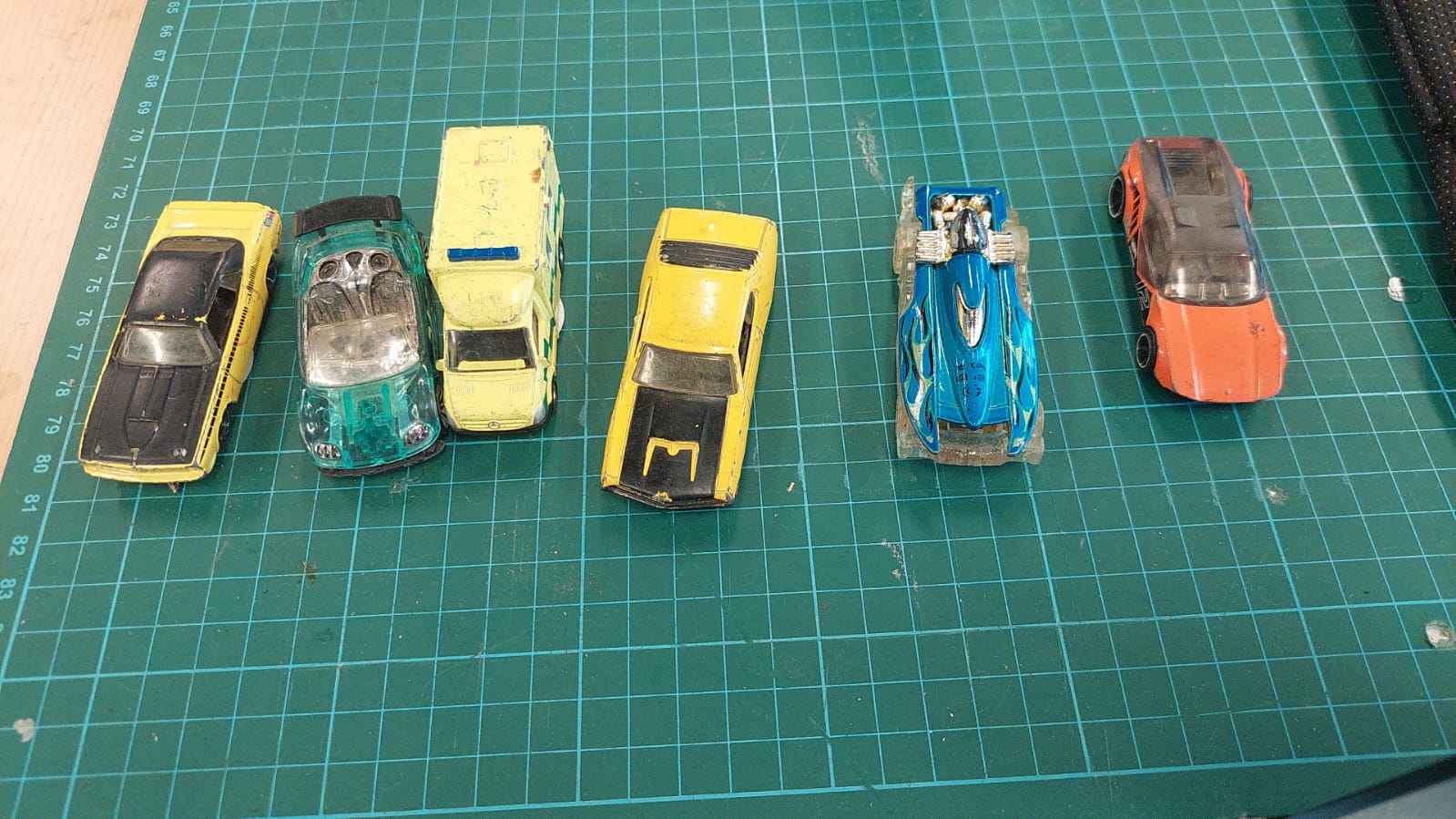
Vehicle Line-up
Inspiration
After looking at the various problems cities face, including congestion, waste management and overcrowding, we decided to focus on traffic jams waste 119 hours, $1010 and 21 gallons for each person every year leading to an inefficiency in daily life.
What it does
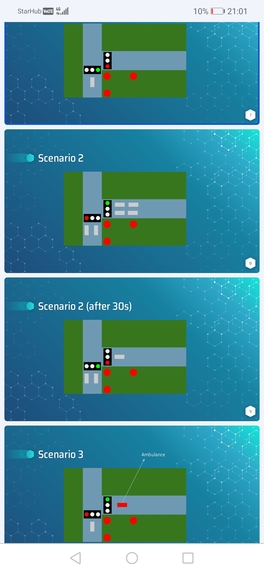
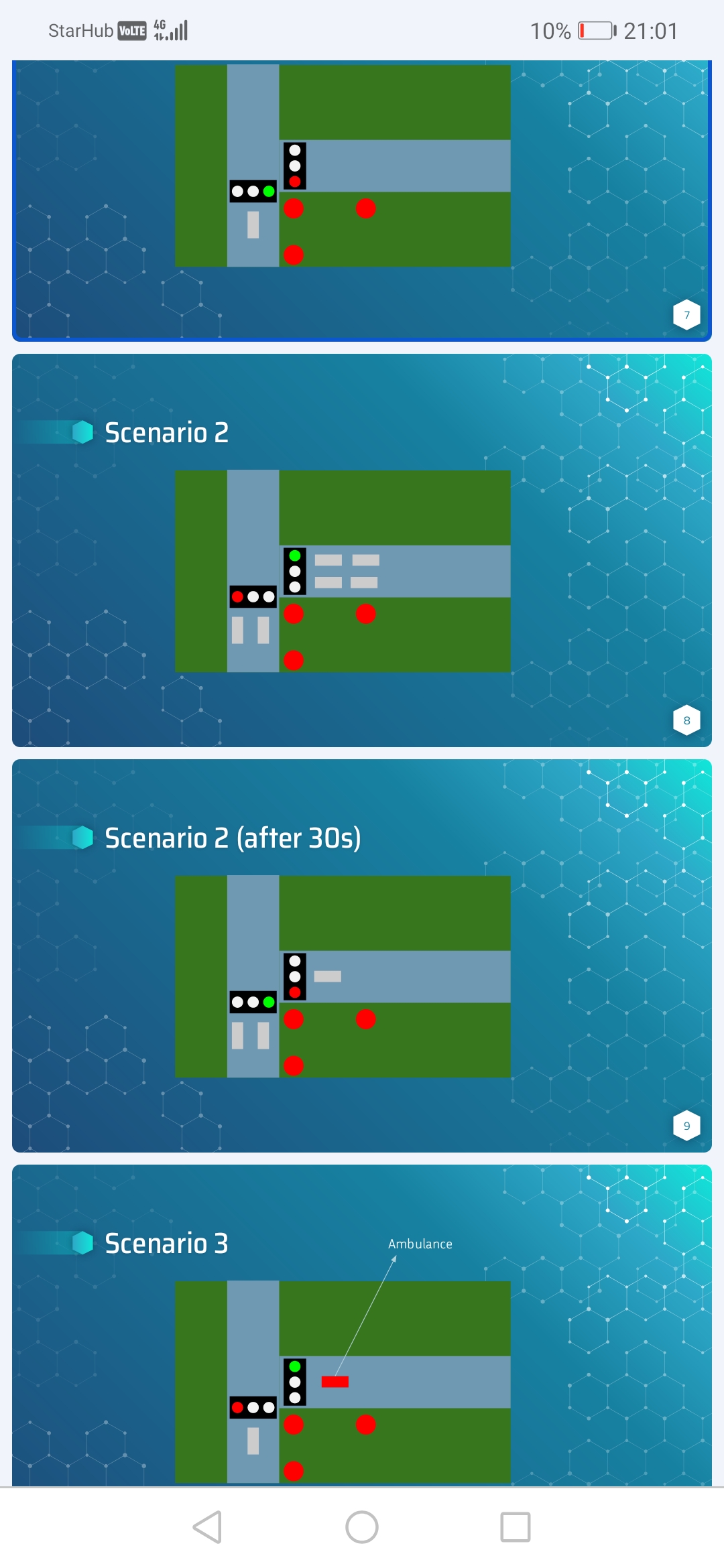
Uses rfid scanners to determine the number of cars in the area and control traffic lights to adapt to the traffic. We also included a feature which grants prioritised access to emergency vehicles.
How we built it
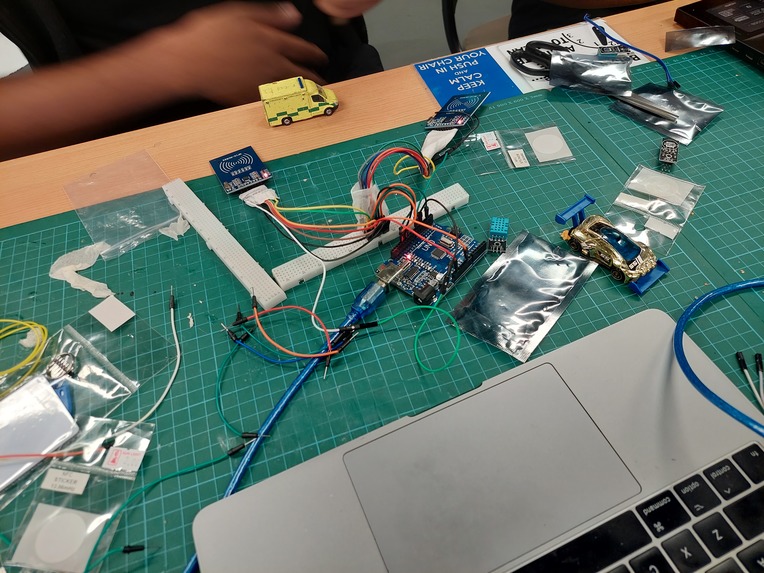
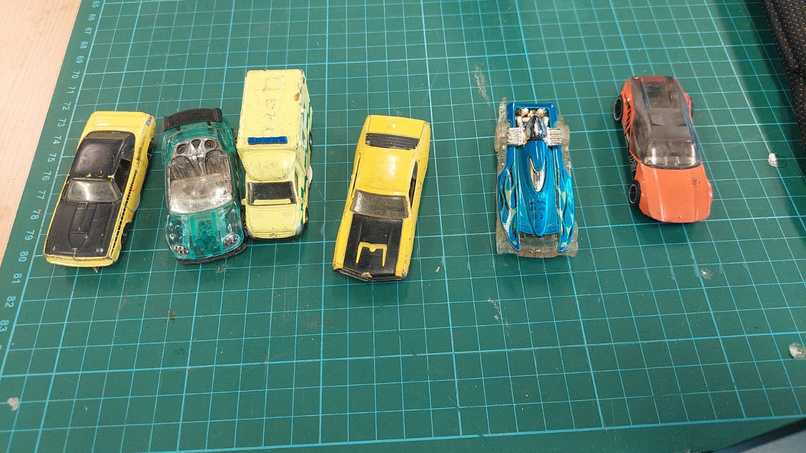
The cars were fitted with NFC stickers and the scanners were placed under the road. Every time a tag was detected, the system recognized that a car had entered the road. We also stored the ID of the emergency vehicle, allowing the system to recognise and give priority to it.
Challenges we ran into
Rfid scanners did not detect rfid tags and stickers, but it was solved when our hardware and software experts worked tirelessly, in spite of repeated code failures.
The buildings' estimated print time was 1 day 19 hours! Instead of leaving the buildings all together, we adapted by using LEGO buildings for the aesthetics instead.
Accomplishments that we're proud of
- We decorated and planned the model well.
- We linked 4 RFID scanners to the Arduino.
- Success! We managed to control the LED signal through based on the rfid signal coming from the cars.
What we learned
Rfid can be uses to give priority to certain cars such as fire trucks and an ambulance, which is better than existing weight or infrared sensor systems.
What's next for Operation traffic control
Using cameras and machine learning to detect vehicles easily with more efficiency.

Log in or sign up for Devpost to join the conversation.