-
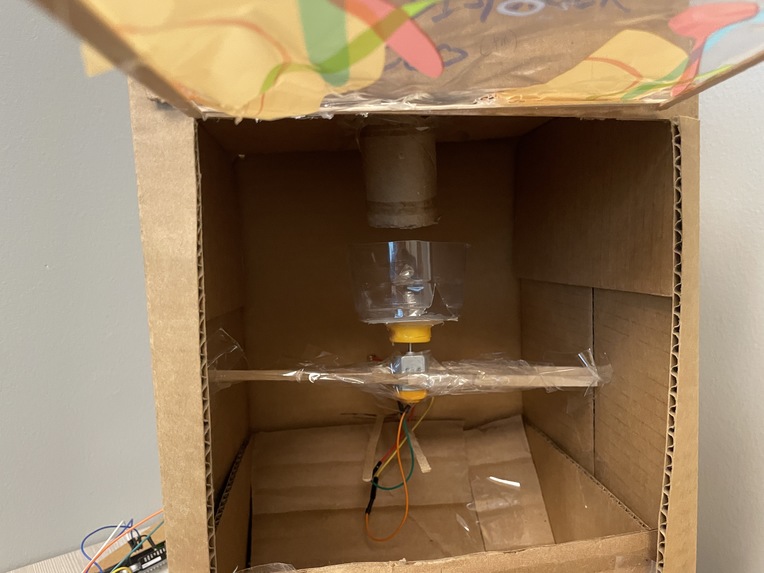
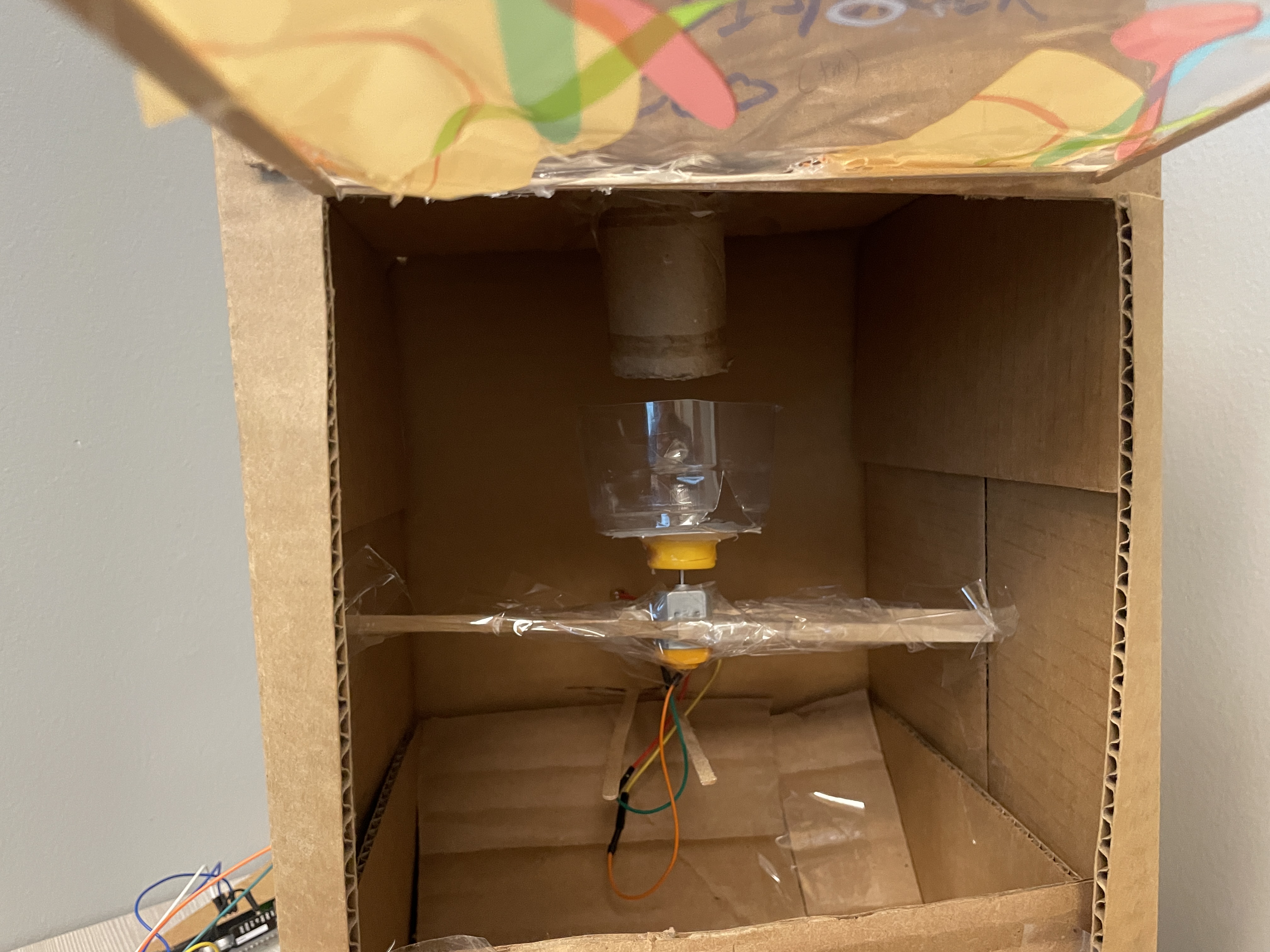
inside drug machine
-
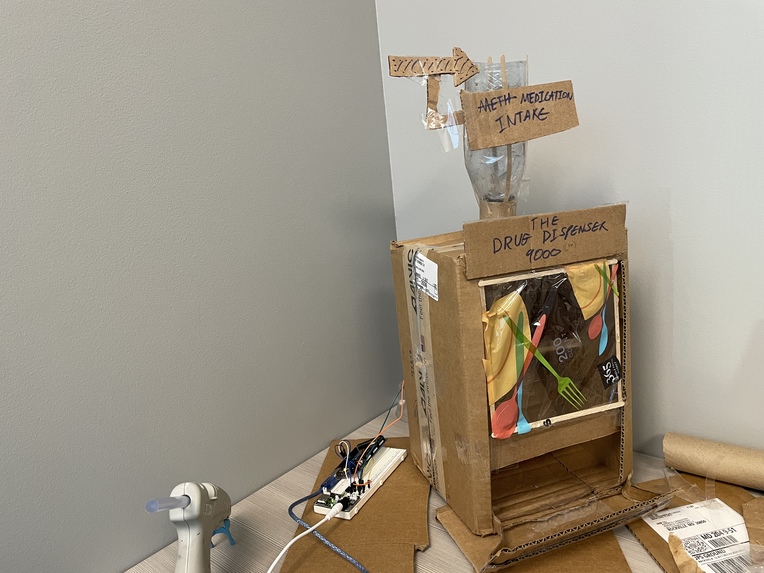
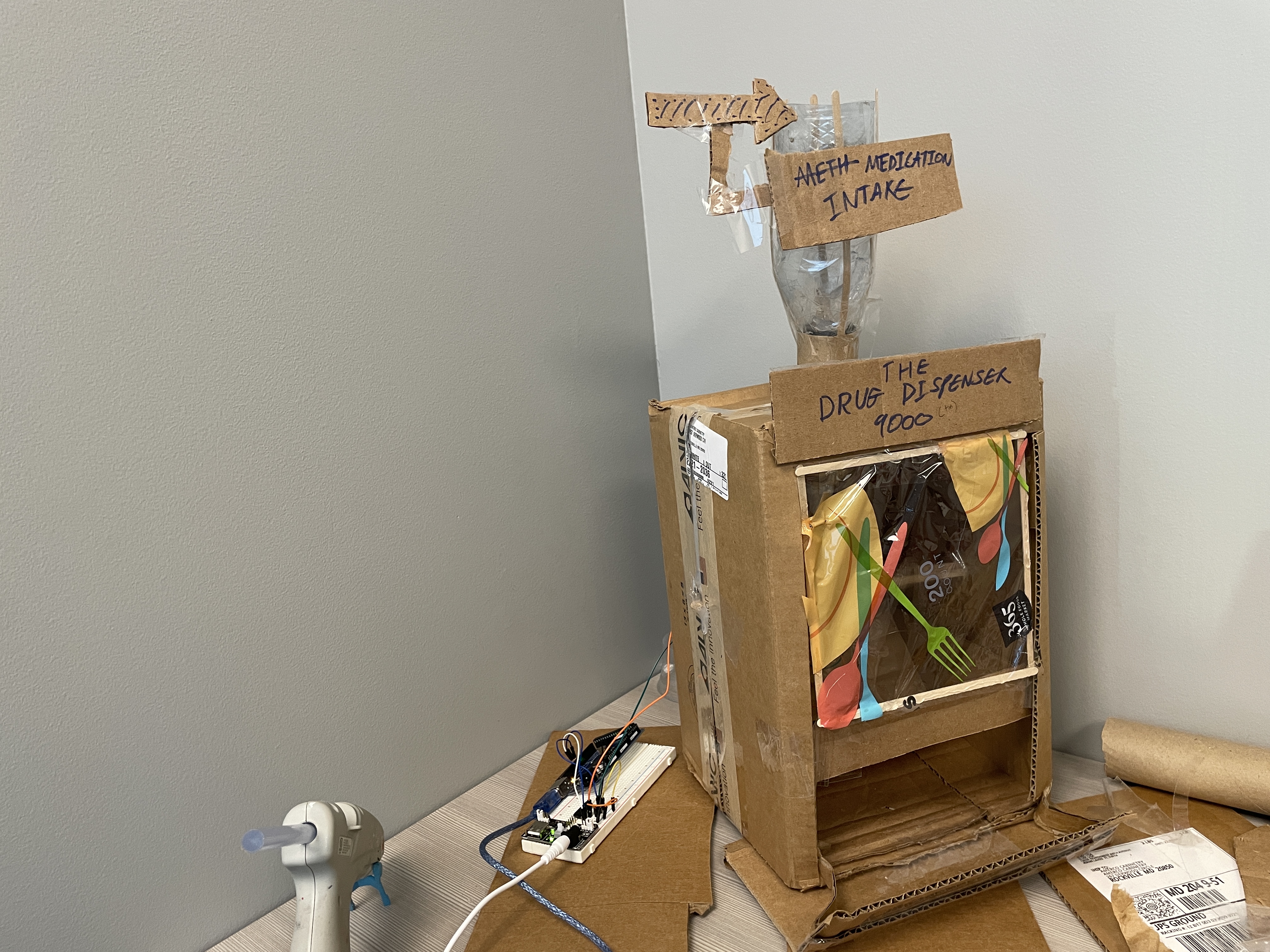
drug machine
Inspiration
Our team member, Louis, inspired us to do this project. Oftentimes, he forgets to take his medication, which is greatly inconvenient to both himself and his family. To solve this problem, we brainstormed ways we could automate the way medication could be dispensed, thus presenting us with the Drug Dispenser 9000™!
What it does
The Drug Dispenser 9000™ first must receive the schedule of its user. The user can input at what time they want their medicine, what medicine they want, how often they want it (daily, weekly, monthly, etc.), as well as having the ability to add or remove medicines at any time. The user also has the option to list out their medicines and schedules in case they forget. Once the machine receives and stores these inputs (from pycharm), it waits until the time is right, then activates a mechanism to dispense the drug. This mechanism takes advantage of centrifugal (technically centripetal) force, spinning rapidly to fling a capsule outwards into a collection slot. The loud sounds will alert the user, reminding them to take their drug, which is now conveniently at their disposal.
How we built it
From the beginning, we wanted to create a piece of hardware that would automate a task. However, collecting the resources to construct this was not easy. We had to forage in malls and countless stores for straws, cardboard, plastic, wooden sticks, and other necessary components. We were forced to make do with what we could obtain, and make the best of the situation with what we had. After gathering all these resources, plus the Arduino kit we had brought beforehand, we brainstormed different designs to reach the goal as efficiently as possible. After running through countless ideas, hours of backtracking, and starting from scratch three times, we finally committed to one idea, constructing it with everything we had left. Though the final result was not what we initially had in mind, it performed the same function, and we thought it looked cooler as well! On the software side, we knew we were going to use Python since it would be easy to implement with Arduino. We wrote some code to create a schedule and array of medicines, all of which had functions to change them. We downloaded several applications across multiple devices, to connect our different pieces of hardware. When we managed to make this connection, linking the code and actions was not too difficult.
Challenges we ran into
Looking for materials to build our machine was challenging, not knowing what the final design would be like beforehand. We ran into a lot of errors involving motors, with one motor straight up not working, one motor that was too weak, and lastly, a motor that was too fast but we still used it since it was our last option and we could change the design to fit it. Constructing the prototypes and models was extremely challenging, and we had to start over multiple times, setting us back hours every time. We changed the design when something didn't work, and the model we ended up with didn't work perfectly either. Software-wise, connecting the code with the motor and getting it to perform the right action was challenging.
Accomplishments that we're proud of
We are proud of assembling a functioning project from scrap from streets and stores.
What we learned
We learned to come more prepared next time, with a solid project idea, all software downloaded, and to bring hardware beforehand. We also learned to not over-engineer and to commit to one idea.
What's next for Operation Dispense Medicine
We hope that in the future Operation Dispense Medicine can be used in homes where people who have trouble remembering to take their medication can benefit from it. We also hope that it might be used in hospitals, reducing the human error of nurses (and saving them some time), and reducing the number of preventable medical technological deaths.


Log in or sign up for Devpost to join the conversation.