Inspiration
We're Gabrielle Sharipov, Aakash Jhingra, Omya Tomar, and Vincent Huynh, a team of high school students who met through the MIT Beaver Works Summer Institute (BWSI) Cyber Operations Hackathon 2026. We all enjoy cybersecurity and have spent a lot of time solving CTFs, but one thing we kept noticing was that most challenges felt disconnected. You solve a problem, submit a flag, and immediately move on to something completely unique. Instead of a collection of random challenges, we decided to build one continuous investigation where every room reveals another piece of the story. We thought it would be much more exciting if players felt like they were uncovering evidence instead of just collecting flags, which is why we created Operation Vault.
What it does
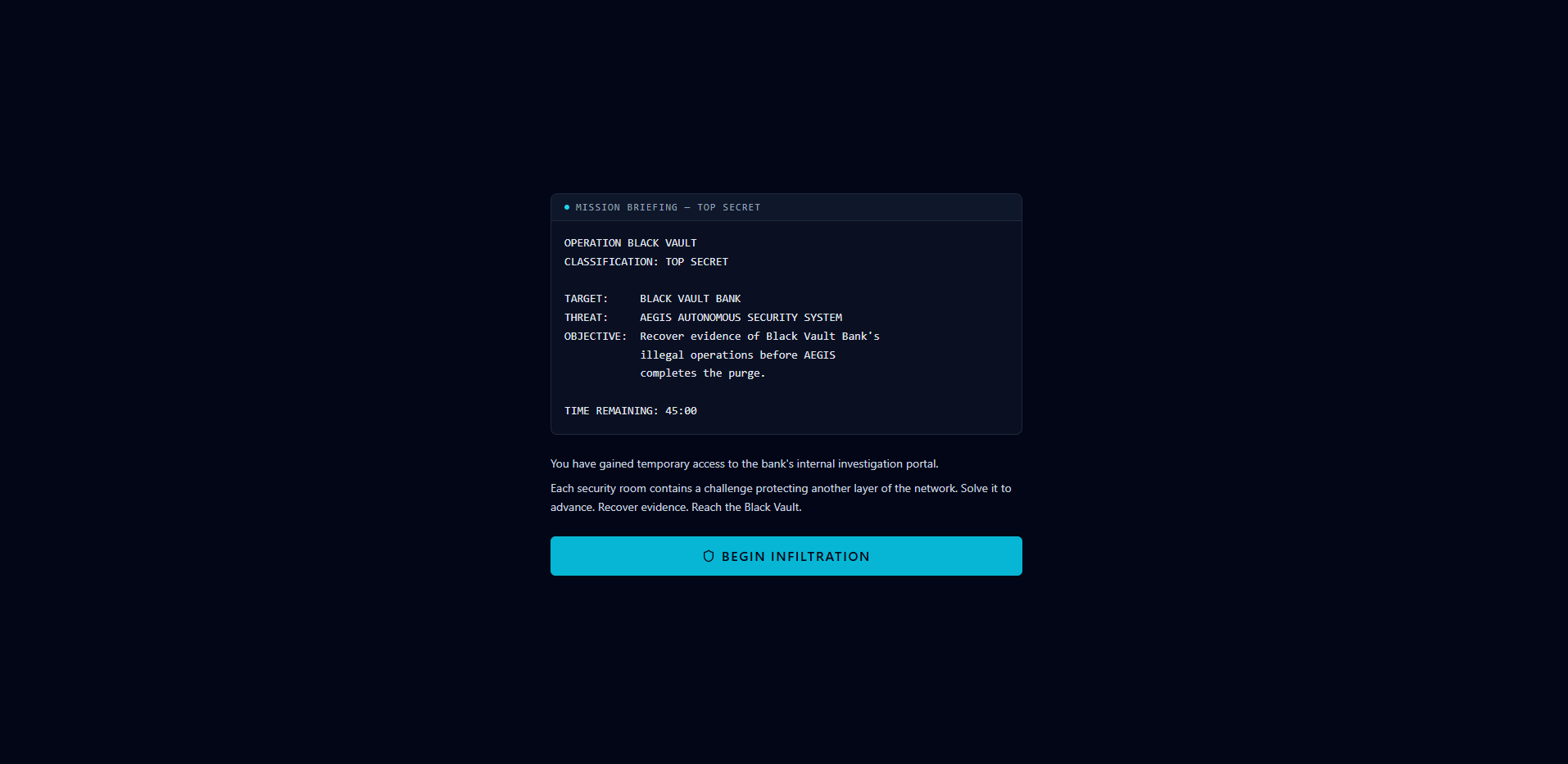
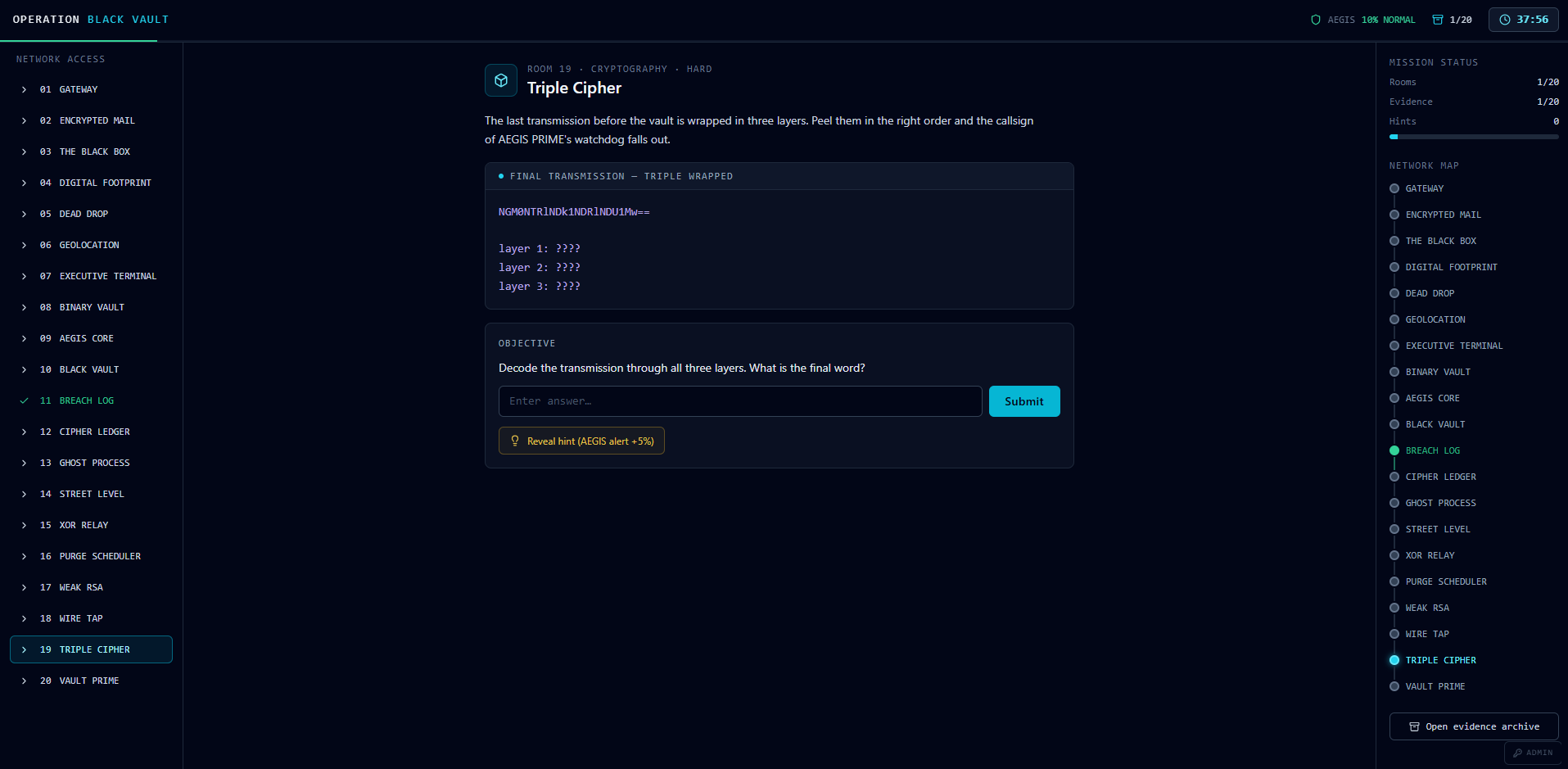
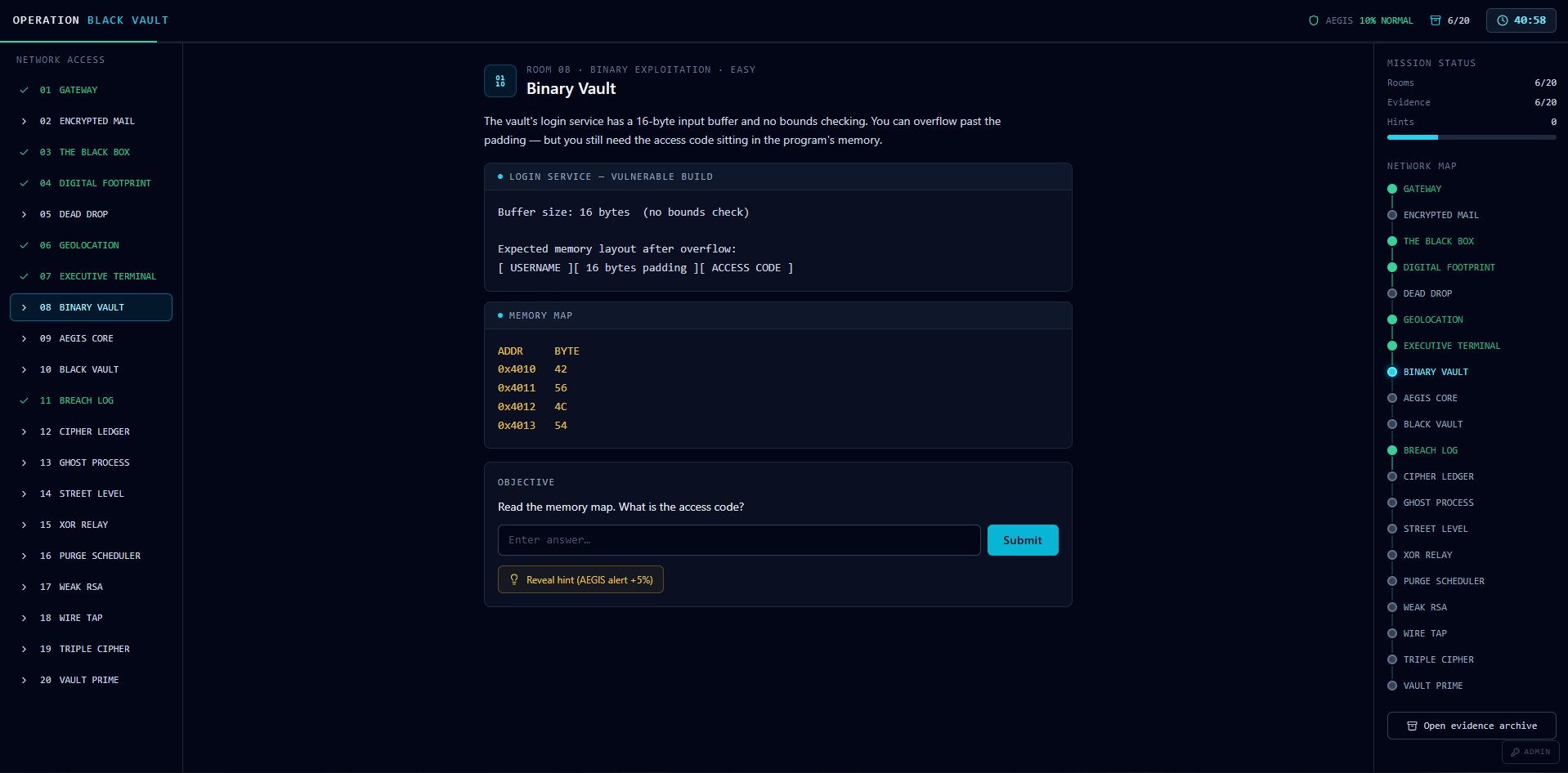
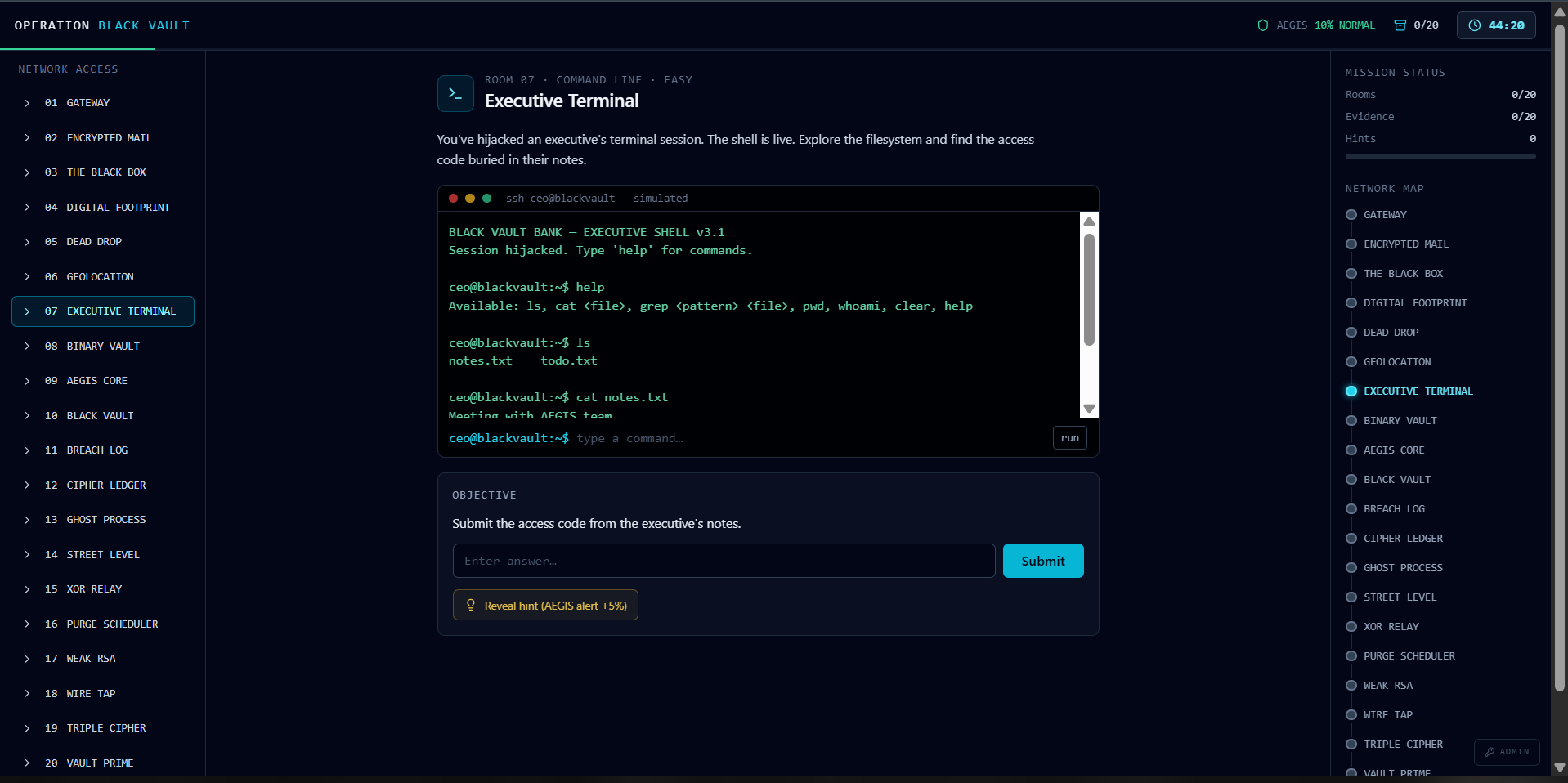
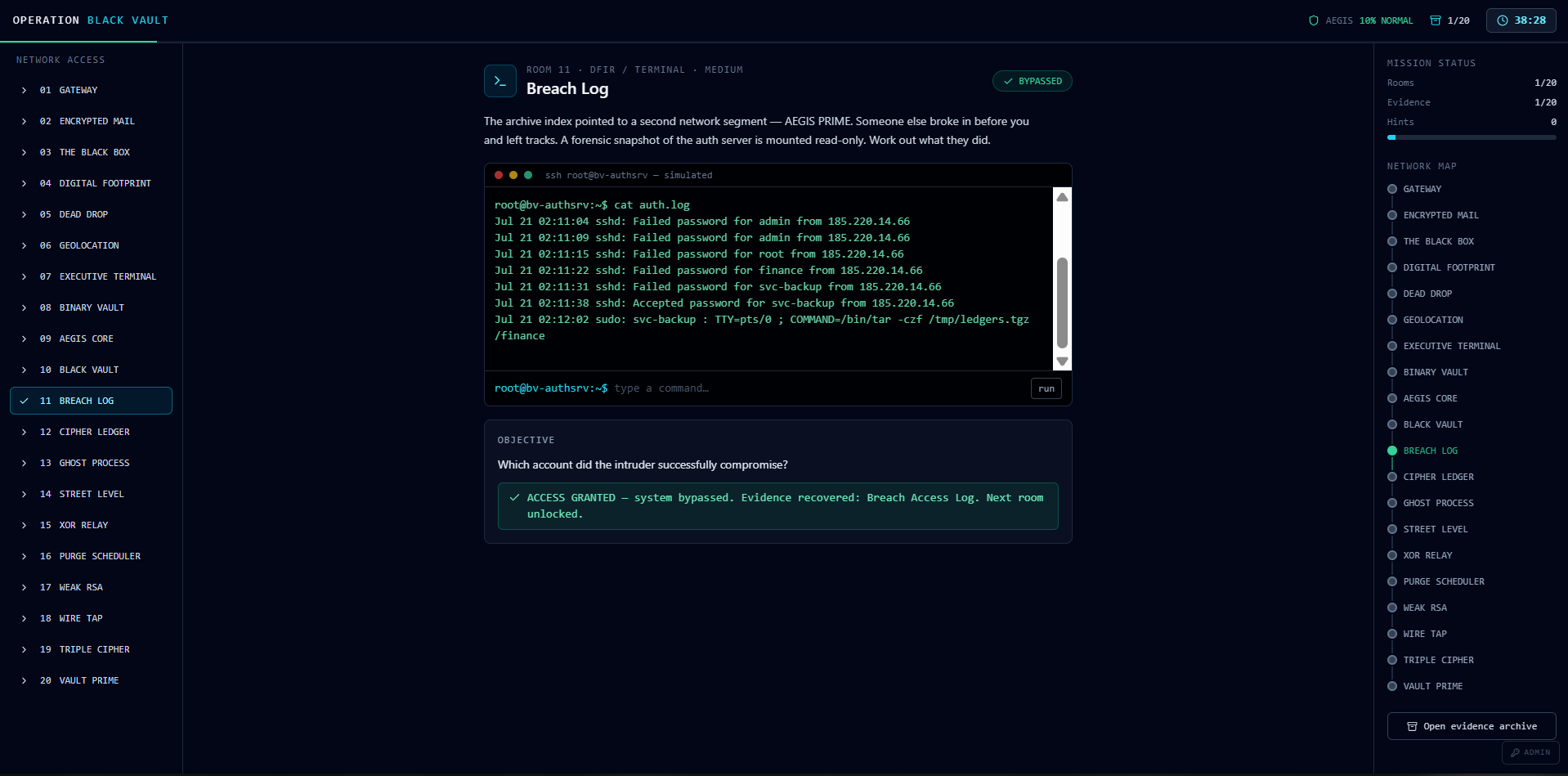
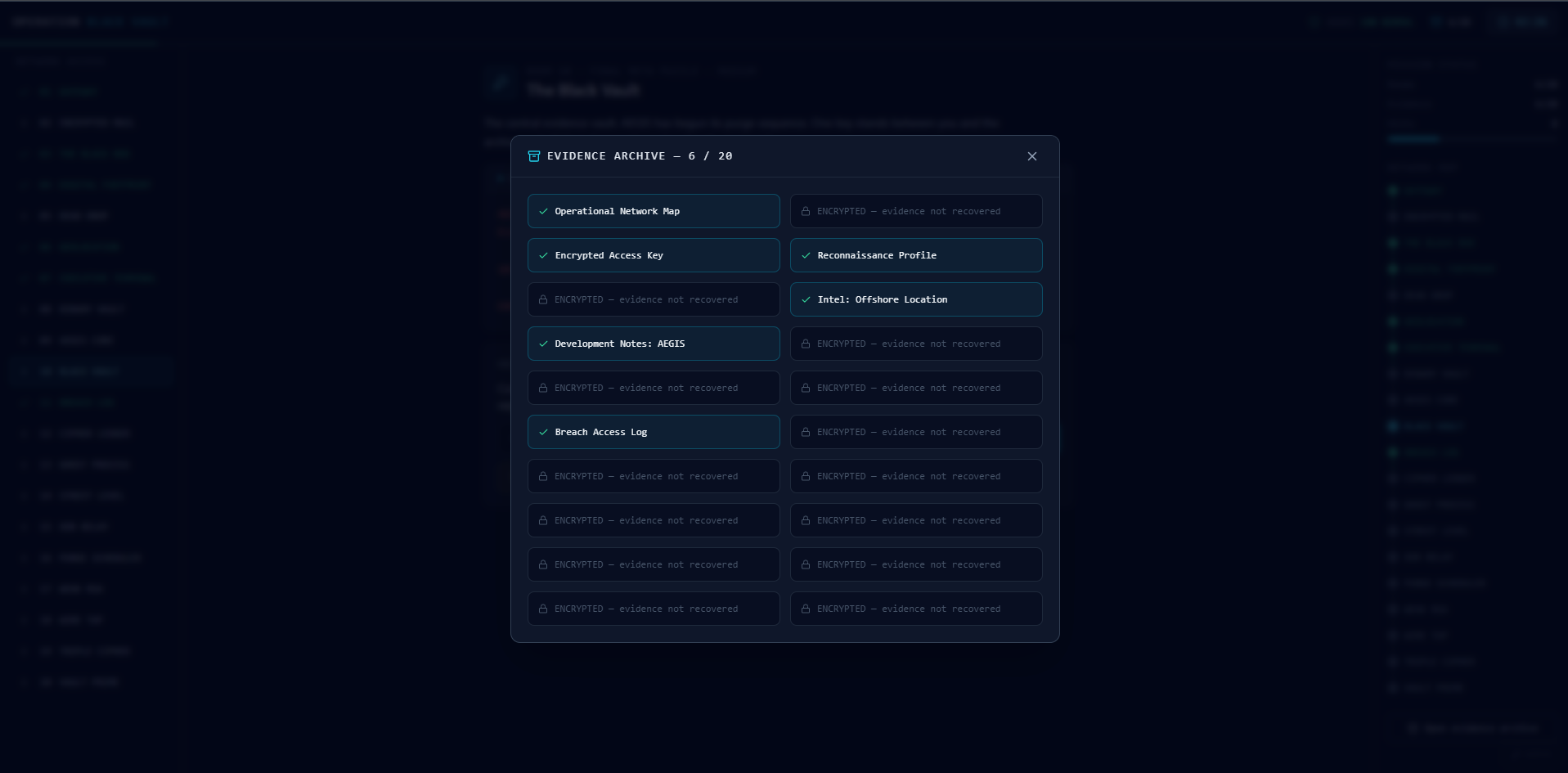
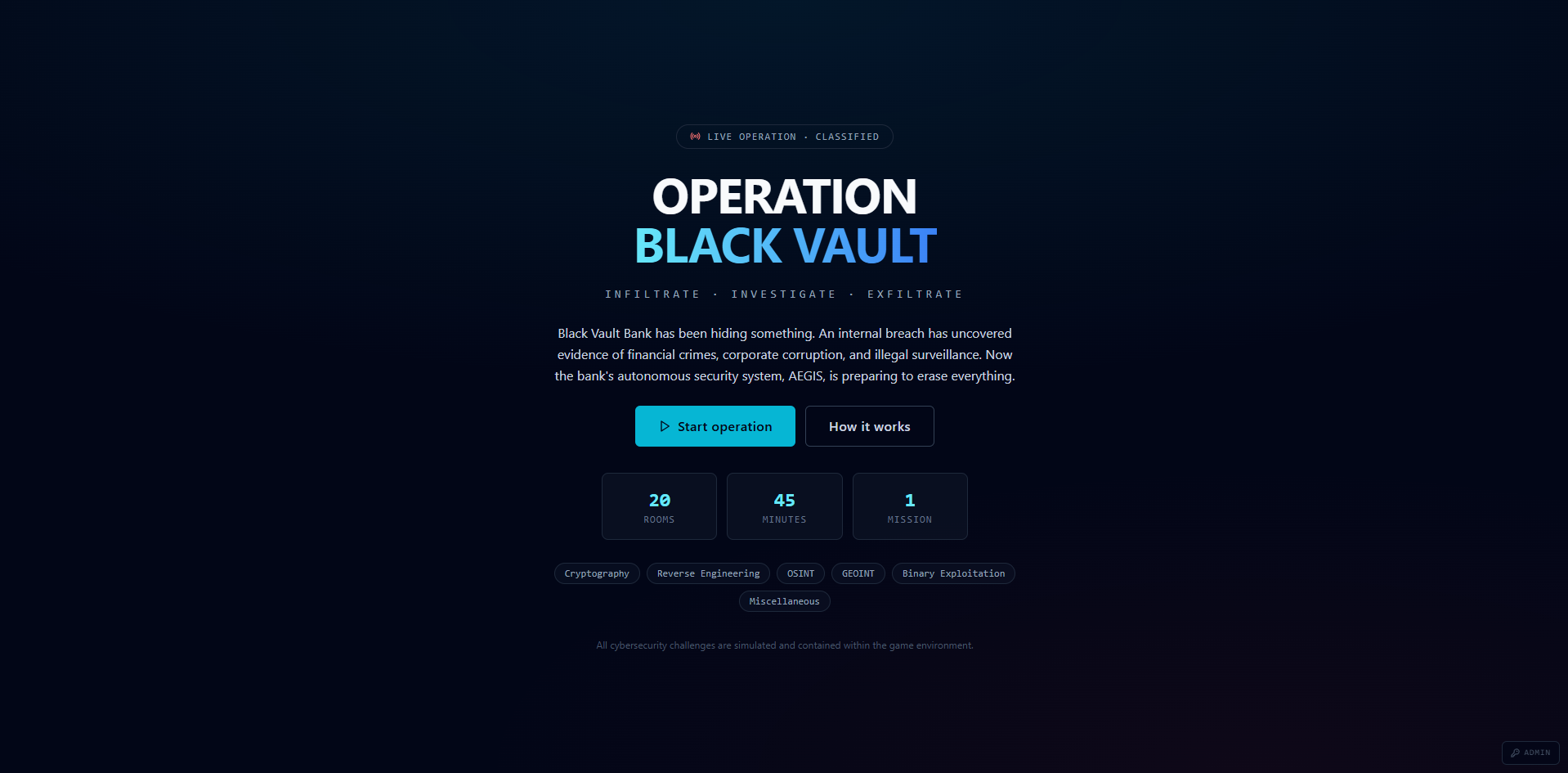
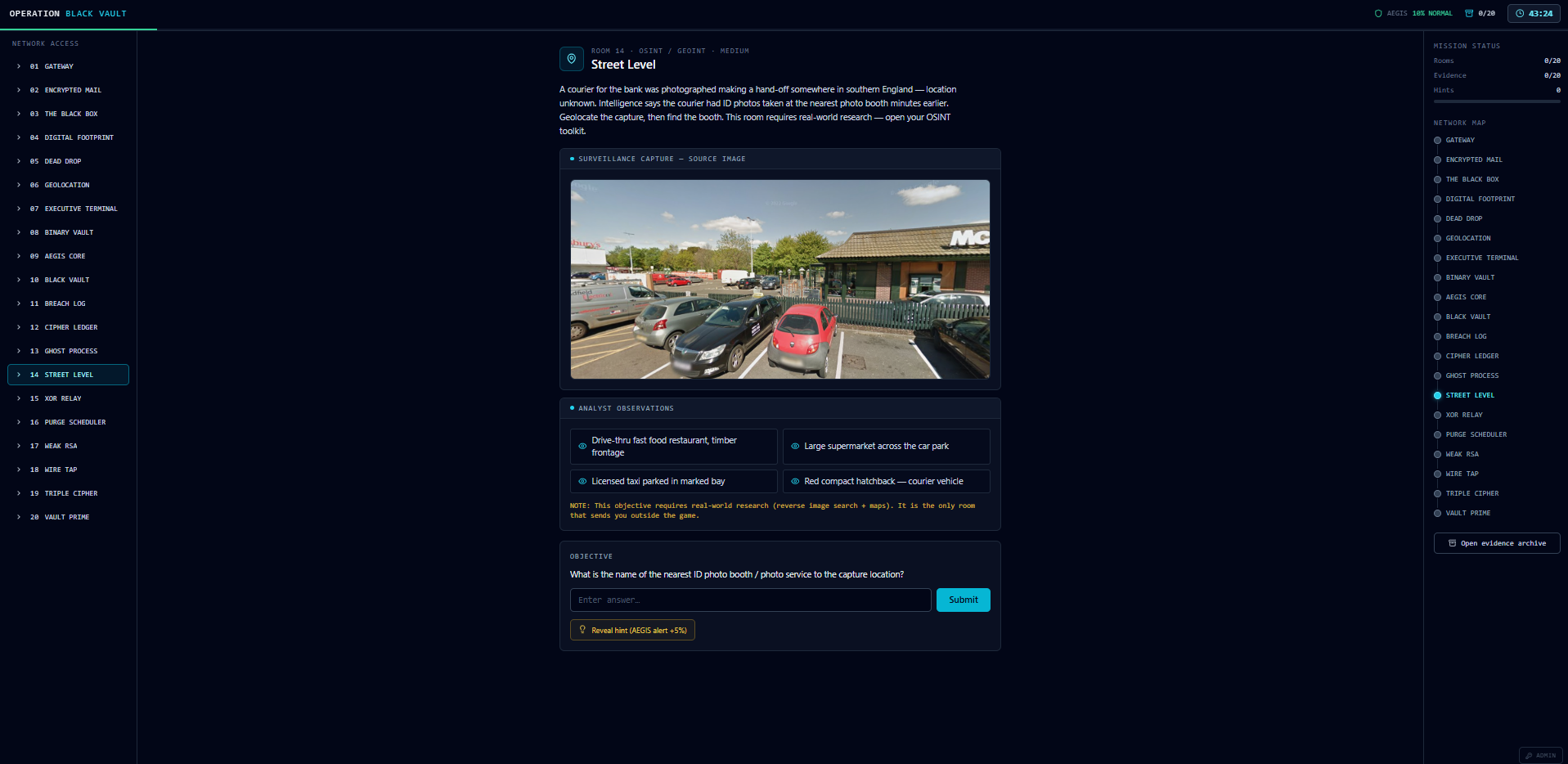
Operation Black Vault is a browser-based cybersecurity escape room where players investigate the fictional Black Vault Bank before its AI security system, AEGIS, wipes all the evidence- if not, the time. Players have 45 minutes to work through 20 connected rooms, solving challenges involving cryptography, reverse engineering, OSINT, GEOINT, binary exploitation, and more. Every challenge unlocks the next part of the investigation, so instead of solving isolated puzzles, players gradually uncover what's really happening inside the bank. Additionally, we also built Br1lliantT0ols alongside the game, a toolkit that players can use throughout the investigation to help solve several of the challenges.
How we built it
We built Operation Black Vault using React, JavaScript, HTML, CSS, LocalStorage, and Vercel. Along the way, we designed the UI, wrote the storyline, created every challenge from scratch, built the room progression system, and developed Br1lliantT0ols. Since everything is connected, we spent a lot of time making sure the story, gameplay, and challenges flowed naturally from one room to the next.
Challenges we ran into
One of our biggest challenges was balancing the difficulty of the CTFs. We wanted players to think through each challenge without getting stuck for half the game. Finding that balance took a lot of testing and tweaking. Another challenge was making the story feel meaningful instead of feeling like it was just sitting between puzzles. We kept asking ourselves if this room actually move the investigation forward. That led us to rewrite parts of the story, redesign challenges, and reorganize rooms so everything fit together better.
Accomplishments that we're proud of
Our biggest accomplishment is that we were able to build a complete experience. Every room contributes to one larger investigation, and we think that makes solving the challenges much more rewarding and entertaining to solve. We're also really proud of Br1lliantT0ols, as it started as a simple idea but ended up becoming a useful companion for the game and adds another interactive element for players. Most of all though, we're proud that we were able to take an idea we were excited about and turn it into a fully playable project during the hackathon!
What we learned
This project taught us that building a good cybersecurity challenge isn't just about making difficult puzzles. Storytelling, user experience, pacing, and teamwork all really matter. Additionally, along the technical aspect, we also gained a lot more experience with React, frontend development, debugging, designing educational challenges, and working together on a larger software project where everyone's pieces had to come together.
What's next for Operation Black Vault
Even though we built Operation Black Vault for the MIT BWSI Cyber Operations Hackathon, we'd love to keep working on it. There are plenty of ideas we'd like to add, including new missions, additional challenge categories, multiplayer support, adaptive difficulty, leaderboards, and more interactive storylines. We also plan to continue expanding Br1lliantT0ols with additional utilities that can help players solve future challenges. This started as a hackathon project, but we think it has the potential to grow into an even bigger cybersecurity learning experience!
Built With
- css
- html
- javascript
- json
- luicide
- mjs
- react
- ts
- tsx
- vercel


Log in or sign up for Devpost to join the conversation.