-
-
Operant Logo
-
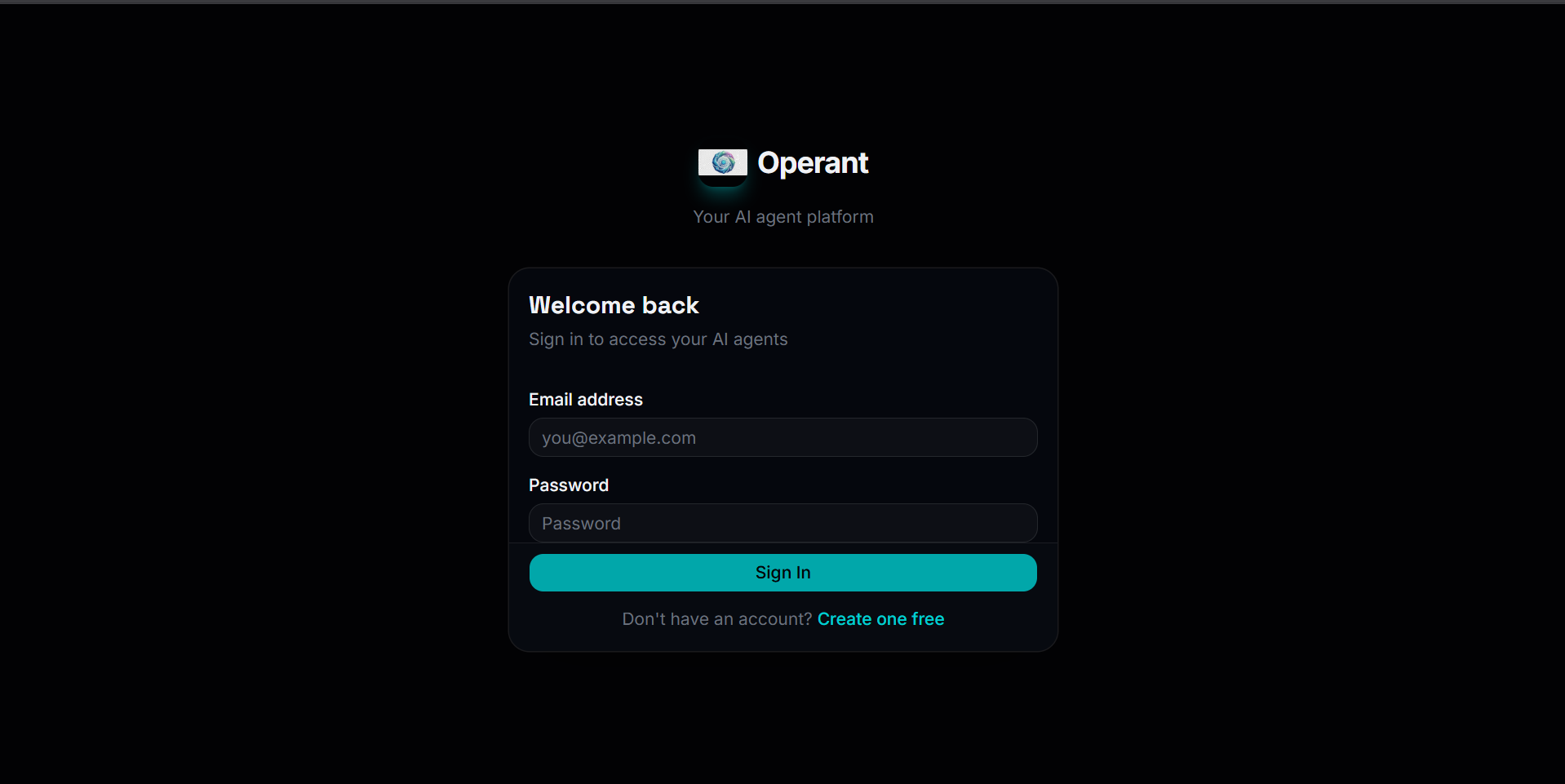
Operant Auth
-
Operant Build 3
-
Operant Build 4
-
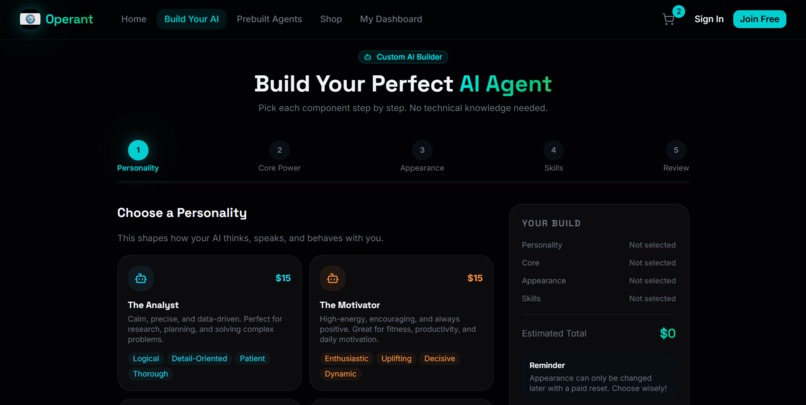
Operant Build 1
-
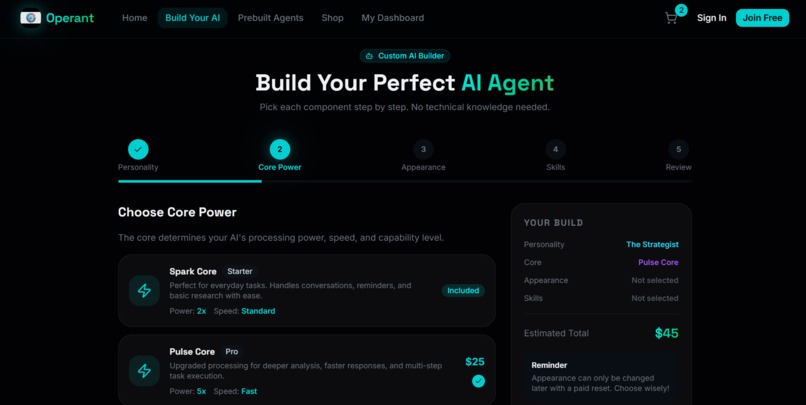
Operant Build 2
-
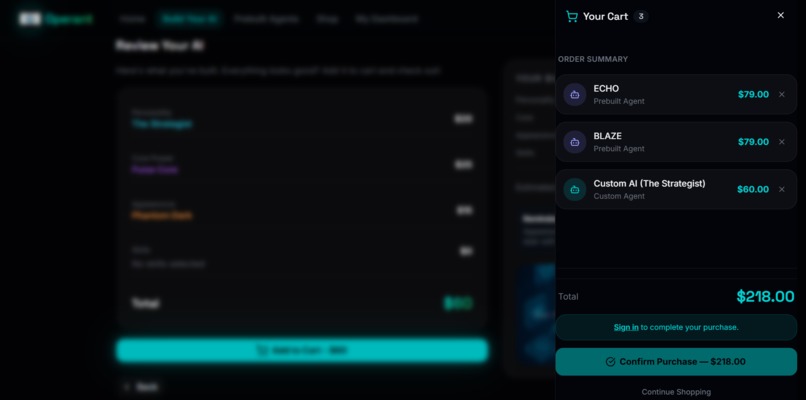
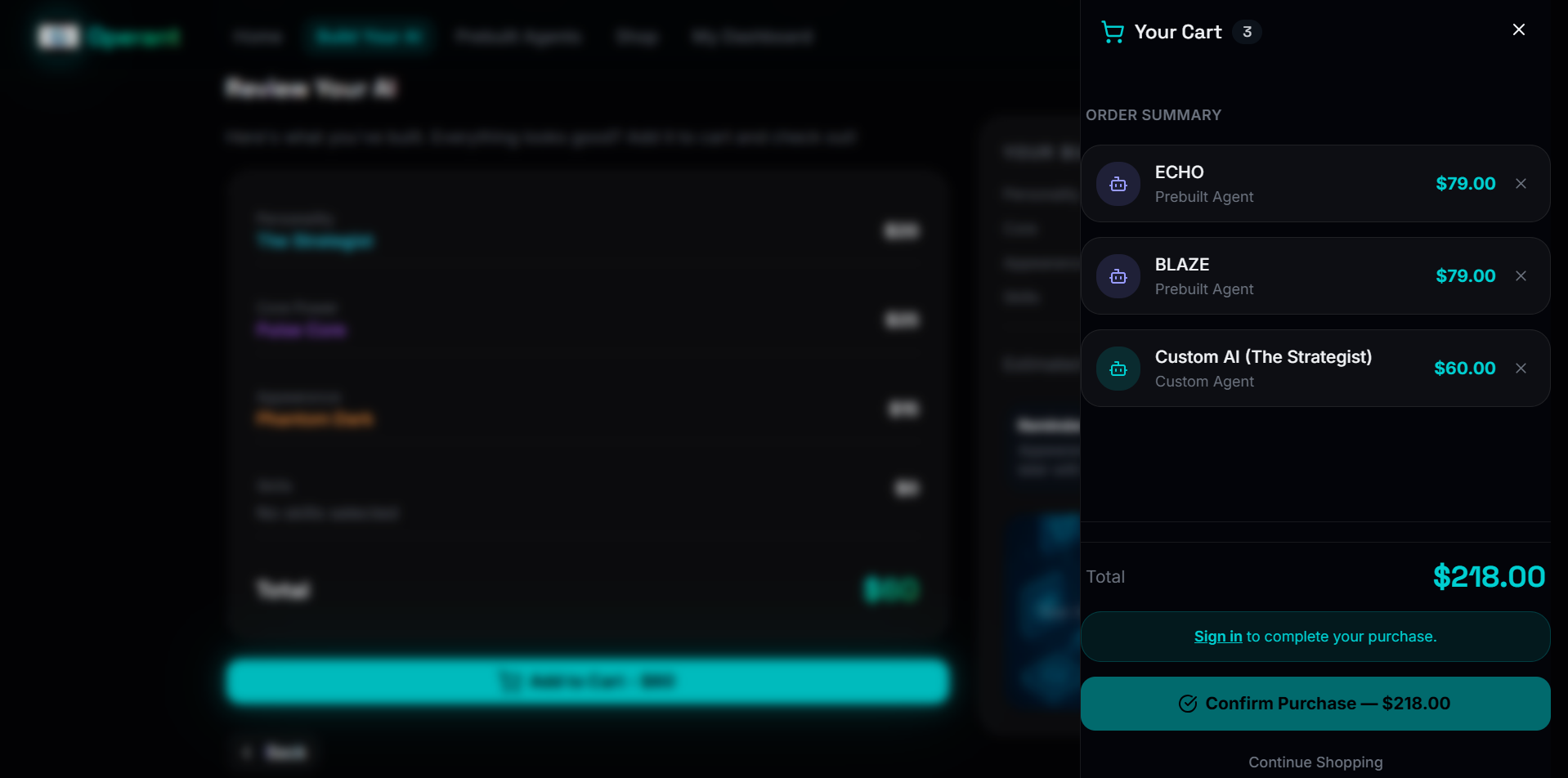
Operant Cart
-
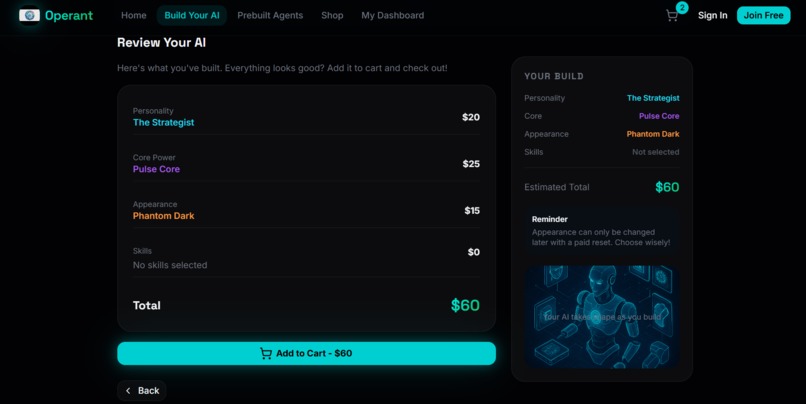
Operant Build 6
-
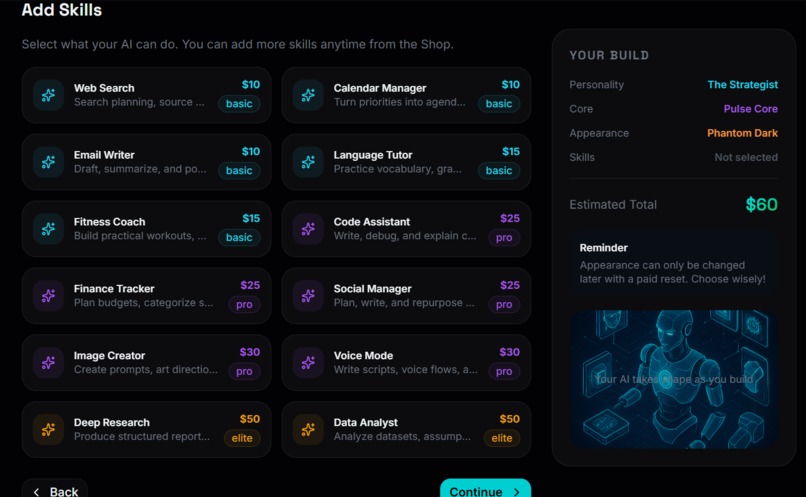
Operant Build 5
-
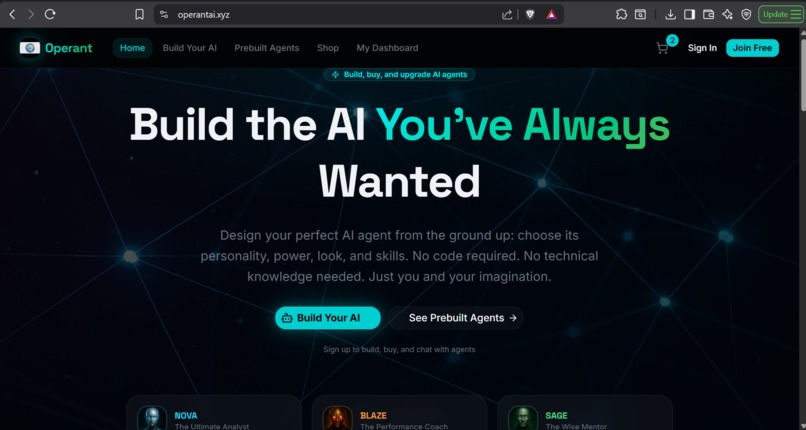
Operant Homepage
Operant
Devpost / AWS / Vercel v0 - hack the zero stack hackathon entry
Inspiration
As AI becomes more capable, finding, customizing, and deploying the right AI agent is still surprisingly difficult. Most marketplaces treat AI like downloadable software instead of something that should adapt to each user's workflow.
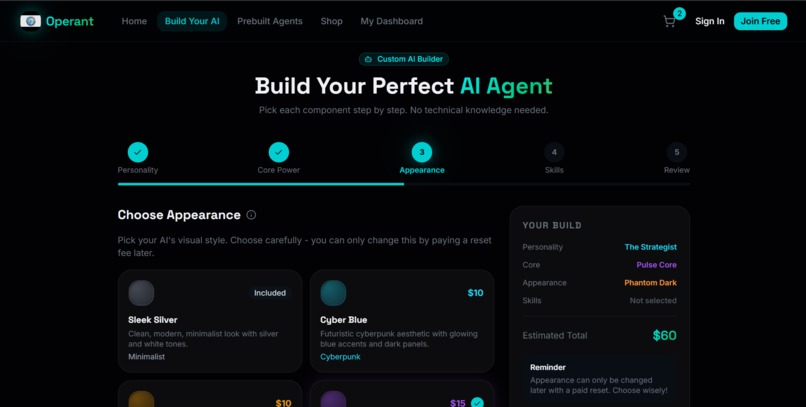
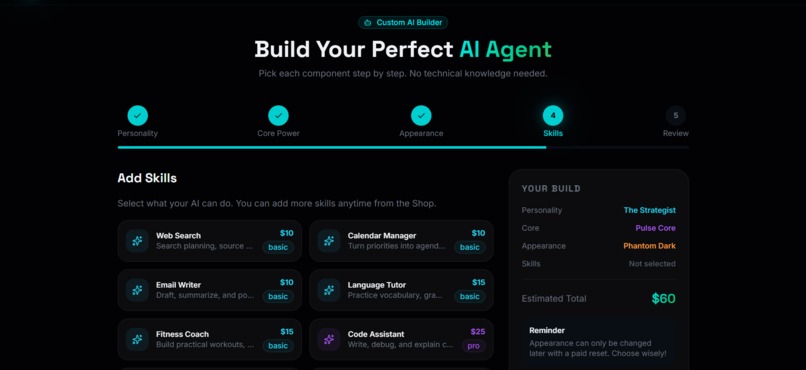
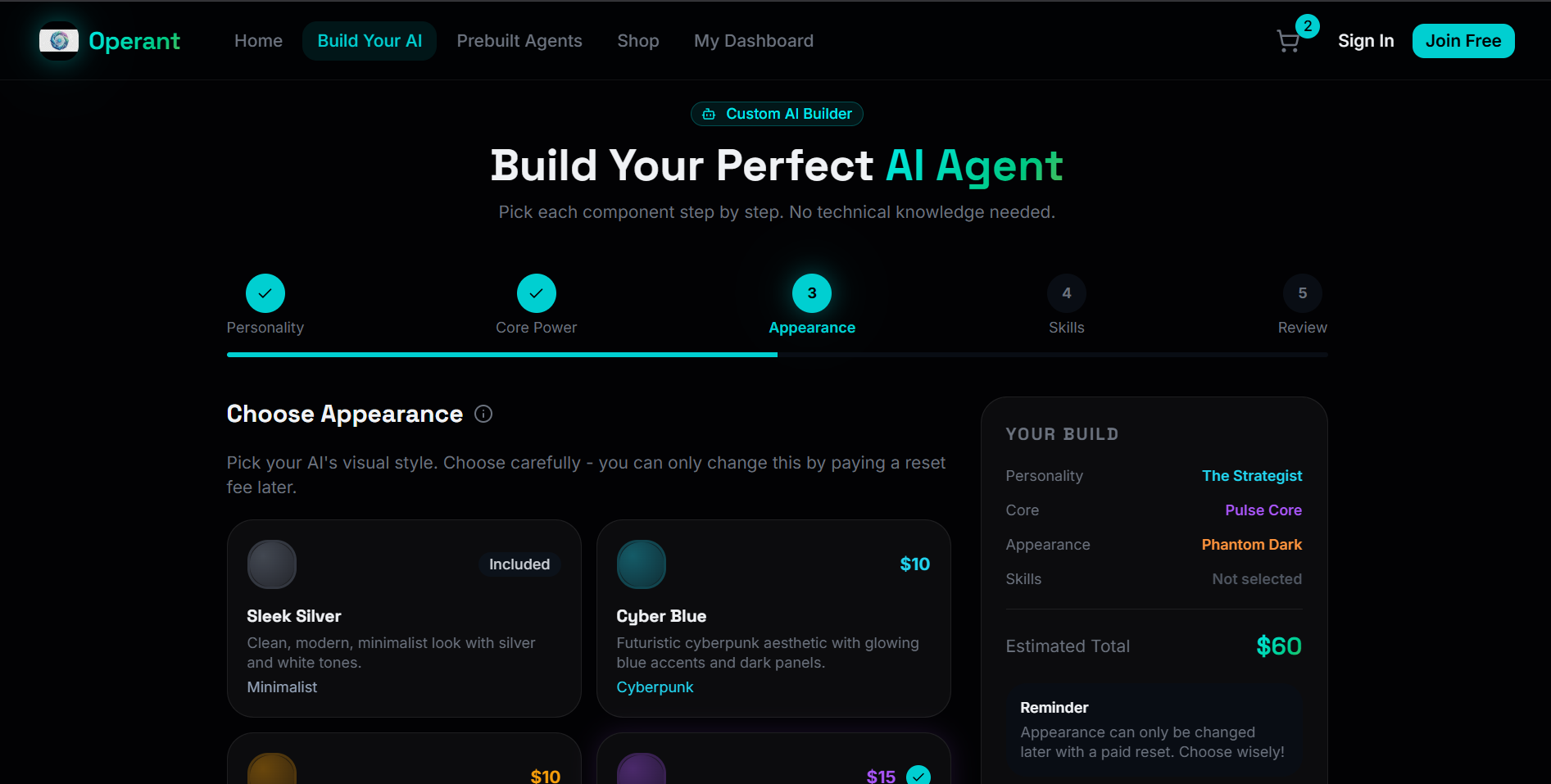
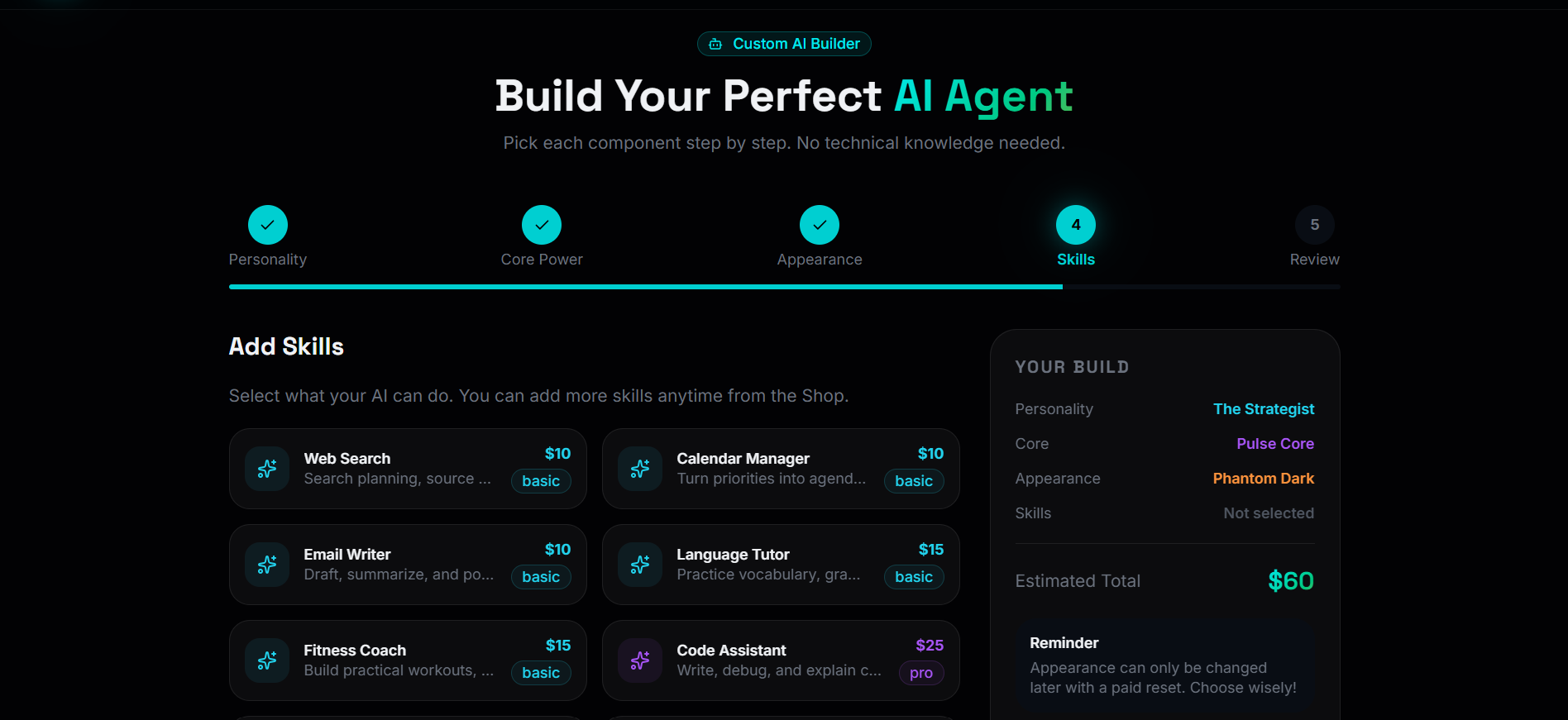
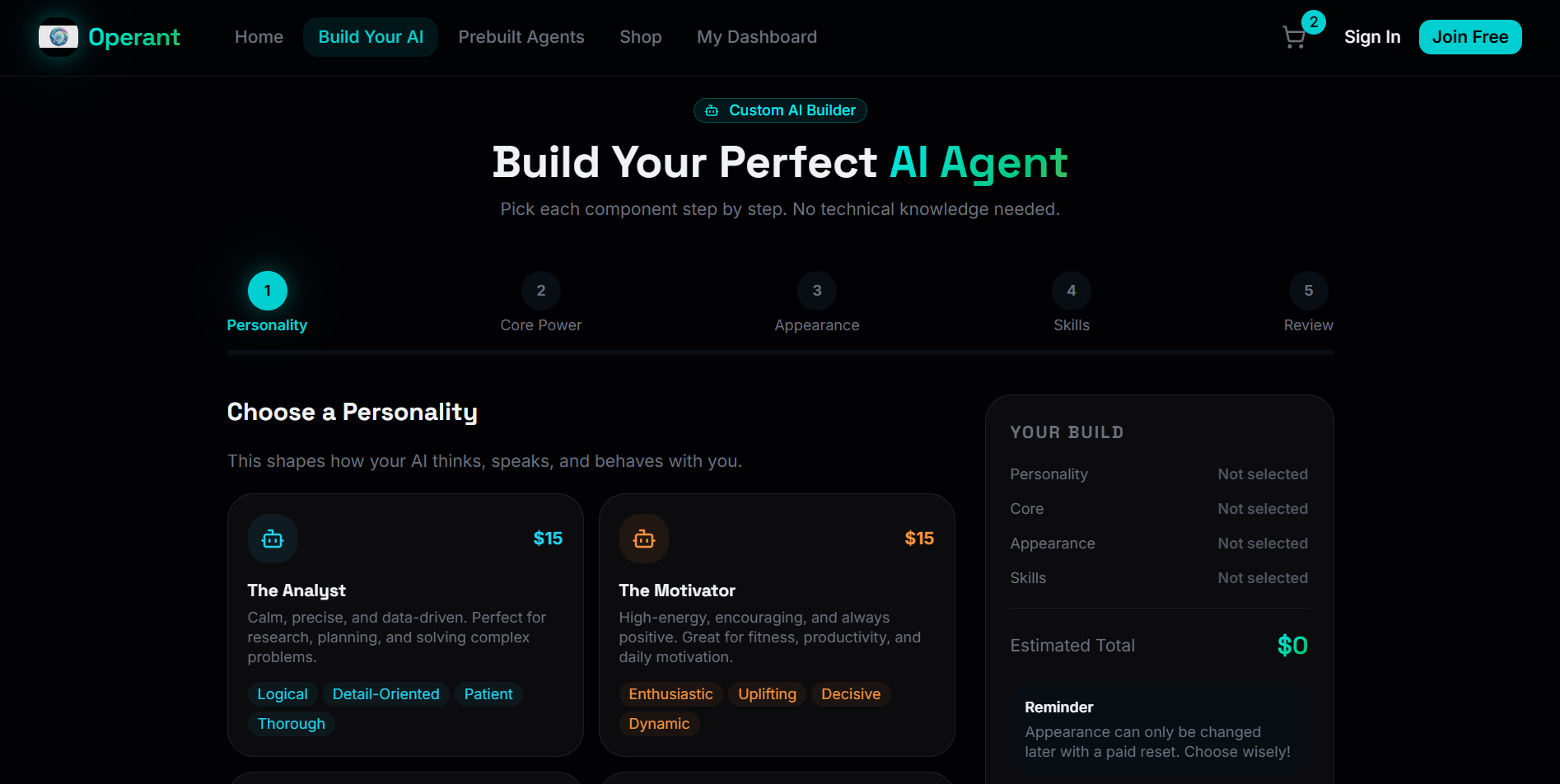
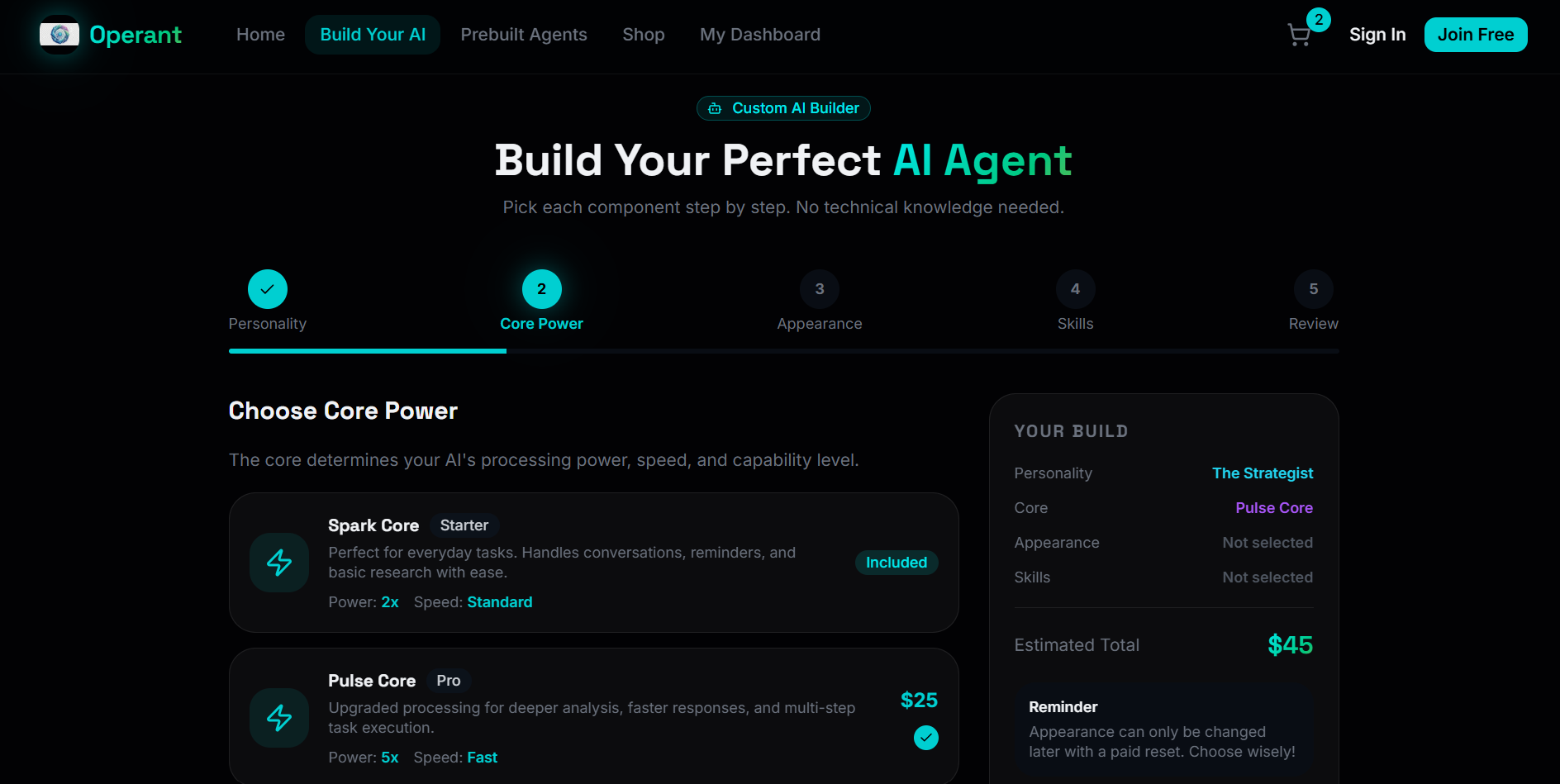
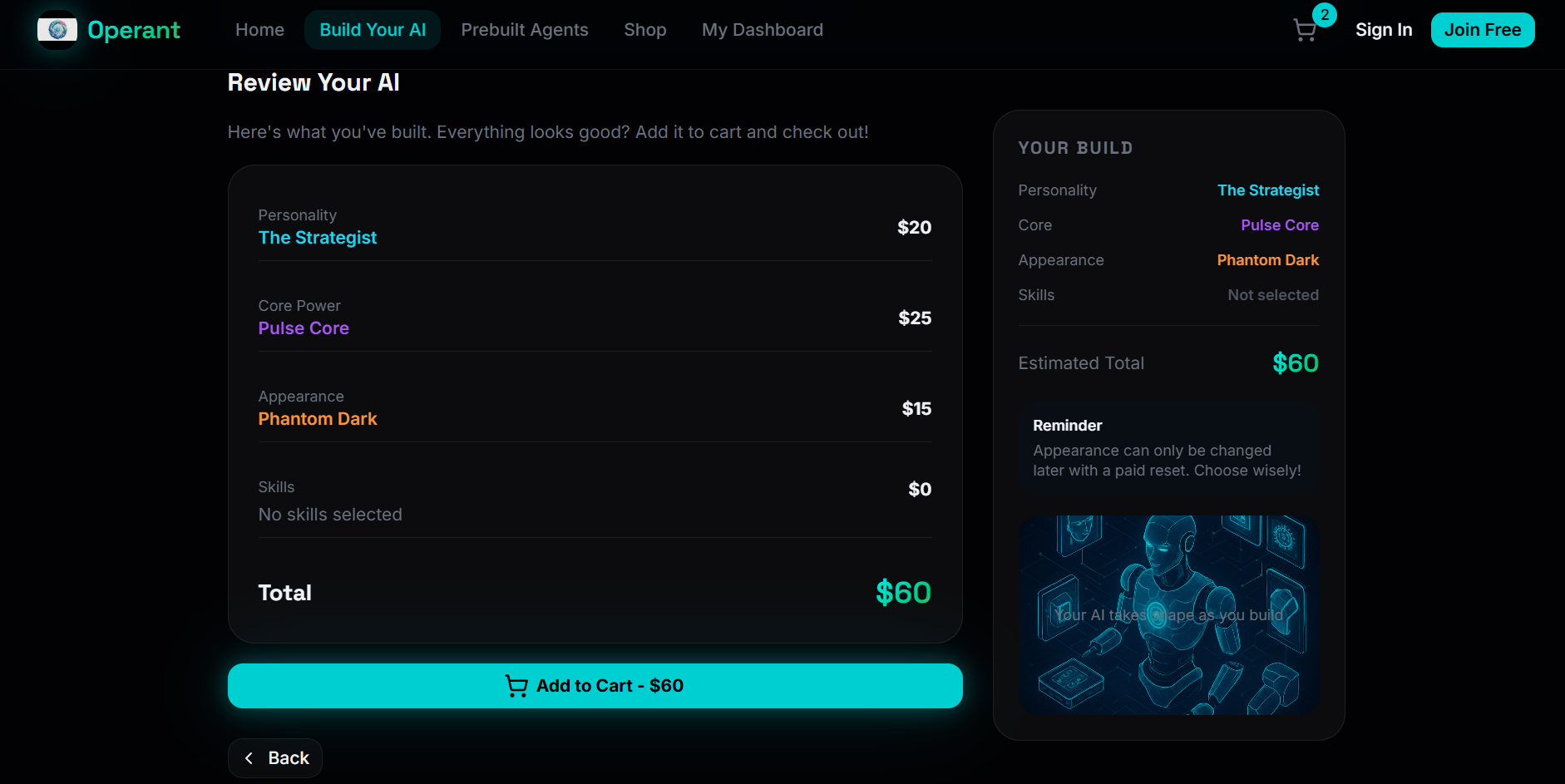
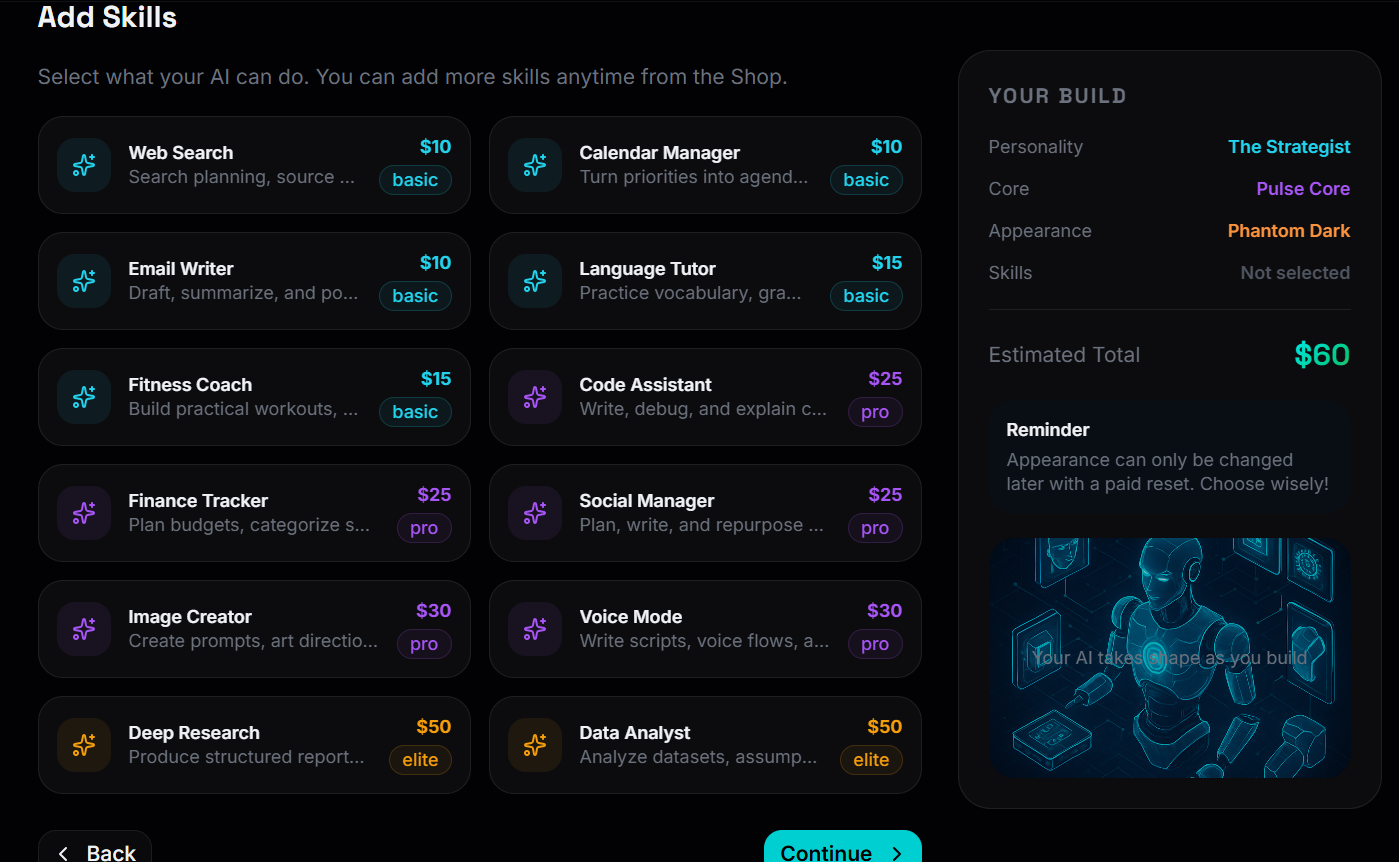
Operant was inspired by the experience of customizing products like Build-A-Bear. Instead of buying a single fixed AI assistant, users start with a base agent and personalize it with modular skills, capabilities, knowledge, and future upgrades. The goal is to make AI feel less like installing software and more like building a teammate.
I also wanted to lower the barrier to creating specialized AI agents by providing a platform where powerful capabilities can be discovered, purchased, and combined without requiring users to build everything themselves.
What it does
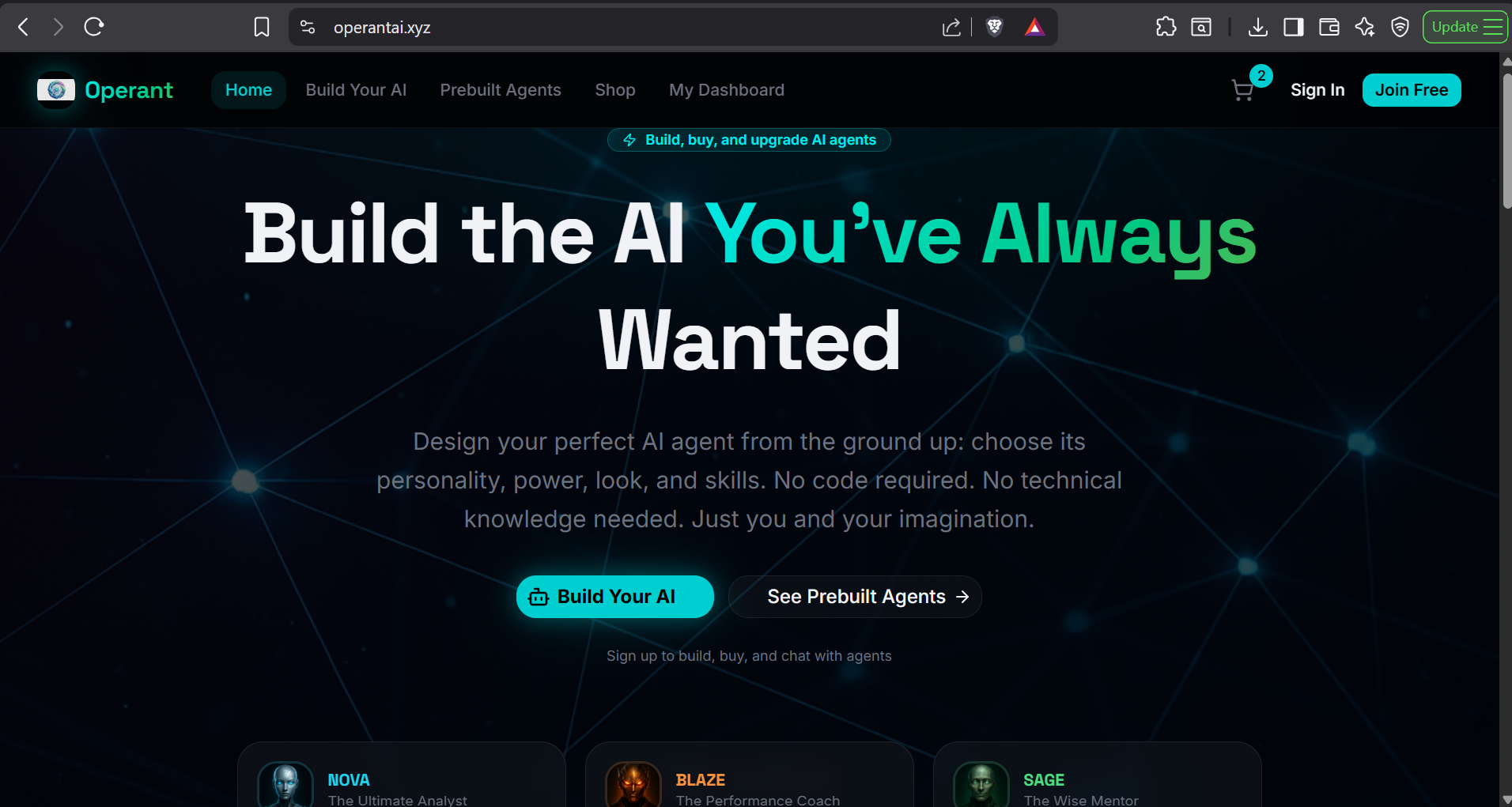
Operant is a marketplace for modular AI agents.
Users can:
- Browse specialized AI agents.
- Purchase agents through integrated Stripe checkout.
- Upgrade agents with modular skills and capabilities.
- Manage their owned agents and upgrades from a central dashboard.
- Build an AI tailored to their own workflow instead of settling for one size fits all assistants.
My long term vision is an ecosystem where AI capabilities can be mixed, matched, and expanded over time.
How I built it
Operant was built as a modern full stack web application using:
- Next.js 16
- React
- TypeScript
- Tailwind CSS
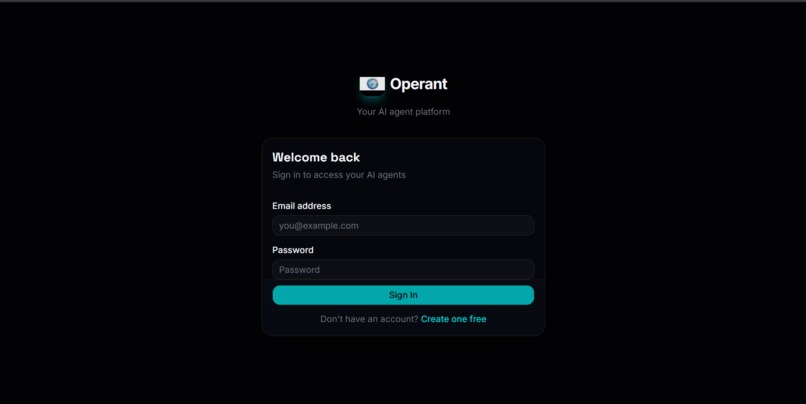
- AWS Cognito for authentication
- Amazon Aurora PostgreSQL for persistent data
- Stripe Embedded Checkout for payments
- Vercel for hosting and deployment
- Vercel v0 for rapid UI development
The backend manages authentication, user ownership, purchases, skills, and inventory while the frontend provides a responsive marketplace experience.
Challenges I ran into
One of the biggest challenges was integrating multiple cloud services into a seamless purchasing experience.
Authentication, payment processing, and database synchronization all had to work together correctly. I spent significant time debugging authentication issues, configuring Aurora database access, ensuring users were correctly recognized after login, and making sure purchased upgrades appeared immediately after checkout.
Designing a modular upgrade system that could support future expansion was also an interesting challenge, since every purchased capability needs to become part of the user's evolving AI agent.
What I learned
This project reinforced how important good system architecture is when multiple cloud services interact.
I gained experience working with cloud authentication, relational database design, payment integration, and building scalable full stack applications. I also learned the importance of designing software for future extensibility rather than only solving today's requirements.
What's next
This submission is the foundation for a much larger vision.
Future versions of Operant will include more advanced, community-created AI agents, richer customization, agent skills, subscriptions, collaborative workflows, advanced search, recommendation systems, and deeper integrations with external tools and enterprise platforms.
Built With
- aws-aurora
- aws-cognito-auth
- next.js
- stripe
- tailwind
- typescript
- v0.dev
- vercel

Log in or sign up for Devpost to join the conversation.