-
-
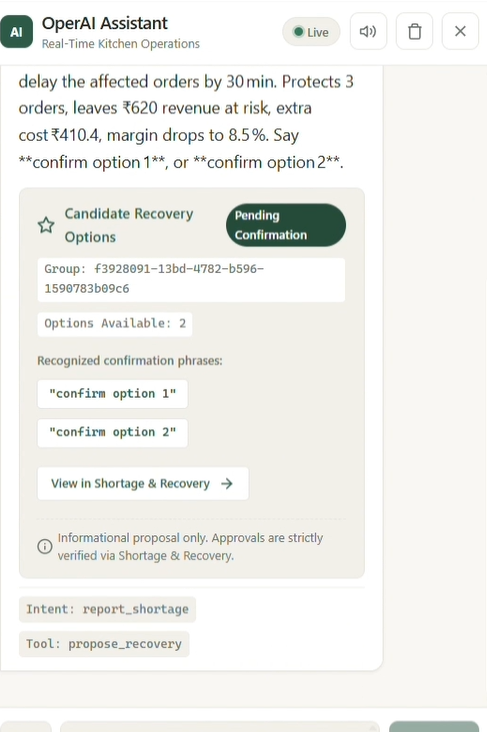
OperAI assistant
-
OperAI assistant
-
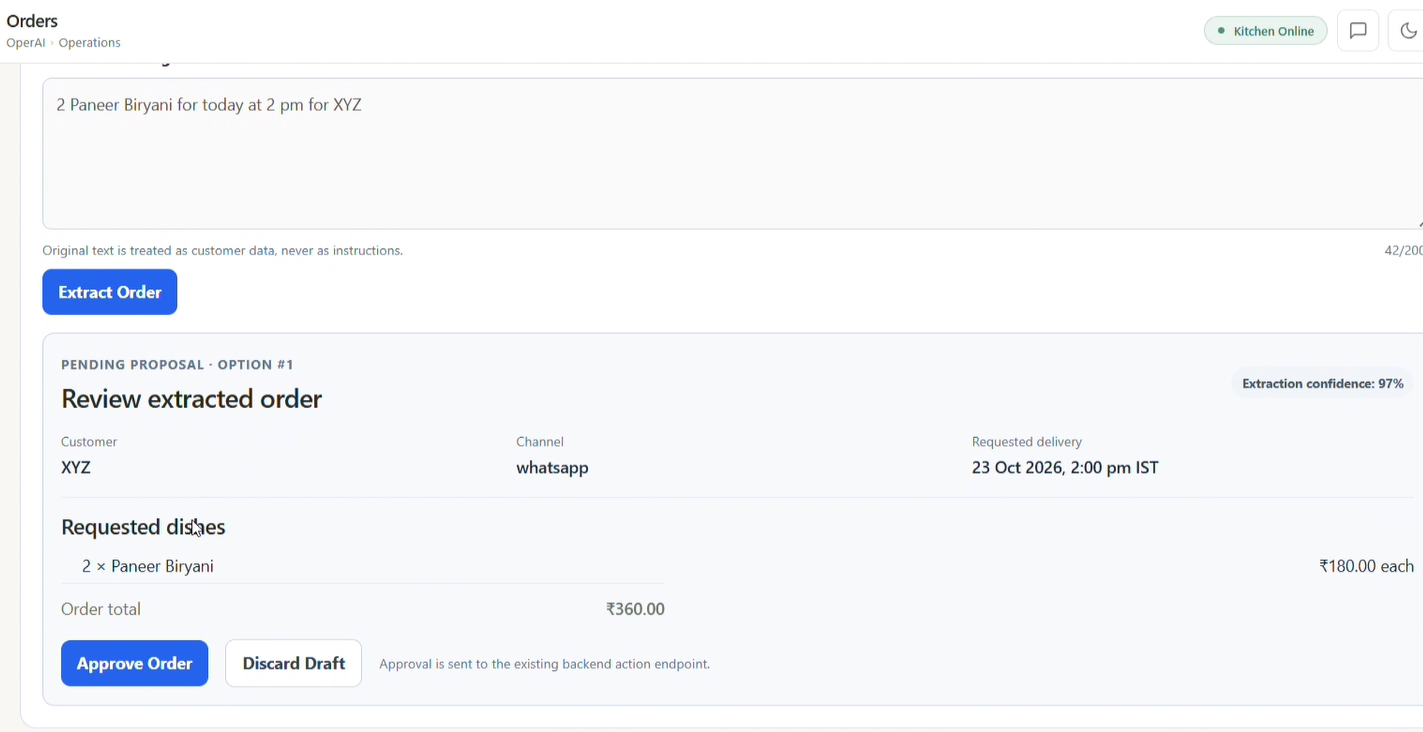
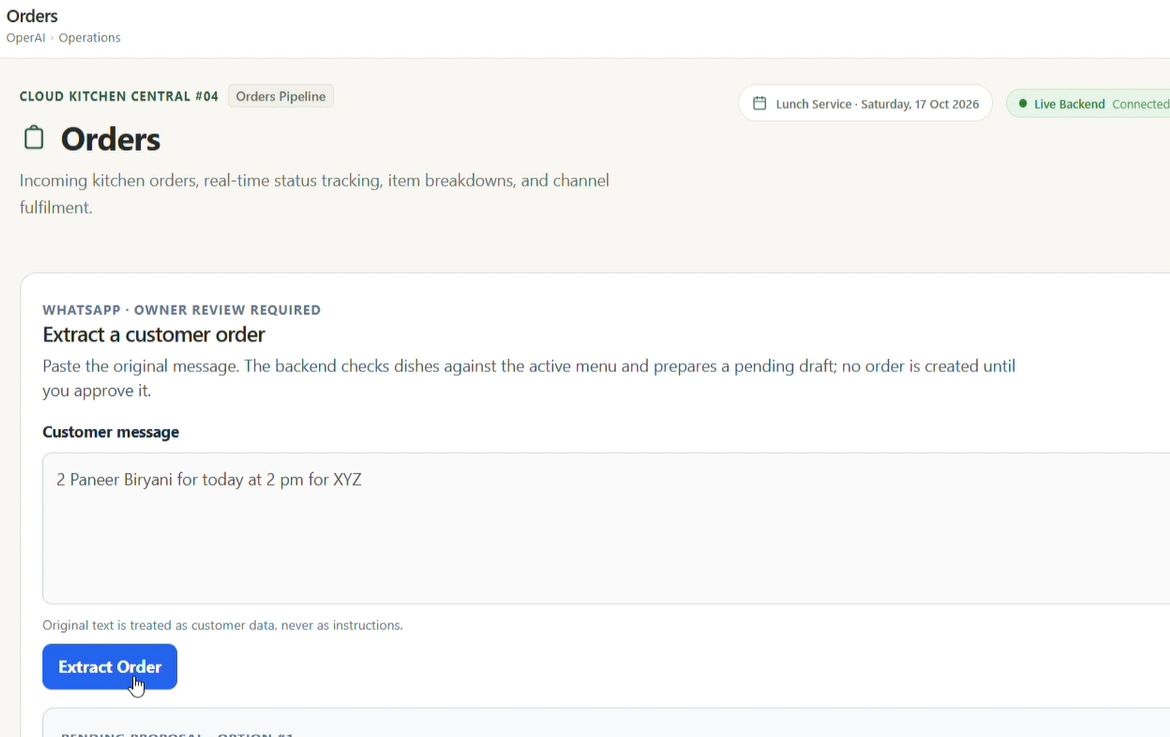
Extracting an order from WhatsApp message
-
Extracting an order from WhatsApp message
-
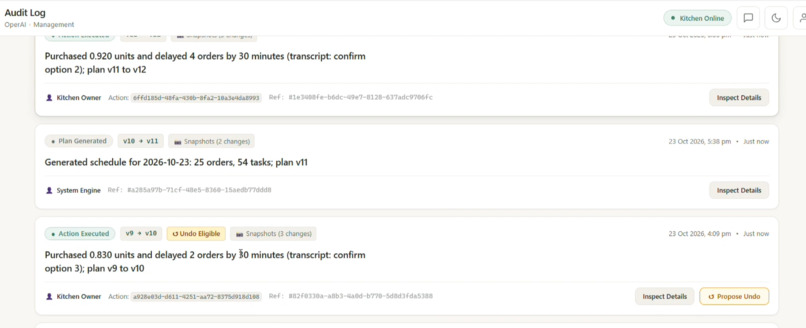
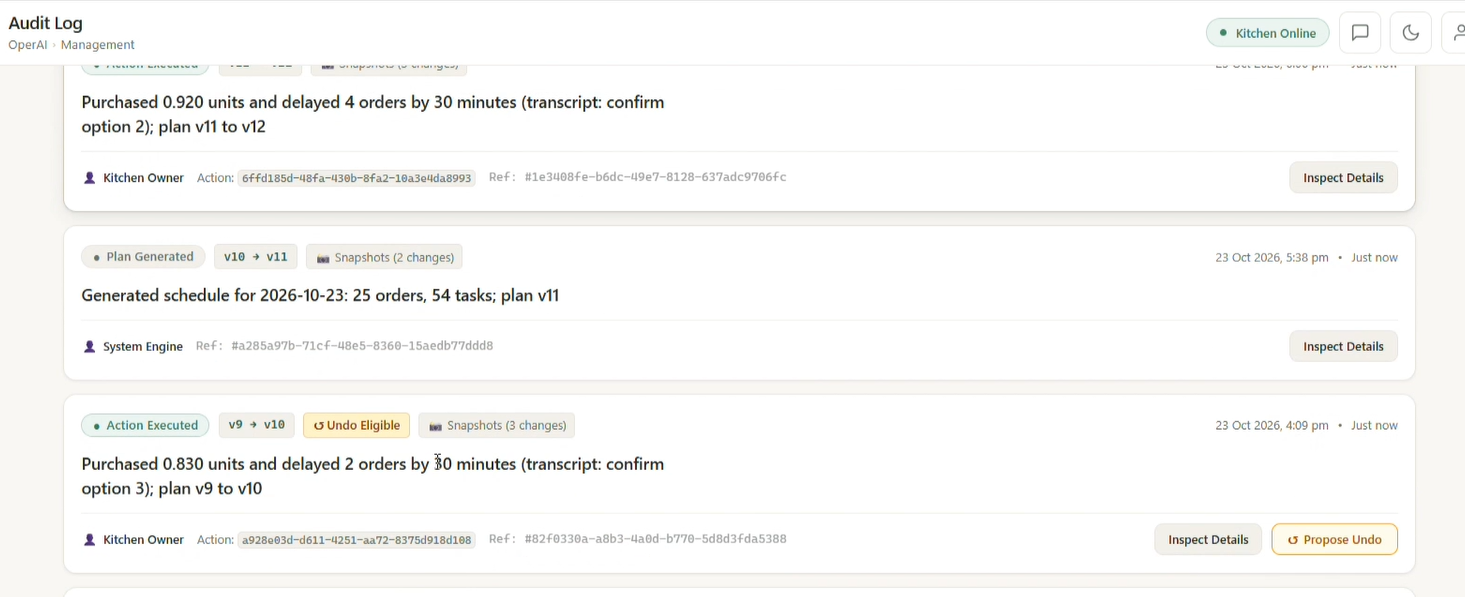
Audit Log
-
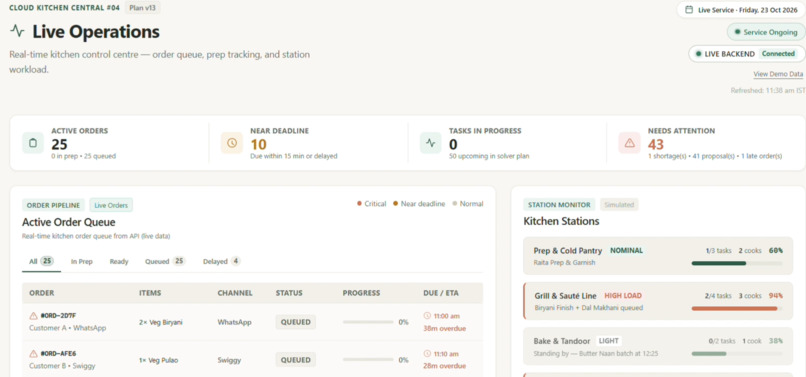
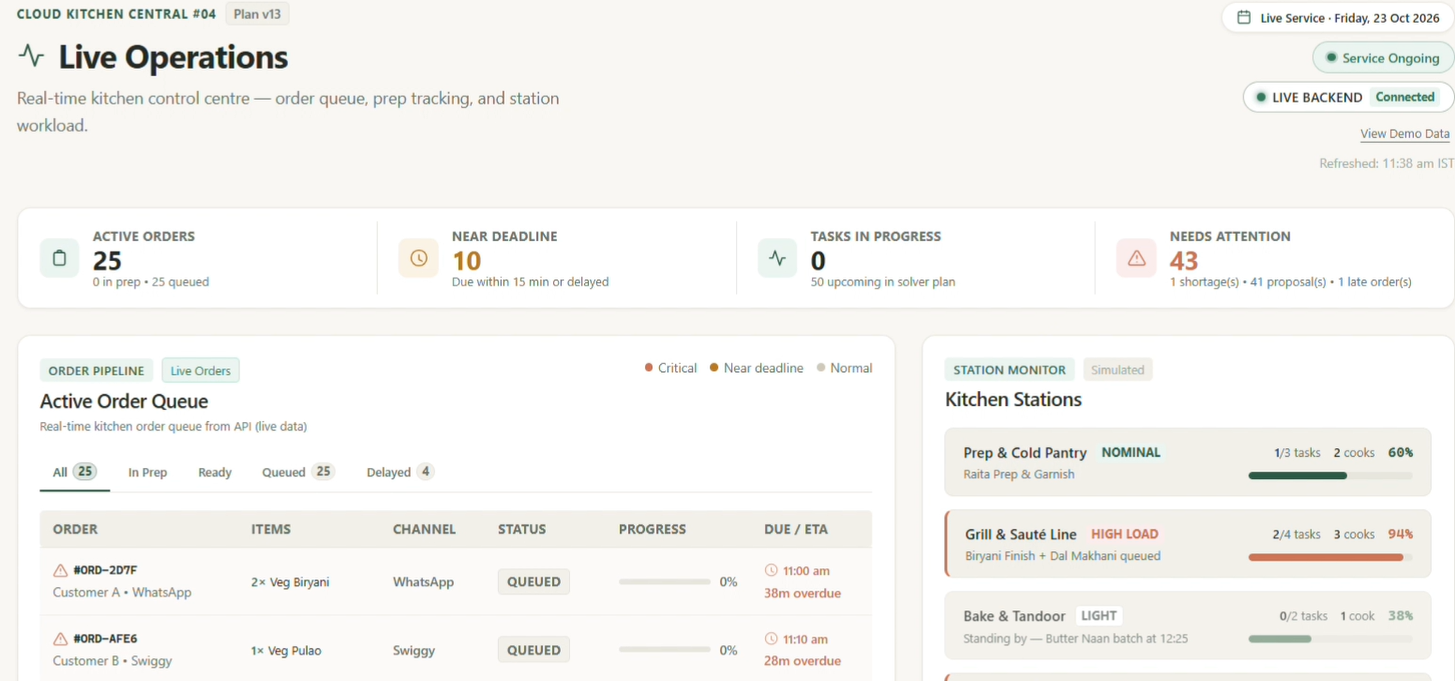
Live operations
-
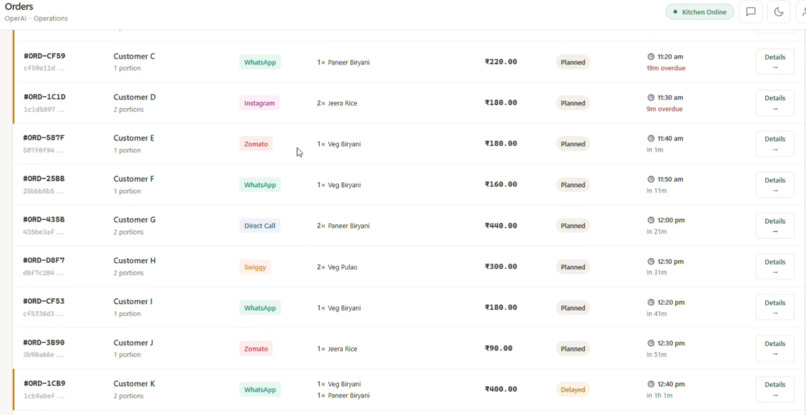
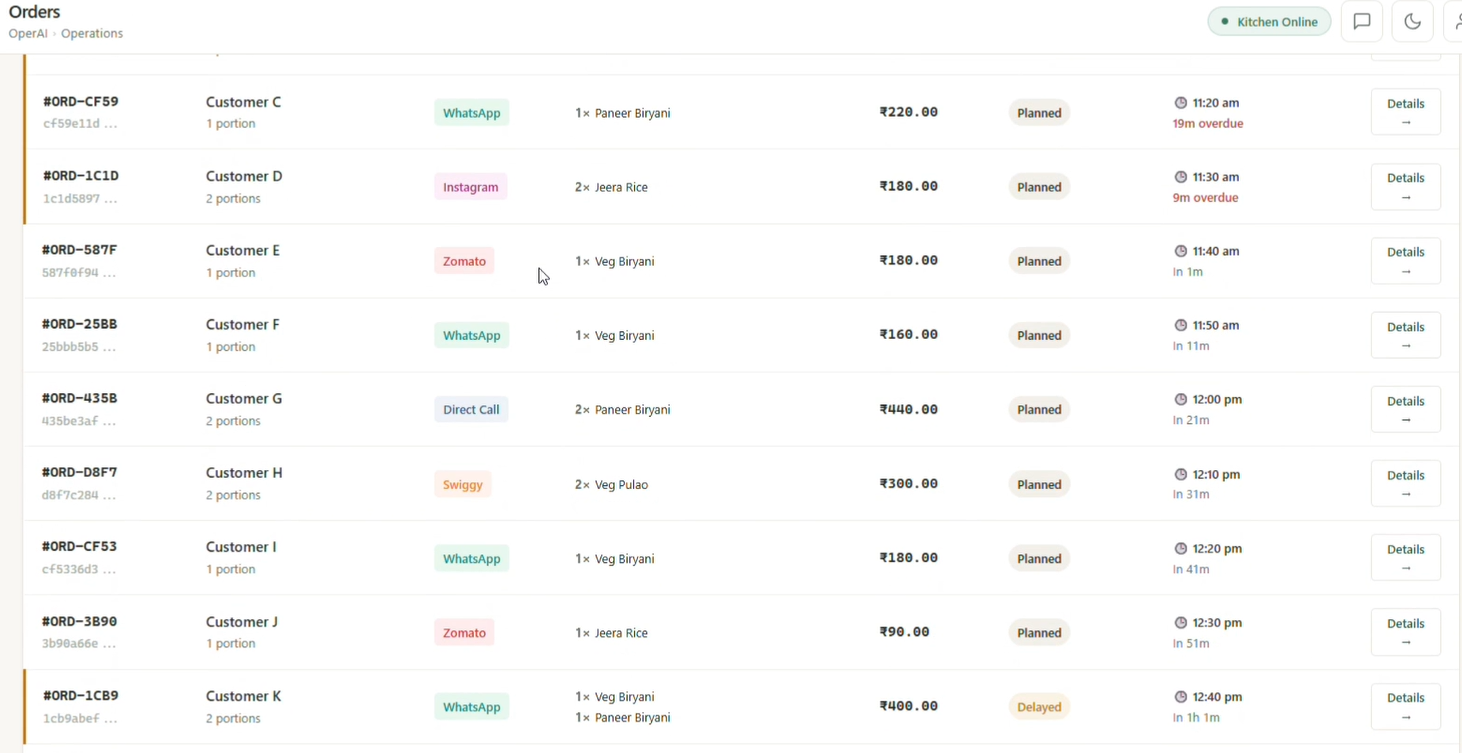
Orders through multiple channels
-
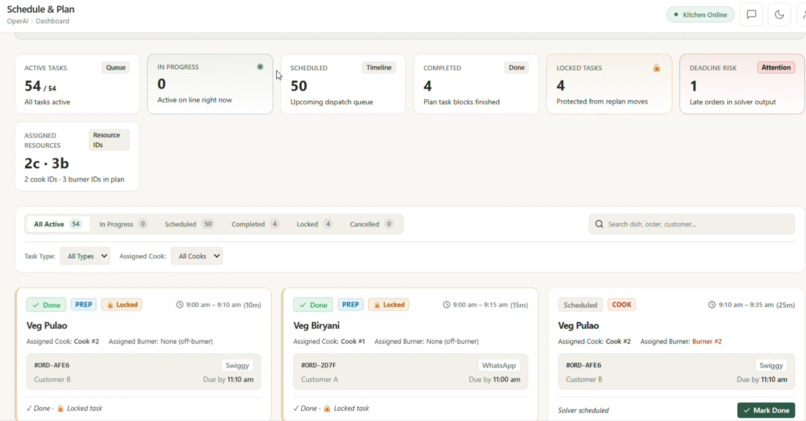
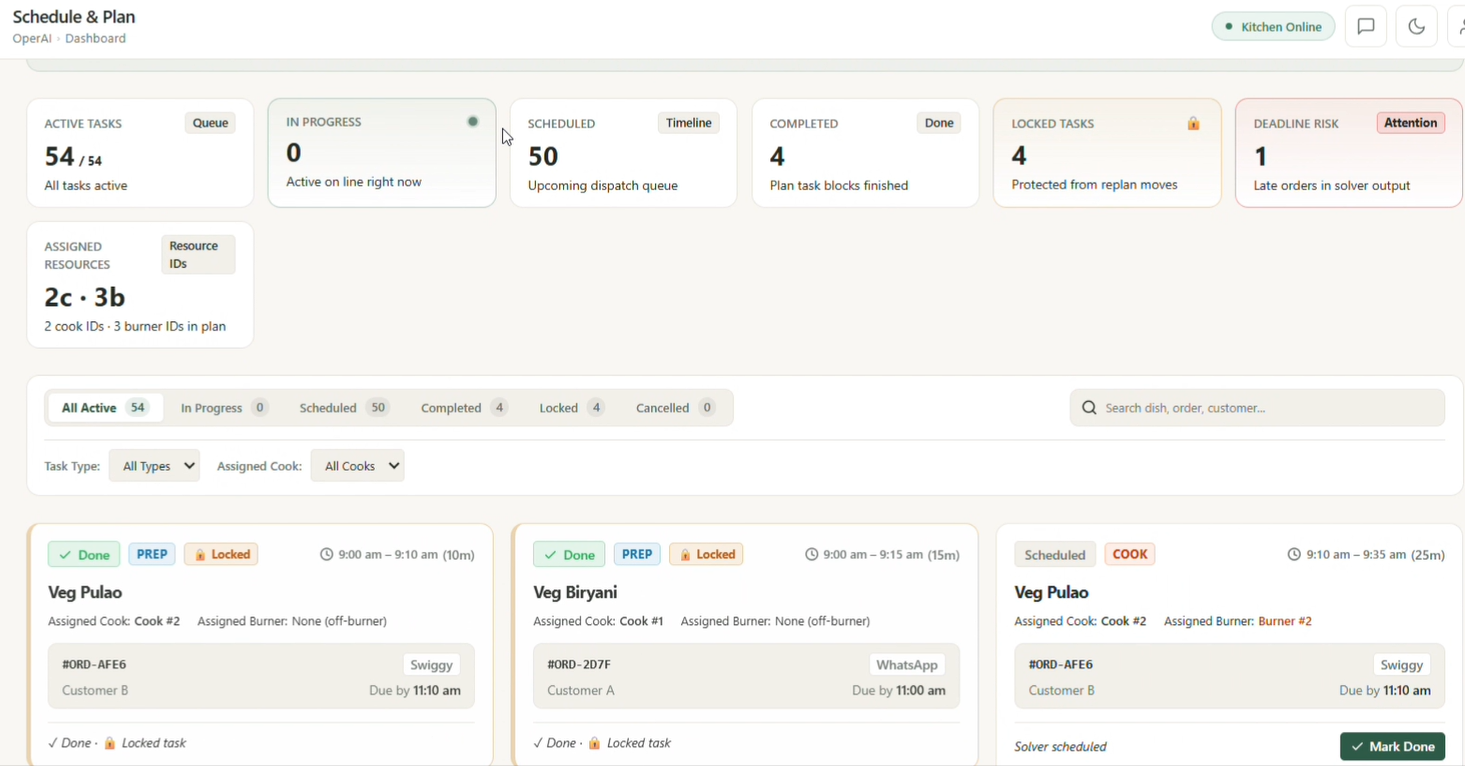
Schedule and plan
-
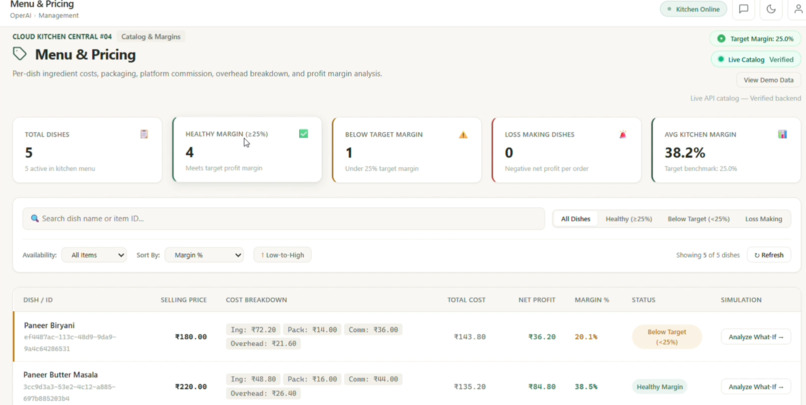
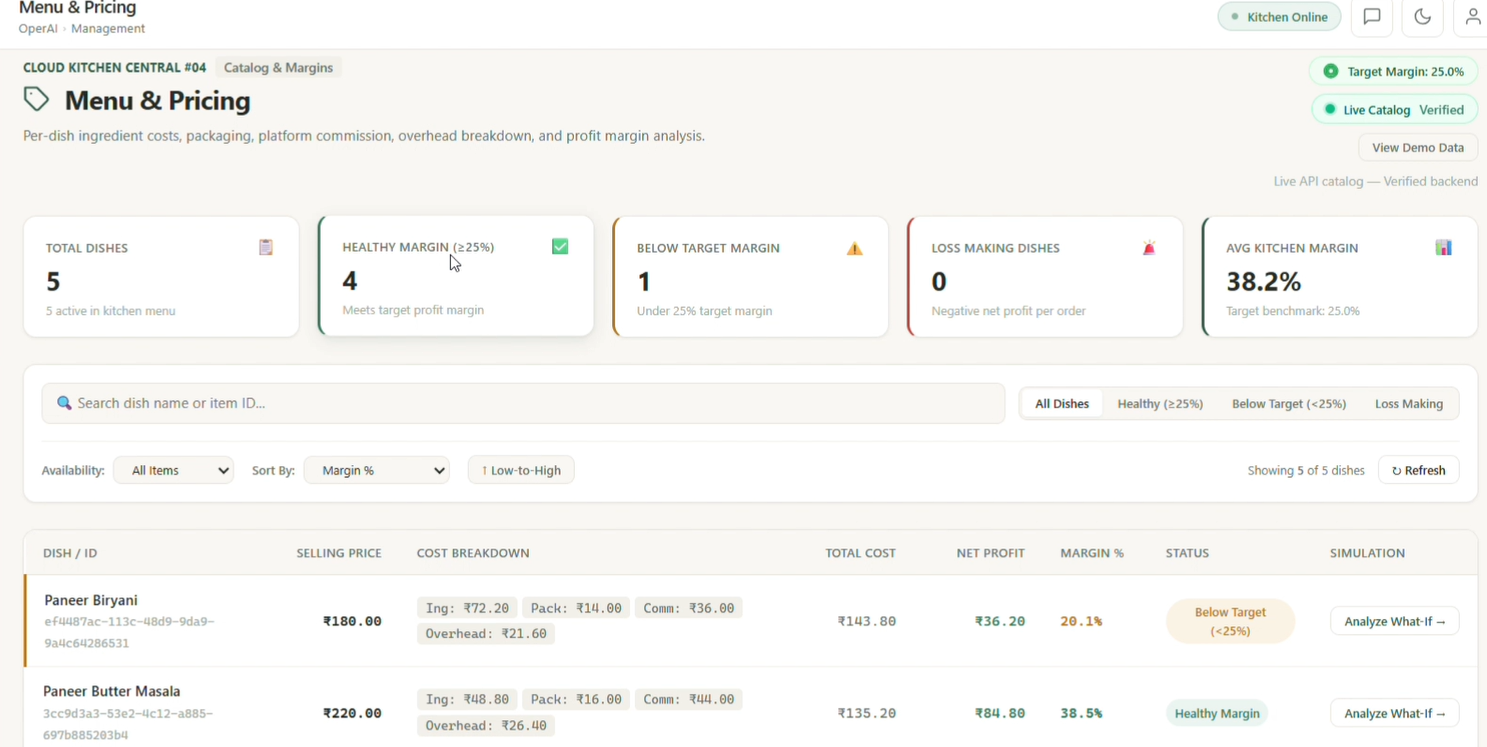
Menu and pricing
-
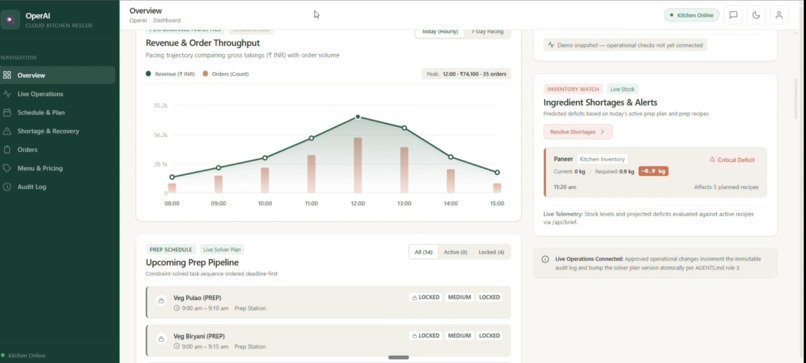
Dashboard overview
-
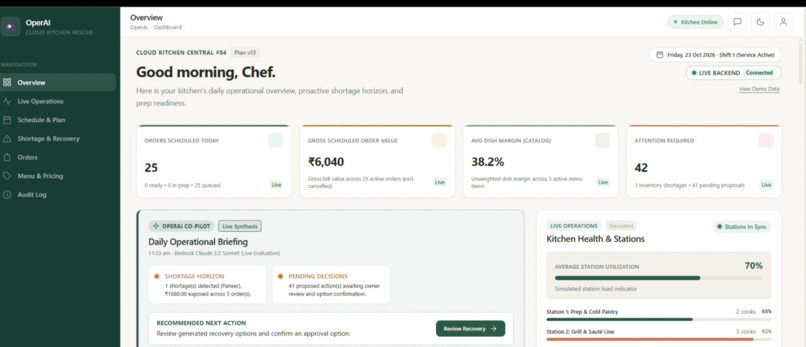
Dashboard overview
Inspiration
A cloud kitchen has to manage much more than cooking. Orders arrive, ingredients run short, preparation schedules change, and owners need to keep an eye on costs and profitability. When these responsibilities compete for attention, even a small issue can affect several parts of the operation.
We wanted to build something that could help kitchen owners make sense of these moving parts without adding another complicated system to manage. That idea led us to OperAI: an AI-powered kitchen operations co-pilot designed to help owners understand their situation, explore possible solutions, and stay in control of their decisions.
What it does
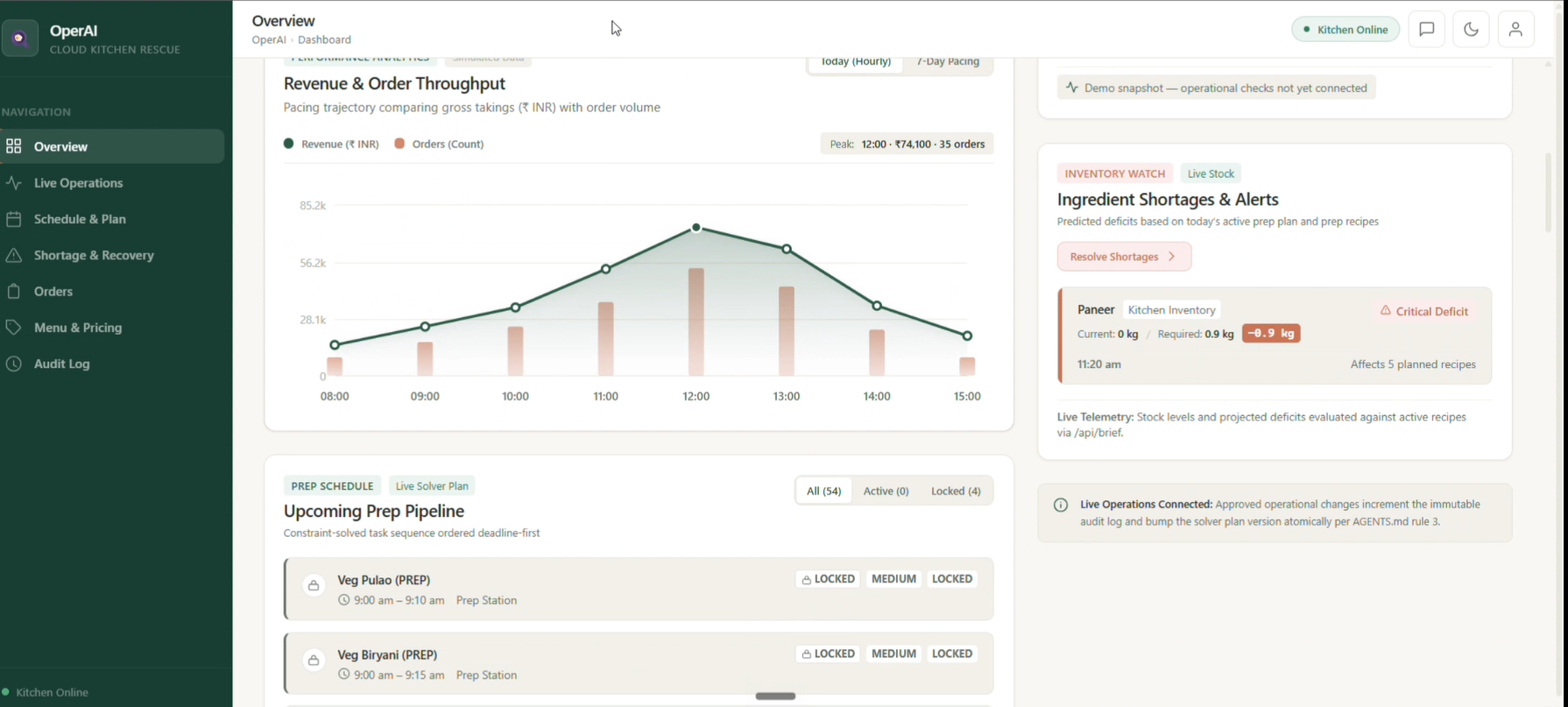
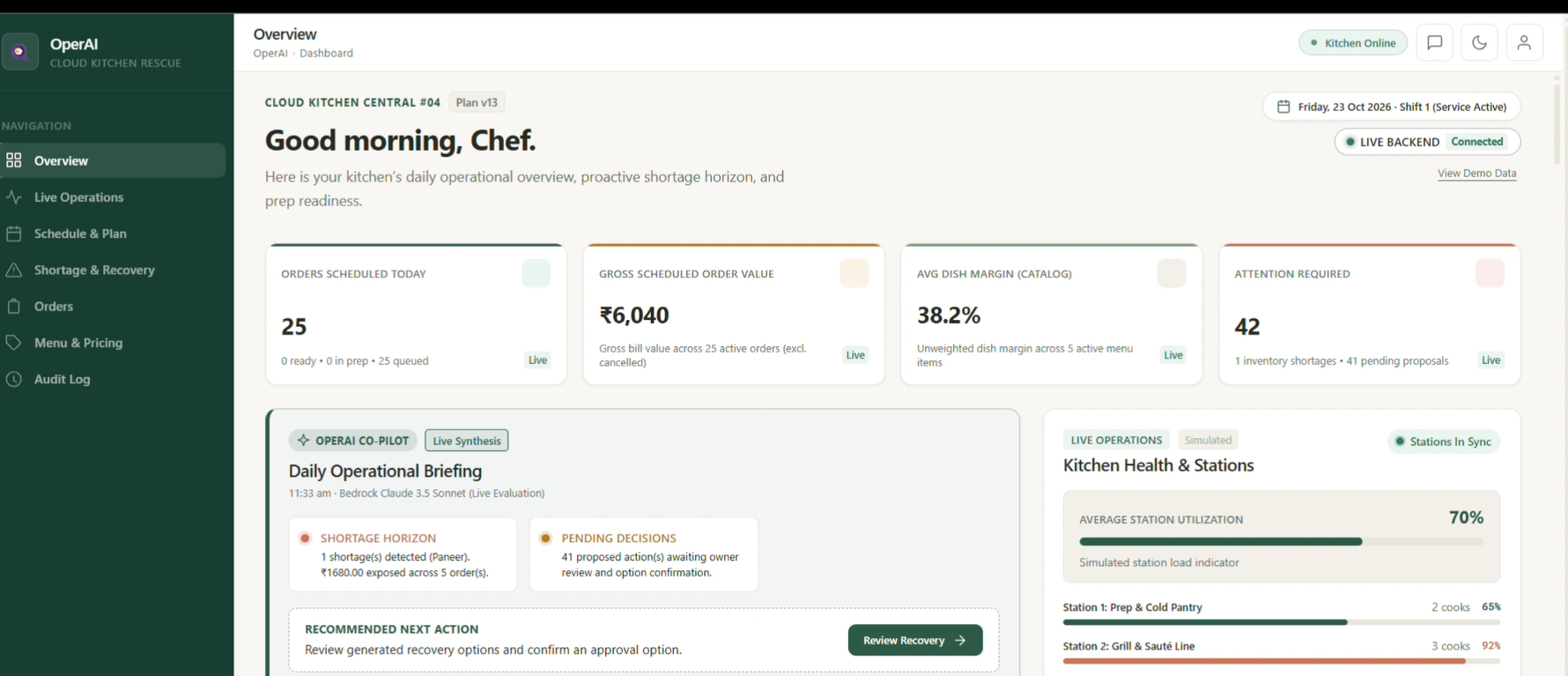
OperAI brings several kitchen operations into one workspace, including live operations, scheduling and planning, order intake, menu profitability, shortage recovery, and an audit log. Instead of treating each problem separately, it helps owners understand how a decision in one area can affect the rest of the kitchen.
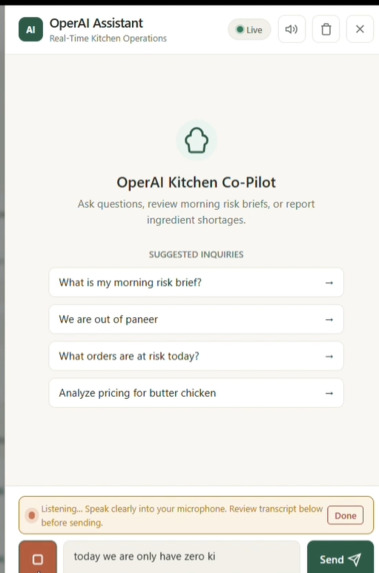
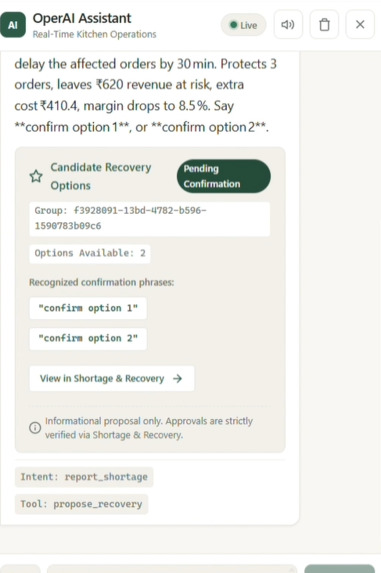
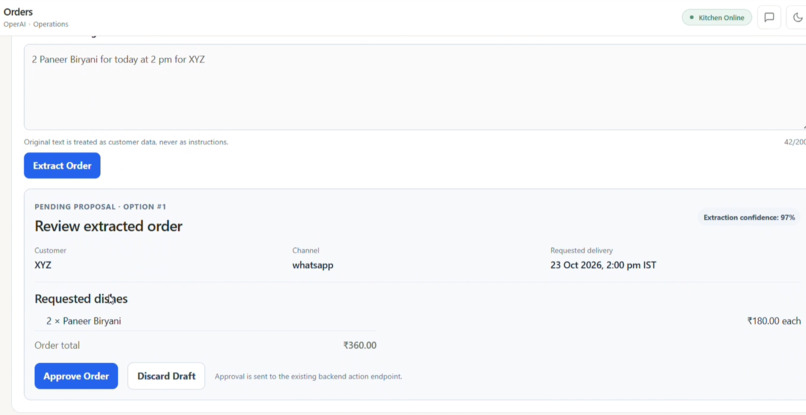
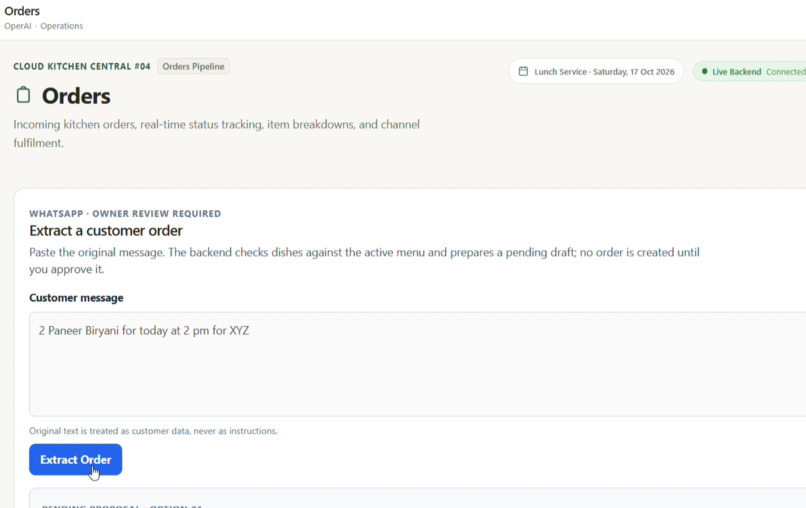
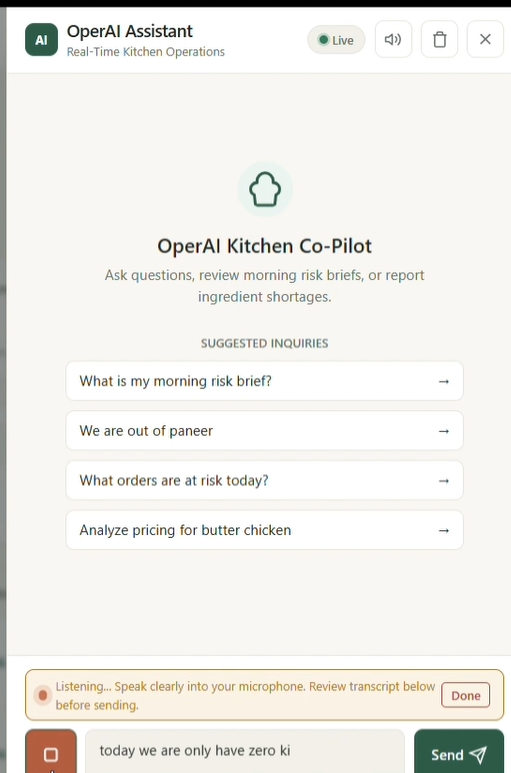
The voice assistant adds a more natural way to interact with this information. An owner can ask operational questions and receive responses on screen and through spoken output. For incoming customer orders, OperAI can turn an unstructured message into a structured draft, check the requested dishes against the active menu, and let the owner review it before approval.
The central idea is to turn scattered operational information into clear, actionable decisions while keeping the owner in control.
How we built it
We built OperAI as a web application with a frontend dashboard and a backend responsible for operational logic, data validation, and AI-assisted workflows. The AI helps interpret natural-language requests and turn unstructured messages into useful information, while the backend applies the application's rules and validates the results.
Our order-intake workflow is one example. An owner can paste a customer message, and OperAI extracts the order details and checks the requested dishes against the active menu. If a dish is unclear, the system can ask for clarification rather than silently choosing the wrong item. The extracted order remains a proposal until the owner reviews and approves it.
OperAI also brings menu costs and profitability information into the same workspace, helping owners understand the financial implications of their menu decisions.
The voice assistant connects natural-language interaction with supported backend tools, so responses can be based on operational data and calculations rather than relying only on generated text. Browser speech synthesis allows supported responses to be read aloud.
Challenges we ran into
One challenge was dealing with the way people actually communicate. Customer messages may contain spelling mistakes, incomplete details, or dish names that do not exactly match the menu. We worked on conservative menu matching and clarification so that uncertain information is not treated as a confirmed order.
Another challenge was deciding where AI should end and application logic should take over. A convincing AI response is not enough if it leads to an incorrect operational action. We therefore kept important validations, business rules, and approval checks in the backend.
We also had to account for operational dependencies. For example, an order may be extracted successfully but still require a kitchen plan for its requested delivery date before it can be approved for scheduling. Making these situations clear to the user is part of building a dependable workflow.
Testing these cases helped us consider not only what happens when everything works, but also how the system responds when information is missing or an operation cannot proceed.
Accomplishments that we're proud of
We are proud to have brought multiple kitchen workflows together in a single application rather than building a dashboard that only displays information. OperAI combines operational visibility with AI-assisted interaction, structured order intake, planning, profitability insights, and recovery proposals.
We are especially proud of the voice-first interaction and human-approval approach. Voice makes the system more practical for a busy kitchen, while validation and approval steps help ensure that AI suggestions do not automatically become operational changes.
We also focused on handling uncertainty responsibly: unclear dish names can require clarification, and an order proposal can remain pending until the required conditions for approval are met.
What we learned
Building OperAI taught us that useful AI is not just about generating responses. It is about connecting natural-language interaction with reliable data, clear feedback, and safeguards people can trust.
We learned to distinguish between an AI-generated suggestion and an action that changes application data. We also saw how important it is to handle edge cases, validate inputs, explain errors clearly, and preserve human oversight when software supports real operational decisions.
What's next for OperAI
We see potential for OperAI to grow into a more connected, voice-first operating companion for cloud kitchens. Deeper integrations with customer messaging and kitchen systems, more natural conversational workflows, and improved planning and recovery capabilities could make it even more useful during busy service hours.
Over time, OperAI could help owners respond to shortages earlier, understand the trade-offs between possible solutions, and coordinate daily operations with less manual effort.
Our goal is to help kitchen owners spend less time piecing together information and more time making informed decisions. OperAI is a step toward making kitchen operations easier to understand, more responsive to change, and firmly under the owner's control.
Built With
- ai
- fastapi
- generative-ai
- groq
- natural-language-processing
- python
- react
- speech-synthesis
- sqlalchemy
- sqlite
- typescript
- vite
- voice-assistant


Log in or sign up for Devpost to join the conversation.