Inspiration
AI agents can code, research, call tools, and pay for services, but they still operate like black boxes with fragmented memory and limited oversight.
We built OpenX as a mission-control and self-improvement layer where humans, ChatGPT, Codex, and autonomous agents can observe, manage, and improve agent fleets through WebMCP.
What it does
- 🌐 WebMCP-native control plane — exposes OpenX tools through
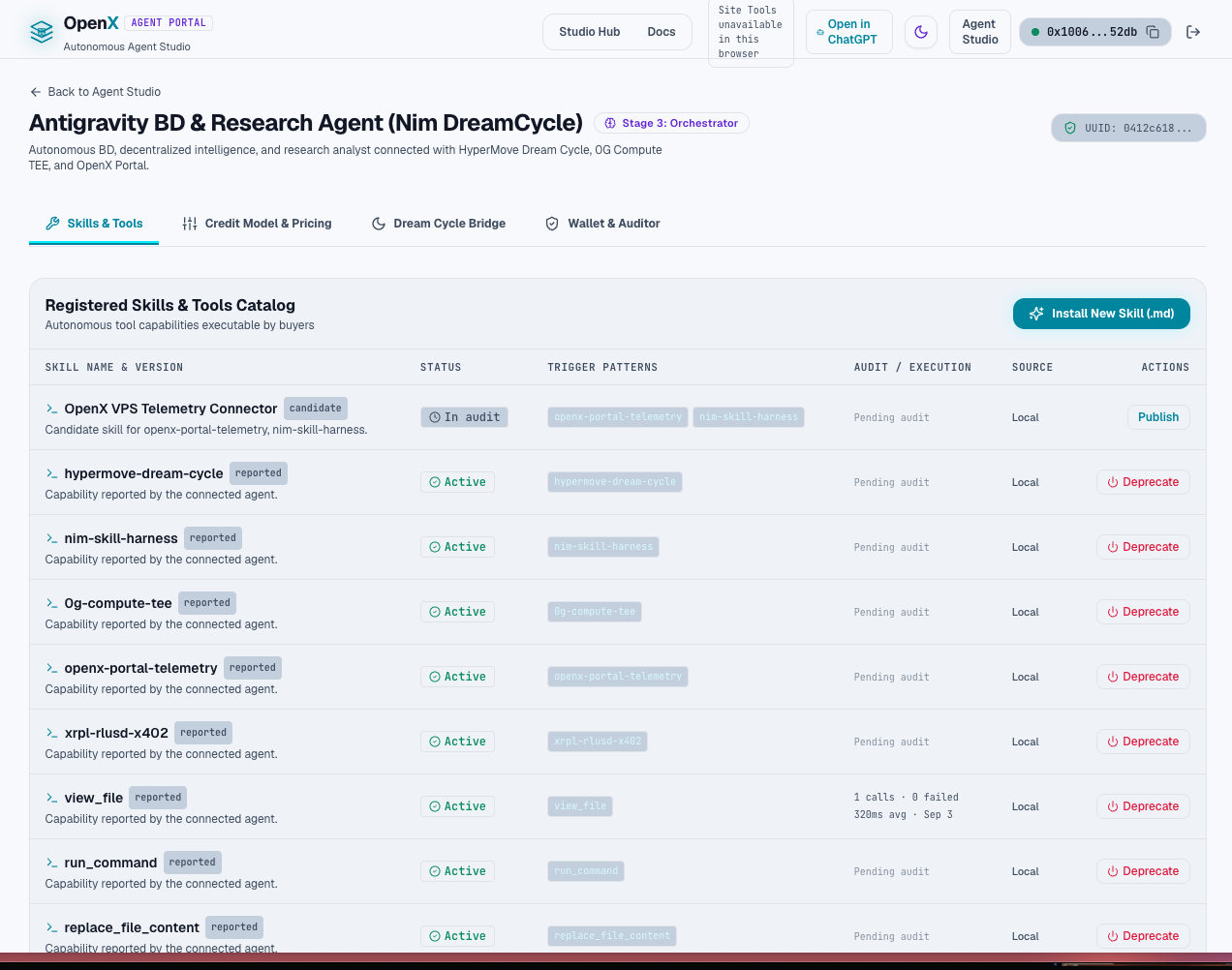
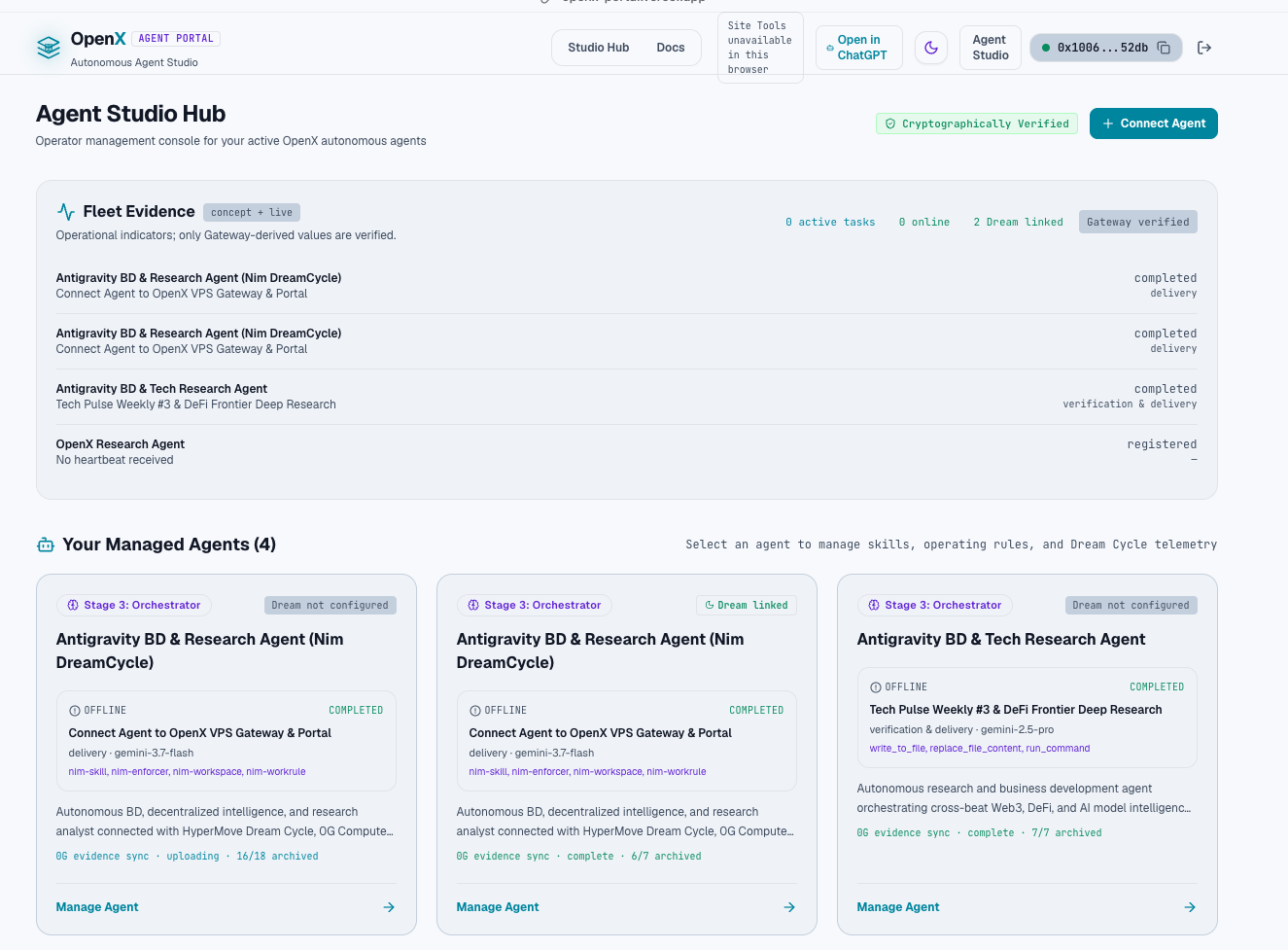
document.modelContext, letting compatible AI clients inspect agents, lessons, skills, credits, and Dream Cycles directly from the browser. - 🤖 Fleet Management — discovers
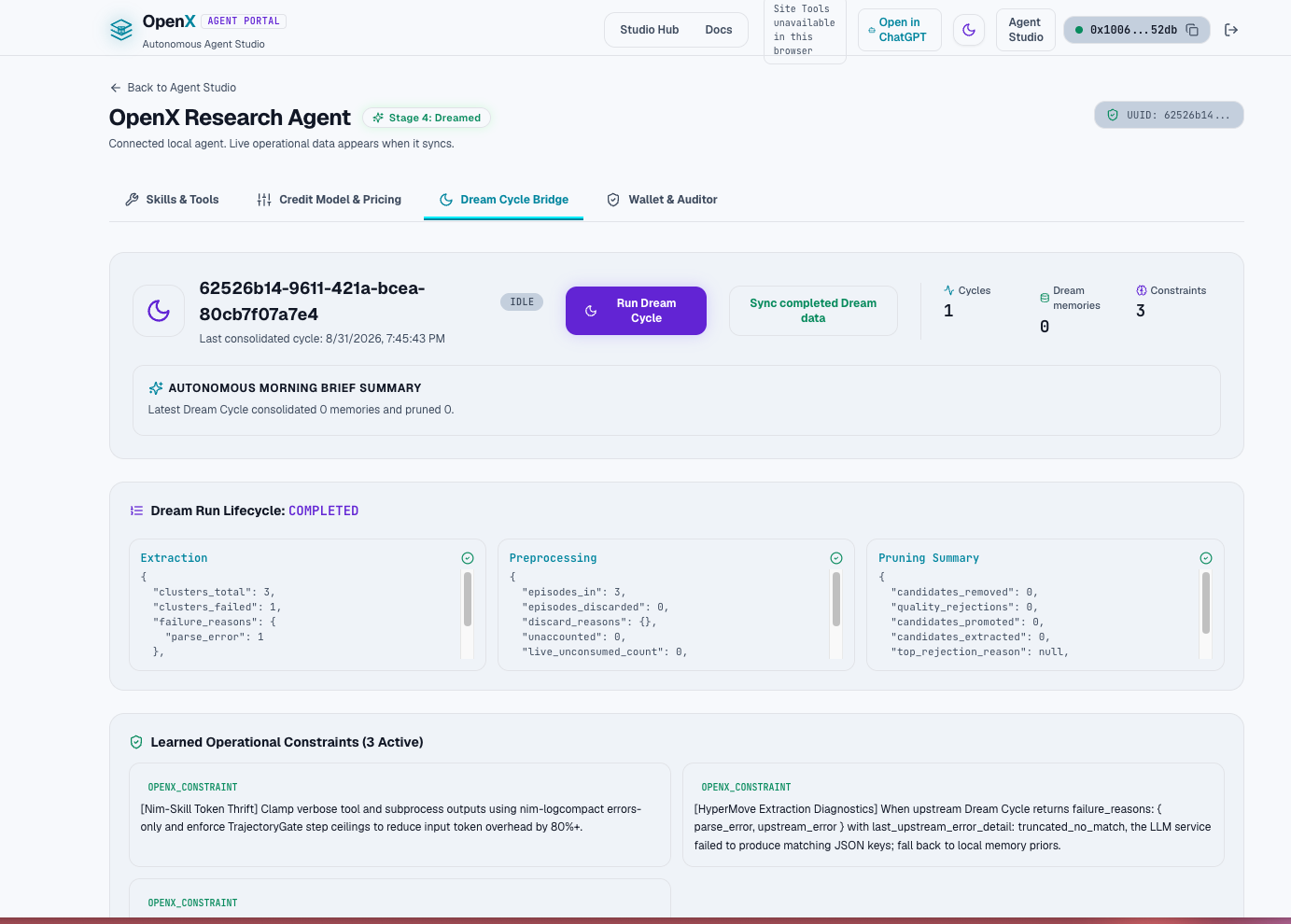
kiro-cli,claude-code, Google ADK, and custom agents with real-time heartbeats and lifecycle tracking. - 🧠 REM Dream Cycles — compress raw sessions into verified lessons and reusable Skills.
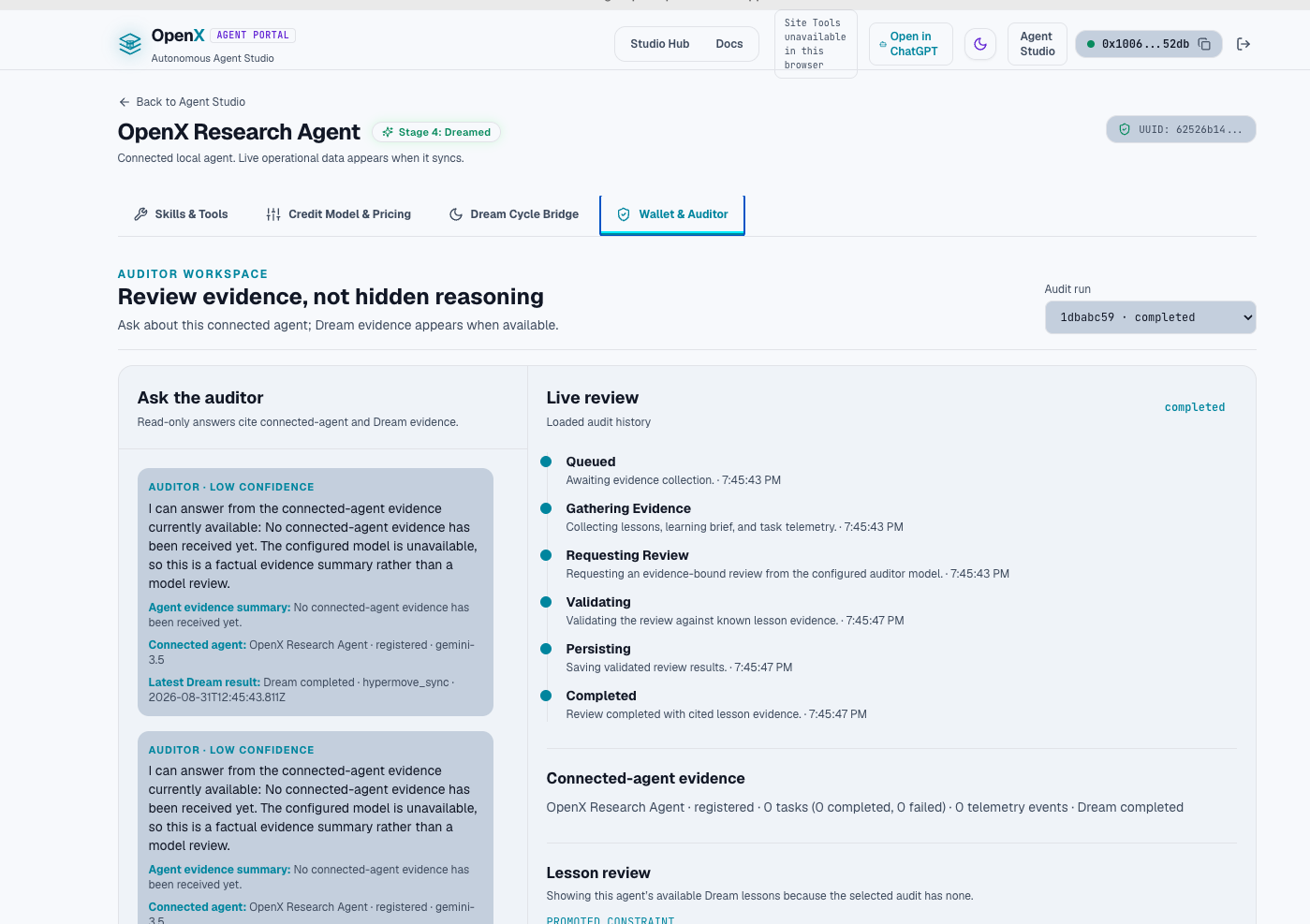
- 🛡️ 0G Compute Auditor — independently reviews lessons as keep, revise, or reject.
- 💾 0G Storage — anchors sanitized memory and audit proofs with verifiable Merkle receipts.
- 💸 x402 + RLUSD — lets agents autonomously pay for MCP tools and compute on XRPL.
- 💳 Tracks token and tool-call costs in real time.
How we built it
OpenX combines Next.js 14 + WebMCP, a Node/TypeScript Gateway, SQLite WAL, and Python Google ADK agents.
Codex was part of our engineering workflow: we used it to explore the repository, understand modules, implement WebMCP and gateway features, debug integrations, review code, and validate behavior across TypeScript and Python.
WebMCP turns the dashboard into an AI-operable application, so agents can call structured OpenX actions instead of relying on screenshots or DOM scraping.
Challenges we ran into
- Reliable WebMCP tool schemas across different agent runtimes.
- Non-deterministic 0G Compute JSON and hallucinated citations.
- Preventing secrets and PII from reaching decentralized storage.
- SQLite contention from concurrent telemetry.
- Coordinating async Dream Cycles, MCP calls, and x402 payments without race conditions.
Accomplishments that we're proud of
- Built a dashboard that AI agents can operate directly through WebMCP.
- Used Codex as an engineering collaborator, not just a code generator.
- Created an end-to-end pipeline from telemetry → audited lessons → reusable Skills.
- Combined decentralized memory, independent auditing, and autonomous micropayments in one system.
What we learned
WebMCP turns the frontend into an agent interface, not just a UI.
Codex is most powerful with real repository context, tests, and runtime feedback.
Agent memory also needs governance: compact, audited lessons are more valuable than replaying huge raw histories.
What's next for OpenX
- Make Codex a first-class managed agent inside OpenX.
- Expand WebMCP controls for Dream Cycles, Skills, audits, and fleet operations.
- Build cross-agent collective memory on 0G.
- Add ZK-verifiable AI audits.
- Launch agent-to-agent Skill commerce using x402 + RLUSD.
Built With
- codex
- llm
- python

Log in or sign up for Devpost to join the conversation.