-
OpenSupply- Operational Command
-
-
-
-
-
-
-
-
-
-
-
-
-
-
Inspiration
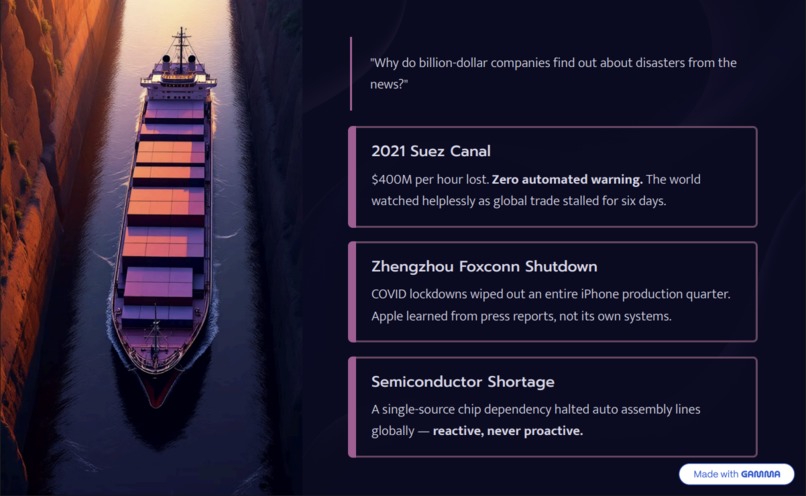
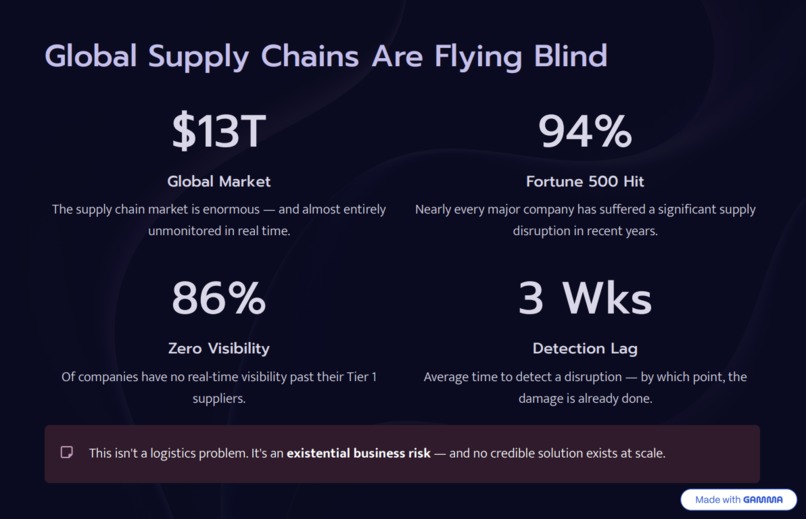
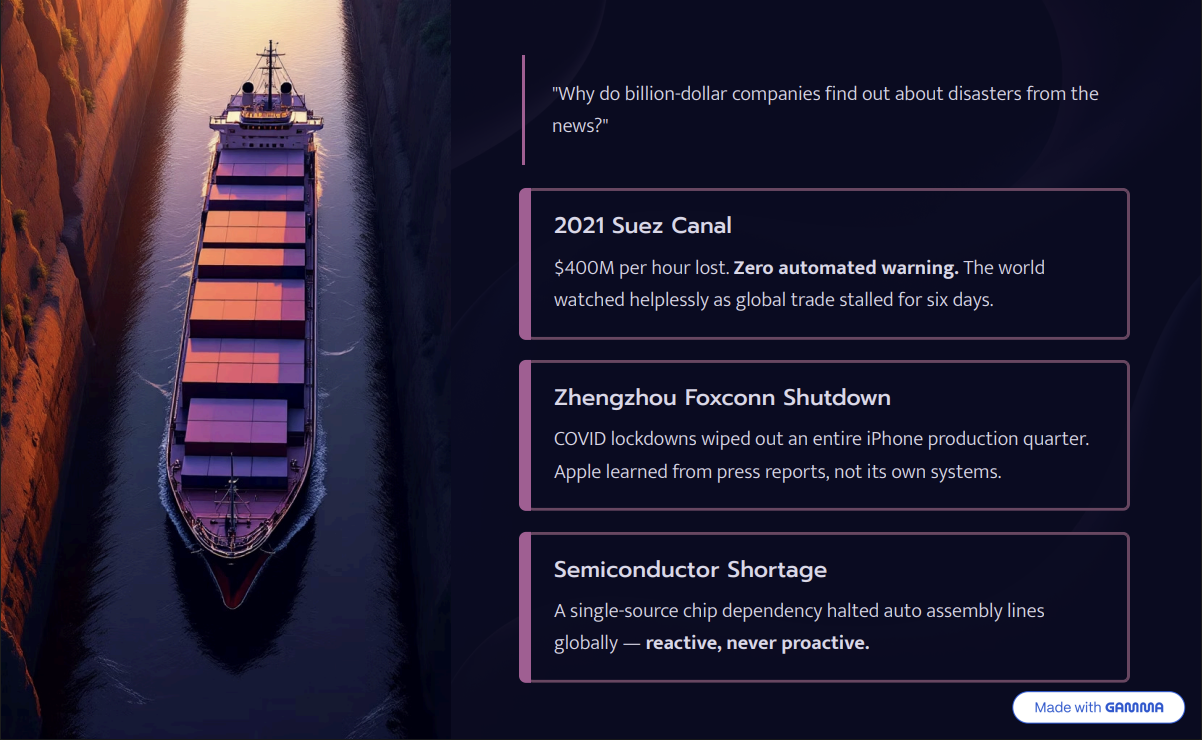
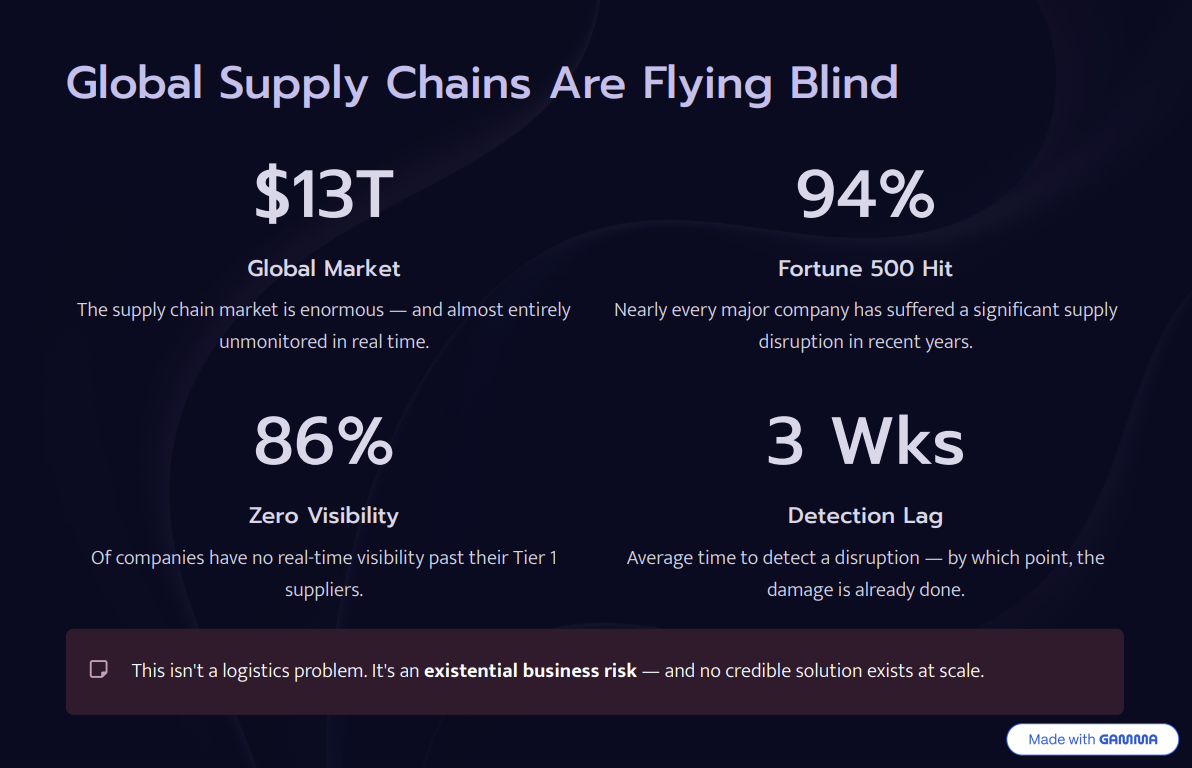
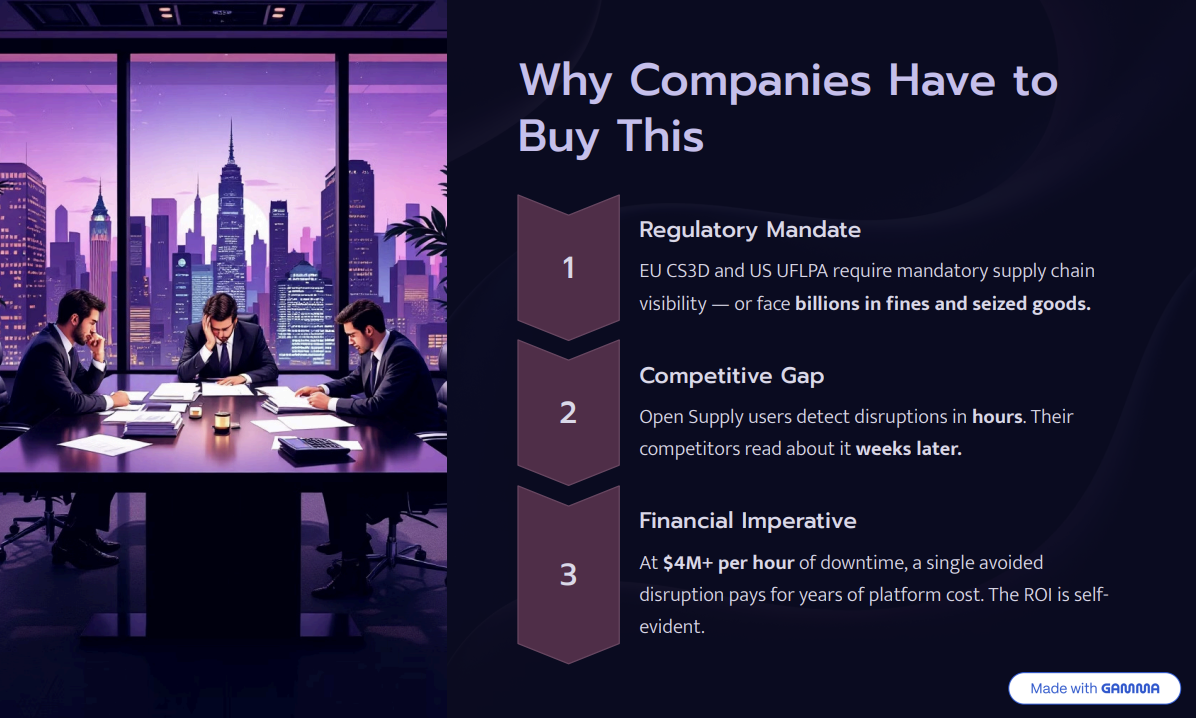
In 2021, the Suez Canal blockage halted global trade for six days, costing an estimated $400 million per hour. What stood out wasn’t just the scale of the disruption — it was how unprepared companies were. Most had no real-time visibility into their supply chains and only discovered the impact after it was already too late.
That moment highlighted a core problem: modern supply chains are incredibly complex, yet the tools to monitor and respond to them are fragmented, reactive, and incomplete.
We built Open Supply to solve this.
What it does
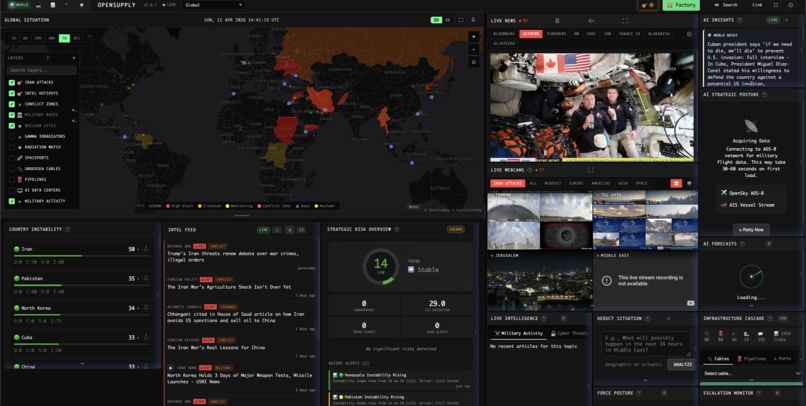
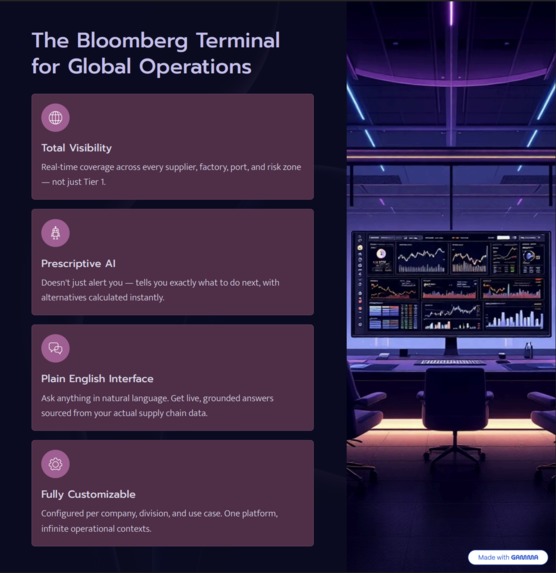
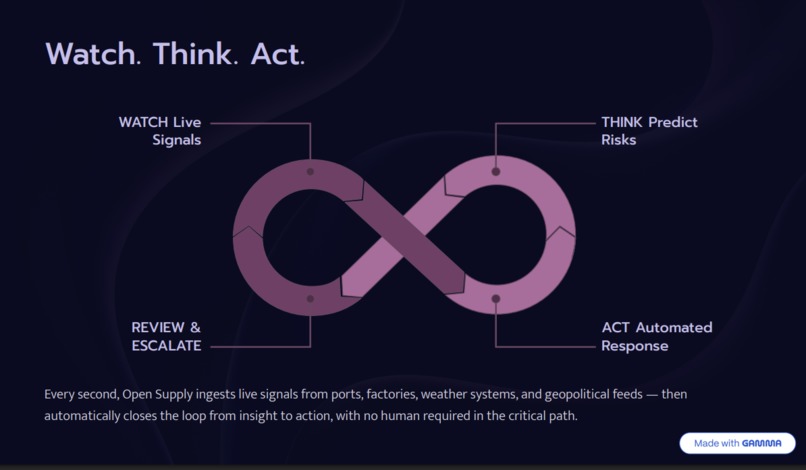
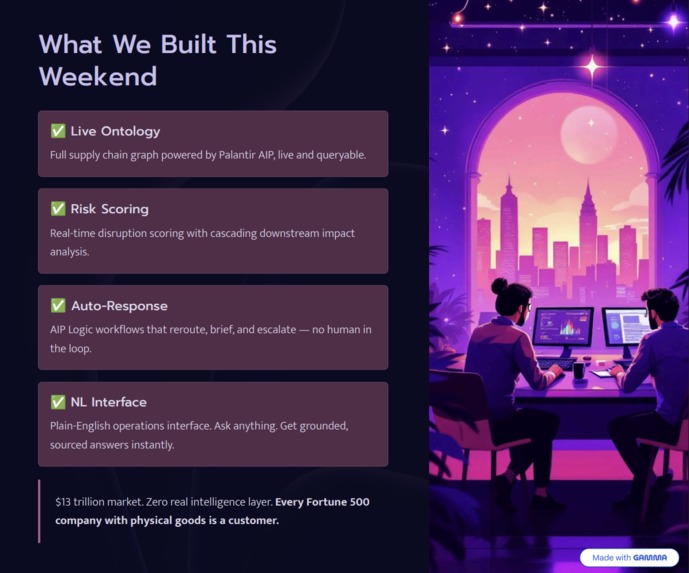
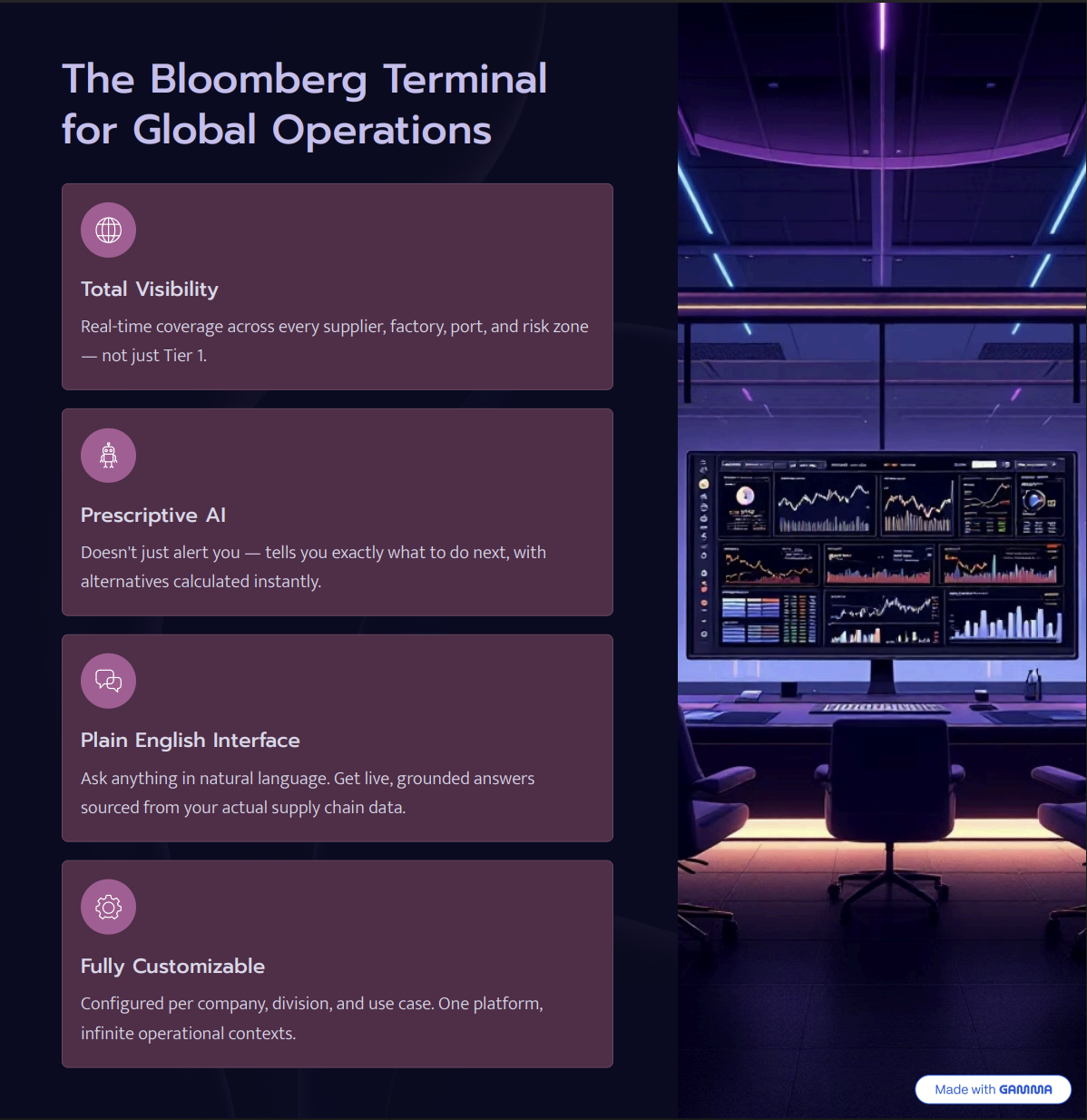
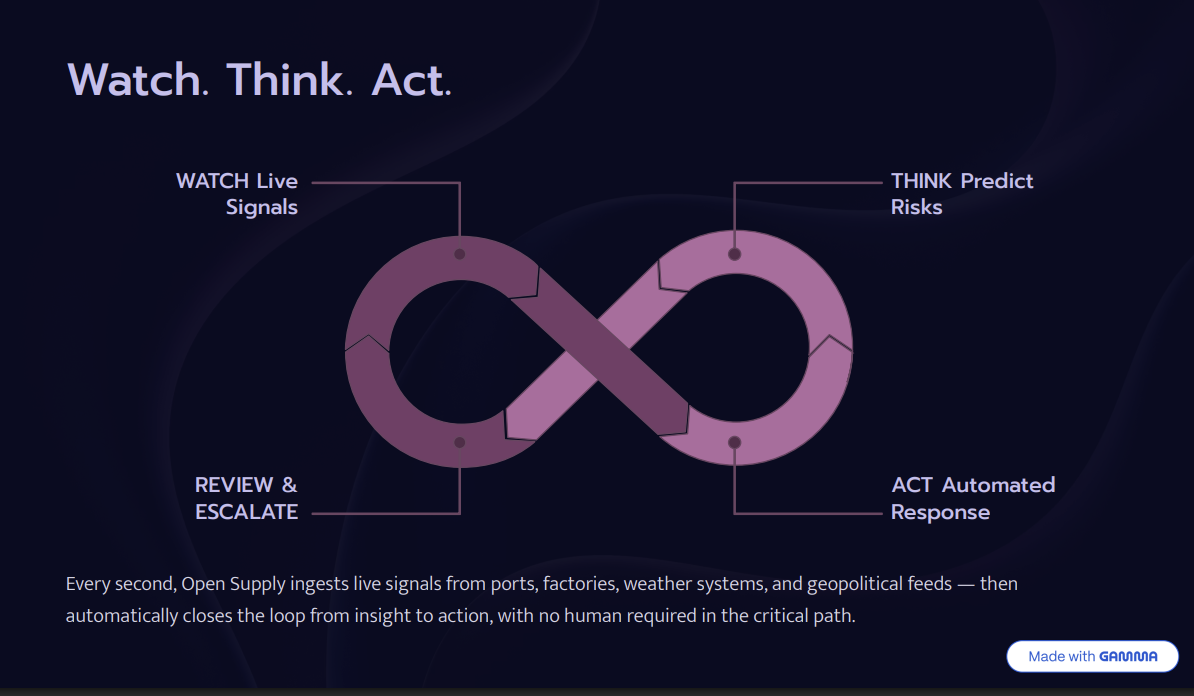
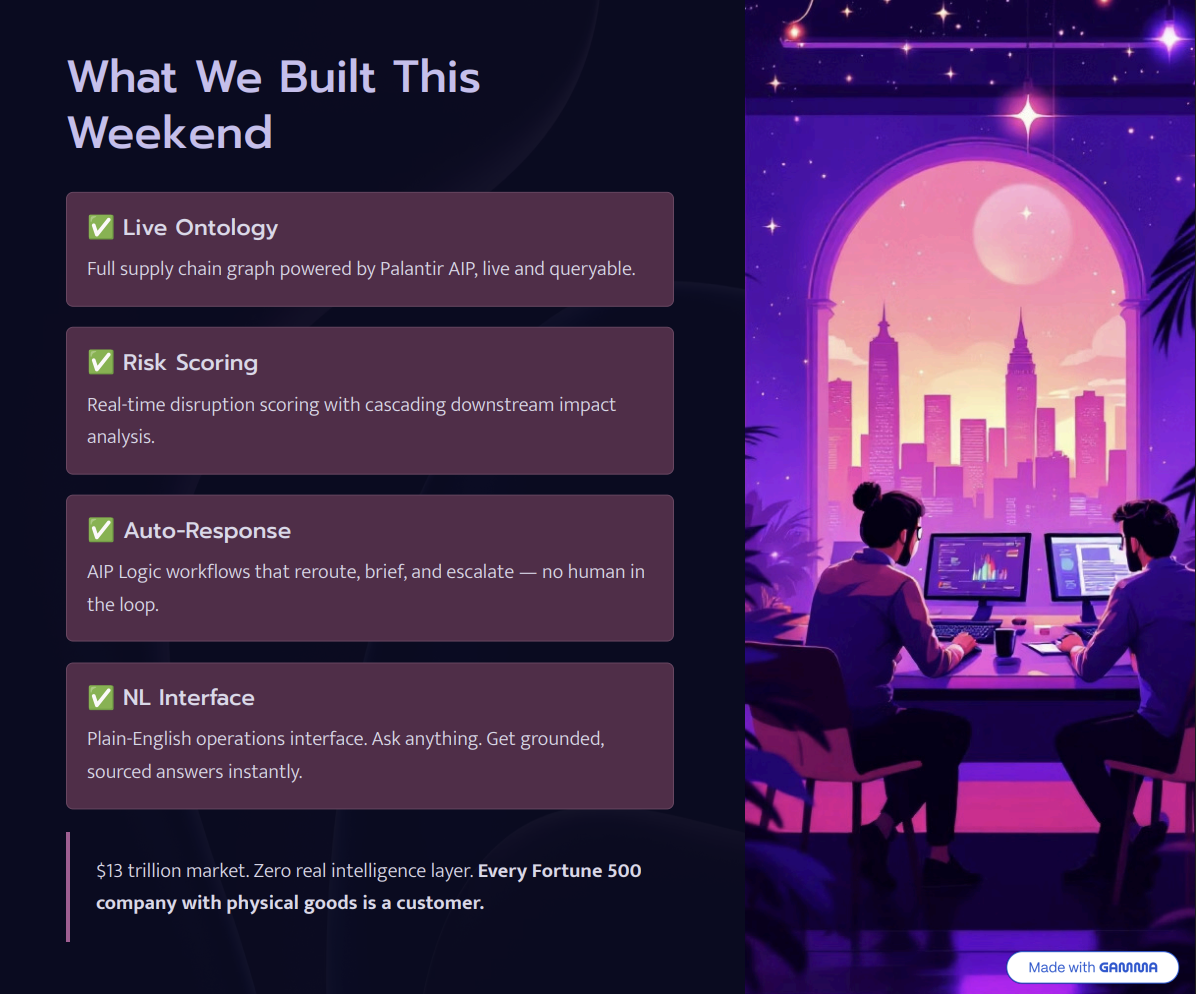
Open Supply is a real-time global operations intelligence platform that maps supply chains onto live geopolitical and logistical data to help companies make better manufacturing decisions.
It combines:
- global intelligence signals (conflicts, instability, trade routes)
- supply chain modeling (suppliers, factories, logistics)
- AI-driven decision-making
Users can:
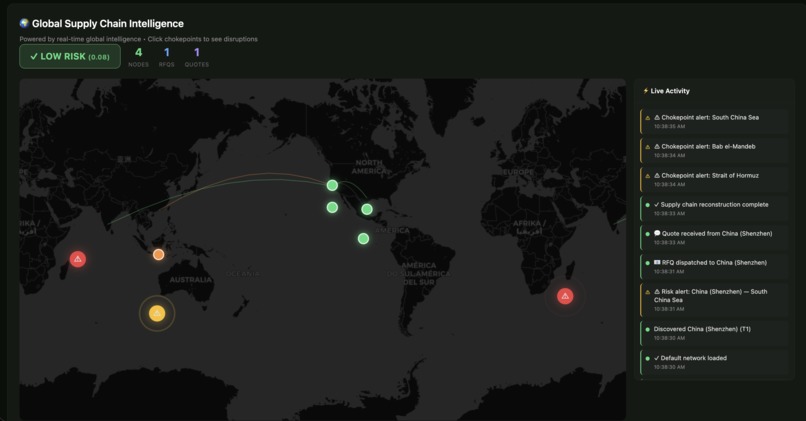
- visualize supply chains across regions
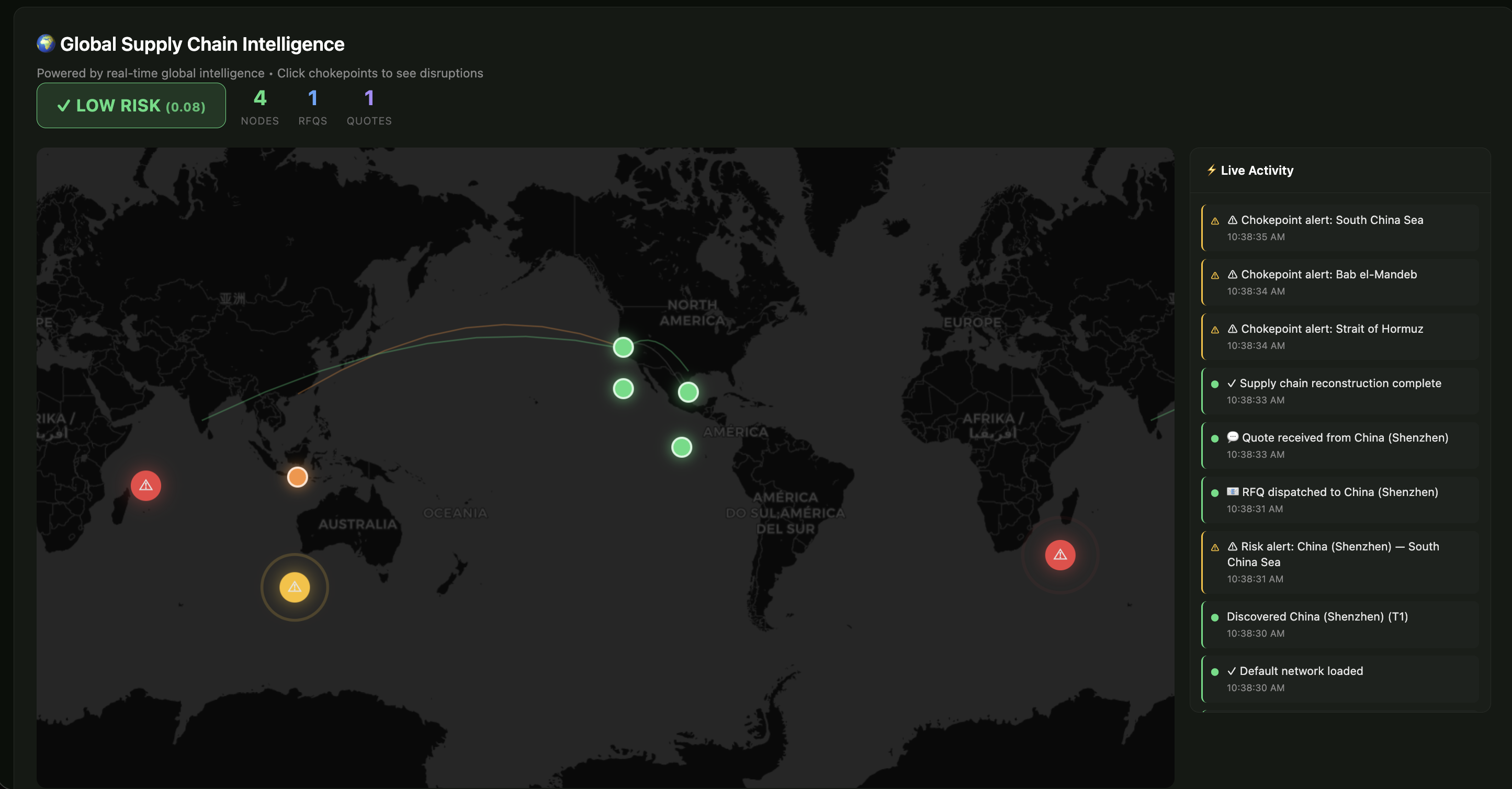
- identify high-risk dependencies and chokepoints
- evaluate alternative sourcing and manufacturing strategies
- receive optimized, risk-aware recommendations
Because the system models supply chains generically, it can be applied to any industry — from electronics and automotive to energy, pharmaceuticals, and critical infrastructure.
How we built it
We built Open Supply as a full-stack web application with a focus on real-time visualization and decision-making.
The system consists of two main layers:
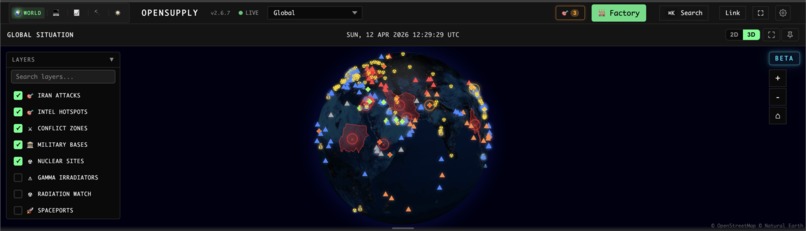
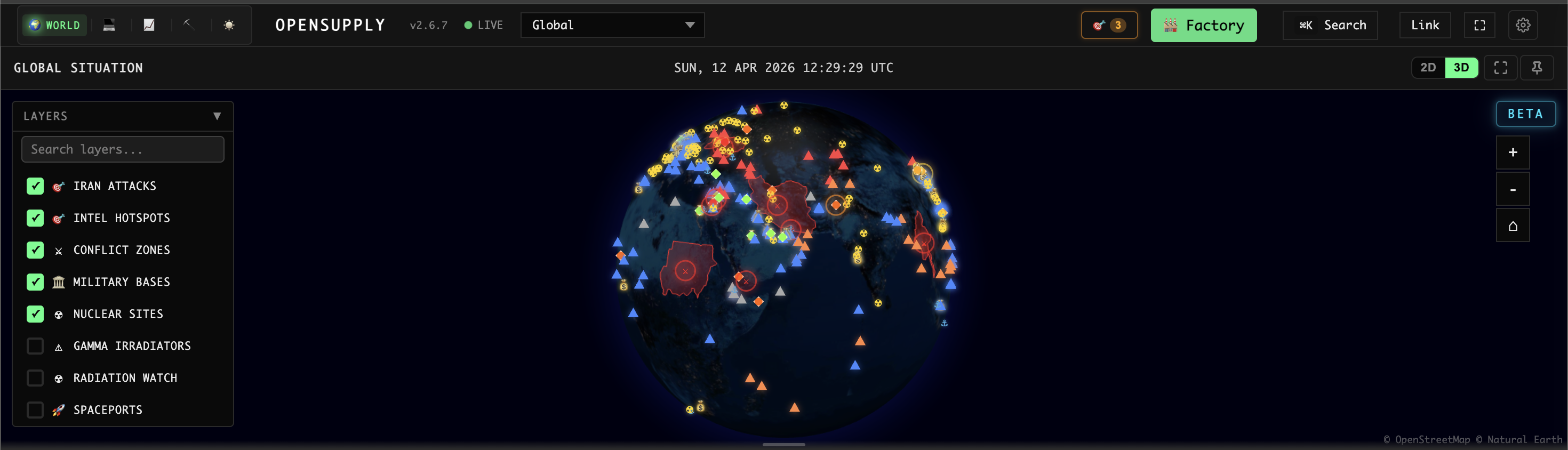
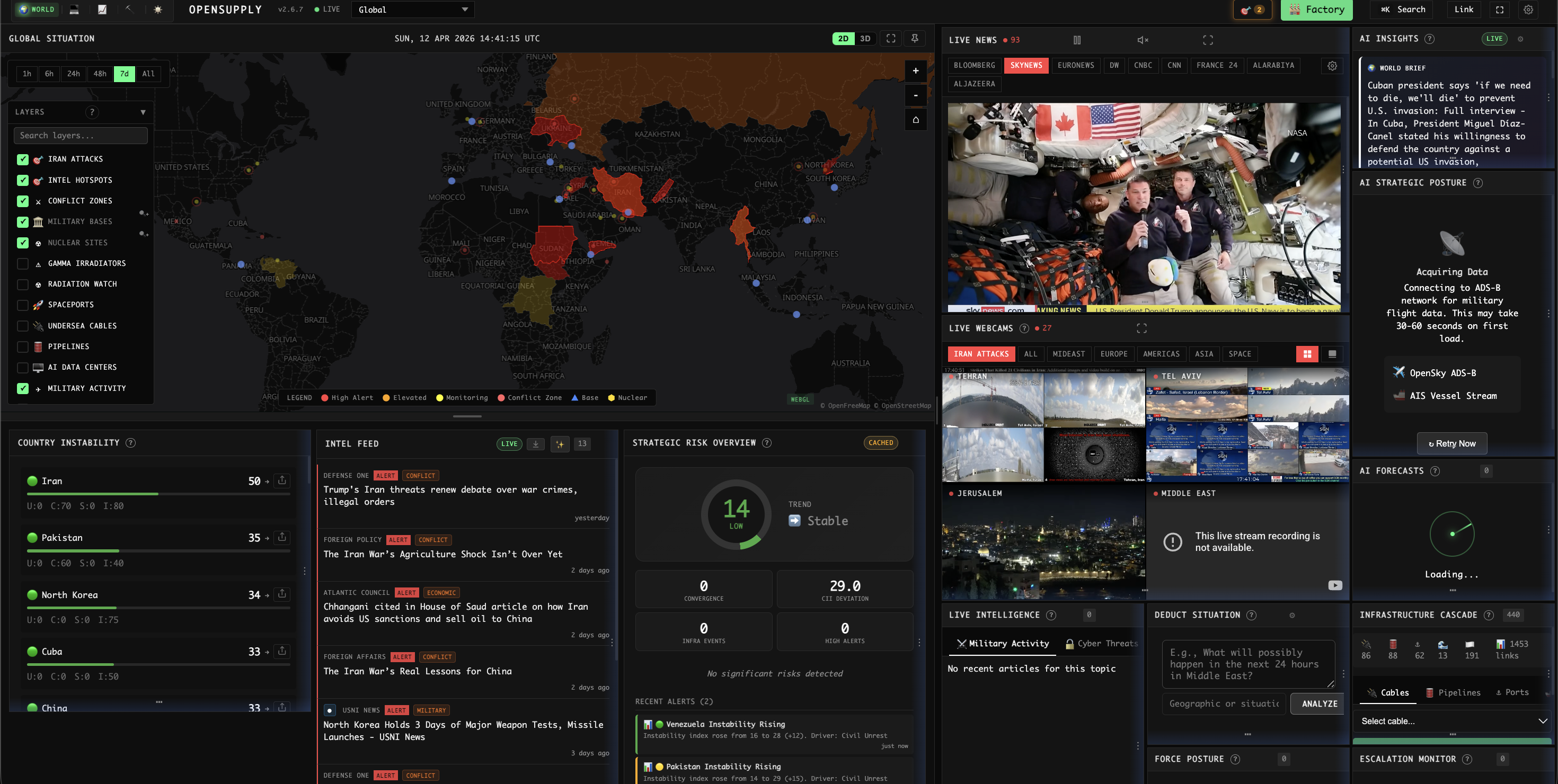
World Monitor (Intelligence Layer)
- Aggregates global signals like conflicts, trade routes, and economic activity
- Displays them on an interactive 2D/3D map
- Provides context for global instability and disruption
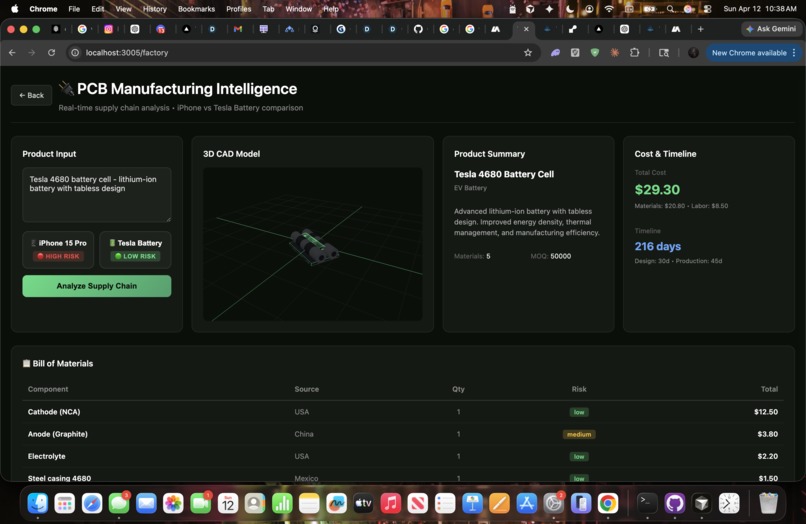
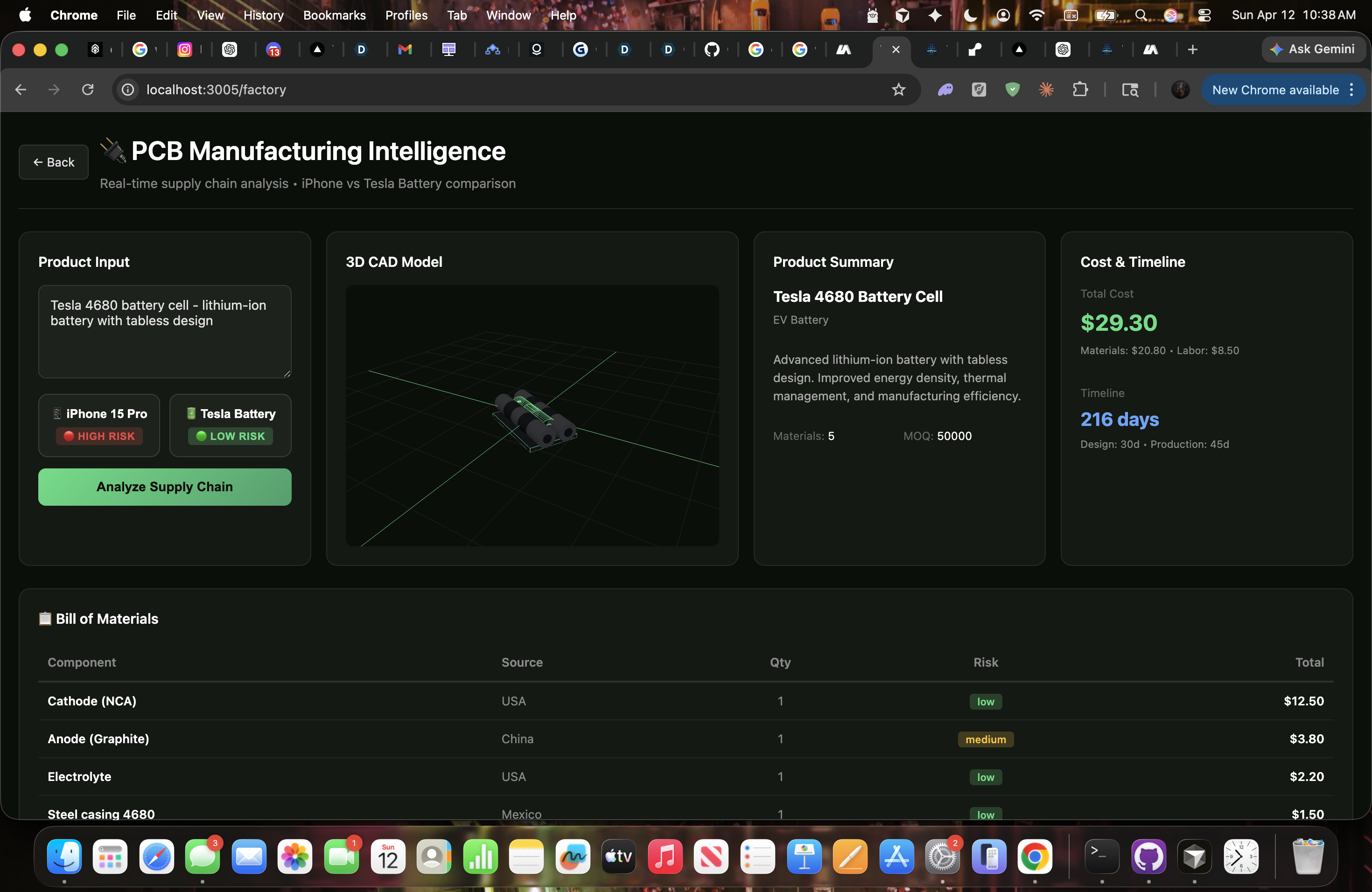
Factory Pipeline (Decision Layer)
- Converts product inputs into supply chain graphs
- Models suppliers, regions, and logistics routes
- Computes risk scores across the network
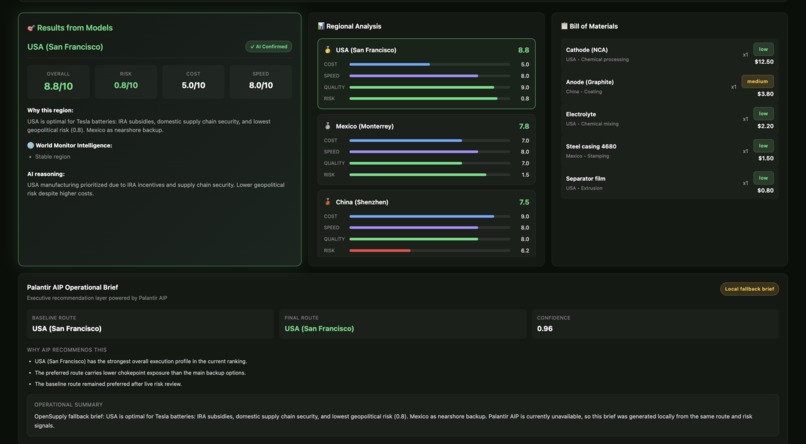
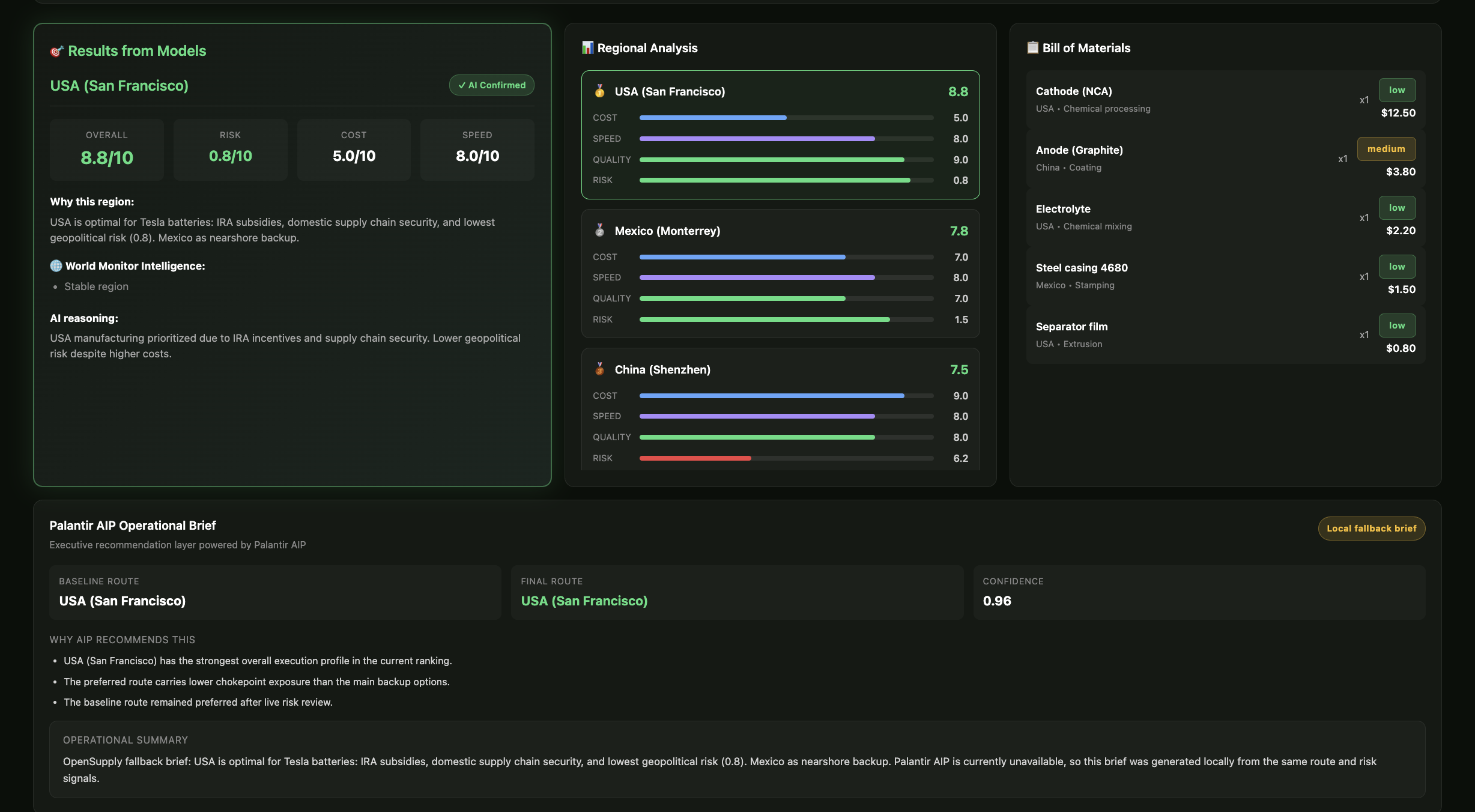
- Generates optimized manufacturing recommendations
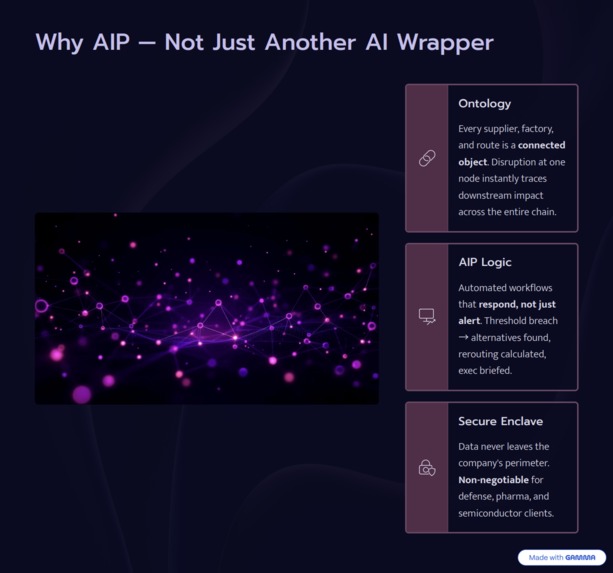
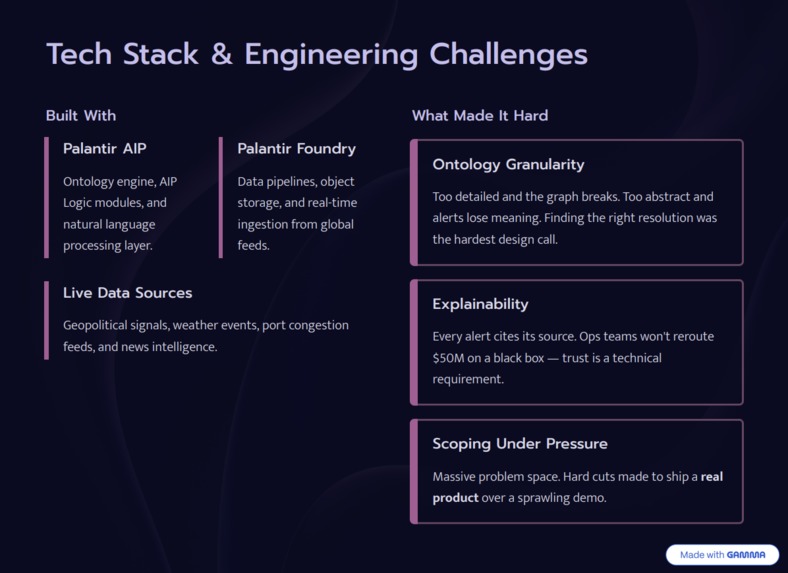
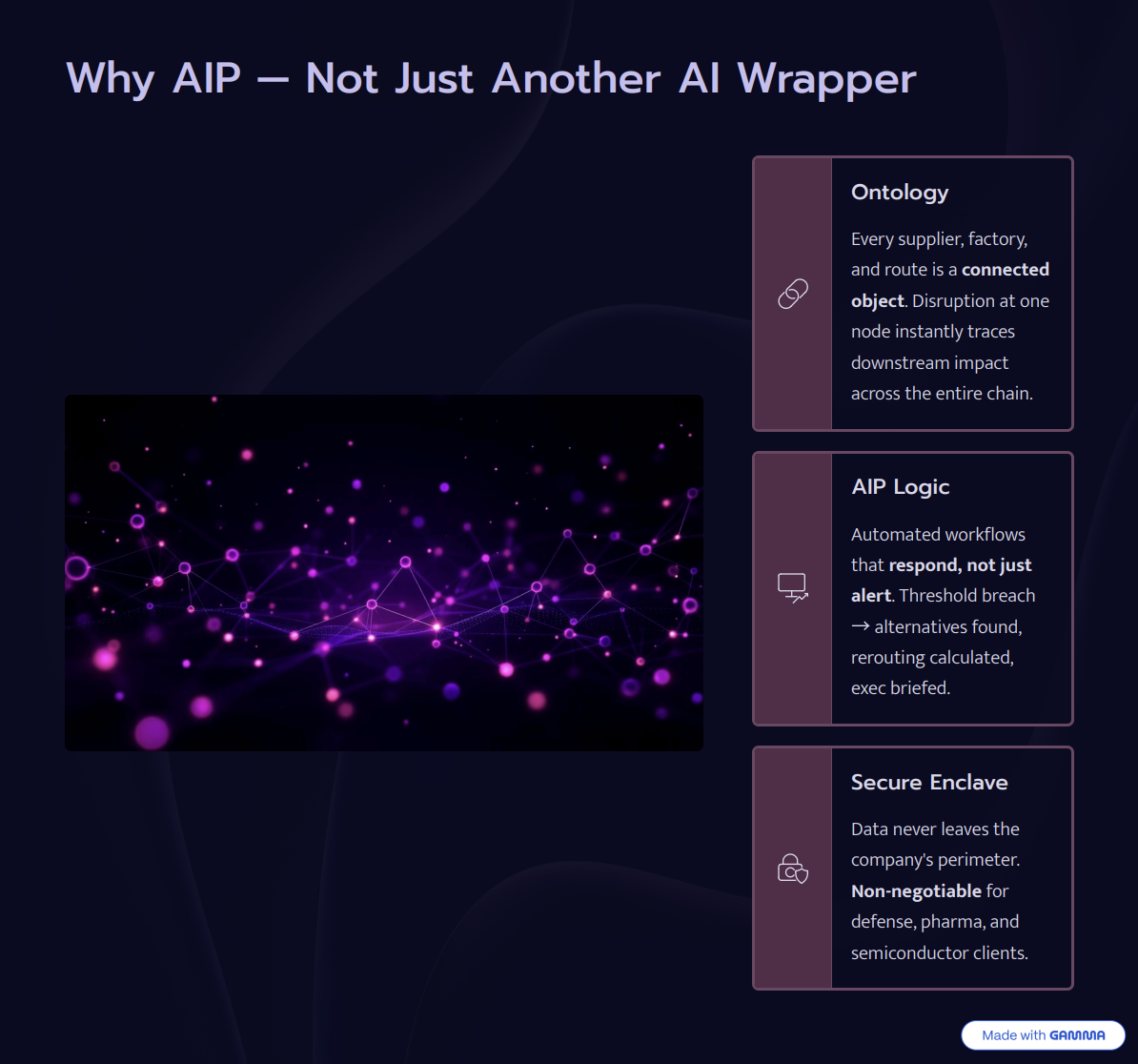
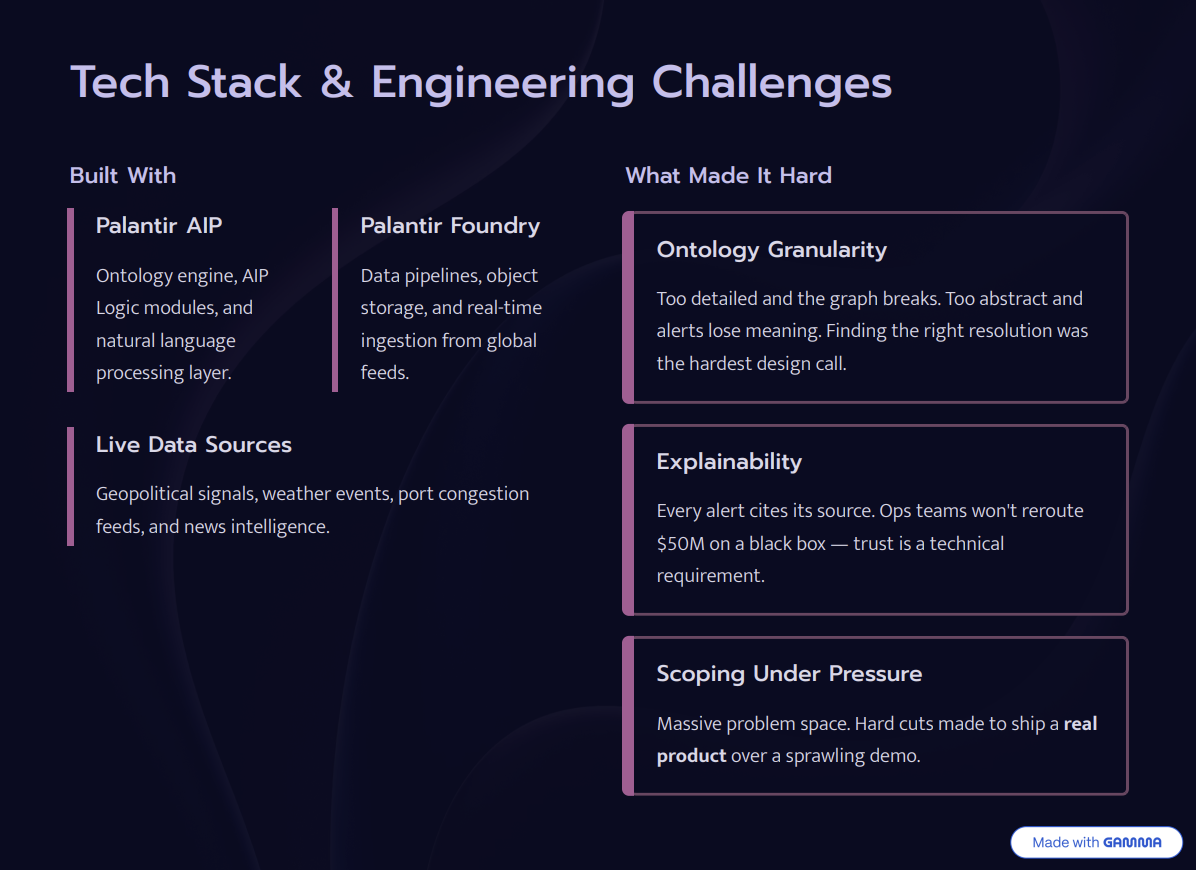
To enhance decision-making, we integrated Palantir AIP:
- Used AIP Logic to generate operational briefs from structured supply chain data
- Modeled supply chains as connected systems, enabling reasoning across dependencies
- Produced human-readable explanations for why certain manufacturing decisions are optimal
This allows the system to move beyond visualization into actionable intelligence.
Challenges we ran into
One of the biggest challenges was balancing realism with reliability in a hackathon setting.
- Real-world data sources are often slow, inconsistent, or incomplete
- Visualization pipelines can break under edge cases
- AI outputs can be non-deterministic, which is risky for live demos
To solve this, we:
- implemented deterministic demo presets for stability
- added fallback logic to ensure consistent outputs
- simplified complex supply chain relationships into clear visual representations
Another challenge was integrating multiple domains — geopolitics, logistics, and AI — into a single cohesive experience without overwhelming the user.
What we learned
We learned that the biggest gap in supply chain technology isn’t data — it’s decision-making.
Most tools show information, but very few help answer:
“What should we actually do?”
By combining global intelligence with structured modeling and AI, we built a system that doesn’t just monitor the world — it helps act on it.
We also learned how powerful it is to combine:
- real-time data visualization
- structured system modeling
- AI reasoning layers
into a single intuitive interface.
What's next
With more time, we would:
- integrate additional real-time data sources (weather, port congestion, satellite feeds)
- expand supplier discovery and validation
- add scenario simulation and forecasting
- support enterprise-scale deployment with real company data
Our goal is to turn Open Supply into a true operational command center for global manufacturing and logistics.
Built With
- node.js
- palantiraip
- react
- three.js
- typescript
- vercel
- vite-node.js-webgl-/-three.js-(3d-globe-+-map-visualization)-palantir-aip-(aip-logic

Log in or sign up for Devpost to join the conversation.