-
-
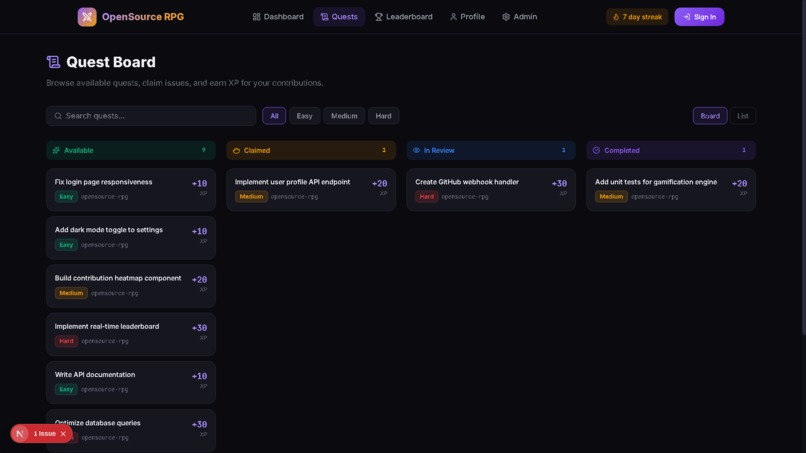
Quest
-
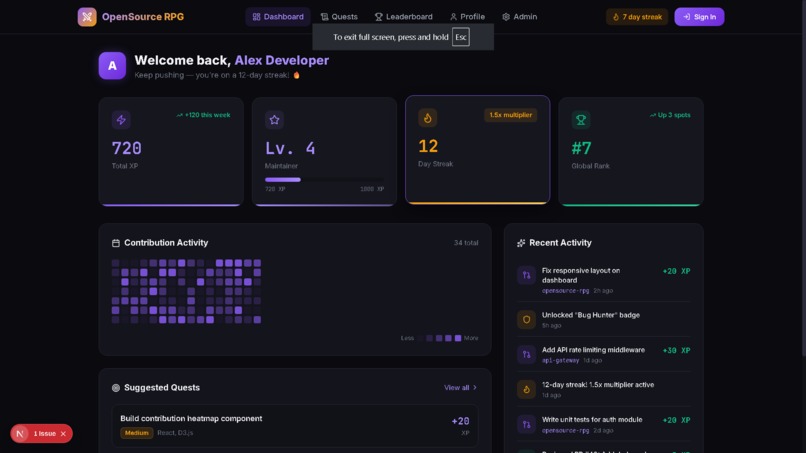
Dashboard
-
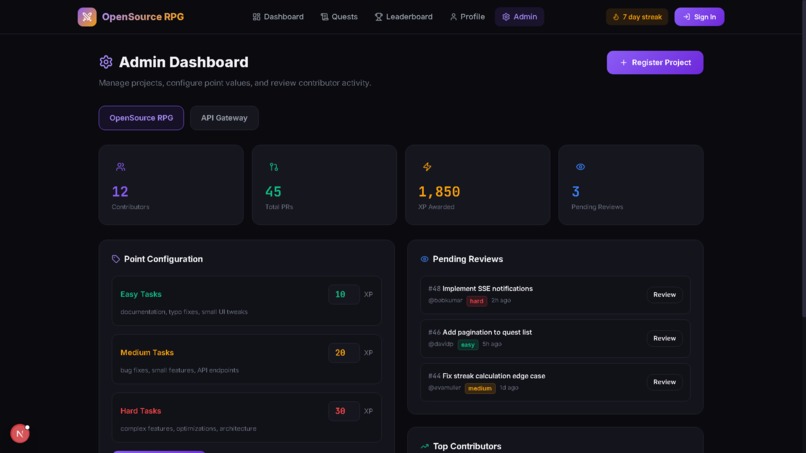
Admin Dashboard
-
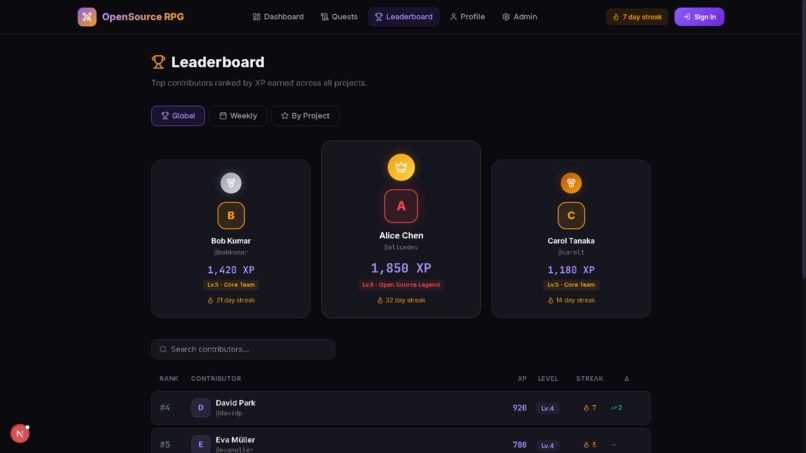
Leaderboard
-
Profile
Inspiration
Every open-source program struggles with the same problem — keeping contributors motivated beyond the first PR. We asked ourselves: "What if contributing to open source felt like playing an RPG?" Inspired by GitHub's contribution graph, Duolingo's streak mechanics, and classic RPG leveling systems, we built OpenSource RPG — a platform that transforms mundane contributions into an addictive progression experience.
What it does
OpenSource RPG integrates with GitHub to automatically track pull requests, issues, and code reviews, converting them into:
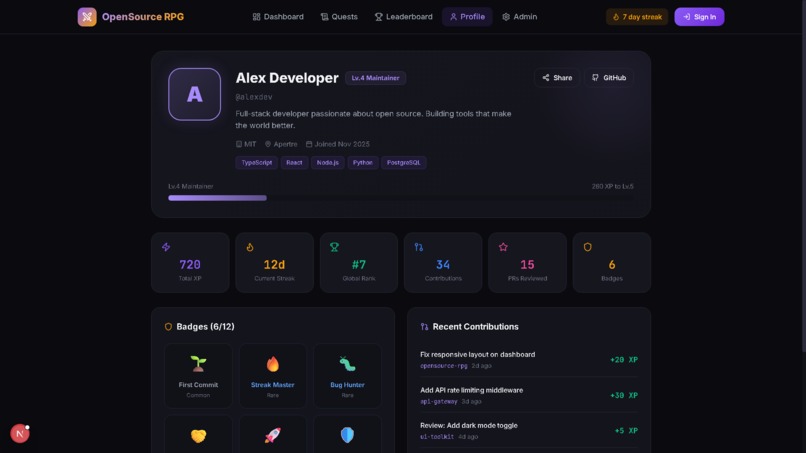
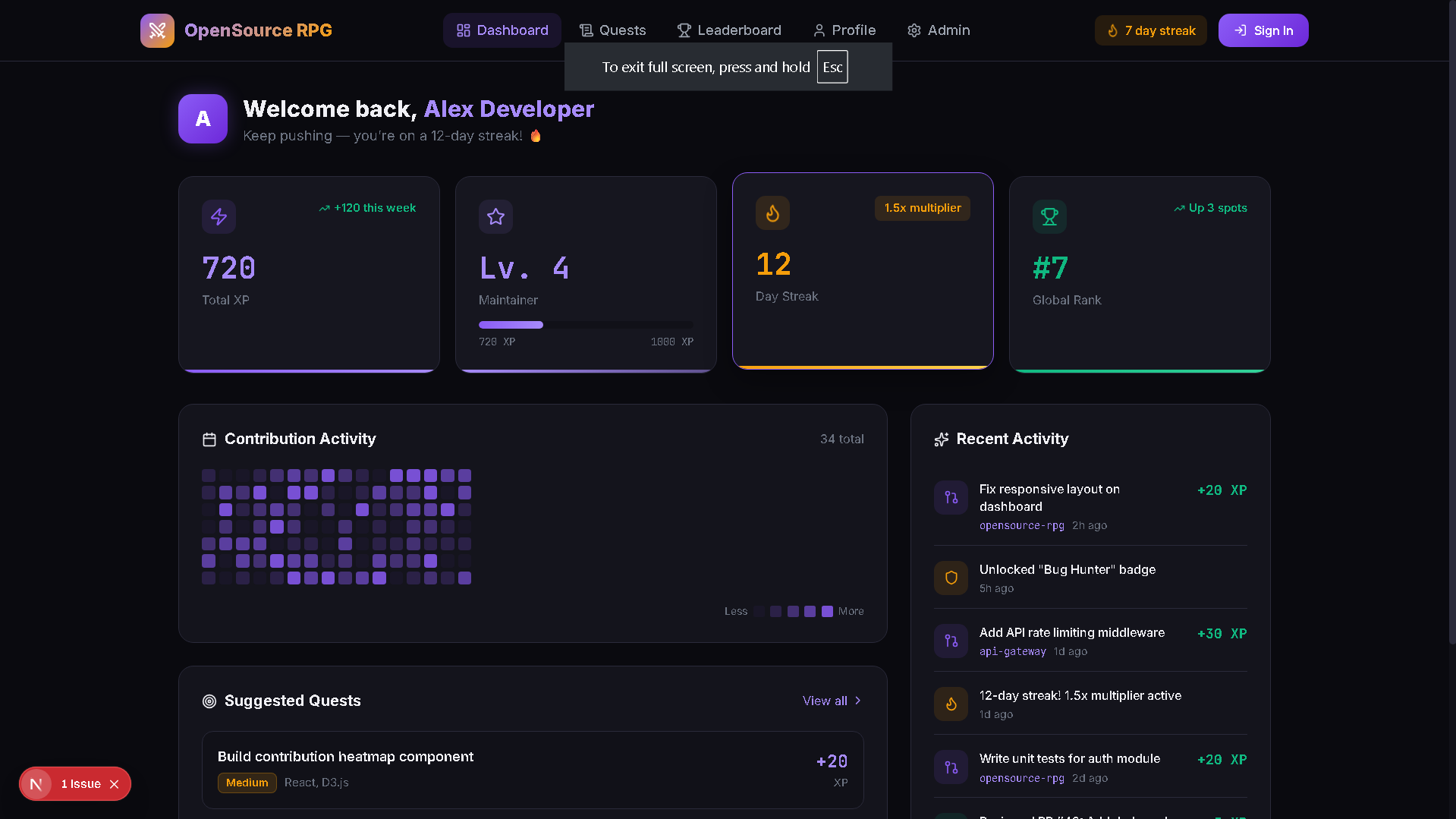
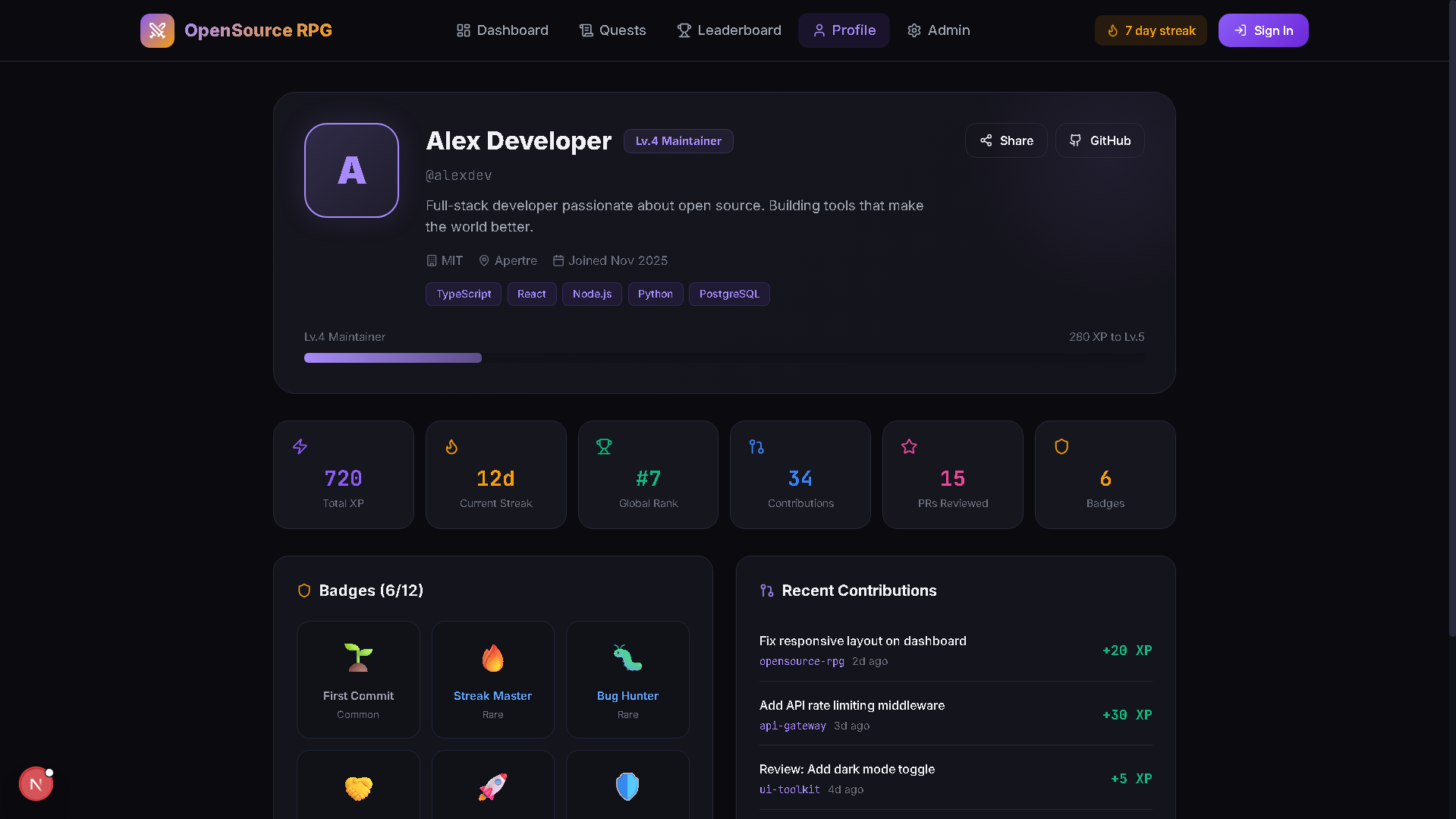
- ⚡ XP & Levels — 6-tier progression from Newbie to Open Source Legend
- 🔥 Streaks — Daily activity tracking with multipliers (7d = 1.2x, 30d = 2x)
- 🛡️ Badges — 12 achievements across 4 rarity tiers (Common → Legendary)
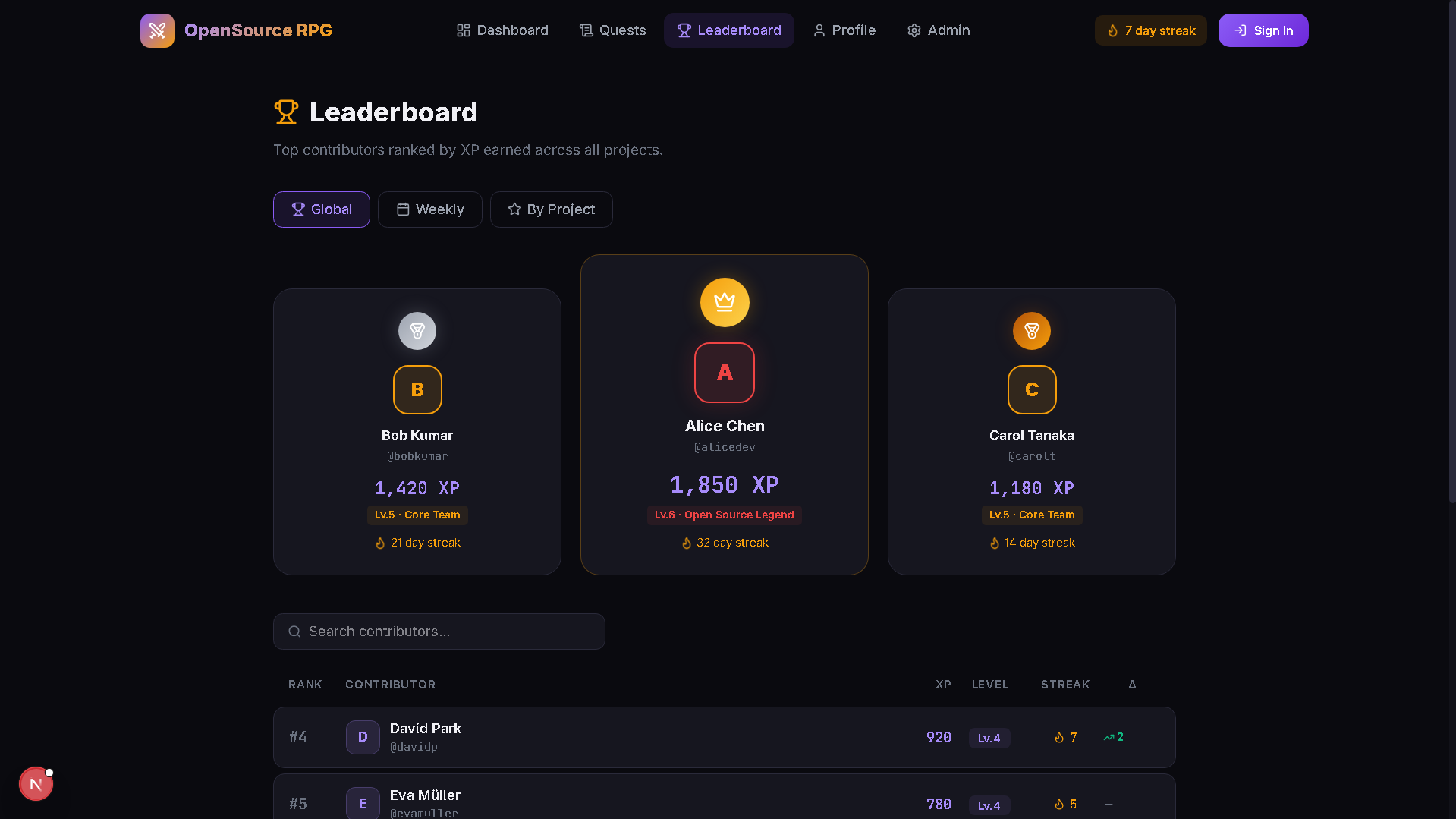
- 🏆 Leaderboards — Global, weekly, and per-project rankings with a podium view
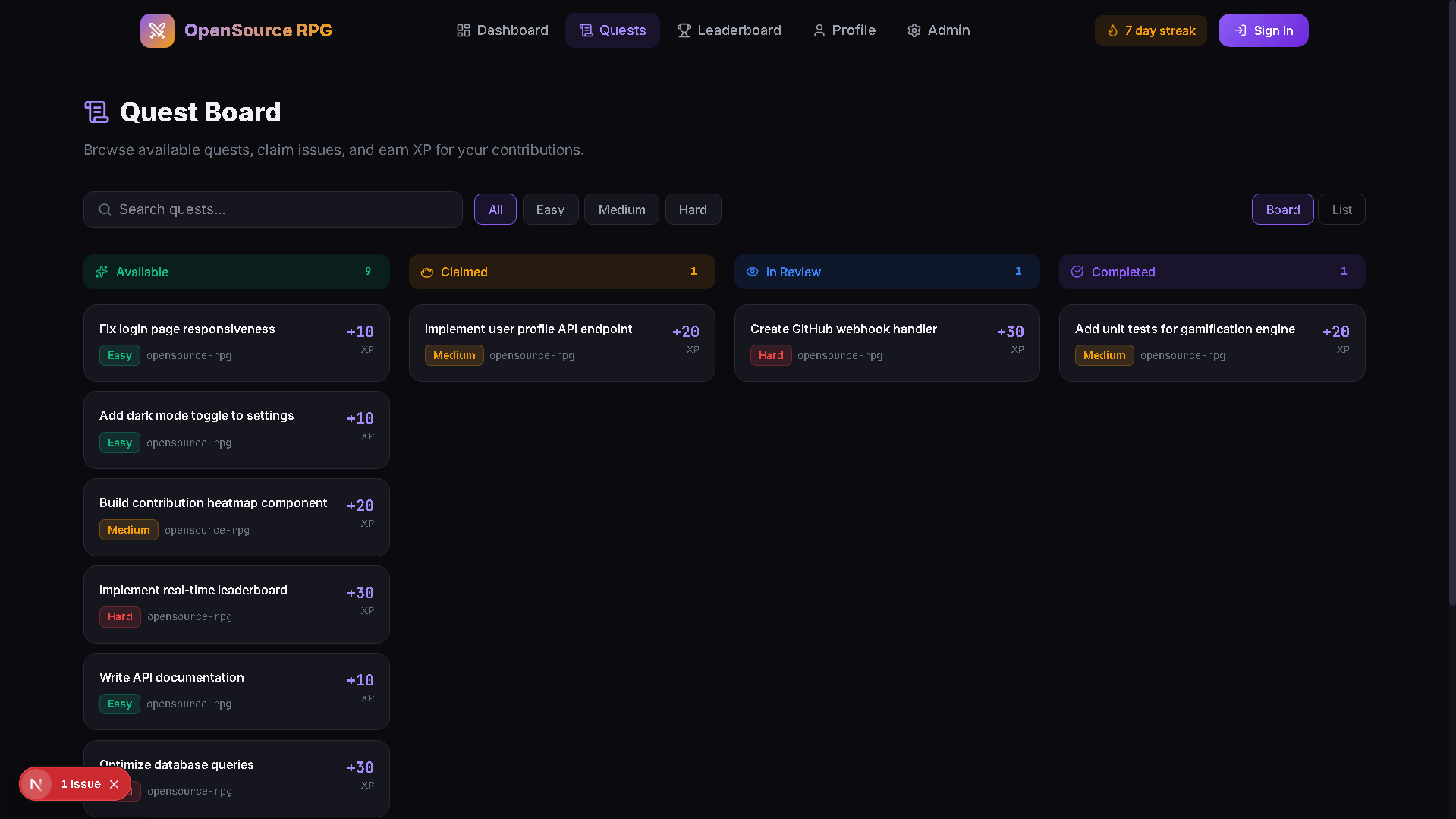
- 📜 Quest Board — Kanban-style issue browser where contributors claim tasks
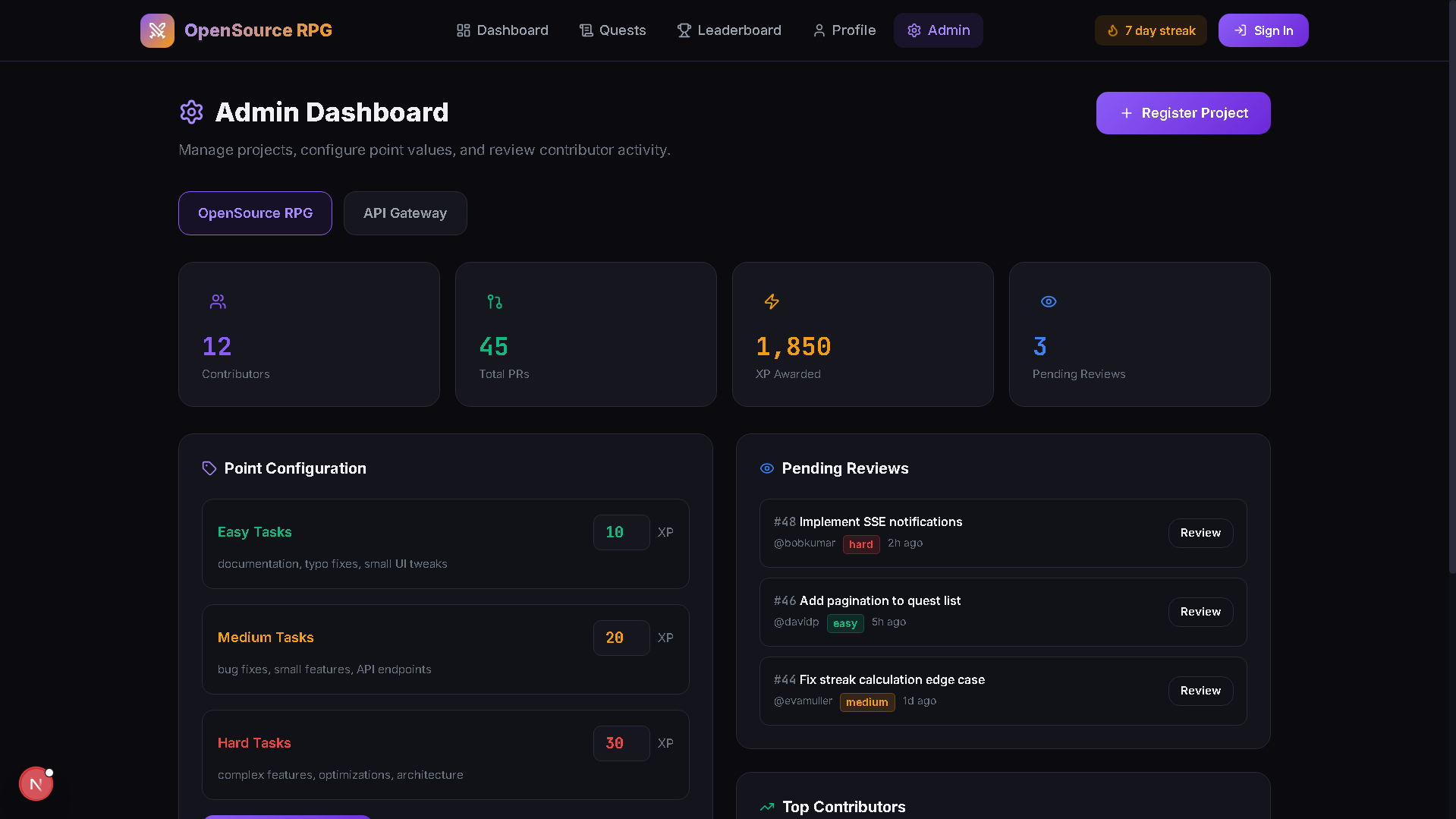
Mentors can register repositories, configure XP values per difficulty label, and review pending contributions. Organizers can manage seasons for programs like Apertre.
How we built it
- Frontend: Next.js 16 (App Router) + TypeScript + Tailwind CSS + Framer Motion for RPG-themed animations (level-up effects, floating XP numbers, pulsing glows)
- Backend: Next.js API Routes with GitHub webhook handlers for real-time PR/issue tracking
- Database: Prisma ORM with SQLite (dev) / PostgreSQL (prod) — 8 models covering users, projects, quests, contributions, badges, and streak history
- Auth: NextAuth.js with GitHub OAuth for seamless login
- Gamification Engine: Custom XP calculator with streak multipliers, anti-spam PR heuristics, and automatic badge awarding
Challenges we faced
- Build-time Prisma errors: API routes tried to initialize PrismaClient during static page collection. Solved with
force-dynamicexports and a try-catch wrapper around client construction. - Designing the gamification math: Balancing XP values, streak multipliers, and level thresholds so progression feels rewarding but not trivially easy required multiple iterations.
- RPG aesthetic without a design team: Achieving a premium dark-mode UI with neon accents, glassmorphism cards, and smooth animations using only CSS variables and Framer Motion.
- GitHub webhook complexity: Handling label-based difficulty detection, anti-spam filtering, and automatic quest creation from labeled issues across multiple repositories.
What we learned
- How to build a complete gamification system from scratch (XP, levels, streaks, badges)
- GitHub webhook architecture and event-driven contribution tracking
- Advanced Next.js patterns: dynamic API routes, server components, Prisma integration
- Creating premium UI without a component library — pure CSS design systems with custom animations
What's next
- Discord bot integration for achievement notifications
- AI-powered quest recommendations based on contributor skills
- Shareable profile cards for social media
- Multi-season archive and hall of fame


Log in or sign up for Devpost to join the conversation.