-
-
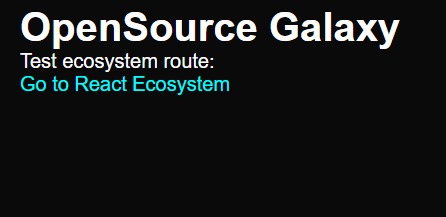
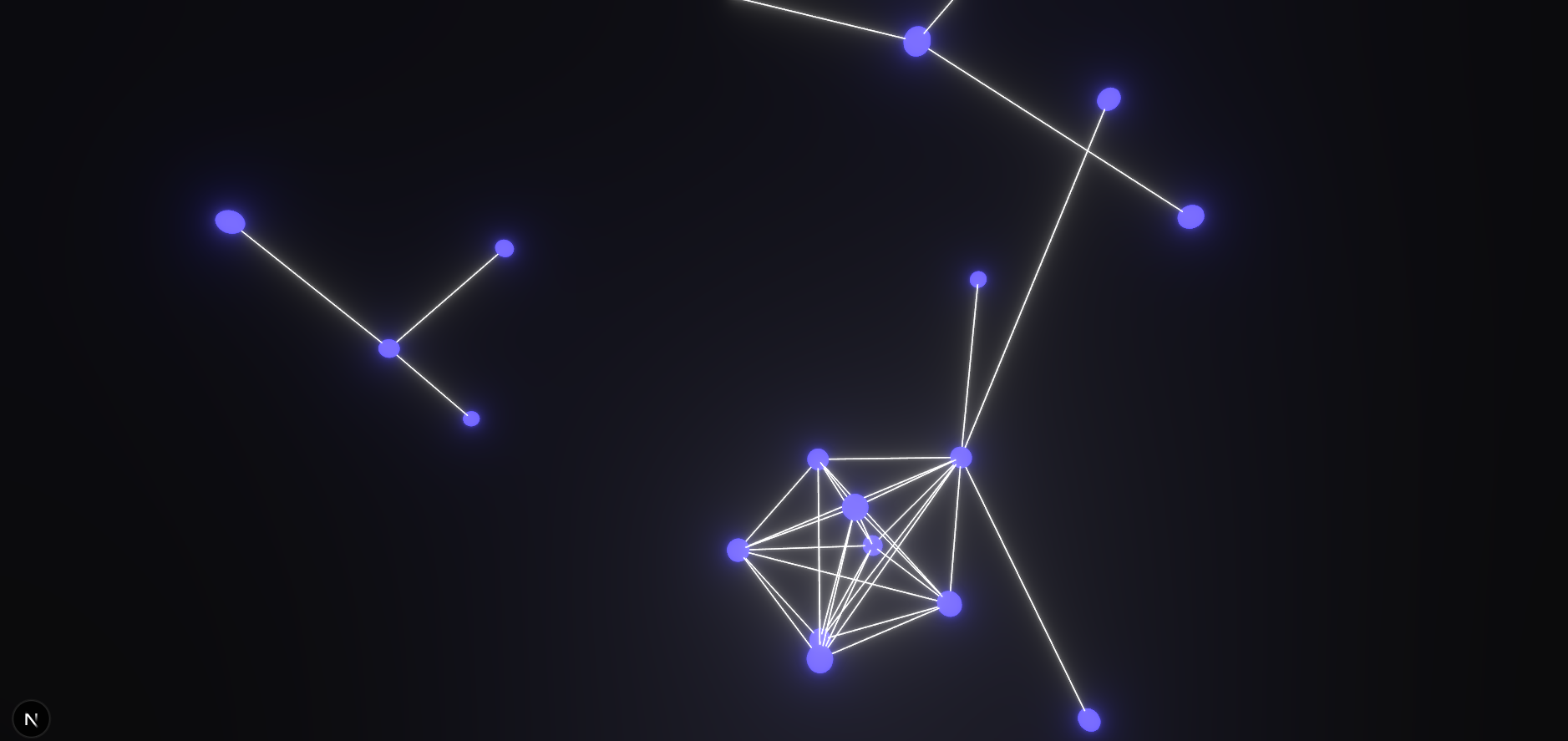
Initial page
-
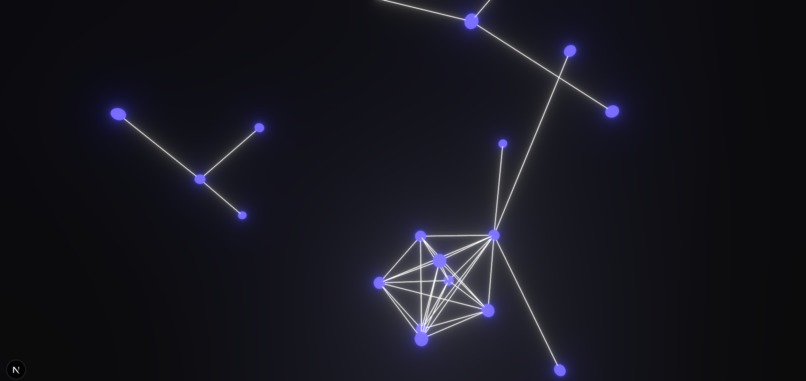
The ecosystem
-
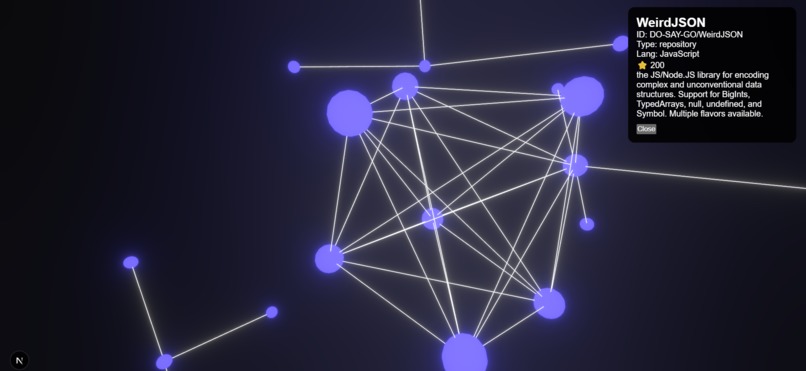
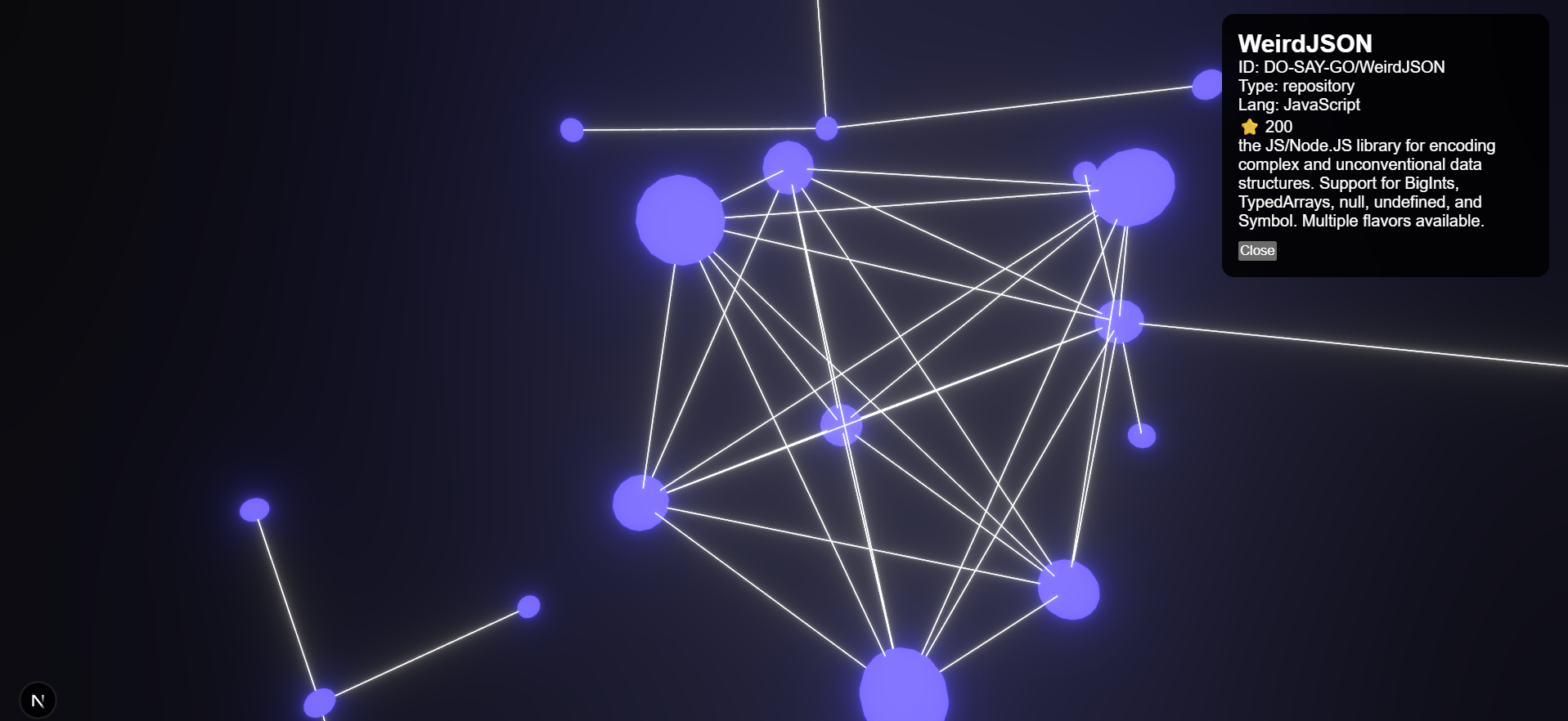
click any sphere to see the repo
Inspiration
Open-source software powers modern technology, yet understanding the relationships between repositories, dependencies, and ecosystems remains difficult. Traditional repository explorers present information as lists and graphs, making it challenging to grasp the bigger picture.
We wanted to create a more intuitive way to explore open-source ecosystems by transforming repository networks into interactive 3D galaxies. Instead of reading dependency trees, users can visually navigate ecosystems, discover related projects, and understand how technologies connect within the broader open-source landscape.
What it does
OpenSource Galaxy is an interactive platform that visualizes open-source ecosystems as dynamic 3D graphs.
Users can:
- Search for a technology or repository ecosystem
- Explore connected repositories and dependencies in an interactive 3D environment
- Navigate complex relationships through intuitive visual exploration
- Understand ecosystem structure beyond traditional dependency trees
- Discover related projects and communities within an ecosystem
The platform transforms repository data into a navigable galaxy where nodes represent projects and connections represent relationships between them.
How we built it
The project was built using a modern full-stack architecture:
Frontend
- Next.js
- TypeScript
- React
- Three.js
- React Three Fiber
The frontend renders interactive 3D graphs, camera controls, node interactions, and ecosystem visualization.
Backend
- Java
- Spring Boot
- Maven
The backend communicates with the GitHub API, processes repository ecosystem data, builds graph structures, and exposes REST APIs consumed by the frontend.
Deployment
- Vercel for frontend hosting
- Railway for backend hosting
- Environment-based configuration for secure API communication
Challenges we ran into
One of the biggest challenges was transforming real-world repository data into a meaningful and visually understandable graph structure.
We also faced several engineering challenges:
- Designing scalable graph generation logic
- Handling GitHub API integration and authentication securely
- Managing CORS and cross-origin communication between frontend and backend deployments
- Configuring environment variables for production deployments
- Debugging server-side rendering issues in production
- Optimizing 3D rendering performance for larger ecosystems
Balancing visual appeal with usability was another challenge, as dense dependency networks can quickly become difficult to navigate.
Accomplishments that we're proud of
- Built a complete full-stack application from scratch
- Successfully integrated live GitHub ecosystem data
- Created an interactive 3D visualization experience using Three.js
- Designed a modular backend capable of generating ecosystem graphs dynamically
- Deployed both frontend and backend to production environments
- Implemented a foundation that can scale into a much larger ecosystem discovery platform
Most importantly, we transformed complex repository relationships into an experience that is engaging and easy to explore.
What we learned
Through this project we gained experience with:
- Full-stack application architecture
- Spring Boot API development
- GitHub API integration
- Three.js and React Three Fiber
- Production deployment workflows
- Environment management and application security
- Handling real-world data visualization challenges
- Debugging distributed frontend-backend systems
We also learned that visualizing data effectively is often as challenging as collecting and processing the data itself.
What's next for OpenSource Galaxy
Our vision is to evolve OpenSource Galaxy into a comprehensive open-source exploration platform.
Planned features include:
- Adjustable ecosystem density and exploration depth
- Advanced graph layouts and clustering algorithms
- Repository statistics and contributor insights
- Ecosystem health and activity metrics
- Enhanced visual effects, lighting, and galaxy simulations
- Search recommendations and discovery features
- User accounts and saved ecosystem collections
- Support for larger and more complex technology ecosystems
Ultimately, we want OpenSource Galaxy to become the most intuitive way to explore, understand, and discover open-source software ecosystems.
Built With
- java
- next.js
- spring-boot
- three.js
- typescript


Log in or sign up for Devpost to join the conversation.