-
-
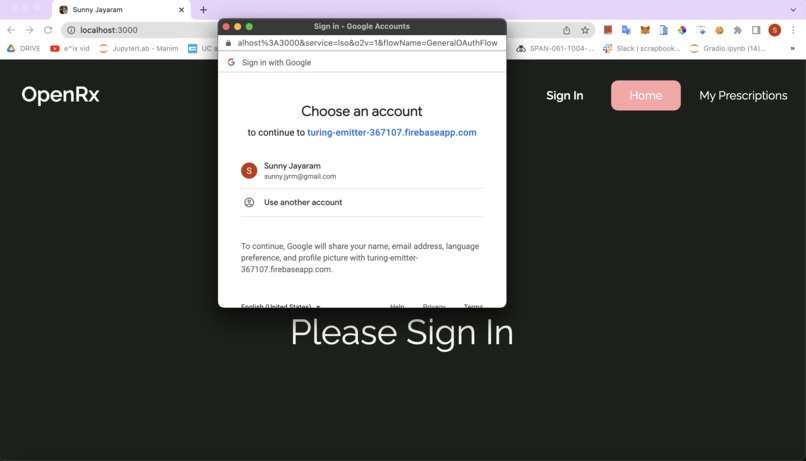
Easily sign in with google
-
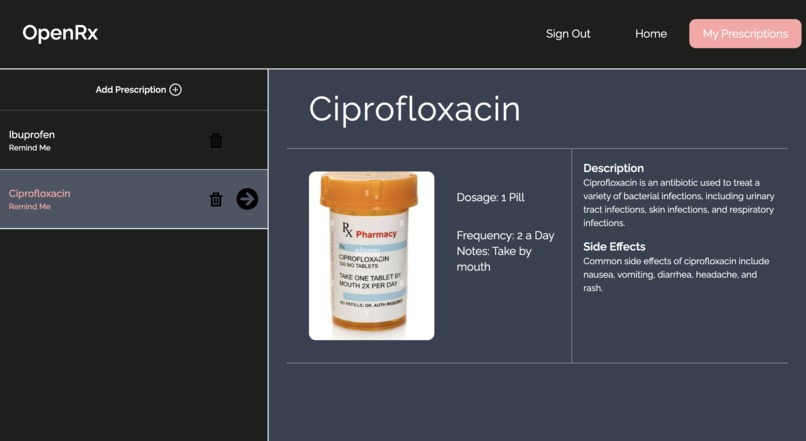
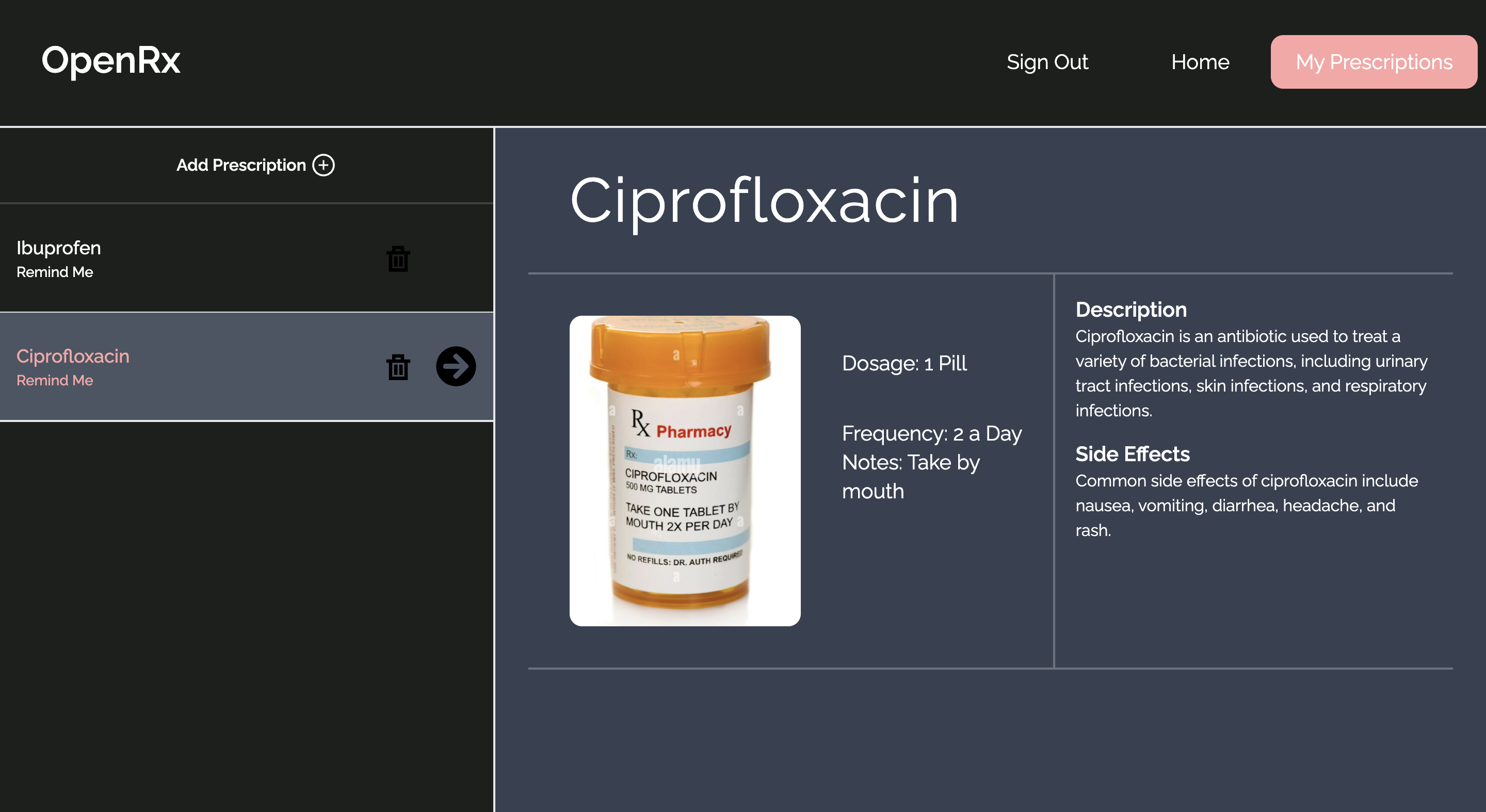
Prescriptions Page, All data generated by simply snapping a photo of a Prescription.
-
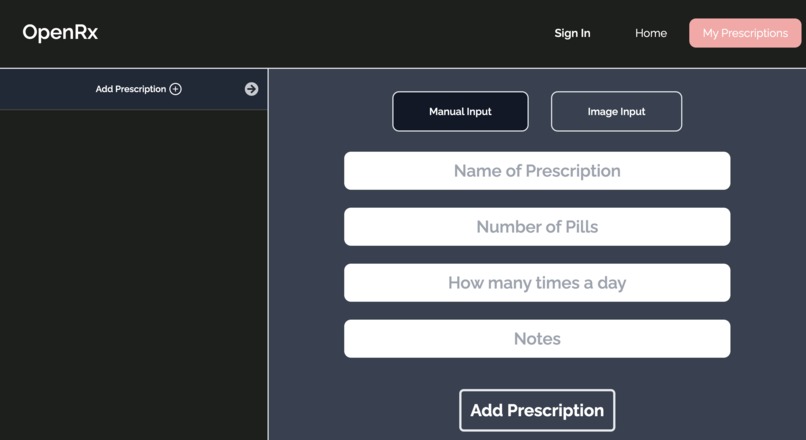
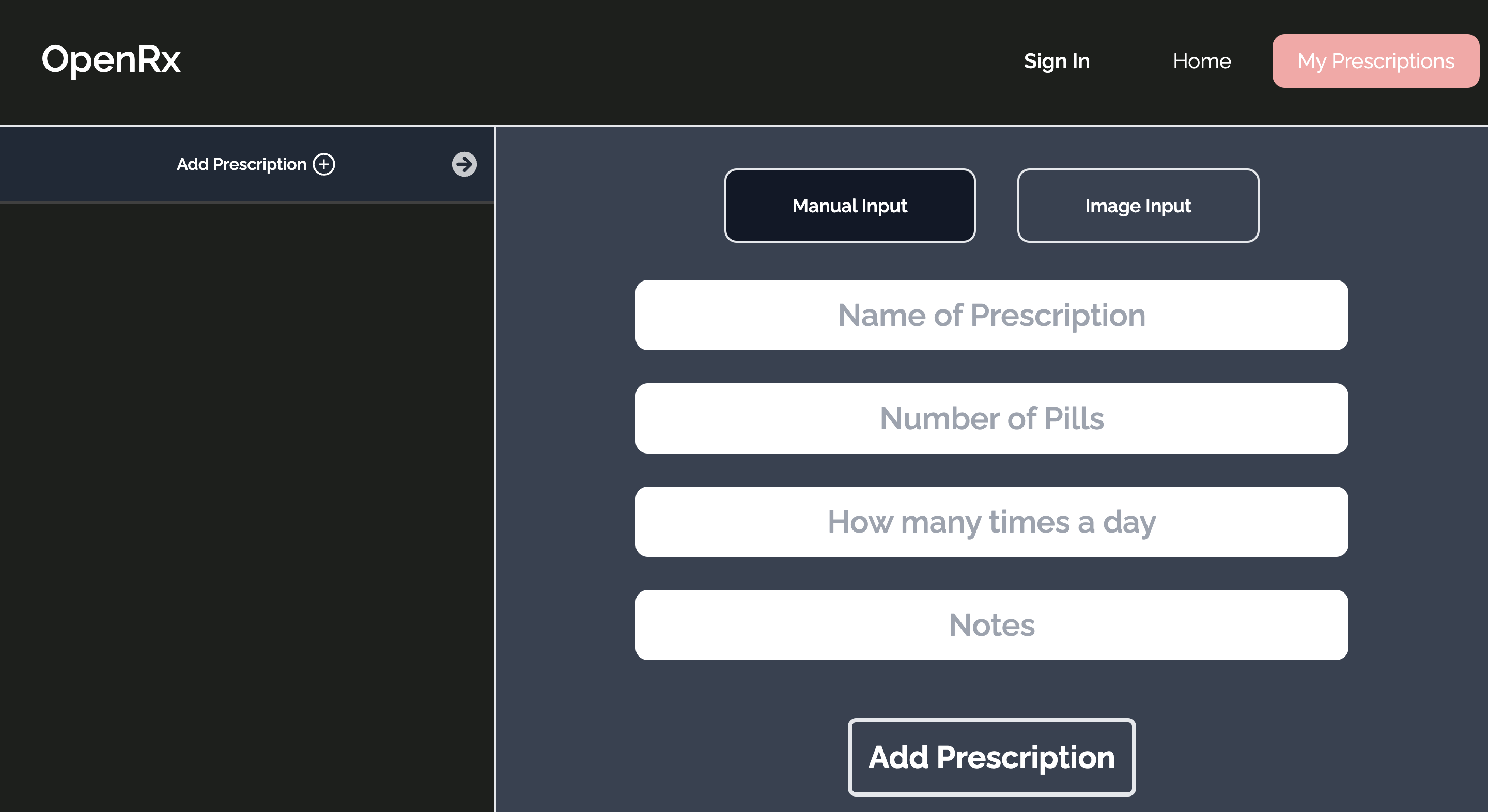
Add prescriptions using OCR or manually enter information
Inspiration
The inspiration behind OpenRx came from a personal experience of seeing the struggles faced by elderly individuals, particularly those with degenerative memory disorders like Alzheimer's, and those with disabilities such as dyslexia and ADHD. The need for better accessibility in healthcare became more and more apparent. That's why we created OpenRx to make medication management easier and less stressful for these communities. With advanced picture recognition technology, SMS reminders, and an easy-to-use UI, we aim to provide a life-saving solution for elderly individuals and those with disabilities who struggle to keep track of their multiple medications.
What it does
OpenRx is the solution for seniors and disabled individuals to stay on top of their medication schedules. With just a quick photo of the bottle label, our program utilizes Azure OCR and GPT API to accurately parse and manage the medication information, and Twilio to send timely reminders. Say goodbye to forgotten doses and hello to improved health and peace of mind with OpenRx.
How we built it
OpenRx was designed with an advanced technology stack to make medication management a breeze. The program is built on the Next.js framework, using React.js for the frontend UI and TailwindCSS for styling. Firebase was utilized to authenticate users, secure user data, and host images. The computational power of OpenRx comes from Microsoft Azure Cloud Vision Services OCR, which was used to read prescriptions, accounting for oblique angles and the curvature of the bottle, and OpenAI, which was used for prescription recognition and data retrieval on medications. Twilio was used for real-time reminders for users, ensuring they never miss a dose. These technologies were carefully chosen to provide users with an easy-to-use, reliable and efficient solution for managing their medications.
Challenges we ran into
While developing OpenRx, we faced some challenges, including difficulties in making API calls using Next.js due to limited familiarity. Integrating Twilio into the app was also of particular challenge. The most difficult part was connecting multiple technologies in a large tech stack. However, the team worked hard to overcome these obstacles and deliver a reliable solution.
Accomplishments that we're proud of
The clean UI was a major accomplishment, providing an easy-to-use interface for the elderly and disabled. Additionally, the data pipeline that takes an image and uses OCR and AI to return numerical data about the prescription was a significant accomplishment, ensuring that the program is reliable and accurate in tracking medication information.
What we learned
During the creation of OpenRx, the team gained a deeper understanding of connecting multiple APIs to a full stack web application. This knowledge will be useful in future projects, as it provides insight into how different technologies can be integrated effectively. Additionally, the team learned about the limitations of GPT API, specifically its speed. This experience provided a better understanding of the potential and limitations of AI technology, which will be useful in future projects as well.
What's next for OpenRx
The next steps would be to have the ability to remind users when their prescriptions are running low and they need a refill.


Log in or sign up for Devpost to join the conversation.