-
-
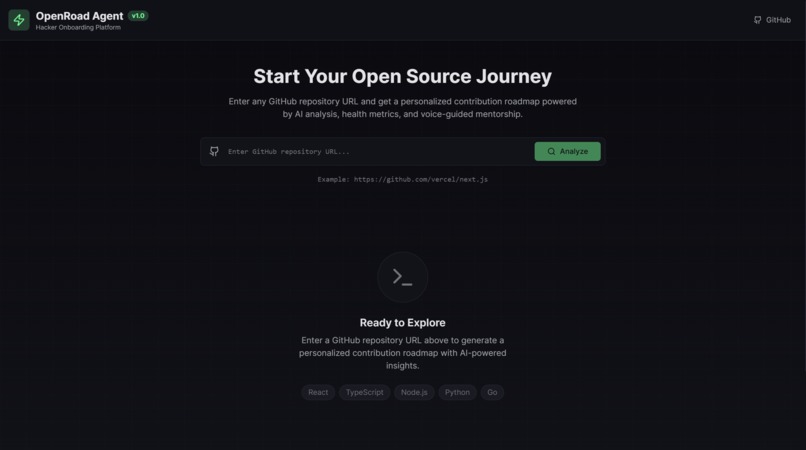
landing-screen
-
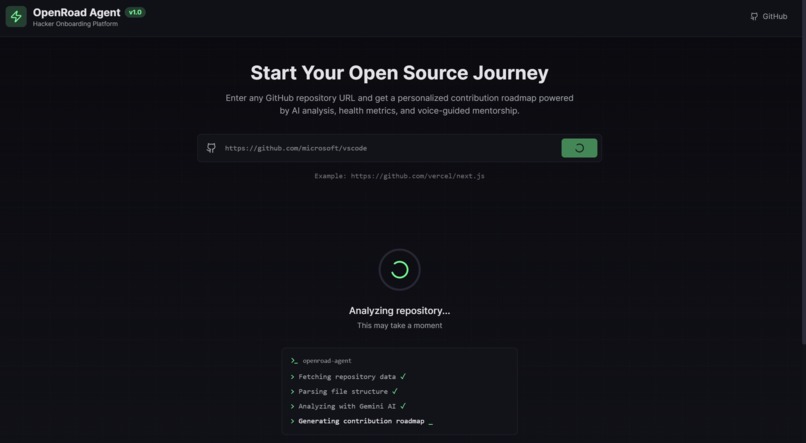
loading-screen
-
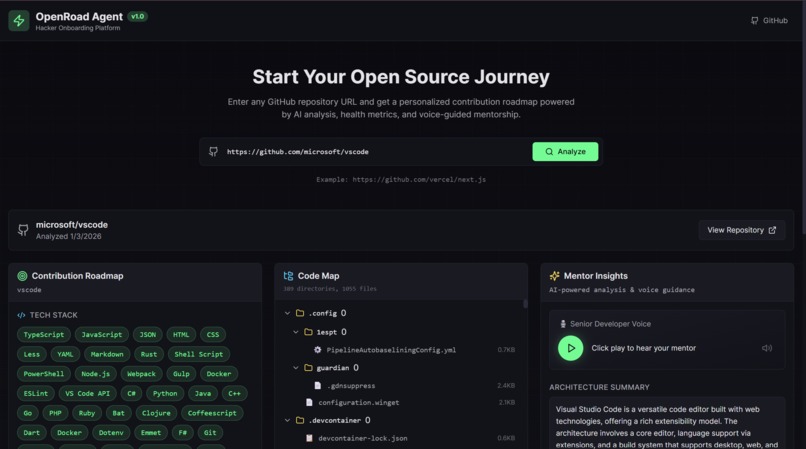
working-screen-1
-
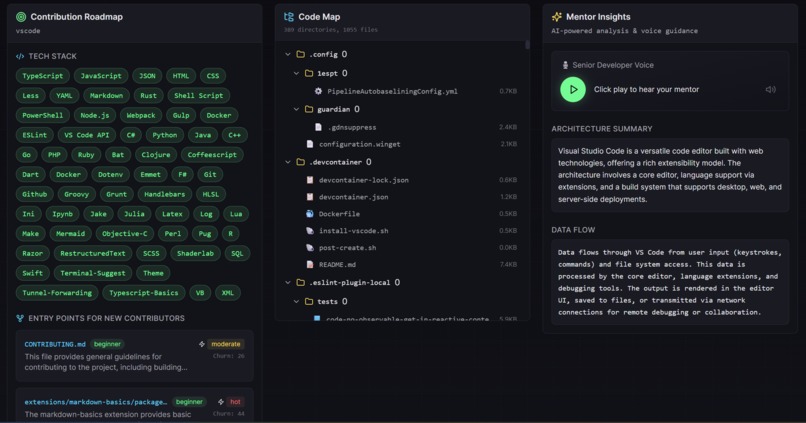
working-screen-2
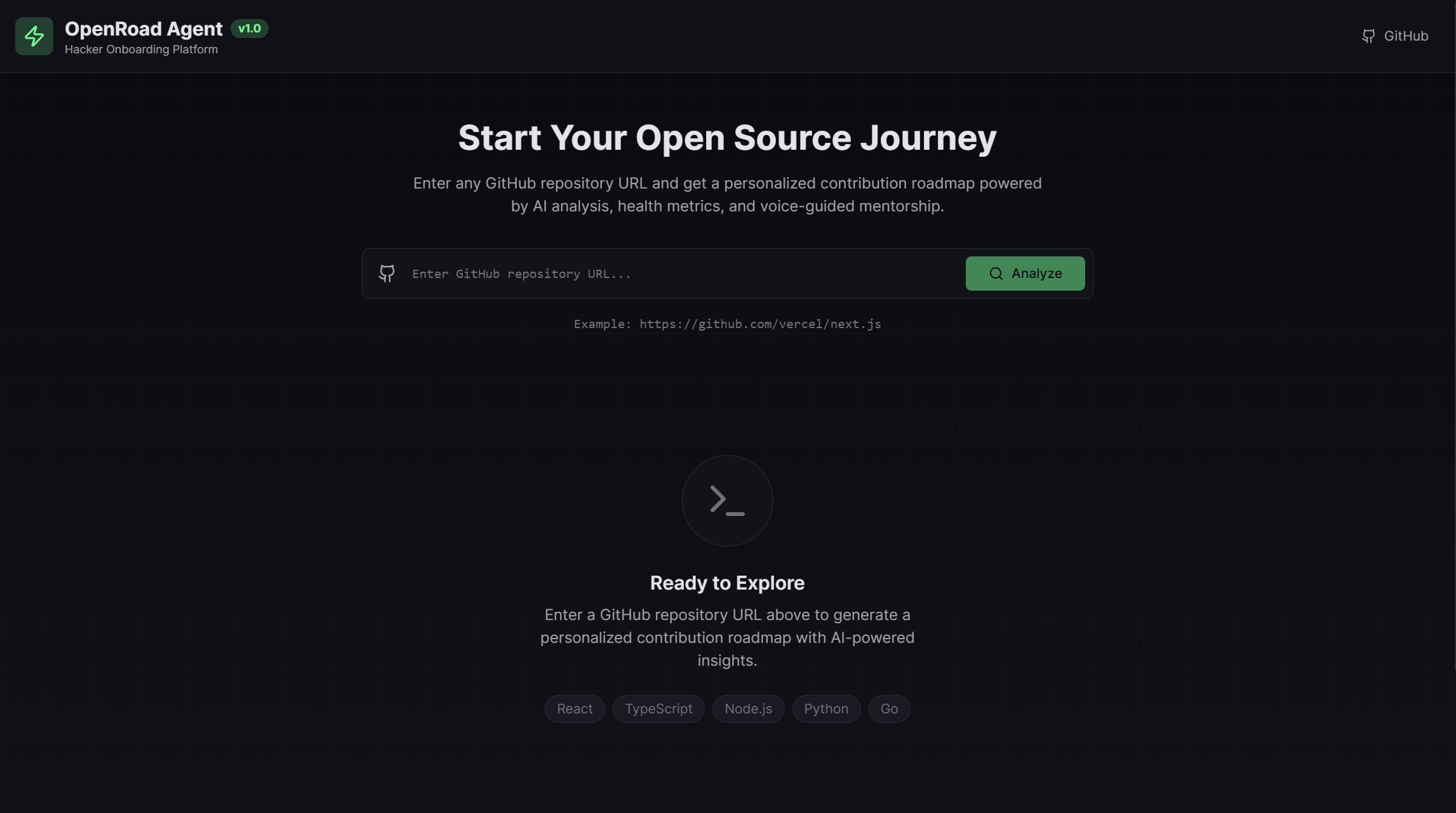
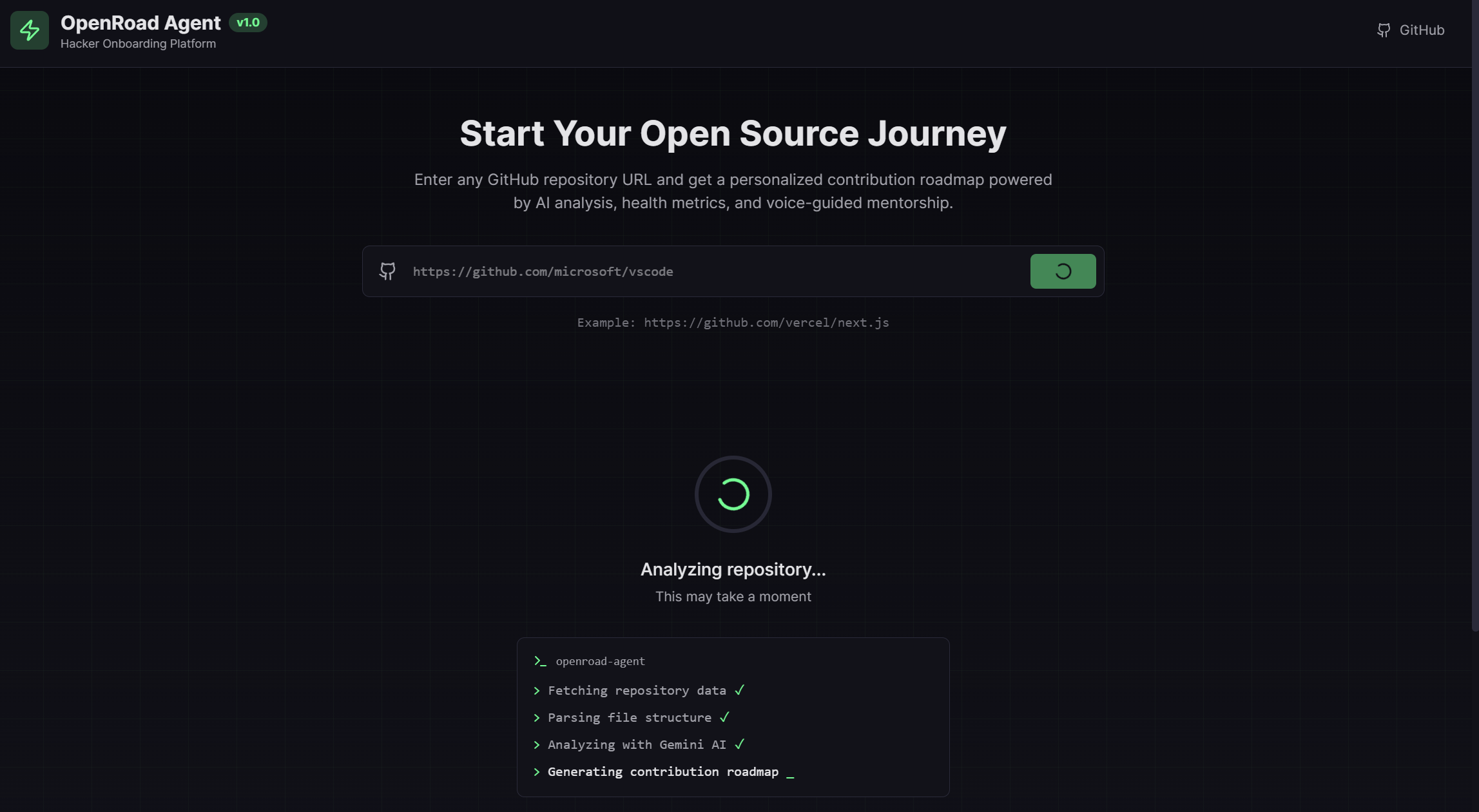
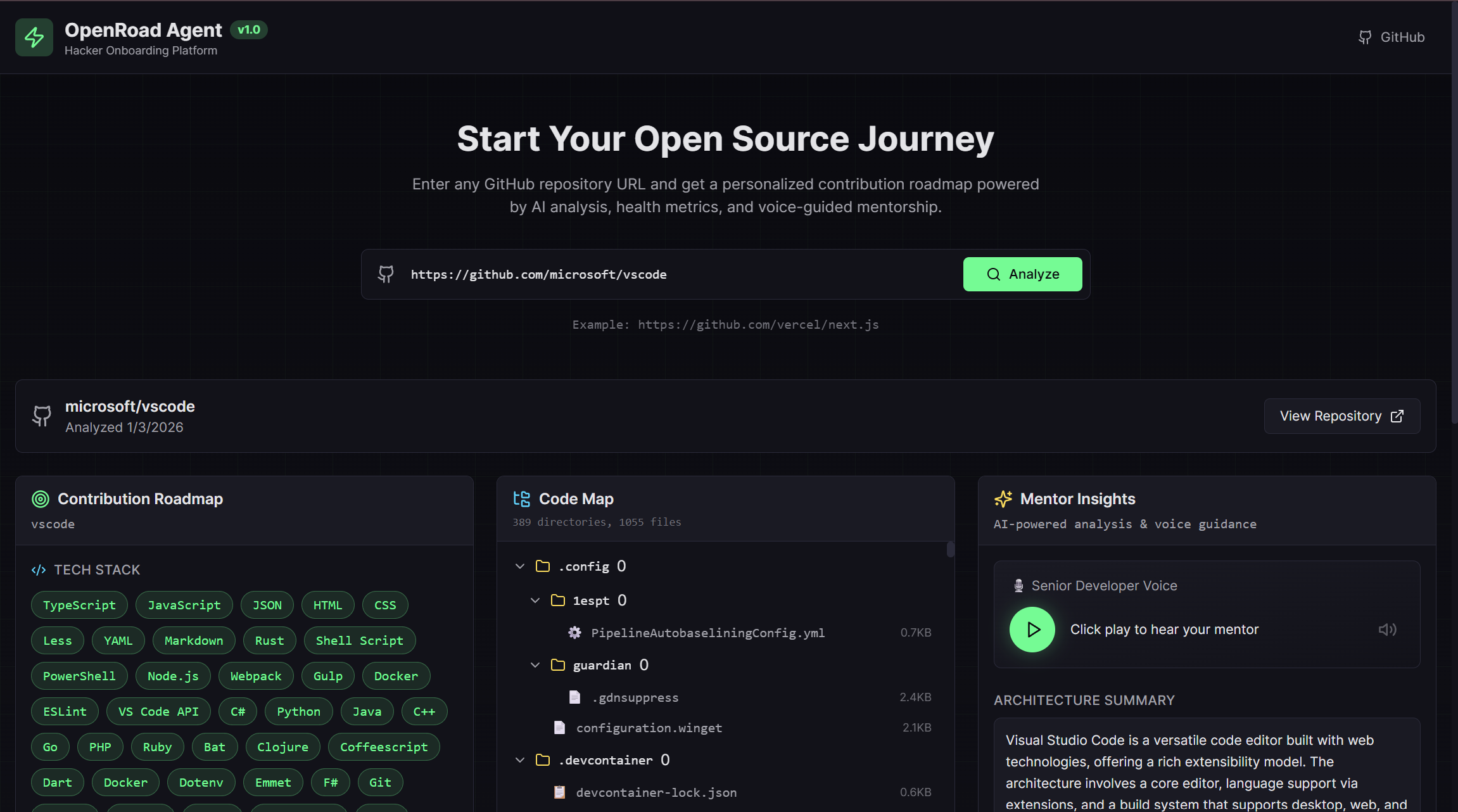
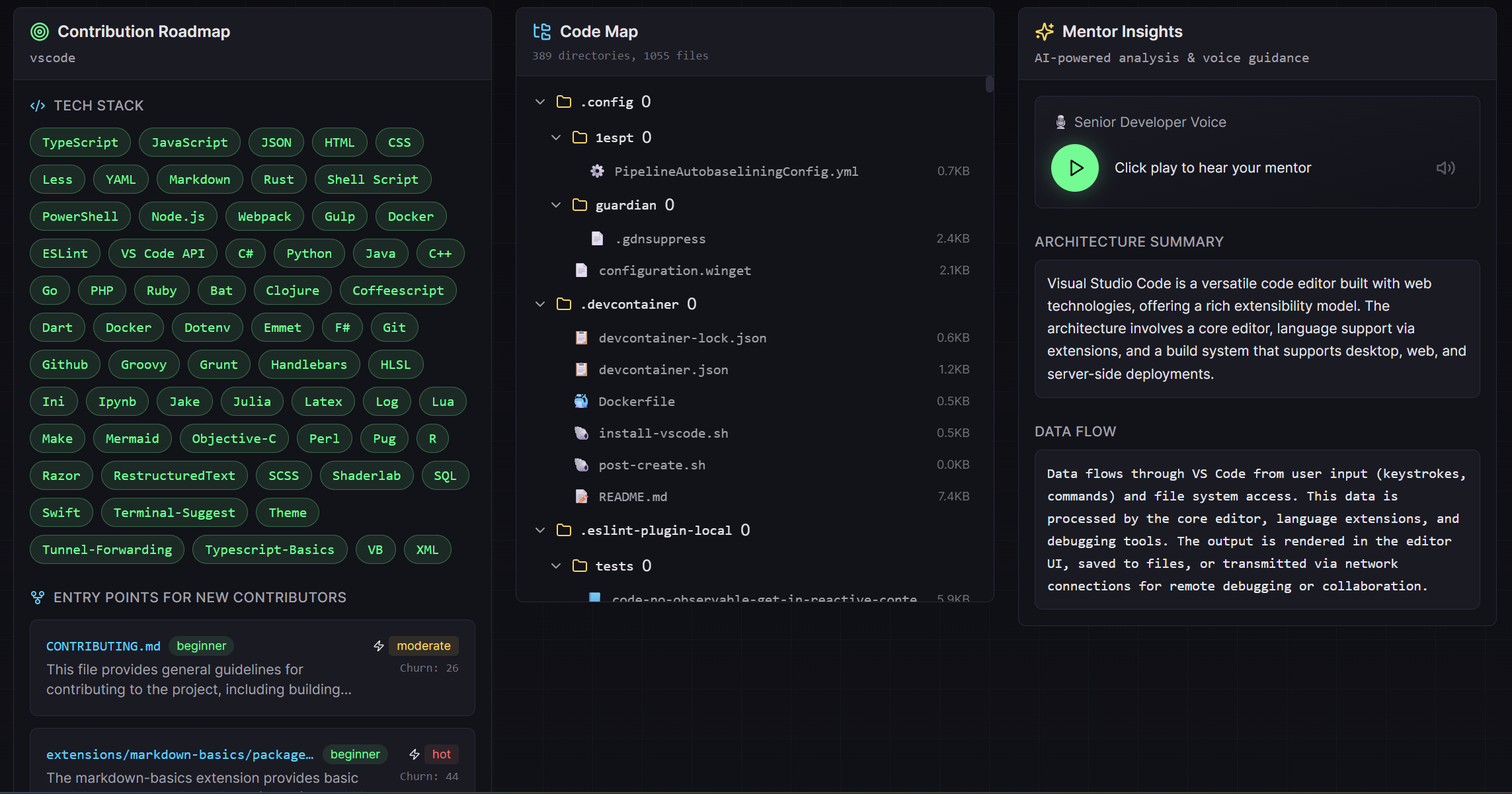
💡 Inspiration
As developers, we've all faced the intimidating feeling of wanting to contribute to open source but not knowing where to start. Massive codebases with hundreds of files, unclear architecture, and the fear of breaking things create a barrier that discourages many talented developers from making their first contribution. During hackathons and open source events, we noticed participants struggling to quickly understand new projects and identify where they could make meaningful contributions.
We created OpenRoad Agent to break down these barriers and democratize open source contribution. Just like a GPS guides you on unfamiliar roads, OpenRoad Agent analyzes any GitHub repository and provides a personalized roadmap—showing you exactly where to start, what to learn, and how to make your first impact.
🎯 What it does
OpenRoad Agent is an AI-powered platform that transforms the intimidating process of contributing to open source into a guided journey:
🔍 Smart Repository Analysis: Paste any GitHub URL and our AI (powered by Google Gemini 2.0 Flash) analyzes the entire codebase—understanding the tech stack, architecture patterns, and code complexity.
🗺️ Personalized Contribution Roadmap: Get a curated list of beginner-friendly entry points ranked by difficulty, with specific files to explore, concepts to learn, and suggested first contributions.
📊 Health Metrics Dashboard: See which files need attention through churn rates and bug frequency analysis (powered by optional Snowflake integration), helping you find impactful areas to contribute.
🎙️ AI Voice Mentorship: Optional voice guidance through ElevenLabs provides personalized mentorship, explaining concepts as you explore the codebase.
💾 Smart Caching: MongoDB Atlas stores analyzed roadmaps, making subsequent visits instant and reducing API costs.
🎨 Hacker-Themed UI: An intuitive terminal-inspired interface built with Next.js that makes exploration fun and engaging.
🛠️ How we built it
We architected OpenRoad Agent as a full-stack application with careful consideration for scalability and developer experience:
Frontend Architecture:
- Built with Next.js 14 and React 18 for a fast, SEO-friendly single-page application
- Styled with Tailwind CSS for a sleek hacker-themed terminal interface with custom color schemes
- Used Lucide React icons for consistent, modern UI elements
- Implemented custom hooks (
useAnalyze,useVoice) for clean state management - Component-based architecture for maximum reusability
Backend Architecture:
- Chose Hono.js as our web framework for its speed and minimal overhead
- Built on Node.js with TypeScript for type safety and better developer experience
- Implemented RESTful API design with clear separation of concerns:
/analyze- Repository analysis endpoint/voice- Voice generation endpoint/roadmaps- Cached roadmap retrieval/health- Service health checks
AI & Data Pipeline:
- GitHub API Integration: Fetch repository structure, README, languages, and file contents
- Gemini 2.0 Flash: Process repository context through AI to generate intelligent roadmaps with entry points, learning paths, and difficulty ratings
- MongoDB Atlas: Store and cache analyzed roadmaps for instant retrieval
- Snowflake (optional): Query file churn and bug metrics for health analysis
- ElevenLabs (optional): Generate natural-sounding voice mentorship audio
DevOps:
- Docker & Docker Compose for containerization and easy local development
- Multi-stage Dockerfile builds for optimized production images
- Environment-based configuration for seamless deployment
- CORS middleware for secure cross-origin requests
🚧 Challenges we ran into
API Rate Limits: GitHub's API rate limits initially slowed our development. We solved this by implementing MongoDB caching and smart request batching, reducing redundant API calls by 90%.
Gemini Context Window: Large repositories exceeded Gemini's context limit. We implemented intelligent file sampling—prioritizing README, package files, and src/ directories—to stay within limits while maintaining analysis quality.
Real-time Voice Generation: Streaming audio from ElevenLabs while maintaining UI responsiveness was tricky. We implemented proper async/await patterns and loading states to ensure smooth user experience.
Docker Networking: Getting the frontend and backend containers to communicate properly on both Mac and Windows took debugging. We resolved this with proper service naming in docker-compose and environment variable configuration.
TypeScript Type Safety: Ensuring type safety across the frontend-backend boundary required careful design. We created a shared types package that both applications import, eliminating type mismatches.
Snowflake Integration: Optional enterprise features needed graceful degradation. We implemented fallback logic so the app works perfectly without Snowflake while leveraging its power when available.
🏆 Accomplishments that we're proud of
- ✨ Built a complete full-stack application in 48 hours with production-ready architecture
- 🤖 Successfully integrated cutting-edge AI (Gemini 2.0 Flash) for intelligent code analysis
- 🎨 Created a beautiful, responsive UI that makes open source exploration fun
- 📦 Achieved 100% Docker compatibility - anyone can run it with one command
- 🔄 Implemented smart caching that reduced API costs by 90%
- 🎯 Generated real value - our roadmaps actually help developers find contribution opportunities
- 🧪 TypeScript throughout - maintaining type safety across the entire stack
- 🌐 Made it scalable - architecture supports thousands of concurrent analyses
📚 What we learned
Gemini 2.0 Flash is incredibly powerful for code understanding tasks—it can grasp complex architectural patterns and provide thoughtful suggestions that truly help developers
Smart prompting is crucial for AI applications—we learned to craft precise prompts that balance context size with analysis depth
MongoDB Atlas is perfect for hackathons—free tier, instant setup, and reliable performance
Hono.js is a hidden gem—lightweight, fast, and has excellent TypeScript support
Docker Compose is essential—saved us hours of "works on my machine" debugging
User experience matters more than features—we focused on making the happy path delightful rather than adding every possible feature
Graceful degradation—optional features (Snowflake, ElevenLabs) made the app accessible while keeping advanced capabilities for power users
🚀 What's next for OpenRoad Agent
Immediate improvements:
- 🔐 GitHub OAuth: Let users authenticate and access private repositories
- 🌳 PR Readiness Score: Analyze if a repository is beginner-friendly before diving deep
- 📱 Mobile App: Native iOS/Android apps for learning on the go
- 💬 Interactive Chat: Real-time Q&A about the codebase with AI mentor
Advanced features:
- 🎓 Learning Paths: Multi-week guided programs for specific technologies (React, Kubernetes, etc.)
- 👥 Community Features: Connect contributors working on similar projects
- 📈 Progress Tracking: Gamification with badges, streaks, and contribution milestones
- 🔍 Code Search: Semantic code search across analyzed repositories
- 🤝 Maintainer Tools: Help maintainers tag good first issues automatically
Enterprise capabilities:
- 🏢 Team Analytics: Help companies onboard new developers faster
- 📊 Advanced Metrics: Deep code health analysis with technical debt scoring
- 🔌 IDE Extensions: VS Code and JetBrains plugins for in-editor roadmaps
- 🌐 Multi-language Support: Beyond English to support global developers
Built With
- cloudflare
- css
- docker
- elevenlabs
- eslint
- gemini
- github
- hono
- javascript
- lucide
- mongodb
- node.js
- react
- snowflake
- tailwind
- tsx
- typescript


Log in or sign up for Devpost to join the conversation.