-
-
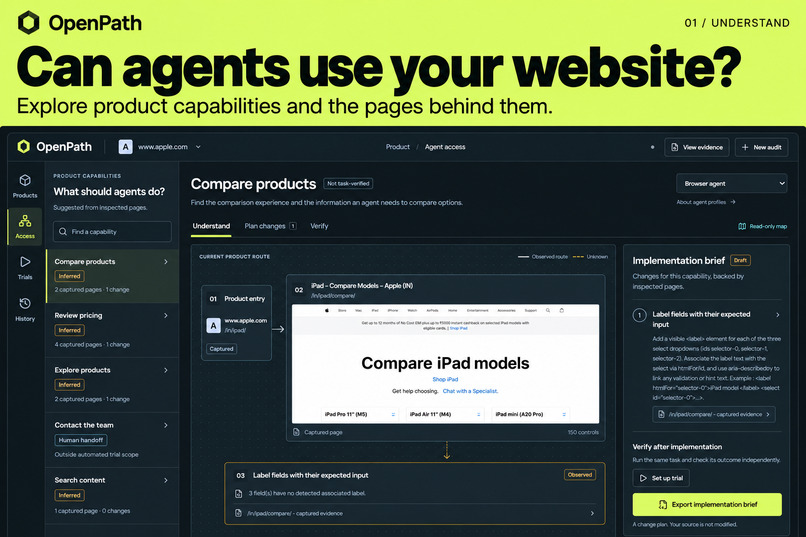
capability-workspace
-
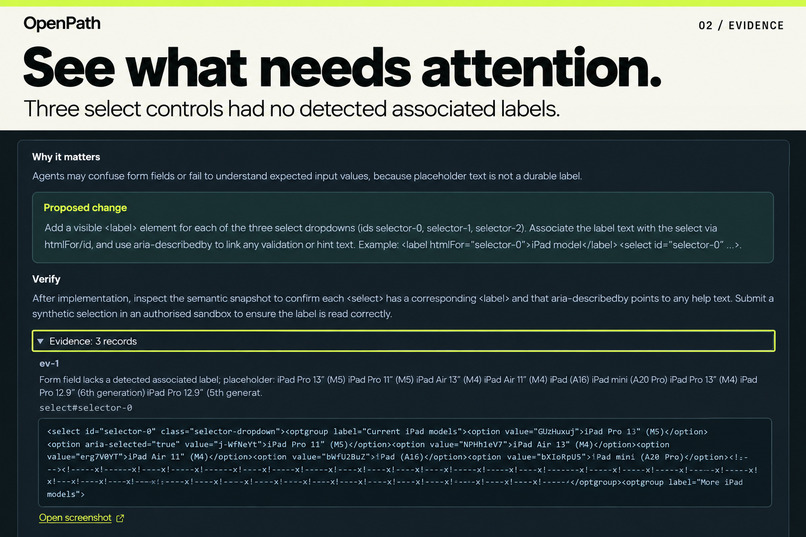
captured-evidence
-
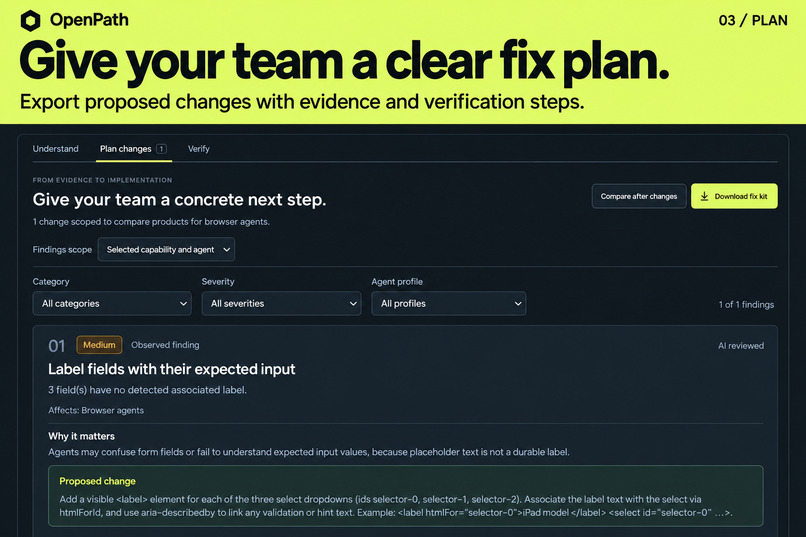
implementation-plan
-
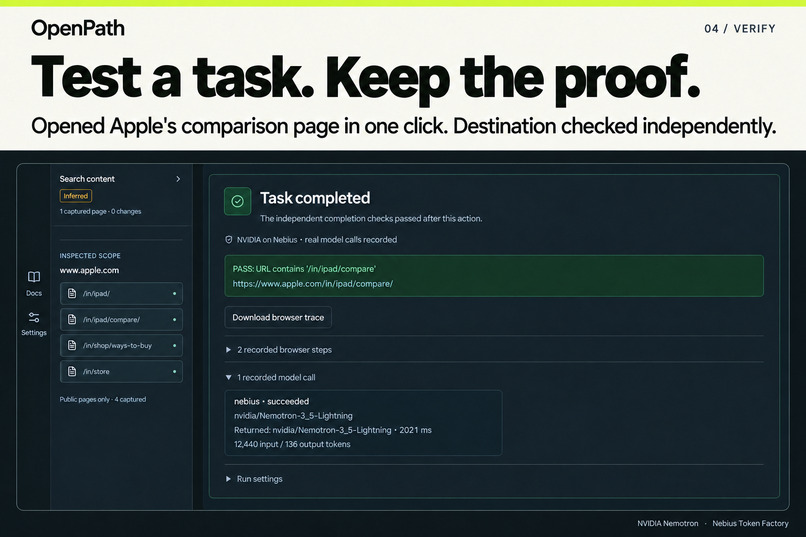
verified-browser-trial
Inspiration
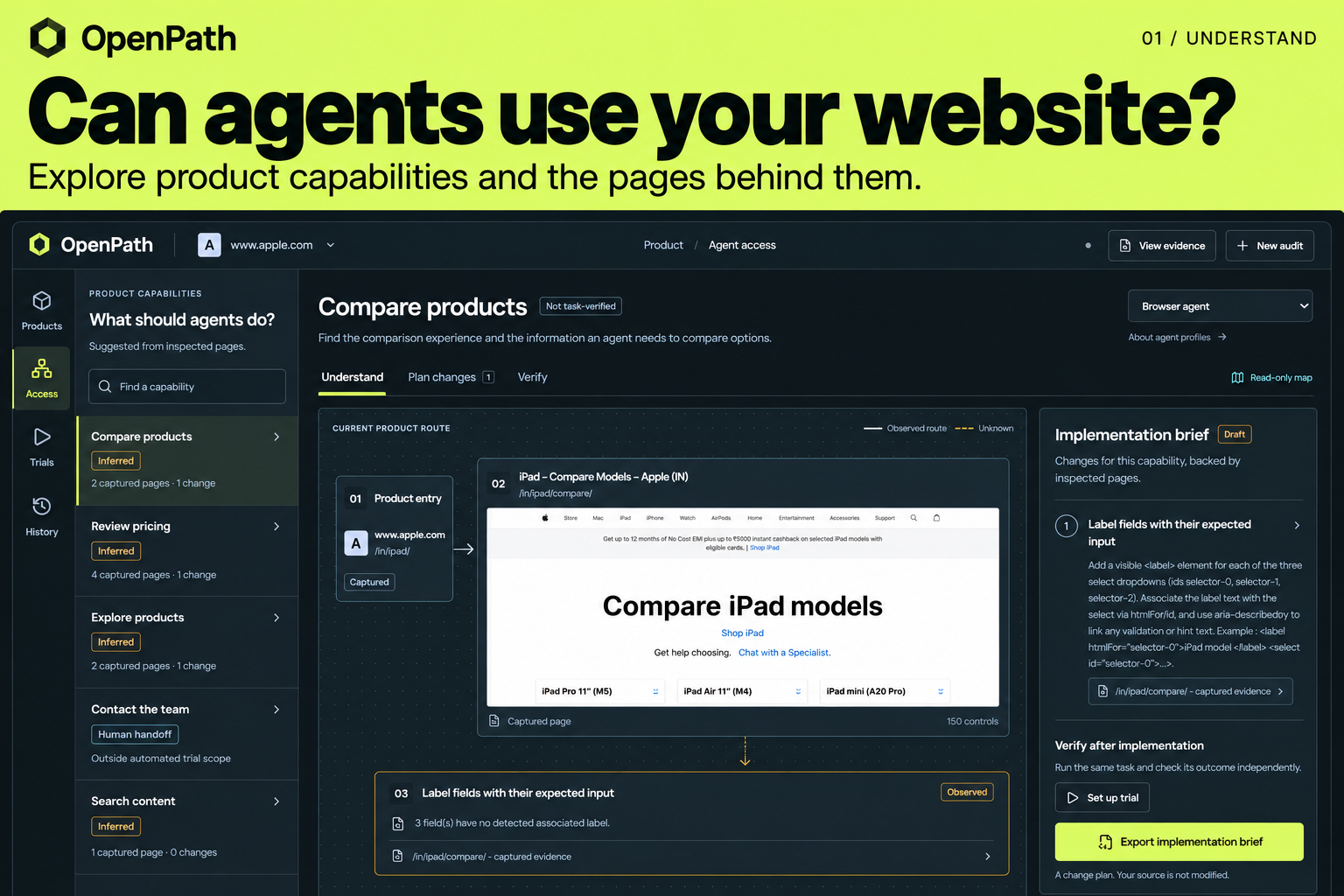
A website can look clear to a person while leaving an AI agent guessing. An icon may have no name. A custom control may hide its state. Important information may exist only after JavaScript runs.
We started with one question: your product works for people, but can an AI agent use it? We built OpenPath to help developers answer that question through real-page evidence, practical recommendations, and independently verified browser tasks.
What it does
Enter a public website URL. OpenPath inspects up to four linked pages and produces an evidence-backed compatibility report.
- Find and access: can an agent reach and identify the relevant pages?
- Read and understand: is information available in HTML and rendered content?
- Use and complete: do buttons, inputs and custom controls expose useful names and semantics?
- Connect directly: are existing API or tool documentation links discoverable?
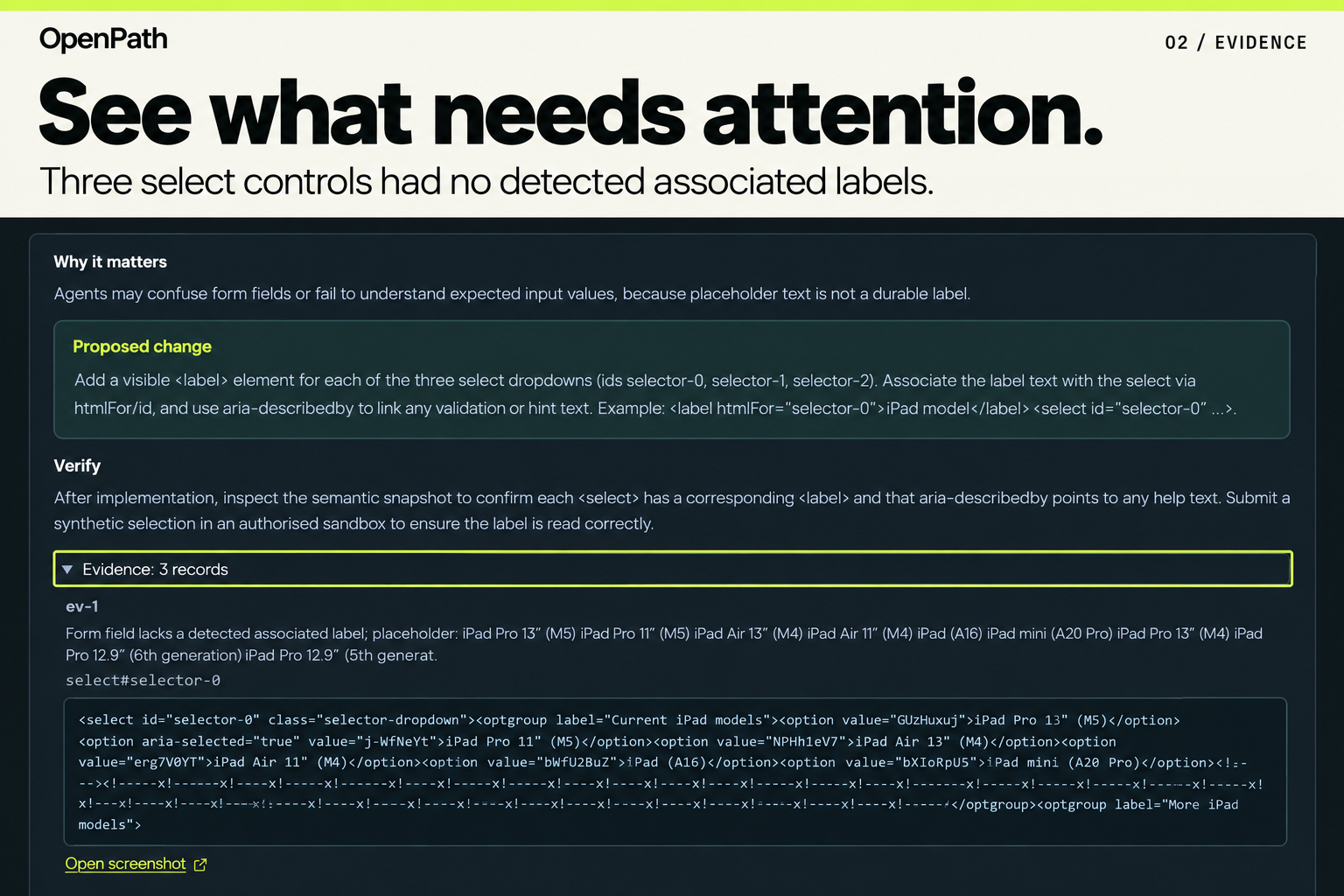
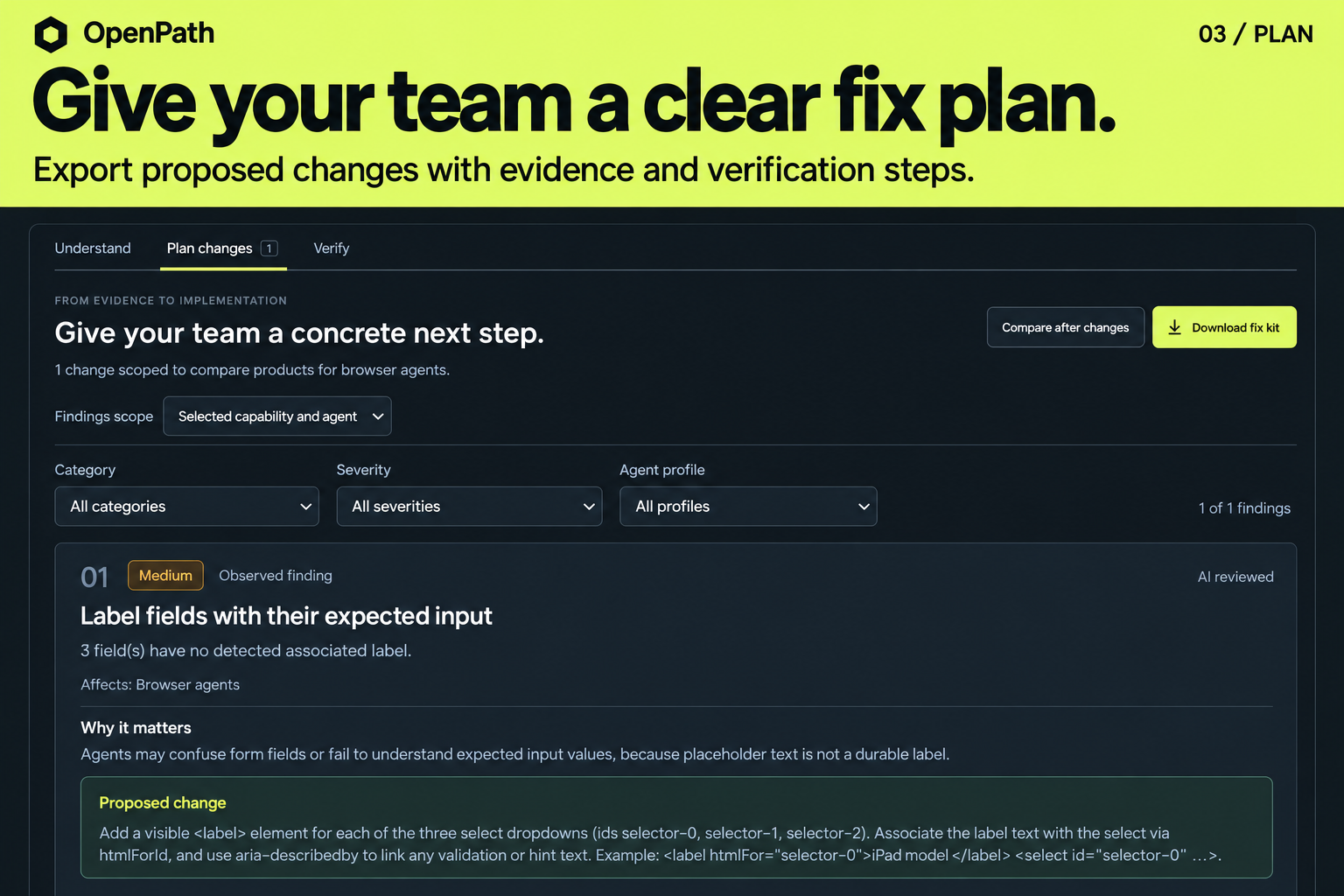
Each finding identifies the affected agent type, shows the observation and evidence, and suggests a change with a verification step. Developers can download a Markdown fix brief for themselves or a coding agent.
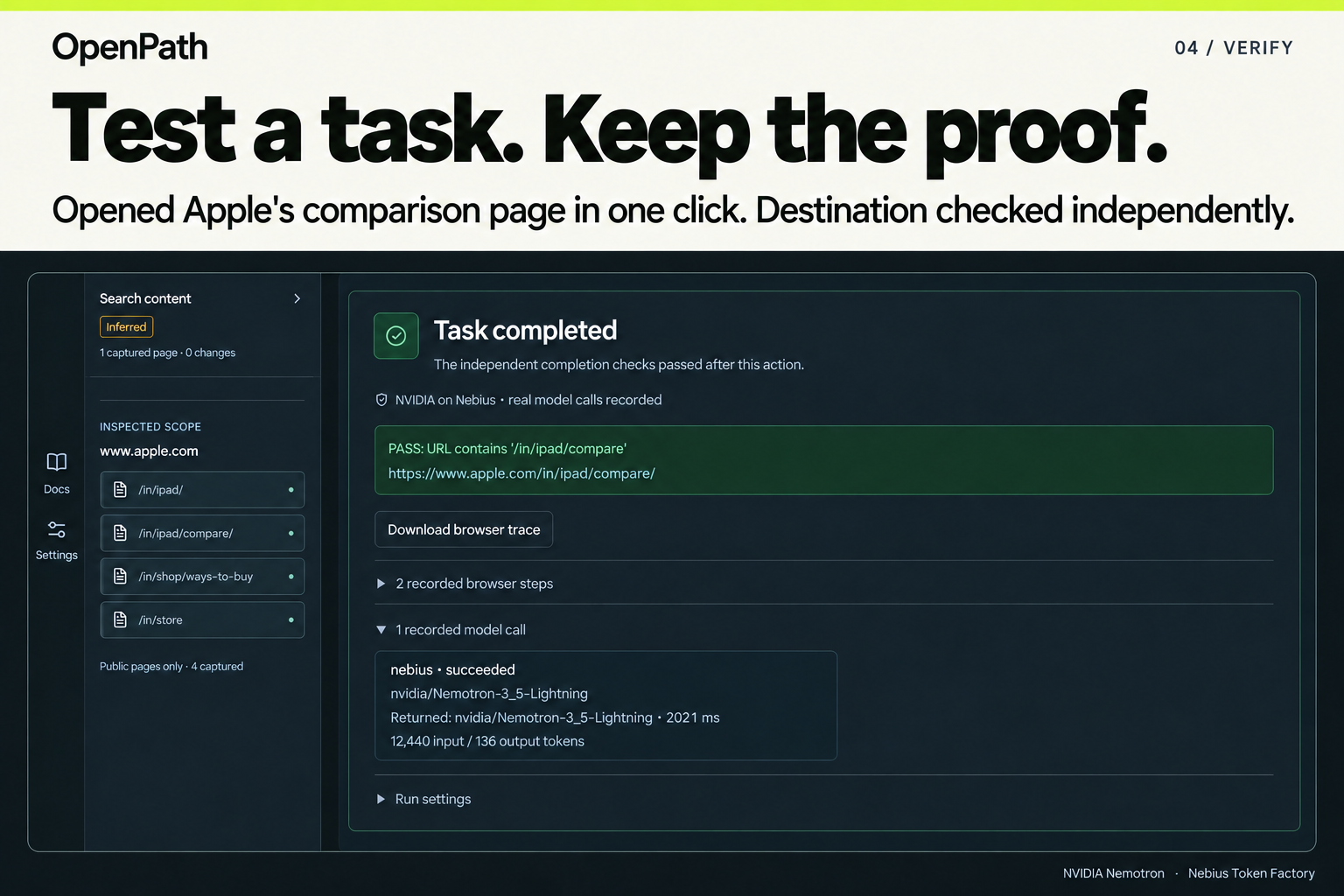
An optional browser trial tests a declared task. OpenPath records actions, screenshots and a browser trace. A separate checker verifies the outcome instead of trusting the agent's claim that it finished.
Saved reports and attempts support before/after comparisons. Missing evidence stays unverified; an unchanged outcome stays unchanged.
How we built it
We built one TypeScript application with React, Vite and CSS on the frontend, and Express on Node.js for the API and bounded job queue. Playwright Chromium collects page evidence and executes validated browser actions. Zod validates requests and model responses. Reports and artifacts persist as local files.
NVIDIA Nemotron, served by Nebius Token Factory, performs two central jobs: refining recommendations grounded in observed findings, and choosing the browser agent's next action. We use structured tool calls through the OpenAI JavaScript SDK configured for Nebius.
Deterministic checks establish observable facts. Independent URL/text assertions verify public browsing tasks; our controlled storefront uses server-owned cart state. The model does not grade itself.
Challenges we faced
Separating a warning from a real failure. An unnamed control is a compatibility risk, but a capable agent may still complete the task. We keep static observations and measured task outcomes separate.
Making comparisons honest. Paired attempts must preserve goals, assertions, model and runner settings. Different page coverage cannot become a claimed improvement.
Keeping browser actions and spending bounded. We limit crawl scope, browser actions and execution time, guard private-network access, and restrict writes to our demo sandbox. A persistent conservative spending cap protects this installation.
Integrating quickly as a small team. Shared TypeScript contracts helped connect the crawler, evaluator and report UI. Automated browser tests caught integration problems before the final build.
Accomplishments we're proud of
- A working URL-to-report-to-task-to-comparison workflow with inspectable evidence and export.
- Real NVIDIA inference through Nebius for both recommendations and browser decisions.
- 58 passing automated tests, plus production-flow and restart checks; GitHub's Linux verification passed.
- An honest controlled demo: the fixed storefront removed the observed control-name warning, while both live browser attempts completed the independently checked cart task. We report that task comparison as unchanged, not an invented success gain.
What we learned
Agent compatibility depends on the agent's capabilities. HTML readers, browser agents and API clients do not need exactly the same things.
Evidence matters more than a single readiness score. A recommendation is useful when a developer can inspect its basis, apply a change and verify the result.
What's next
Expand task coverage and checks, support authorized staging environments, and add repeatable trials across agent profiles. The current MVP is verified locally. It provides change guidance; it does not automatically rewrite a product or certify universal agent compatibility.
Built With
- css3
- express.js
- nebius-token-factory
- node.js
- nvidia-nemotron
- openai-sdk
- playwright
- react
- typescript
- vite
- zod


Log in or sign up for Devpost to join the conversation.