-
-
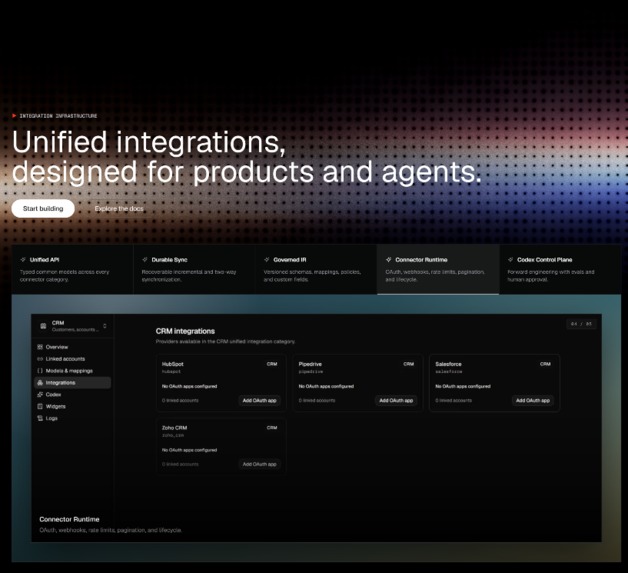
Hero
-
-
-
Footer
-

Login
-
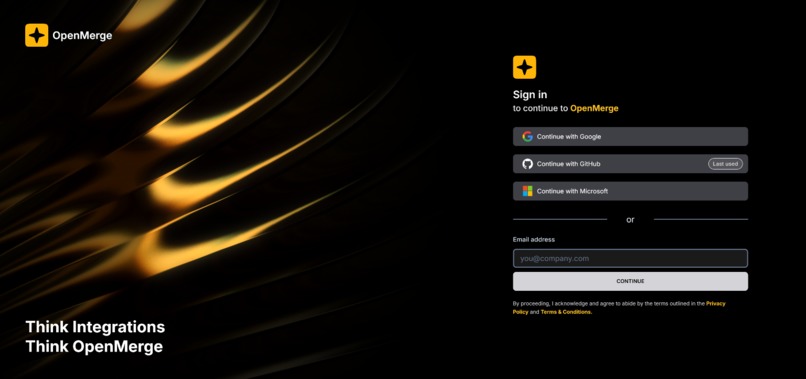
Login
-
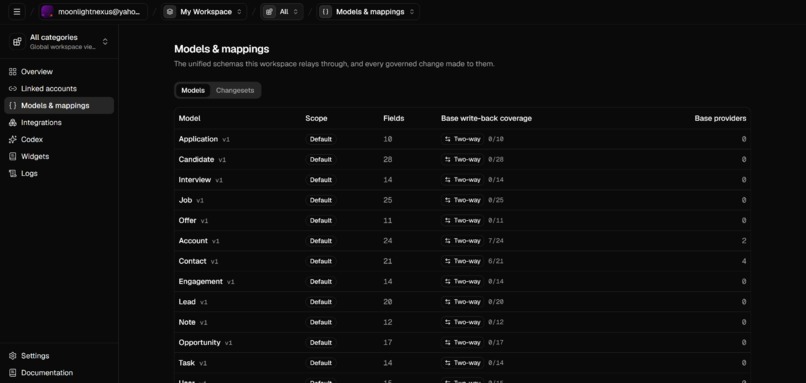
Unified Schema
-
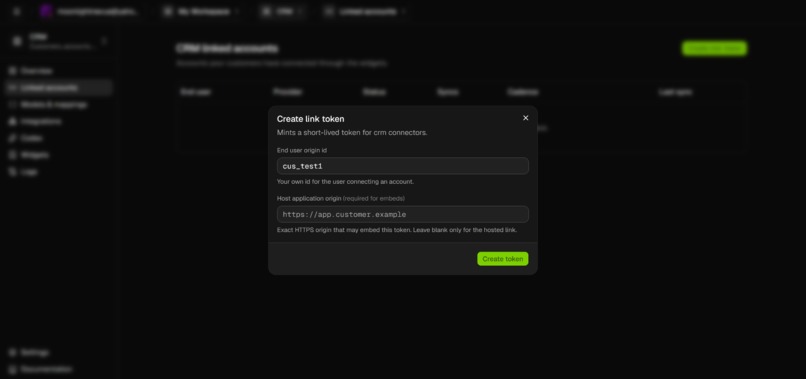
-

-
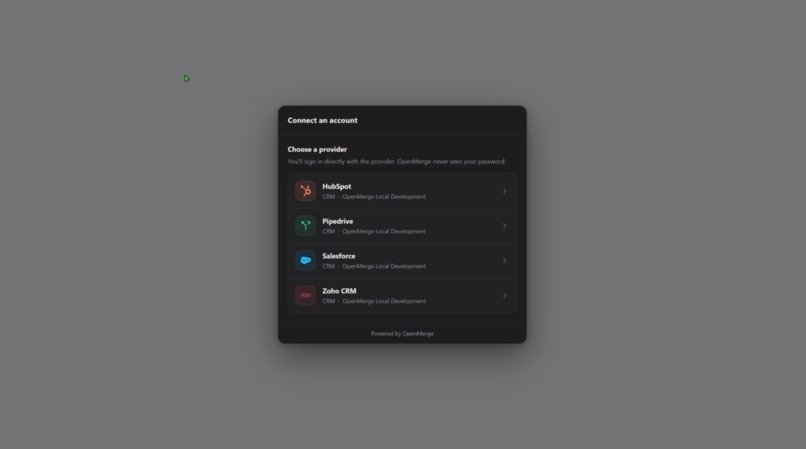
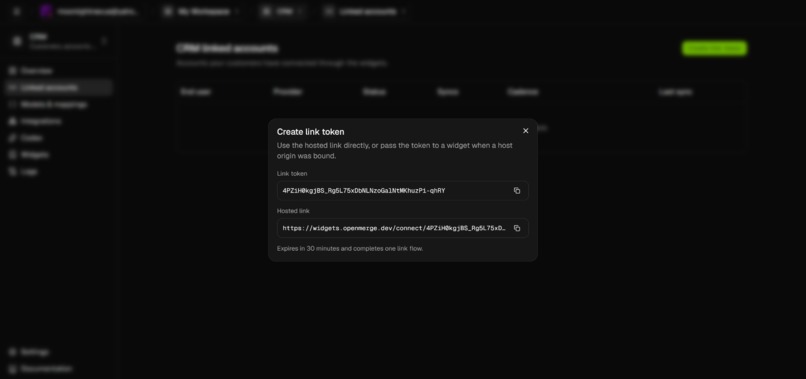
Widget
-
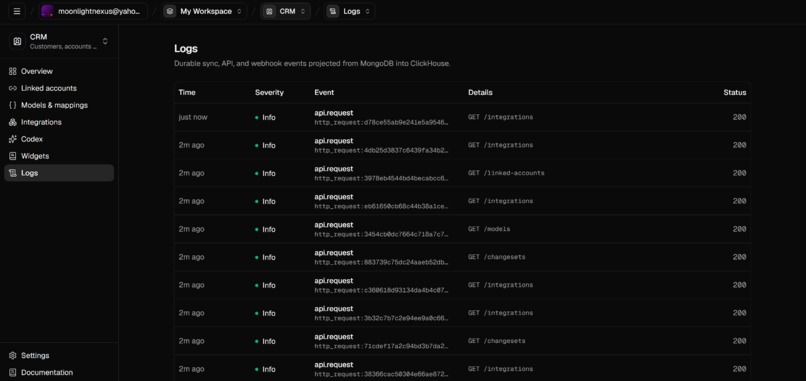
Logs
-
-
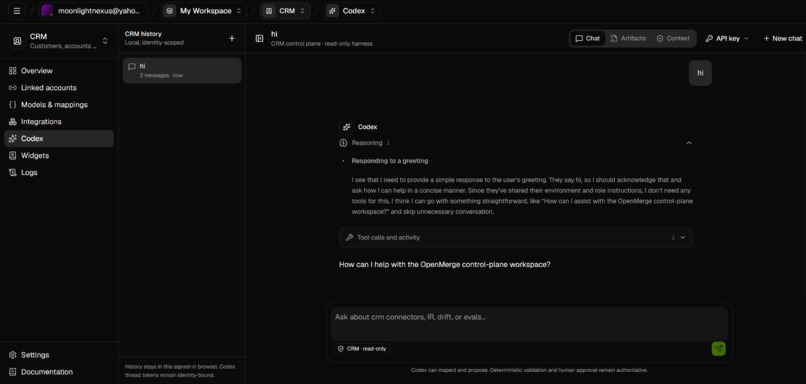
Agent


Inspiration
TBH, I didn't actually start the product to participate in this hackathon. It was a mere coincidence that I saw an OAI post on X.com and thought it would be a good validation point. While still in my job, I built a GTM Data SaaS almost 10 months ago that now has a decent user base. One request I constantly hear from users is about integrations with platforms, specifically CRMs and accounting tools. But to be fair, I’ve always found that their requests have a lot of divergence; some wants new custom fields, some want implicit de-duplication, some need custom data types, and some need weird field mappings and nested mappings, something like base schematics plus their own divergent requirements. More or less, it is something that requires full-scale forward engineering for each user, along with a unified schema and unified integrations with platforms like Salesforce, HubSpot, Pipedrive, etc.
What it does
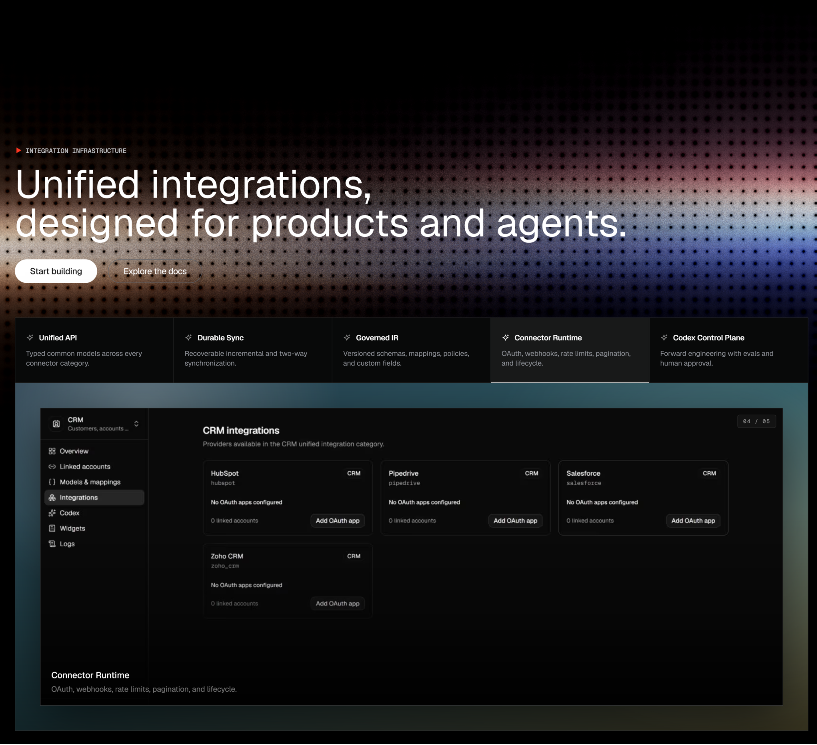
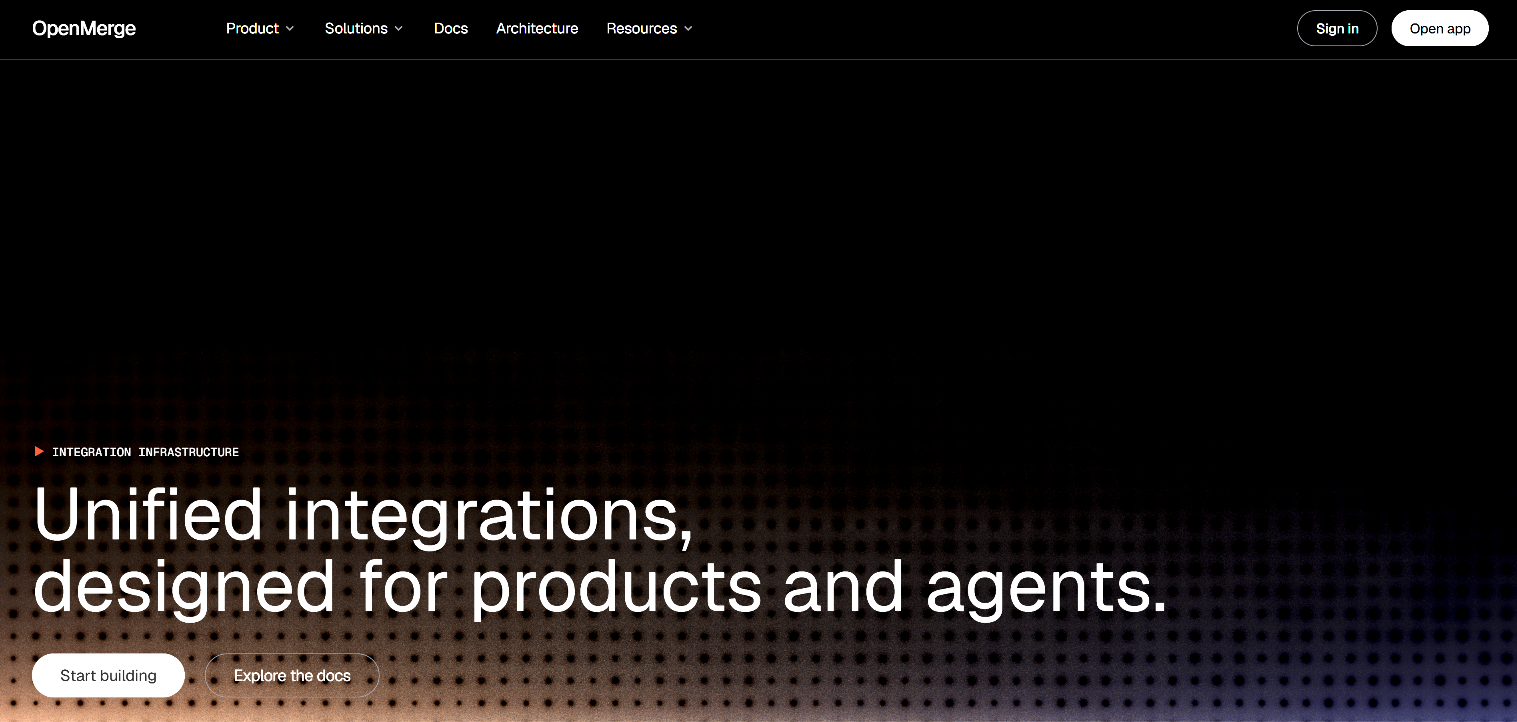
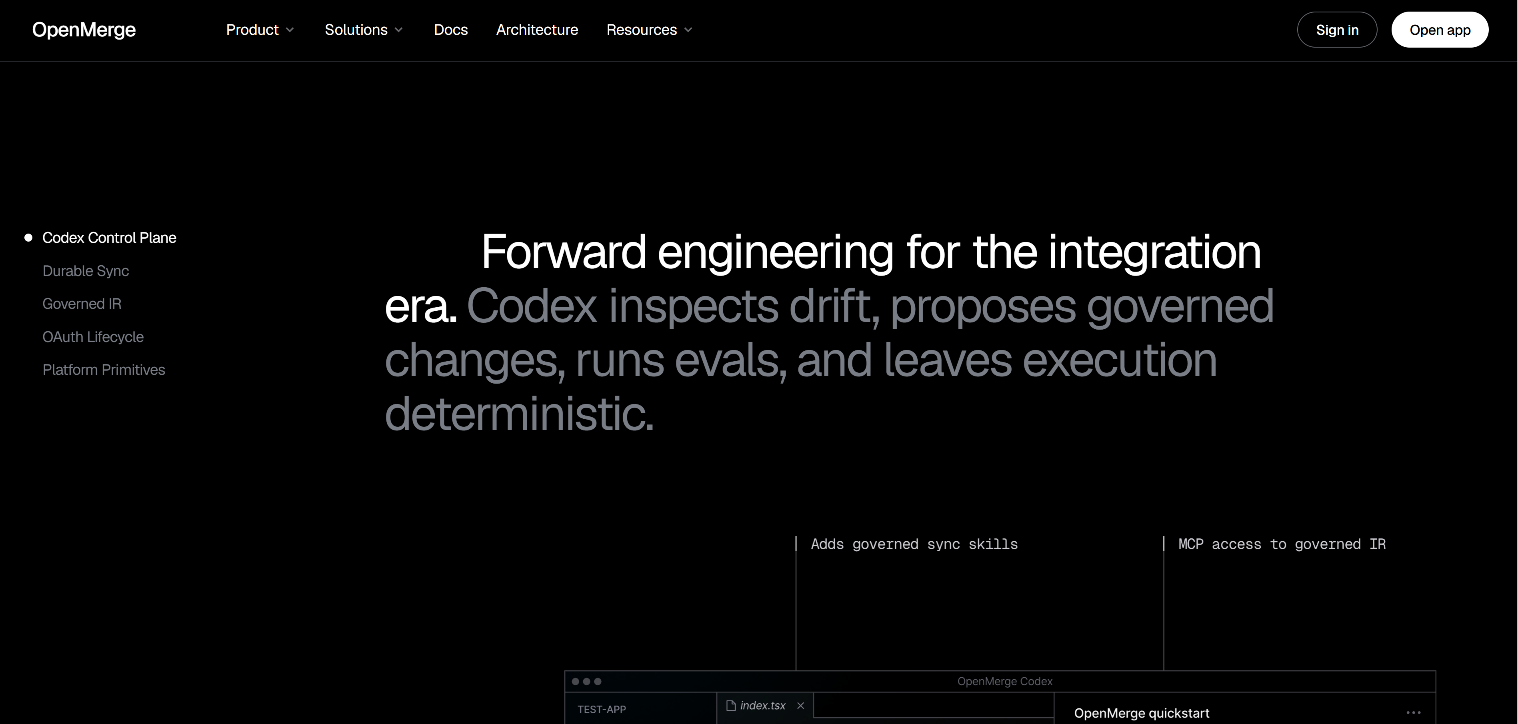
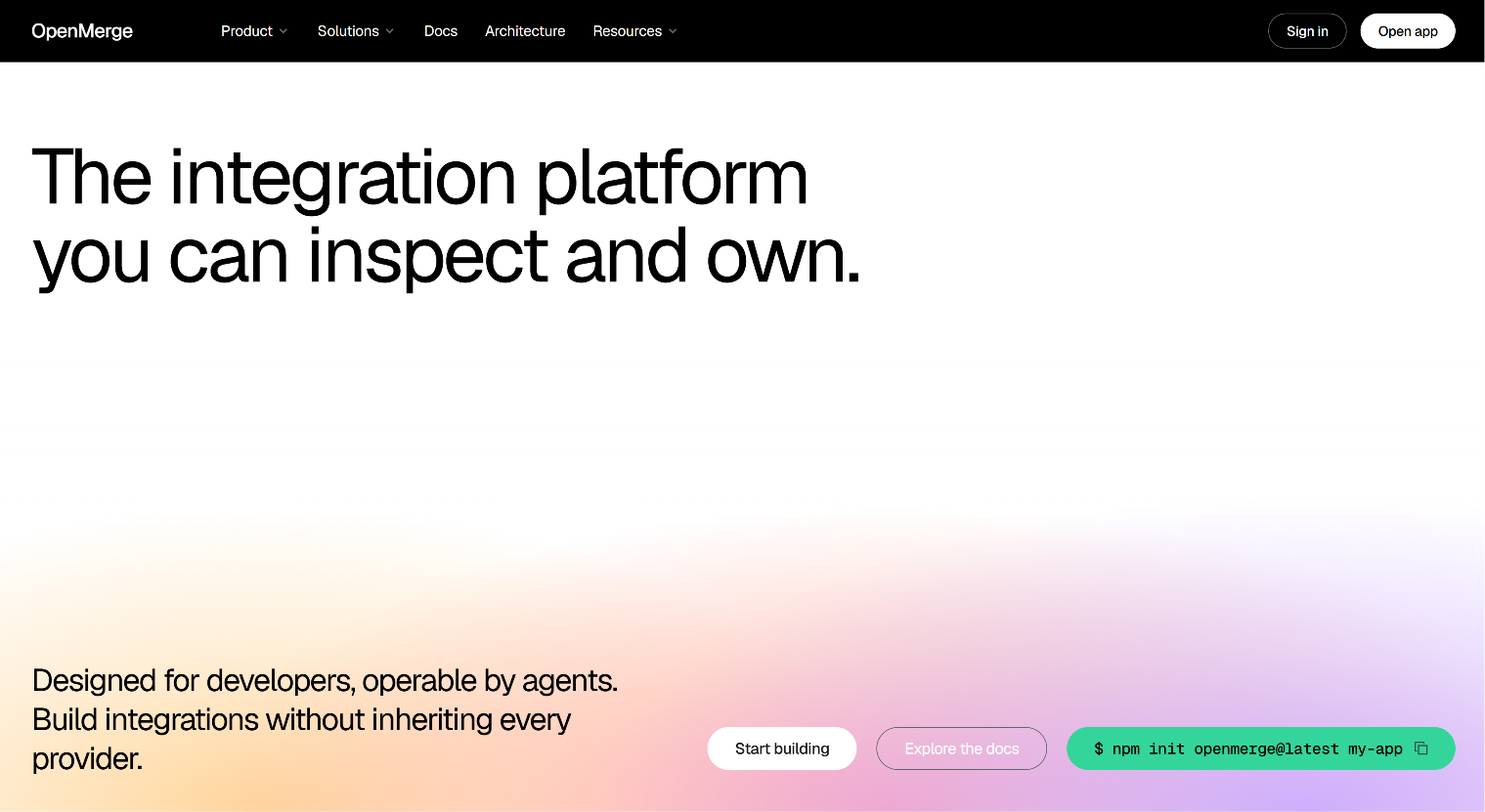
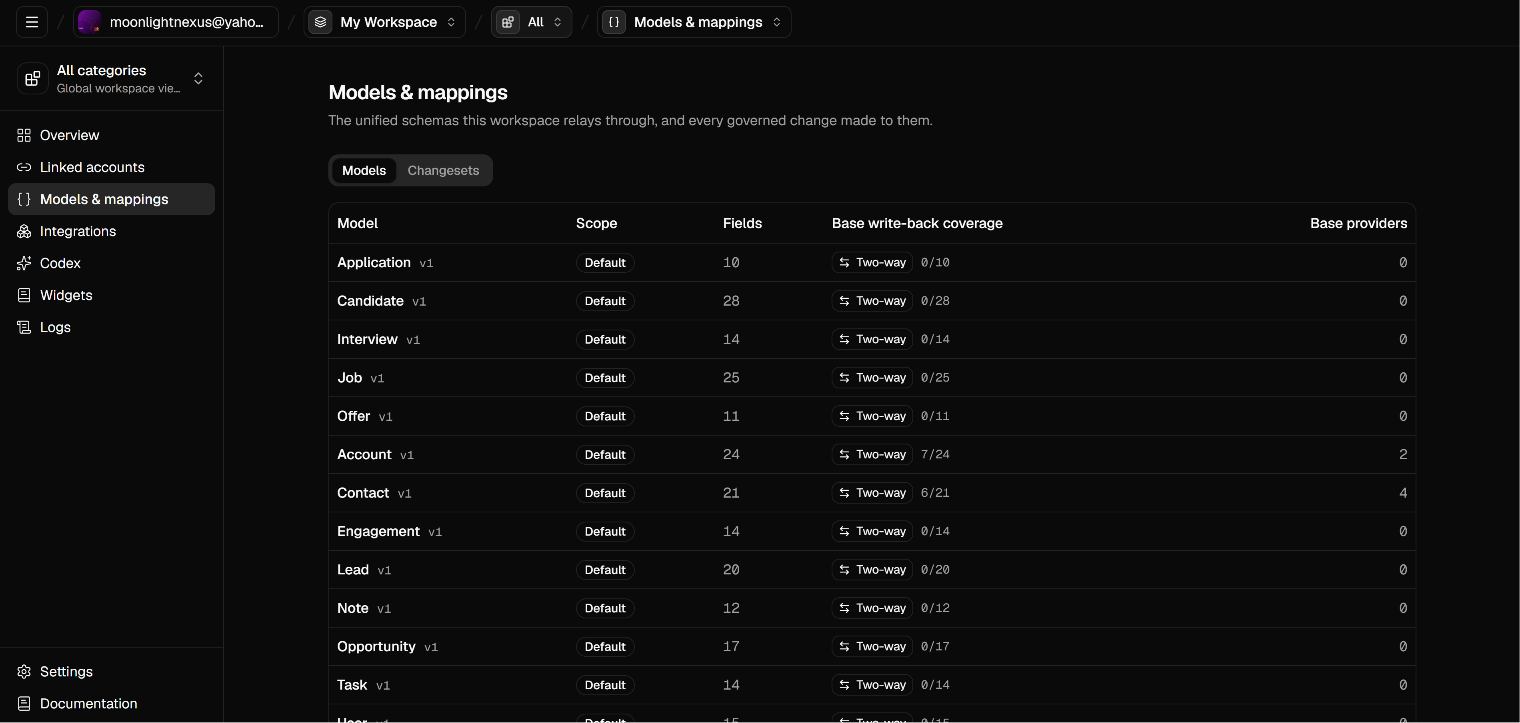
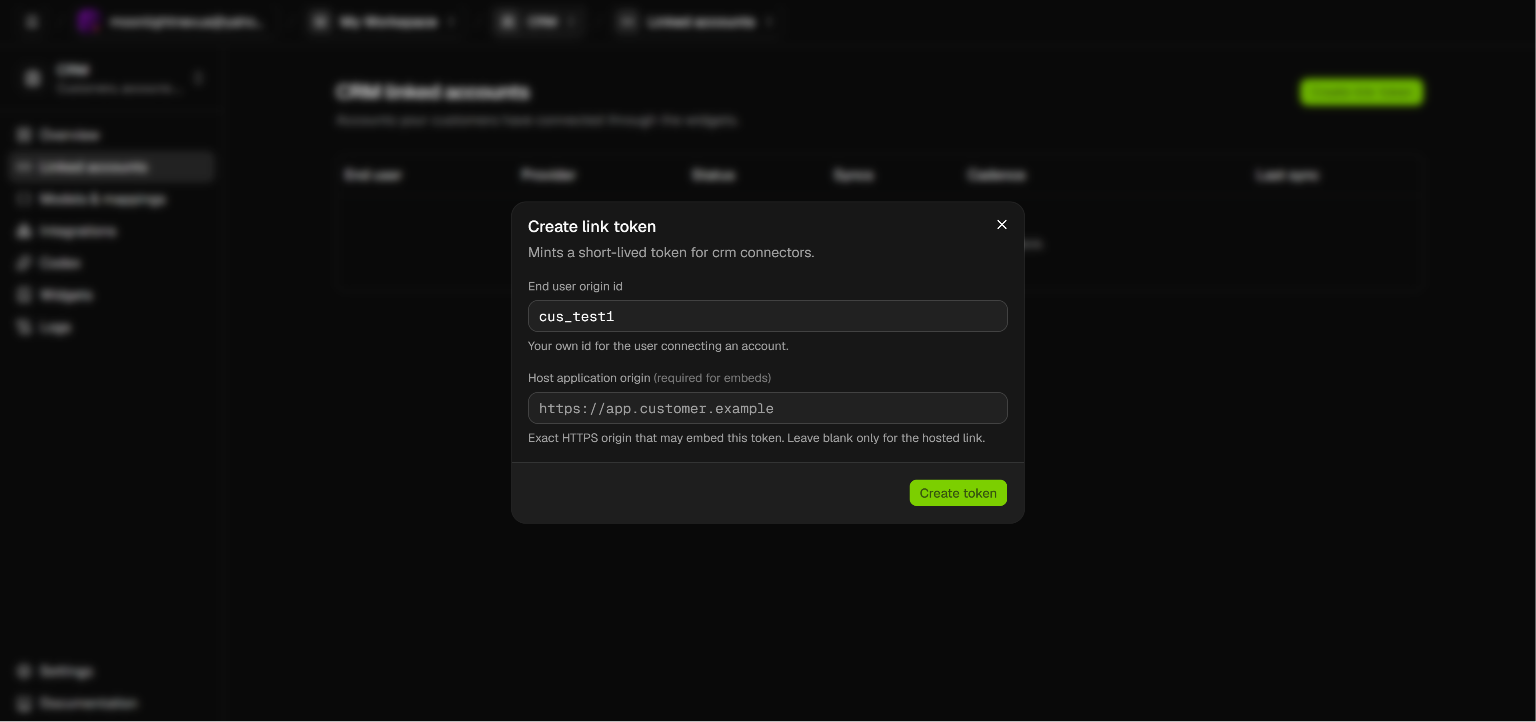
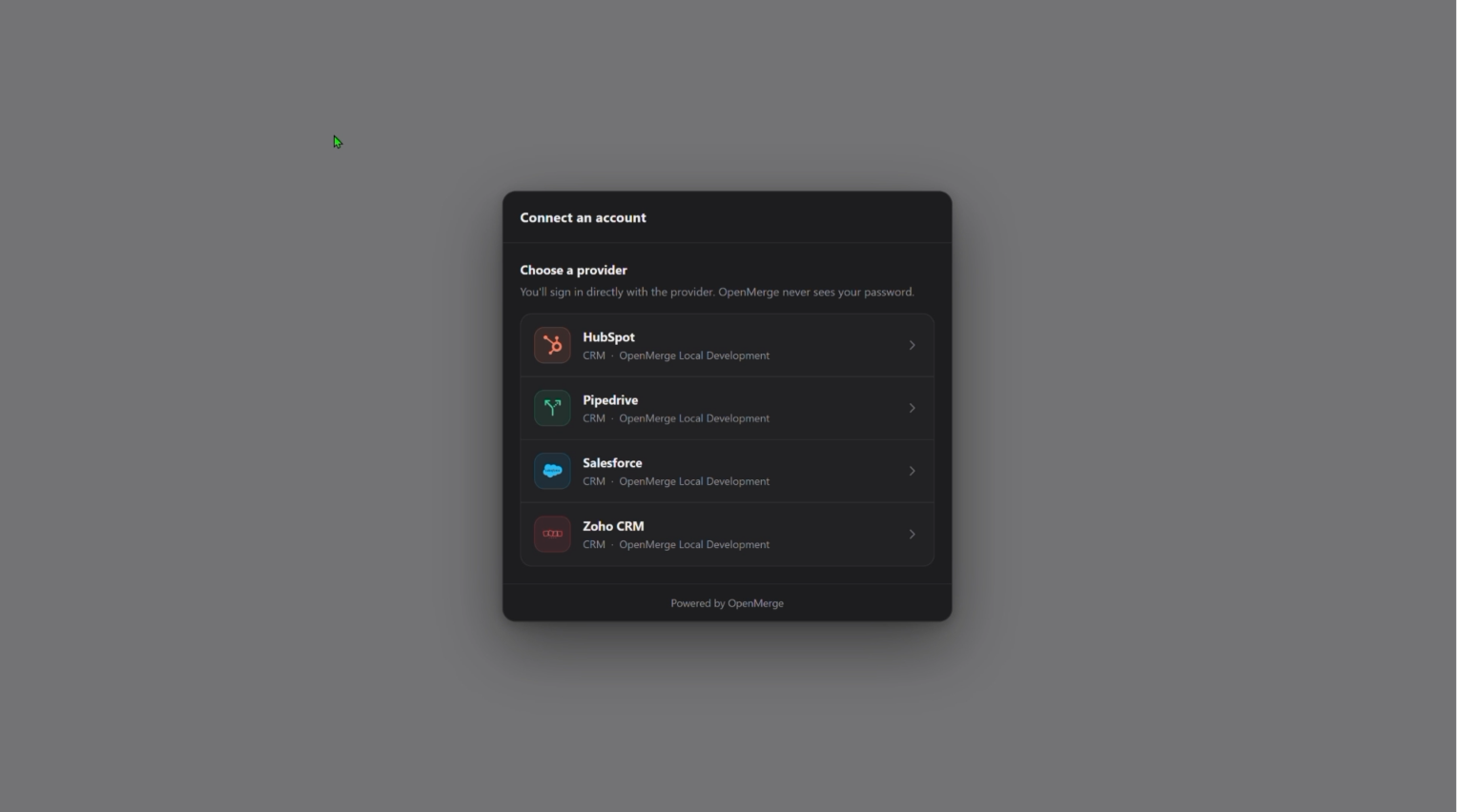
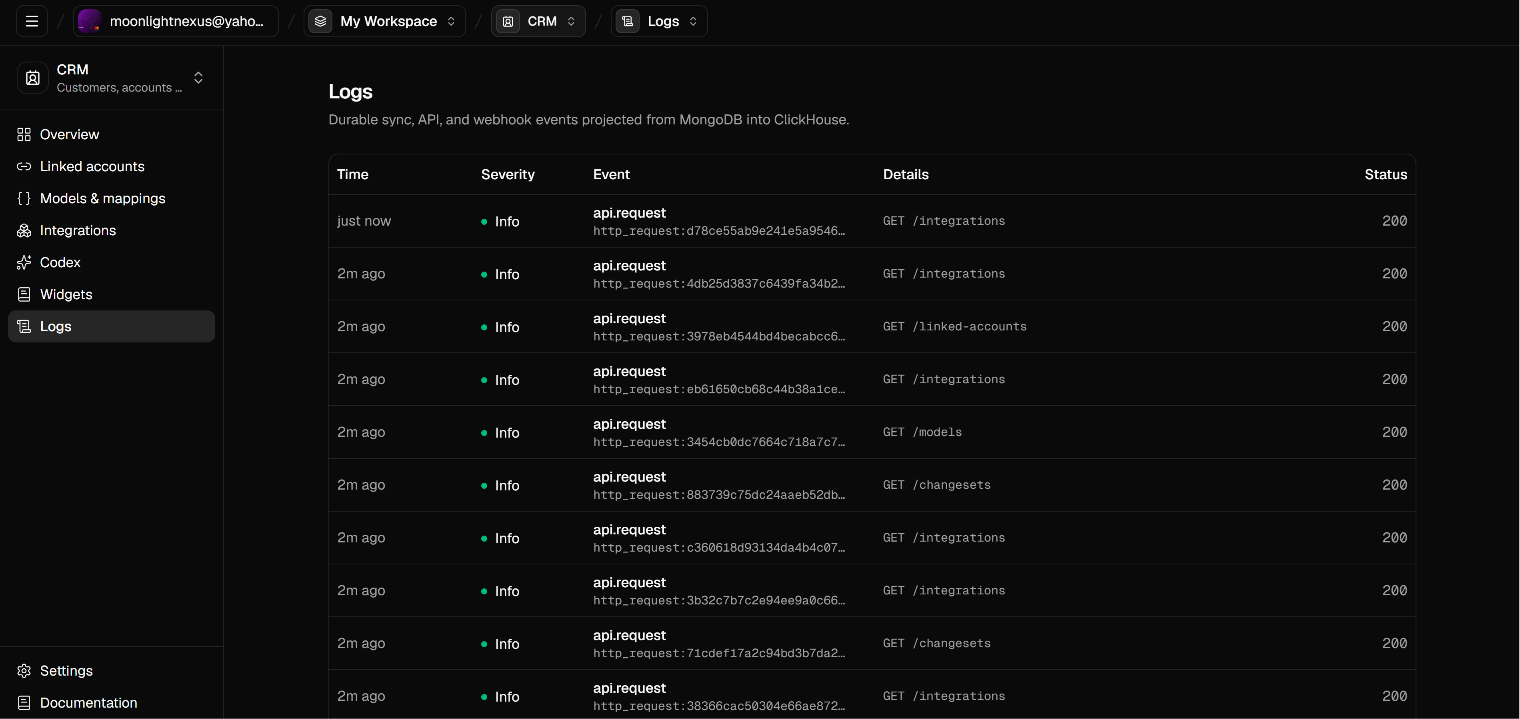
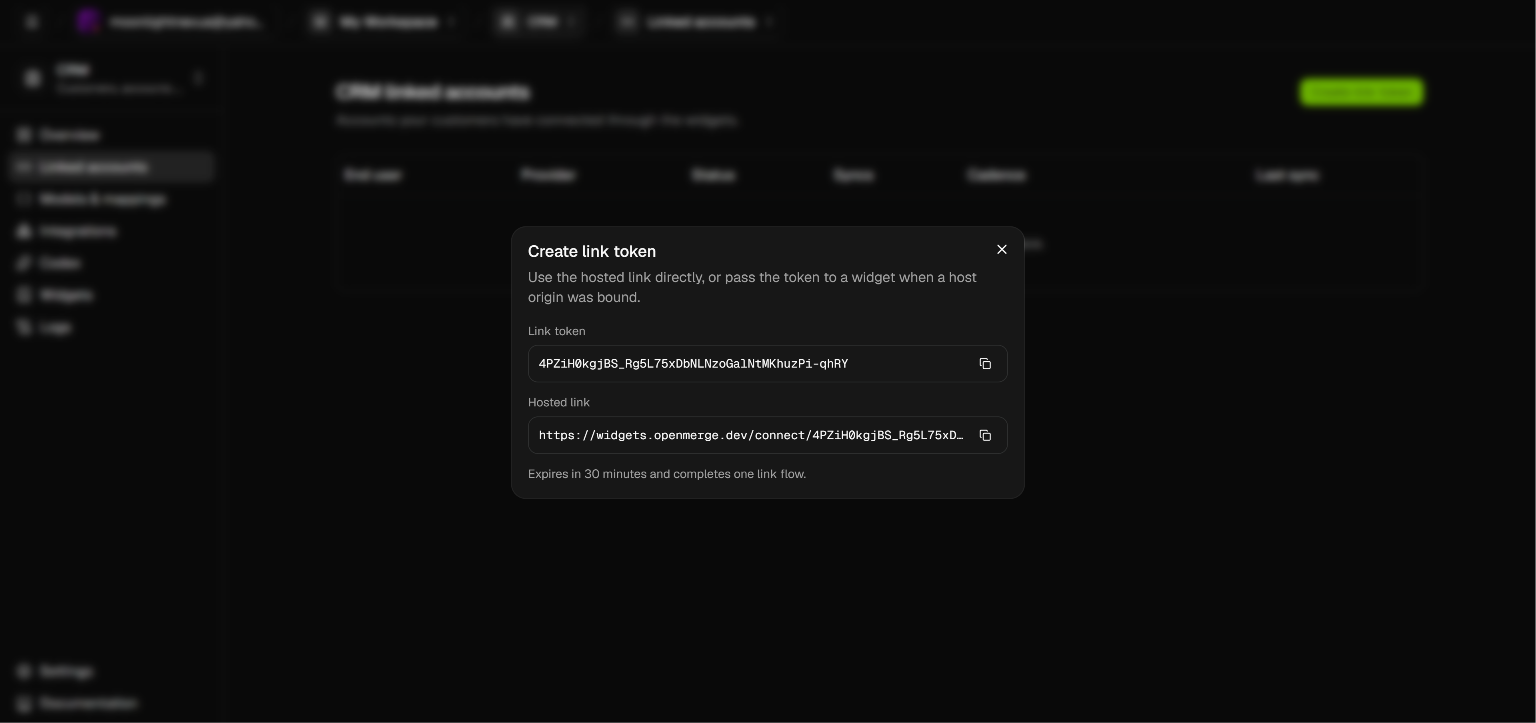
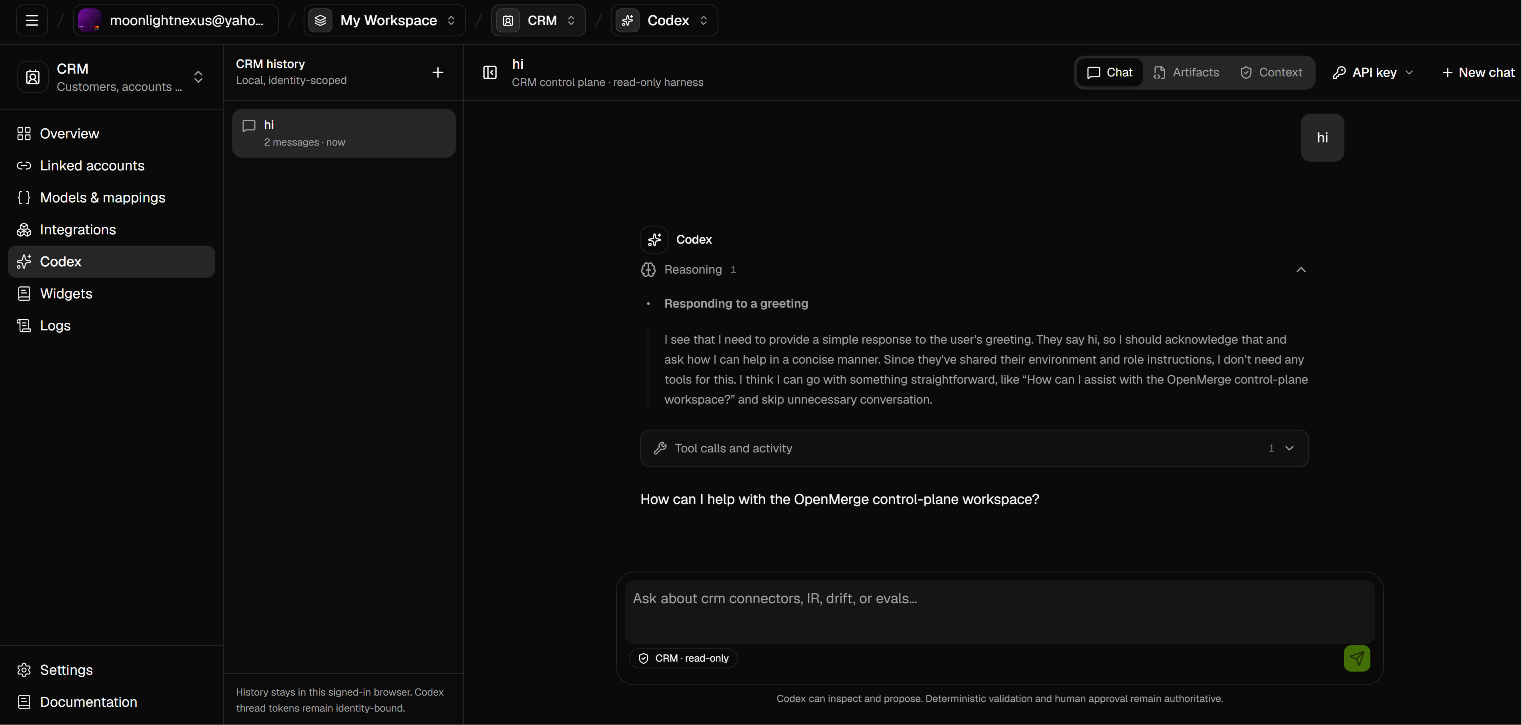
OpenMerge is a Unified Integrations Backend iPaaS designed for products and agents. It comes with a full 2-way type-safe Sync Engine, built-in de-duplication, APIs, SDKs, and hosted widgets. It is a multi-tenant application where you can allow your users to connect to any CRM/Accounting/ ATS/ storage/ HRIS/ Ticketing/Knowledge Base application at once. You can have multi-way sync up and running on fully managed infrastructure without worrying about provider schema changes, breaking updates, or anything else, alongside benefits like fire-and-forget sync. It's also an application where AI modifies IRs, mappings, data types, evals, and other time-consuming things through a live agent harness, potentially automating forward engineering for everyone using the self-serve agents.
How I built it
I started with the set of problems, the system design & the architecture, the vision of how it was going to work, and the core I/O, and the medium of its transmission. For 2 days, I brainstormed the system and each component of the platform through multiple sessions and iterations with GPT, eventually fixating on the most open-ended and scale-out-suitable version. Then I started with GPT-5.6 Sol High, along with a rough folder structure and a set of languages, libraries, and frameworks we would be using, and left 5.6 Sol High in Codex to do the remaining grinding by itself for the next 50+ hours, with full access to Docker, Chrome, and computer use. That gave me a great scaffolding of the entire application to start with. The very next thing I did was provide a deeper set of instructions and define the I/O I was looking for. This time, I started with Sol Ultra and multiple sub-agents to perform holistic testing and validation of the entire application, covering each part not just by writing tests, but by actually using the application via computer use and testing every element one by one, feature by feature. This completed the approach of what we know as outcome driven development to be fair this was the first time I was able to get a real outcome from and AI model. This marked my first product that I've built without writing more than 70 actual lines of code while the application itself is a very large application combining the SDKs and other libraries that it has created and hosted on npm it's very very impressive work.
Challenges I ran into
As I said originally, this was not intended for a hackathon, and I was genuinely trying to build an actual proof for some possibilities I was exploring, including easing my own work with it. I've been a Pro plan user of OAI since GPT-5.4 and of Anthropic since Fable. Interestingly, I originally tried to build the same full-scale application with a much simpler architecture than the current one using Fable 5, but I had to scrap and delete the entire project because of how pathetically poor the output was, even after completely exhausting my weekly plan limits. I then started again from scratch with GPT-5.6, eventually moving forward with a much tougher architecture and much more complex mechanics.
That was the biggest challenge. I started again from scratch with GPT Sol, and I never truly thought it could accomplish such a large horizontal task. I started out of curiosity to see whether it was more of a benchmaxxed model or what, but the result was astonishing. OpenMerge is as large as it looks from the outside. It is very deep vertically and very broad horizontally, with both dimensions requiring significant research efforts, I truly believe this OpenMerge might be one of the largest submissions in this hackathon. And for me the biggest hurdle this time was not the application code itself, but the testing and optimization of the entire application, including database query optimization, the 2-way sync engine's type safety, UX, and of course the visuals. TBH, codex was able to handle almost everything related to the application side. I manually checked many query optimizations and found that the majority of them were already correctly implemented.
Accomplishments that I'm proud of
First, I’d really like to congratulate and cheer the training and alignment teams at OAI. This came out really well. I’m very proud that I was able to build the first version of such a large application within 4 days of starting to code, which would otherwise have taken more than a month. To be fair, the credit goes to the model itself because, process-wise, I didn’t change anything. I used the model and the agent harness exactly the same way I usually do, so it doesn’t look like the improvement came from my end, but rather from the model’s end.
What we learned
It’s my observation that GPT-5.4 was a leap in critical thinking, and GPT-5.6 Sol is a bigger leap than anything we’ve seen in a while, specifically in long horizon contextual understanding. It looks like the pre-training wall was always a shifting goalpost, and the most important thing is that we’ve entered a phase where I really didn’t need to do much handholding.
What's next for OpenMerge
Once I’m satisfied with the code after reading it myself, using it in production for my own applications, and successfully testing it with my application’s users -> I’d be interested in potentially monetizing it or collaborating with the ecosystems, possibly OSS, Vercel, or even the sponsors of this hackathon themselves🤷♂️. But anyway it's still available in public and you'd be able to use the application out of beta as soon as I test it in production with at least CRMs and Accounting unified connectors.
Built With
- clickhouse
- codex
- elasticsearch
- fastapi
- golang
- mongodb
- mq
- nextjs
- postgresql
- python
- redis
- socket.io
- tailwind
- typescript


Log in or sign up for Devpost to join the conversation.