-
-
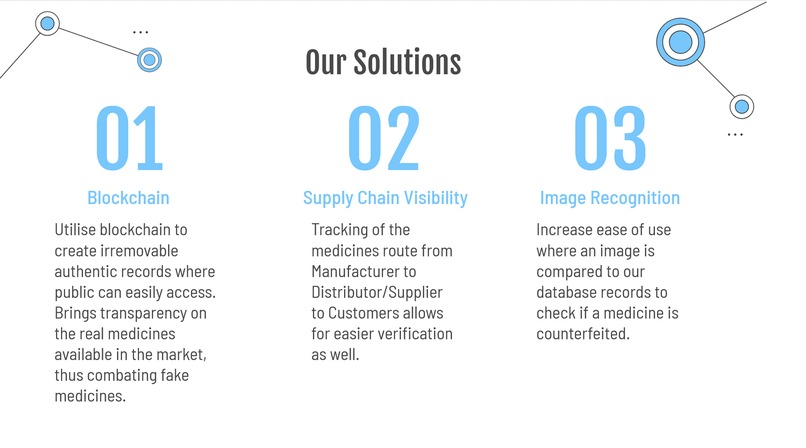
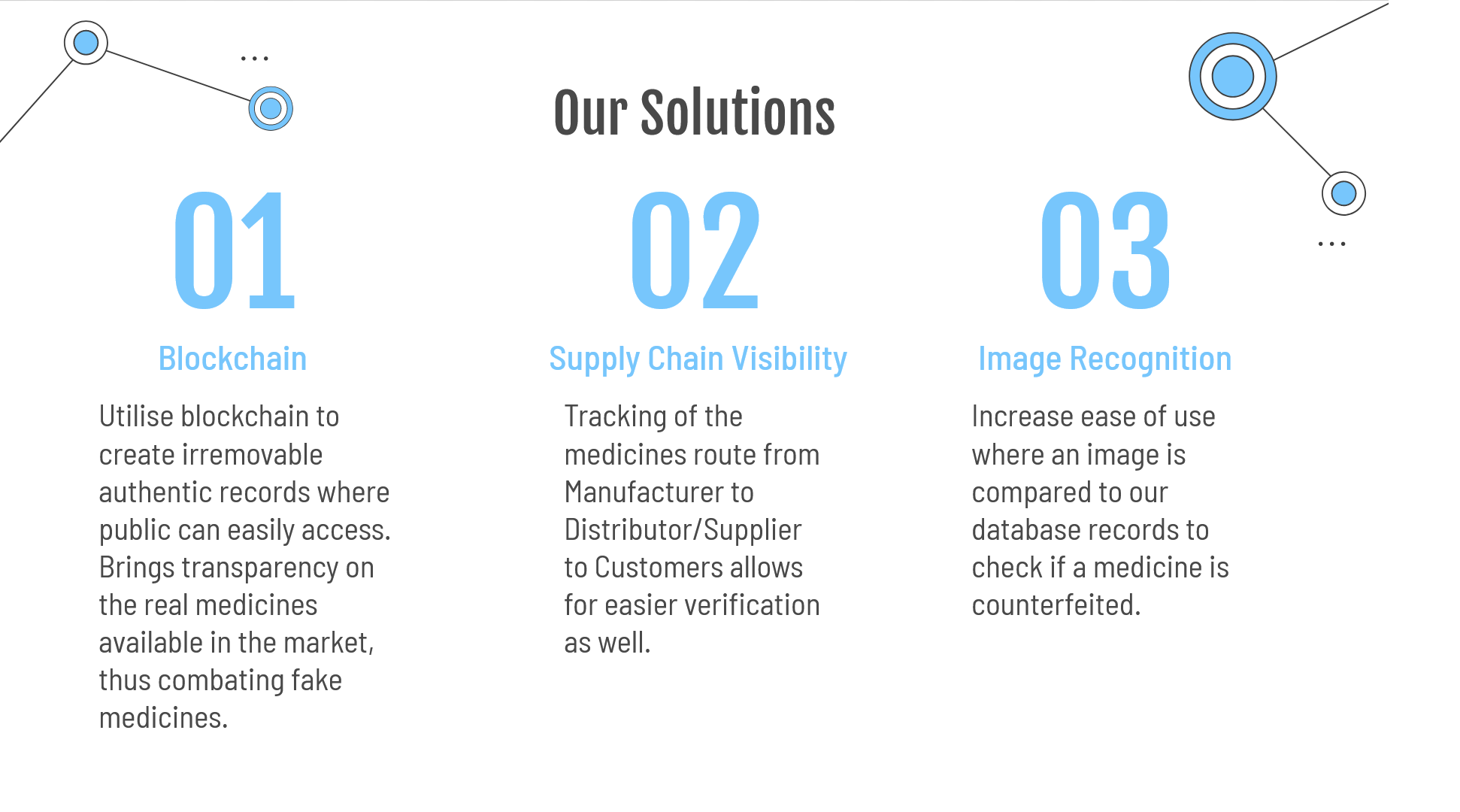
Our Solution
-
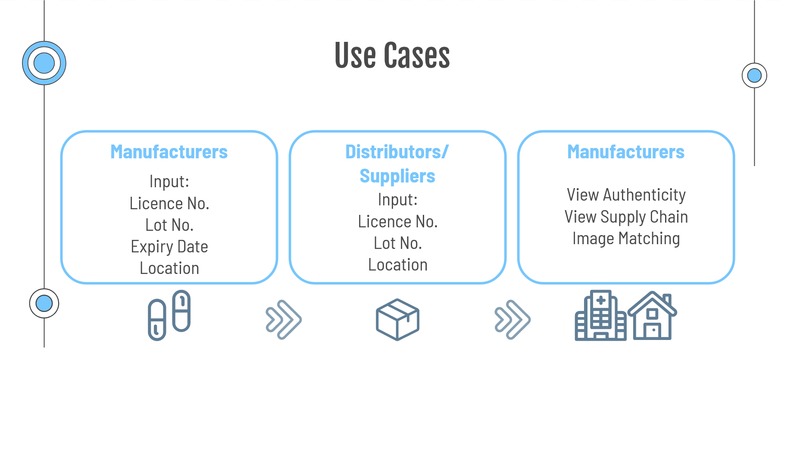
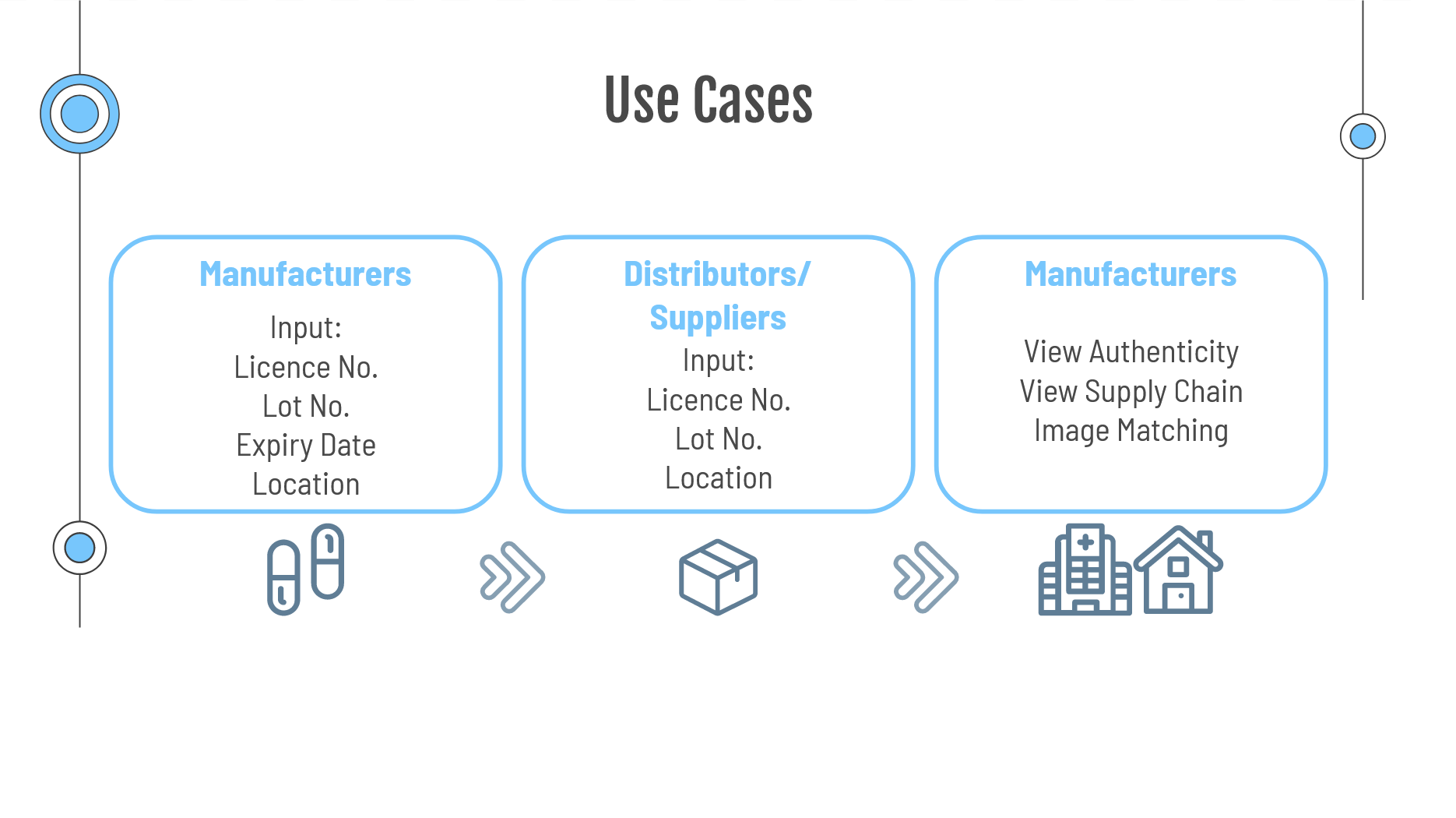
Use Cases
-
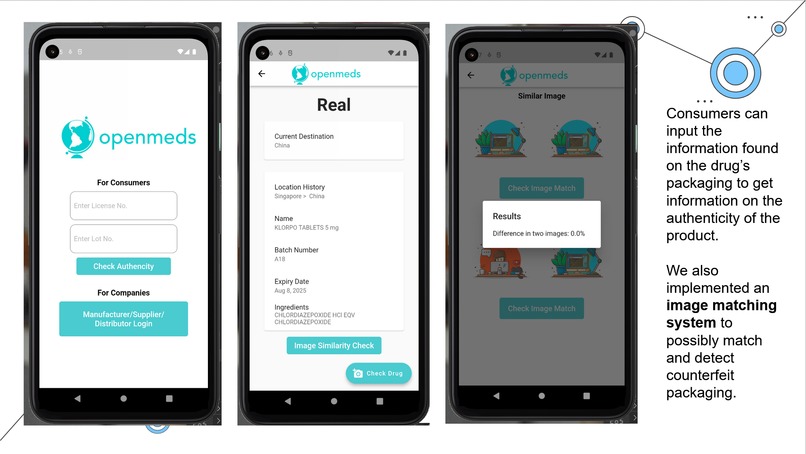
Consumers Use Case
-
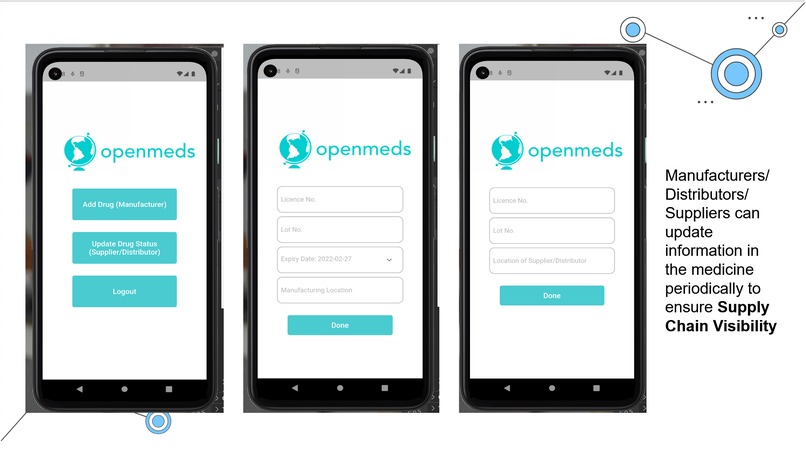
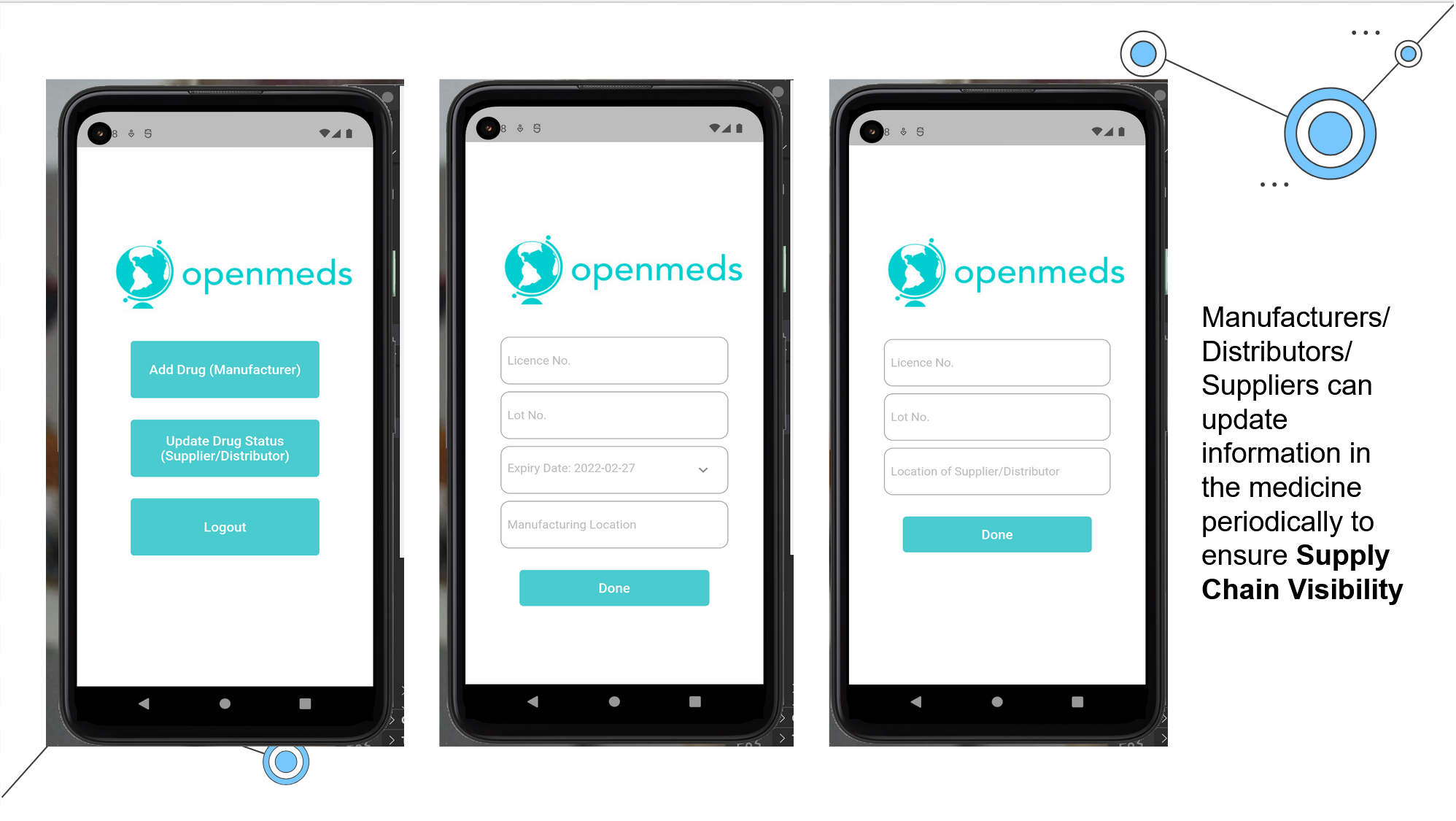
Manufacturer/Distributors/Suppliers Use Case
-
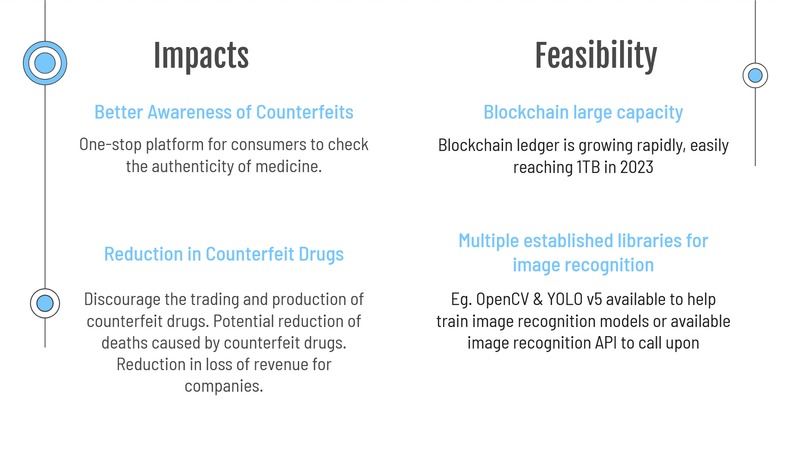
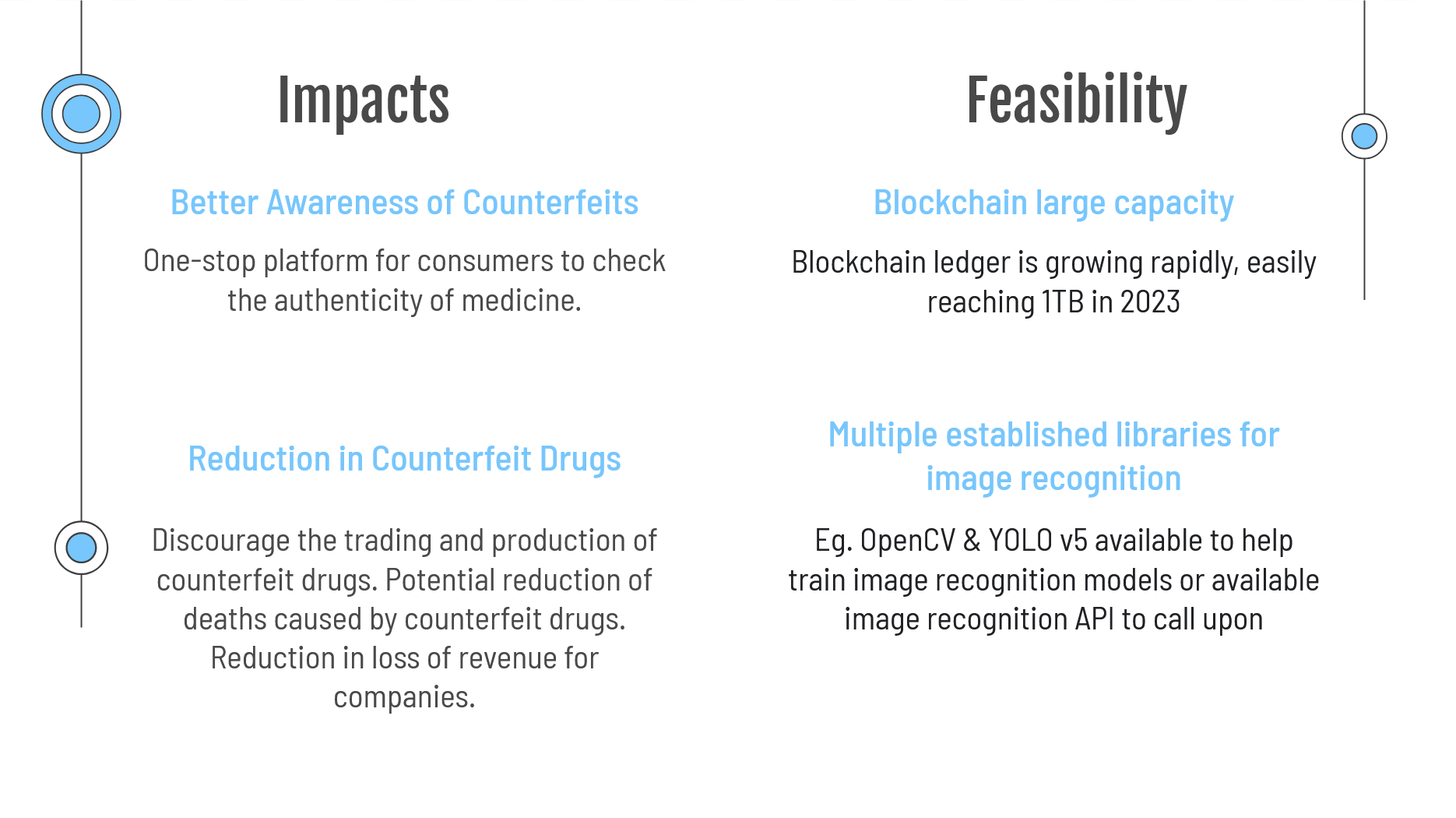
Impacts & Feasibility
-
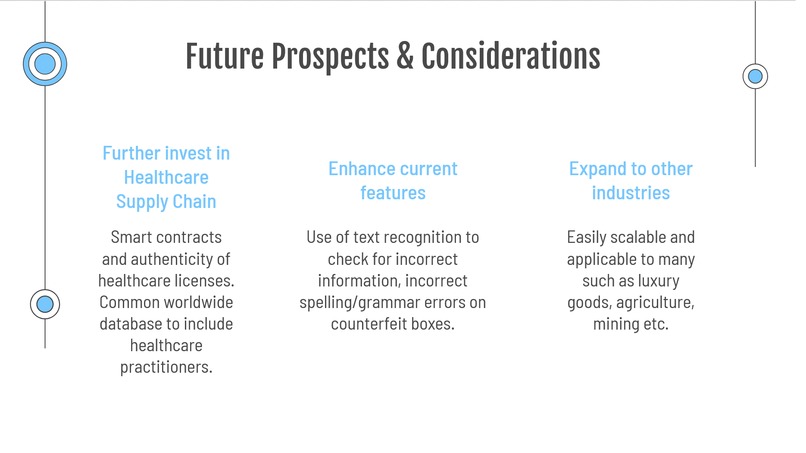
Future Prospects & Considerations
Inspiration
Just 1 day ago, there was news in Malaysia reporting a growing number of digital drug dealers. Counterfeit and adulterated health products have remained a global issue that needs to be addressed as the consequences of taking counterfeit medicines can be fatal. This problem is exacerbated with the exponential growth of e-commerce due to the pandemic.
Digital drug dealers around the world are able to use an unlimited supply of websites to lure unsuspecting customers into buying counterfeit, substandard, and sometimes even lethal fentanyl-laced medicines online. As these drug dealers can operate anonymously and from almost anywhere in the world, they’re far too often beyond the reach of local law enforcement.
Hence, we want to help consumers, as well as manufacturers/suppliers/distributors to be more well-informed of how authentic the drugs that they are handling.
What it does
OpenMeds will help consumers check if the drugs they have are real or fake. Data of real drugs will be put onto a blockchain ledger with non-confidential data made known to everyone. In addition, the characteristics of blockchain will also allow the data to be static. Hence, ensuring that the entered data is that entered by the manufacturers.
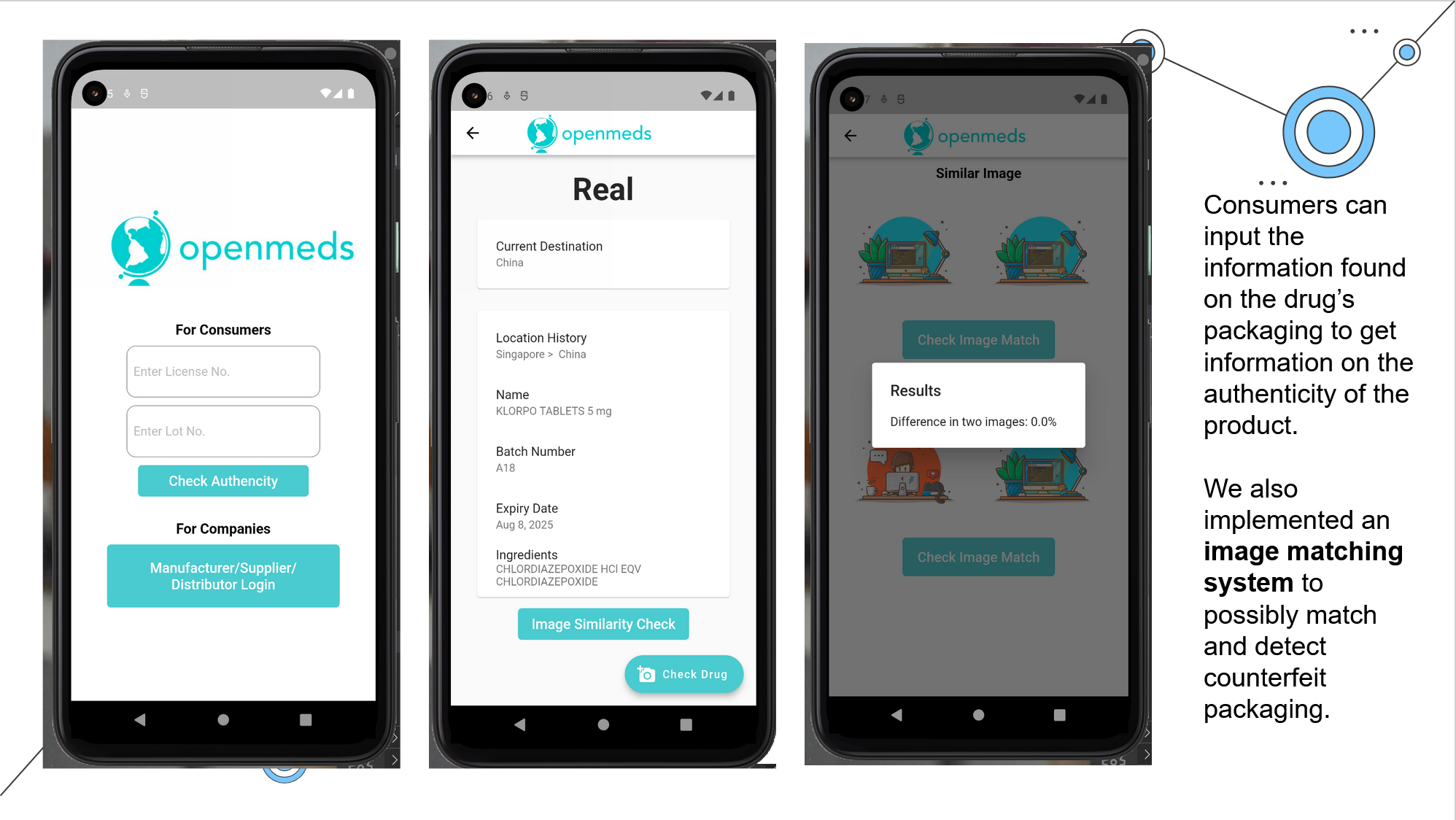
Consumers will input the licence number and lot number as per the packaging of the box to check if data is present on the blockchain database.Consumers will then be provided with an image and a list of details relevant to that particular lot and licence number to check against with the medicine they have on hand. If packaging and detail matches with those on the consumers’ drug, then the drug, then the drug is an authentic drug as our data will be scored directly from the manufacturers/ suppliers/ distributors and verified by the government. Else, highly likely the data is a counterfeit and it will send an alert to us to report to the authorities.
To increase usability of the manual checks, we have also incorporated an image recognition function, where consumers can take a photo of the drug packaging and it will be compared to the image present in the blockchain. If the images are not exact matches, then the drug will be considered fake.
How we built it
We built OpenMeds using Flutter (for app development), Firebase (to simulate blockchain technology) and Github.
We adopted a 4-step approach. We first planned out our direction and features, followed by designing our prototype by drawing sketches on how our user interface will look like. Next, we began to develop our application through coding, and finally ended with tying our loose ends and testing for further deployment.
Challenges we ran into
- Finalising on the problem statement
- Being limited by the 24 hours limit
- Not having enough time to play all the arcade games and explore the playground
Accomplishments that we're proud of
We worked very well despite it being our first time working with one another. We learnt to tap on our strengths and cover each other’s weaknesses.
What we learned
Don’t think too much about the issue, just try and code to see if it works.
What's next for OpenMeds
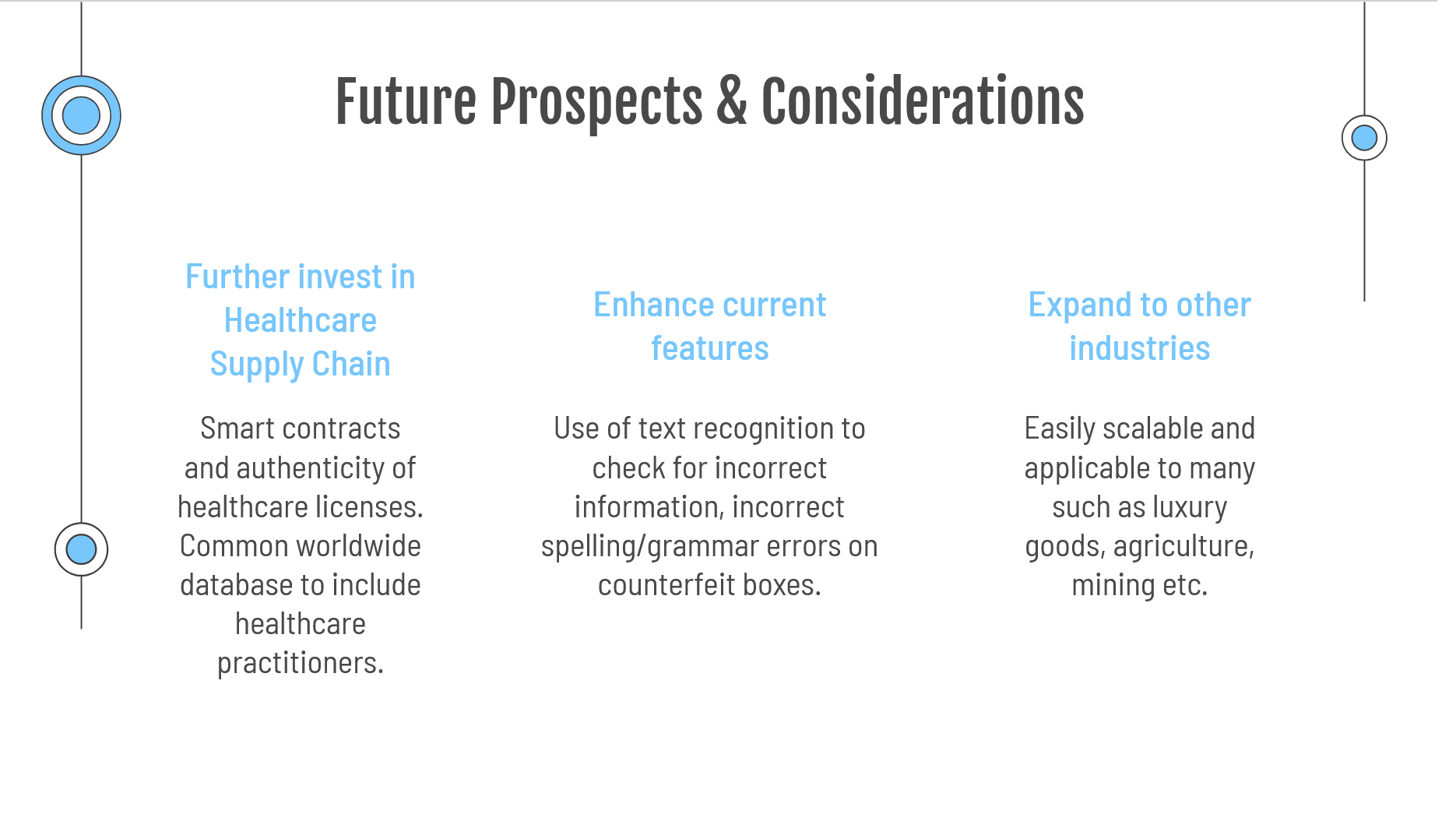
We see much potential in our application. Here are some prospects:
Further investment in healthcare supply chains. These can include smart contracts and authenticity of healthcare licences, and even common worldwide databases to include healthcare practitioners.
Enhancements in our current application. The use of text recognition to check for incorrect information, incorrect spelling/grammar errors on counterfeit boxes can do further checks that can increase the awareness of people to identify them.
Expansion to other industries. OpenMeds is easily scalable and applicable to many sectors such as luxury goods, agriculture, mining etc.
Built With
- blockchain
- dart
- database
- firebase
- flutter
- visual-studio


Log in or sign up for Devpost to join the conversation.