-
-
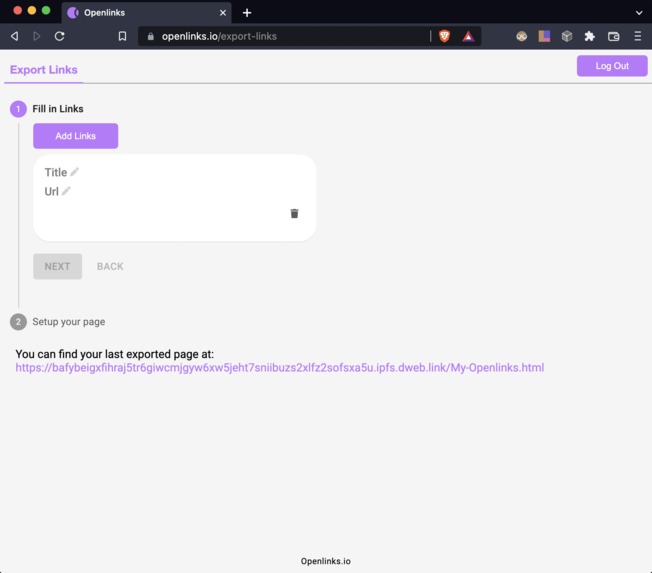
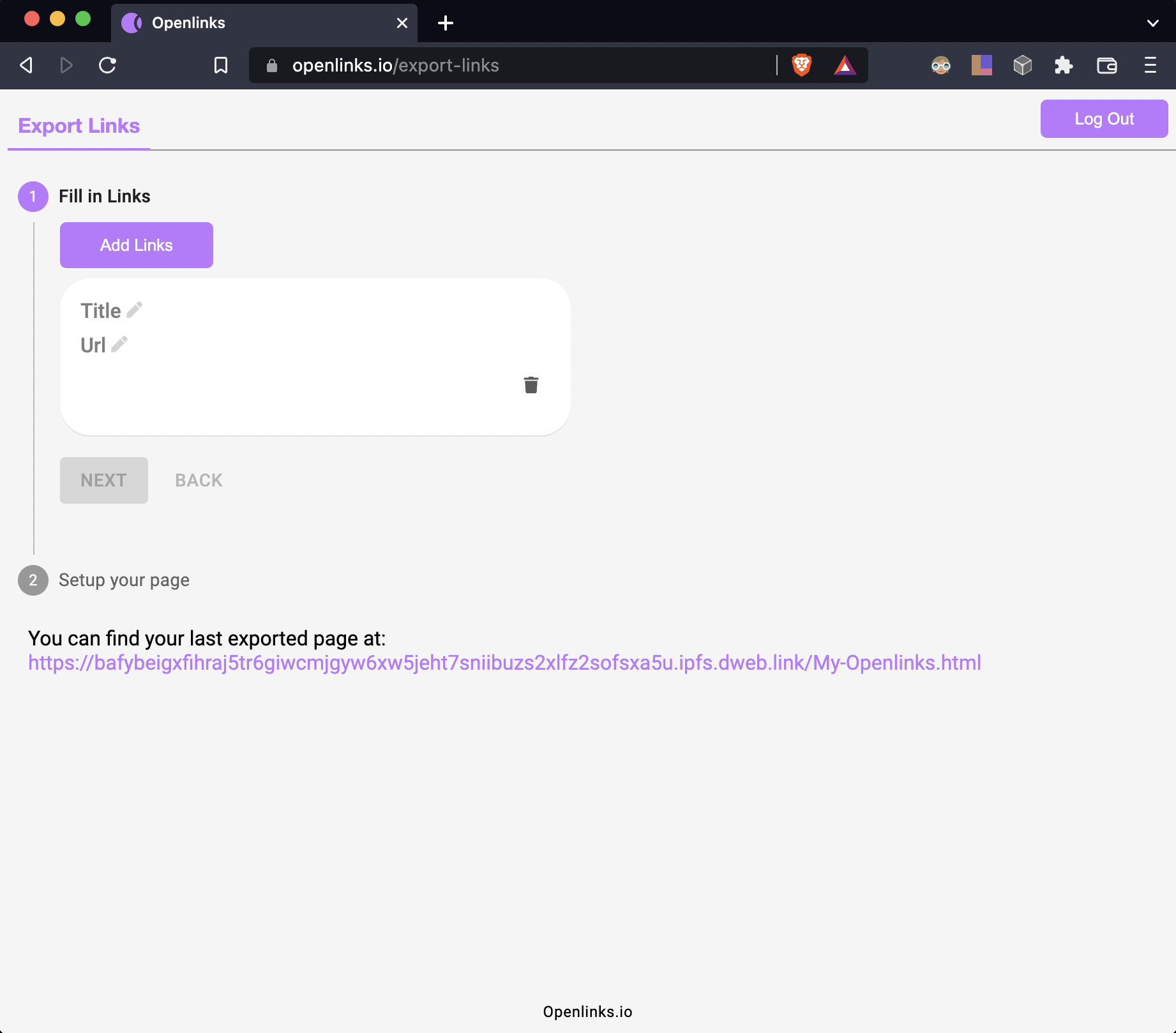
Step 1 - Add links & name each link with a title
-
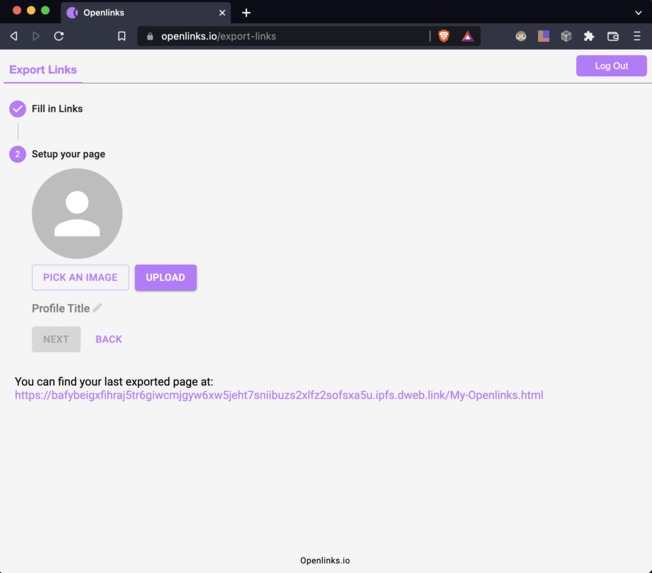
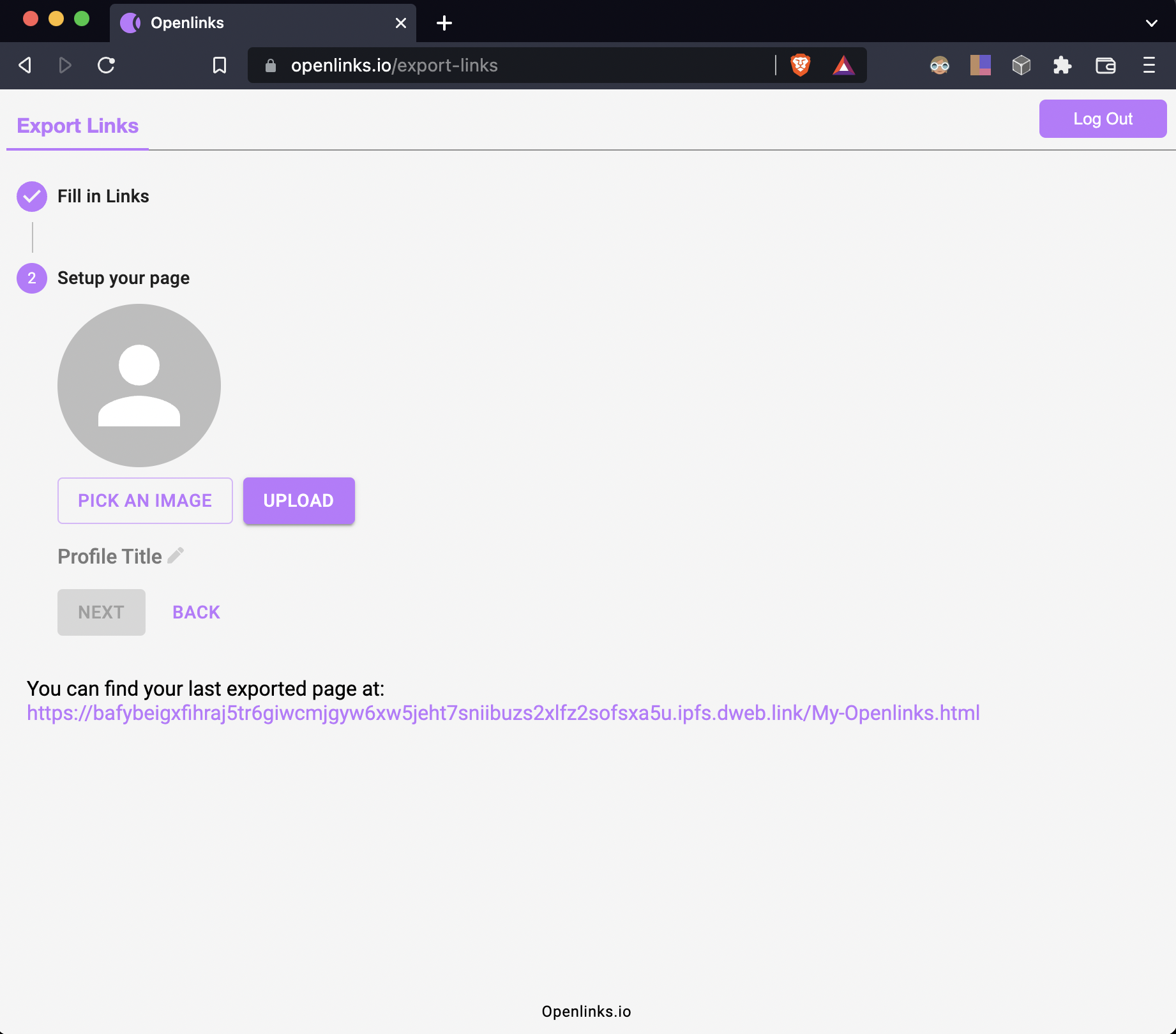
Step 2 - Choose a profile photo, name your webpage, & generate a link
-
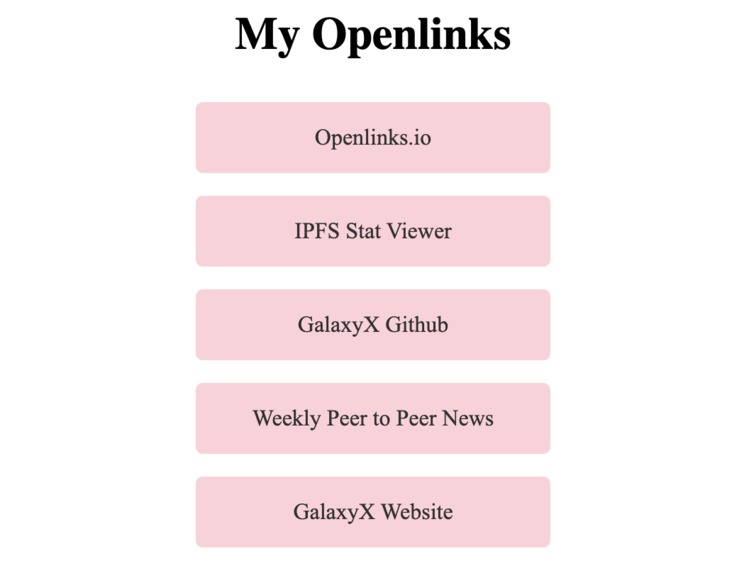
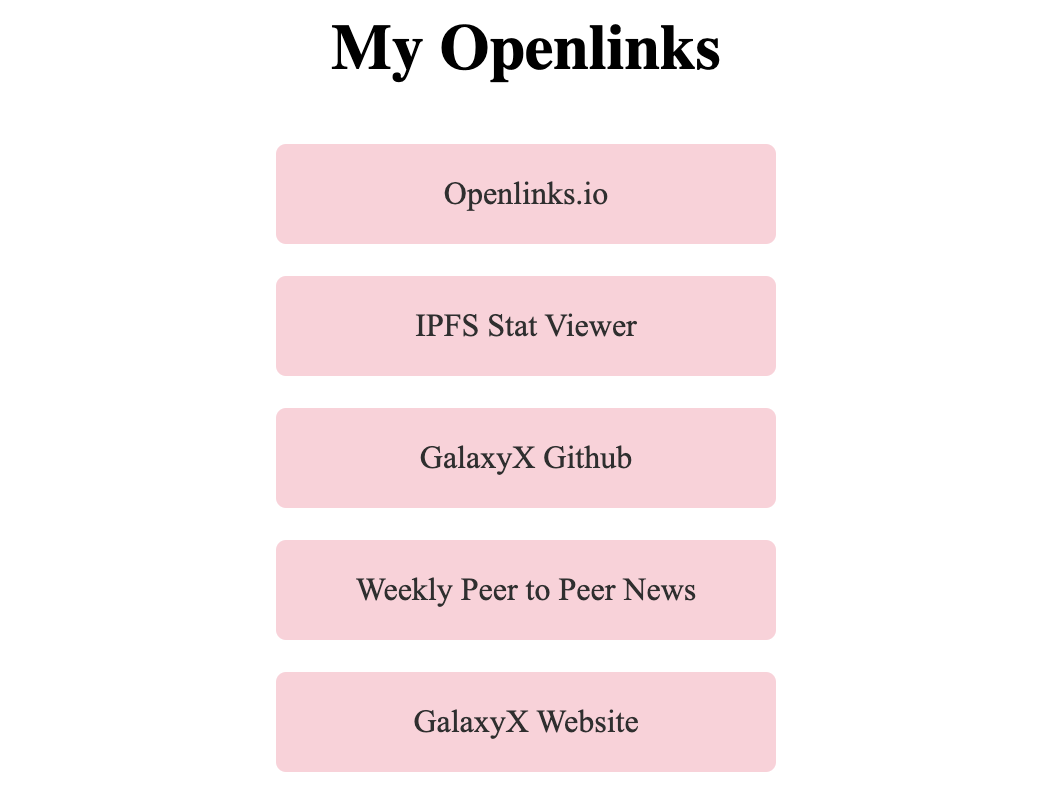
A finished Openlinks webpage hosted on IPFS
-
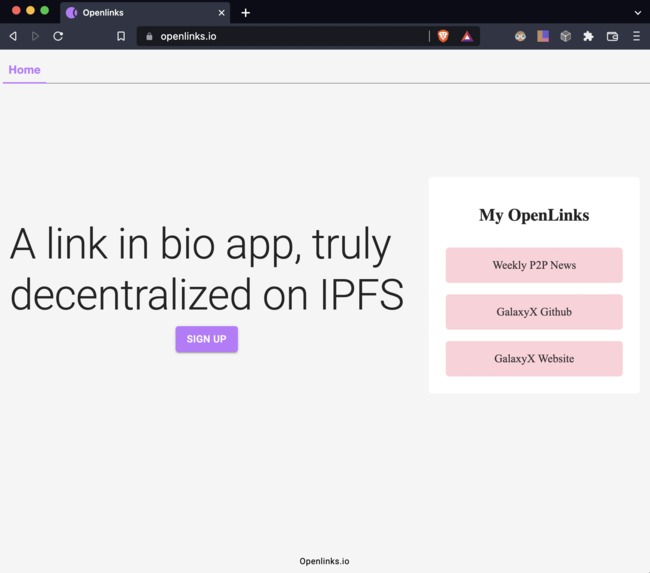
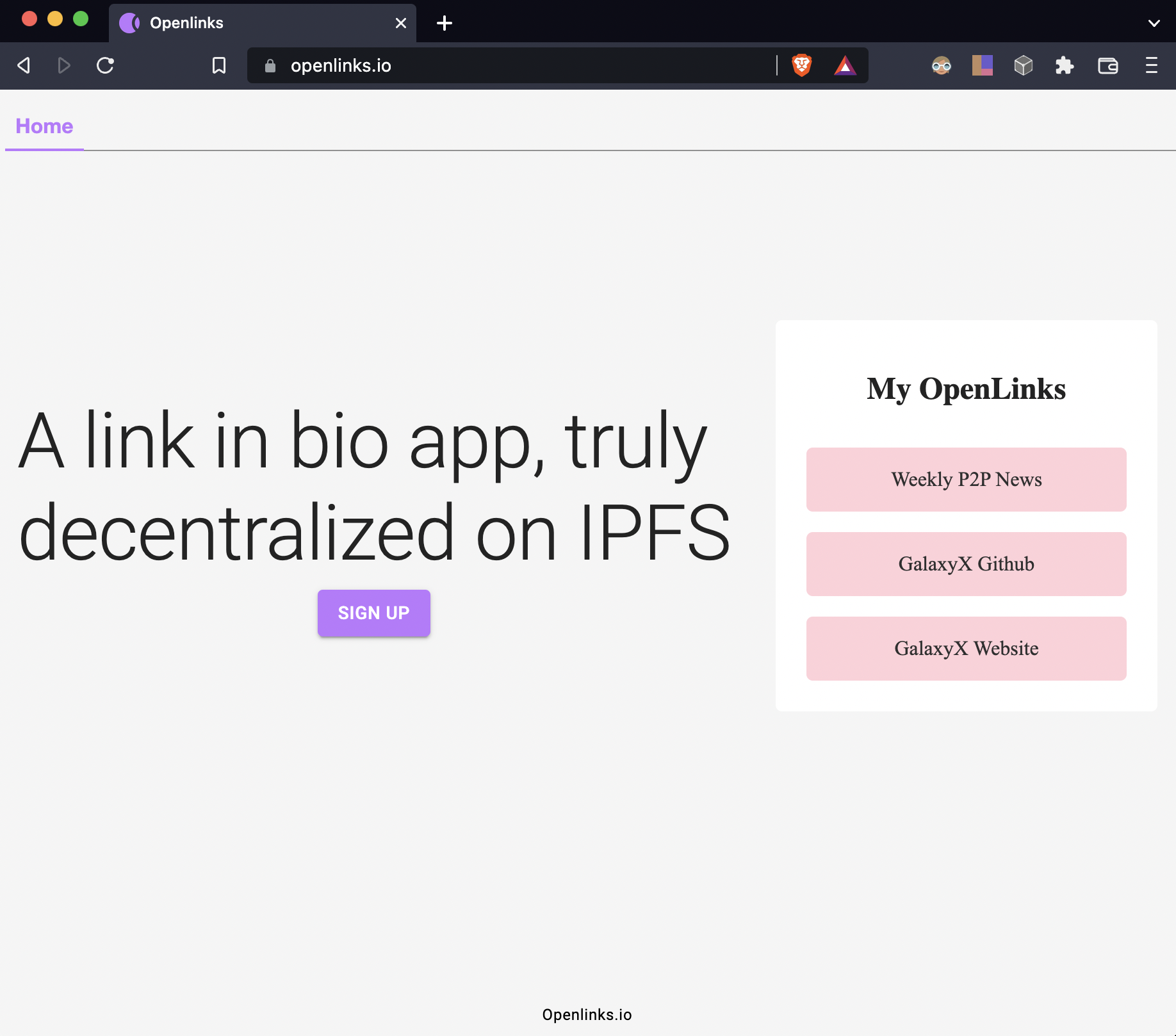
Openlinks Homepage
-

Openlinks Logo

Inspiration
We are inspired by the open internet and believe that IPFS is a core part of that stack. Our goal is to help with mainstream adoption of IPFS and other open internet tools. We found that a link-in-bio product built on IPFS is an easy way for anyone to try out the open internet by launching a censorship-resistant webpage. IPFS was made to do this as the negative scaling characteristics make it a perfect solution for creating persistent websites.
What it does
Openlinks is a link-in-bio webpage generator built on IPFS. Users login with our simple Auth0 login and can produce a self sovereign, decentralized webpage within a few clicks. Once they launch the webpage, users are automatically given a gateway link via Web3.storage that they can put in any bio/profile online. The webpage can be updated. Openlinks can be used for e-commerce, community engagement, or just censorship-resistant fun.
How we built it
We first started with a simple React App and configured Auth0 as our user login management system to give our users a simple sign on for ease of use. We used Node.js to build the backend to manage user data in conjunction with Auth0 for safe user privacy management. Then, we set up an API call to Web3.storage to save the webpages on IPFS and Filecoin. Keeping track of API keys is done with a simple .env file.
App Deployment
Since everything is built on Node.js and React, getting this deployed was not too difficult. We wanted everything to remain scalable and easy to manage. The app is built to work with AWS Lambda. Everything is built modularly, so service providers can be switched out to use different hosting environments. We have been looking at more decentralized hosting options for later down the road. Hosting the project on Openlinks.io
Challenges we ran into and what we learned
At first, we were trying to optimize for decentralization. Our app's users were required to have their own IPFS nodes running. We realized that building out the project to use Web3.Storage was a much needed feature if we wanted to scale to large numbers of users (our users don't need to run full IPFS nodes).
For anyone who wants to host a webpage locally, we offer a version of Openlinks that connects to a local IPFS node for hosting.
In addition to focusing on decentralization, scalability was a challenge. To make the app in a way that would scale, we decided to build the app on AWS Lambda. This gives us scalability, but extends the deployment time.
Accomplishments
We have been focused on tight user feedback loops in our product development. Since submitting our application to this hackathon, we have iterated upon our UI many times, added features, and have an extensive feature roadmap all based on end user feedback.
It's been exciting to see the feedback from the community. We had an opportunity to share the project in a Web3 builders (Biscuit Bytes) Twitter spaces and got some great ideas.
Read more about Openlinks & the Open Web on our Medium post.
The Openlinks roadmap includes
- Upload a profile photo for the IPFS webpage and save using Web3.storage
- Personalization features for webpages (better webpage font, themes, icons, bio)
- Optimizations for mobile browsing
- Dark Mode
- IPNS/BAFY link integration (get rid of huge IPFS link to shortened links)
Built With
- amazon-web-services
- auth0
- ipfs
- javascript
- node.js
- react
- web3.storage


Log in or sign up for Devpost to join the conversation.