Inspiration
- Many people struggle to talk openly about mental well-being on traditional social platforms due to judgment, comparison, and pressure to perform.
- While AI tools can respond instantly, they lack lived human experience and emotional authenticity.
- We wanted to create a calm, safe space where real people can reflect, share, and support each other without noise or popularity metrics.
What it does
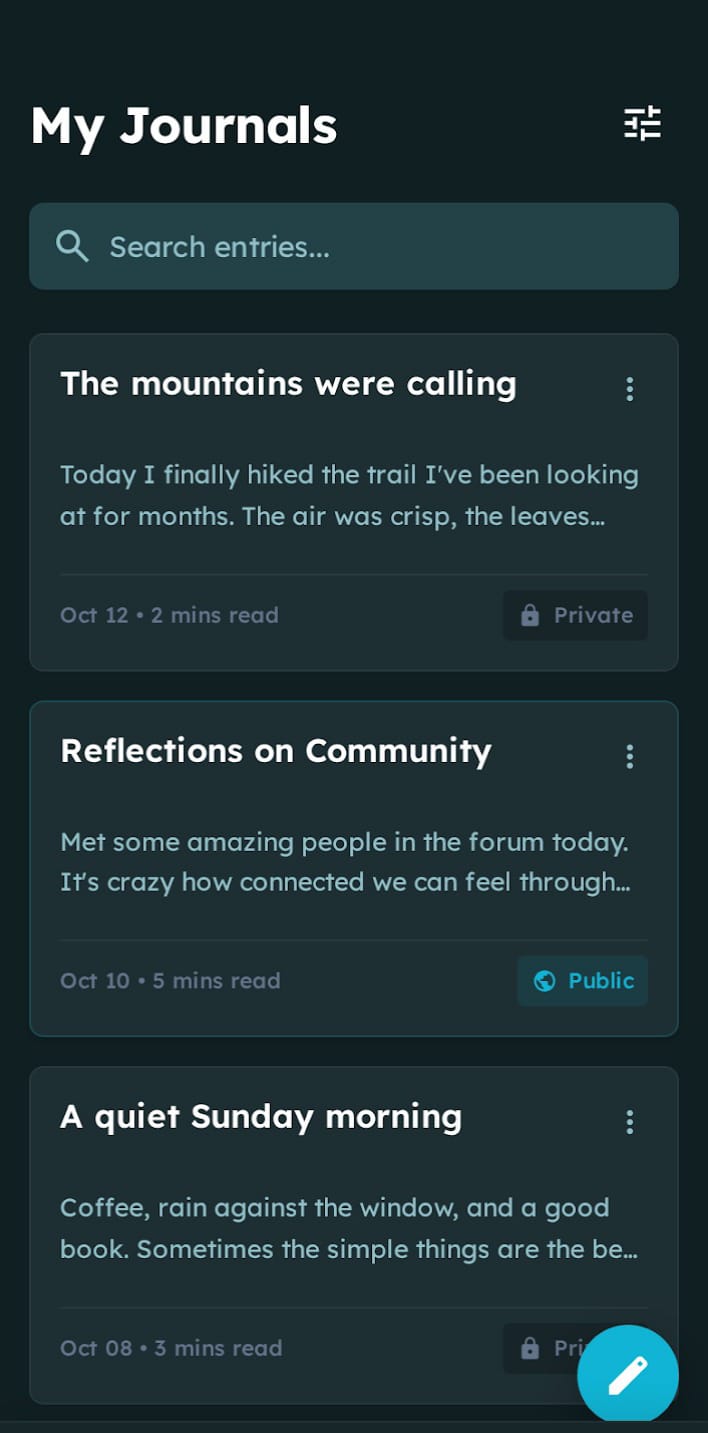
- Users can create private or public journal entries.
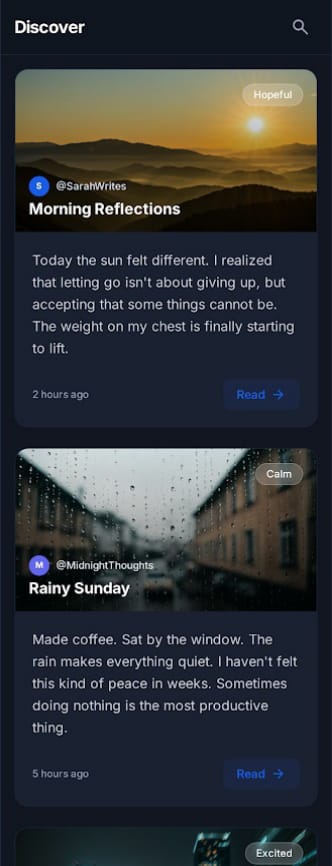
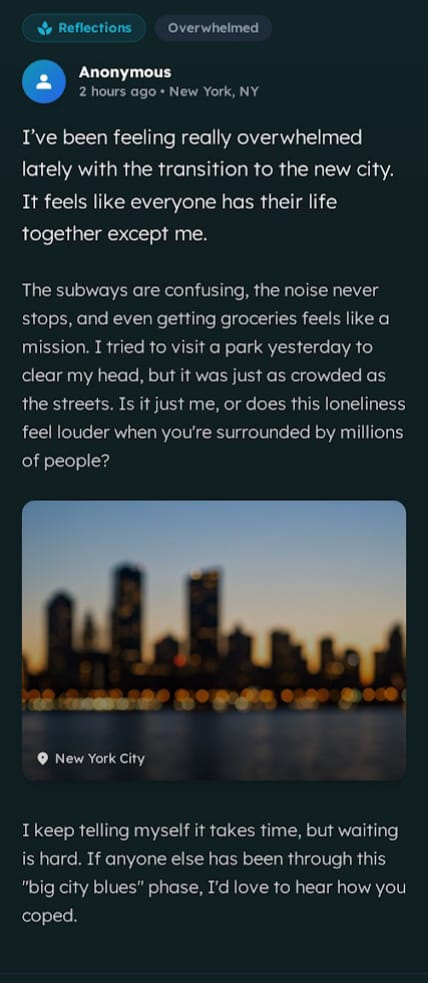
- Public journals appear in a tag-based discovery feed, similar to Instagram tags but without algorithms.
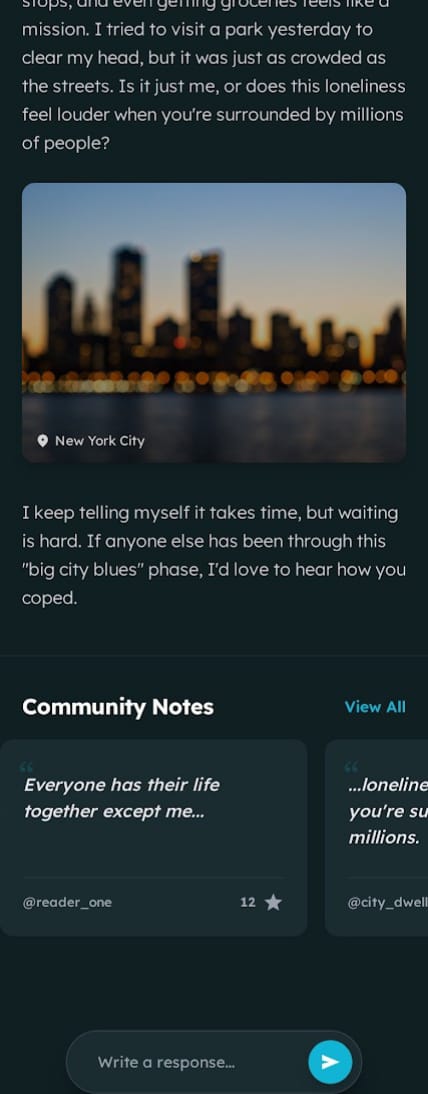
- Other users can leave community notes under public journals.
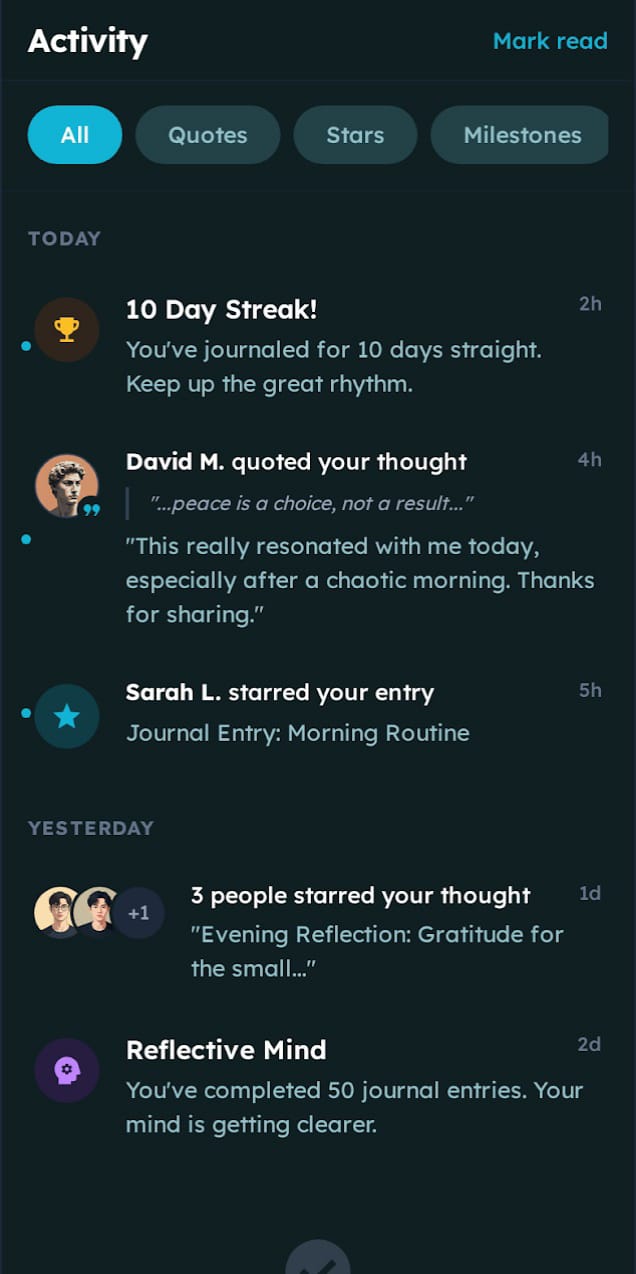
- Journal owners can star notes they find helpful or empathetic.
- Stars contribute to milestones that unlock the ability to create invite-only spaces.
- Spaces are small discussion areas for open conversation, not journaling feeds.
How we built it
- Used Firebase Authentication for secure user login.
- Used Firebase Firestore to store users, journals, tags, notes, stars, milestones, and spaces.
- Designed five main navigation sections:
- Journals – all journals created by the user
- Discover – public journals shown via tags
- Activity – notes, stars, and milestone notifications
- Spaces – invite-only discussion groups
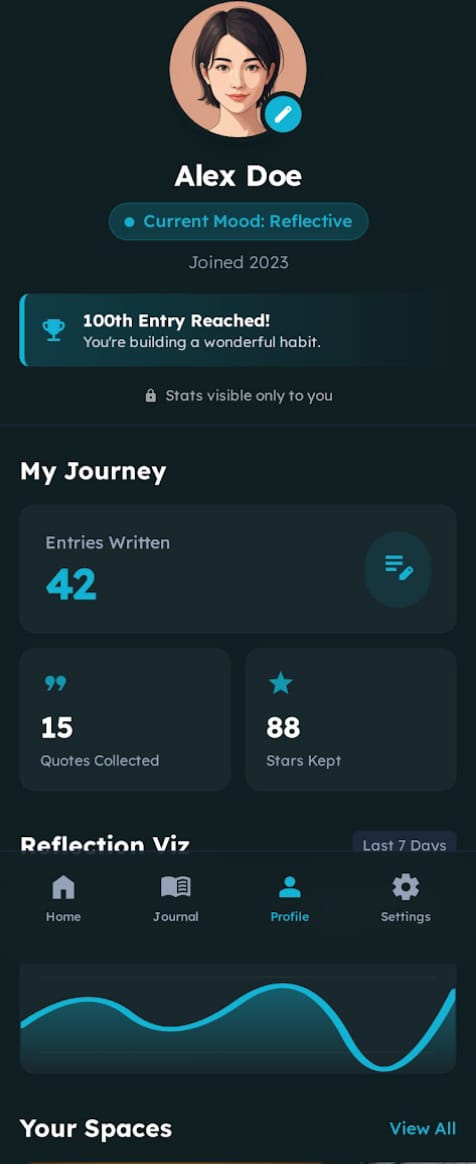
- Profile – user stats and progress
- Focused on a minimal, calming UI to support mental well-being.
Challenges we ran into
- Designing meaningful interaction without encouraging comparison or engagement pressure.
- Designing stars as a form of appreciation rather than popularity.
- Keeping spaces calm and focused instead of noisy.
- Balancing anonymity with accountability and safety.
Accomplishments that we're proud of
- Built an empathy-first mental health platform
- Created a recognition system based on helpfulness rather than engagement.
- Implemented invite-only spaces unlocked through positive contribution.
- Maintained a simple, emotionally safe user experience.
What we learned
- Small design decisions strongly affect how safe users feel.
- Slower, simpler interactions encourage deeper reflection and support.
- Mental health platforms require different success metrics than social apps.
What's next for OpenJournal
- Add gentle reflection and journaling prompts.
- Improve moderation tools for spaces.
- Enhance accessibility and inclusivity.
- Explore partnerships with mental health communities to expand real-world impact.
Built With
- cloudfirestore
- firebase
- gemini3flash
- react
- tailwindcss
- typescript

Log in or sign up for Devpost to join the conversation.