-
-
Branding
-
What We Built
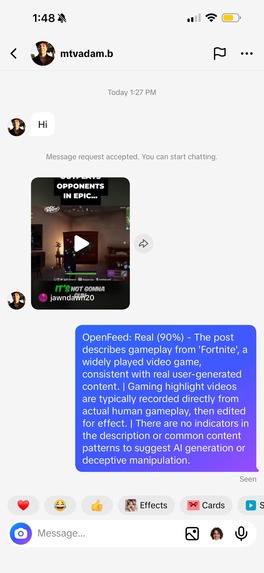
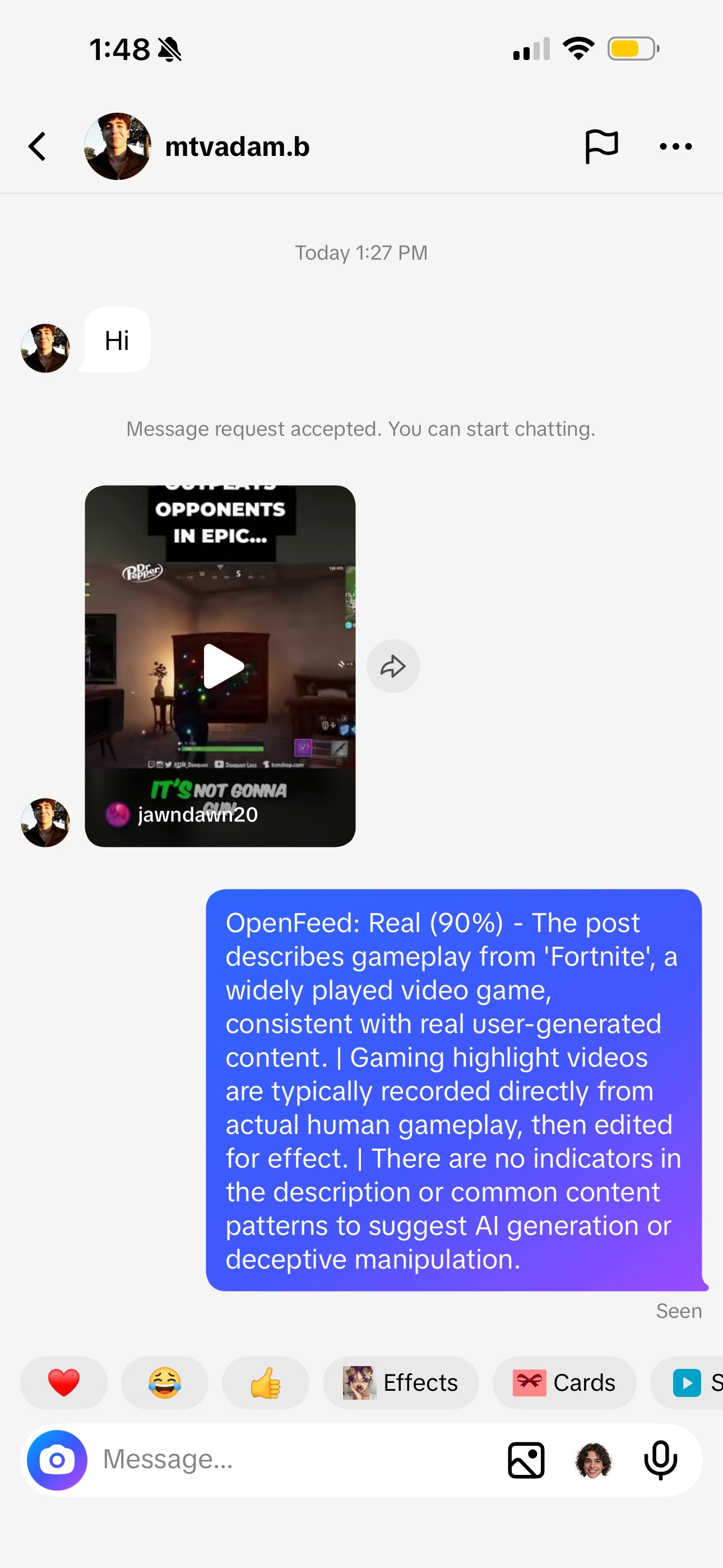
OpenFeed is an AI-powered content verification tool that lives where people already are —
inside their DMs.
Send any social media link to the OpenFeed bot on TikTok or Instagram, and within seconds
you get back a clear verdict: Real, AI Generated, Manipulated, or Inconclusive — along with
a confidence score and three specific reasons explaining why.
No new apps to download. No websites to visit. Just forward a post and get an answer.
How We Built It
AI Analysis — Google Gemini 2.5 Flash receives the URL along with scraped post metadata (author, description, video URL) and returns a structured JSON classification with verdict, confidence, and reasoning.
OpenClaw — Handles research and video file analysis, enriching the context sent to Gemini
beyond just URL metadata.
TikTok DM Bot — A Selenium-based bot using Undetected ChromeDriver monitors the TikTok inbox in real time, extracts URLs from incoming messages, and replies directly in the conversation thread.
Instagram DM Bot — A secondary integration using instagrapi (Instagram's private API) with automatic session persistence and ISP proxy rotation for rate-limit resilience.
Deduplication — Every URL is normalized (tracking params stripped, hosts lowercased) and
SHA-256 fingerprinted. Duplicate submissions return cached results instantly from Supabase
without burning another API call.
API Layer — FastAPI provides REST endpoints (/health, /history, /analyze-url) so the
analysis engine can be used programmatically, independent of any chat platform.
Proxy Infrastructure — ISP residential proxies rotate automatically when platforms
rate-limit or block requests, keeping bot sessions alive without manual intervention.
Challenges We Faced
No official APIs exist for DM automation — TikTok and Instagram don't offer public APIs for
reading or sending direct messages. We used browser automation for TikTok and a
reverse-engineered private API for Instagram, both requiring careful session management to
avoid bans.
Duplicate detection at scale — The same viral post gets shared through dozens of different
URL formats with different tracking parameters. URL normalization and fingerprinting solved
this, ensuring one analysis per piece of content regardless of how it was shared.
Staying undetected — Social platforms actively fight automation. We integrated ISP proxy
rotation that automatically cycles to a fresh IP on rate limits, combined with undetected
browser profiles that persist sessions across restarts.
Structured AI output — Getting Gemini to consistently return parseable JSON required strict prompting, output validation, and fallback handling for edge cases where the model wraps responses in markdown or deviates from the schema.
What We Learned
Meet users where they are — Nobody wants another app. The highest-impact UX decision was making the entire interaction happen inside DMs people already use every day.
Fast and explainable beats slow and perfect — Users trust a quick response with three clear reasons more than a delayed response with a single confidence number.
The AI was the easy part — Gemini classification took an afternoon. The real engineering
work was keeping browser sessions alive, rotating proxies, handling platform quirks, and
making the system resilient enough to run unattended.
What's Next
- Expand to WhatsApp, Twitter/X, and Telegram
- Multimodal analysis — download and analyze actual video frames, not just URLs and metadata
- Public verification registry — a searchable database of previously analyzed content
- Open-source the full stack as a community-driven trust layer
OpenFeed is our step toward making the internet more transparent — one post at a time.
Built With
- fastapi
- gemini
- openclaw
- postgresql
- python
- selenium

Log in or sign up for Devpost to join the conversation.