The Problem I've been working with clinicians for the past couple of years, and their billing struggles are real. Especially smaller practices managing their own billing.
They're not doing bad medicine. They're getting denied for missing specific documentation requirements buried in payer policies that are impossible to find. A phrase missing from a note. 89 days of conservative treatment instead of 90. A BMI threshold they didn't know existed.
I've watched physicians spend evenings resubmitting claims and office staff on hold for hours trying to understand rejections. It's bleeding small practices dry.
What Inspired This I study systematic healthcare improvement in my capstone, and I've been really inspired by OpenEvidence – they made clinical decision-making accessible by aggregating medical literature.
That got me thinking: what if we did the same for payer policies?
The policies exist. They're published. But they're scattered across hundreds of portals, buried in PDFs, and constantly changing. Providers are expected to comply with rules they can't access. If we could aggregate this and make it searchable, we could actually help people get paid.
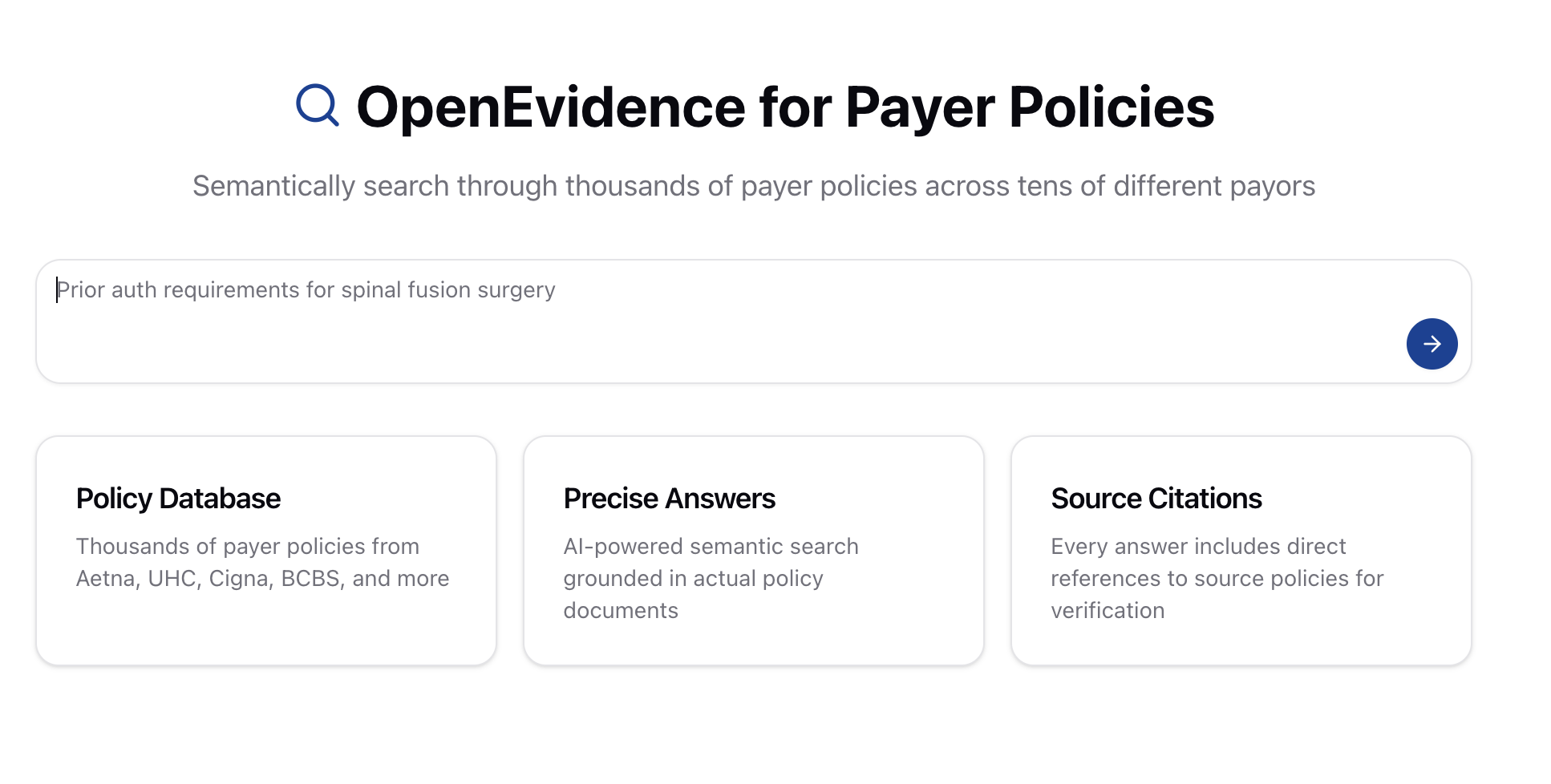
How I Built It I used Browserbase and agentic tools to scrape hundreds of thousands of payer policies from insurance portals. Then I put them into a RAG system that pulls the right policy for any query – procedure, payer, plan year.
Built a simple interface on Vercel. Search bar. Ask a question, get an answer.
The Challenges Data was messy. Every insurer formats policies differently – PDFs, web portals, login walls. Building universal scrapers was hard.
Keeping it current. Policies change mid-year. Had to build re-scraping without breaking existing queries.
Making it useful. Translated dense policy text into actionable checklists, red flags, and copy-paste templates.
Who This Helps Individual providers, but also integrates with RCM startups, EHR platforms, prior auth tools, and reimbursement companies.
But I built this for the small practice physician who just wants to get paid fairly.
What I Learned You don't always need policy reform. Sometimes you just need to make existing information accessible.
OpenEvidence showed me that aggregating scattered information can genuinely improve healthcare. This is the next step – help clinicians make good decisions, then help them get paid for the care they provide.
Built With
- browserbase
- claude
- gcp
- rag
- vercel
- vibecoding


Log in or sign up for Devpost to join the conversation.