Inspiration
All of our team members come from areas that are plagued with difficult housing markets, and some of our team members have people close to them that have experienced homelessness. We wanted to build a web app that will help low-income individuals in San Francisco find affordable housing that suits their needs.
Project Description
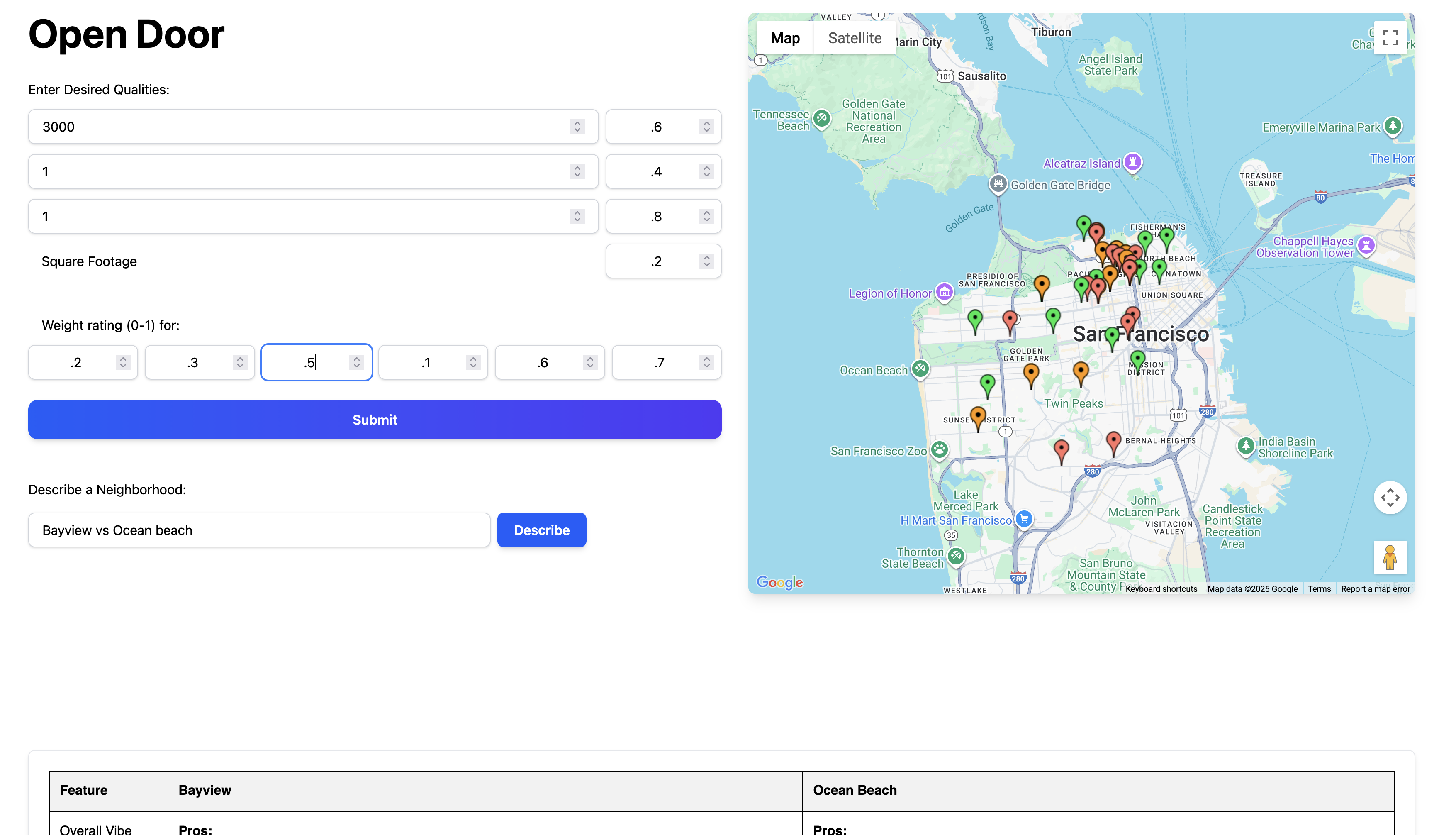
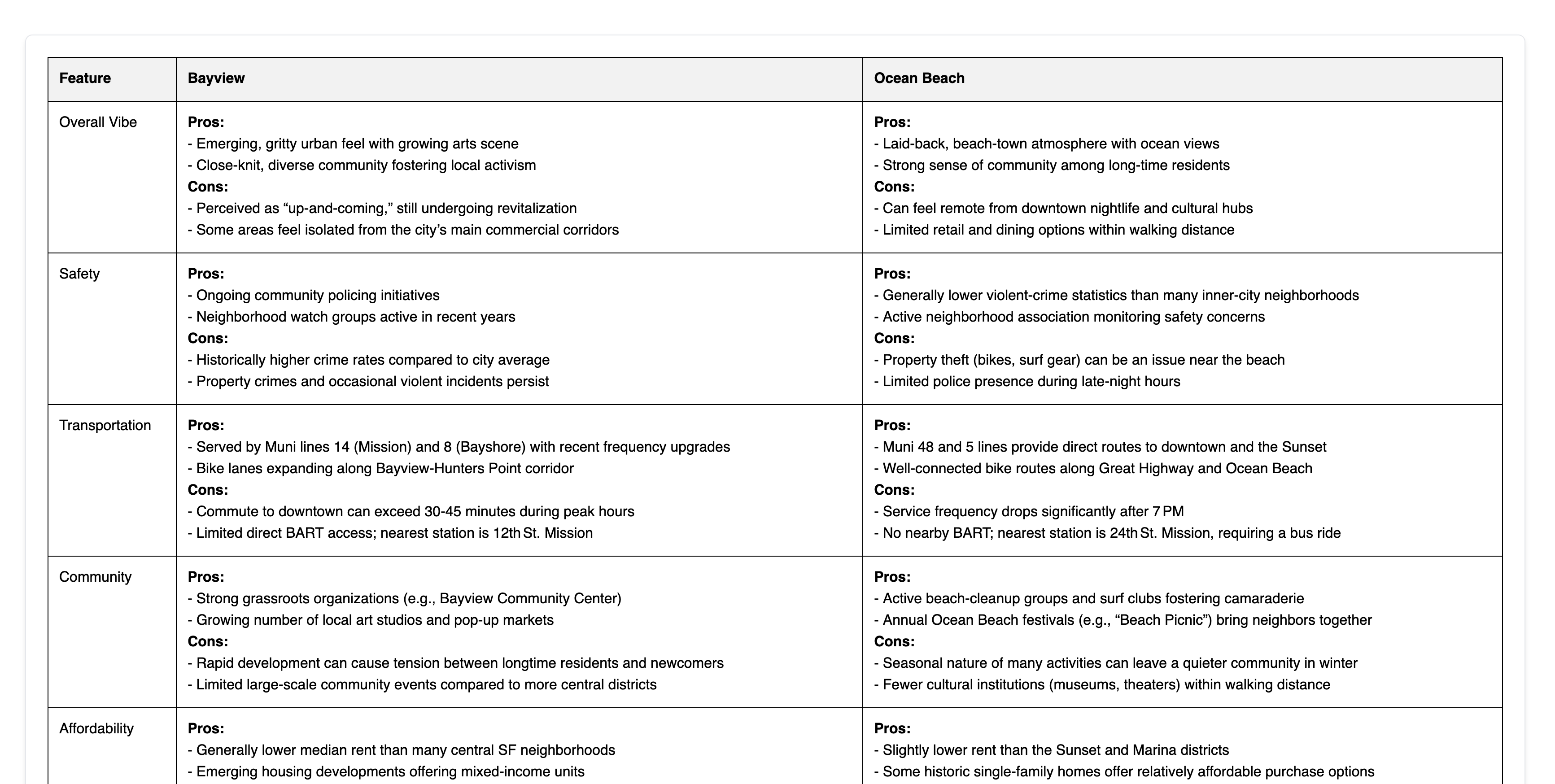
Our web app takes criteria from users for what they want in their housing, prioritizing characteristics that may include rent cost, nearby green areas, neighborhood walkability, or public transportation. Using these parameters, our app returns online listings that fit the user's criteria best. It displays specific areas to show where the user should be looking in the city to find housing that most accurately fits their preferences.
Building the Web App
Backend: We pulled rental data from the DataSF API, created a custom class to filter and organize listings, and integrated the Google Maps Nearby Search API to identify amenities like restaurants, parks, and transit. Our algorithm generates personalized scores for each listing based on weighted user preferences across different amenity categories.
Frontend: Users input their housing criteria and explore results on an interactive Google Maps interface. They can visualize listings as map points, prioritize amenity categories that matter most to them, and receive tailored recommendations based on their personalized preferences.
Challenges
API Limitations: We were restricted to free APIs with request caps and slow query times, and our DataSF API only contained occupied rental units from previous years without current vacancy pricing.
AWS Challenges: We faced difficulties configuring EC2 instances and struggled with securely storing housing data in S3 buckets.
Integration Issues: Connecting our scoring algorithms to the various APIs proved challenging due to compatibility and data flow concerns.
Accomplishments
API Management: We addressed free API limitations by reducing the number of requests and optimizing our query strategy.
Pivot Strategy: We solved the occupied-units-only issue by shifting focus from finding specific available units to identifying overall good locations where users could then search for housing.
Development Progress: We completed our backend base code within the first 9 hours, then spent the remaining time integrating it with our algorithms and frontend.
Key Takeaways
Full-Stack Integration: We learned how to integrate multiple platforms into a unified project and dynamically display different frontend pages based on user interactions.
API Implementation: We gained experience pulling and deploying web APIs, specifically making API requests using Python to retrieve and process external data.
Future of OpenDoor
Feature Enhancement: We plan to continue refining parameters and adding new functionality to improve the user experience and recommendation accuracy. We also think that the project could be improved with a more user-friendly way to set preferences before searching for listings.
Social Impact Focus: We aim to leverage our platform to support low-income individuals and families by collecting data on their residential patterns, identifying underserved areas for increased funding, and integrating resources like EBT/food stamp locations and group home availability into our search criteria.
Built With
- amazon-web-services
- bedrock
- css
- datasf
- flask
- html
- javascript
- python
- s3

Log in or sign up for Devpost to join the conversation.