-
-
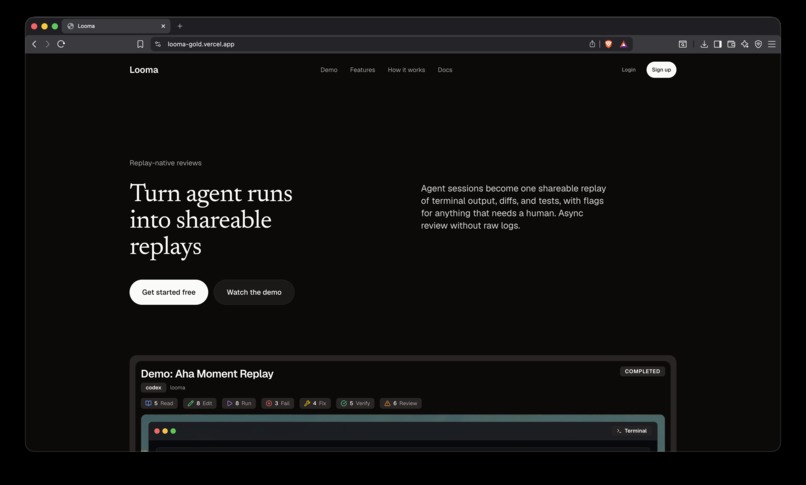
Landing Page
-
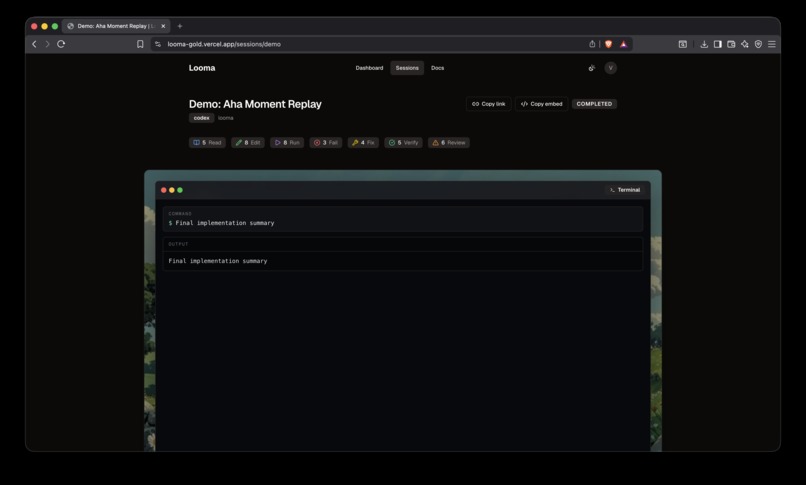
Fitur Utama
-
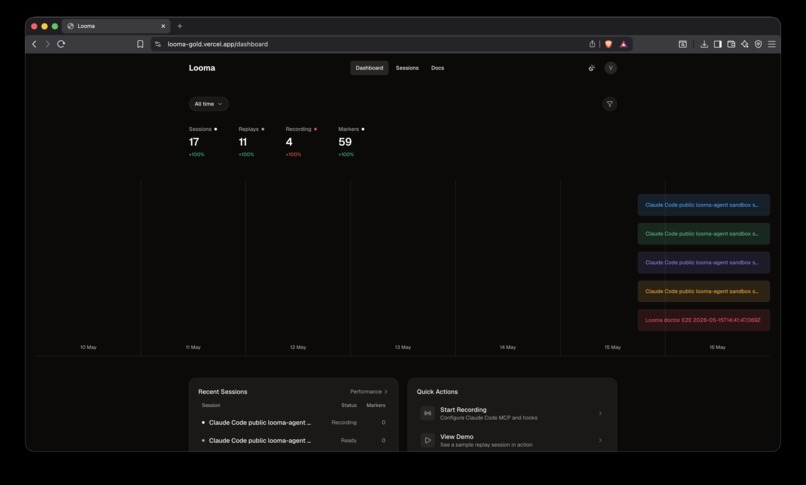
Dashboard
Inspiration
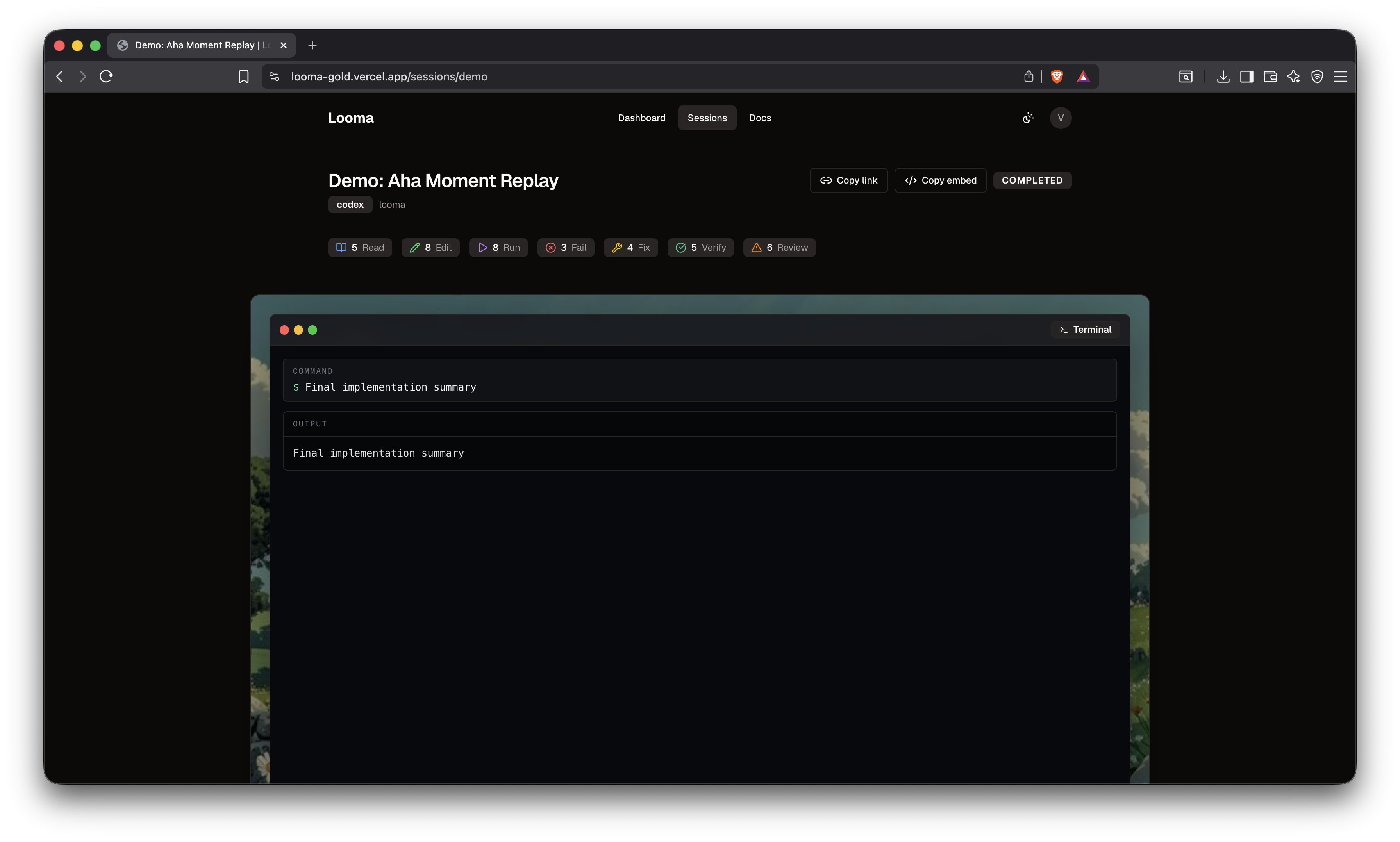
Autonomous coding agents like OpenClaw and Hermes Agent can move fast, but reviewing what they actually did is still difficult. A final diff often misses the most important context: which commands were run, where the agent got stuck, what errors repeated, and which moments deserved human review.
Looma was inspired by that gap. Instead of treating an agent session as a black box, Looma turns it into a replayable review artifact.
What it does
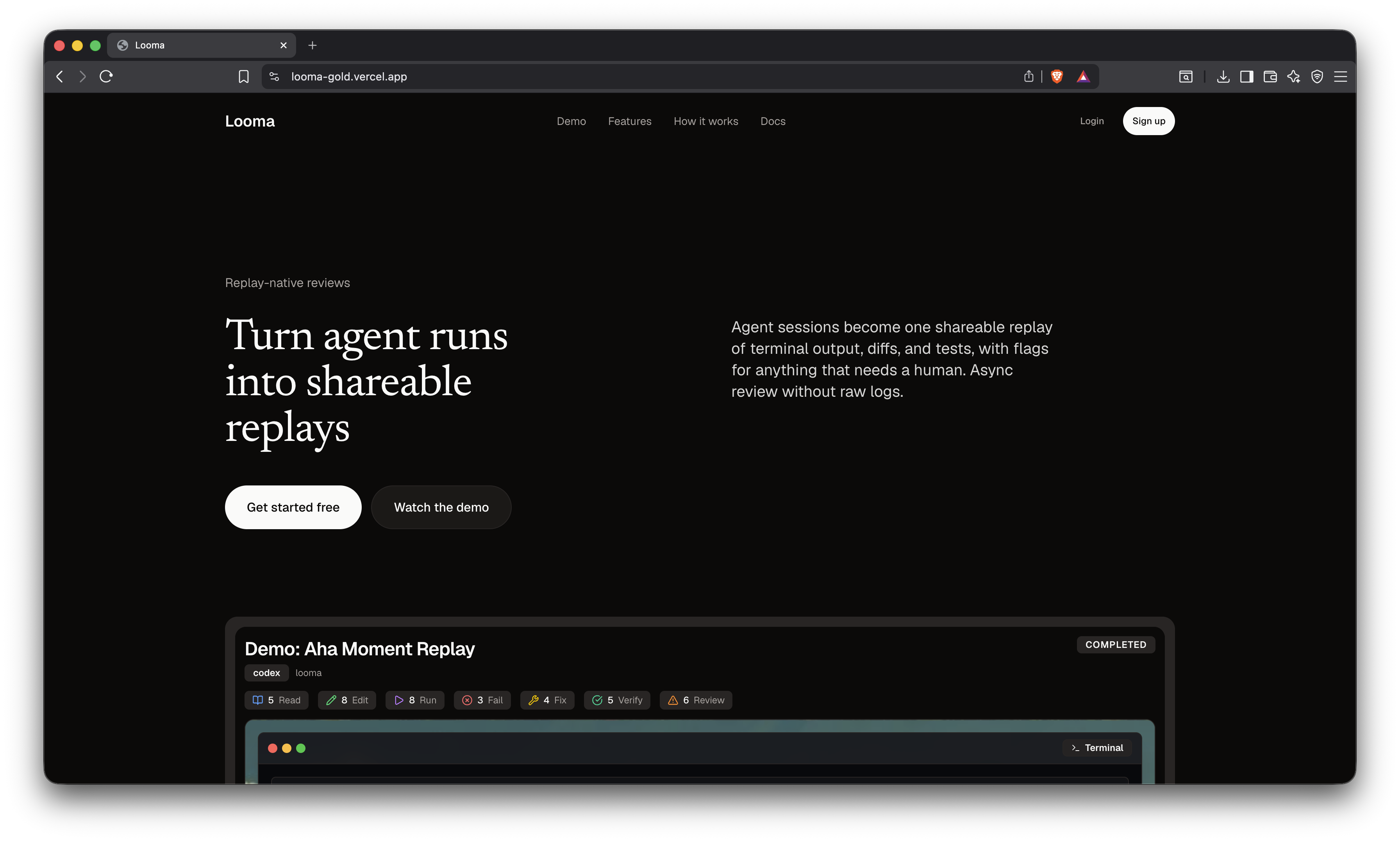
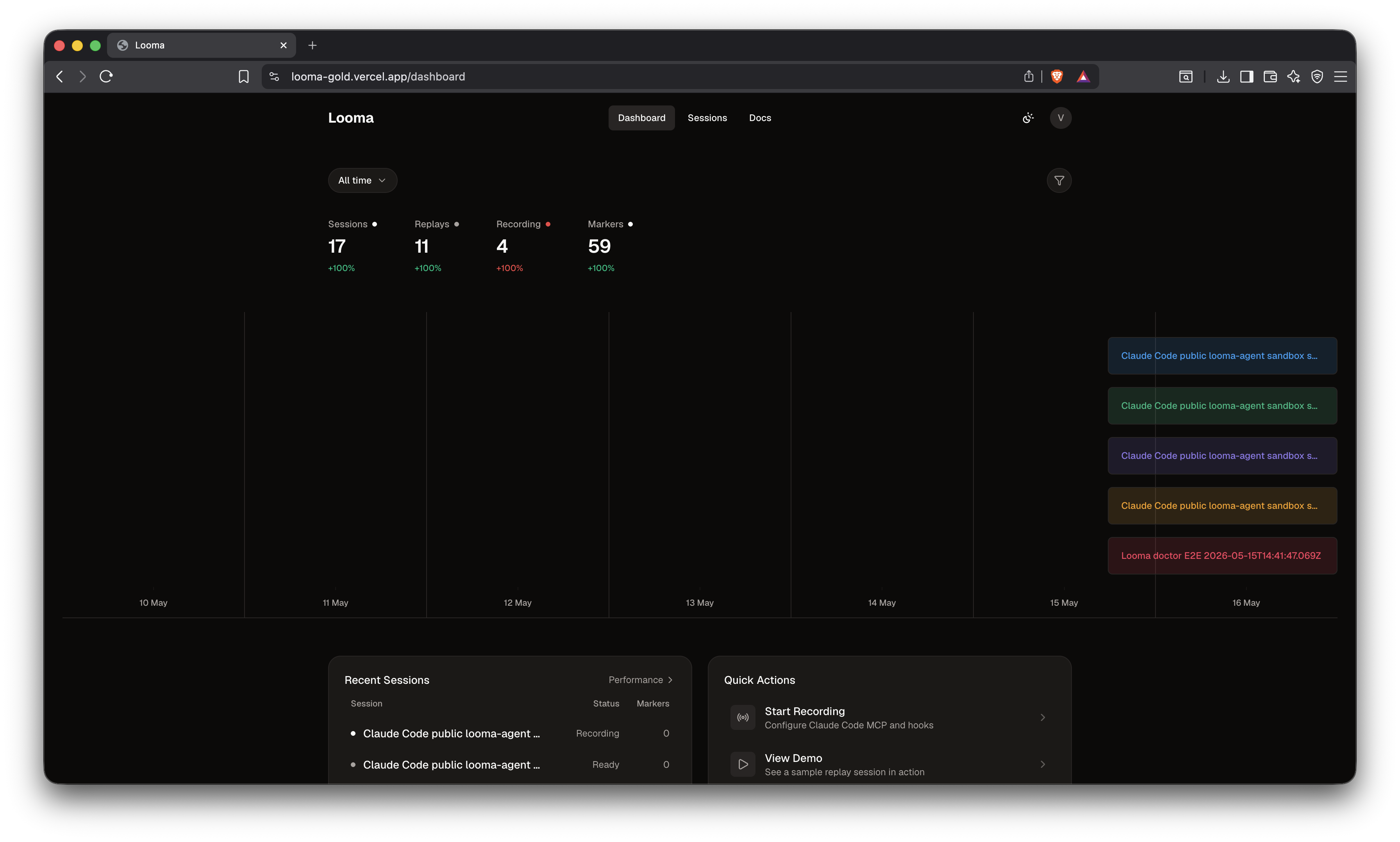
Looma records coding-agent sessions and presents them as structured, inspectable timelines. It helps reviewers understand the agent's behavior, spot repeated failures, identify low-progress loops, and mark risky moments as Needs Review before the work ships.
The goal is simple: make autonomous coding work easier to trust by making the process visible, replayable, and reviewable.
How we built it
We built Looma as a Bun monorepo with a Next.js web app, shared TypeScript packages, and a local agent bridge. The app provides the replay and review interface, while the local bridge and MCP server capture structured session events from agent workflows.
The core architecture includes:
- A Next.js + React web interface for reviewing sessions
- A local MCP server for recording agent events
- A hook bridge for capturing agent activity from local workflows
- Shared TypeScript schemas for consistent event contracts
- Supabase integration for persistence and session data
- AI-assisted summaries and review notes for faster inspection
- Vercel AI SDK for agentic system
What I learned
I learned that the most valuable review signal is not just the final code output. It is the sequence of decisions and failures that led there.
A coding agent may eventually produce a working result, but the session can still contain warning signs: repeated commands, repeated errors, skipped verification, or risky changes that were never explained. Capturing those signals as structured events makes review much more actionable.
We also learned that agent tooling needs to fit naturally into existing developer workflows. Looma is designed to work around local agent sessions rather than forcing teams into a completely new coding environment.
Challenges
The hardest part was designing a useful review artifact without making the experience noisy. Agent sessions can produce a lot of logs, tool calls, and intermediate output, so Looma needed to separate important review signals from raw activity.
Another challenge was making the recording layer general enough for tools like OpenClaw and Hermes Agent while still keeping the data structured enough for replay, review markers, and loop detection.
What's next
Next, Looma can expand deeper integrations with agent runtimes, improve automatic detection of risky behavior, and generate clearer review summaries for teams adopting autonomous coding workflows.
Built With
- ai
- bun
- codemirror
- framer
- lucide
- mcp
- motion
- next.js
- openai
- query
- radix
- react
- supabase
- tailwind
- tanstack
- typescript
- vercel
- vercel-ai-sdk
- xterm.js
- zod


Log in or sign up for Devpost to join the conversation.