Inspiration
penCare was inspired by the reality that many people struggle to access timely and reliable healthcare information, especially in underserved communities. I wanted to build a platform that uses technology and AI to reduce these barriers and empower people to make better health decisions early. My interest in software engineering, AI, and healthcare naturally came together in this idea. The goal was simple: make healthcare guidance more open, smarter, and accessible.
What it does
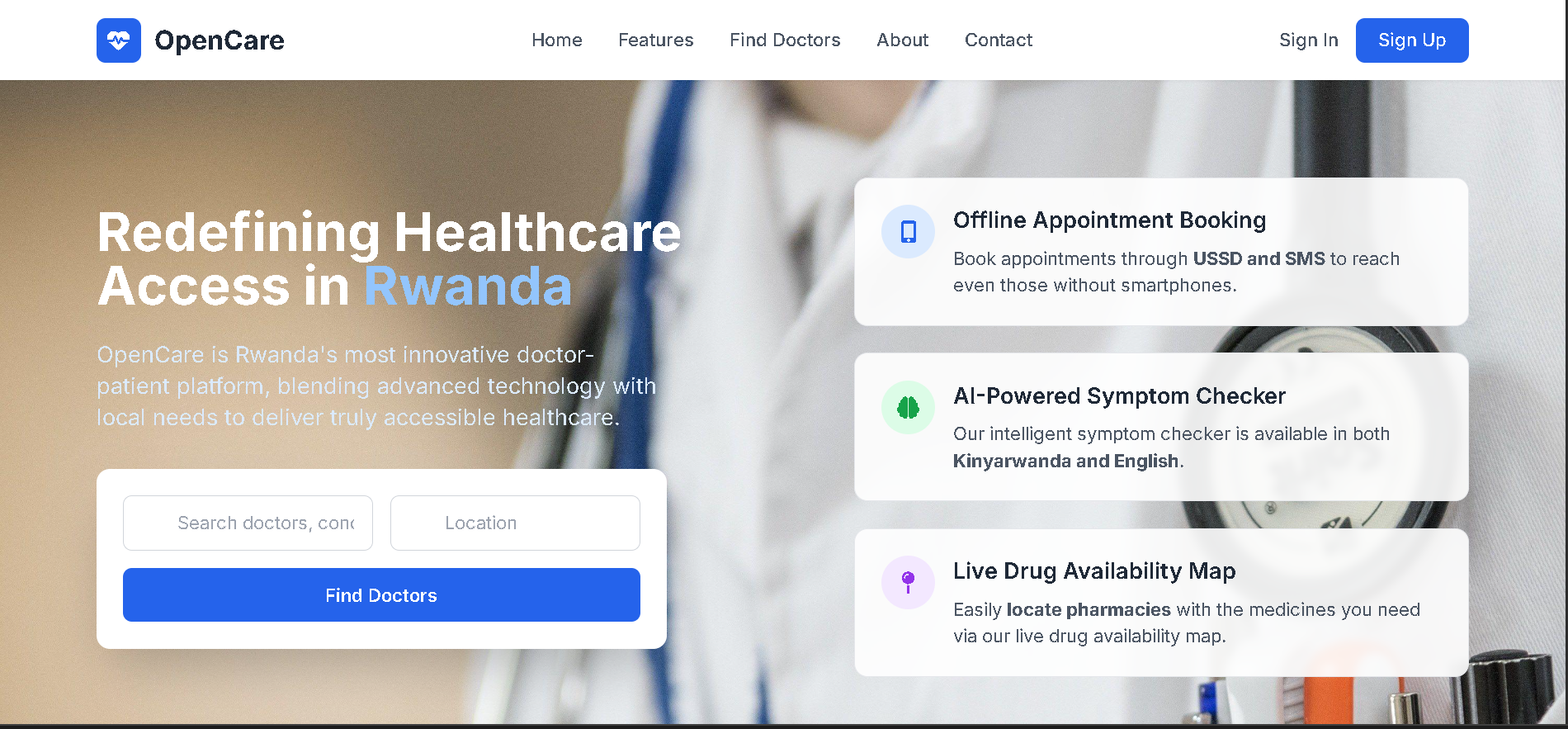
OpenCare is a smart healthcare web platform that helps users understand their health by analyzing symptoms and personal inputs using AI. It provides instant guidance, health insights, and recommendations through an easy-to-use interface. OpenCare also organizes health data, supports alerts for potential risks, and is designed to connect with future features like dashboards, notifications, and secure integrations.
How we built it
Frontend – Designed with HTML, CSS, and JavaScript to create an interactive and responsive user interface. Users can input symptoms, age, and notes, and receive instant feedback. Animations and dashboard elements were added for better usability.
Backend – Built using Node.js (or Python/Flask) to handle data processing, API requests, and business logic securely. It manages user inputs, communicates with the AI model, and sends back structured responses.
AI Integration – Used a language model or symptom analysis AI to interpret user inputs and provide meaningful health guidance. Data flows like:
Challenges we ran into
AI Integration & Security – Ensuring the AI could analyze symptoms accurately without exposing API keys or sensitive data was tricky. I had to learn safe methods for server-side requests and data handling.
Project Structure – As a solo developer, balancing frontend, backend, and AI logic in a single project was challenging. Organizing files and maintaining clean, modular code took several iterations.
Asynchronous Code & API Handling – Managing async calls, error handling, and real-time responses from AI models caused bugs and delays, requiring careful debugging.
User Experience Design – Creating an interface that was both intuitive and informative was hard. I had to iterate multiple times to make the platform easy to navigate while presenting complex health data clearly.
Data Privacy & Security – Handling health-related data responsibly added an extra layer of complexity, forcing me to implement secure storage, validation, and encryption techniques.
Accomplishments that we're proud of
Fully Functional AI-Powered Health Platform – We built a system that takes user inputs, analyzes symptoms with AI, and provides actionable health guidance in real time.
End-to-End Integration – Successfully connected the frontend, backend, database, and AI, creating a seamless experience for users.
User-Centric Design – Developed an interface that is intuitive, responsive, and visually engaging, making complex health data easy to understand.
What we learned
Full-Stack Development Skills – Gained hands-on experience combining frontend (HTML, CSS, JS), backend (Node.js/Python), and AI integration, understanding how each layer communicates and works together.
AI & Data Processing – Learned how to structure user inputs, send them to an AI model, and interpret the outputs into meaningful health guidance.
Project Planning & Modular Design – Understood the importance of organizing code, creating reusable components, and planning for future scalability.
What's next for Opencare
Expanded AI Capabilities – Integrate more advanced AI models for accurate diagnosis suggestions, predictive health analytics, and personalized care plans.
Mobile App Version – Build iOS and Android apps for broader accessibility, allowing users to check symptoms and health guidance on the go.
Real-Time Alerts & Notifications – Add push notifications, SMS, or email alerts for critical health updates or reminders.
Telemedicine Integration – Connect users with doctors, clinics, or telehealth services directly through the platform.
Multi-Language Support – Make OpenCare accessible to non-English speakers, expanding its reach globally.

