-
-
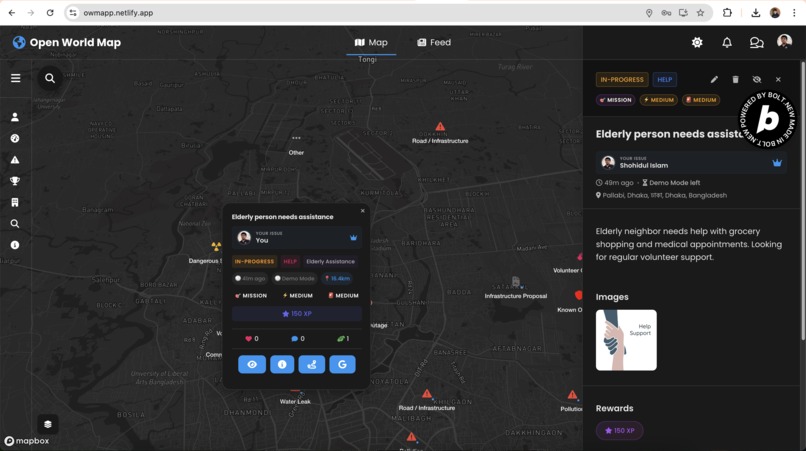
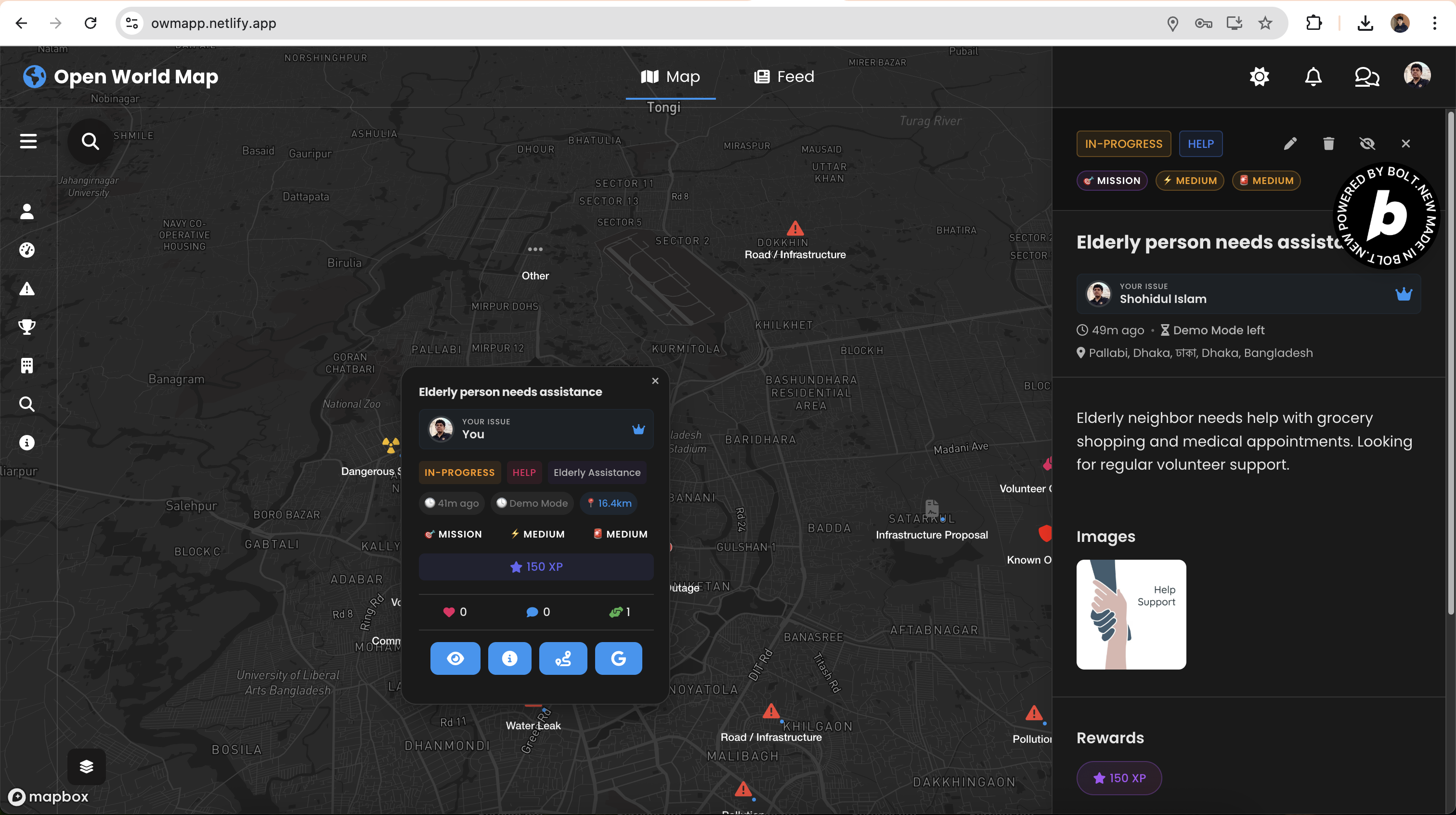
Issue Preview
-
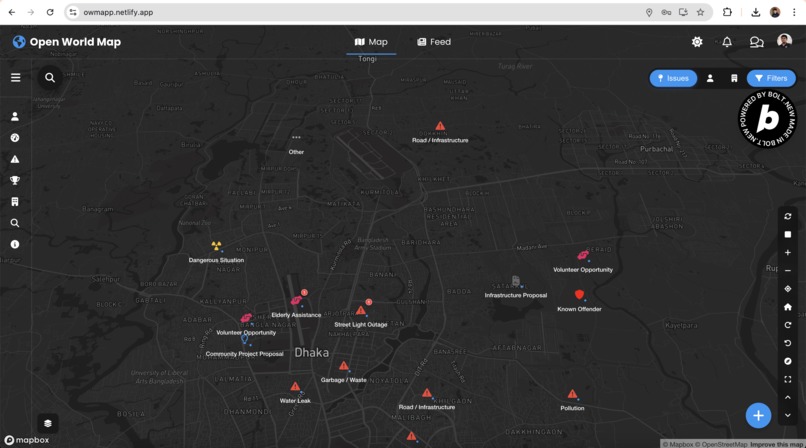
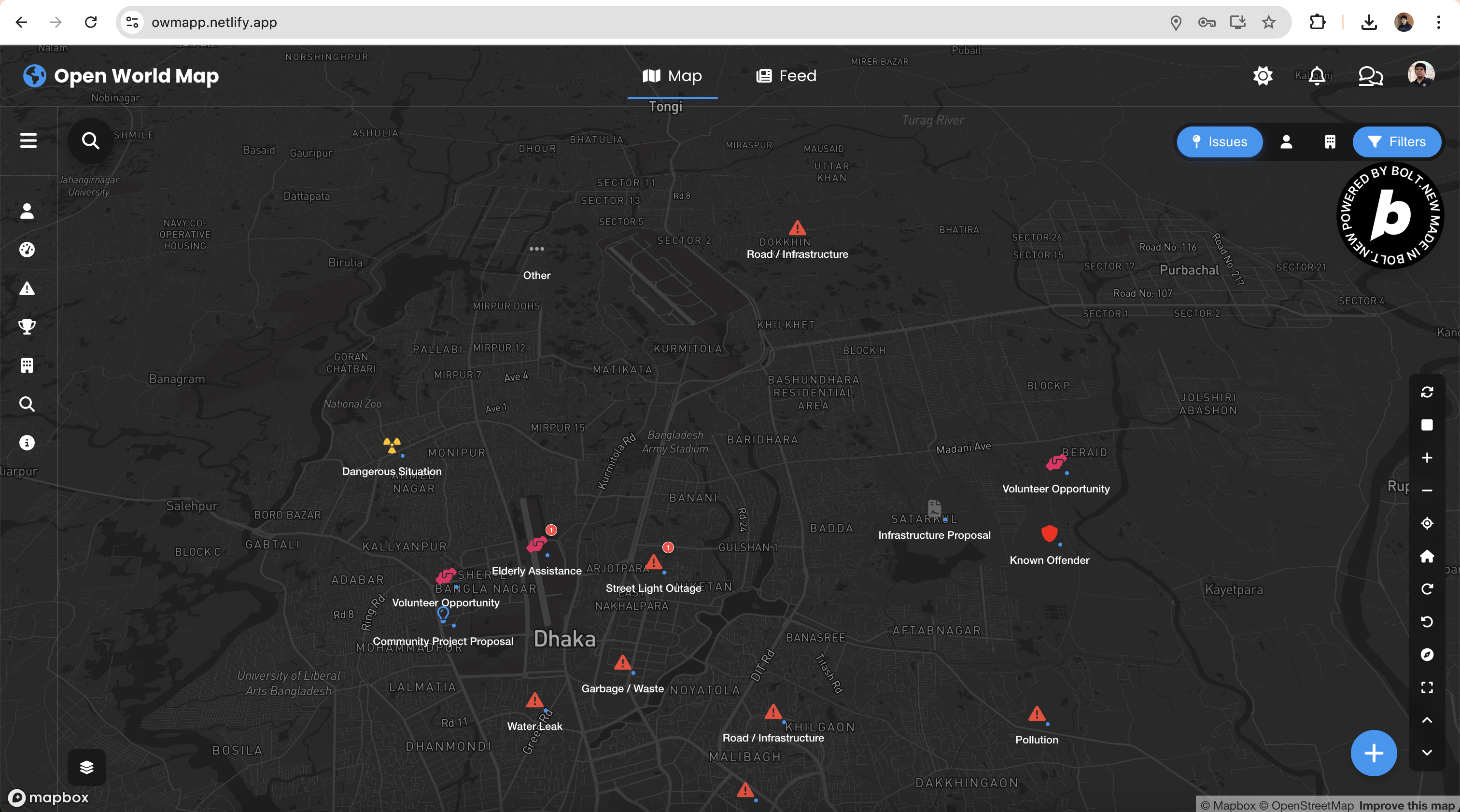
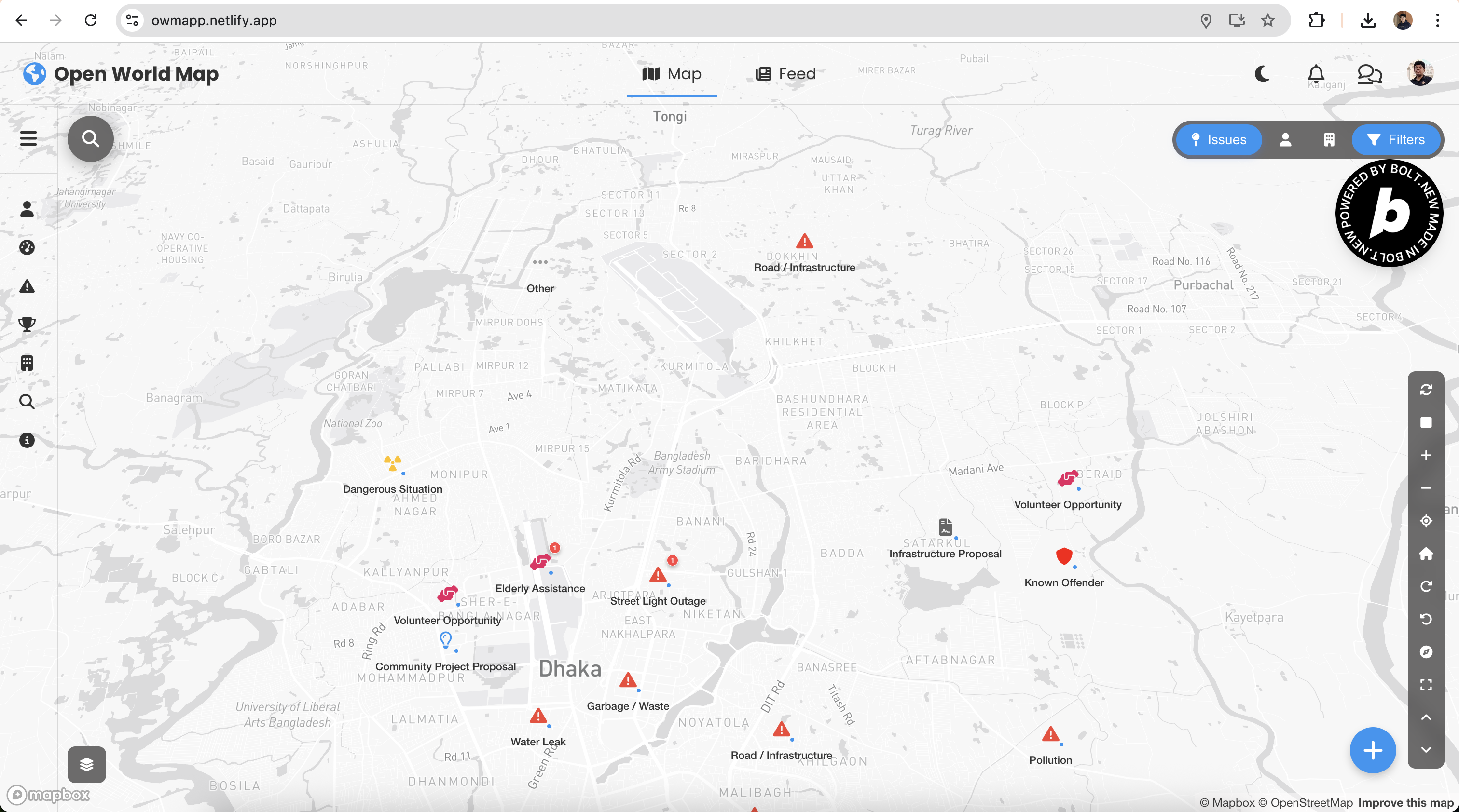
Map/Home
-
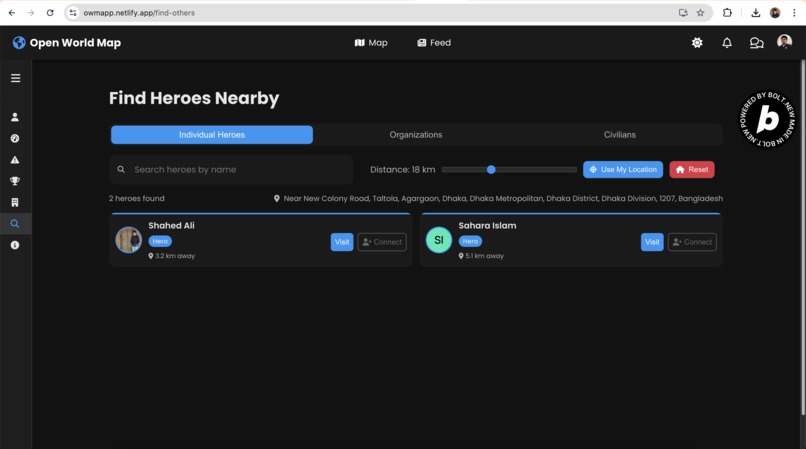
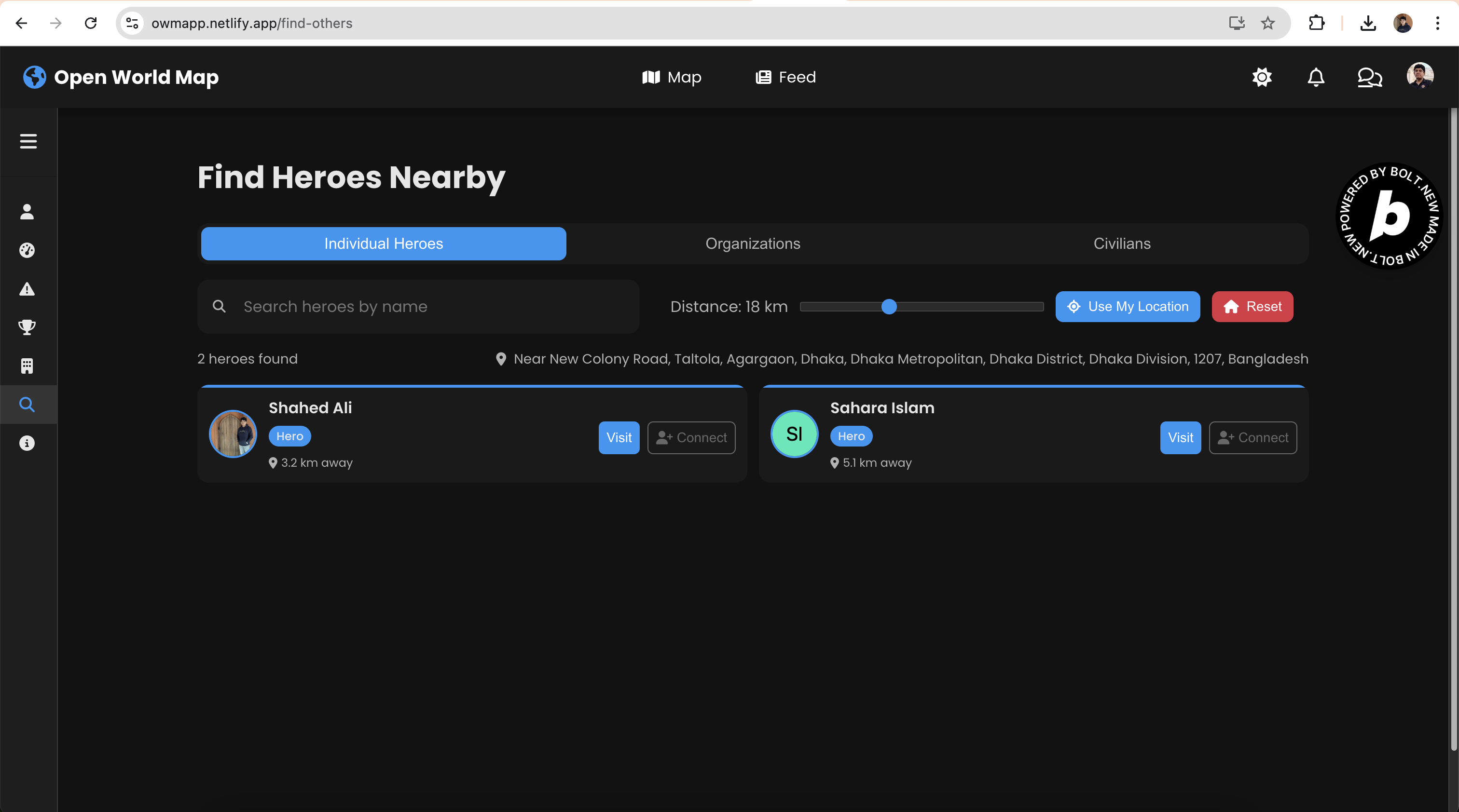
Find Others
-
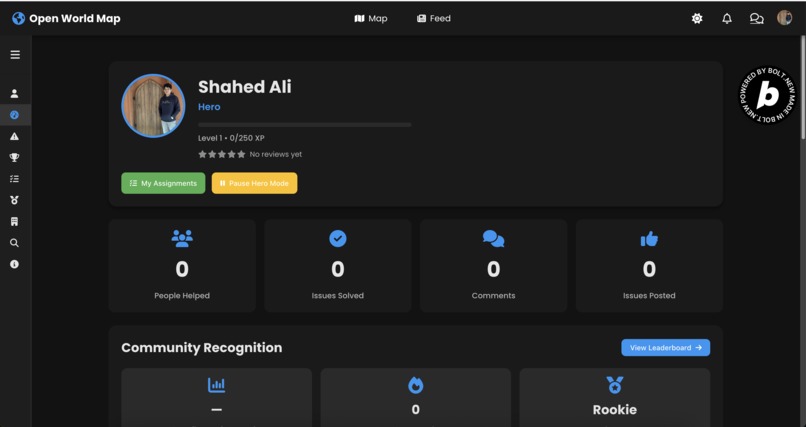
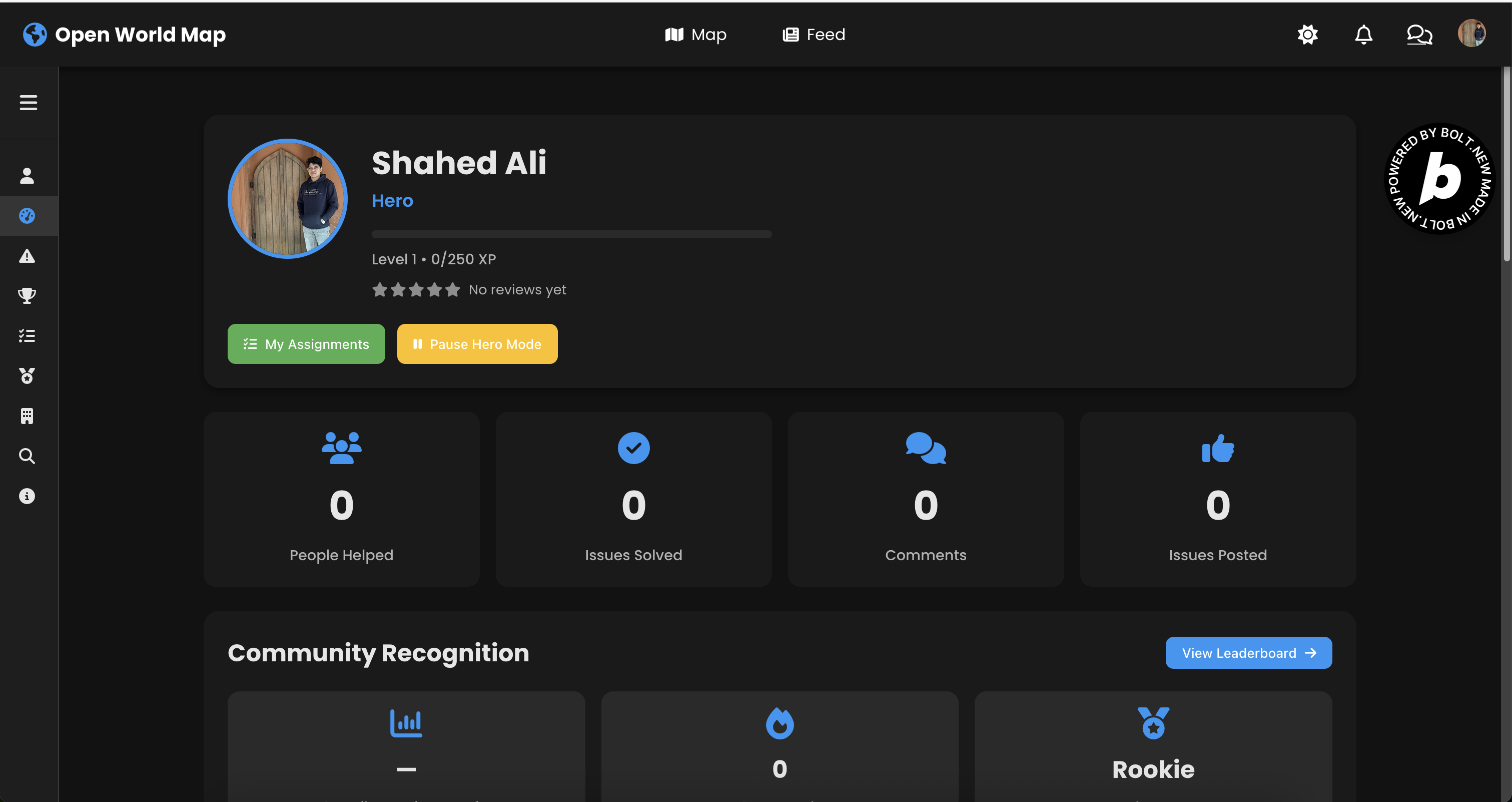
Hero Dashboard
-
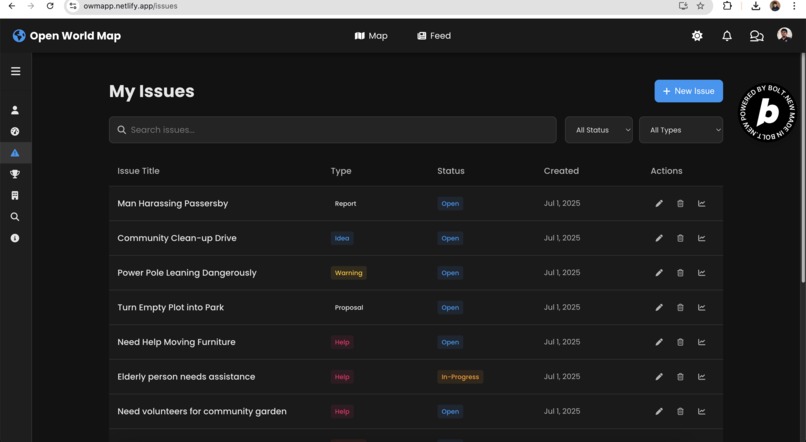
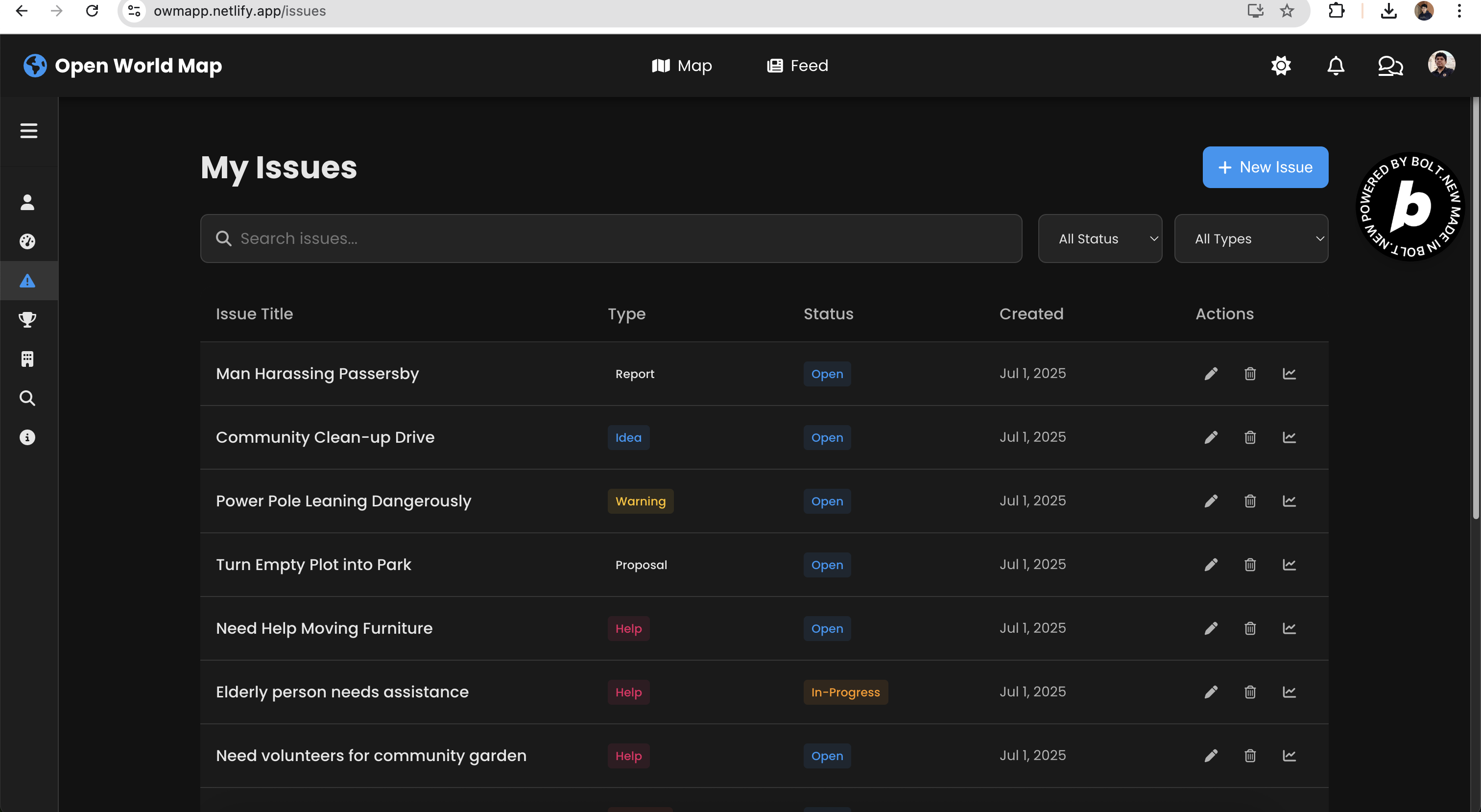
Issues
-
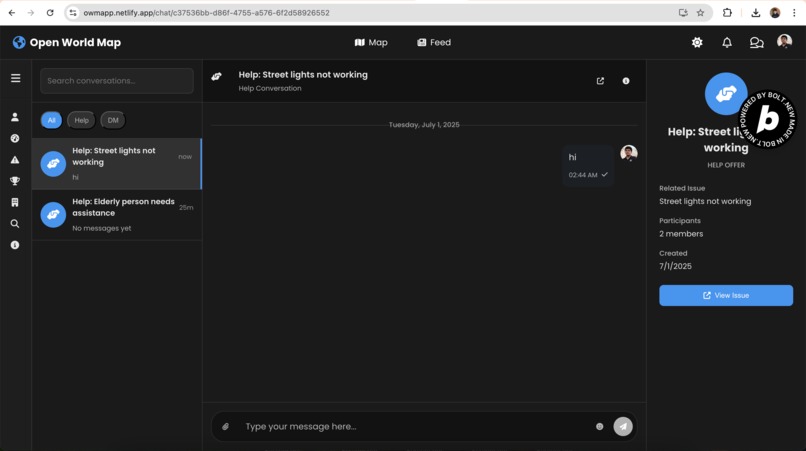
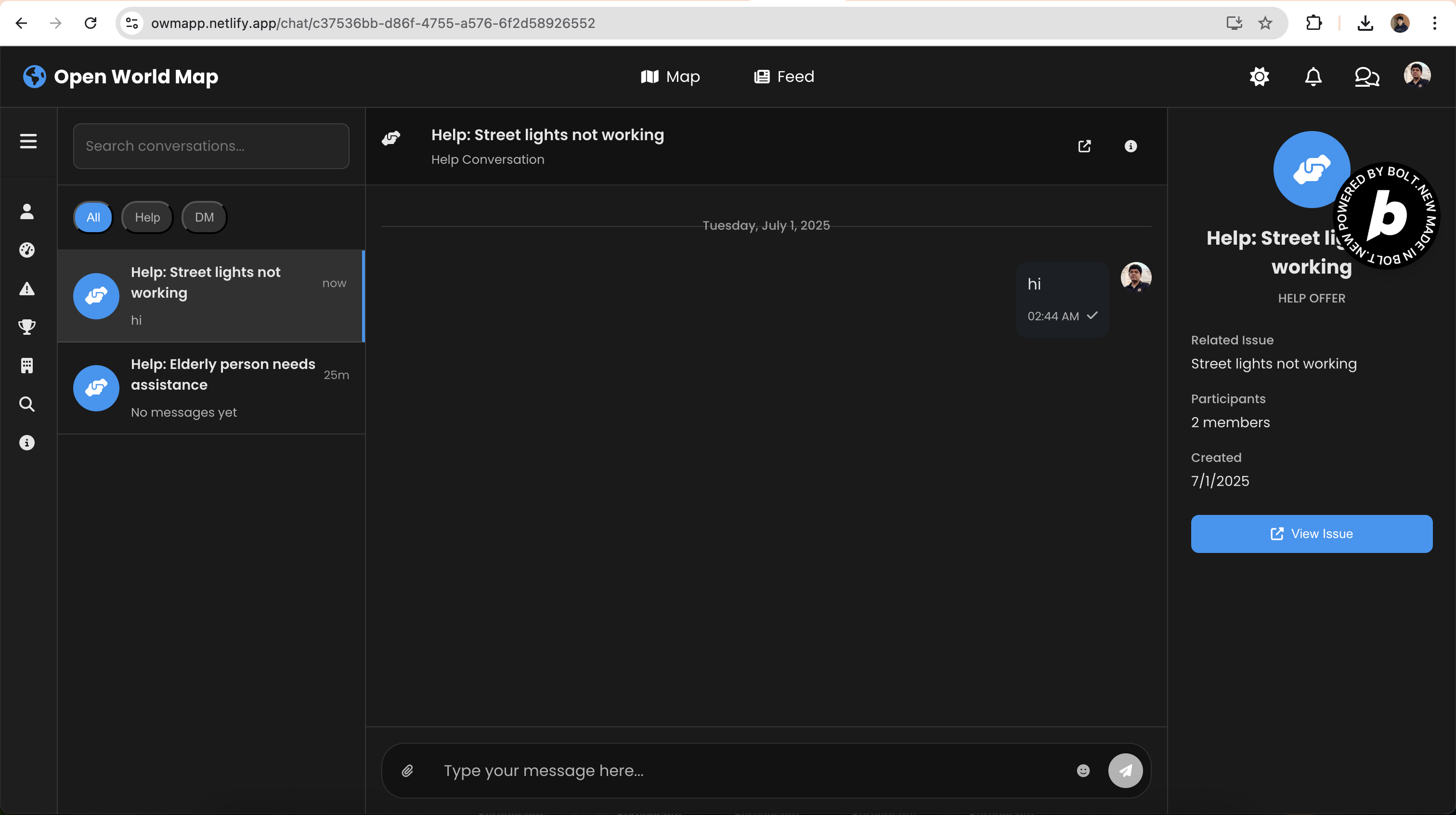
Chat
-
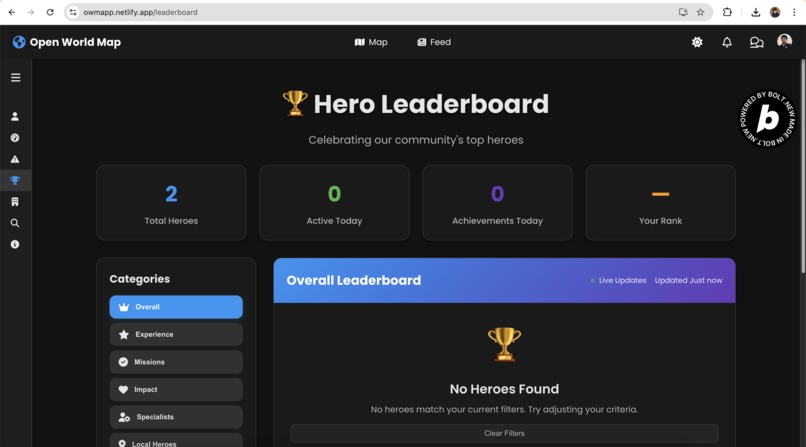
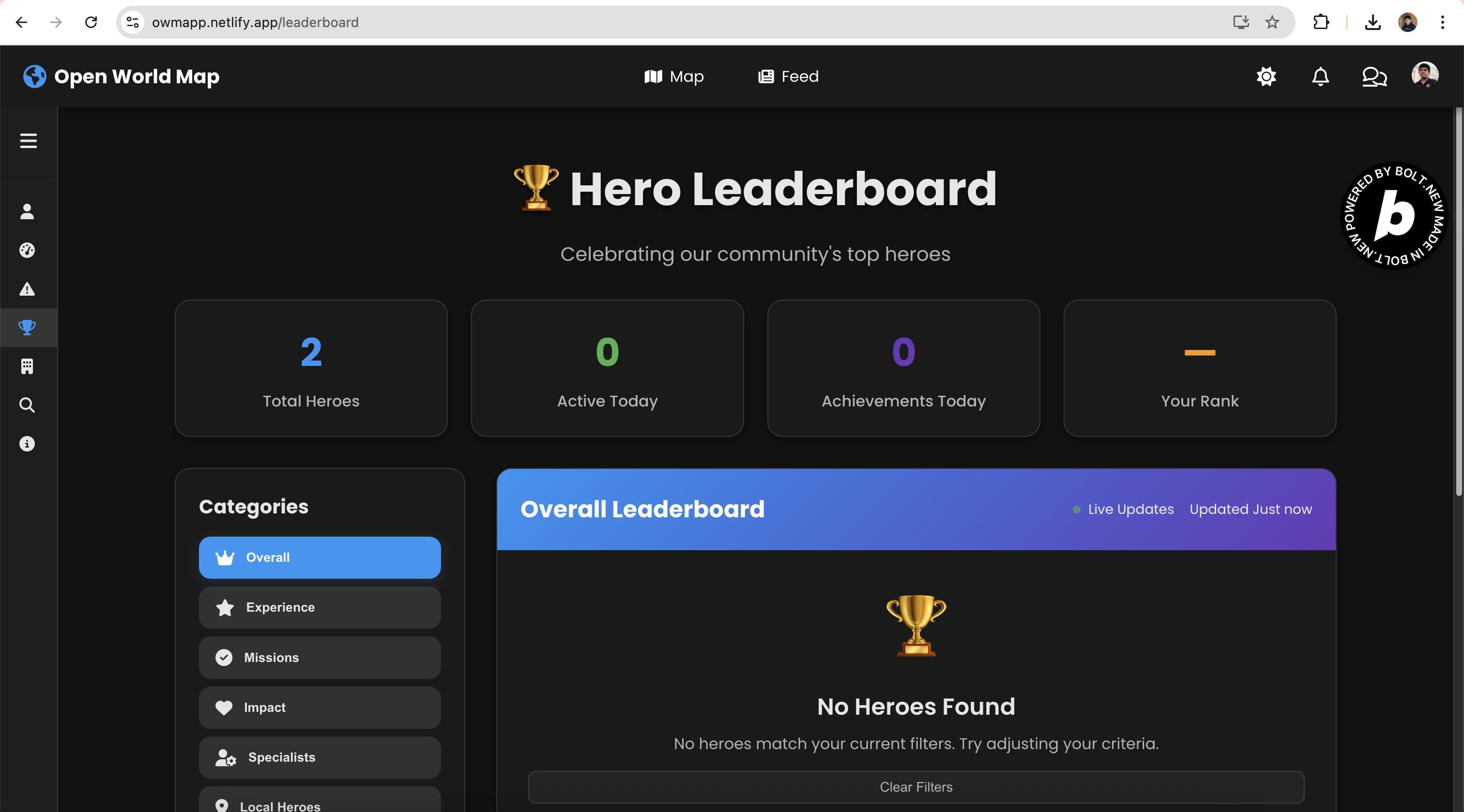
Leaderboard
-
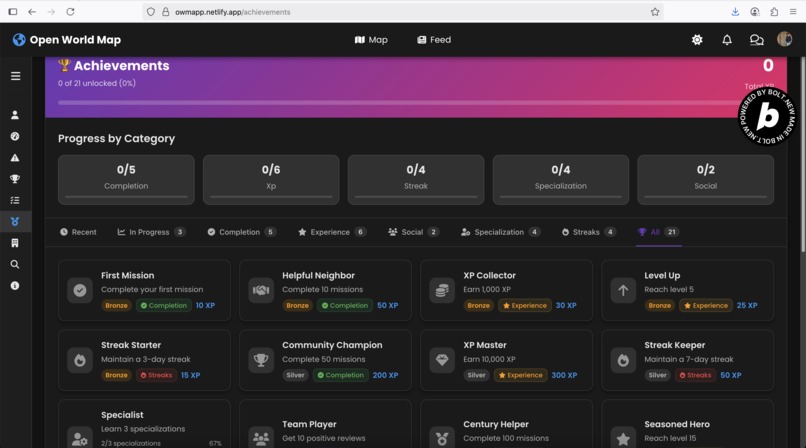
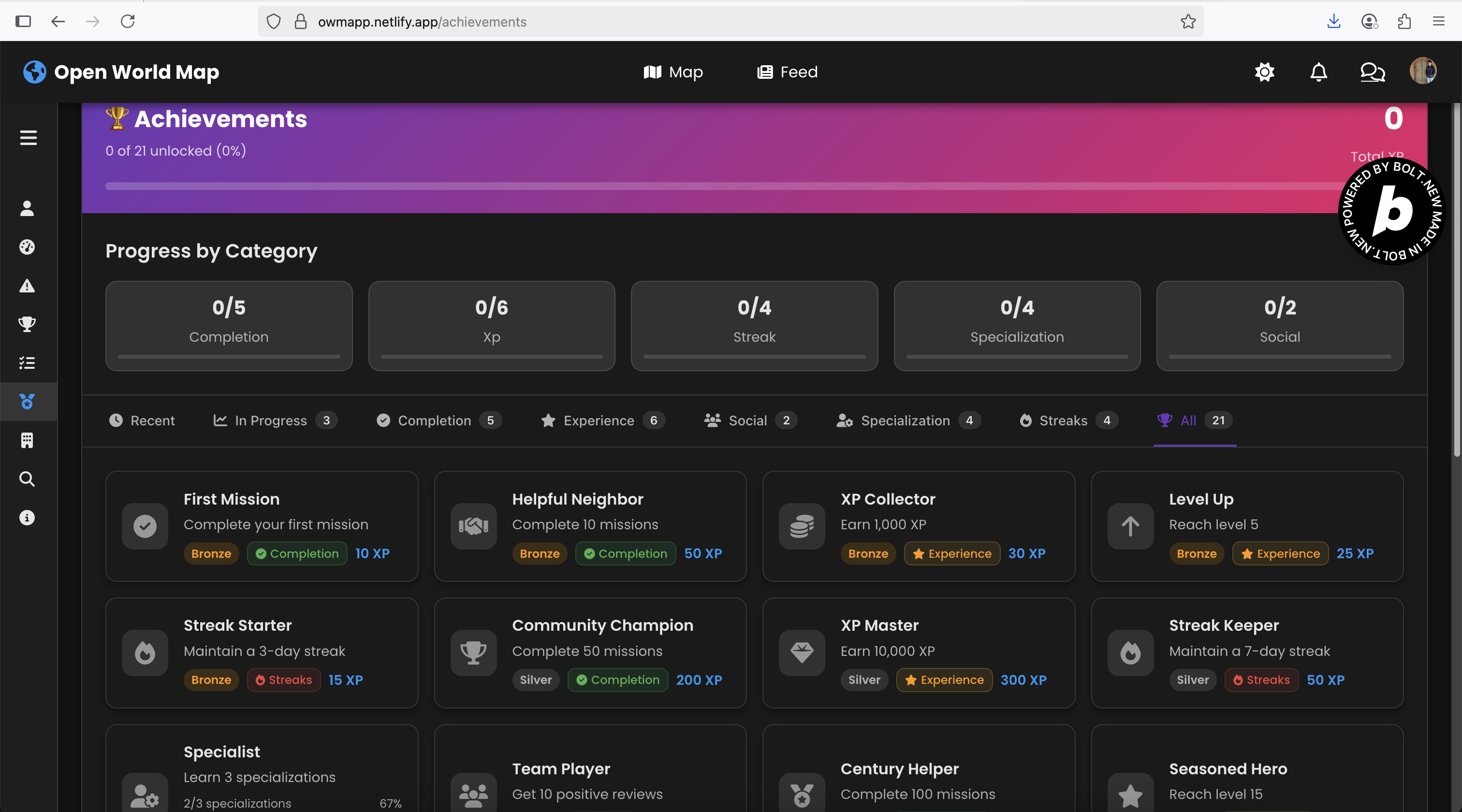
Achievements
-
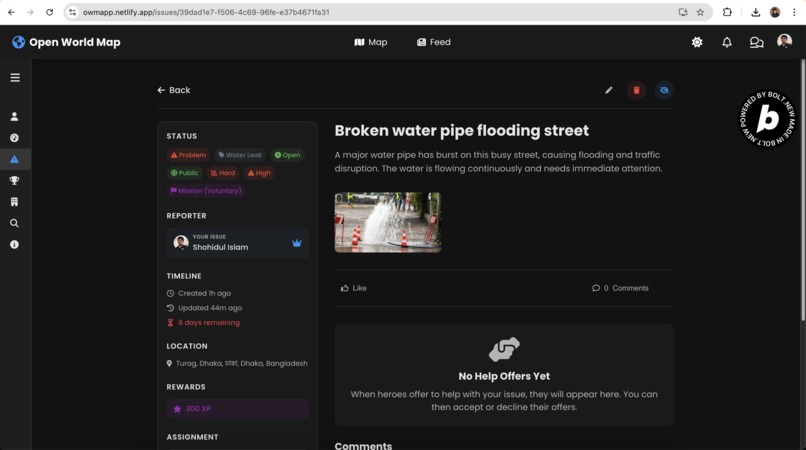
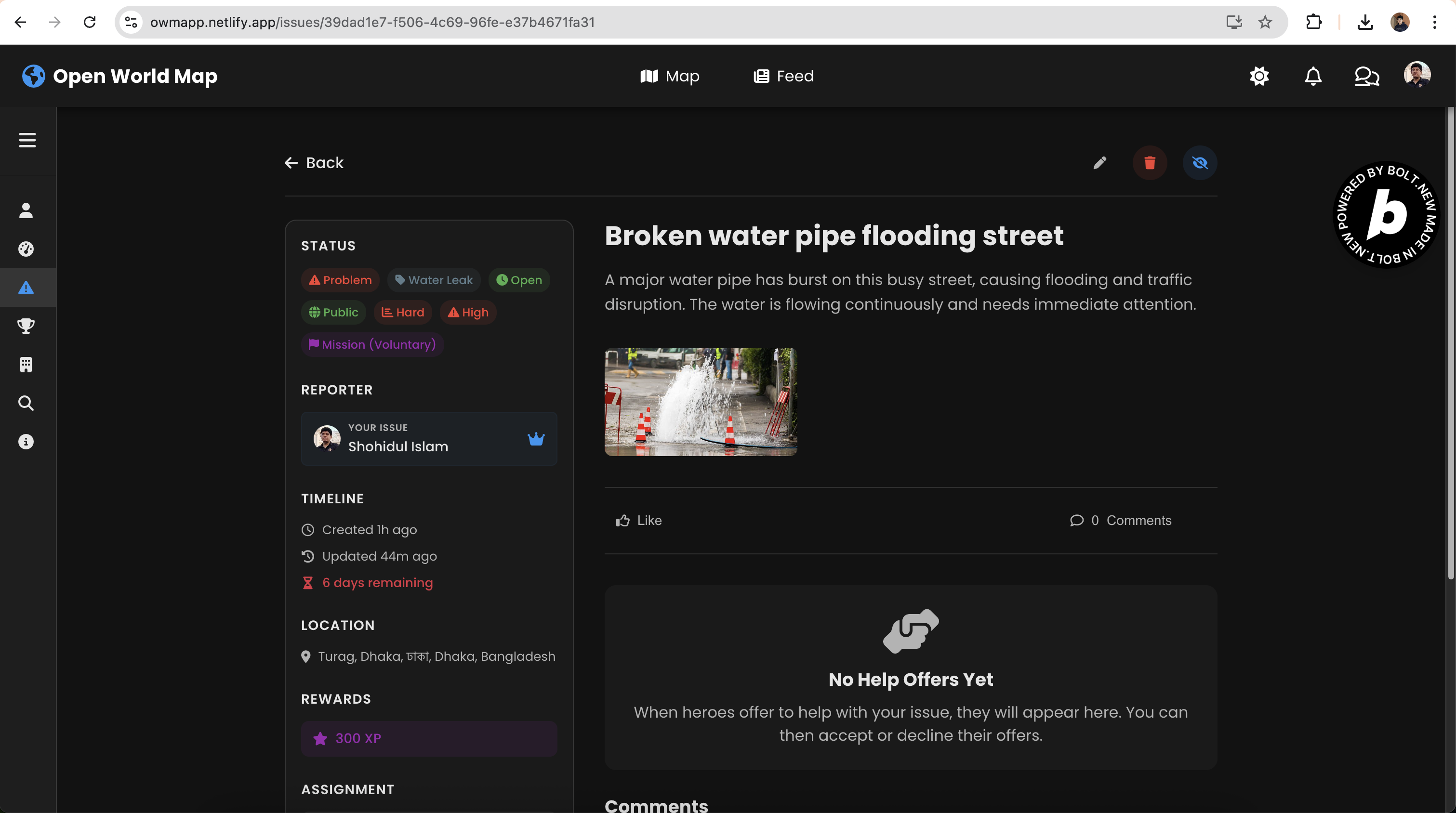
Issue Details
-
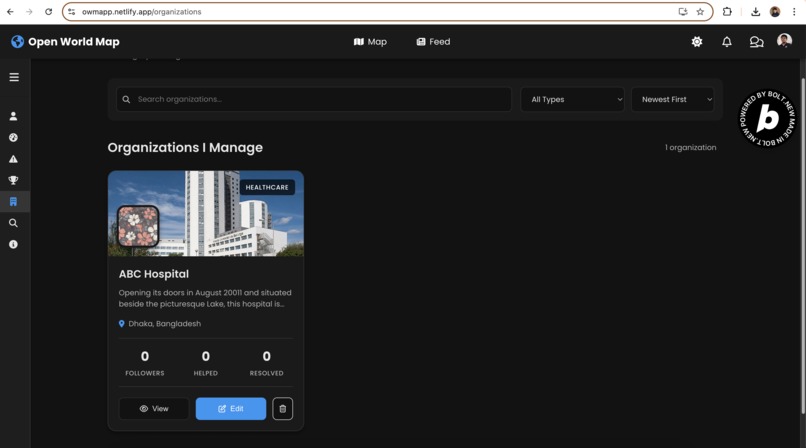
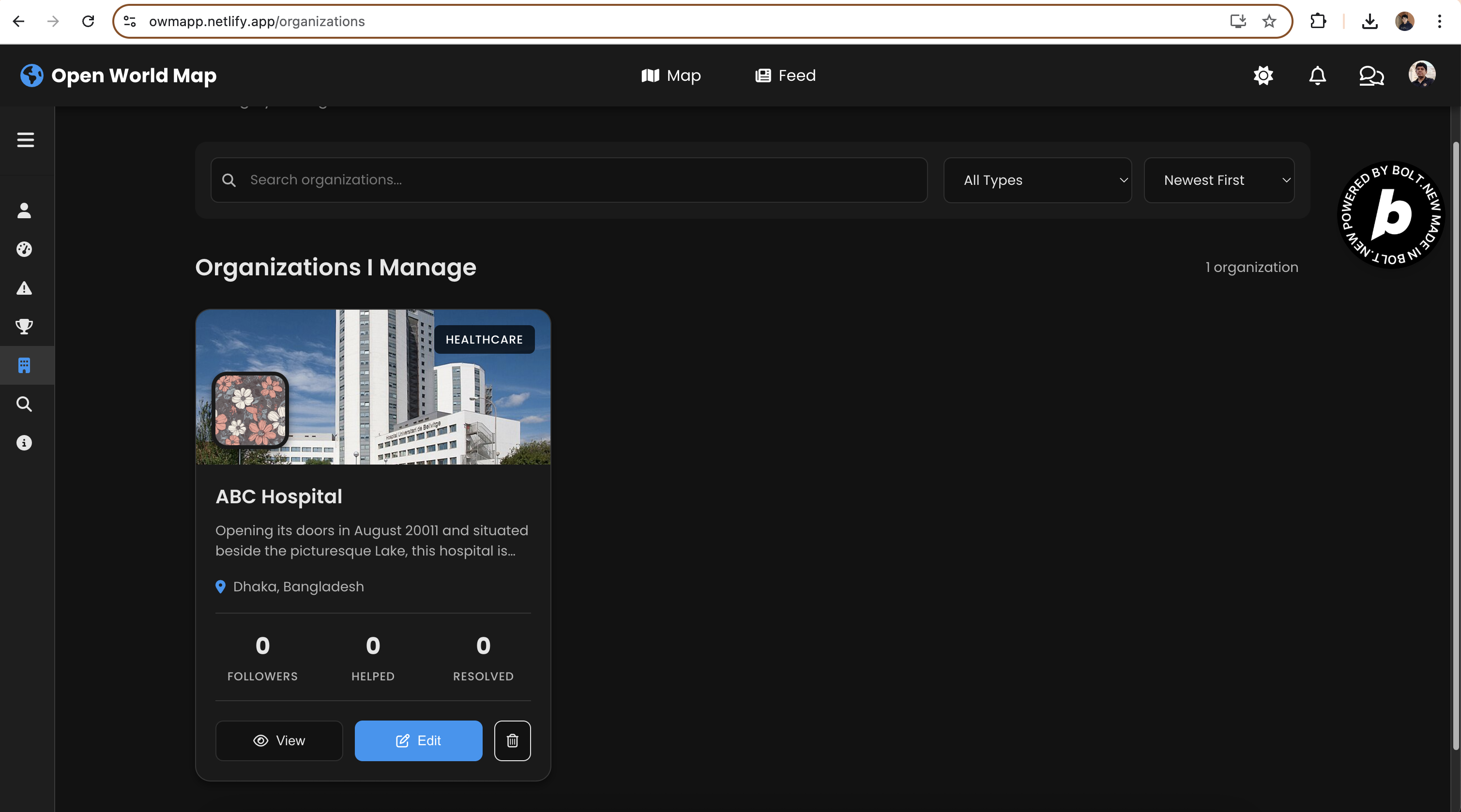
My Organizations
-
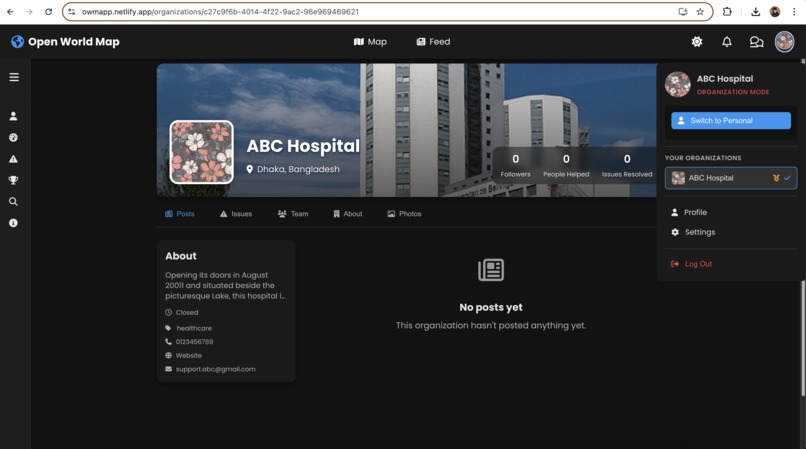
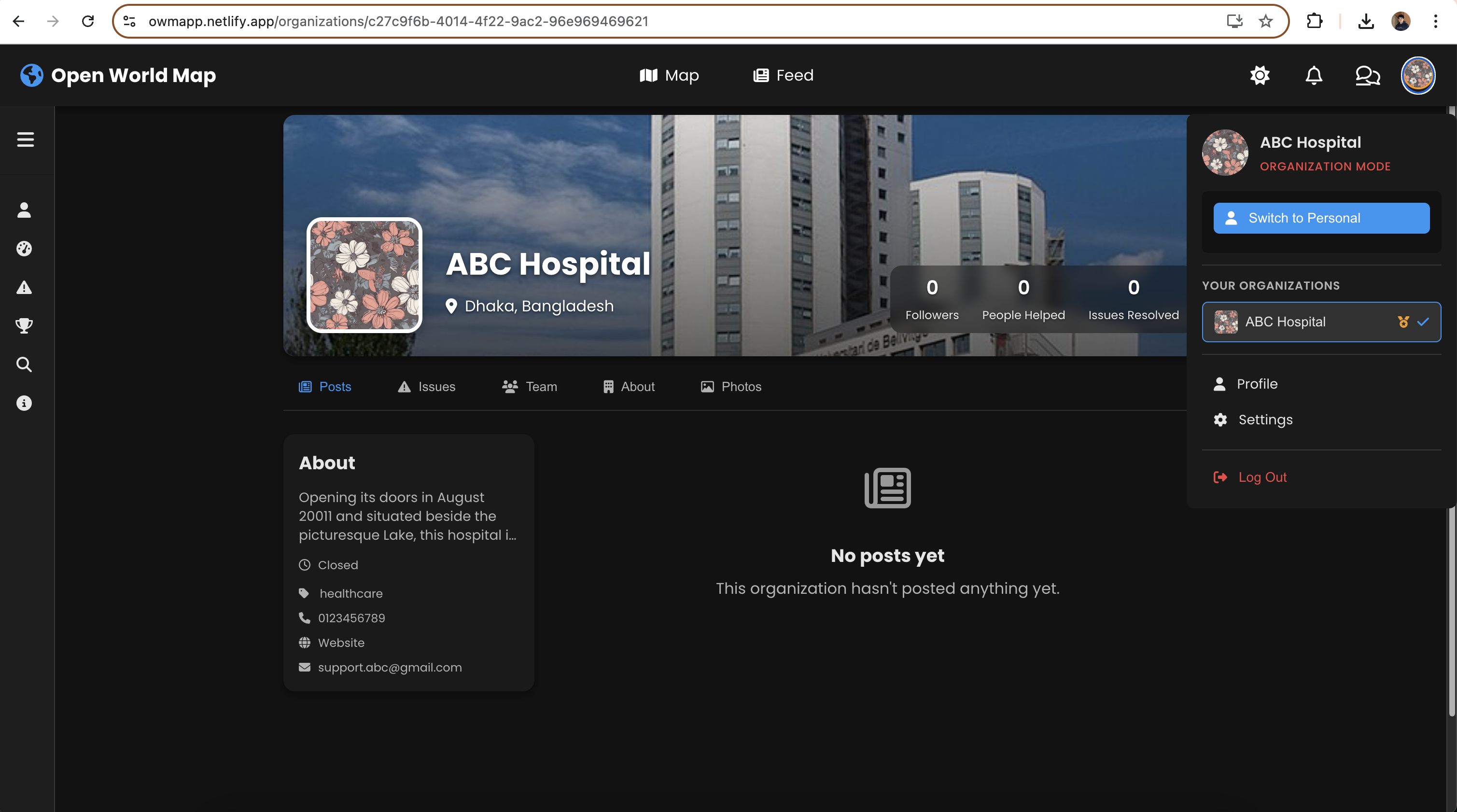
Organization Profile
-
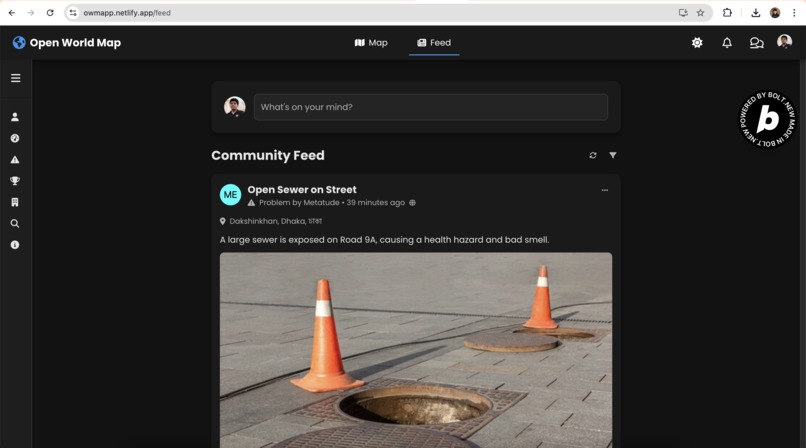
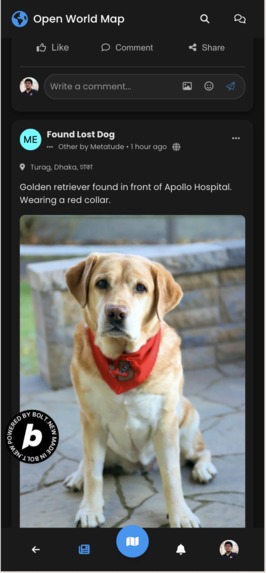
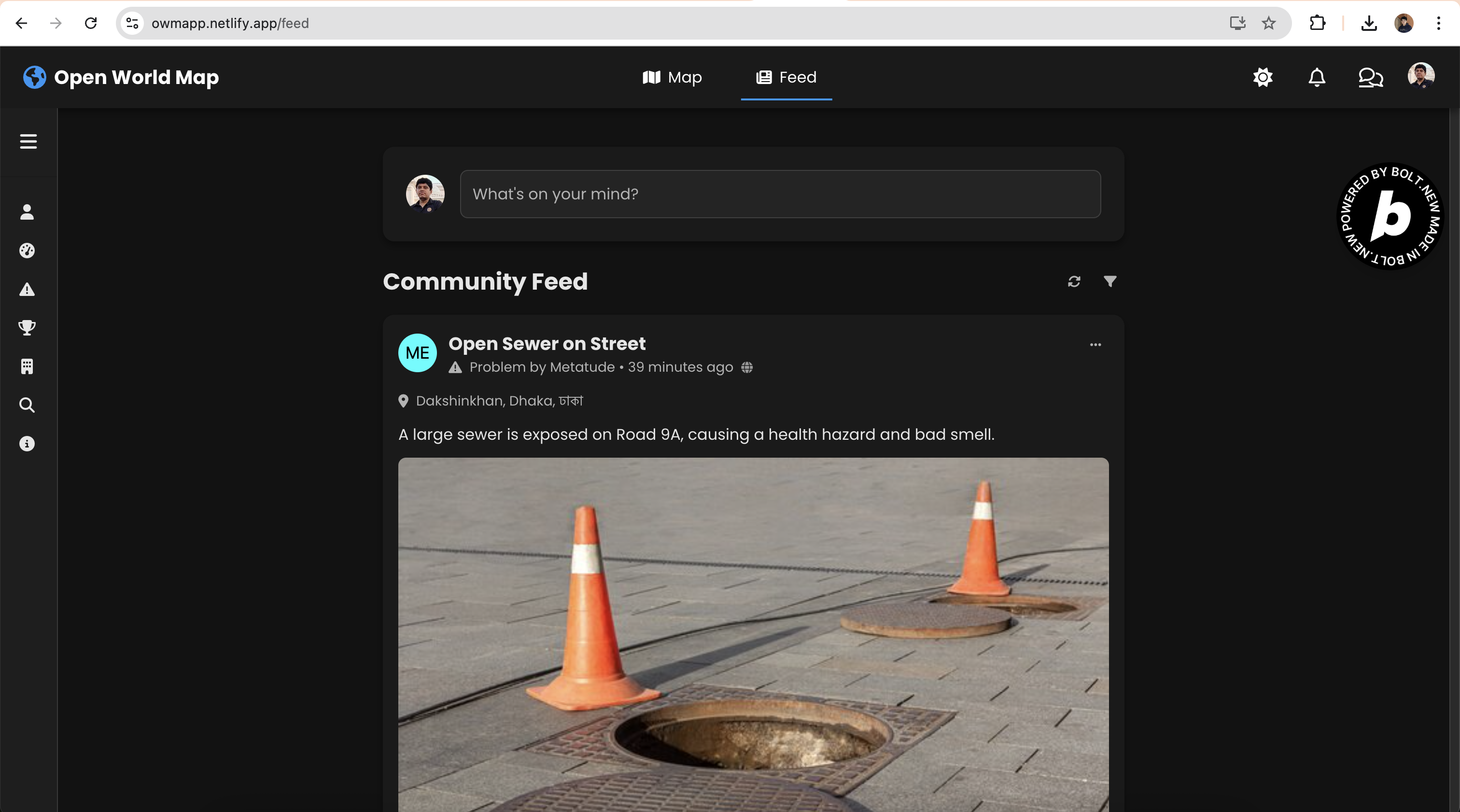
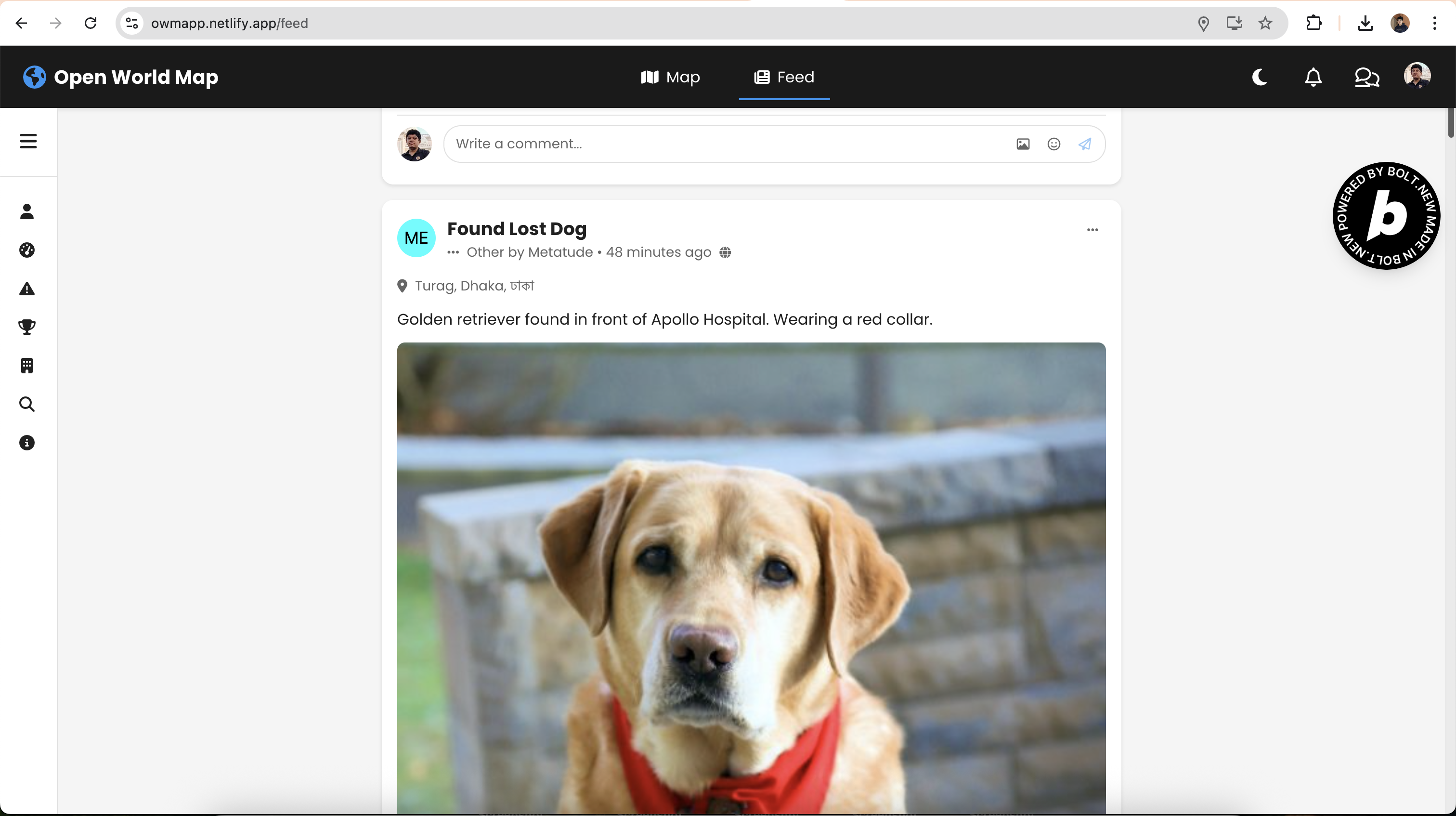
Feed
-
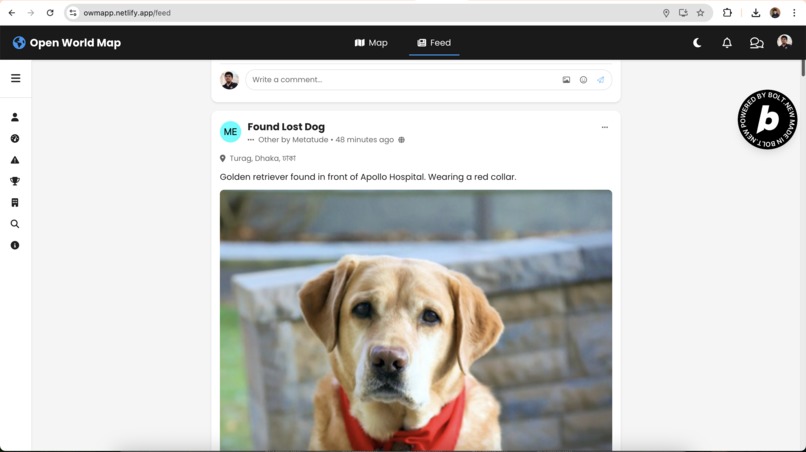
Feed
-
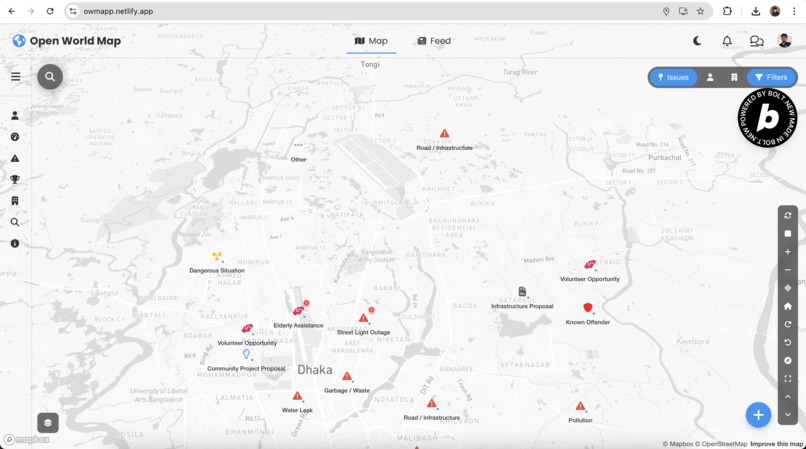
Light Mode
-
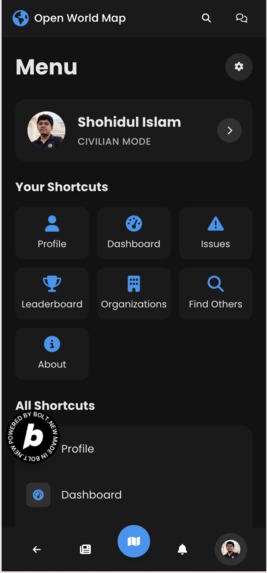
-
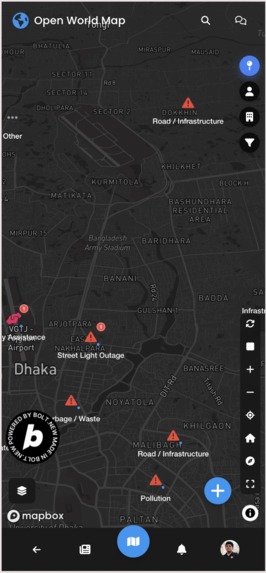
-
Inspiration
In 2020, during the peak of the COVID-19 pandemic, I saw how many people silently struggled — needing help but unable or afraid to ask for it. Meanwhile, others wanted to help but had no idea who needed support or where to go.
That’s when the idea for Open Letter Map was born — a way to put help requests on a map so responders could act fast. In 2025, I brought this vision to life and reimagined it as Open World Map – Call for Heroes for the Bolt.new hackathon.
What it does
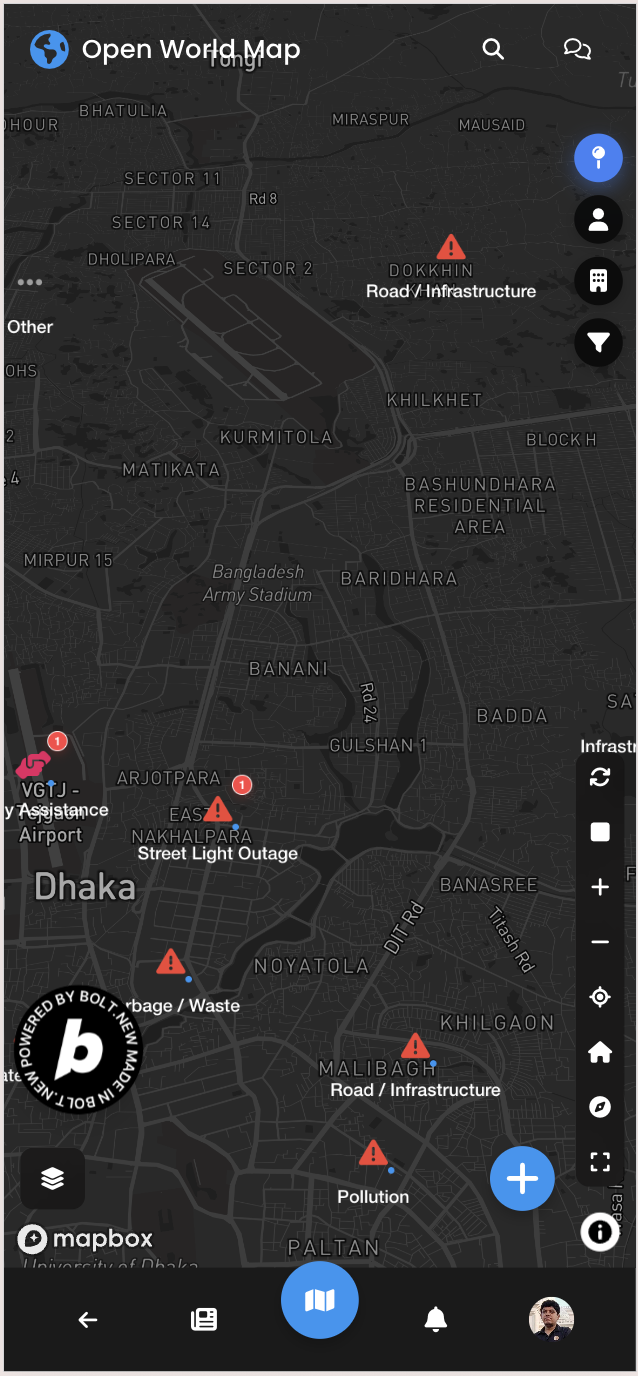
Open World Map is a real-time, location-based social platform where:
- Civilians can issue help requests or report local issues.
- Heroes (volunteers or skilled individuals) can respond based on their abilities and proximity.
- Organizations can coordinate support at scale.
Core features:
- Drop issue markers on the map
- Request or offer help with optional visibility
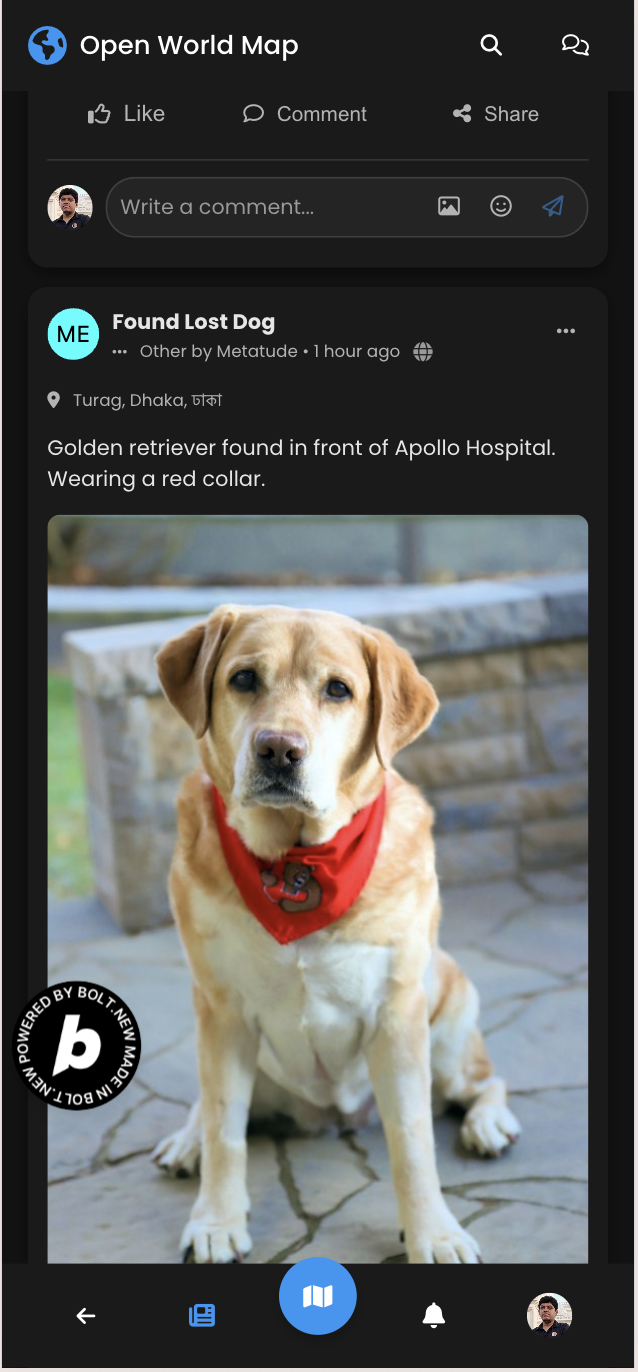
- Like, comment, and chat on issues and updates
- Post statuses and mission logs like a social feed
- View hero profiles with skills, missions, and reputation
How we built it
- Frontend: Angular, built primarily in Bolt.new and localhost Cursor (for debugging)
- Map: Mapbox GL JS
- Social Features: Status posts, comments, and chat simulation
- Cloudinary: image hosting
- State & storage: BehaviorSubjects + LocalStorage
- Backend: Supabase (for auth, data, and real-time sync)
- Deployment: Netlify
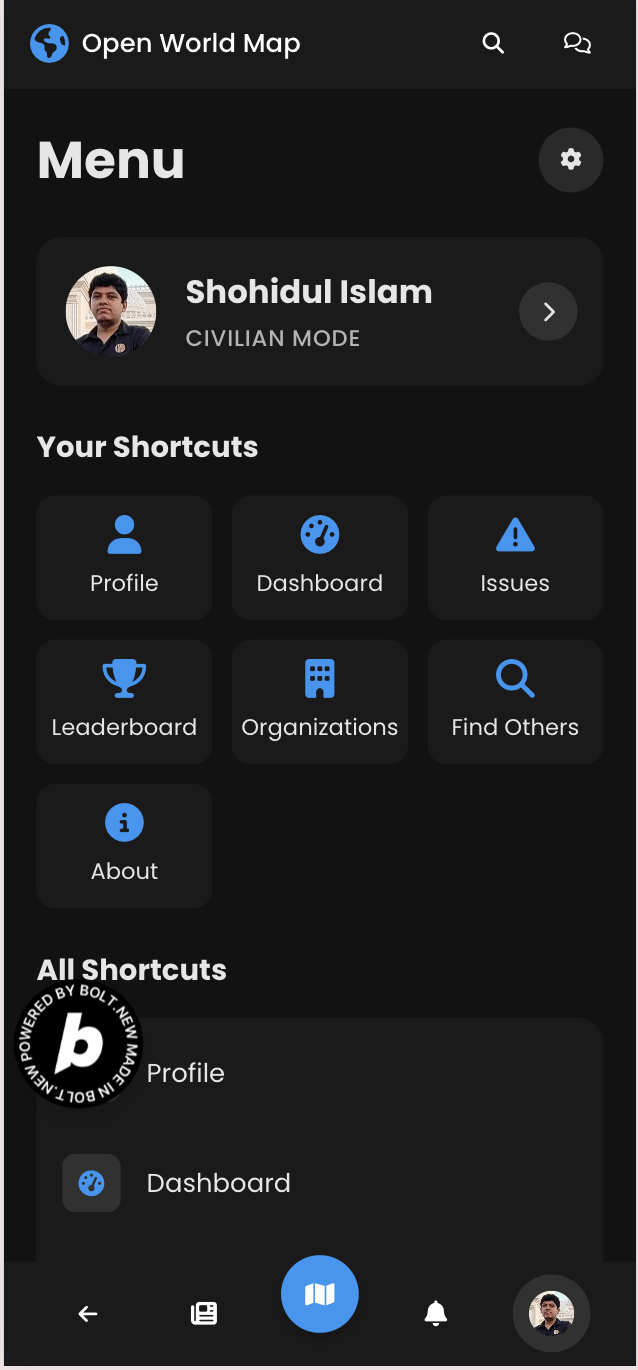
- PWA: install on mobile from browser, use like mobile app
The app is mobile-friendly, supports real-time updates, and can scale to multiple types of map-based interactions.
Challenges we ran into
- Designing a clean and intuitive map UI on limited screen space
- Handling user verification and privacy while keeping help requests visible (future)
- Managing live map updates and markers with performance in mind
- Making sure it works smoothly even on slow connections or local setups
Accomplishments that we're proud of
- Turned a pandemic-era idea into a real, working app
- Merged map-based civic action with social network dynamics
- Implemented role-based interaction: civilians, heroes, and organizations
- Built a dynamic map interface that feels light and responsive
- Created a fully functional MVP in a single-prompt challenge on Bolt.new
What we learned
- How to build real-time, map-driven UIs that feel social and meaningful
- How to use Supabase for auth and live updates without over-engineering
- That meaningful apps don’t just share data — they connect people
- How to use Angular + Bolt efficiently under hackathon pressure
What's next for Open World Map – Call for Heroes
- Add support for smart commute, shared rides, and safe zones
- Add a social feed dashboard for public updates and community stories
- Let users verify accounts and build reputation based on completed help missions
- Enable media uploads (photos, audio) with help requests
- Turn the app into a PWA with offline support
- Build a global heatmap of impact — visualizing where help is flowing
Built With
- angular.js
- bolt.new
- cloudinary
- mapbox
- netlify
- node.js
- supabase

Log in or sign up for Devpost to join the conversation.