-
-
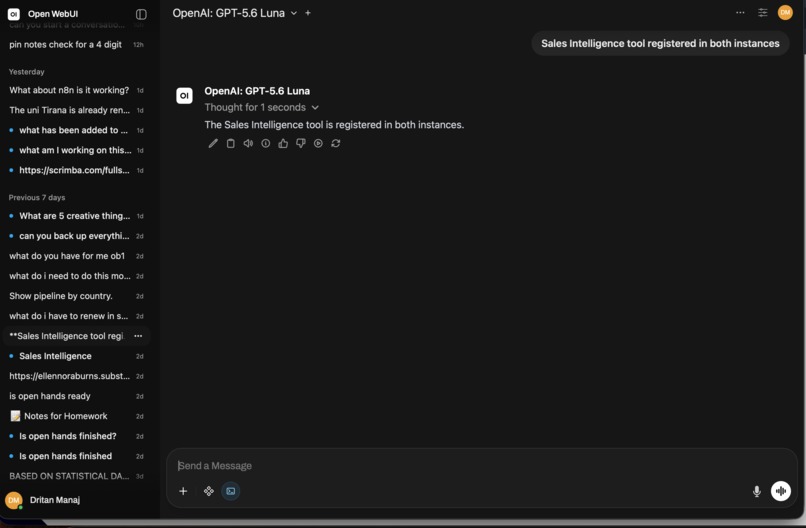
sales intel
-
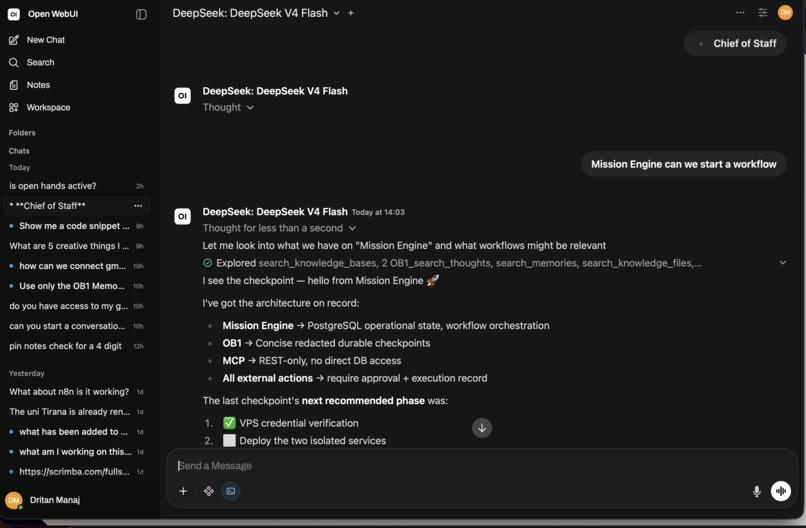
chief of staff
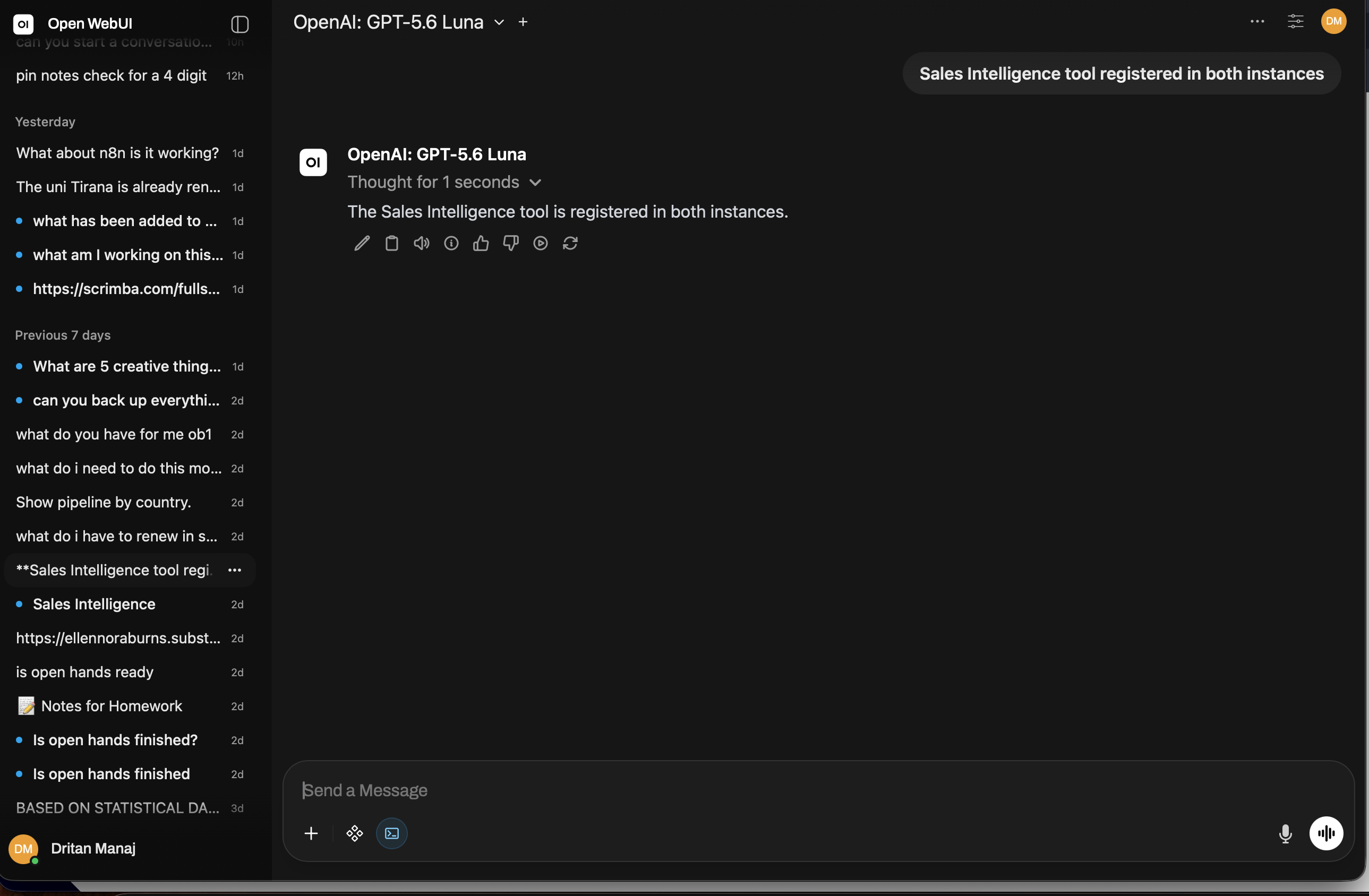
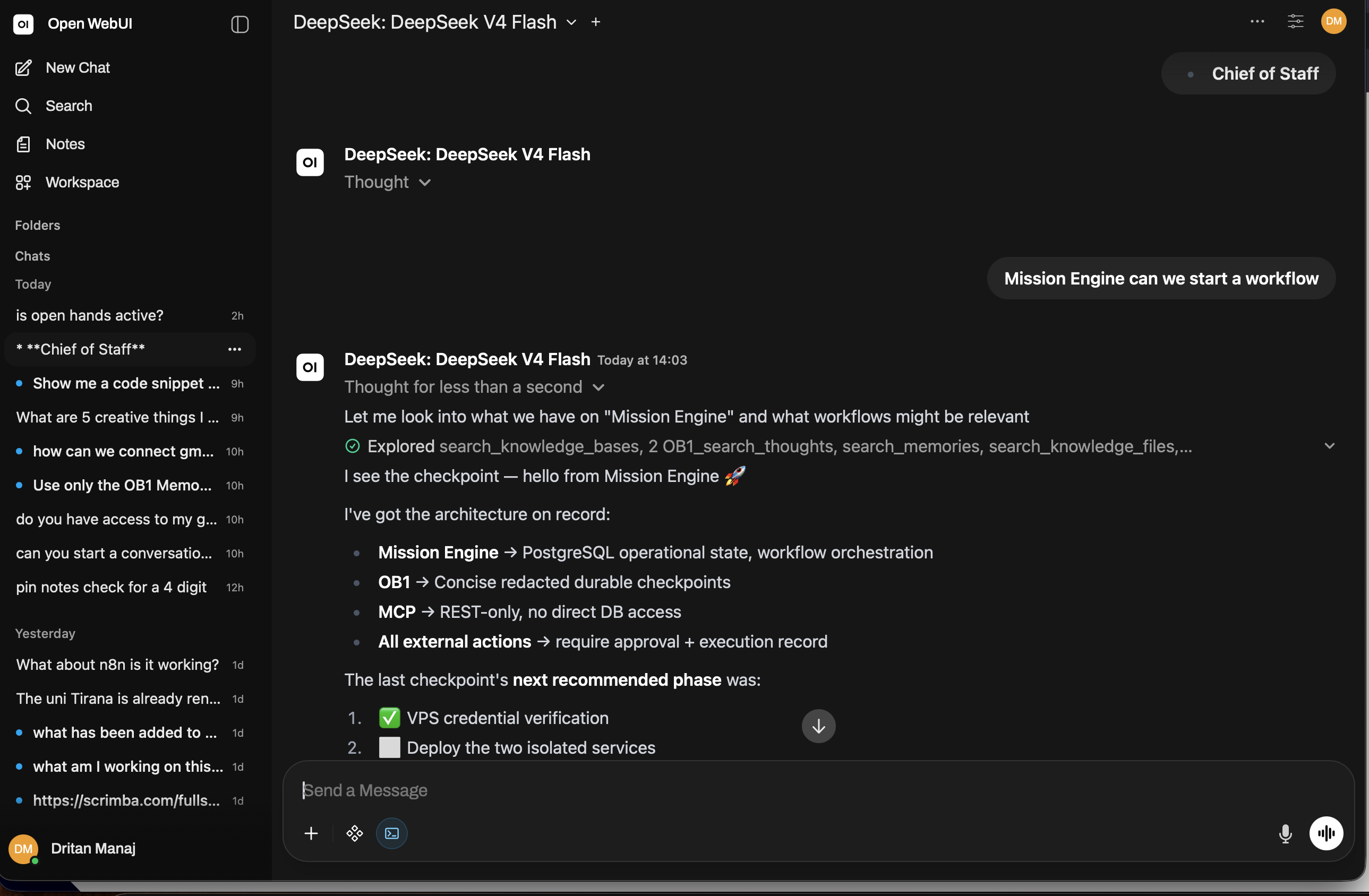
Open University Intelligence (OUI)
Inspiration
Artificial Intelligence is transforming higher education, but universities are adopting it in fragmented ways. Faculty use different AI tools than students, administrators rely on disconnected systems, and valuable institutional knowledge remains locked away in documents, SharePoint sites, learning management systems, and databases.
Having worked closely with universities across Europe, we saw the same challenge repeatedly: institutions don’t need another chatbot—they need a trusted AI platform that connects their people, knowledge, and workflows while keeping their data secure.
That vision inspired Open University Intelligence (OUI)—the AI operating system for higher education.
⸻
What it does
OUI provides a single AI workspace where universities can securely interact with their institutional knowledge, automate repetitive tasks, and collaborate with specialized AI agents.
The platform acts as an intelligence layer above existing university systems rather than replacing them. Users can ask questions, retrieve trusted information, generate content, automate workflows, and access role-specific AI assistants for teaching, research, admissions, student services, and administration—all through one interface.
⸻
How we built it
We built OUI using a modular, self-hosted architecture designed for flexibility and scalability.
The platform combines Open WebUI as the user interface, a custom FastAPI AI Gateway for intelligent model routing, Docker Compose for deployment, PostgreSQL and Qdrant for structured and vector data, Redis for runtime services, and n8n for workflow automation.
Instead of relying on a single LLM, OUI supports multiple AI providers through OpenAI-compatible APIs, dynamically routing requests to the most appropriate model based on performance, capability, or cost. This architecture keeps the platform provider-agnostic and future-proof.
⸻
Challenges we ran into
The biggest challenge was not integrating AI models—it was orchestrating an entire ecosystem of services into a seamless user experience.
We had to design reliable model routing, build secure authentication across multiple services, integrate long-term memory and retrieval, manage workflow automation, and ensure every component could scale independently. Balancing enterprise-grade flexibility with a simple user experience required constant iteration.
⸻
Accomplishments that we’re proud of
- Built a fully self-hosted AI platform for higher education.
- Developed a custom AI Gateway capable of routing requests across multiple LLM providers.
- Created a modular architecture that universities can deploy and extend without vendor lock-in.
- Integrated retrieval, workflow automation, and specialized AI agents into a single workspace.
- Designed the platform to complement existing university systems instead of replacing them.
⸻
What we learned
Building OUI reinforced that successful AI adoption is far more about orchestration than individual models.
Universities need trusted knowledge, governance, interoperability, and seamless workflows just as much as they need powerful language models. By keeping the platform modular and provider-agnostic, institutions can continuously adopt new AI capabilities without rebuilding their infrastructure.
⸻
What’s next for Open University Intelligence (OUI)
Our next milestone is transforming OUI from an intelligent assistant into a complete AI ecosystem for universities.
We’re expanding our library of specialized AI agents, integrating directly with Learning Management Systems (LMS), Student Information Systems (SIS), and research platforms, enhancing workflow automation, and introducing governance, analytics, and collaboration features.
Our vision is to become the trusted AI operating system powering every department across higher education—helping universities innovate faster while maintaining full ownership of their data, security, and academic integrity.

Log in or sign up for Devpost to join the conversation.