-
-
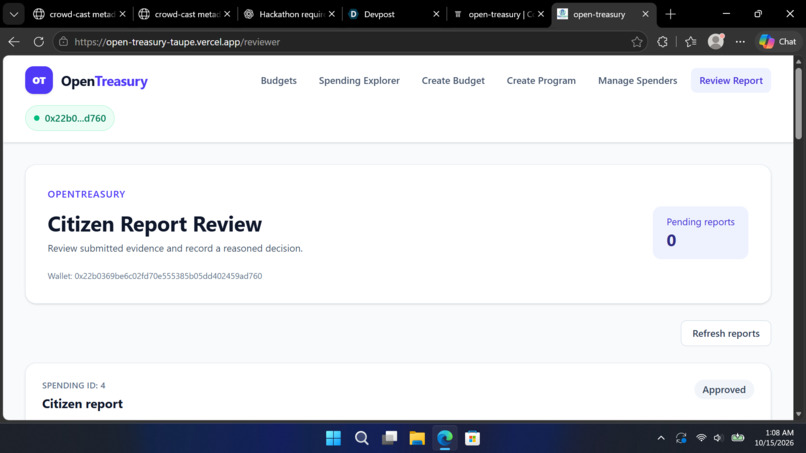
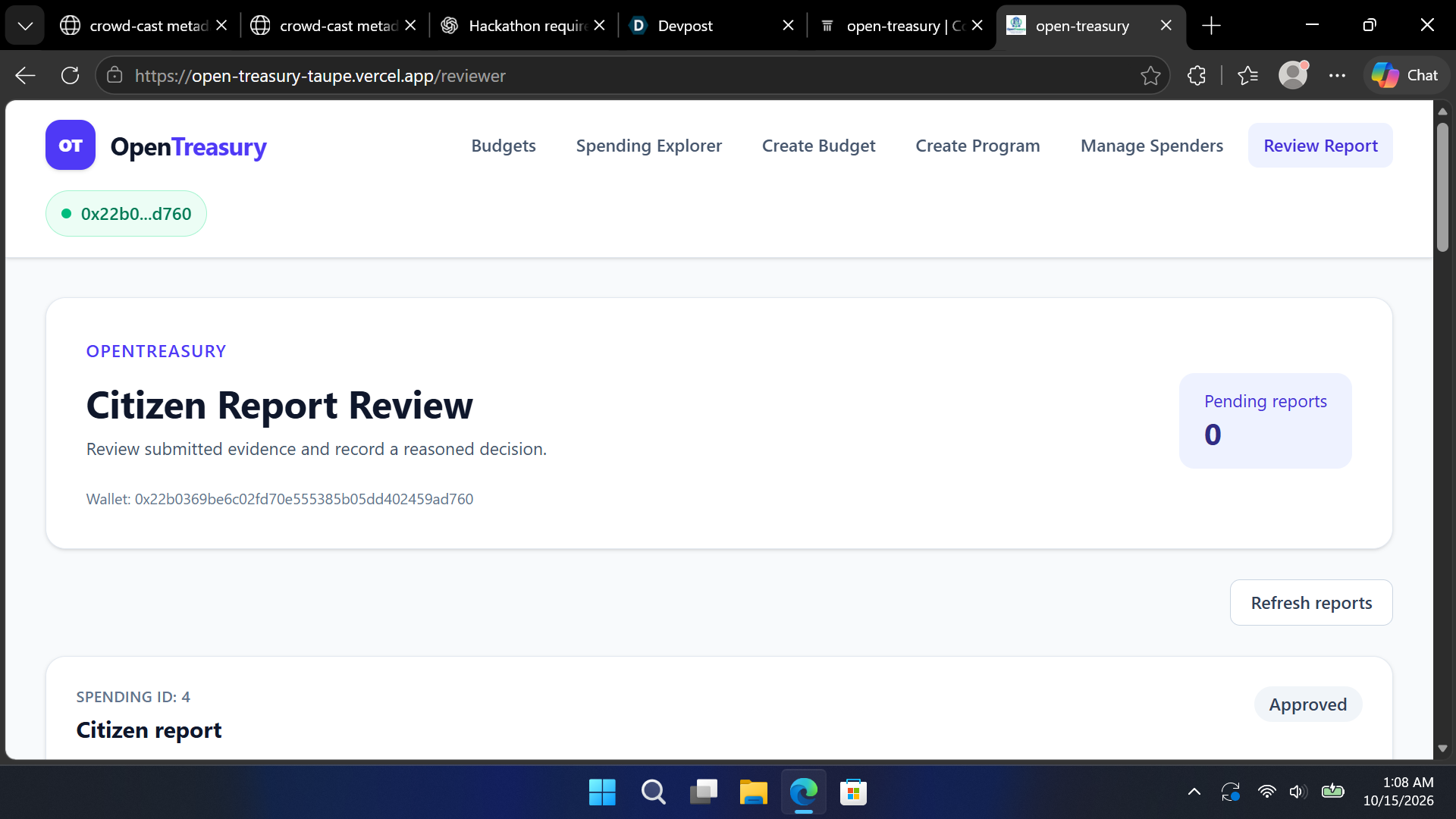
Citizen Report Review Dashboard
-
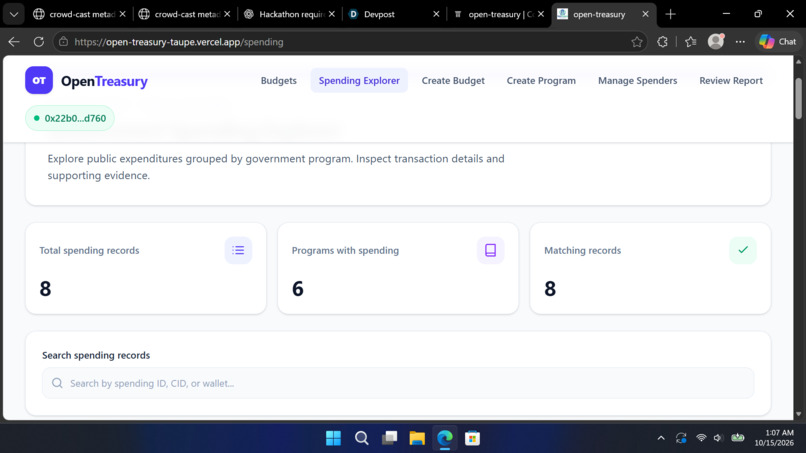
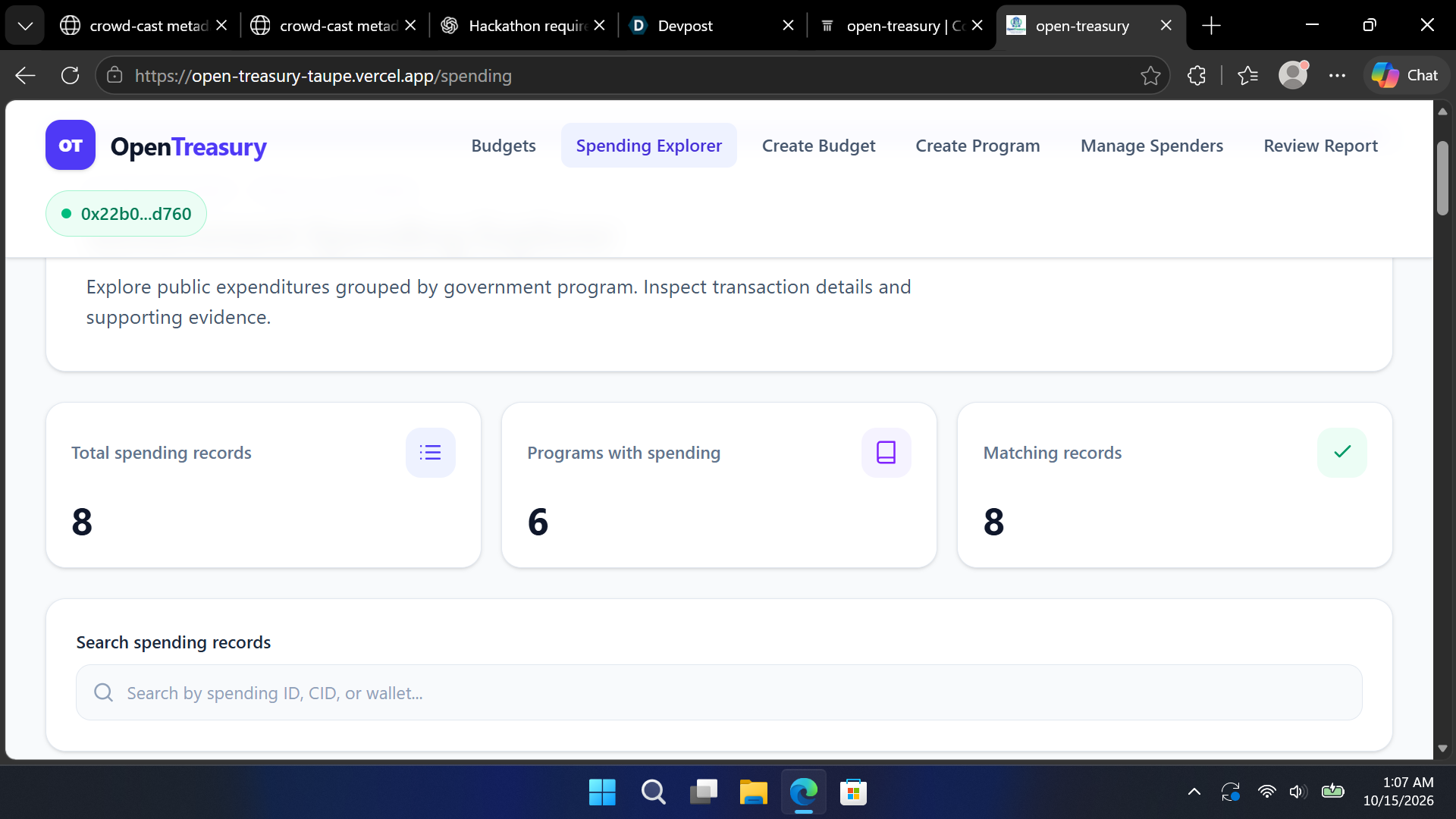
Spending Explorer
-
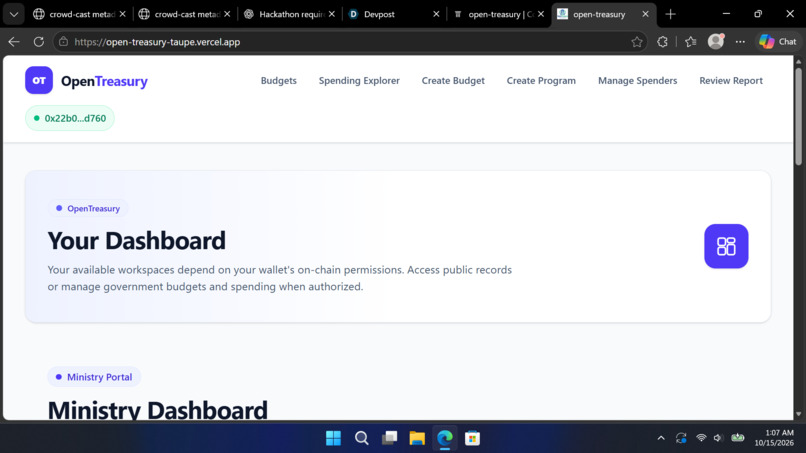
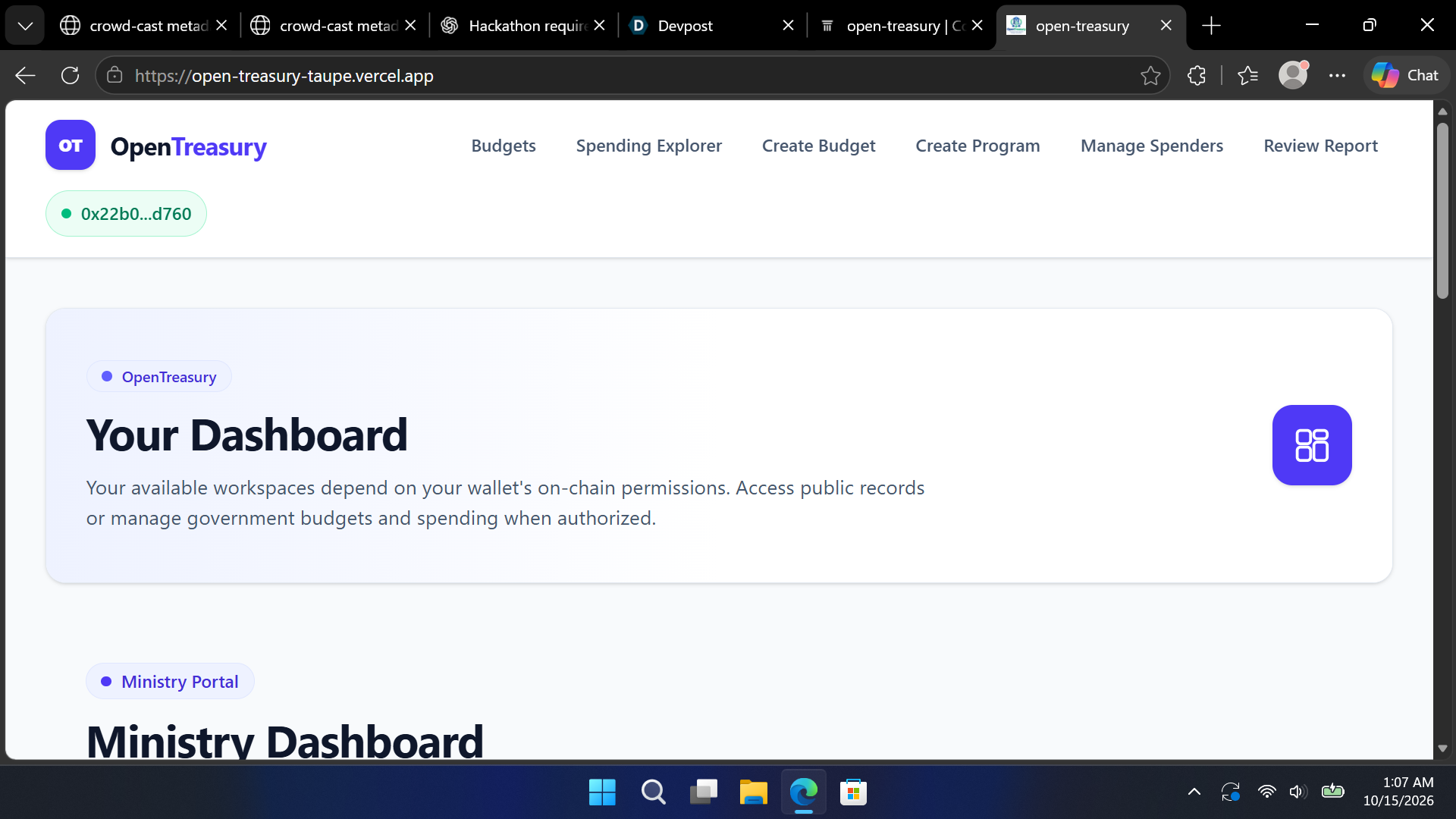
Main Dashboard
-
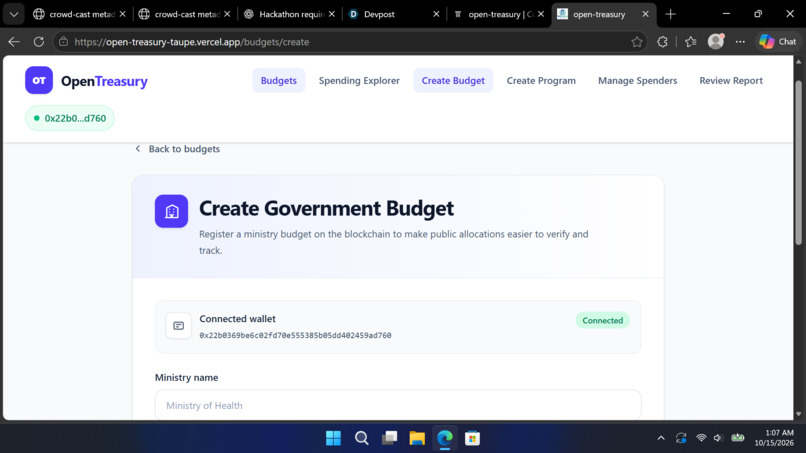
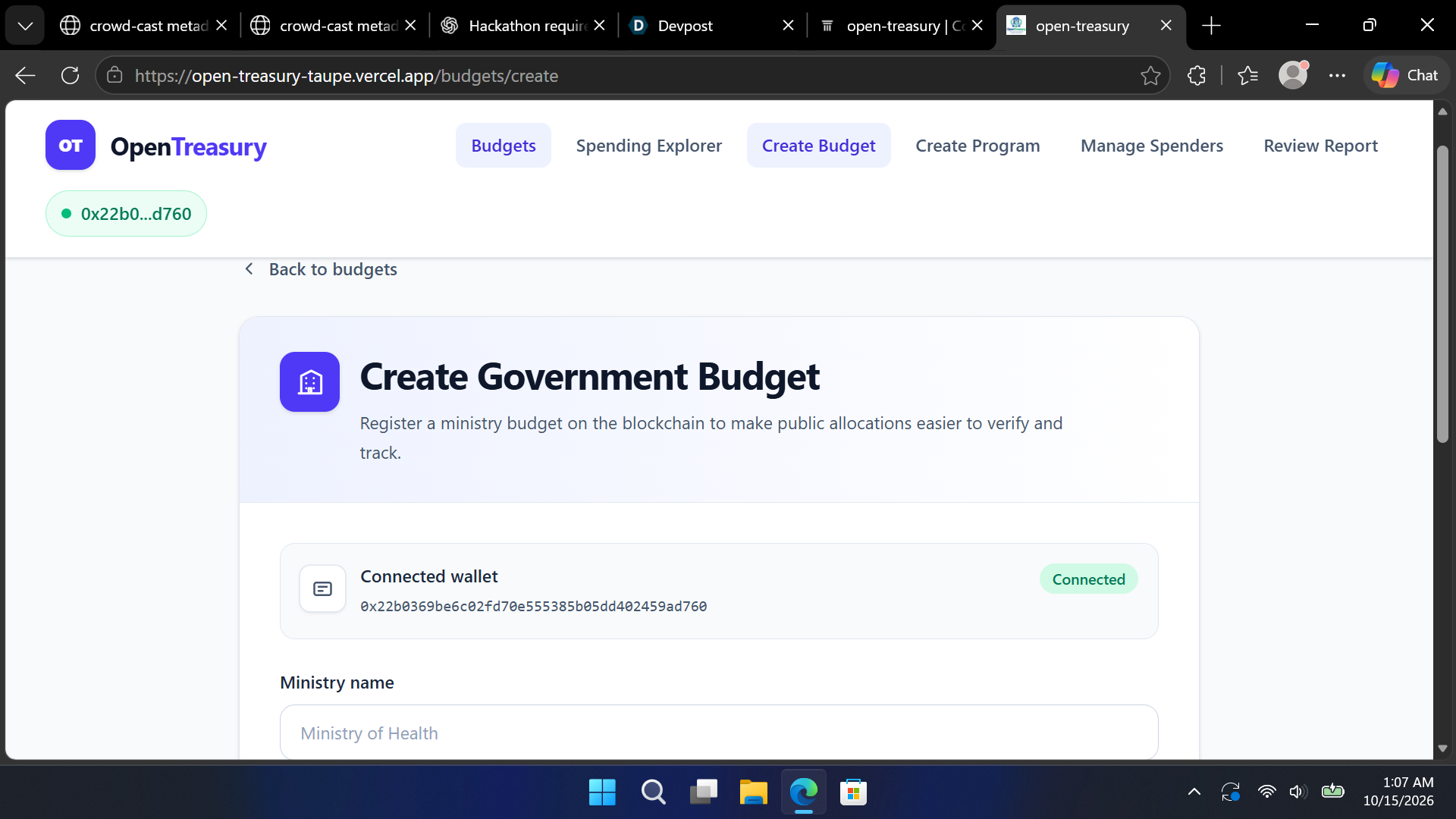
Climate Budget Creation
Inspiration
Climate change requires significant investment in renewable energy, reforestation, clean water, and other environmental initiatives. However, ensuring that climate funds are spent responsibly and that funded projects deliver measurable results remains a major challenge. We were inspired to build open-treasury, a blockchain-powered platform that brings transparency and accountability to climate finance. Our goal is to help citizens, public institutions, donors, and project stakeholders follow how climate funds are allocated, disbursed, and spent.
What it does
open-treasury extends the idea of transparent public budgeting to climate-related projects. It aims to make funding information accessible and provide a verifiable record of project spending and environmental progress.
features include: -Transparent fund allocation: Record climate-project budgets and allocations on the blockchain. -Accountable spending: Track spending by authorized participants and associate transactions with supporting evidence. -Evidence storage: Use IPFS to store supporting documents, receipts, and project reports. -Public transparency: Enable citizens and stakeholders to explore budgets, spending records, and project information. -Environmental milestone tracking: Support tracking project outcomes such as trees planted, renewable energy capacity installed, and clean-water infrastructure delivered. -The goal is to connect financial transparency with measurable environmental outcomes so that climate initiatives can be monitored more effectively.
How we built it
open-treasury blockchain-based government budget transparency project.
The platform uses Solidity smart contracts to manage budget records, program allocations, authorized participants, and spending records. We use React and Vite for the frontend, enabling users to interact with the platform through a web interface.
Challenges we ran into
One major challenge was designing a system that balances public transparency with controlled access to sensitive operations. We needed to distinguish between public users, authorized ministries, and authorized spenders while maintaining reliable records of financial activity.
Another challenge was connecting blockchain transactions with supporting evidence stored outside the blockchain. Smart contracts are useful for maintaining verifiable records, but documents and environmental claims require additional validation.
We also recognized that recording a payment does not automatically prove that a climate project has achieved its environmental goals. Meaningful impact tracking requires credible evidence, clearly defined milestones, and appropriate verification procedures.
What we learned
Building OpenTreasury taught us how to design smart contracts for budget management, integrate blockchain transactions into a React application, and connect decentralized evidence storage with backend services.
open-treasury build by applying financial transparency to climate action. We learned that blockchain can make records more auditable, but trustworthy climate finance also requires reliable data, independent verification, and meaningful environmental indicators.
What's next for open-treasury
Our next steps are to develop and demonstrate climate-specific project tracking, introduce environmental milestone reporting, and explore AI-assisted evidence analysis.
Our vision is to make climate finance easier to audit, environmental progress easier to understand, and funding decisions more accountable to the people and communities they are intended to benefit.
Built With
- blockchain
- climate-tech
- ethereum
- express.js
- foundry
- ipfs
- javascript
- pinata
- react
- smart-contracts
- solidity
- supabase
- sustainability
- vite
- zustand

Log in or sign up for Devpost to join the conversation.