-
-
Part 1
-
Part 2
-

Part 3

Inspiration
The inspiration for this project came from the realization that our DNA is essentially the "source code" of life. Just as a computer's binary can be corrupted by a "bit-flip," human DNA is constantly "hacked" by environmental stressors like cosmic radiation and terrestrial toxins. I wanted to bridge the gap between high-level molecular biology and accessible data science to help NGOs visualize genetic health risks in under-resourced communities.
What it does
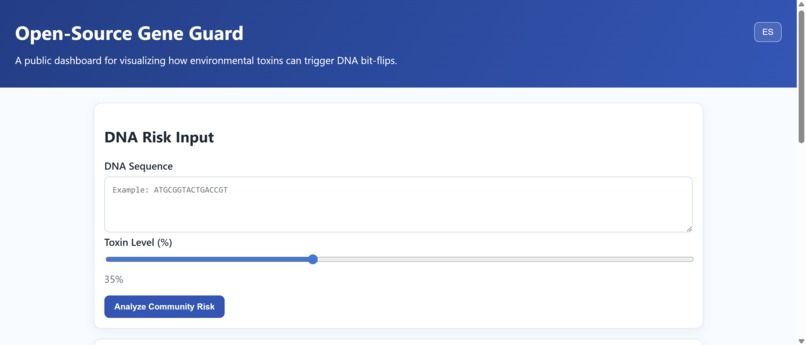
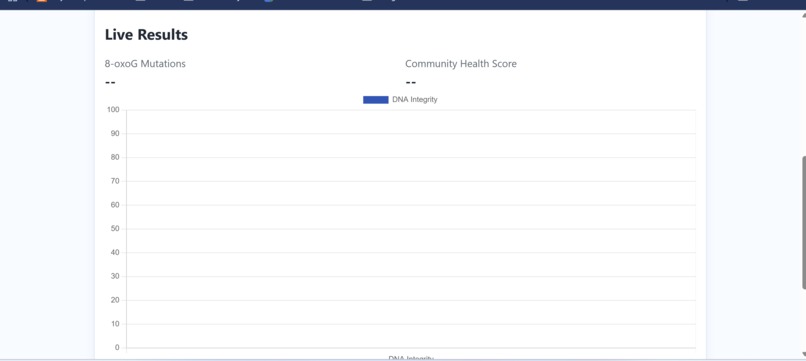
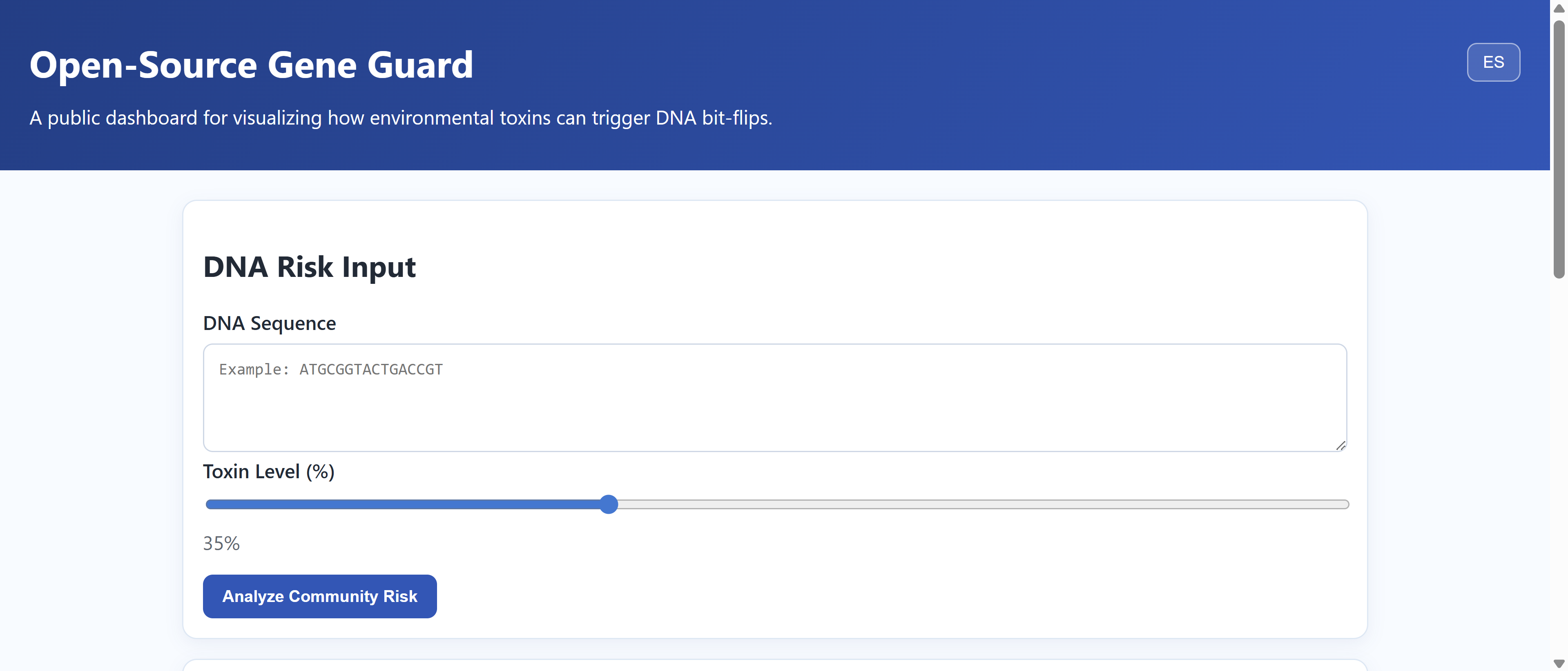
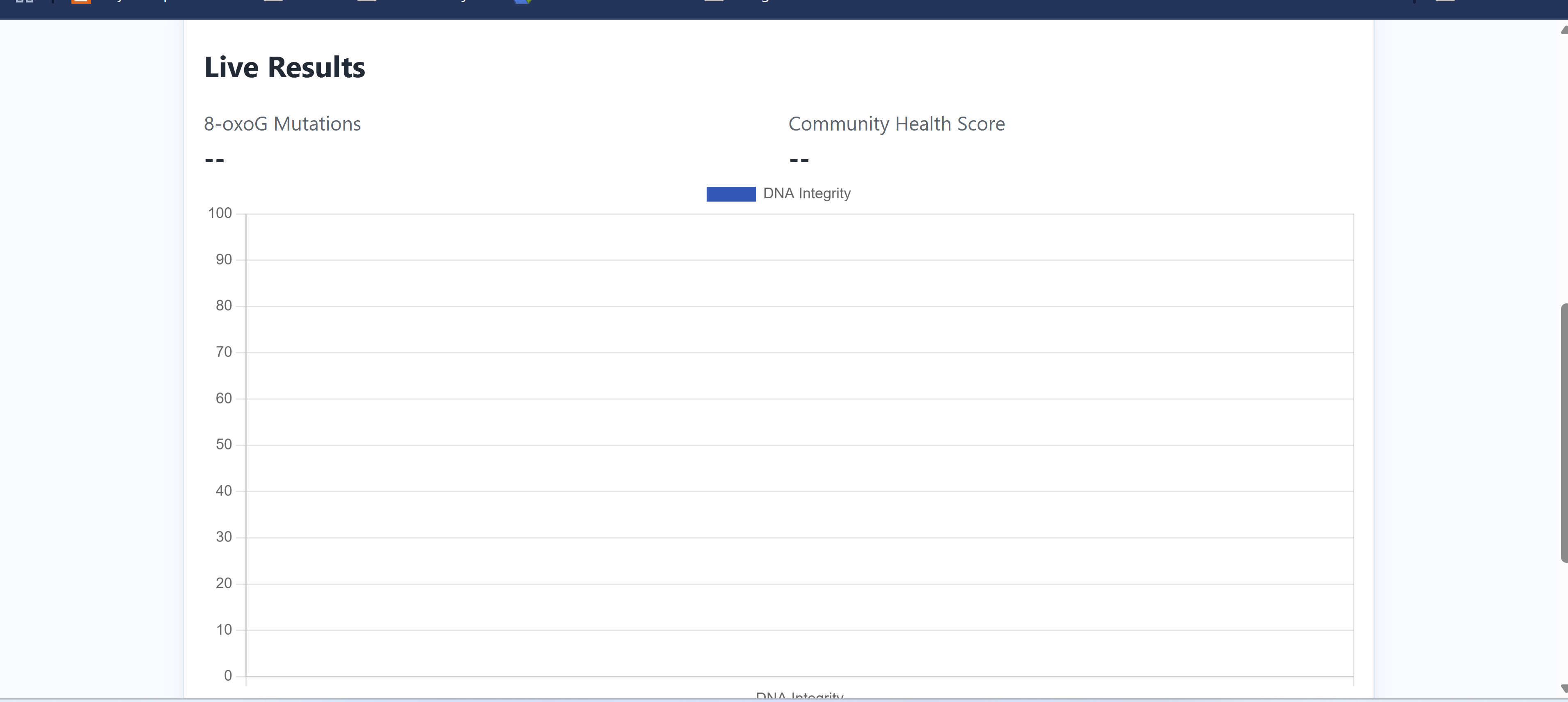
Open-Source Gene Guard is a bilingual (English/Spanish) web application that simulates the impact of environmental toxins on DNA integrity. Users can input specific toxin levels, and the Python-based backend calculates the probability of 8-oxoG (8-oxoguanine) lesions—the most common form of oxidative DNA damage. The app provides a "Community Health Score" and a real-time data visualization of genetic "data corruption."
How we built it
The project was built using a "Full-Stack" approach:
Backend: Python and Flask handle the stochastic mutation logic, specifically targeting the low oxidation potential of Guanine.
Frontend: HTML5 and SCSS were used to create a clean, "UN-Blue" branded interface.
Data Vis: Chart.js powers the dynamic integrity graphs.
Bilingual Logic: A custom JSON-based translation system allows the entire UI to toggle between English and Spanish, ensuring global accessibility for NGOs.
Challenges we ran into
The biggest challenge was translating complex chemical concepts—like "oxidation potential"—into a simplified algorithm that could run in a web browser. I also had to ensure the 8-oxoG mutation logic was scientifically grounded while remaining performant. Debugging the Flask routing for the bilingual toggle required a deep dive into how web sessions handle language states.
Accomplishments that we're proud of
I am incredibly proud of creating a tool that is both scientifically accurate and accessible. Successfully implementing a "Language Toggle" was a major win, as it reflects my commitment to the UN Sustainable Development Goal 10 (Reduced Inequalities). Seeing a 7th-grade project move from a simple terminal script to a functional web dashboard was a huge milestone.
What we learned
Through this project, I learned the fundamentals of Bioinformatics—how to treat biological sequences as data strings. I also improved my full-stack development skills, specifically in linking a Python backend to a responsive frontend. Most importantly, I learned that coding is a powerful tool for humanitarian advocacy.
What's next for Open-Source Gene Guard
The next step is to integrate real-world environmental data via APIs (like air quality or radiation sensors) to provide live "Genetic Risk" maps for specific geographic regions. I also plan to expand the library of "Molecular Targets" to include more than just Guanine, creating a comprehensive "Firewall" for human health.
Built With
- chart.js
- flask
- github
- google-fonts
- html5
- javascript
- json
- openweathermap
- python
- python-3.x
- render
- scss
- vercel

Log in or sign up for Devpost to join the conversation.