-
-
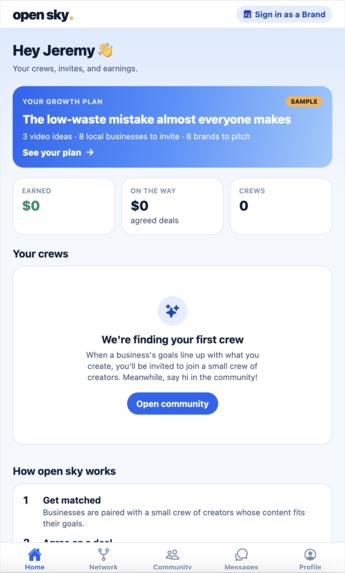
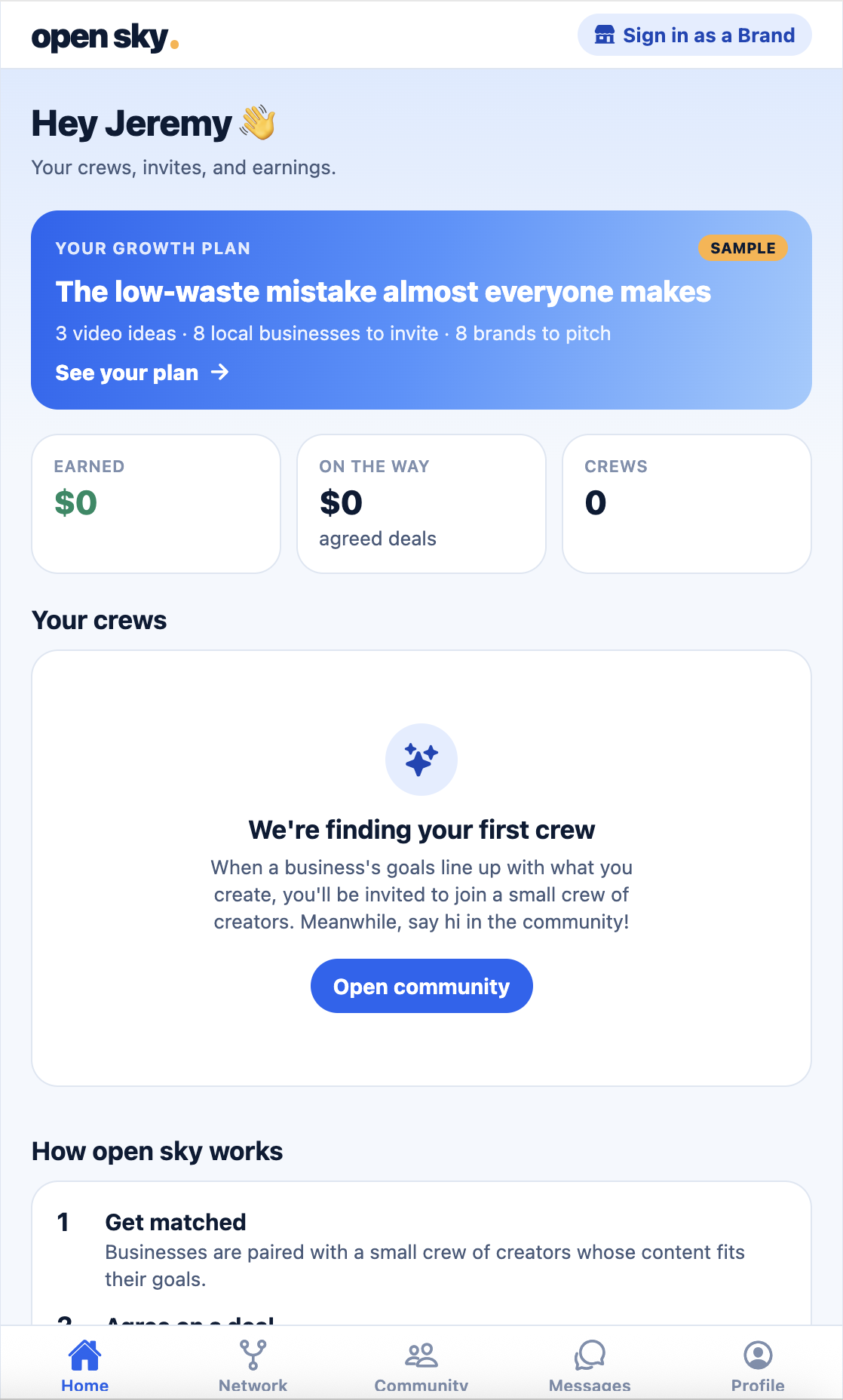
Check your personal dashboard after signing in.
-
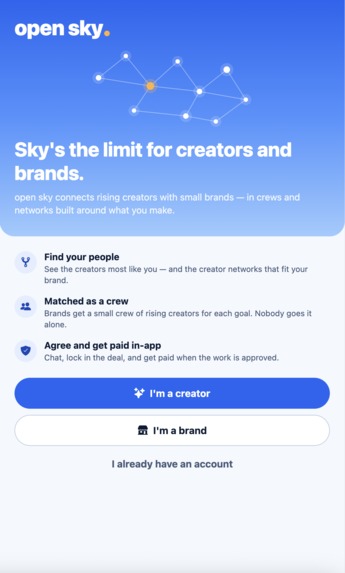
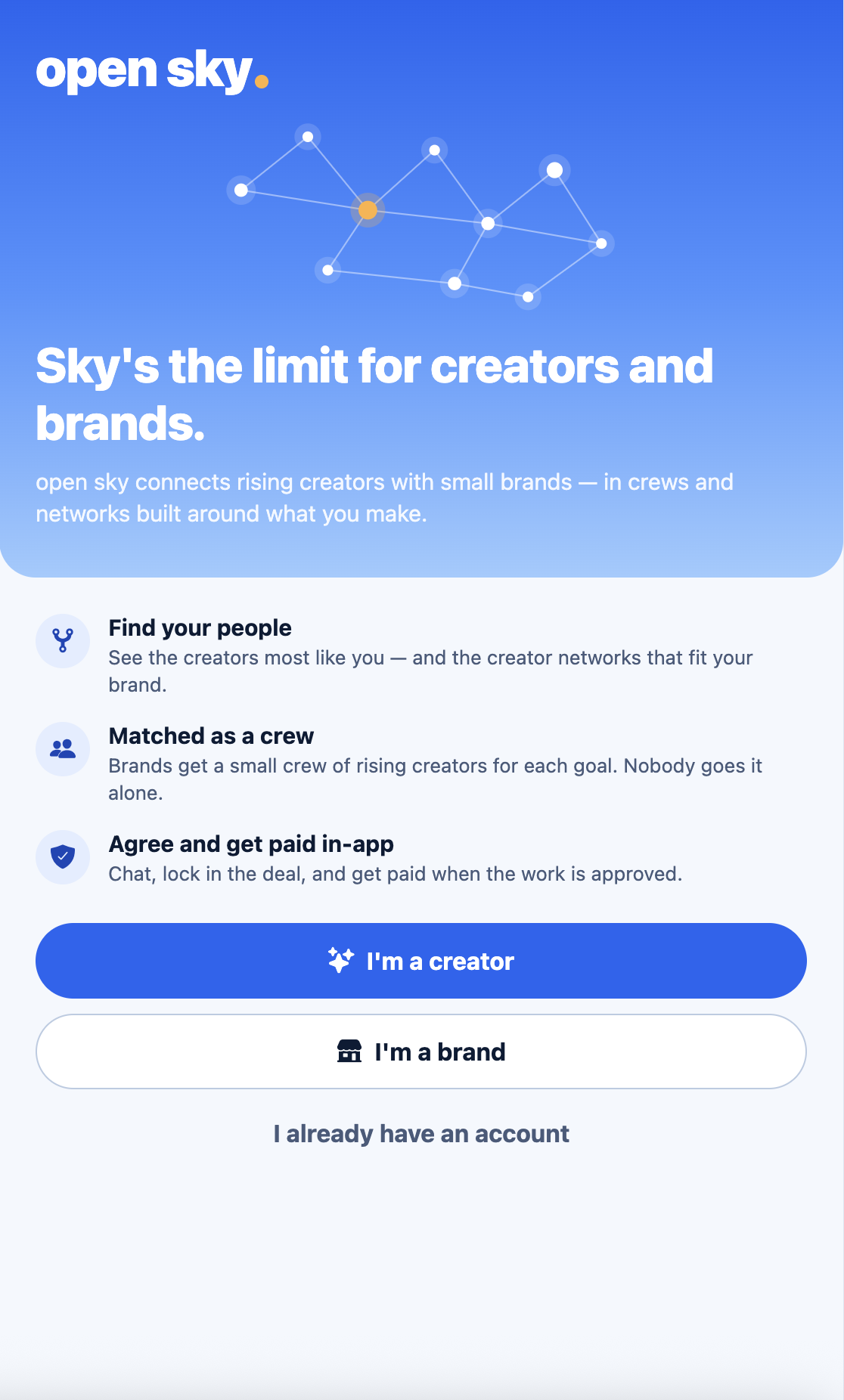
Sign in as a creator or brand.
-
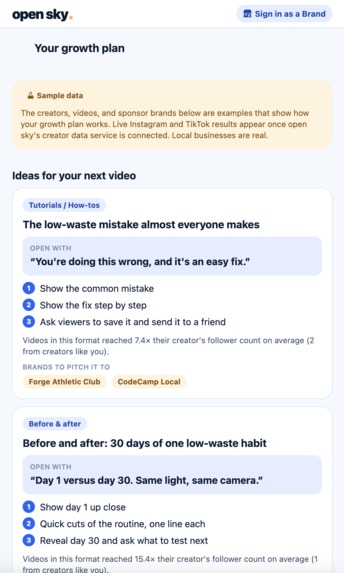
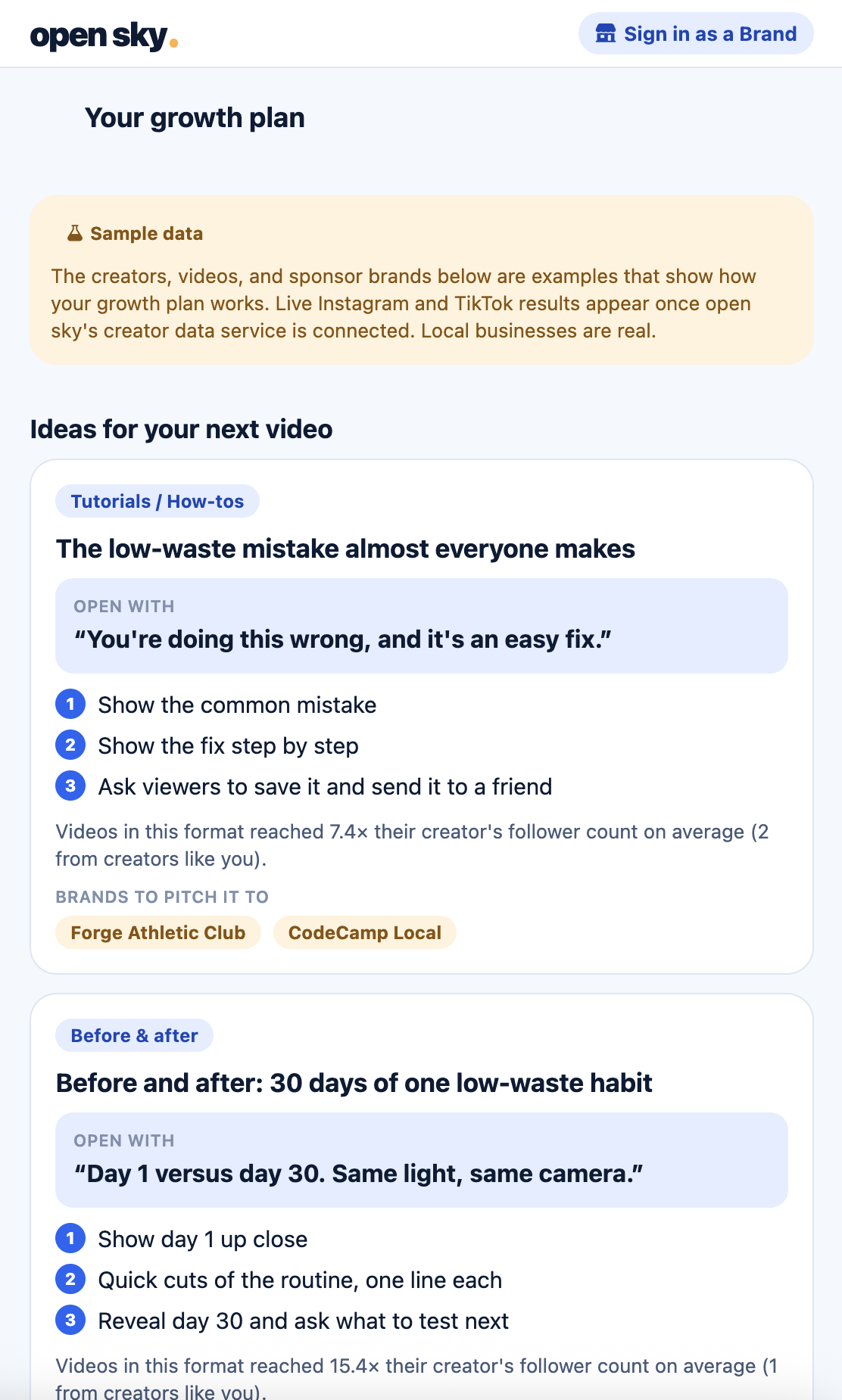
Recommended content ideas based on scraping from similar creators with brand deals using the Modash API.
-
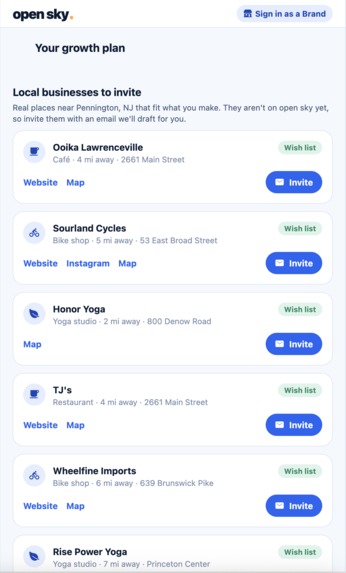
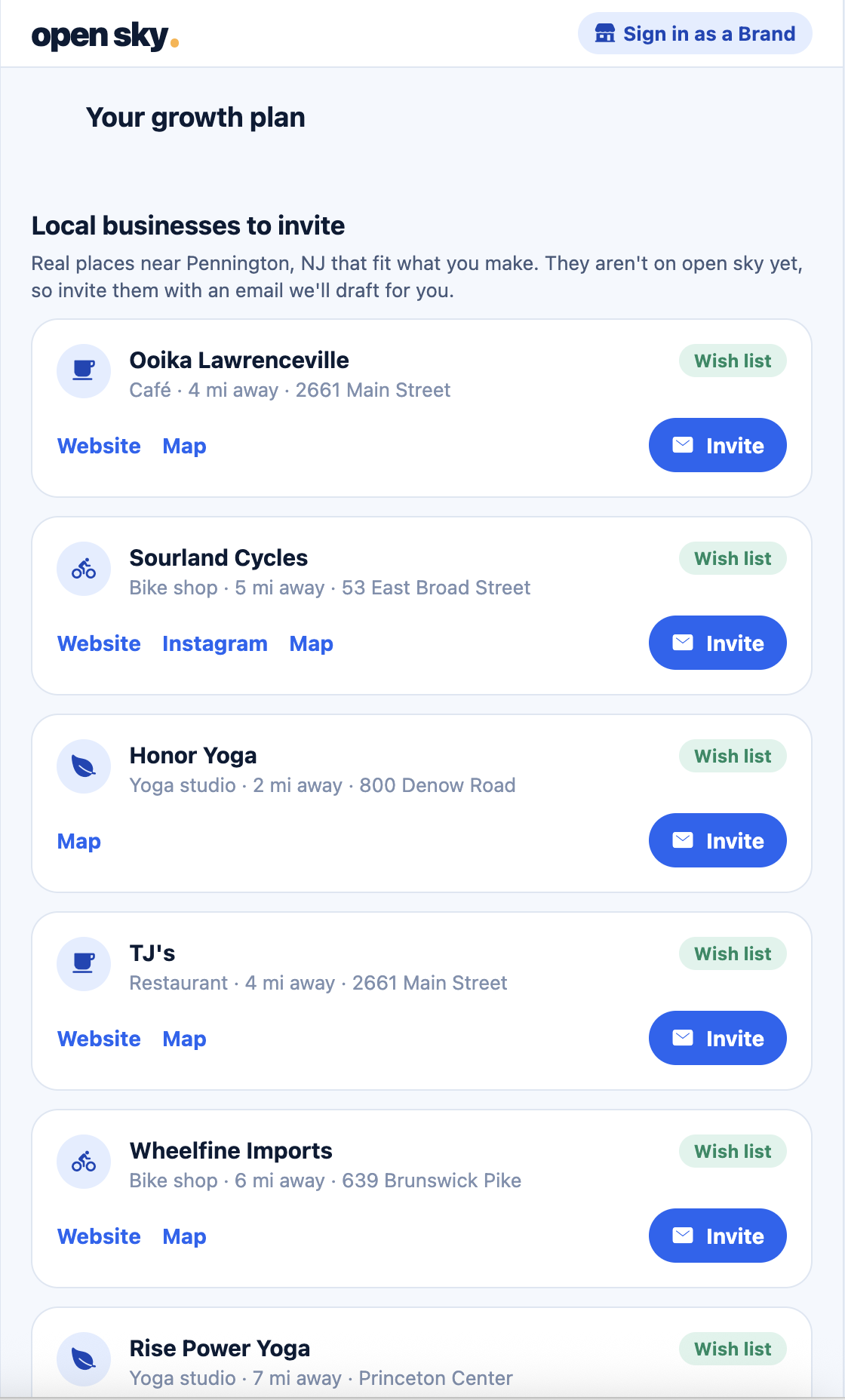
Reach out to local brands to invite them back to the app.
-
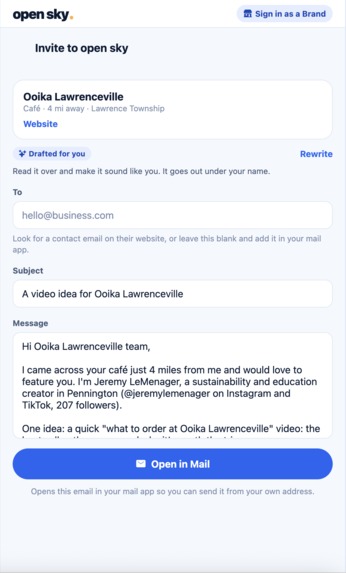
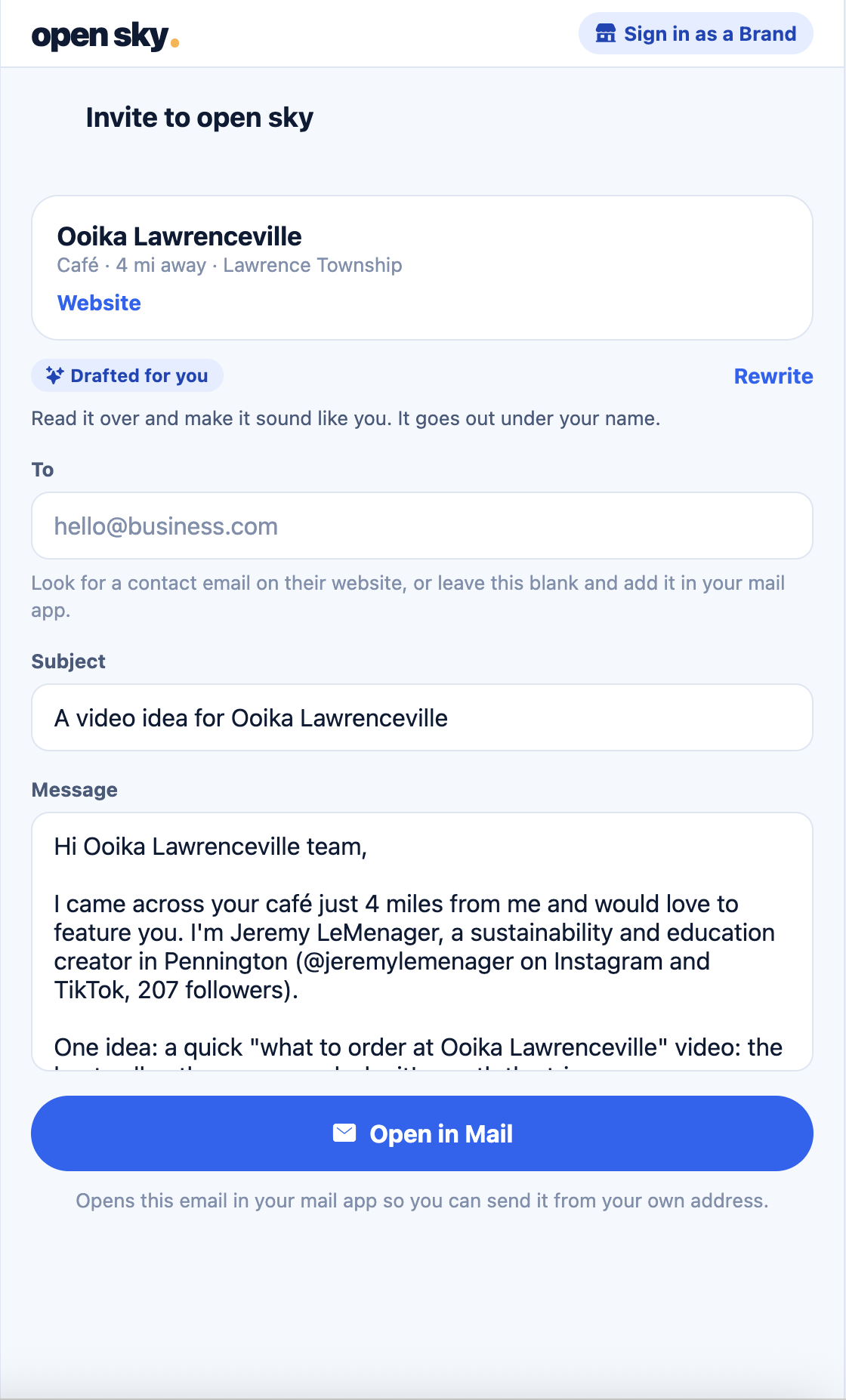
Have your email draft written for you to save time.
-
Want to try it yourself? Just take a picture of this QR code.
Inspiration
Most creators will never get a brand deal. Brands chase follower counts, so a creator with 8,000 followers gets skipped, even though all 8,000 might live in the same city. To the new coffee shop down the street, that local audience is exactly what matters.
We kept seeing small creators wait on apps where businesses post the requests and creators can only apply. Most of those deals were a free meal for a post. We wanted to flip that:
- Help smaller creators grow, with advice from creators one or two levels ahead of them instead of from million-follower accounts.
- Make creators the ones who reach out. They find the shop, set the price, and own the relationship.
- Build a community, not just a tool. As creators land bigger deals, they form squads. Experienced creators lead and mentor, and they gain management experience along the way. Beginners get their first paid deals by joining a squad.
That became Open Sky: an AI business assistant that helps local creators turn influence into a business they own.
What we learned
-Small creators don't lack talent. They lack a reference point. Most of the creators we talked to had never charged for a collab because they didn't know what was fair.
-Shops care about customers, not views. A post with 40K views means little to a café owner. Thirty-eight people walking in with a discount code means a lot. So we built results tracking into the core loop.
-Peers are a better guide than stars. We rank shops using two kinds of signals: shop signals (newly opened, highly rated with few reviews, quiet on Instagram) and peer signals, meaning how often creators at your level closed deals with similar shops.
-A retainer can't just be "three posts a month." A single creator's audience saturates. The lasting value is content the shop reuses on its own channels, repeat customers, and fresh audiences from rotating squad creators.
How we built it
-Talking to real creators. We reached out to micro creators with 1K–50K followers to hear how they find deals, what they charge, and what frustrates them. -Competitor research. We studied Mustard, Joli, LocalCollab, DishPair, Beacons and Opportunities. Some already track restaurant visits or use data from similar creators, which pushed us to sharpen our position: creator-side and local.
- One shared spec. We wrote and revised a single product spec so everyone worked from the same version of the idea.
- Collaborating with AI. We used Claude to turn the spec into an interactive web prototype and our pitch deck, to rewrite pitches live inside the demo, and to stress-test our answers to hard judge questions.
- The prototype has: an algorithm that scrapes Instagram and Tiktok using Modash API to suggest content and local brands based on similar popular creators and brand deals, a profile creation section to inform the algorithm and connect with similar creators, a newsfeed and messaging platform to connect with like-minded brands and creators, an option to email suggested brands and invite them back to the app, a receipt-style results report and earnings dashboard for creators and brands, and the ability to join a crew of other creators to make a joint deal with a brand (this is great for small creators to get their foot in the door). (Note, as of now, data from the scraper API is mock data as Modash API requires a paid tier to work effectively)
Our business model is simple. We take 8% only when a creator gets paid.
Challenges we faced
-Getting creators and businesses onto the platform in the first place. Marketplaces have a chicken-and-egg problem. Our answer is that shops don't need to sign up. Creators find them through public map data and pitch them directly, so one creator brings many shops, and squads bring in more creators.
-Syncing everyone's opinions. Our team had different visions: local shops or online brands, which follower range, even the name. We settled debates with one test: *does a creator's local audience give them an edge here? If yes, it's in scope.
-Understanding the real pain point. It was easy to assume what creators wanted.
-Competing with larger platforms. Well-funded apps already connect creators and local businesses. We had to find what they structurally can't do. They're paid by businesses, so helping creators charge more works against their own customers. We're paid only when creators earn.
-Stress-testing the business model. Judges will ask what happens when an audience saturates, or when a creator skips us to avoid the fee. We answered both with ongoing value instead of lock-in: monthly results reports, billing, content planning, and squads that only work on the platform.

Log in or sign up for Devpost to join the conversation.