-
-
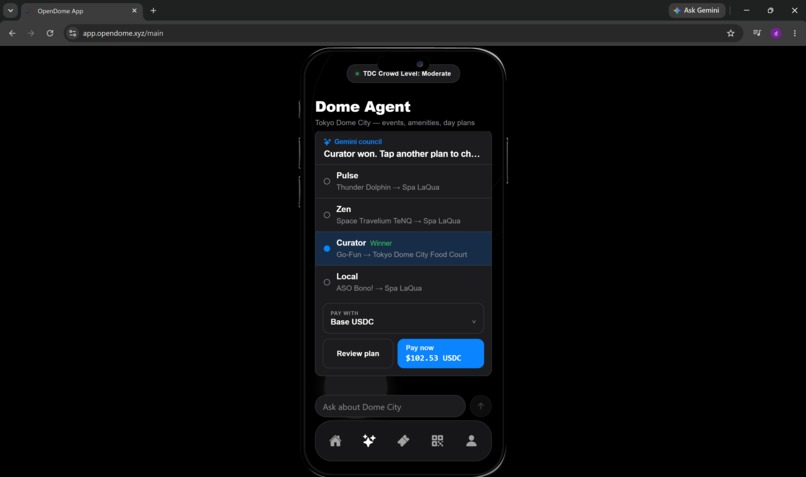
Agentic Flow
-
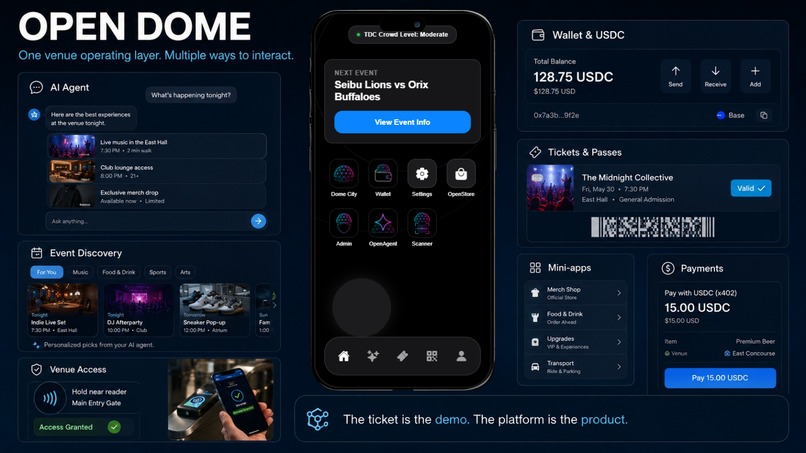
Main Services
-
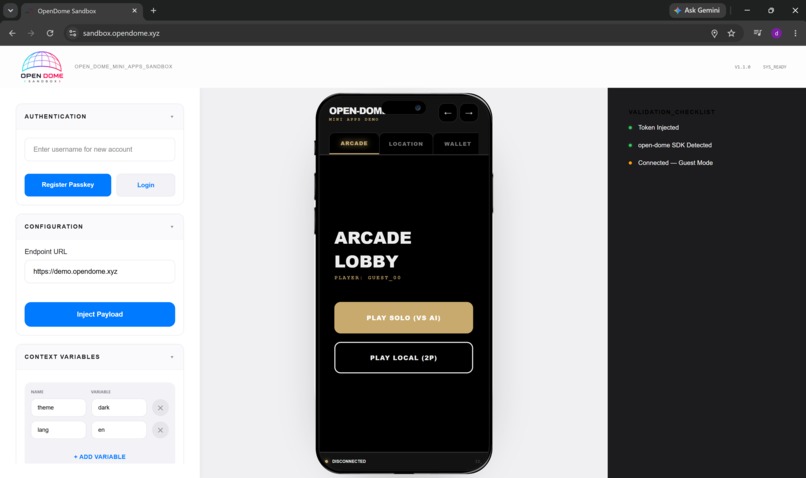
Sandbox
-
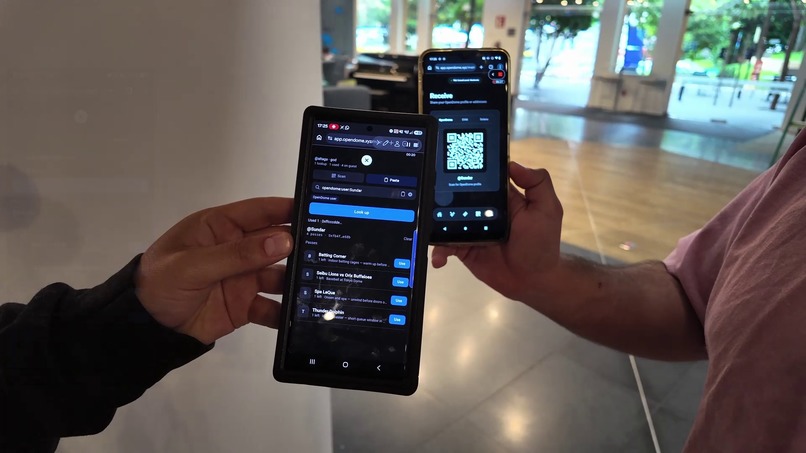
Real Capture
-
First Venue
-
Roadmap
Open Dome: Agentic Venue OS
What if you never had to navigate a venue again?
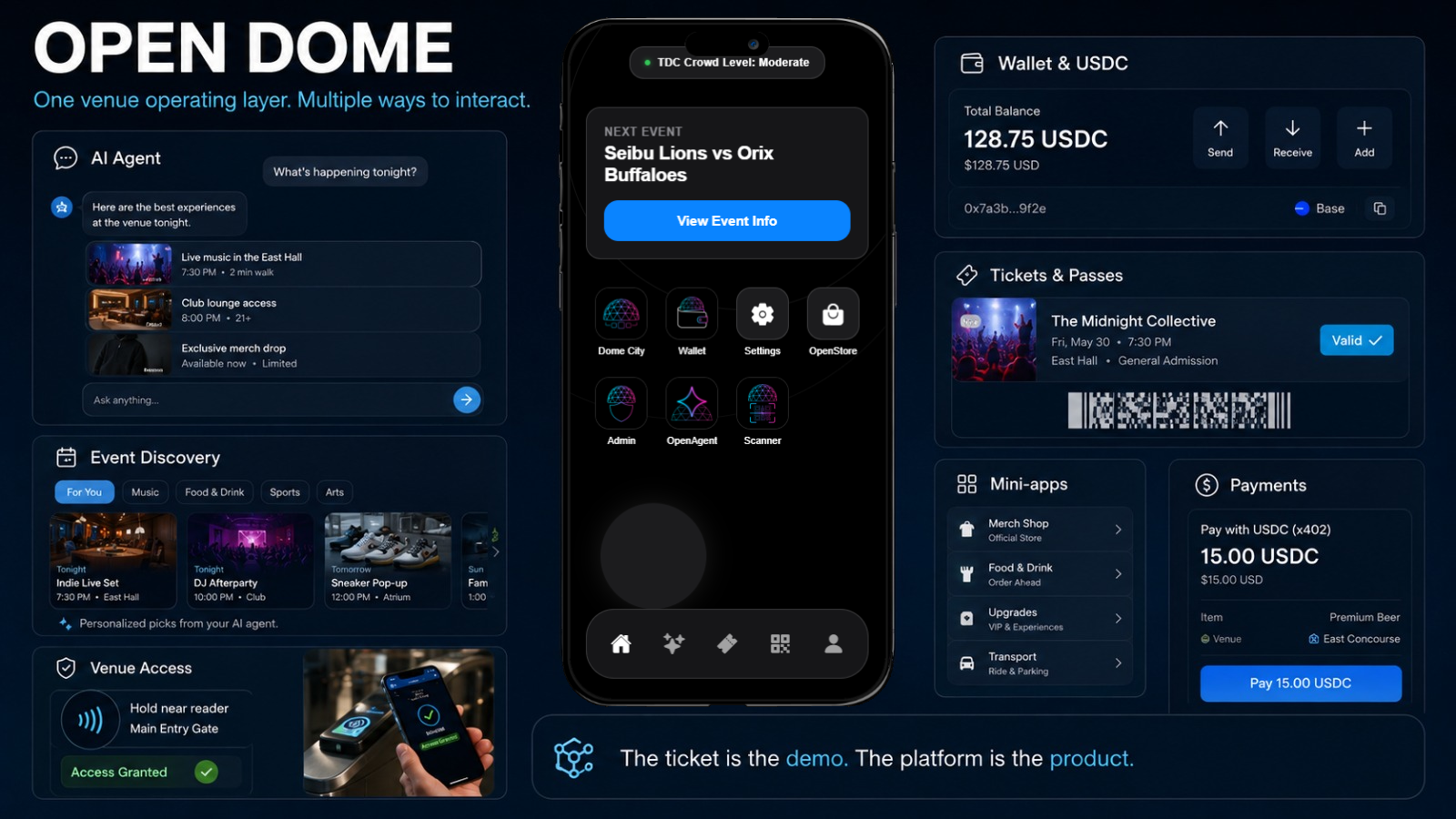
Open Dome turns physical venues into environments AI agents can operate. Tell Gemini what you want, and it can discover experiences, coordinate venue services, transact in USDC through Circle, and deliver the result.
Gemini operates the venue. Circle makes it payable.
A venue is a city with terrible interfaces.
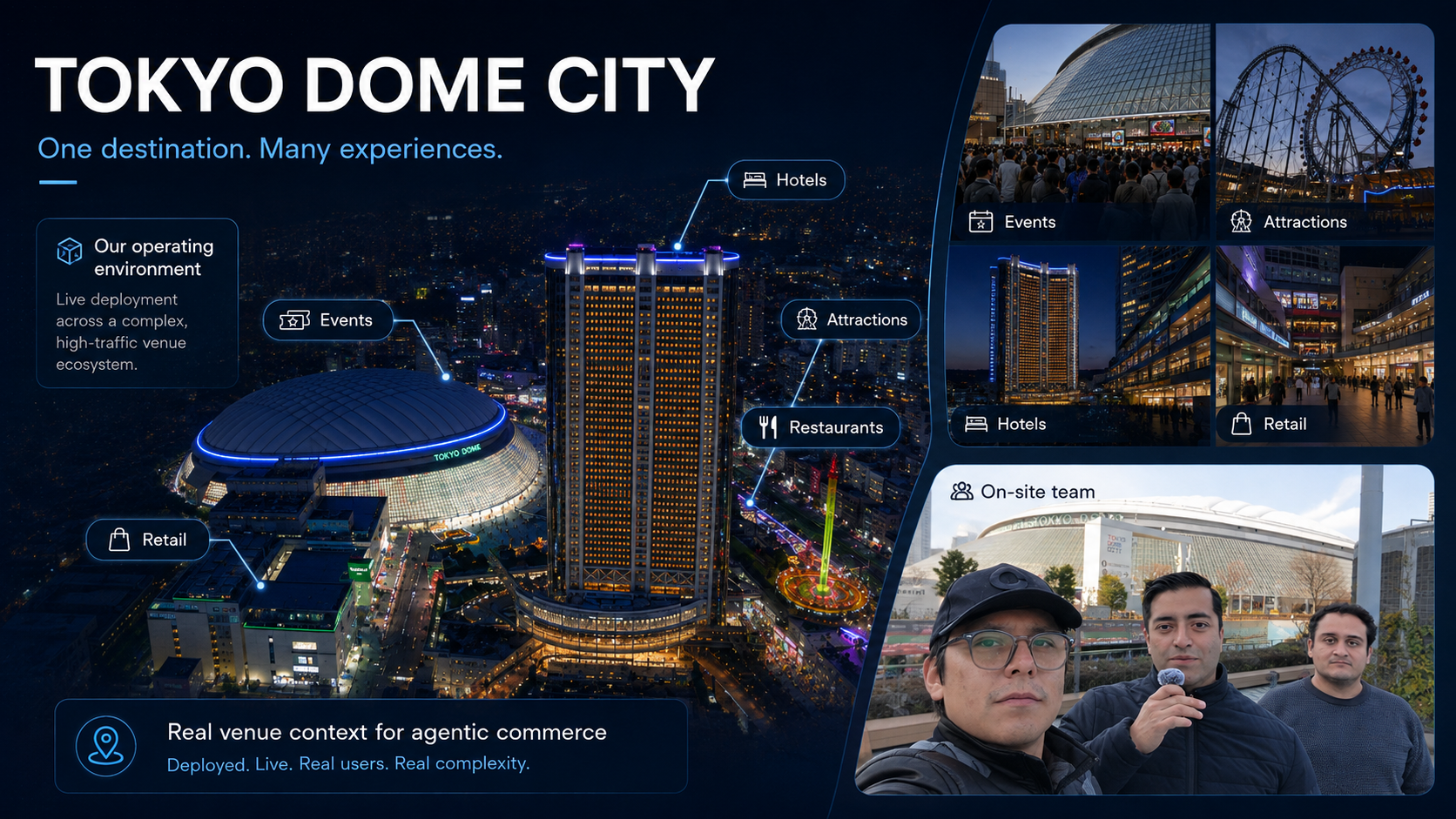
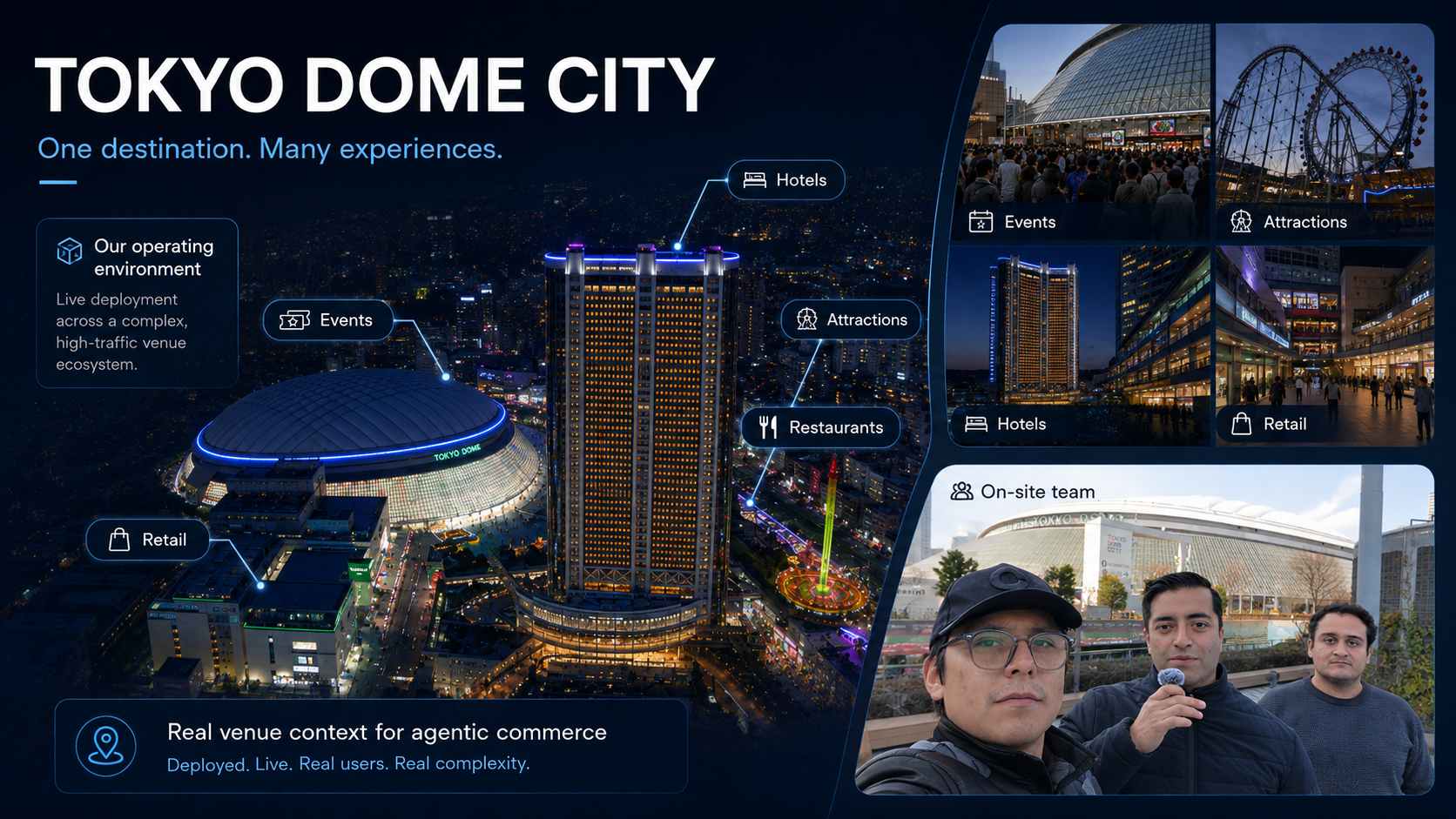
A place like Tokyo Dome City is not really one business. It is a stadium, concert halls, attractions, restaurants, shops, hotels, galleries, and services sharing the same physical environment.
Digitally, however, they often behave like completely separate worlds.
Visitors search in one place, purchase in another, navigate somewhere else, and repeatedly identify themselves or figure out how to pay along the way.
Working around this problem convinced us that the answer is not another super-app with even more buttons.
The better interface is intent.
Instead of asking visitors to understand how the venue works, we asked:
What if they could simply tell the venue what they wanted?
One sentence in. A ticket out.
For our XPRIZE build, we wanted one workflow that made the idea immediately understandable.
A visitor asks:
“Find me two tickets for tonight around 7 PM and keep it under $80.”
That sentence is enough to start the workflow.
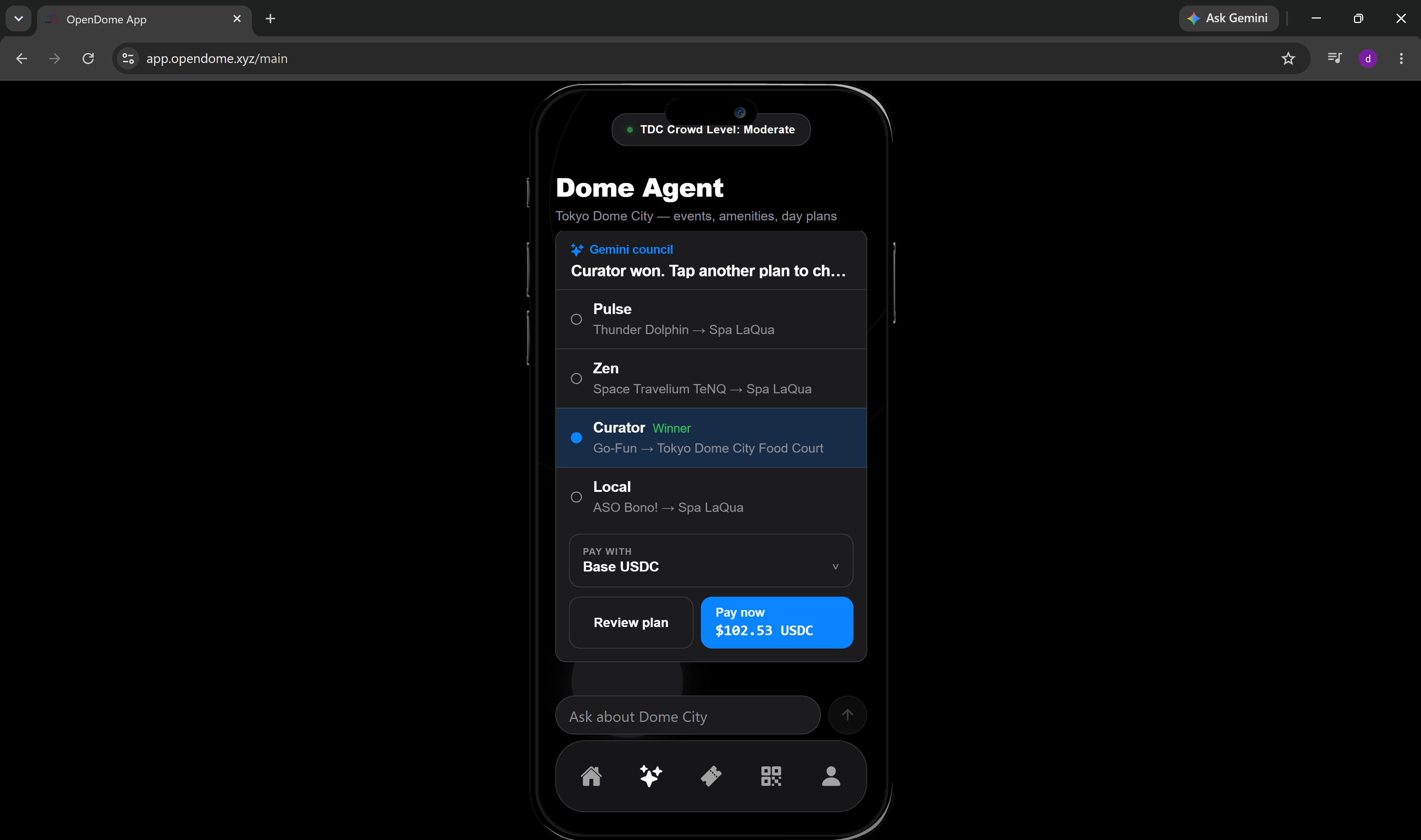
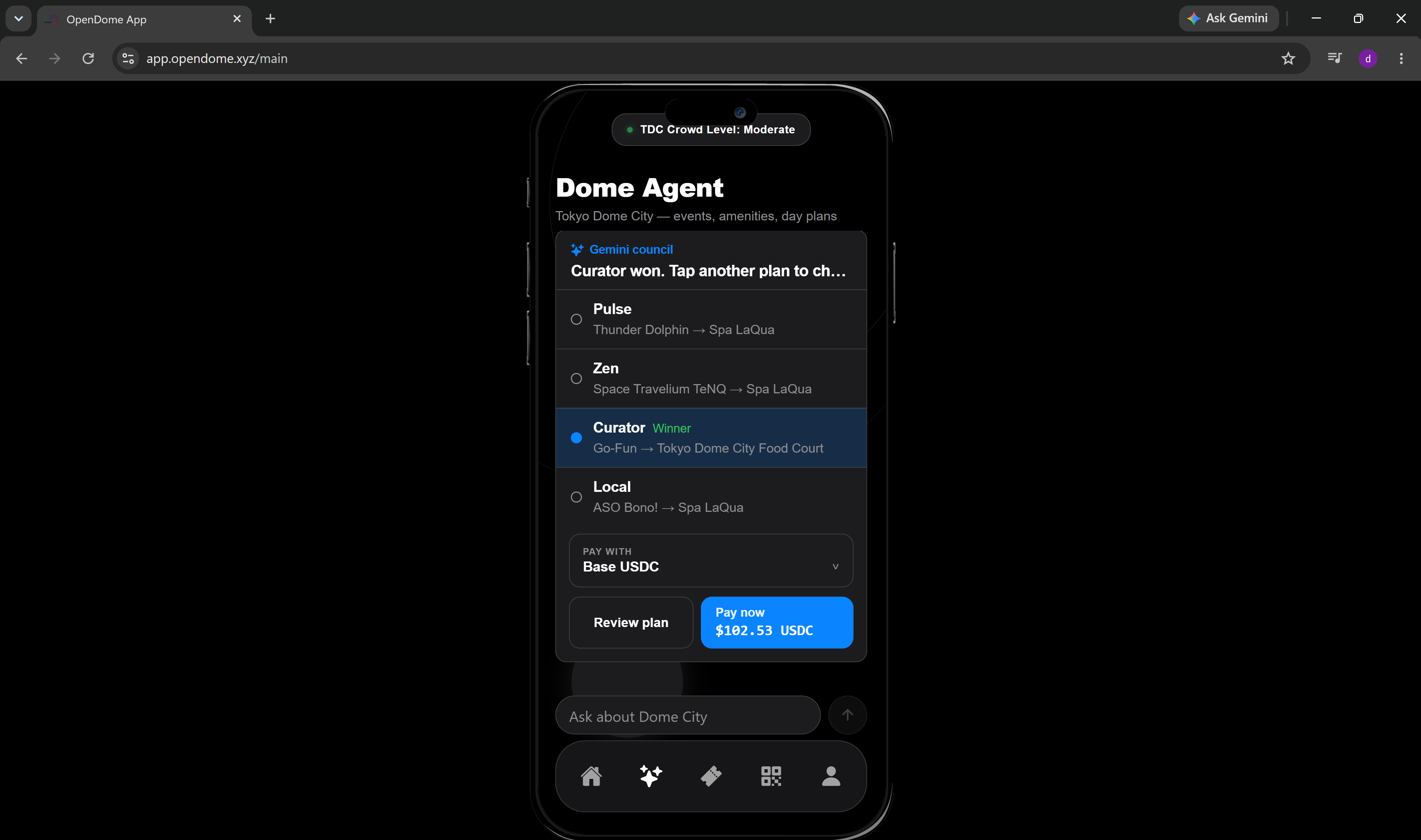
Gemini interprets the request and its constraints, discovers the relevant venue services, evaluates the available experiences, and coordinates the tools needed to move toward fulfillment.
Circle connects that decision to programmable money.
Open Dome delivers the result.
The important part is what does not happen.
The agent does not stop at:
“Here are some tickets you might like.”
It can continue into the actual economic workflow.
ASK → DECIDE → TRANSACT → FULFILL
One natural-language request becomes a completed venue experience.
This is not a chatbot.
The ticket demo looks simple because the complexity is deliberately hidden from the visitor.
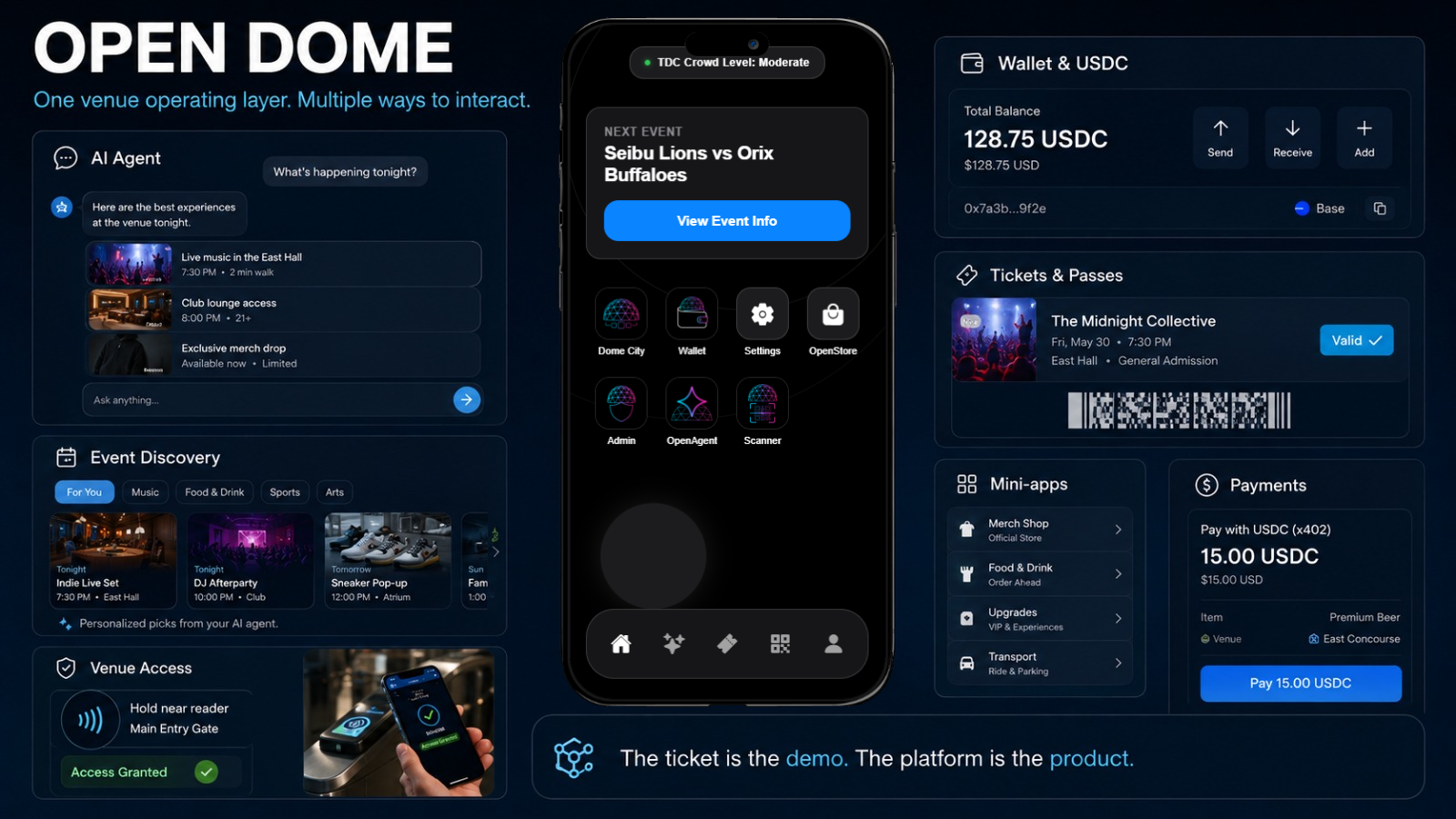
Underneath it, Open Dome gives Gemini actual capabilities it can reason about and invoke: venue information, events, identity, location, wallets, payments, tickets, and fulfillment.
We combine two different forms of agentic execution.
Gemini handles open-ended intent, reasoning, constraints, and tool selection.
Specialized agents and venue services handle repeatable planning and execution where deterministic behavior makes more sense.
Open Dome connects those decisions to the physical venue and fulfills the result.
We do not use AI because conversational interfaces are fashionable.
We use AI because the venue itself has become programmable.
Giving an agent a wallet changes what an agent is.
An AI that can discover the perfect experience but cannot transact is still fundamentally an assistant.
It can recommend.
It can explain.
It can tell you what you should do next.
But commerce starts when software can participate in the transaction itself.
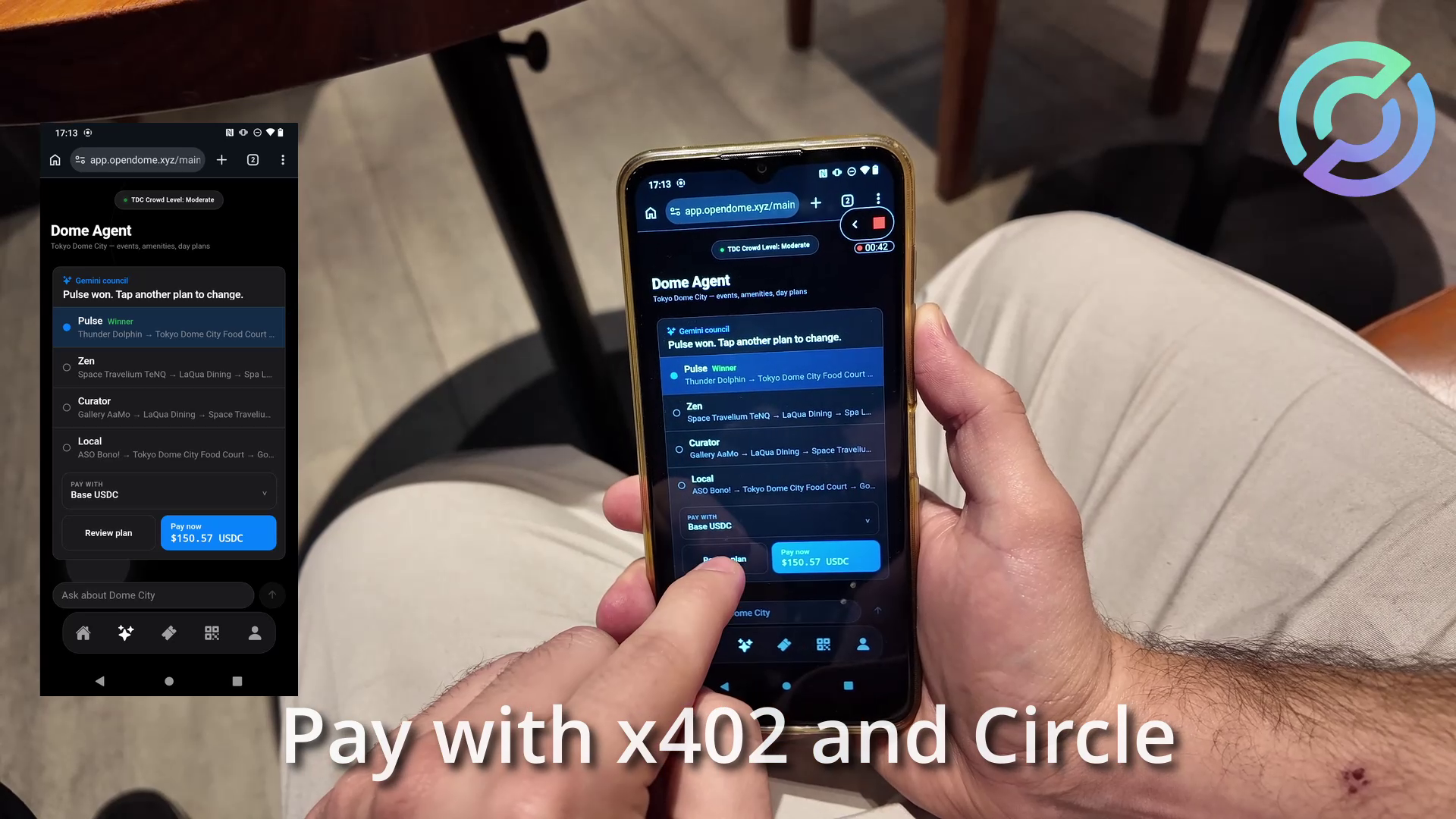
That is why Circle is not simply a payment button inside Open Dome. We integrated programmable wallets and USDC into the platform so financial actions can become part of the same tool-driven workflow Gemini is already orchestrating.
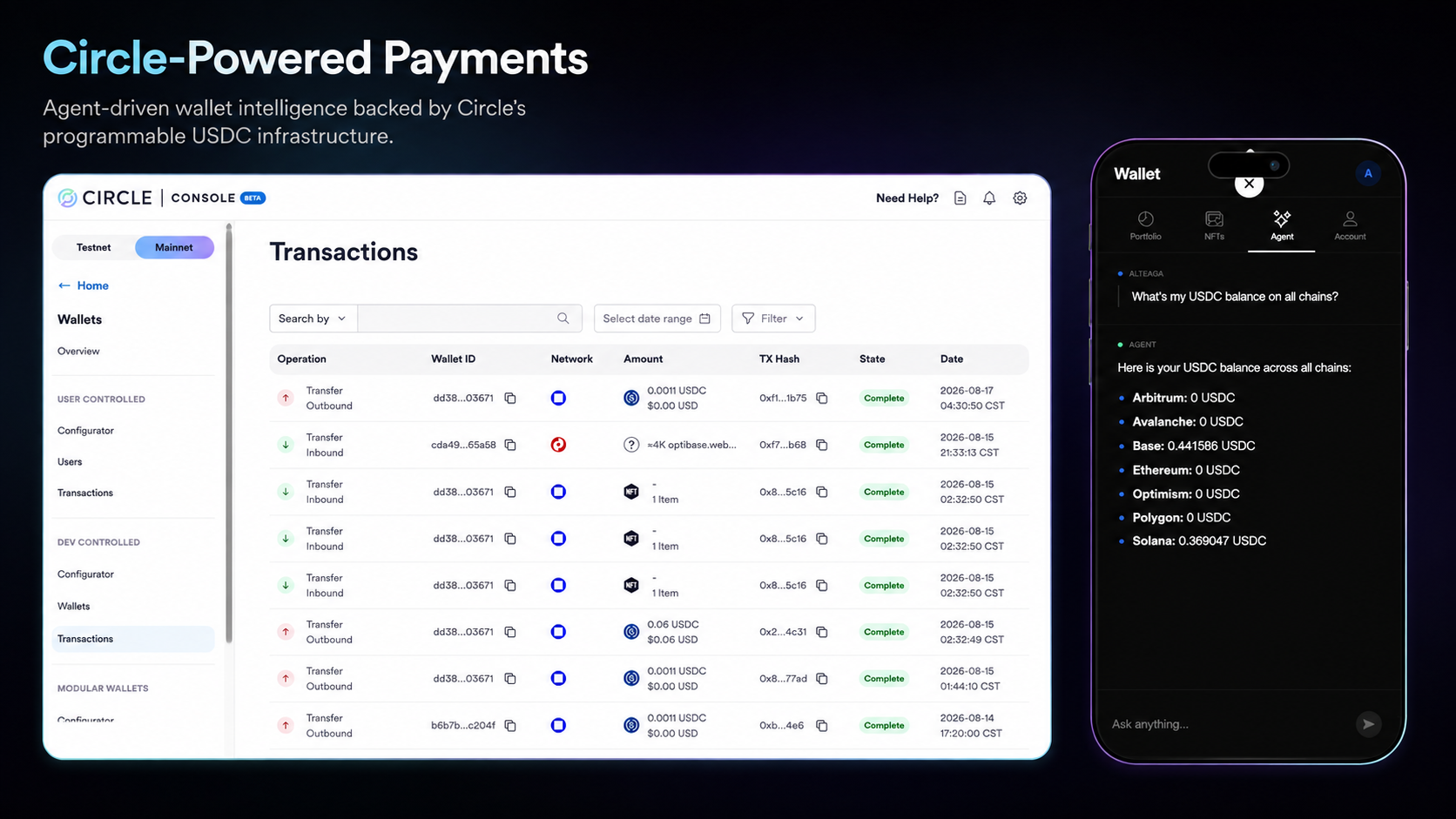
The visitor should not need to understand gas, networks, private keys, bridging, or settlement infrastructure.
Those are implementation details.
The visitor asked for a ticket.
The system should deliver a ticket.
Circle gives Open Dome the financial infrastructure required to connect reasoning with real economic execution.
Gemini operates the venue. Circle makes the venue payable.
The ticket is the demo. The venue is the product.
We deliberately chose ticketing because everyone understands the workflow.
But Open Dome is much larger than a ticket agent.
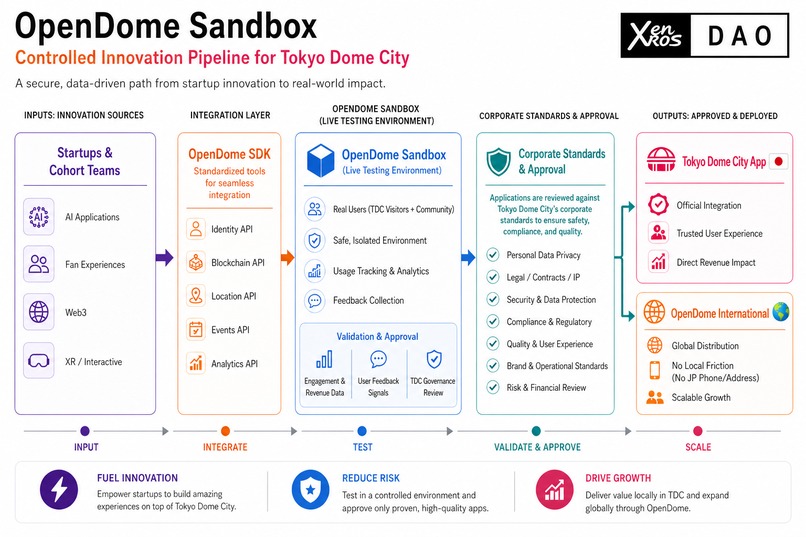
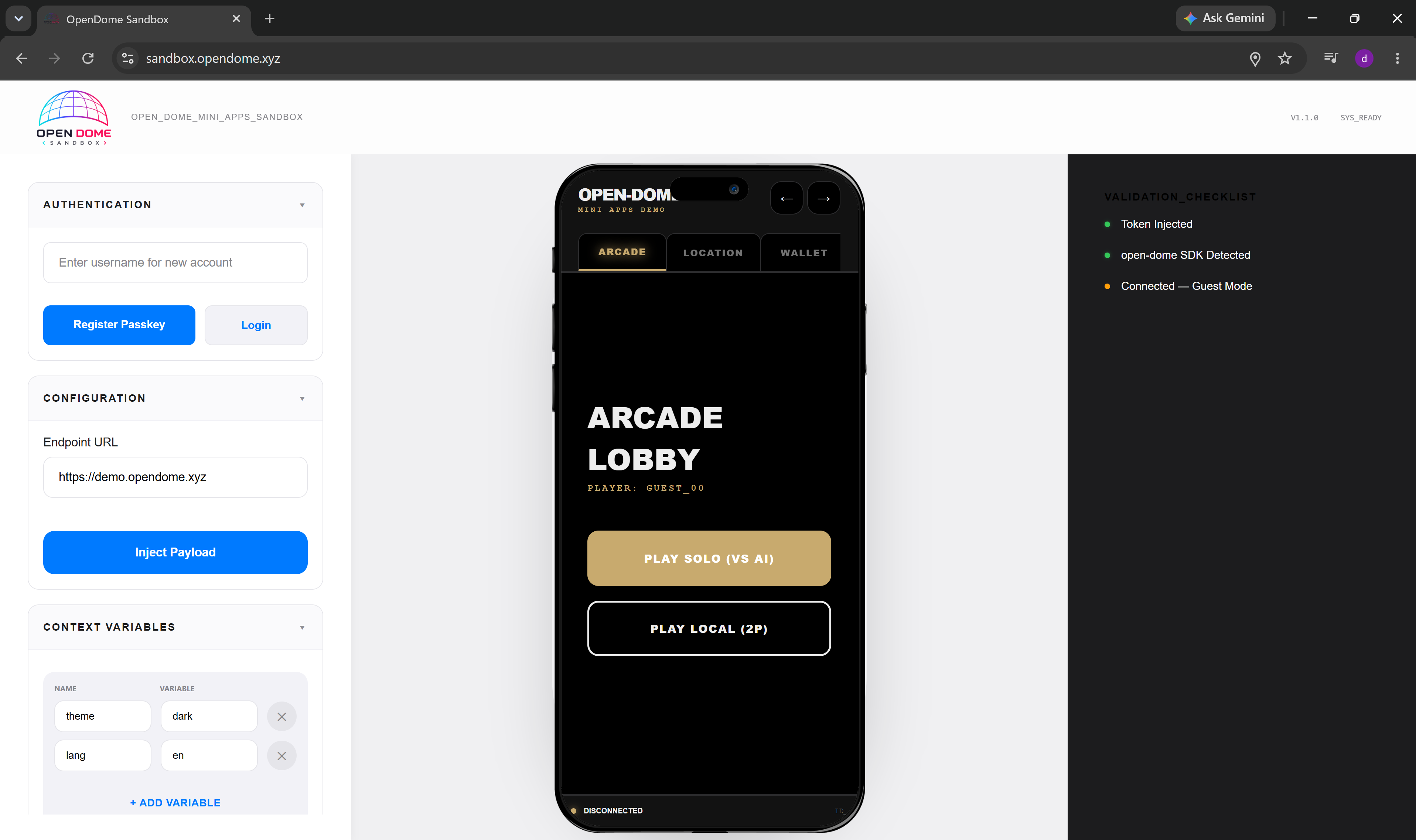
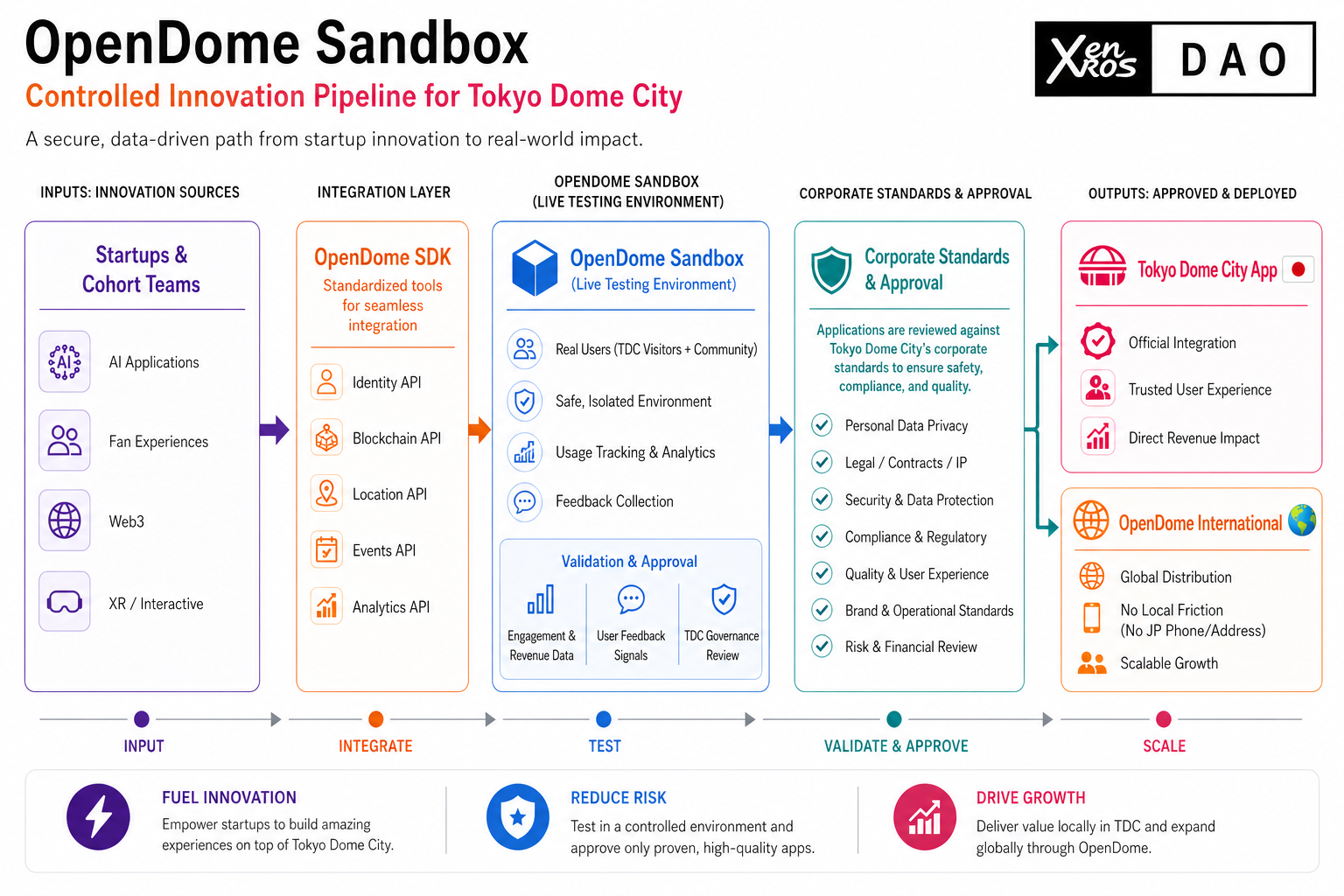
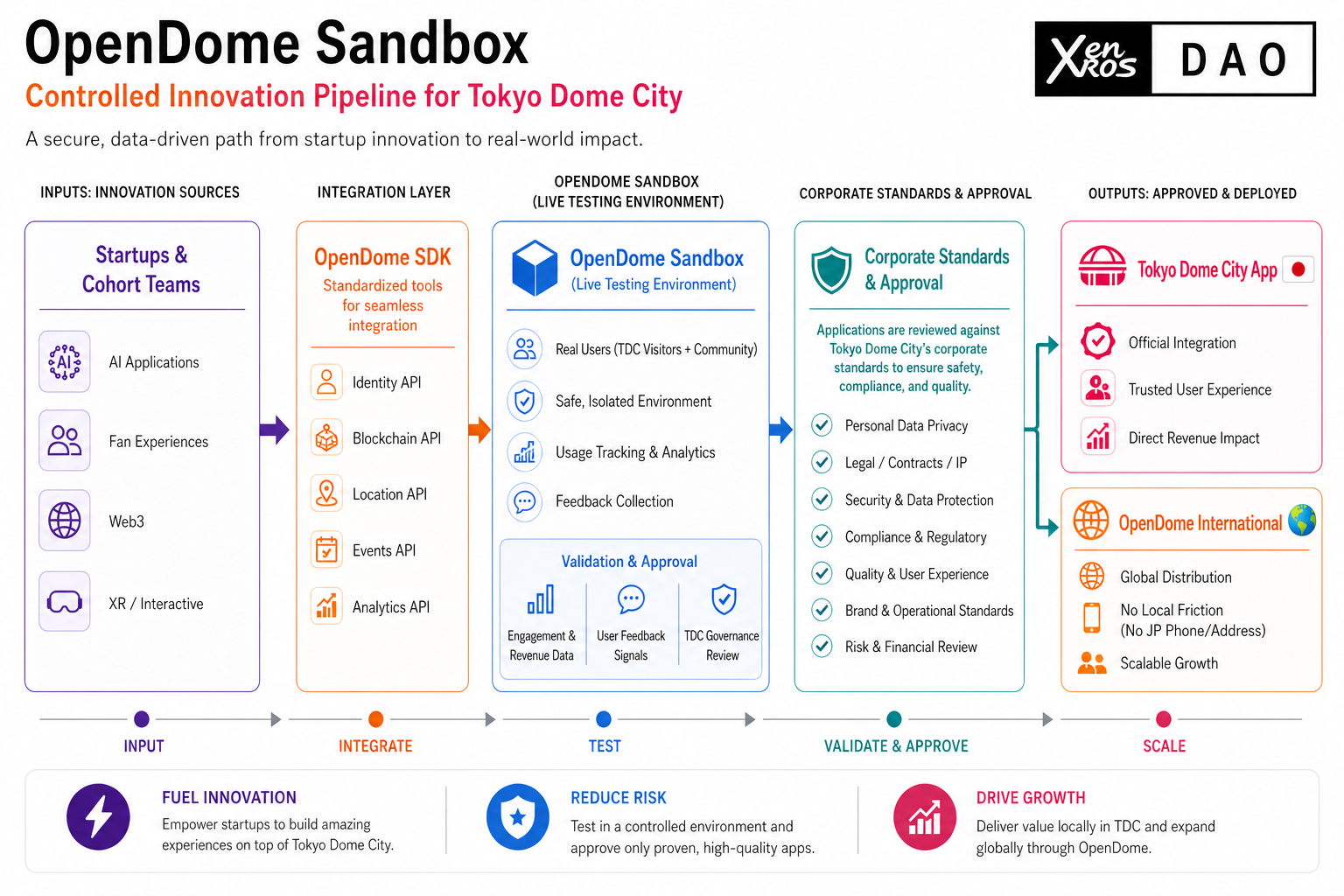
The platform consists of a persistent guest application, a developer Sandbox, a reusable SDK, identity, programmable payments, venue information, location, realtime services, fulfillment, and an ecosystem of independent mini-apps that can dock into the host.
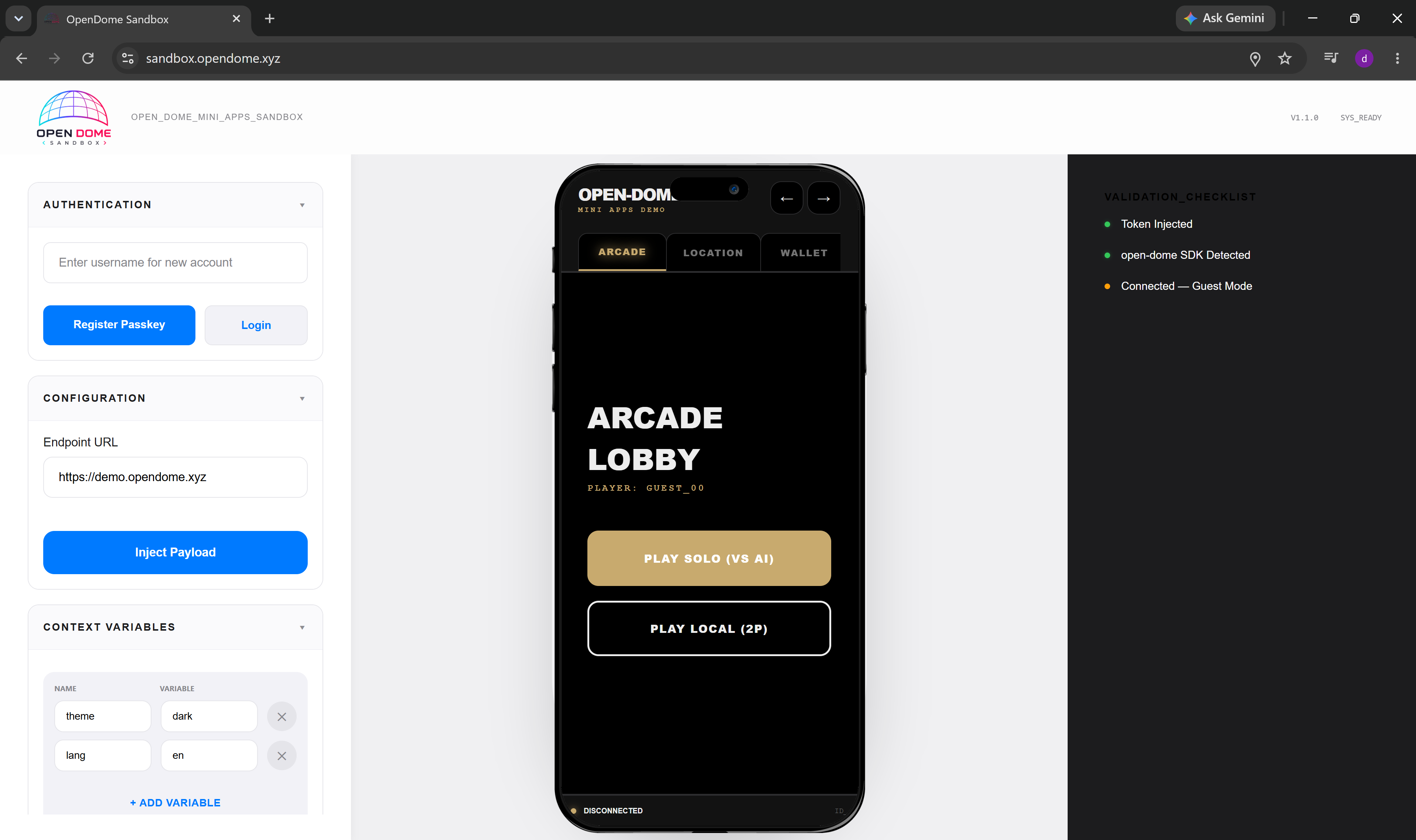
A developer building a new experience does not need to rebuild authentication, wallets, payment infrastructure, location permissions, or venue integrations.
They build the experience.
Open Dome provides the environment around it.
That means a ticketing service, restaurant reservation, attraction, loyalty program, merchandise store, or completely new experience can become part of the same venue ecosystem.
And every new capability that enters that ecosystem can eventually become another tool an agent can operate.
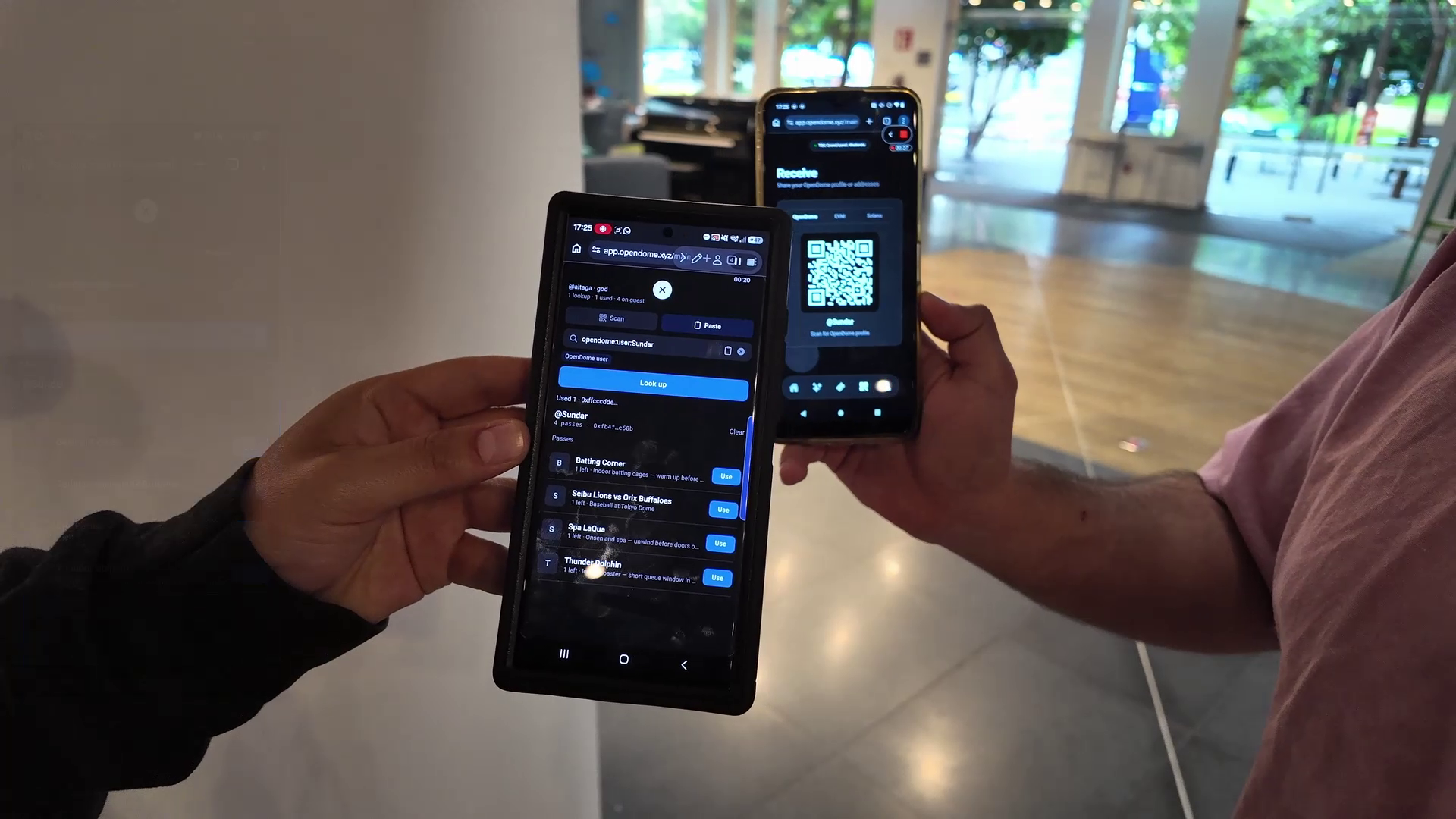
This extends into the physical world as well. The same identity and commerce infrastructure behind an agent-purchased ticket can connect to experiences such as our face-based checkout flows.
Digital commerce and physical commerce stop being separate systems.
They become different interfaces into the same venue.
We did not invent this problem for a hackathon.
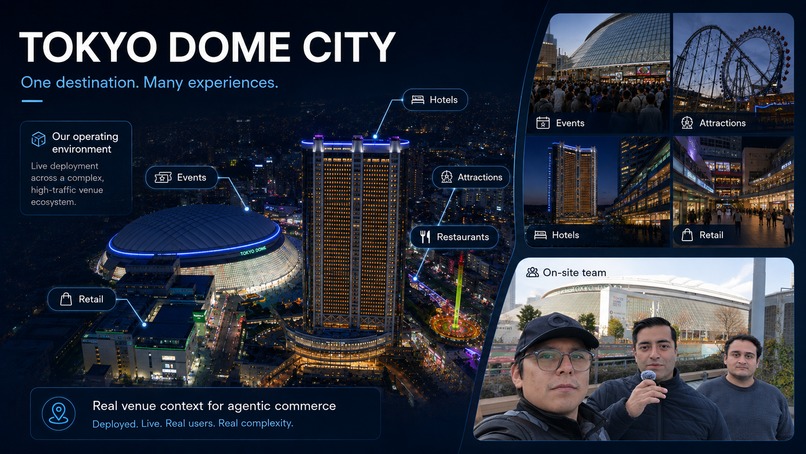
Open Dome comes from working directly around the challenges of high-traffic venues.
Our team spent six months embedded through the enXross program at Tokyo Dome City, building, testing, and refining technology around the realities of one of the world's most complex entertainment destinations.
That experience changed how we thought about the product.
The initial challenge was connecting services inside a venue.
The deeper opportunity was realizing that, once those services become programmable, AI can begin operating across them.
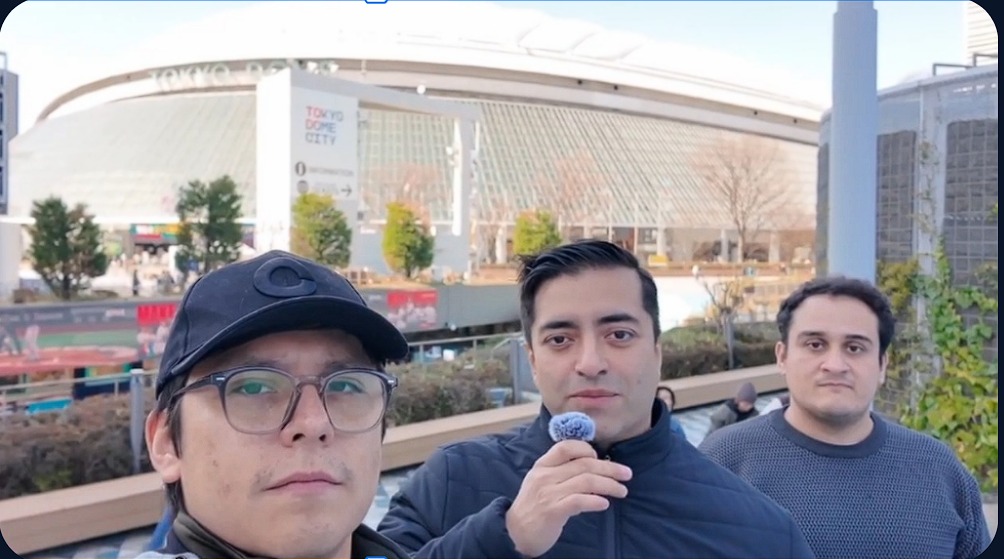
For XPRIZE, we built the new agentic layer around that foundation: Gemini-centered orchestration, specialized agents, tool-driven venue execution, and Circle-powered programmable commerce.
The result is not an AI concept looking for somewhere to be deployed.
It grew out of an environment where the problem is already real.
Under the hood, this got slightly out of hand.
What started as an agent workflow grew into an end-to-end operating stack.
Gemini · Vertex AI · Google GenAI SDK · Circle · USDC · Circle Programmable Wallets · x402 · Open Dome SDK · React Native · Expo · Firestore · BigQuery · Passkeys · EIP-3009 · CCTP · Solana · Base
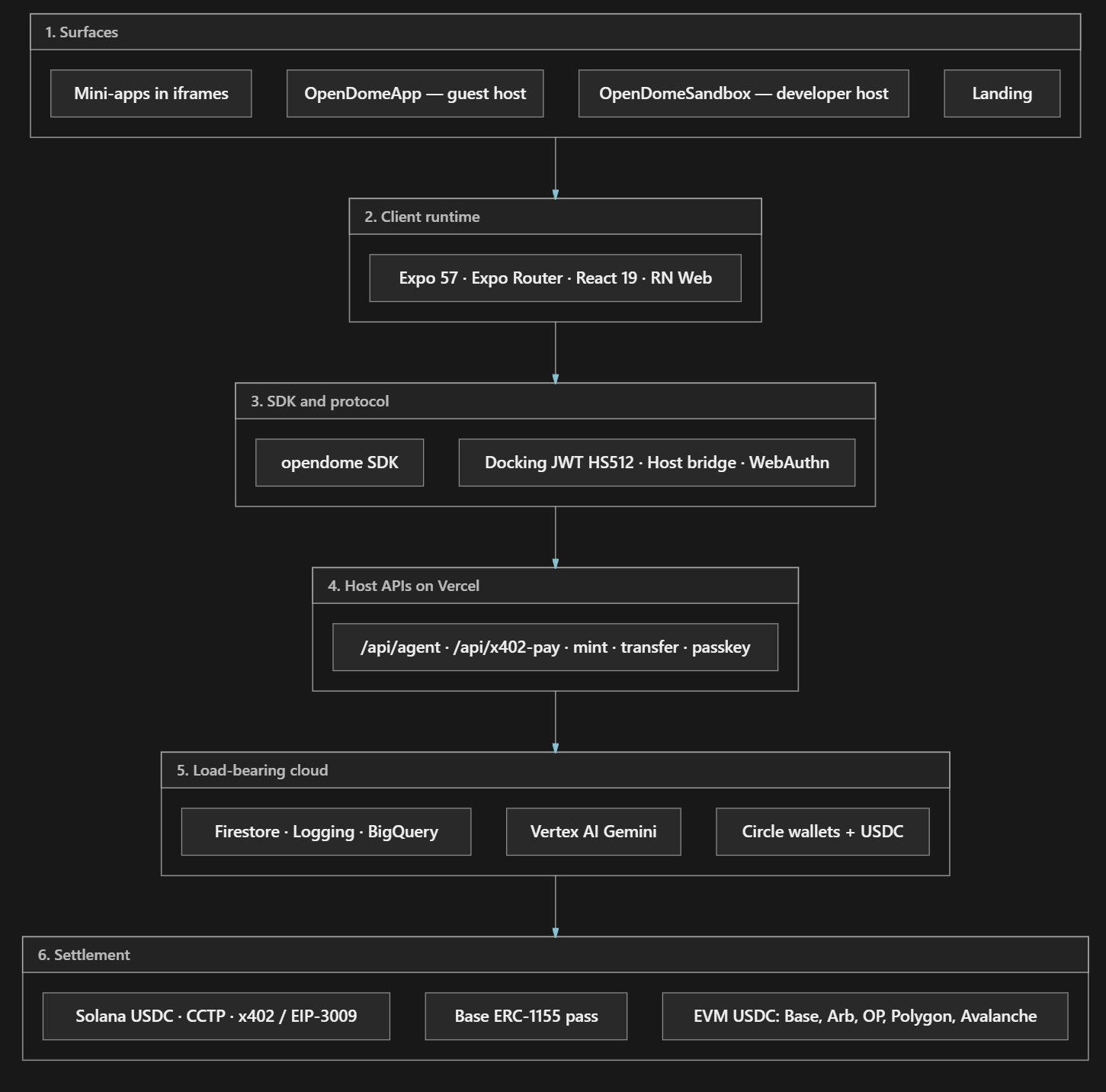
Open Dome now connects a guest application, developer Sandbox, SDK, programmable wallets, ticket fulfillment, scanning, mini-app docking, identity, venue services, payments, and observability.
Security became especially important once third-party applications, identity, location, AI, and real money started sharing the same environment.
Mini-apps therefore dock into Open Dome through controlled sessions rather than inheriting permanent access to the host. Long-lived credentials remain server-side, and individual experiences receive only the capabilities they actually need.
Observability also changes when an AI can act.
Knowing the final text response is no longer enough. We need to know which tools were invoked, what decisions were made, which transactions happened, and whether the experience was ultimately fulfilled.
That is why our Google Cloud infrastructure tracks the execution around the agent, not only the conversation with it.
We are proud of every one of these components.
We are much more proud that they work together.
The next venue app may not look like an app.
Today, visitors navigate software.
They search menus, switch services, compare options, enter information, choose payment methods, and repeatedly tell different systems what they are trying to accomplish.
We think that interaction model is going to change.
Tomorrow, visitors will express intent — and software will navigate the venue for them.
Ticketing is one workflow.
The same agentic layer can extend to restaurants, attractions, merchandise, reservations, loyalty, VIP experiences, navigation, transportation, and physical checkout.
Every new mini-app added to Open Dome becomes more than another screen.
It becomes another capability an agent can operate.
We are not building another venue super-app.
We are building the operating system that lets AI operate the venue.
Built With
- arbitrum
- base
- circle
- expo.io
- firestore
- gemini
- google-bigquery
- google-cloud
- hedera
- javascript
- solana
- vercel
- vertex



Log in or sign up for Devpost to join the conversation.