🧠 Open Comet
Inspiration
Modern AI agents can generate text—but they struggle with real-world execution on the web. Tasks like research, form filling, or multi-step workflows often break due to dynamic UIs, unreliable selectors, and lack of structured planning.
We were inspired to solve a core gap:
How can we build an AI agent that doesn’t just respond—but plans, verifies, and reliably executes tasks inside a real browser?
This led to Open Comet: a spec-driven autonomous browser agent designed for reliability, transparency, and privacy.
What it does
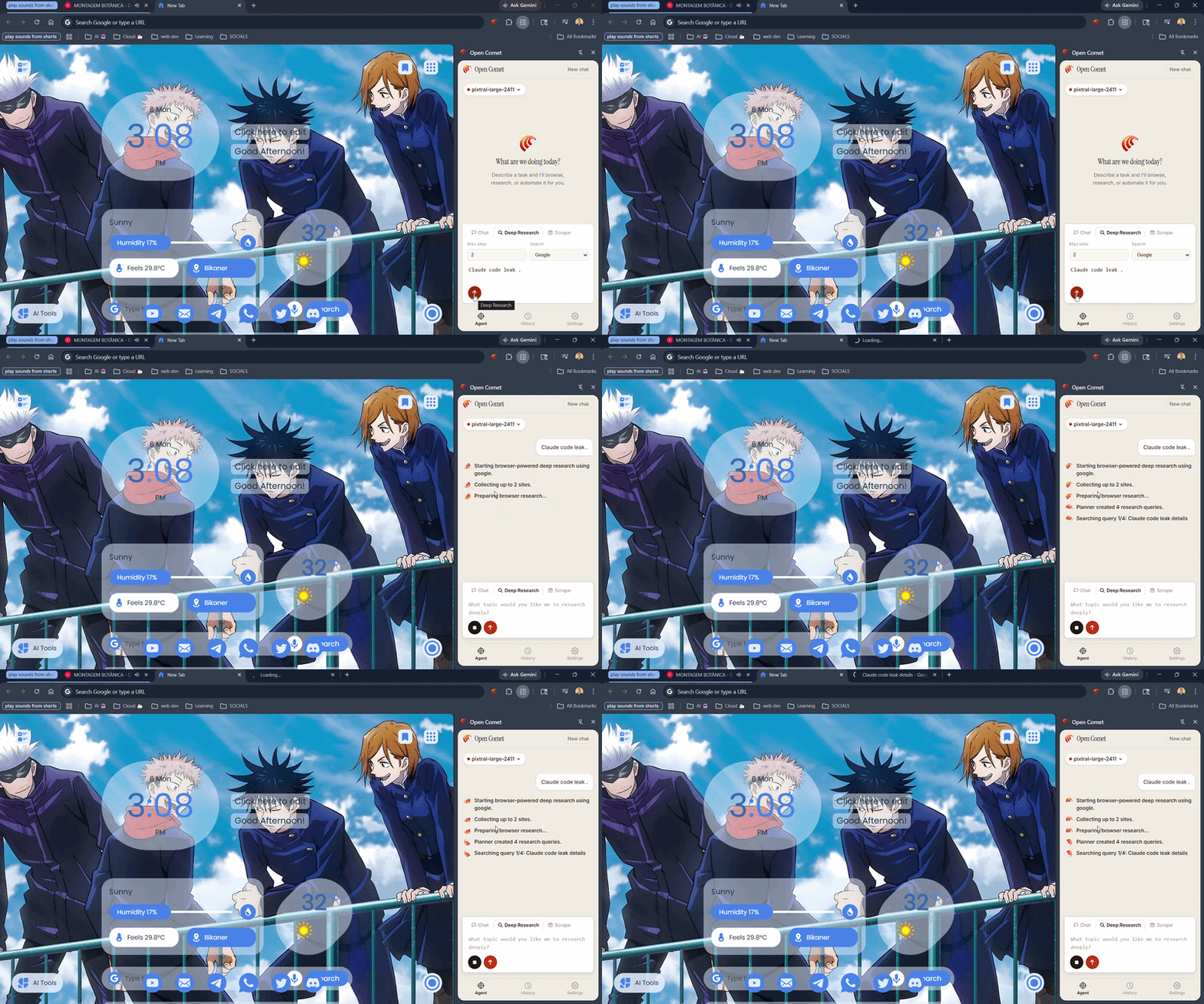
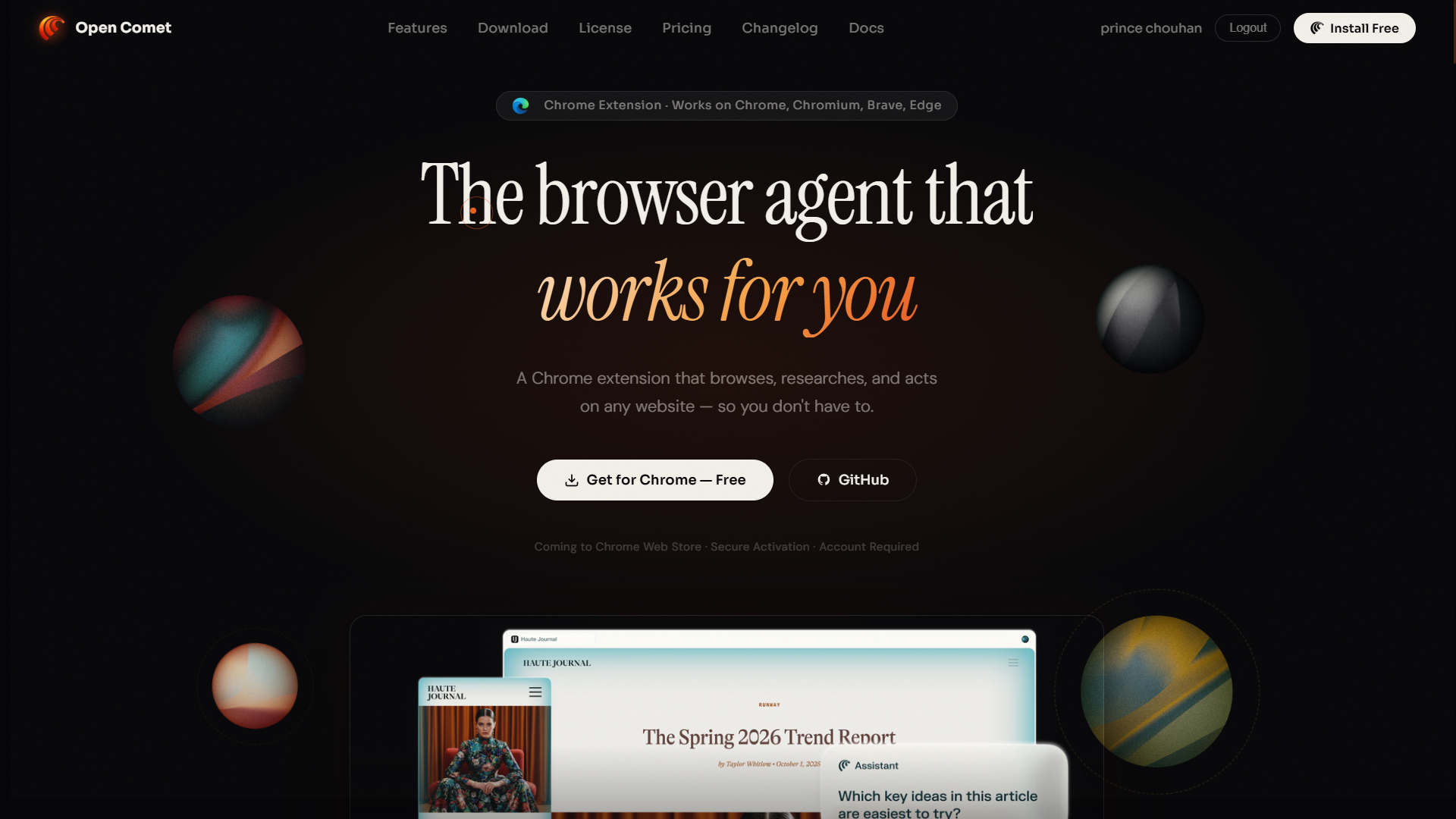
Open Comet is an AI-powered Chrome extension that turns high-level user intent into structured, executable web workflows.
It can:
- Perform multi-step browsing tasks across websites
- Run deep research loops across tabs and sources
- Interact with web pages using visual + DOM understanding
- Recover from failures using self-healing execution strategies
Unlike traditional agents, Open Comet:
- Plans → verifies → executes instead of blindly acting
- Uses multimodal grounding (DOM + screenshots)
- Maintains a Zero-Data architecture (all sensitive data stays local)
How we built it
We followed a spec-driven development approach, where every task is converted into a structured execution pipeline before action.
🔧 Core Architecture
Intent → Spec Layer Converts user prompts into structured task graphs
Execution Engine Breaks tasks into atomic browser actions (click, type, navigate)
Multimodal Perception Layer Combines:
- DOM parsing
- Screenshot-based visual grounding
Verification Loop Confirms each step before proceeding (reduces hallucinated actions)
Self-Healing System Handles:
- DOM changes
- stale selectors
- dynamic layouts
Model Abstraction Layer Supports multiple providers:
- OpenAI
- Anthropic
- Mistral AI
- Ollama
Privacy Layer (Zero-Data Architecture) Ensures browsing data and history remain on-device
Challenges we ran into
Dynamic Web Environments Websites frequently change structure, breaking naive automation.
Reliable Element Detection Pure DOM-based approaches failed—required hybrid visual + structural grounding.
Agent Consistency Early prompt-based agents behaved unpredictably without structured specs.
Latency vs Accuracy Tradeoff Adding verification improved reliability but increased execution time.
Accomplishments that we're proud of
- ✅ Built a fully working autonomous browser agent
- ✅ Implemented spec-driven execution (not just prompt-based AI)
- ✅ Designed a self-healing interaction system
- ✅ Achieved high task success rate across dynamic websites
- ✅ Created a privacy-first Zero-Data architecture
- ✅ Enabled multi-model support (cloud + local LLMs)
What we learned
- Spec-driven > prompt-driven for reliable AI systems
- Multimodal grounding is essential for real-world execution
- Verification loops drastically improve agent stability
- Real-world environments expose edge cases not seen in controlled demos
This project shifted our mindset from:
“Ask AI to do things” → “Design systems that ensure AI does things correctly.”
What's next for Open Comet
🔄 Advanced Planning Engine Hierarchical task decomposition and long-horizon workflows
🧠 Learning-based Skill System Agents that improve from past executions
🔍 Better Execution Trace Visualization Debugging and transparency tools for developers
🌐 Cross-browser + OS-level automation Expanding beyond Chrome
🔐 Stronger Security Layer Sandboxed execution and permission-aware actions
Built With
- css
- html5
- javascript
- katex
- manifest
- node.js
- react
- vite

