-
-
project banner
-
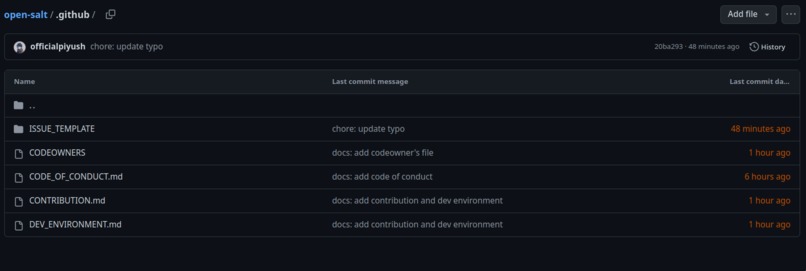
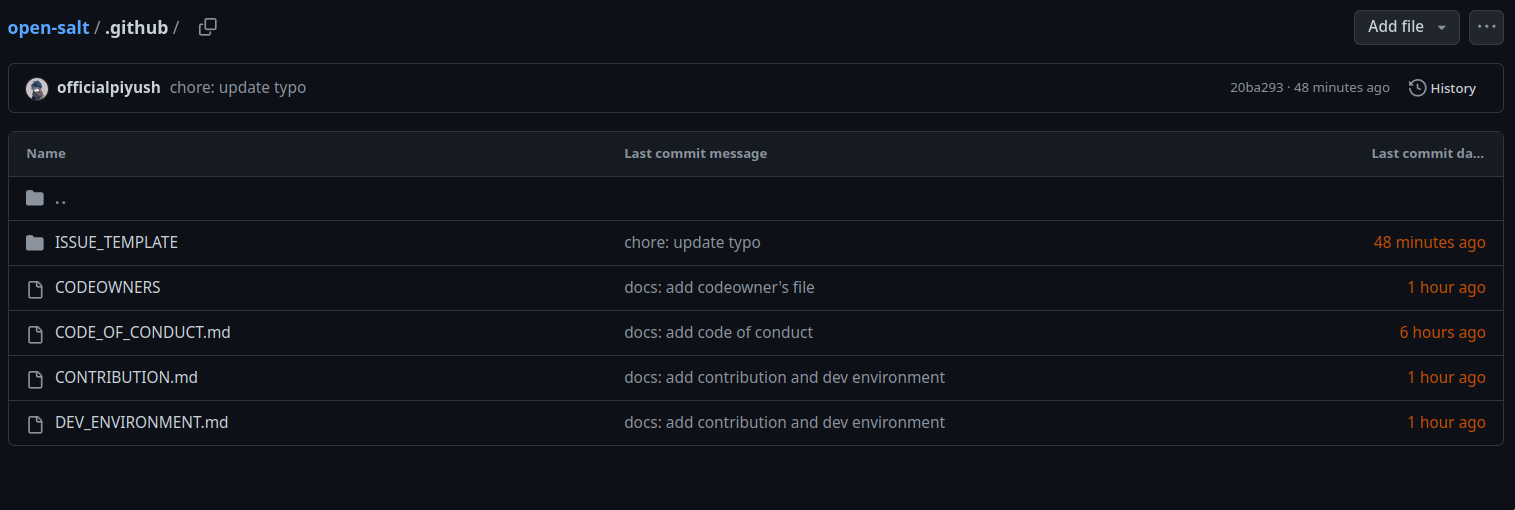
Open Salt Github Community Information Files | Code of Conduct, Contributing, Local Development Setup, Issue Templates, etc
-
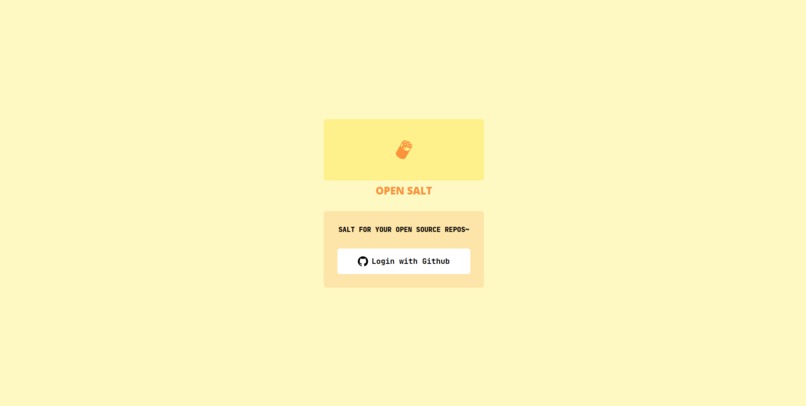
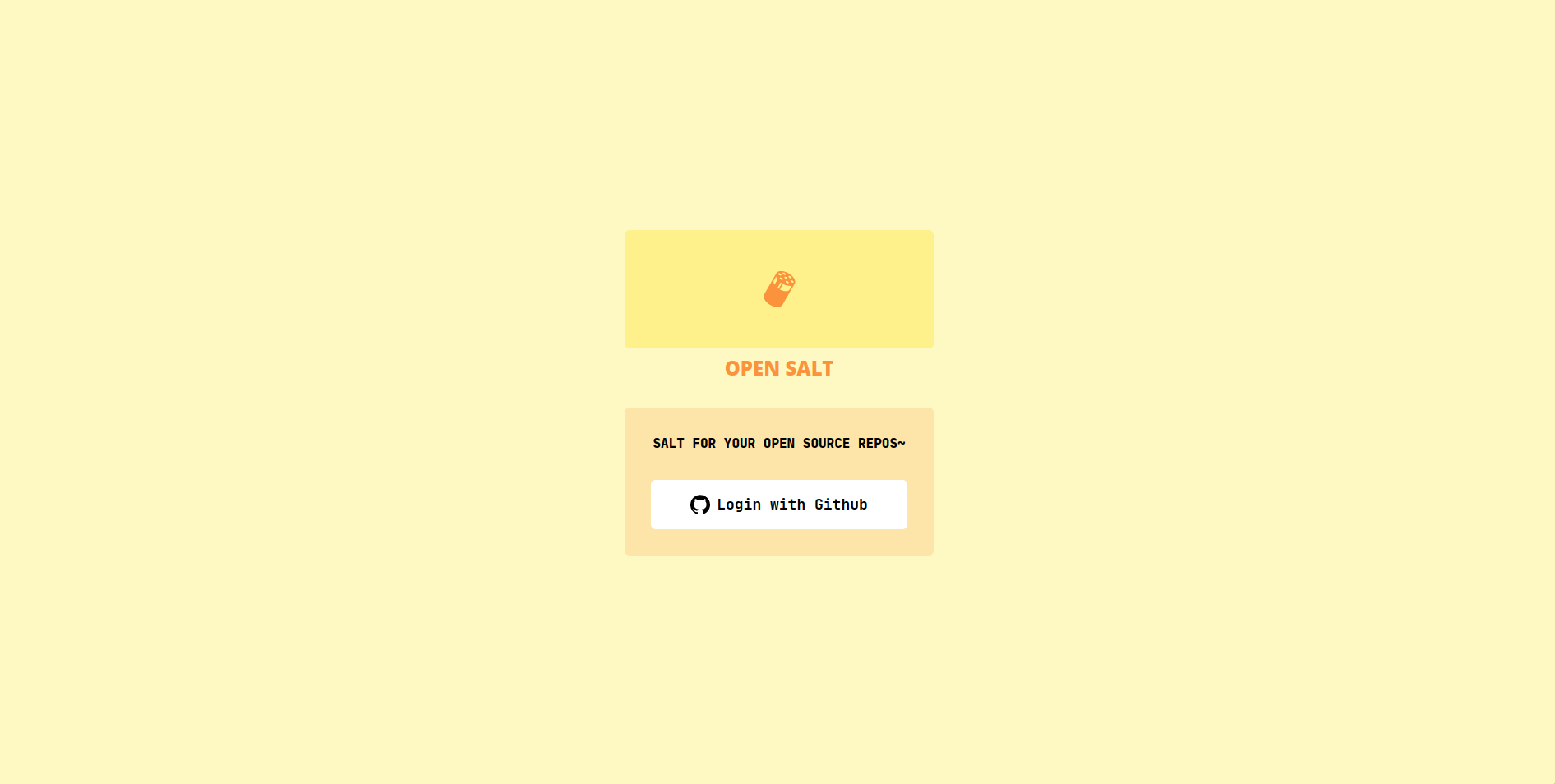
Login Page | Github OAuth
-
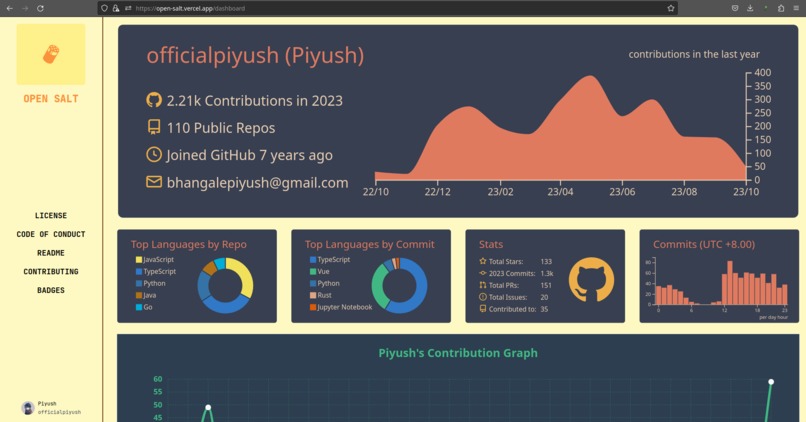
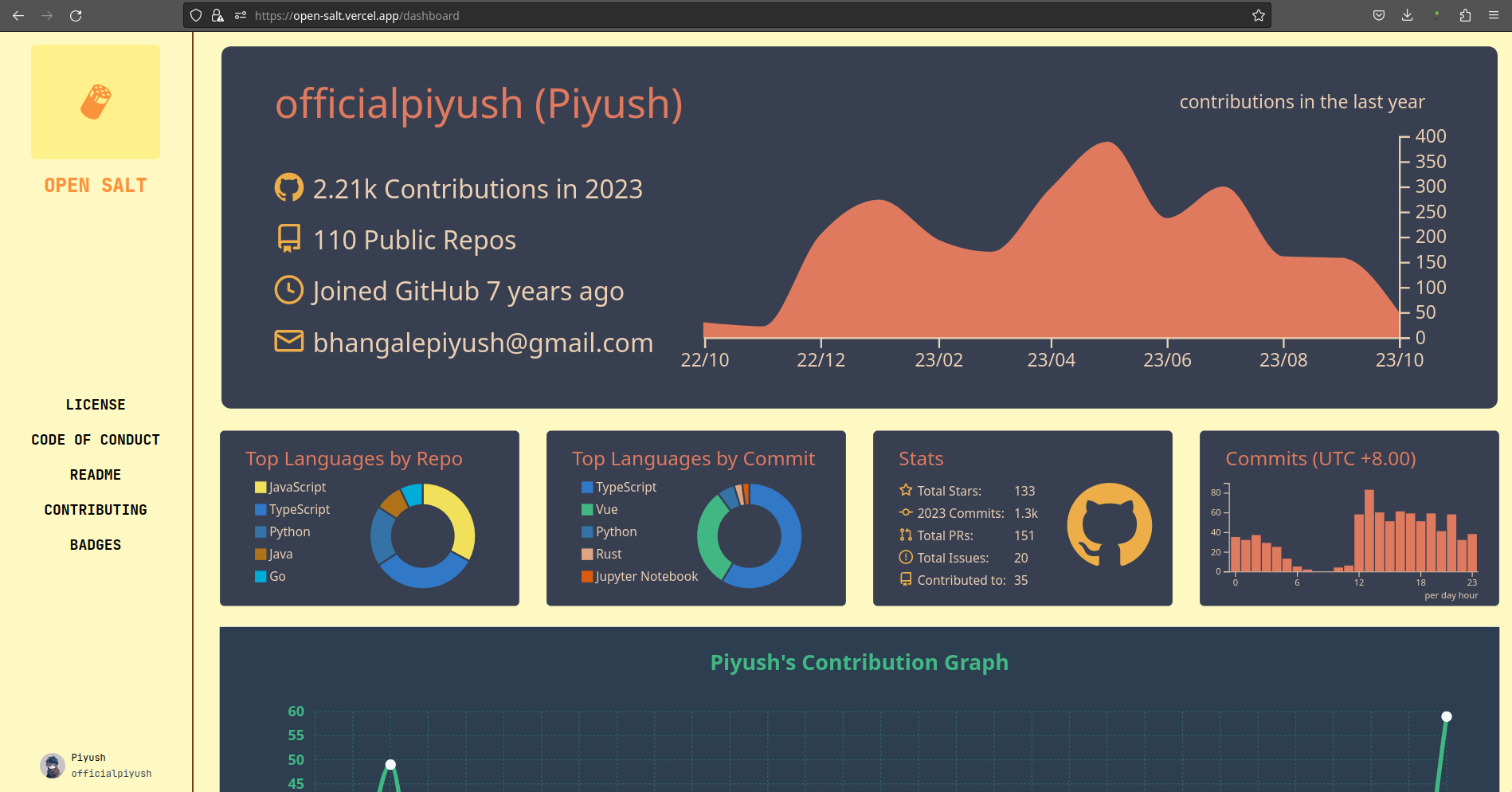
Dashboard Github Statistics
-
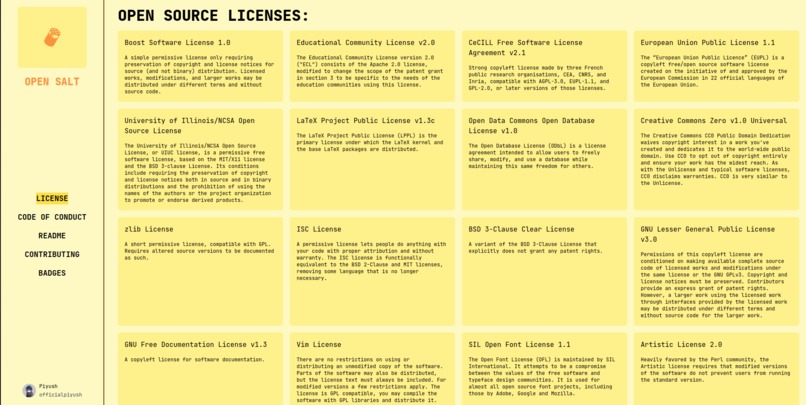
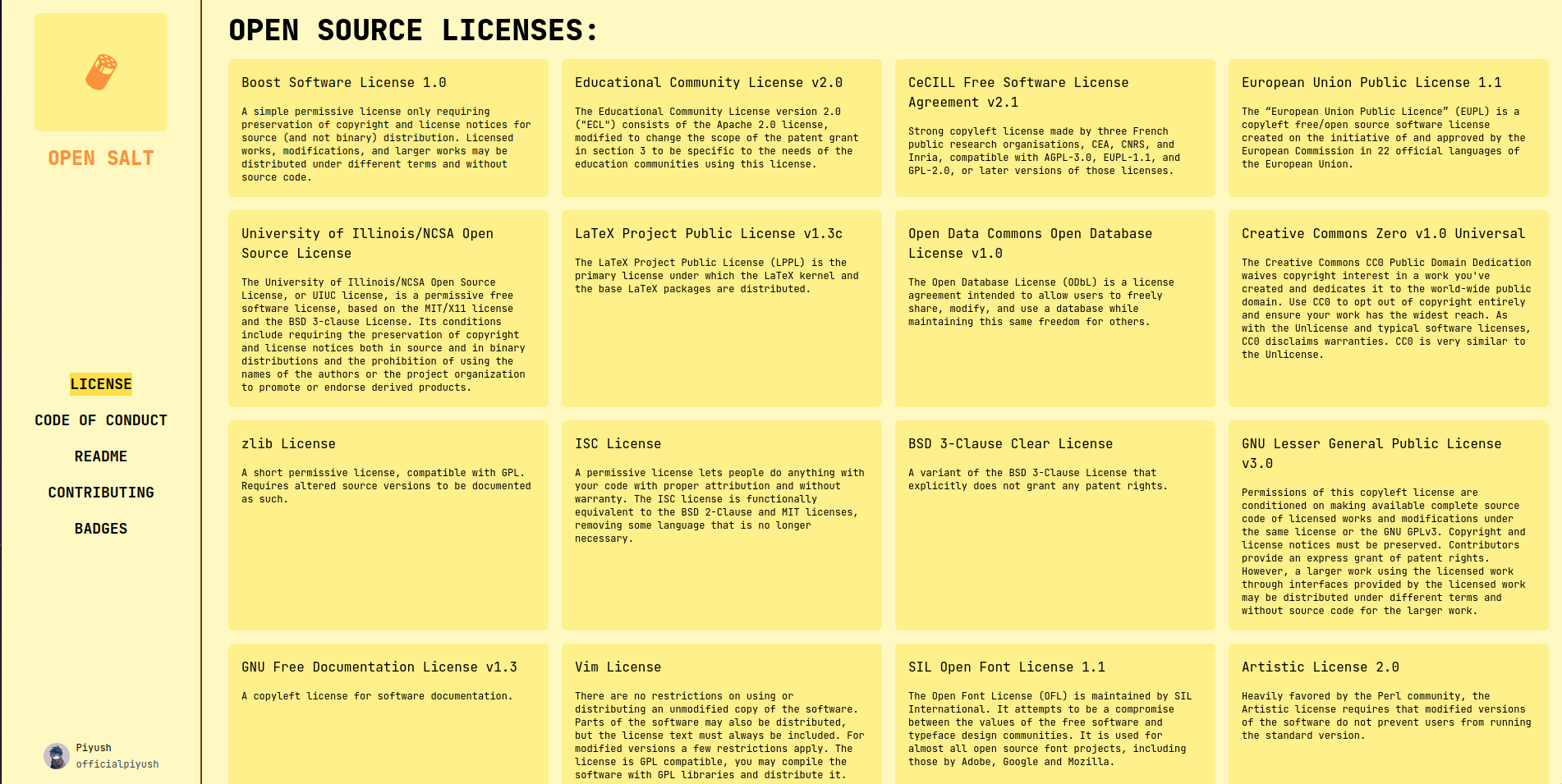
License Page | Checkout all Open Source Licenses Here
-
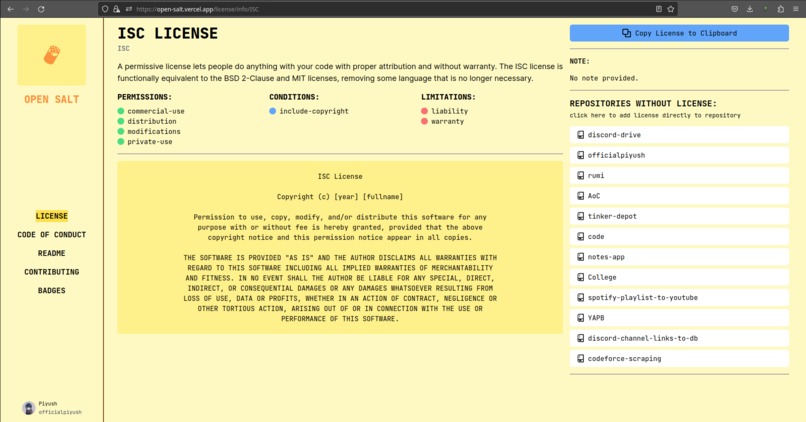
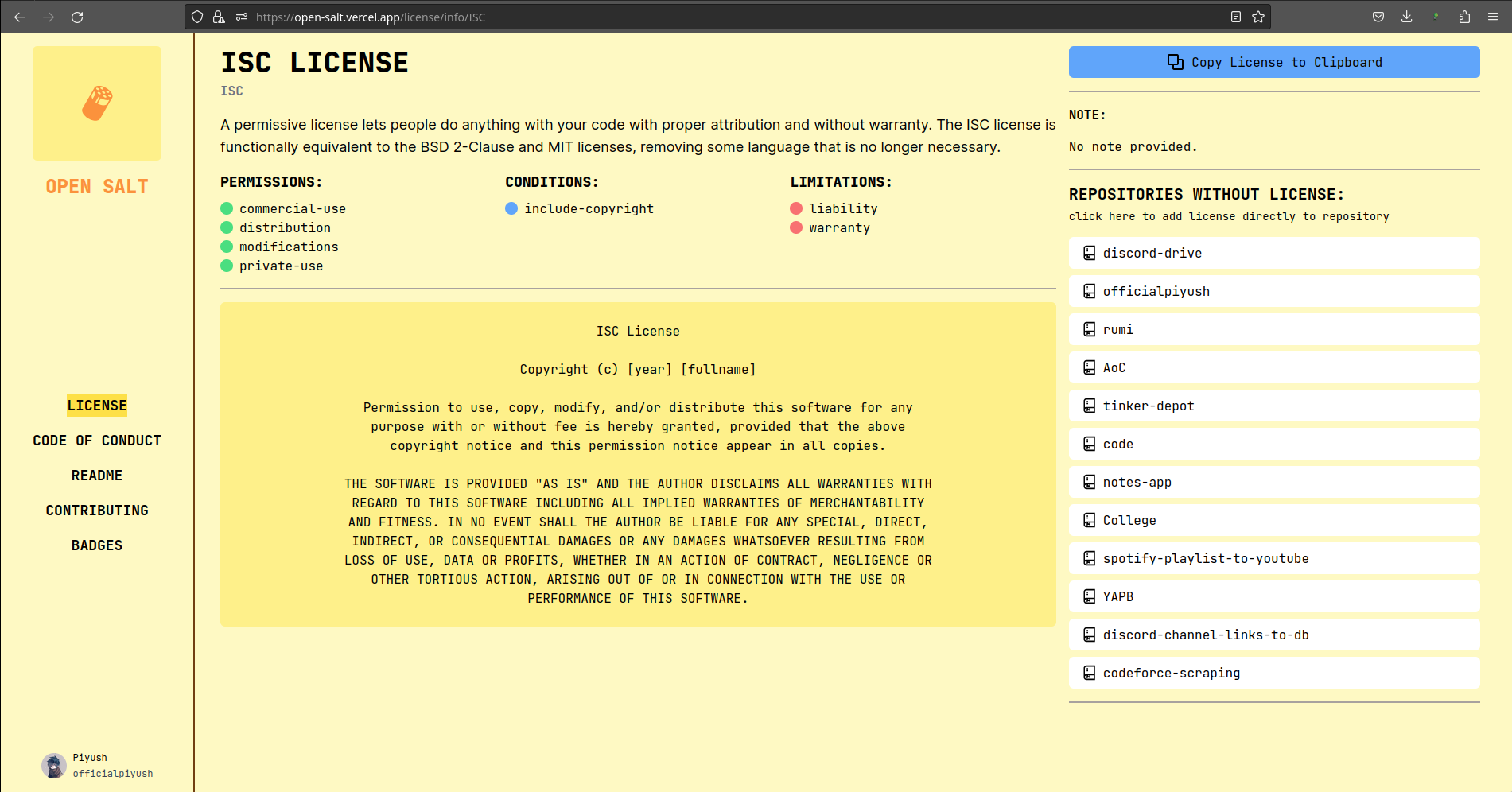
License Information Page | One click addition of license to your public repos | Github OAuth + API
-
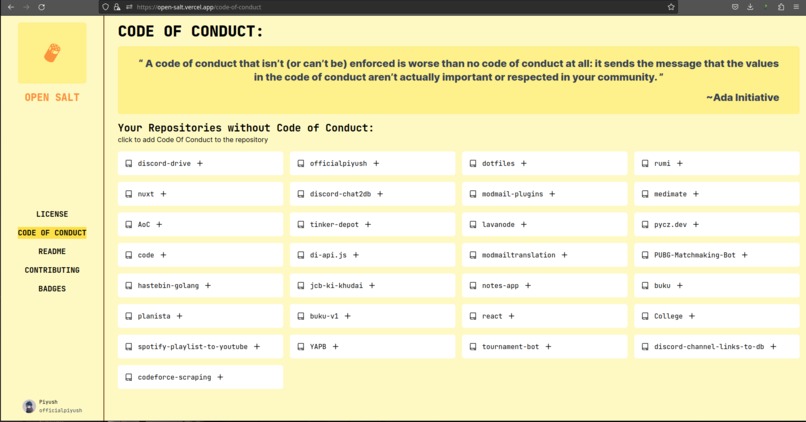
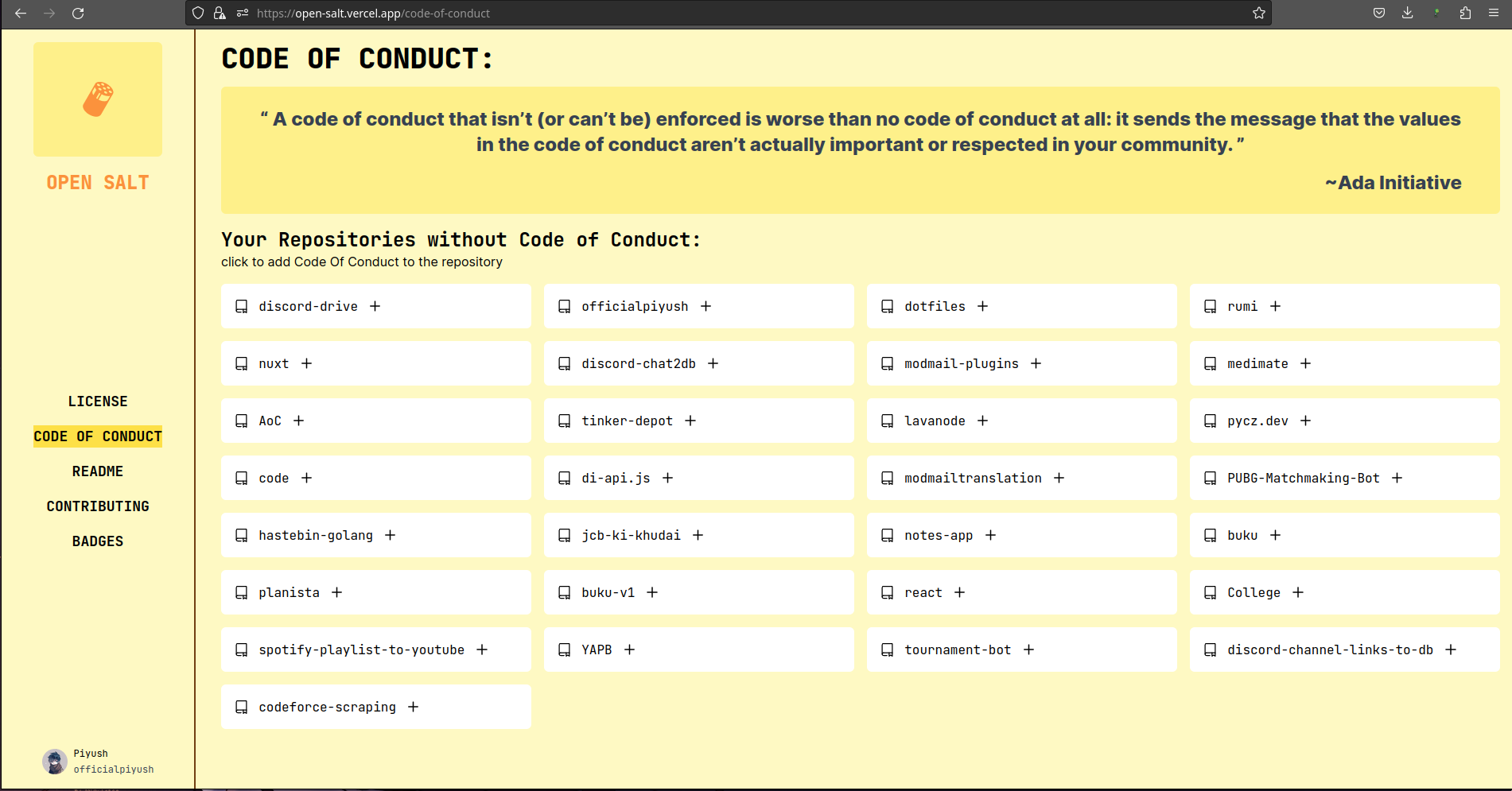
Code of Conduct Page | Show's which repo(s) don't have a code of conduct file and one click add them to repository | Github OAuth + API
-
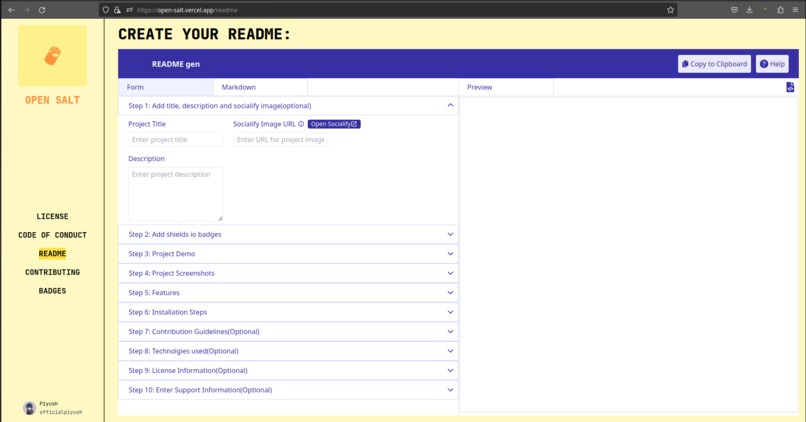
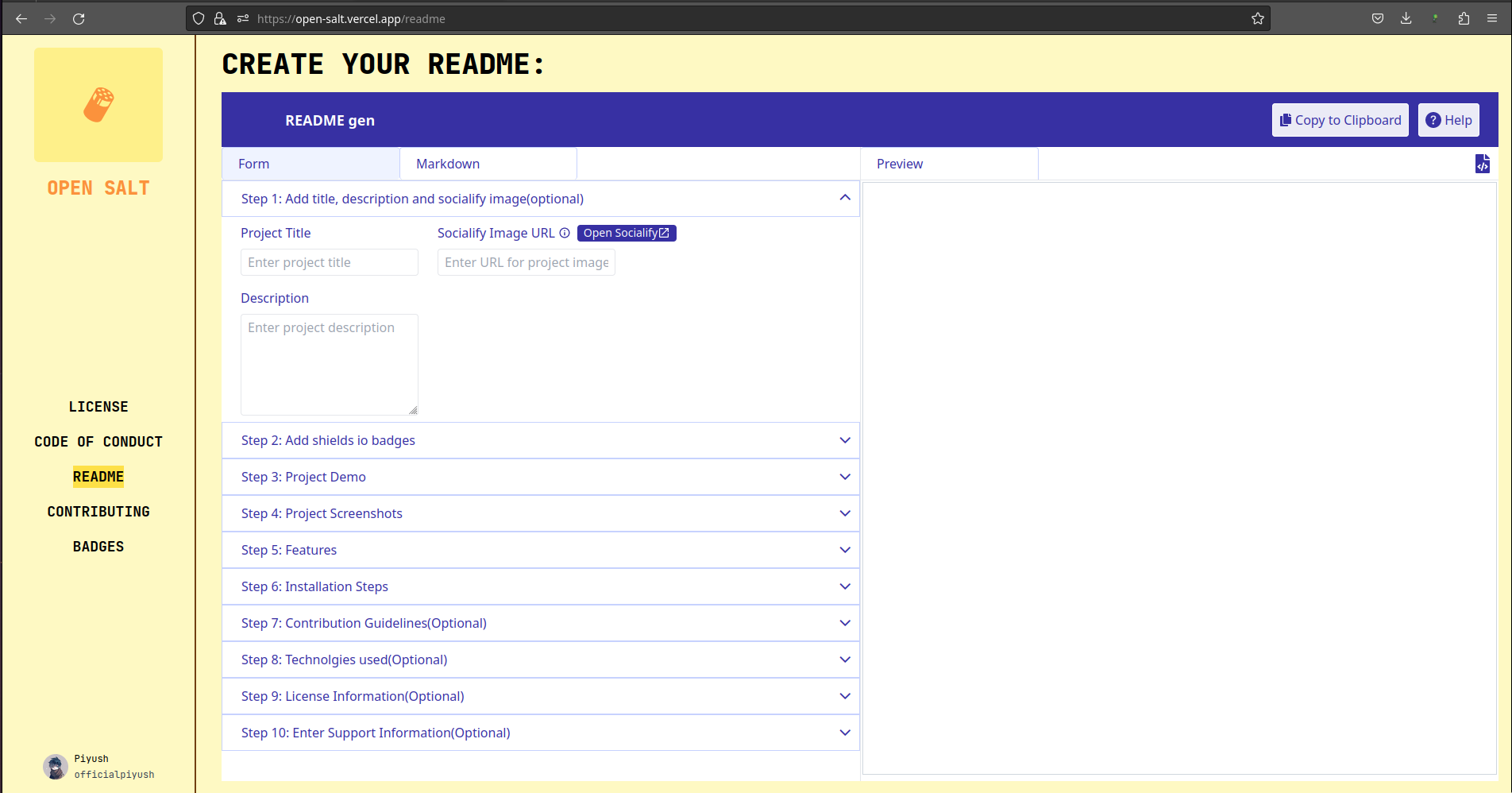
Readme Generator | Answer simple questions and get a beautifully generated README file
-
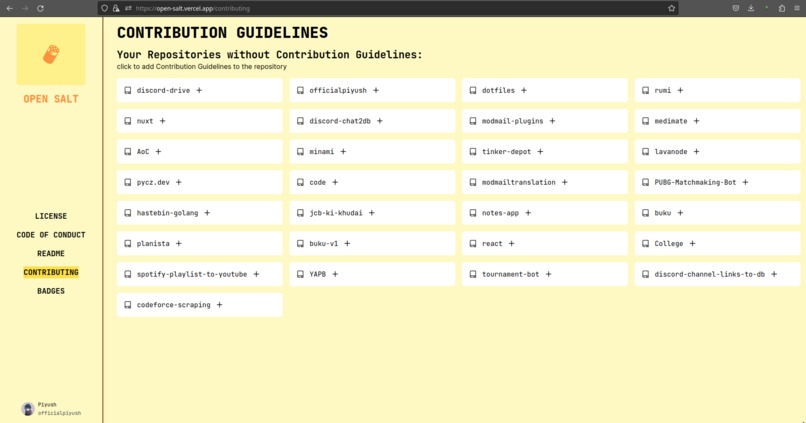
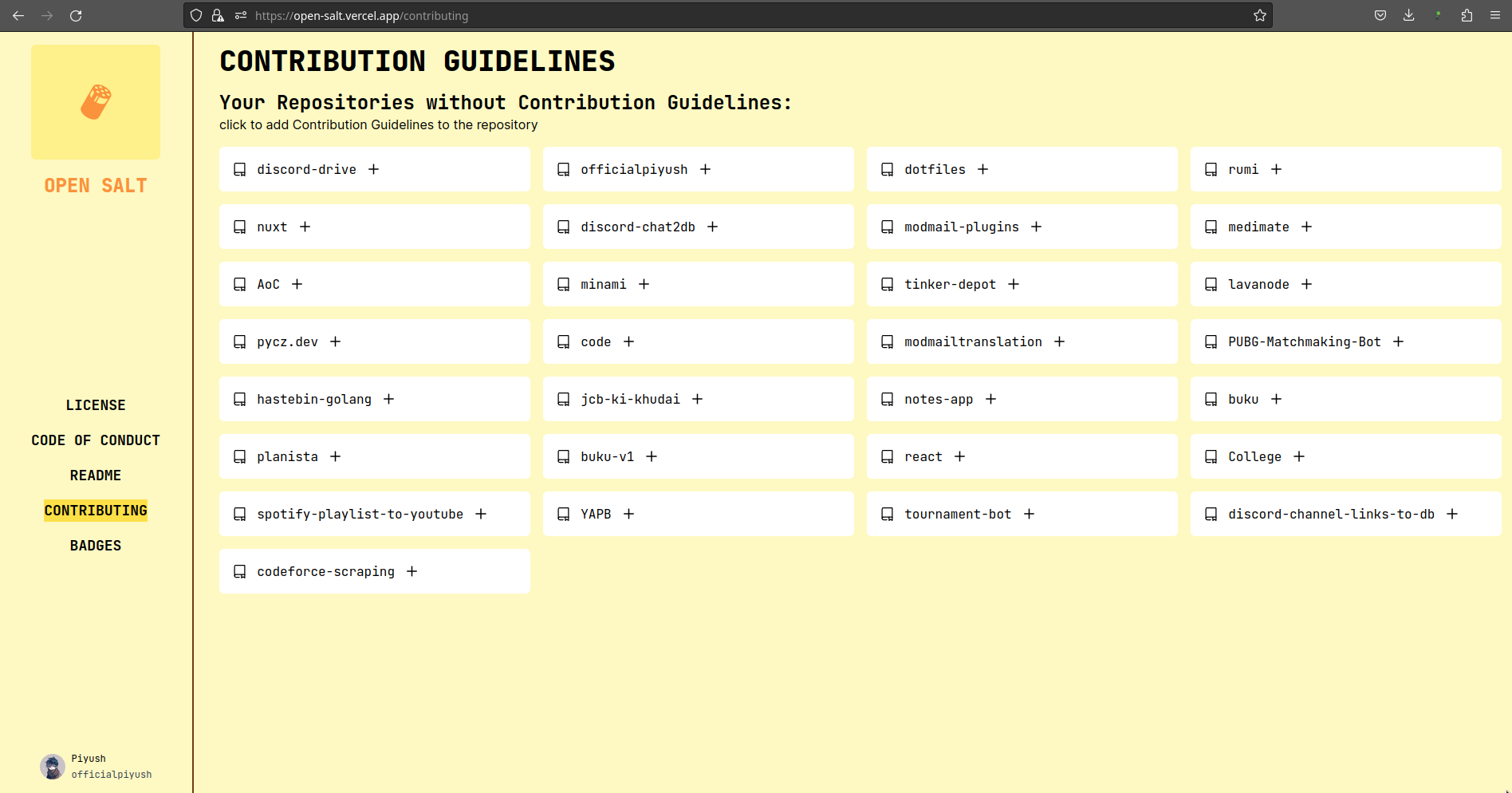
Contributing Page | Show's which repo(s) don't have a Contributing file and one click add them to repository | Github OAuth + API
-
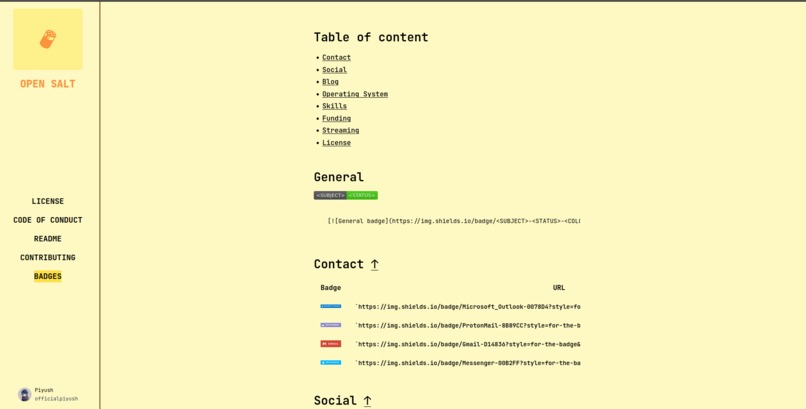
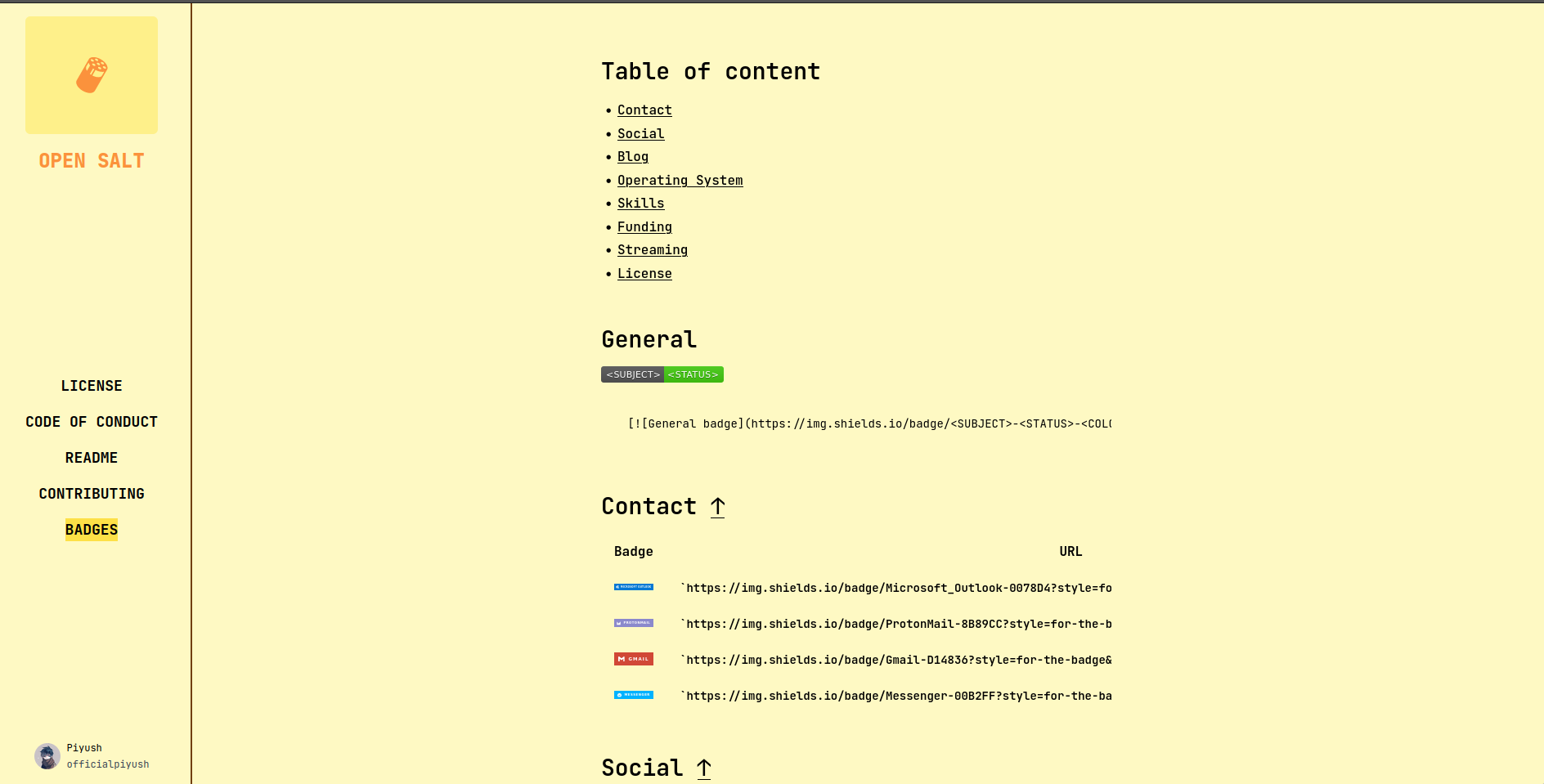
Badges Page | List commonly used badges
Inspiration 🌱
The inspiration behind Open Salt stems from a deep passion for open source and a desire to make it more accessible and welcoming for developers of all backgrounds. Open source software has the power to drive innovation, collaboration, and positive change, but many potential contributors, especially newcomers, often face barriers when trying to engage with open-source projects. We recognized the need for a platform that not only educates people about the open source but also guides developers on best practices for managing their open-source projects.
What it does ⚙️
- Open Salt aims to help the Open Source maintainers to manage their contribution guidelines.
- With this project, the maintainers can check what files they are missing and add them with a single click.
- A lot of people (including us), love to open source our work, but having an open source repository means people will notice, and many a times, would want to contribute back, may it be a bug fix or a new feature - and many of them could be new to open source, or contributing in general.
How we built it 🦾
Open Salt was developed using a combination of modern web technologies. We utilized GitHub OAuth for user authentication, ensuring a seamless connection between the user's GitHub account and Open Salt. Data storage and retrieval were managed through a robust database system, guaranteeing the security and integrity of user information.
The development process involved careful planning, iterative design, and extensive testing. We faced challenges related to authentication and integrating with the GitHub API, but with persistence and collaboration, we overcame these hurdles.
Overview
Open Salt was meticulously crafted to simplify open-source project management and education. Our development process involved the integration of cutting-edge technologies, passionate dedication to the open-source community, and a commitment to empowering developers.
Dashboard
The core of Open Salt is its dynamic dashboard, offering users a comprehensive overview of their linked GitHub account:
Repository Insights: Users can easily view the number of repositories they've created and contributed to. Open Salt also provides statistics on the top programming languages used and a breakdown of languages by commit frequency.
GitHub Stats: Real-time GitHub statistics, including follower counts, contributions, and stars, are displayed on the dashboard.
Contribution Graph: Users can access their GitHub contribution graph, showcasing their daily contributions to repositories.
Open Source Licenses
Open Salt hosts a dedicated section for open-source licenses:
License Information: We provide detailed explanations of all available open-source licenses, including permissions, conditions, and limitations. This ensures users understand the implications of each license.
Copy to Clipboard: To streamline the licensing process, users can easily copy their chosen license to the clipboard directly from the platform.
Identify Repositories without Licenses: Open Salt's side panel lists repositories lacking proper licenses. With a single click, users can add licenses to these repositories, ensuring legal compliance and clarity for contributors.
Code of Conduct
Open Salt actively promotes the inclusion of a code of conduct in open-source projects:
- Identify Repositories without Code of Conduct: The platform identifies repositories without a code of conduct and offers a one-click solution to add one. This process occurs in real-time, ensuring projects are welcoming and inclusive.
Readme Generator
Creating a high-quality README is crucial for an open-source project's success. Open Salt offers a powerful README generation tool:
Guidelines and Forms: Users can follow guidelines and use a form format to input project information. The platform generates a README markdown template based on the provided inputs.
Direct Markdown Editing: For users comfortable with markdown, Open Salt offers a direct markdown editor for hands-on README creation.
Preview Section: An integrated preview section allows users to visualize their README's formatting in real time, ensuring a polished presentation.
Contribution Guidelines
Open Salt encourages clear and accessible contribution guidelines:
- Identify Repositories without Guidelines: The platform identifies repositories without contribution guidelines and provides a one-click option to add them. This feature streamlines the contribution process for contributors.
Badges
Enhancing project credibility and visibility is made easy with badges:
- Badge Integration: Open Salt simplifies badge integration, allowing users to easily add badges for various social platforms, continuous integration services, and project metadata.
Our development journey was a collaborative effort, driven by a dedicated team of developers and open-source enthusiasts. We aimed to provide a seamless and user-friendly experience, and the platform continues to evolve with the input and feedback of the open-source community.
Challenges we ran into 🏁
Throughout the development of Open Salt, we encountered several challenges that tested our problem-solving skills. Some of the notable challenges included:
Configuring authentication with GitHub and securely storing user data.
- Implementing OAuth to retrieve and list user repositories.
- Analyzing repository contents to identify missing project files.
- Providing an intuitive and user-friendly interface for managing open-source projects.
- Saving and storing the user Github access token's securely.
These challenges pushed our team to think creatively and develop robust solutions that ensure a smooth user experience.
Accomplishments that we're proud of 🏆
We are immensely proud of several accomplishments with Open Salt:
- Successfully implementing GitHub authentication for a seamless user experience.
- Developing a comprehensive educational hub with valuable resources on open source best practices.
- Creating a user-friendly dashboard that simplifies open-source project management.
- Fostering a community of developers who have embraced Open Salt as a tool to improve their open-source projects.
Our proudest achievement is the positive impact Open Salt has had on both newcomers and experienced developers in the open source community.
What we learned 🧠
Working on Open Salt has been a valuable learning experience for our team. We have gained insights into:
- The importance of user-friendly documentation and resources for open source.
- The significance of automation in simplifying open-source project management.
- The challenges and intricacies of integrating with external APIs, such as GitHub.
- The power of community engagement in promoting open source.
These learnings have not only enriched our technical skills but also deepened our commitment to fostering a more inclusive and vibrant open source ecosystem.
What's next for Open Salt 🔮
Looking ahead, Open Salt has an exciting roadmap:
- Expanding educational content: We plan to add more in-depth resources, including video tutorials and interactive guides, to help developers excel in open source.
- Enhanced project management tools: We aim to offer advanced features for project analytics, collaboration, and automation.
- Community building: We'll focus on growing the Open Salt community by hosting events, webinars, and hackathons to encourage collaboration and knowledge sharing among developers.
Open Salt is dedicated to being a catalyst for positive change in the world of open source, and we're excited to see it evolve and continue to empower developers worldwide.
Built With
- api
- github
- nuxt
- open
- source
- trpc
- uno
- vue


Log in or sign up for Devpost to join the conversation.