-
-
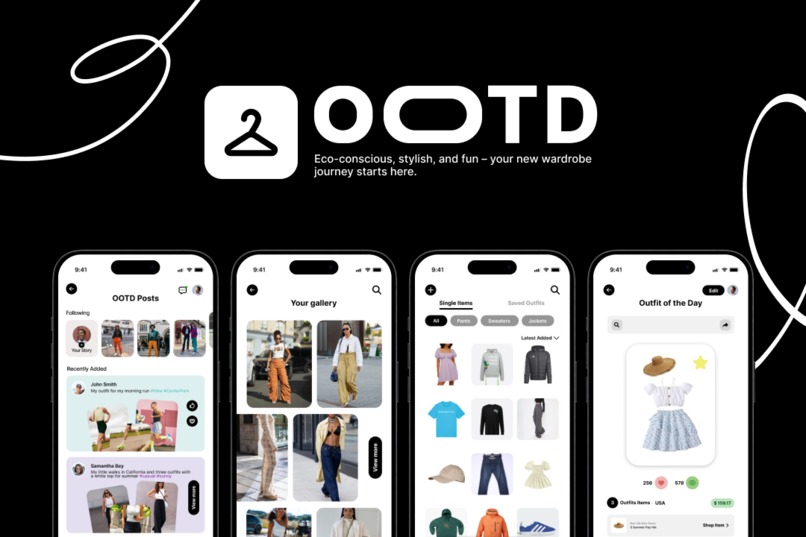
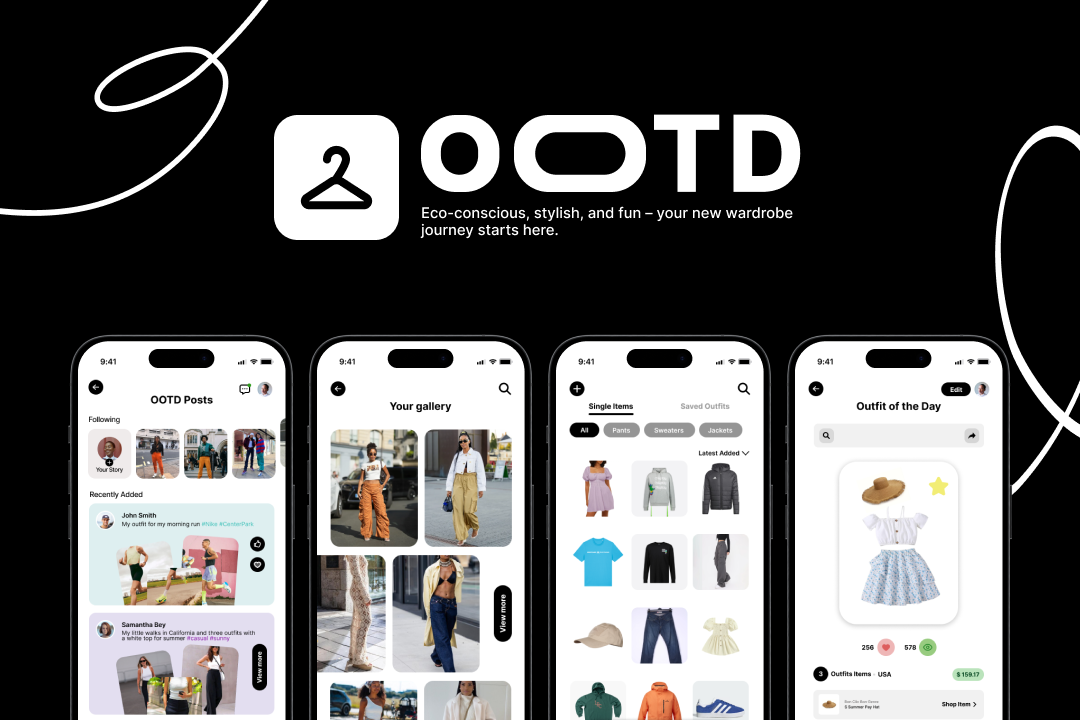
Eco-conscious, stylish, and fun – your new wardrobe journey starts here.
-
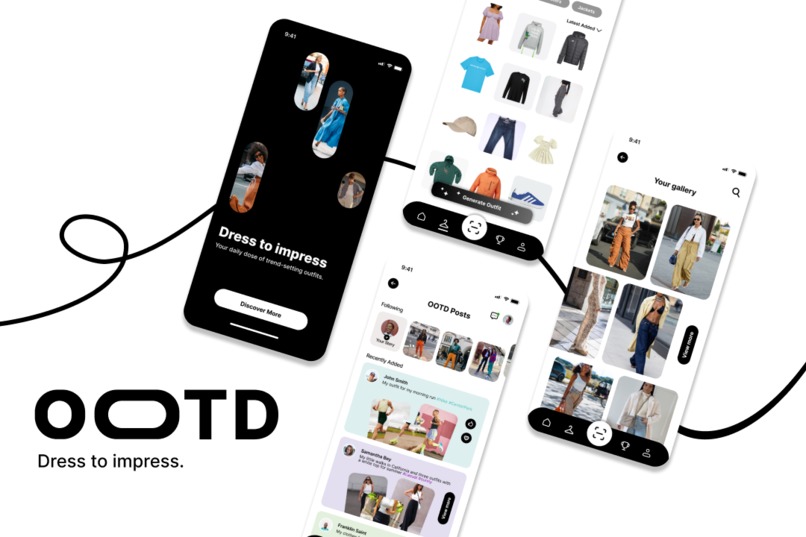
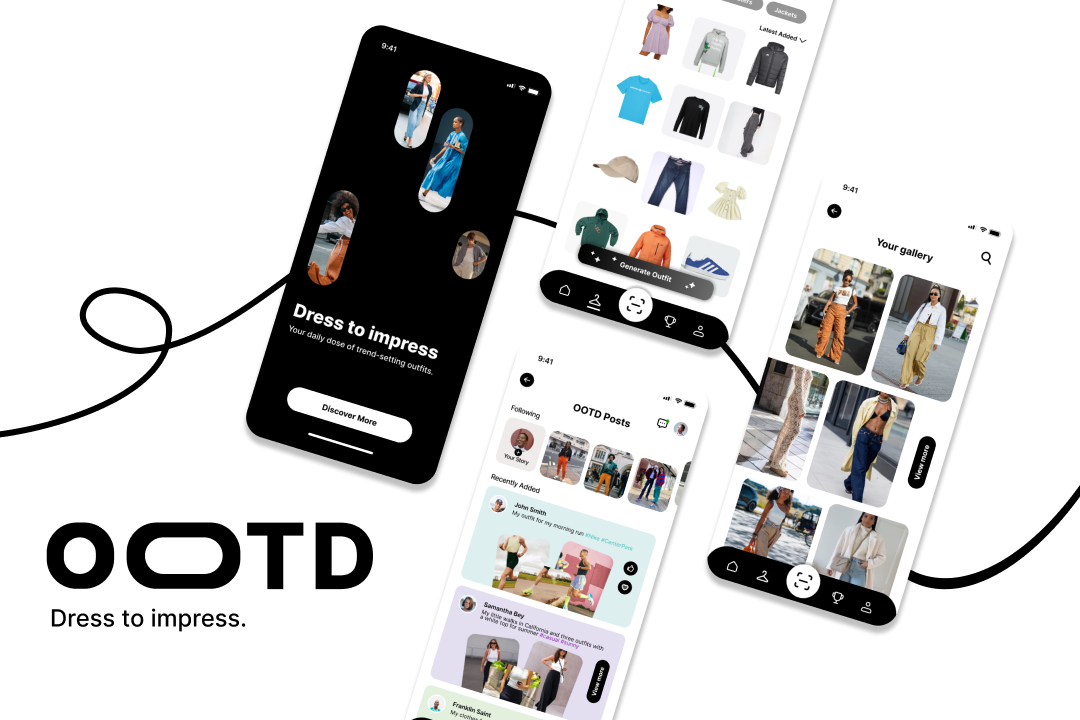
Dress To Impress.
-
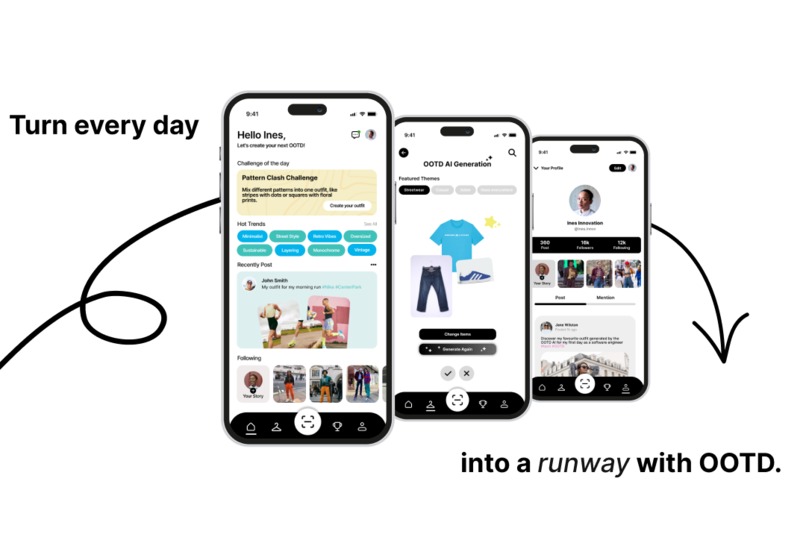
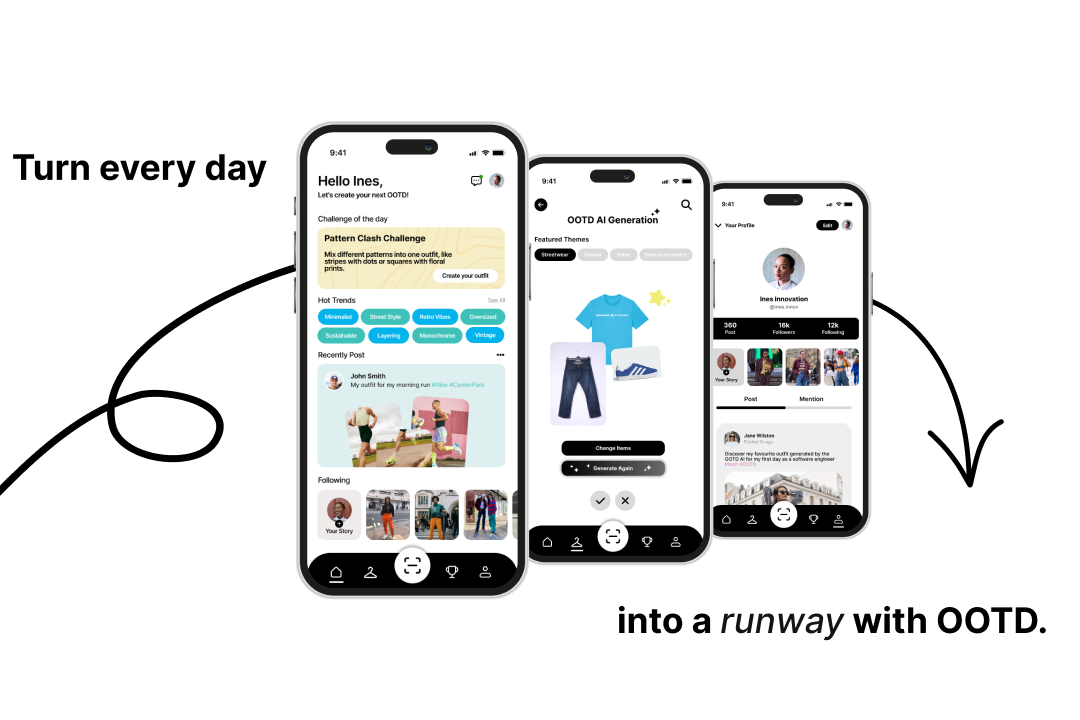
Turn everyday into a runway with OOTD.
-
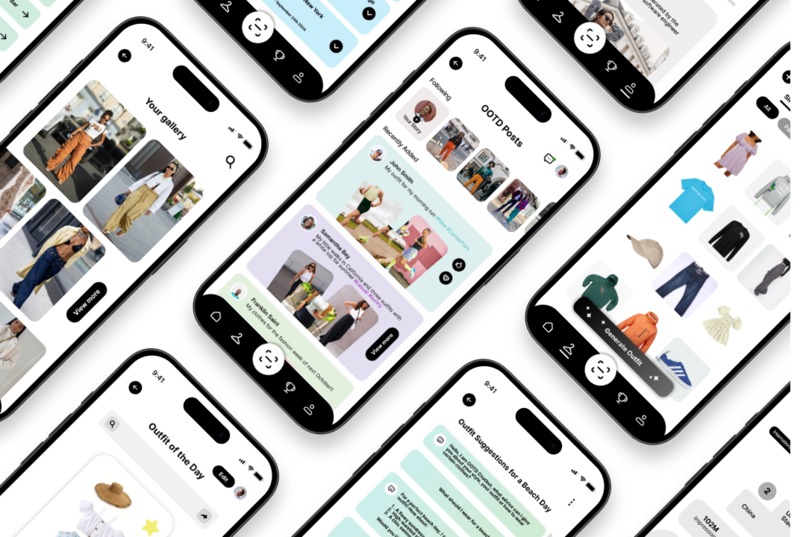
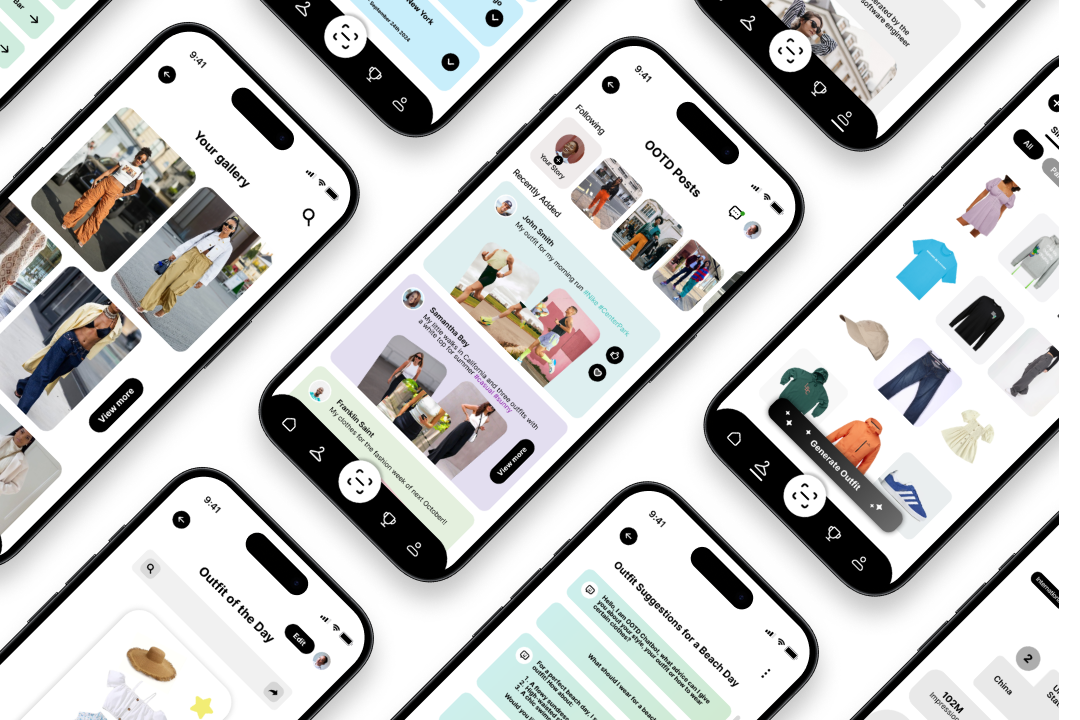
OOTD Mockup
Inspiration
I created the startup idea OOTD out of a desire to build a social app that encourages creativity and personal expression while maintaining a sustainable focus. After analyzing consumer behavior on platforms like TikTok and Instagram, I noticed many young people are deeply influenced by trends and often obsessed with recreating the outfits of influencers, which can contribute to overconsumption. With OOTD, I’ve struck a balance: users can share their daily outfits and participate in fashion challenges, but they also have the option to exchange clothing with others through a dedicated swap feature. This promotes sustainability and helps reduce the waste caused by fast fashion.
To design my startup idea I was inspired by the bereal application which reaches a wide audience of all ages from celebrities to normal people and even French politicians. I took into account the growing enthusiasm of people during the Paris 2024 Olympic Games to introduce gamification and for each person to make their country or region win by participating in daily challenges. But above all the fashion and fast fashion industry is very controversial so I was careful to take into account the carbon footprint to design an ecological app.
The fact that this social network is integrated with short photos of your outfits and little interaction allows me to reach a wider audience and therefore reach a high potential market. Let's take a closer look!
What it does
OOTD is a gamified social platform that encourages users to post their outfits every day to earn points for their country, fostering a friendly competition among nations. It integrates AI to help users generate outfits based on weather, personal wardrobe, and daily themes. Importantly, it’s a safe space—users can only interact with positive reactions (likes, smileys), and there are no comment sections that could harm self-esteem or mental health.
For children, I’ve added a special mode where the app hides faces in outfit photos, and AI scans every post to ensure no nudity or inappropriate content is shared. Additionally, OOTD offers a platform for eco-conscious creators and small brands, giving them a place to promote sustainable fashion and recycling initiatives. Key features include:
User Profiles and Wardrobe Management: Users create profiles, upload their wardrobe, and track outfit usage for a personalized fashion experience.
Daily Outfit Suggestions: AI-driven outfit recommendations based on weather, user wardrobe, and daily challenges, ensuring users are always on-trend.
Challenges and Gamification: Country-based fashion competitions where users post outfits daily, earning points for their country while engaging in friendly challenges like "Outfit of the Day" or "Outfit of the World."
Sustainability and Clothing Swap: A platform to swap unwanted clothes with others, promoting eco-conscious fashion and reducing waste.
Positive Social Engagement: Users can share and rate outfits through smileys and likes, with no negative comments allowed to foster a positive environment.
AI Moderation AI scans all uploaded outfits through computer vision algorithm to detect inappropriate content before posting, ensuring a safe and positive community. A safe space for kids where outfit photos have faces hidden, ensuring privacy and security.
Eco-Friendly Recommendations: Featuring brands and products that align with sustainability, encouraging users to shop consciously.
Interactive Chatbot: An AI-powered chatbot that provides personalized outfit advice, answers your fashion questions, and offers tutorials on tasks like tying a tie or ironing clothes, ensuring you always look your best.
AI Wardrobe Integration: Scan each piece of your wardrobe to digitally catalog your clothing. The AI then generates outfit suggestions based on weather, themes, and challenges, or you can manually create ensembles, making daily styling effortless.
How I Built It
So far, I’ve built a Figma prototype to visualize the user interface and journey. My design process was heavily informed by a deep analysis of social media trends and behavior, as well as insights into the sustainability movement. Each feature was developed with user safety, positive engagement, and environmental consciousness in mind. The gamification aspect was also a critical design choice, allowing users to engage in a fun, non-toxic competition that ties their personal style to a broader cause—national pride and sustainability.
Challenges I ran into
One of the biggest challenges was balancing the excitement of fashion with the ethical responsibility to avoid promoting hyperconsumption. The solution was the integration of the swap feature, which allows users to give away clothing they no longer need, making the app as much about recycling as it is about style. Additionally, ensuring the app remains a safe and positive environment required building strong AI moderation tools for both content filtering and user interactions.
Accomplishments that I am proud of
I’m particularly proud of how OOTD addresses the harmful aspects of social media while keeping the fun and excitement alive. The inclusion of a child-safe mode and eco-conscious design ensures that OOTD is a responsible and inclusive platform. The AI-powered outfit generation based on weather and daily themes has been a great addition, simplifying the sometimes daunting task of picking out a new outfit every day.
What I learned
Through this process, I’ve learned how to integrate AI responsibly into a social platform, ensuring it’s used to enhance user experience while protecting them from harmful content. I’ve also deepened my understanding of how consumer behavior can be shaped by design choices, and how important it is to make sustainability and positivity core features of any platform, especially in the fashion space.
What's next for OOTD
Going forward, I plan to fully develop the app with a focus on scalability, incorporating more AI-driven insights, and expanding the clothing swap feature to make it more dynamic and user-friendly. I’m also excited to partner with more eco-conscious brands and creators, amplifying their voices and giving users even more sustainable options. The ultimate goal is to create a global movement around daily fashion that promotes creativity, sustainability, and positive engagement. The next steps for OOTD include:
1. Development and Testing: Transitioning from the Figma prototype to full app development, followed by thorough testing to ensure the platform functions smoothly across all devices.
2. Feature Enhancements: Expanding AI capabilities to provide smarter outfit recommendations, improving the clothing swap system, and introducing new features based on user feedback.
3. Sustainability Partnerships: Collaborating with eco-friendly brands, local fashion creators, and sustainability-focused organizations to enhance the app’s impact on reducing fashion waste.
4. Launch and User Engagement: Launching the app to the public, with a focus on growing a vibrant community through challenges, gamification, and social media campaigns to boost user participation. International Expansion: Scaling the app globally with country-specific challenges and local fashion trends.
Built With
- figma


Log in or sign up for Devpost to join the conversation.