-
-
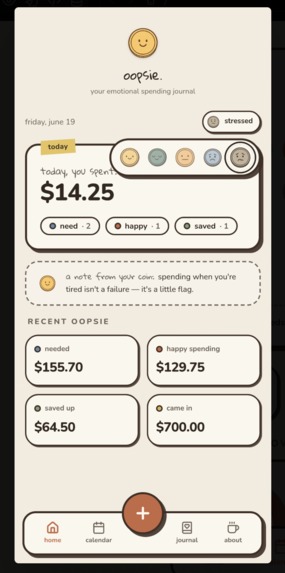
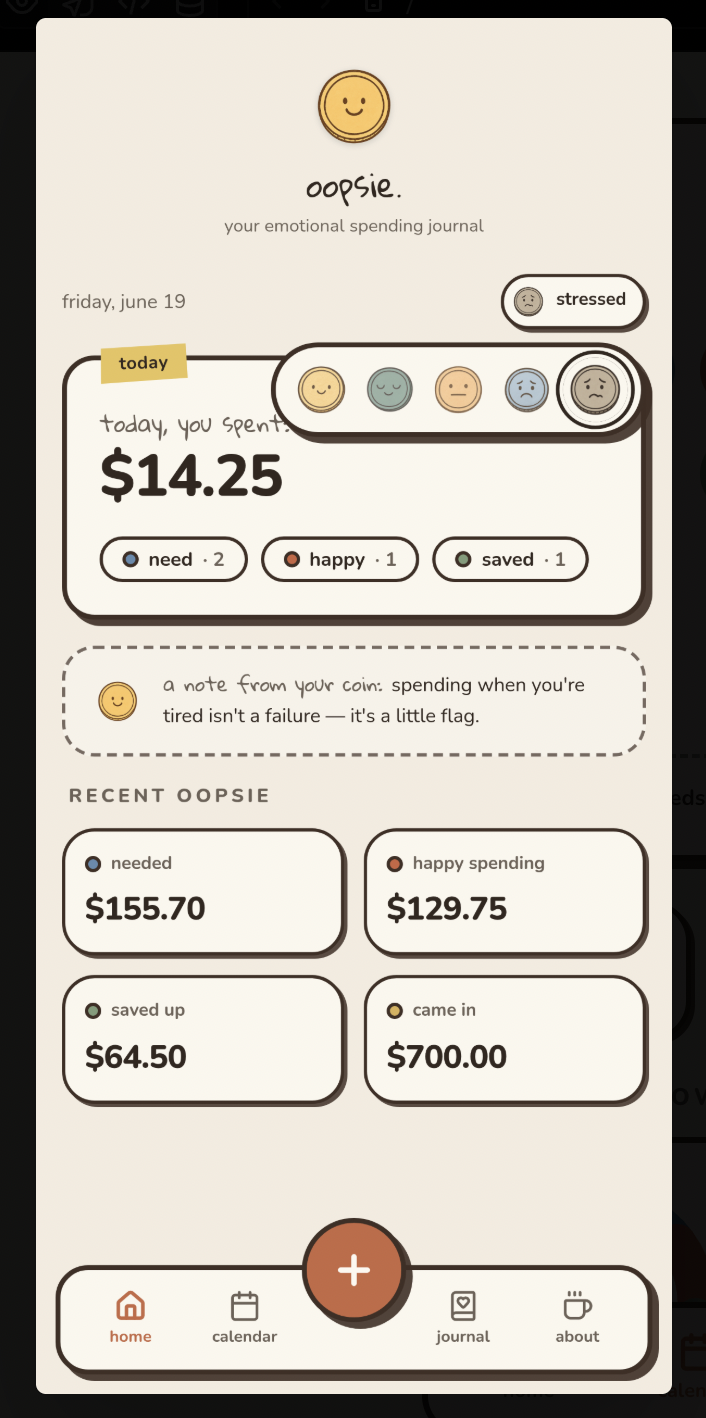
Home Page
-
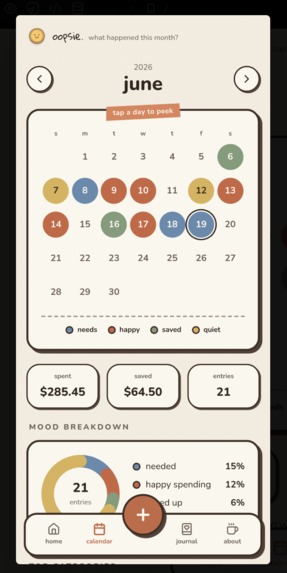
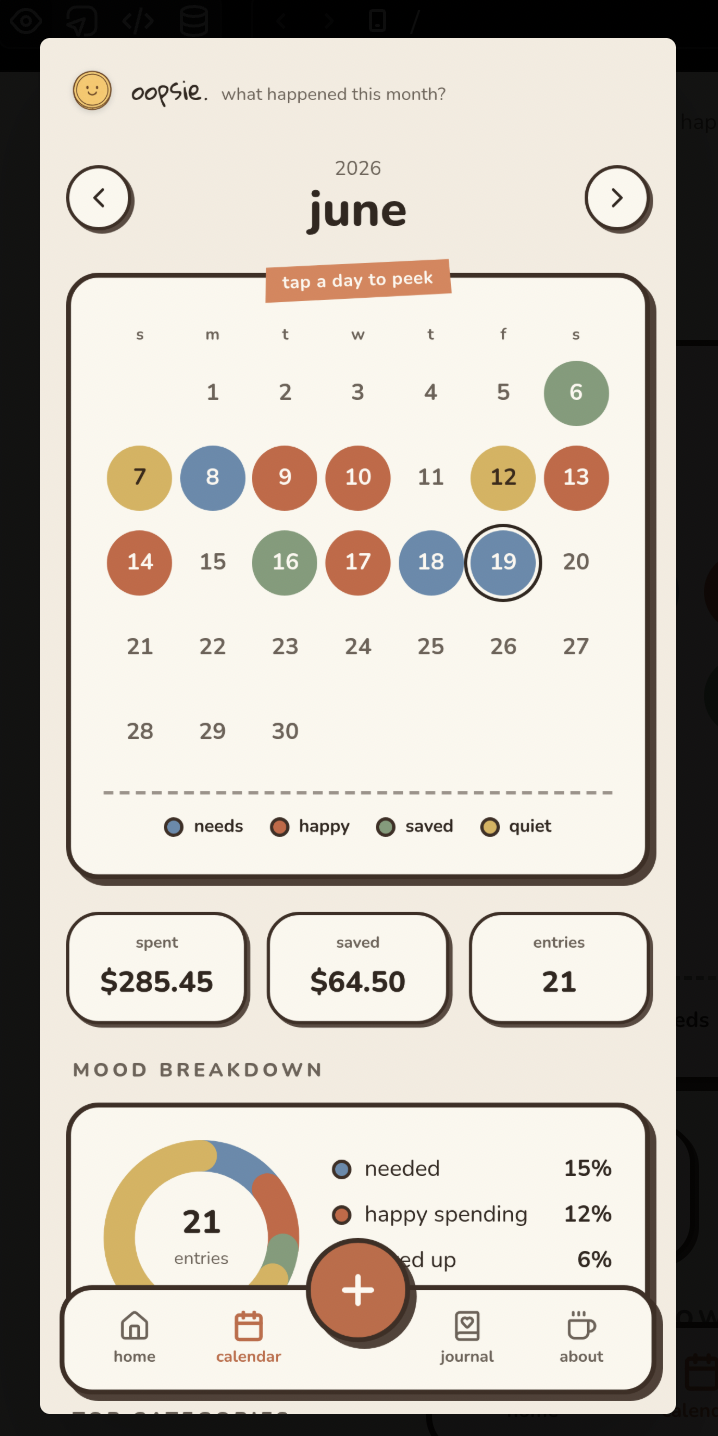
Calendar Page
-
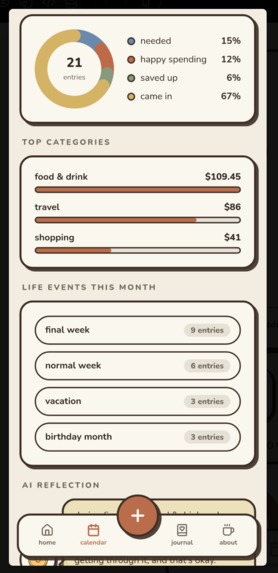
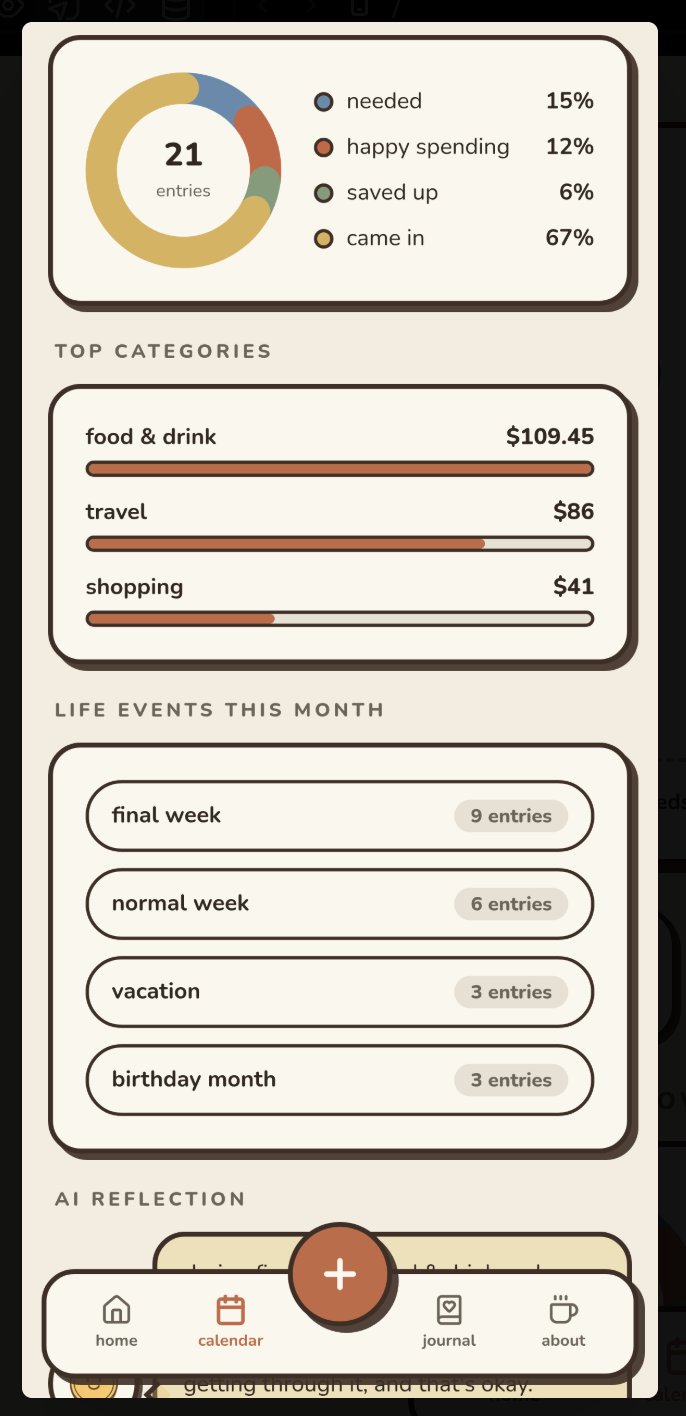
Calendar details
-
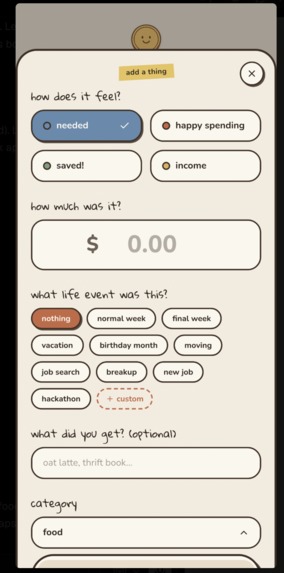
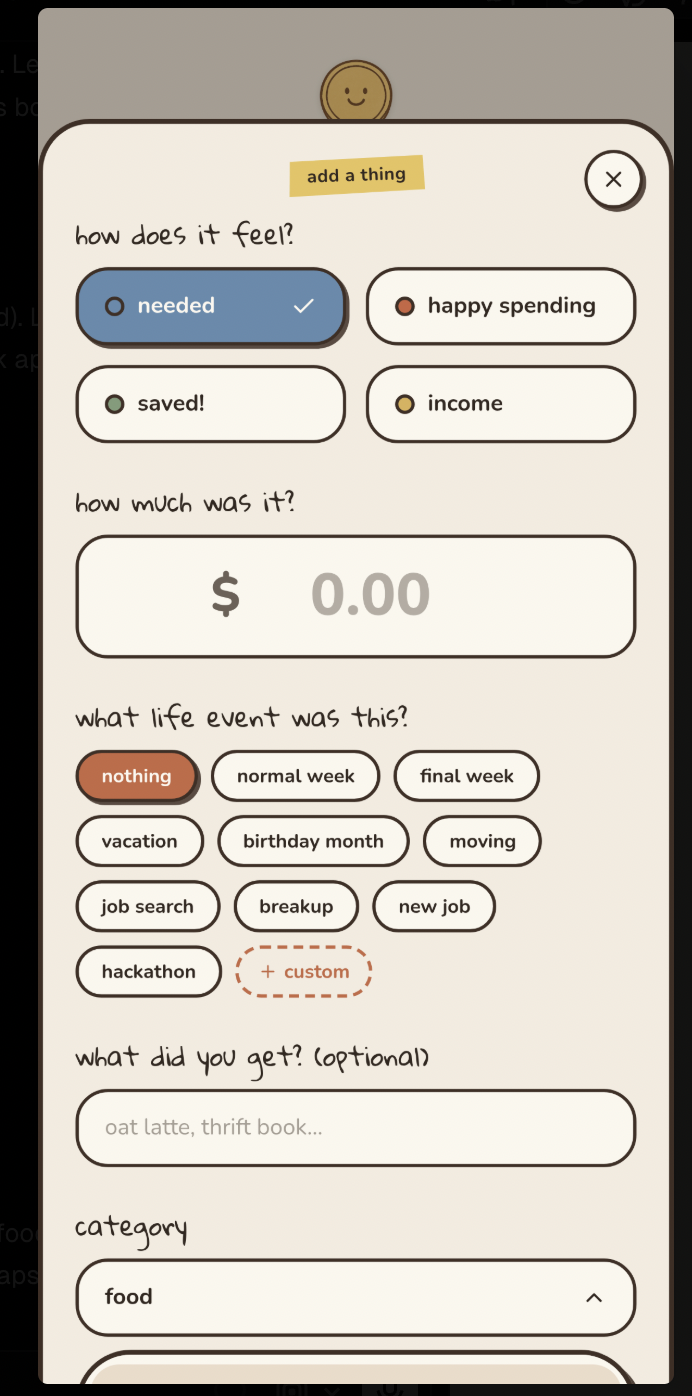
Add Spending
-
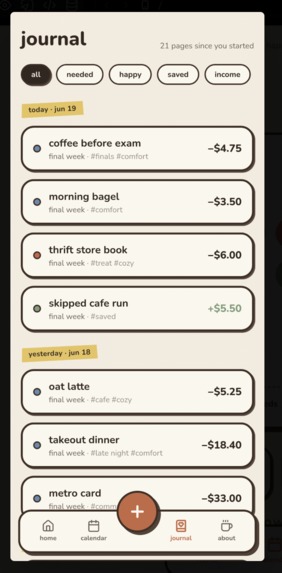
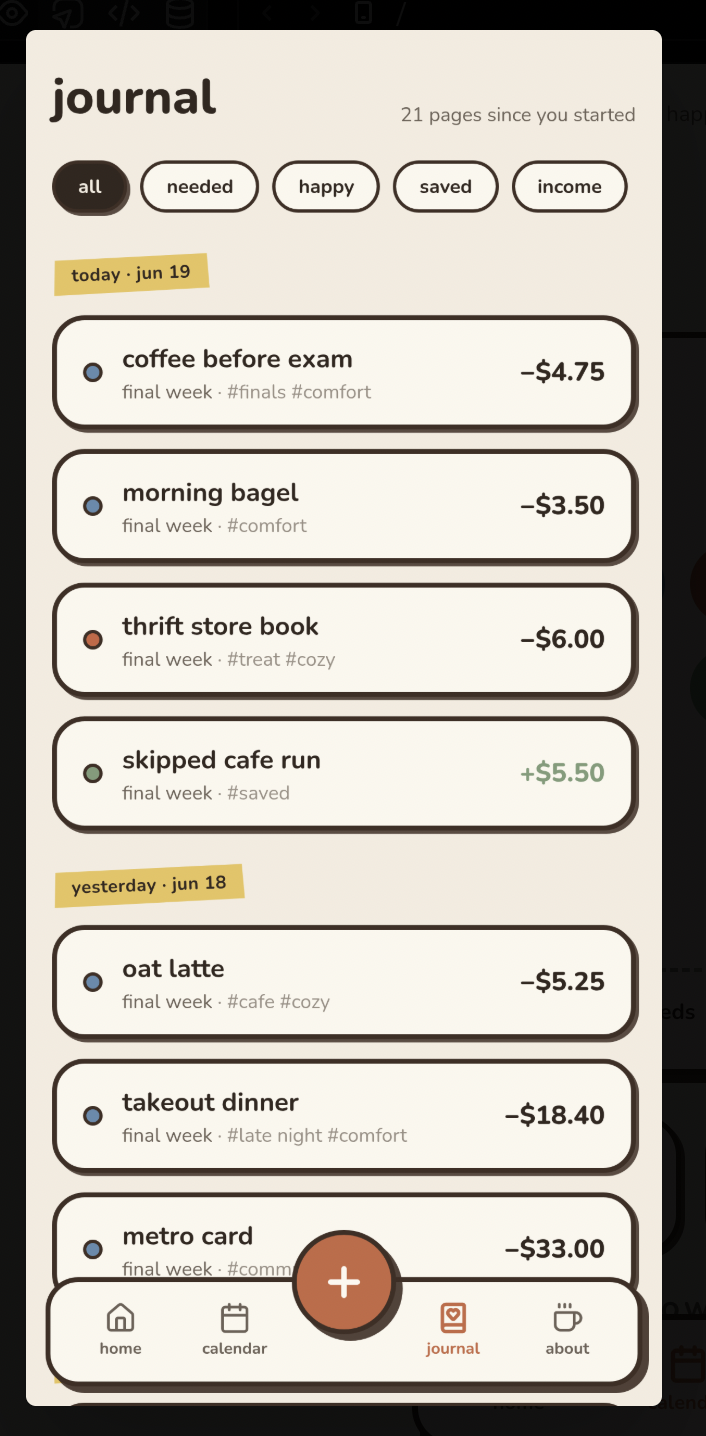
Journal Page
-
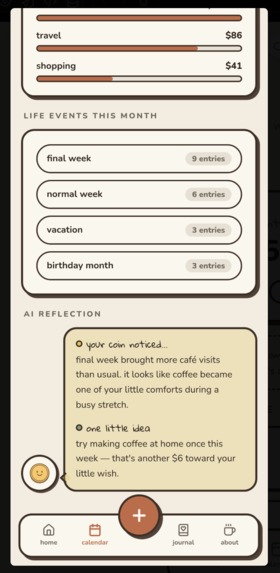
AI Reflection
-
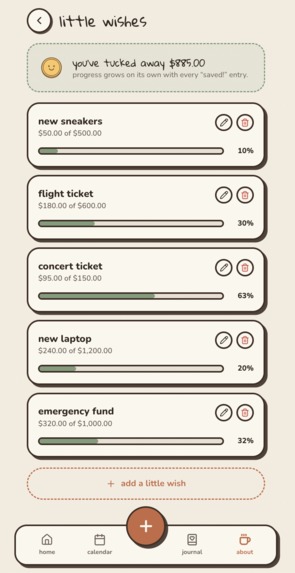
Little Wish
Inspiration
The idea started as a small programming exercise while I was learning Python. Instead of leaving it as a practice project, I continued refining the concept.
Later, while practicing data analysis with my own spending records, I noticed that my expenses were closely connected to what was happening in my life. During birthdays, final exam weeks, or busy project deadlines, my spending patterns naturally changed. Traditional budgeting apps could tell me how much I spent, but they couldn't explain why.
That realization inspired me to build Oopsie: a spending journal that connects life events, emotions, and spending habits to help people better understand the story behind their spending.
What Oopsie does
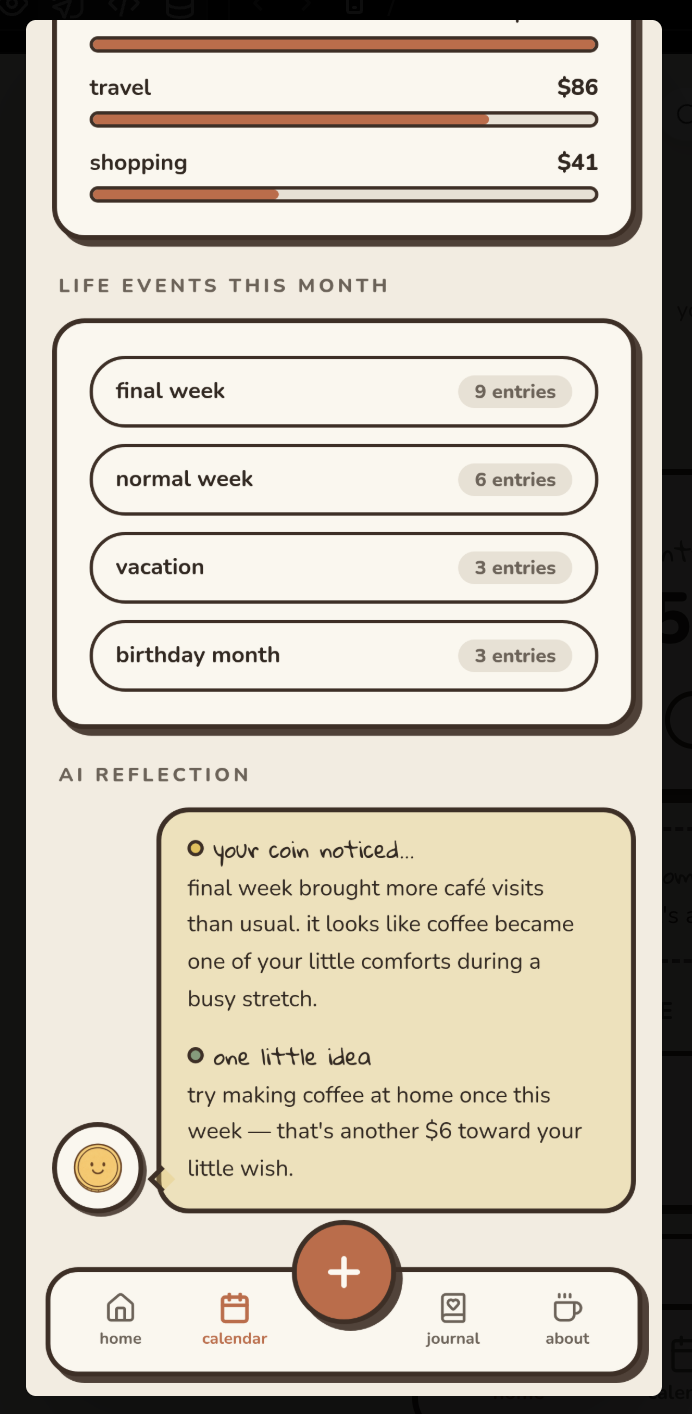
Oopsie helps users understand the story behind their spending instead of simply showing numbers. Rather than focusing only on how much was spent, it connects spending with real-life moments and personal experiences, making budgeting feel more human and meaningful.
Key features include:
-Life Events
Record the context behind each spending decision, such as birthdays, vacations, finals week, or project deadlines.
-Daily Mood
Capture how each day felt, adding emotional context alongside spending habits.
-AI Reflection
Analyze spending patterns by combining life events, moods, and expenses to help users understand what may be influencing their spending over time.
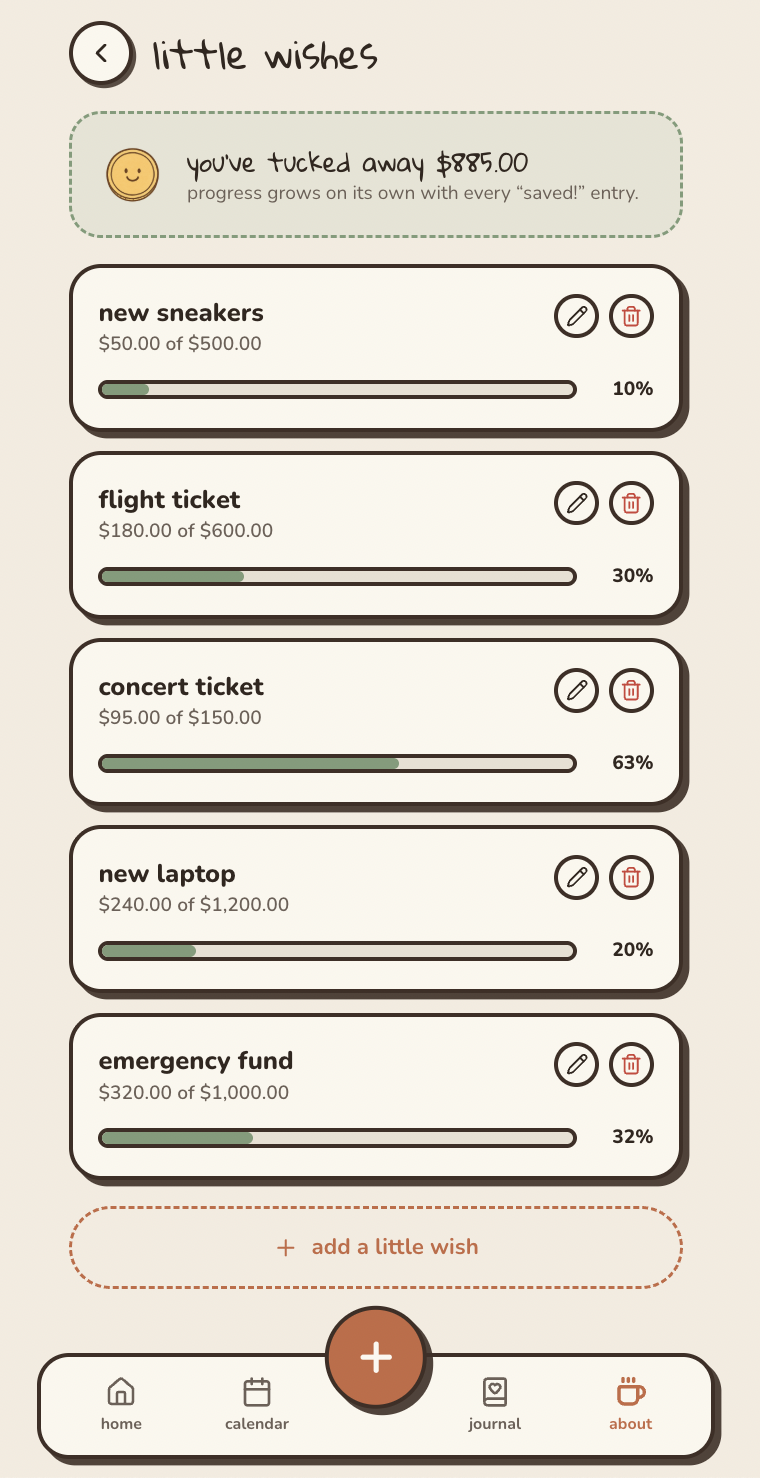
-Little Wish
Turn resisted impulse purchases into visual progress toward future goals, encouraging intentional spending without creating pressure or guilt.
How I built it
The project began with sketches on my iPad, where I mapped out the user flow and designed the first UI concepts before getting into any code.
After validating the overall experience, I used AI-assisted development to rapidly build the initial interface and iterated on the design through multiple rounds of testing and refinement.
Once the frontend was ready, I created an AWS Aurora PostgreSQL database and connected it to the application through API routes, allowing spending entries, life events, categories, and Little Wish data to be stored and retrieved in real time through v0.
Finally, the application was deployed on Vercel, bringing the project from an early concept to a fully functional end-to-end application built with Next.js, AWS Aurora PostgreSQL, and Vercel.
Challenges I ran into
Building Oopsie was my first experience creating an end-to-end full-stack application with a real cloud database. Along the way, I faced three major challenges:
- Learning the backend from scratch: Coming from a UI/UX background, I had to learn backend concepts, build APIs, create an AWS Aurora PostgreSQL database, and successfully connect it to Oopsie. Documentation and AI-assisted development helped me understand each step.
- Debugging and testing: Once the backend was connected, many issues only appeared during real usage. I spent a lot of time testing the app, identifying bugs, and solving them one by one until the experience became stable.
- Prioritizing the MVP: With limited hackathon time, I constantly evaluated which features were essential for the first release and which ideas should be saved for future versions. This helped me stay focused while delivering a complete working product.
Accomplishments that we're proud of
The accomplishment I'm most proud of is NOT giving up when things became difficult.
Throughout the project, I ran into many unexpected challenges, from backend integration to database connections and debugging. Instead of starting over, I learned to identify each problem, solve it step by step, and gradually turn ideas into a working product.
I'm also proud that this project pushed me into a completely new area of software development. What began as a UI/UX concept became an opportunity to learn backend development, cloud databases, and deployment for the first time.
Most importantly, I built an application that solves a problem I personally experienced.
What I learned
Building Oopsie taught me that creating a great application is much more than designing a beautiful interface. It gave me a much deeper understanding of the complete product development process, from planning and development to testing and continuous improvement.
- Product Planning: A well-designed user flow makes development much smoother and reduces unnecessary rework later.
- Full Application Architecture: A great user experience depends on more than the frontend. APIs, databases, cloud infrastructure, and deployment all work together behind the scenes.
- Learning Through Problem Solving: Every bug became an opportunity to learn. Helped me understand how real applications are built.
- User-Centered Design Using Oopsie, I revealed many usability issues that only appeared during real interaction, reinforcing the importance of continuous iteration.
What's next for Oopsie
Oopsie is just getting started.
Here's what I'd love to build next:
Flexible Journal Timeline:
Allow users to add or edit entries on any date, making it easy to capture forgotten moments and keep their spending story complete.
Delightful Tuck-In Feedback
Bring each "tuck it in" moment to life with playful animations, cozy feedback cards, and small celebratory interactions and animations that make logging expenses feel rewarding instead of routine.
Life Event Comparison:
Compare spending across different life events and even different years to discover how life experiences shape spending habits over time.
Smarter AI Pattern Discovery:
Help users uncover hidden connections between life events, moods, and spending behaviors, creating more meaningful "Oh, that's why..." moments.
More Meaningful Little Wishes
Make long-term goals more motivating with richer progress tracking, milestones, and personalized encouragement.
Your Spending Story
Transform spending history into a personal timeline, helping users look back on meaningful moments and see how they have grown over time.
Ultimately, I hope Oopsie helps people better understand their spending, their lifestyle, and themselves. One reflection at a time.
Built With
- api
- aws-aurora-postgresql
- github
- next.js
- prisma
- v0
- vercel

Log in or sign up for Devpost to join the conversation.