-
-
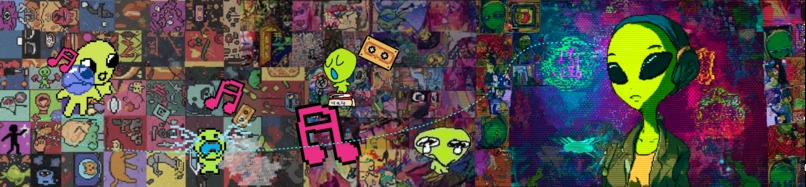
Tap the beat. Challenge your friends. Right on Snapchat!
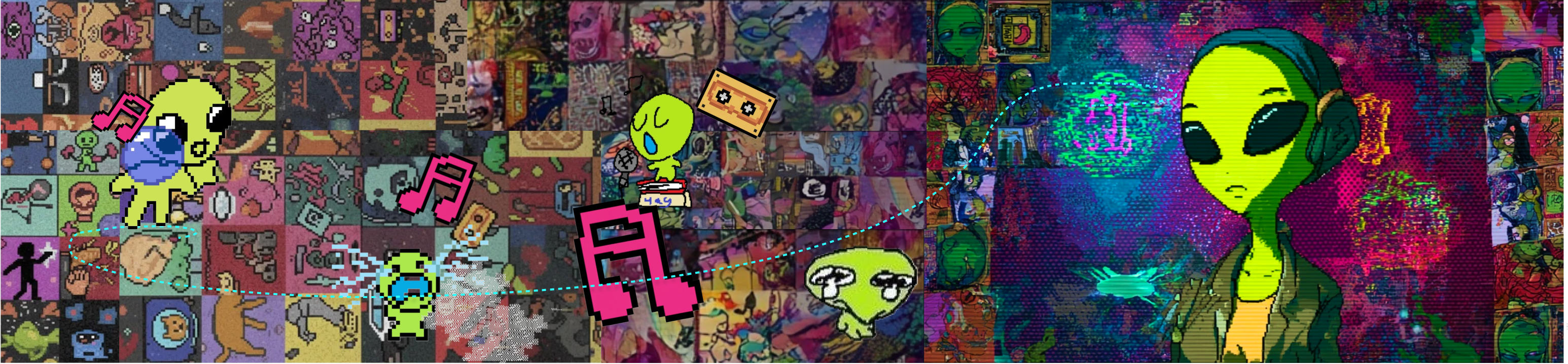
Devpost Submission Content
Inspiration
"What if you could compete with friends on a rhythm game, right in Snapchat?"
We love rhythm games like Guitar Hero, Beat Saber, and Taiko no Tatsujin. The satisfying feeling of tapping to the beat and building combos is universally fun. When we saw the Play Everywhere: Build with Snap Games Lensathon, we knew this was the perfect opportunity to bring that experience to Snapchat—a platform with millions of users already sharing and competing with friends.
Lens Studio caught our attention because of its powerful built-in components. The idea that we could build a complete game with leaderboards, social features, and instant sharing without a custom backend was exciting.
What it does
Oops I Tapped It Again is a rhythm-based mobile game where players tap falling notes in sync with the music.
    ♪  ♫  ♪           <- Notes fall from top
    |  |  |
    |  |  |
   [L][C][R]          <- Tap when notes hit the zone!
Key Features
| Feature | Description |
|---|---|
| 3-Lane Gameplay | Notes fall in Left, Center, and Right lanes |
| Precision Scoring | Perfect, Great, Good, or Miss based on timing |
| Combo System | Chain hits for multiplier bonuses |
| Friend Leaderboards | Compete with your Snapchat friends |
| Quick Sessions | ~60 second songs, perfect for mobile |
Scoring System
The score for each note is calculated based on timing accuracy:
$$\text{Score} = \text{BasePoints} \times \text{TimingMultiplier} \times (1 + \text{ComboBonus})$$
Where the timing multiplier depends on how close the tap is to the target time:
$$\Delta t = |t_{\text{tap}} - t_{\text{target}}|$$
| Rating | Timing Window | Multiplier | Visual Feedback |
|---|---|---|---|
| Perfect | < 50ms | 1.0 | Golden burst |
| Great | < 100ms | 0.75 | Blue glow |
| Good | < 150ms | 0.5 | White flash |
| Miss | ≥ 150ms | 0 | Red X |
How we built it
Lens Studio served as our game engine, providing everything from 2D rendering to touch input to social features. We paired it with a Python-based offline tool for audio analysis.
Architecture Overview
┌─────────────────────────────────────────────────┐
│              LENS STUDIO (CLIENT)               │
├─────────────────────────────────────────────────┤
│  Conductor → NoteSpawner → HitZoneManager       │
│       ↓            ↓              ↓             │
│         SongLibrary.ts (Beatmap Data)           │
│                    ↓                            │
│         Leaderboard Component (Built-in)        │
└─────────────────────────────────────────────────┘
                     ⬇
┌─────────────────────────────────────────────────┐
│           OFFLINE TOOLS (Python)                │
├─────────────────────────────────────────────────┤
│  generate_beatmap.py                            │
│  ├── Audio Analysis (librosa)                   │
│  ├── Beat Detection & Tempo Extraction          │
│  └── Lane Assignment (spectral centroid)        │
└─────────────────────────────────────────────────┘
Core Components
| Component | Role | Key Responsibility |
|---|---|---|
| Conductor | Timekeeper | Tracks song position in beats |
| NoteSpawner | Spawner | Creates notes at the right moment |
| HitZoneManager | Judge | Detects taps and calculates scores |
| SongLibrary | Database | Stores pre-generated beatmap data |
Beatmap Generation Pipeline
Our Python tool transforms any audio file into a playable beatmap:
Audio File (.mp3)
      ↓
  ┌───────────────┐
  │   librosa     │  ← Audio analysis library
  └───────────────┘
      ↓
  ┌───────────────┐
  │ Tempo Detection│  → 95.7 BPM detected
  └───────────────┘
      ↓
  ┌───────────────┐
  │ Onset Detection│  → Find note positions
  └───────────────┘
      ↓
  ┌───────────────┐
  │ Lane Assignment│  → Spectral centroid analysis
  └───────────────┘
      ↓
  SongLibrary.ts (79 notes generated)
Beat Timing Conversion:
Given a beat number $b$ and tempo in BPM, we calculate the exact timestamp:
$$t = \frac{60 \cdot b}{\text{BPM}} + \text{offset}$$
Example: At 95.7 BPM, beat 10 occurs at $t = \frac{60 \times 10}{95.7} = 6.27$ seconds
Lane Assignment via Spectral Centroid:
The spectral centroid represents the "center of mass" of the frequency spectrum:
$$C = \frac{\sum_{k=0}^{N-1} f_k \cdot |X_k|^2}{\sum_{k=0}^{N-1} |X_k|^2}$$
| Centroid Value | Lane Assignment |
|---|---|
| Low ($C < 2000$ Hz) | Left |
| Medium ($2000 \leq C < 4000$ Hz) | Center |
| High ($C \geq 4000$ Hz) | Right |
Challenges we ran into
1. Beat Sync Accuracy
Problem: Notes weren't landing exactly on the beat.
Solution: Account for travel time from spawn to hit zone:
$$t_{\text{spawn}} = t_{\text{hit}} - \frac{d_{\text{travel}}}{v_{\text{note}}}$$
We spawn notes early so they arrive at the hit zone exactly when the beat occurs.
2. Lane Distribution Imbalance
Problem: Spectral centroid analysis put ~70% of notes in the center lane.
Before tuning:
Left:   ████ (12%)
Center: ████████████████████████████ (72%)
Right:  ██████ (16%)
After tuning:
Left:   ████████ (20%)
Center: ████████████████████ (53%)
Right:  ██████████ (27%)
3. Note Spacing
Problem: Too many notes felt overwhelming; too few felt boring.
Solution: Added configurable minimum spacing between notes:
if (currentBeat - lastBeat) >= minSpacing:
    addNote(currentBeat)
4. End-of-Song Timing
Problem: Leaderboard appeared before the last note was hit.
Solution: Added a 3-second buffer after the final note to ensure all notes clear the screen.
Accomplishments that we're proud of
"Zero backend, zero problems."
| Accomplishment | Impact |
|---|---|
| Original Art & Music | Distinctive visual style and soundtrack created with AI tools |
| Leveraged Lens Studio | Built a complete game using the platform's built-in components |
| Zero Backend Required | Leaderboard Component handles scores, friends, and rankings |
| Automated Beatmaps | Python tool generates beatmaps from any audio in seconds |
| Tight Sync | Notes land precisely on beat—feels satisfying |
| Clean Architecture | Easy to add new songs (just add to SongLibrary.ts) |
What we learned
Lens Studio Is a Game-Changer
This hackathon opened our eyes to how powerful Lens Studio really is. What we thought would require weeks of backend development took just a few lines of code.
We expected to build a backend for leaderboards. We didn't need to.
| What We Thought We Needed | What Lens Studio Provided |
|---|---|
| Custom score database | Leaderboard Component |
| User authentication | Built-in Snapchat login |
| Friend graph management | Automatic friend rankings |
| Score submission API | submitScoreAsync() |
| Share infrastructure | Native Snapchat sharing |
The entire leaderboard integration:
leaderboard.submitScoreAsync(score);
leaderboard.show();
leaderboard.hide();
For a hackathon with a tight deadline, this was invaluable. We could focus on making the game fun instead of wrestling with infrastructure.
Audio Analysis
Key Insight: Pre-generated beatmaps are more reliable than real-time detection. Generating offline ensures perfect sync.
What's next for Oops I Tapped It Again
We're excited to explore more of what Lens Studio has to offer:
| Priority | Feature | Lens Studio Component |
|---|---|---|
| High | More Songs | Additional audio assets |
| High | PvP Mode | Sync Framework for real-time 1v1 battles |
| Medium | Custom Beatmaps | Remote Assets for user-generated content |
| Medium | Visual Polish | Particles, screen shake, more juice |
| Low | Song Library | Remote Service Module for cloud storage |
The Sync Framework especially excites us—imagine challenging a friend to a head-to-head rhythm battle in real-time, right in Snapchat!
Built for the Play Everywhere: Build with Snap Games Lensathon | Lens Studio, TypeScript, Python, librosa
Built With
- audio
- leaderboard-component
- lens-studio-5.0+
- librosa
- python
- typescript


Log in or sign up for Devpost to join the conversation.