-
-
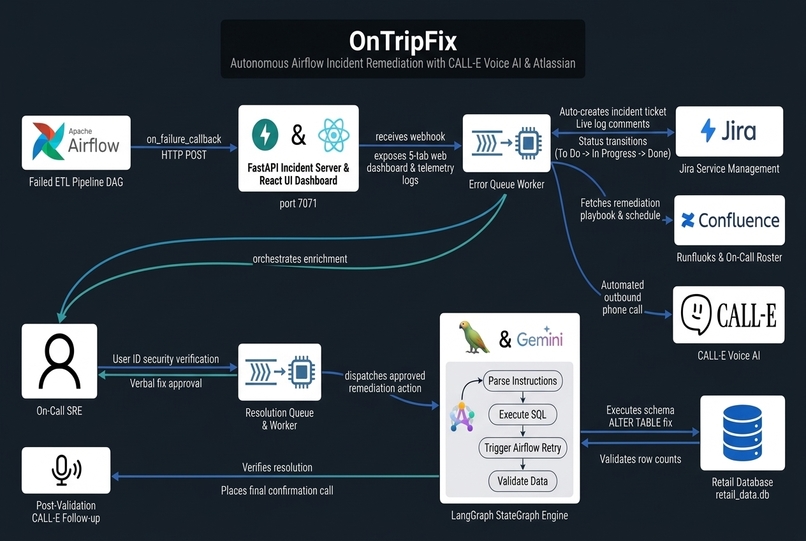
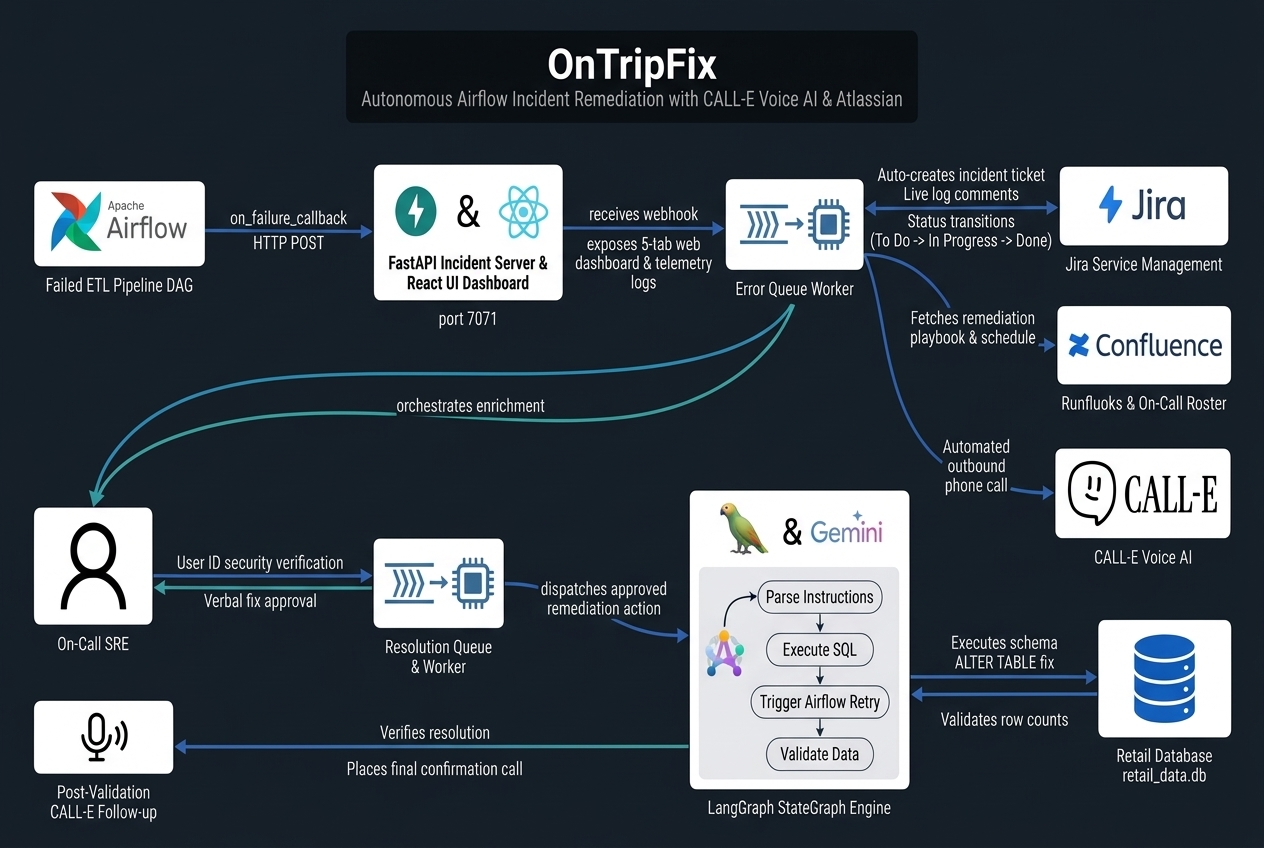
Architecture Diagram
-
-
-
-
-
-
-
Inspiration
Every on-call engineer and data platform lead knows the dread of being away from their laptop—traveling, on a weekend trip, or outside regular office hours—when critical batch ETL pipelines crash. Traditionally, an on-call alert like PagerDuty means having to find stable Wi-Fi, open a laptop, decipher stack traces across terminal logs, dig through Jira tickets and Confluence runbooks, and manually patch database schemas while incident timers tick.
We asked ourselves: What if an engineer on the road could resolve a production data pipeline failure in 60 seconds simply by answering a phone call?
With OnTripFix, the data platform doesn't just alert—it actively investigates, consults knowledge bases, dials the on-call engineer via Call-E Voice AI, validates their identity securely, summarizes the proposed fix, captures spoken authorization, and automatically executes deterministic schema healing with zero laptop required.
YouTube Video Link - https://youtu.be/SCRXJr_r0qA
What it does
OnTripFix is an autonomous incident response and auto-remediation voice agent for Apache Airflow data pipelines:
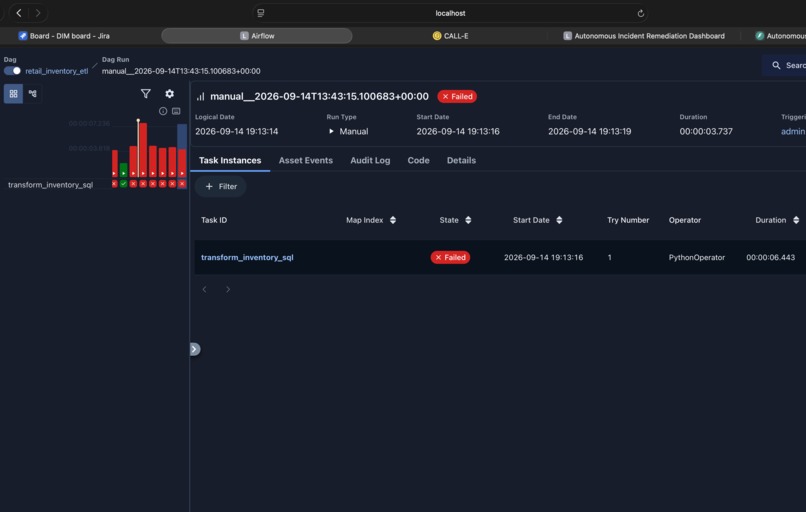
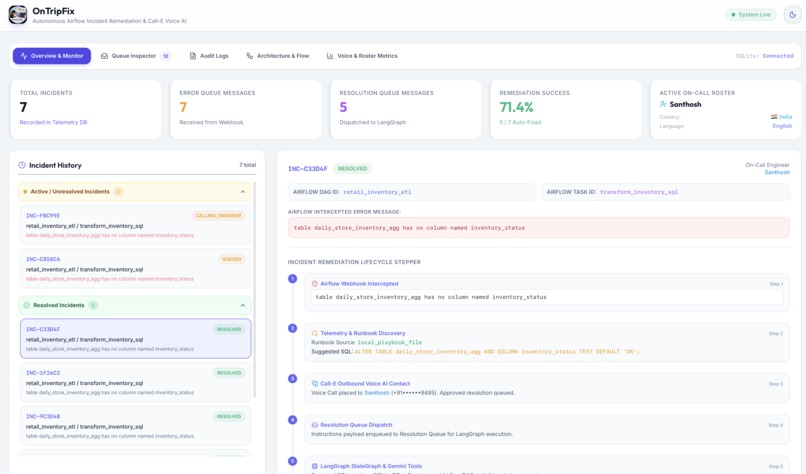
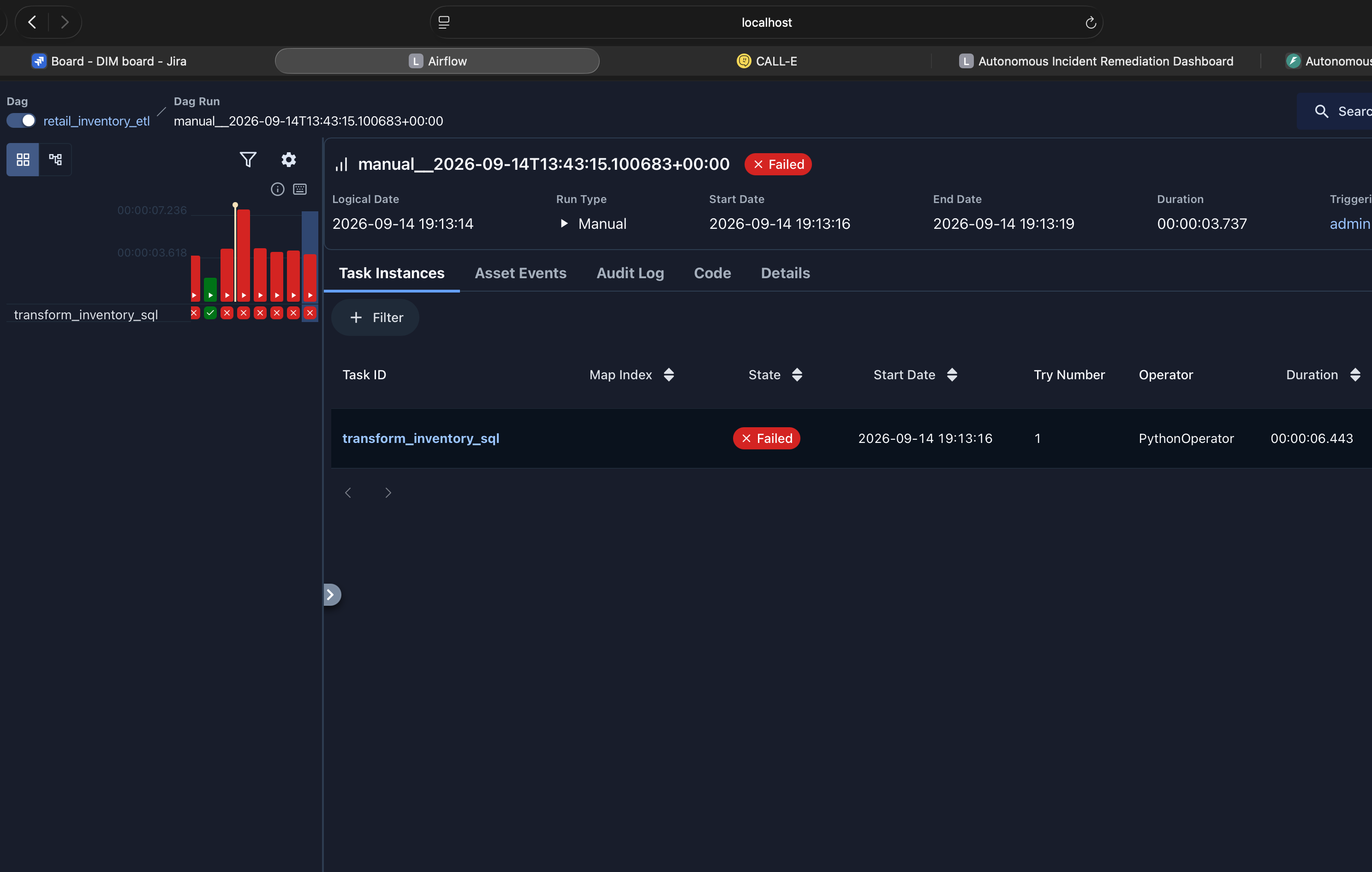
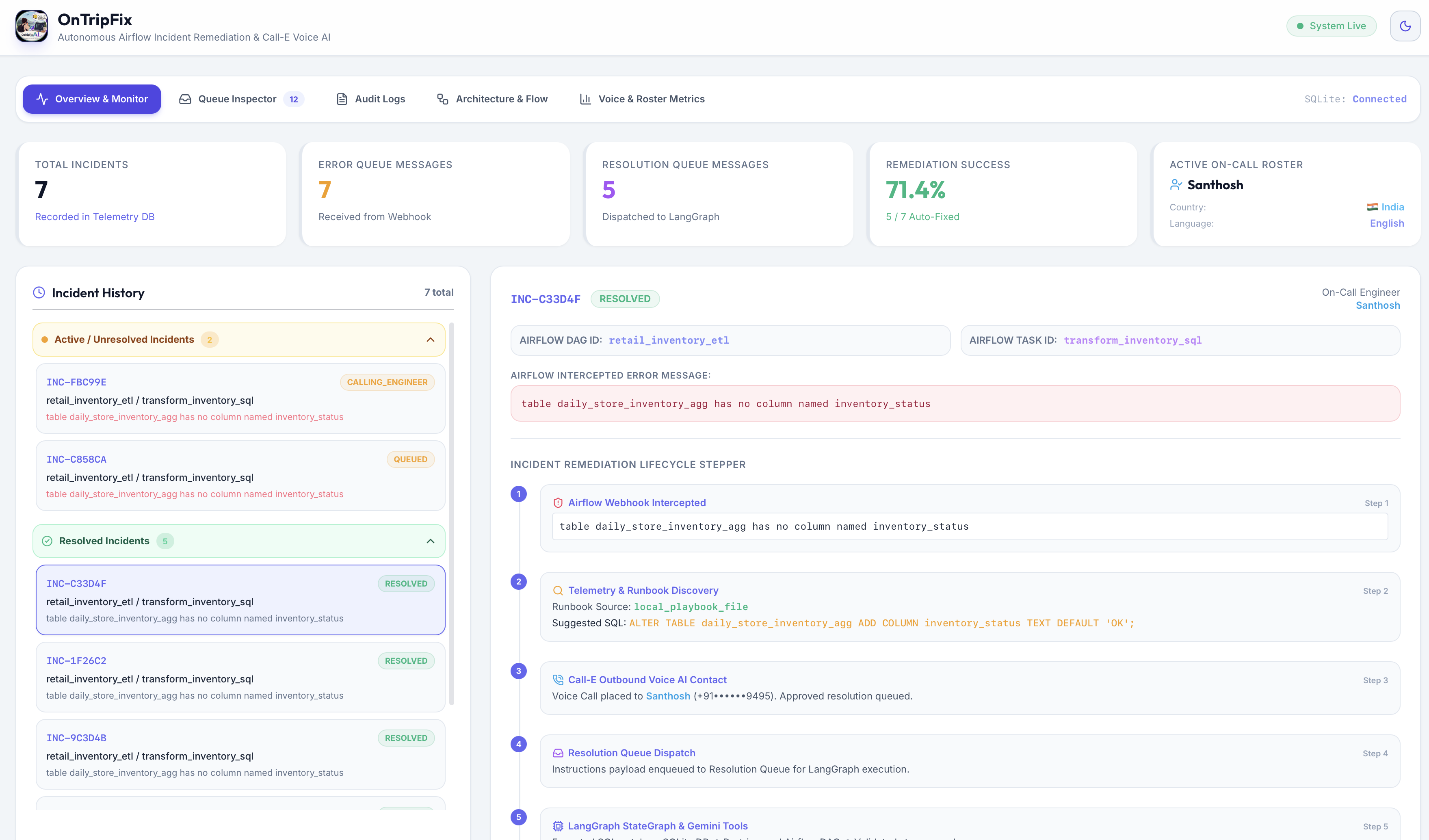
- Incident Interception: When an Airflow DAG task fails (e.g., Sunday night Retail Inventory ETL failing due to an unexpected missing column
inventory_status), Airflow'son_failure_callbackimmediately posts the error payload to OnTripFix's FastAPI incident gateway. - Context Enrichment & Knowledge Retrieval:
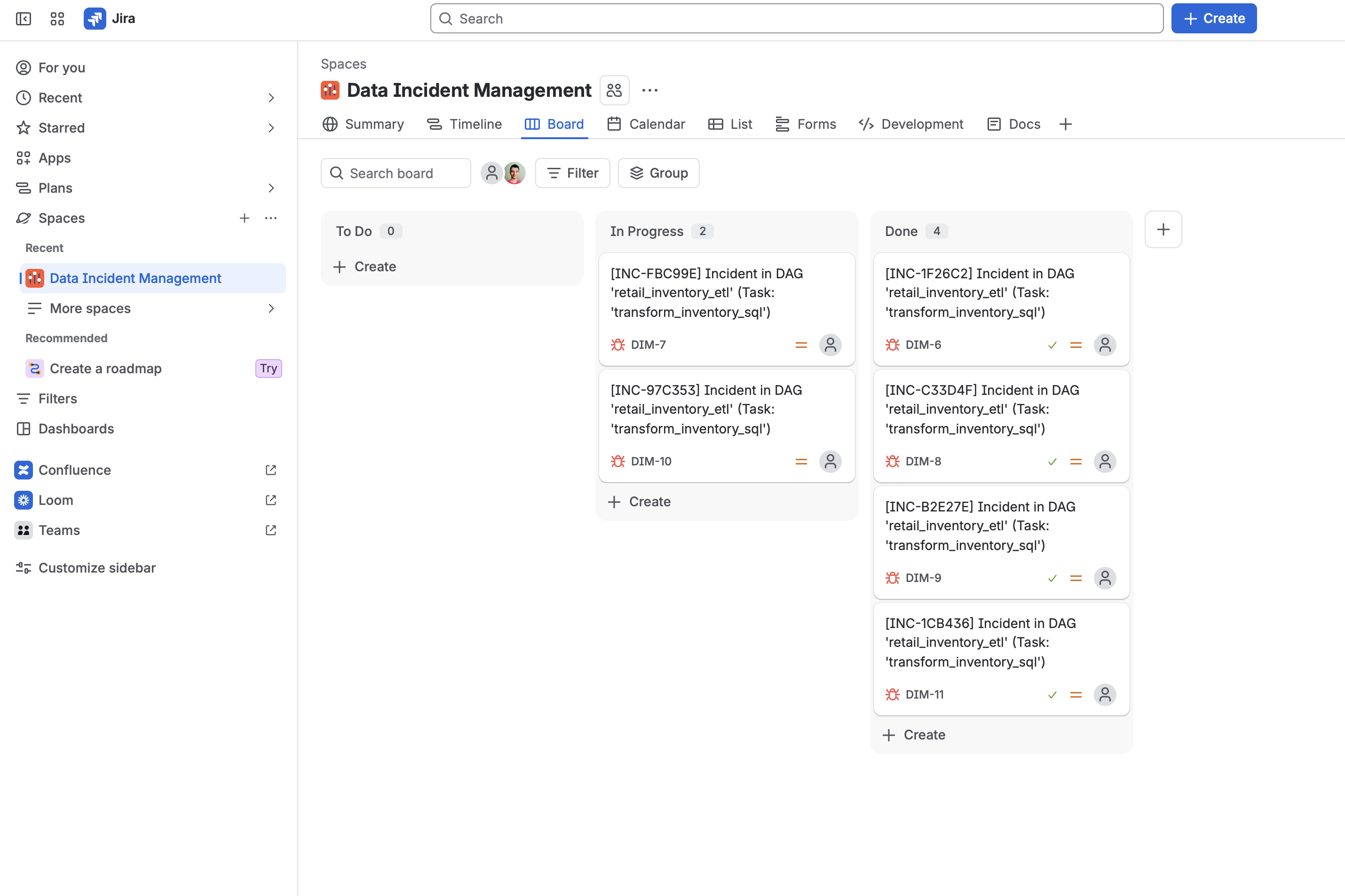
- Jira REST API: Searches historical incident tickets and JQL for matching bugs (or falls back to previous incident matches like
RETAIL-4021). - Confluence Playbooks & Team Calendar: Looks up standard operating procedures and queries the active on-call schedule to identify the responsible engineer.
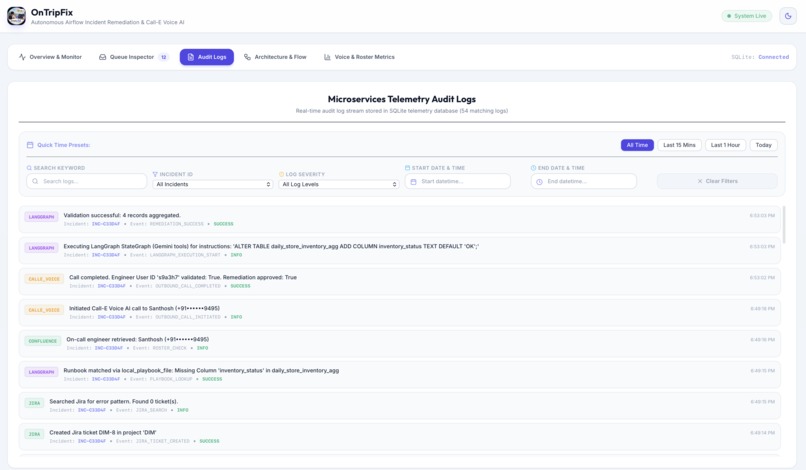
- AI Bug Diagnosis: If no existing playbook exists, LangChain AI diagnosis generates the necessary deterministic SQL remediation script.
- Jira REST API: Searches historical incident tickets and JQL for matching bugs (or falls back to previous incident matches like
- Interactive Call-E Voice AI Escalation:
- Places an outbound voice call to the on-call engineer's mobile device.
- Security First: Prompts the engineer to speak their Employee Security User ID before any operational details or remediation steps can be approved.
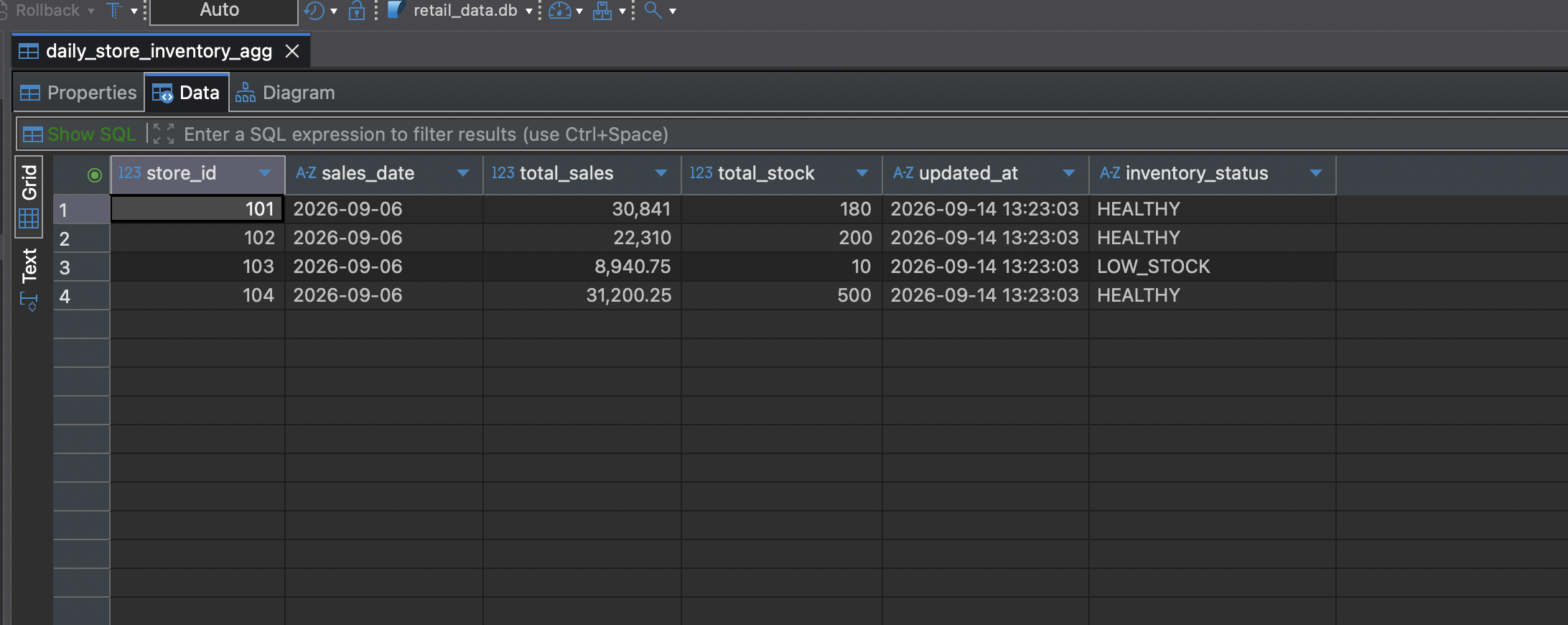
- Summarizes the failing DAG, task, Jira reference, and proposed SQL fix (
ALTER TABLE daily_store_inventory_agg ADD COLUMN inventory_status TEXT...). - Captures spoken approval and resolution instructions as structured JSON via Call-E's
result_schema.
- LangGraph StateGraph Auto-Remediation:
- Parses the spoken resolution instructions.
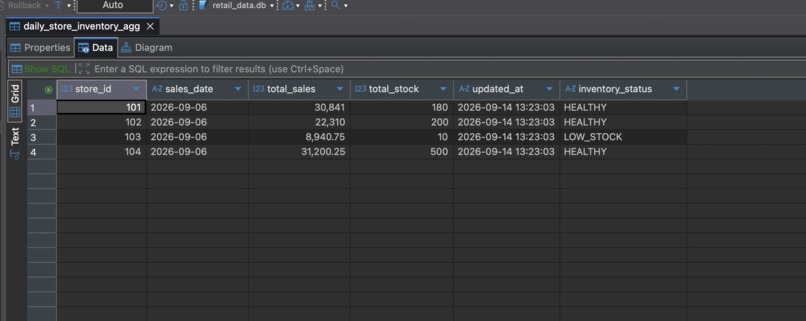
- Executes the DDL patch safely on the SQLite data store.
- Triggers an automated Airflow DAG task retry.
- Validates post-remediation data load integrity (verifying records processed, stock levels, and revenue aggregations).
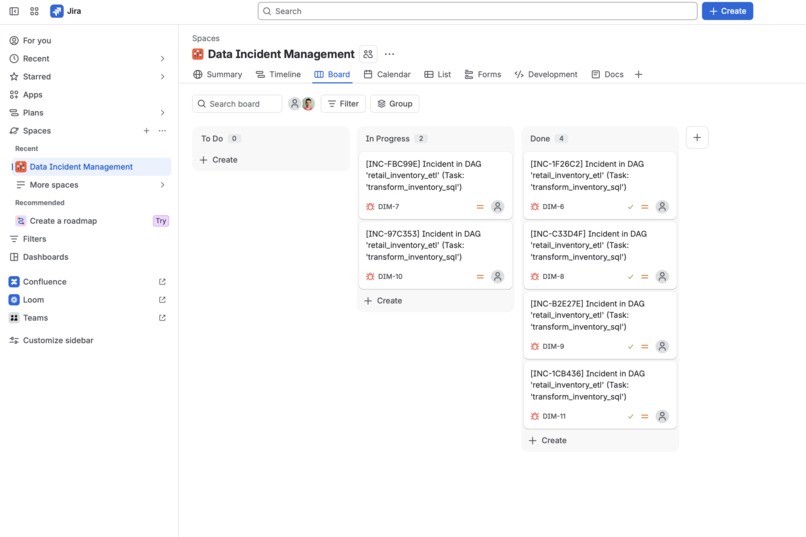
- Transitions the corresponding Jira issue status to Done with full audit logs.
- Call-E Confirmation Voice Call: Dials the engineer back with a voice confirmation stating the pipeline is 100% green for Monday morning business operations.
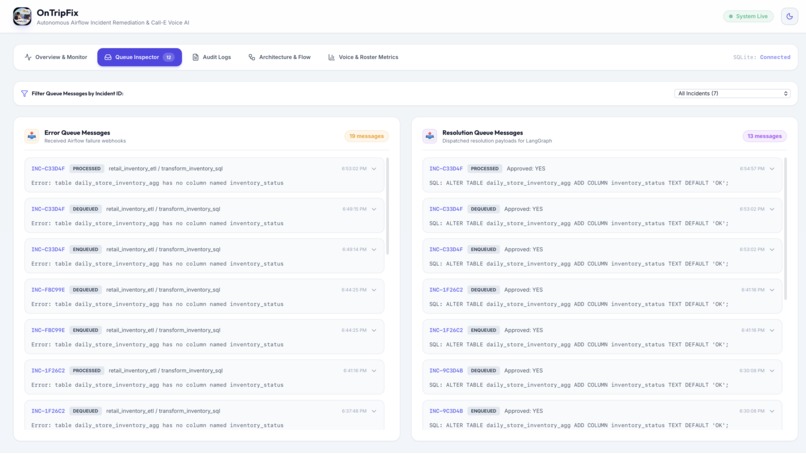
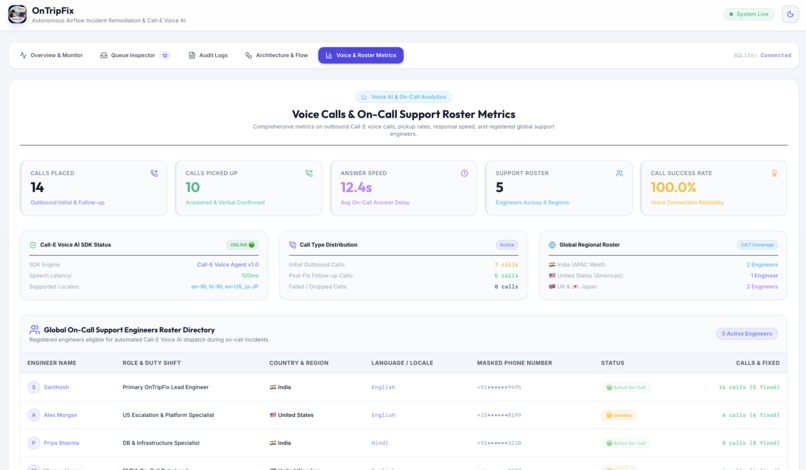
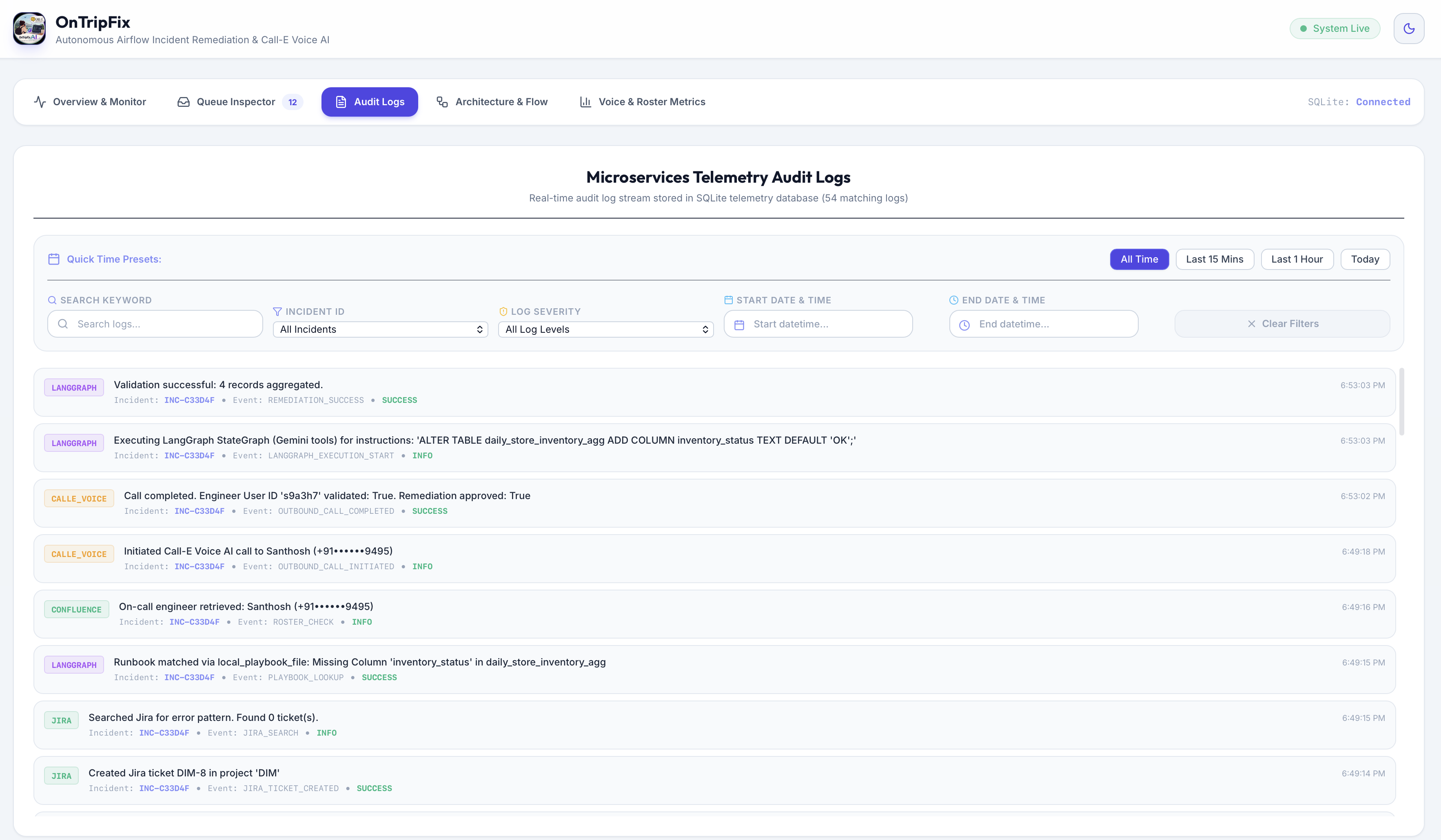
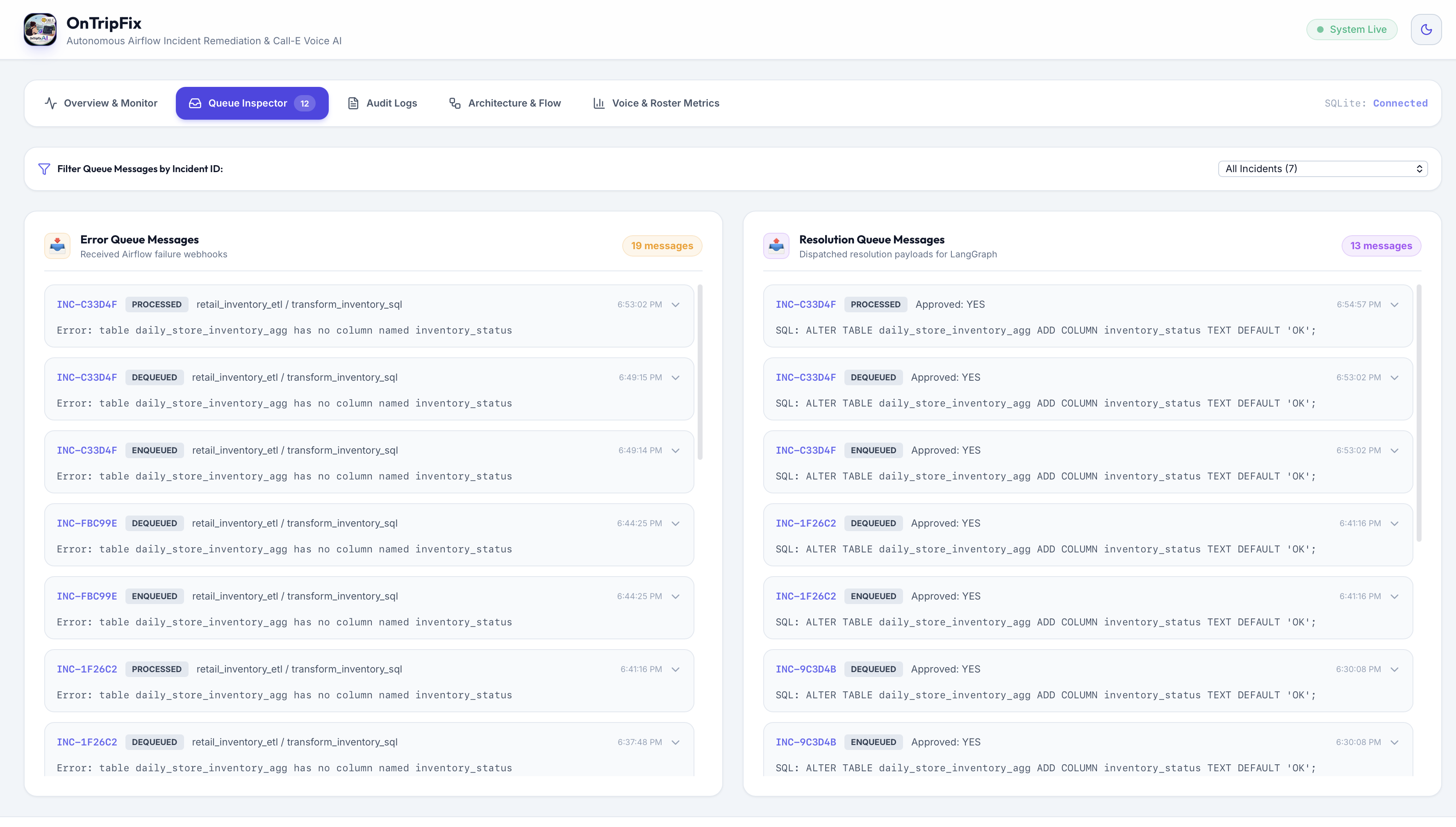
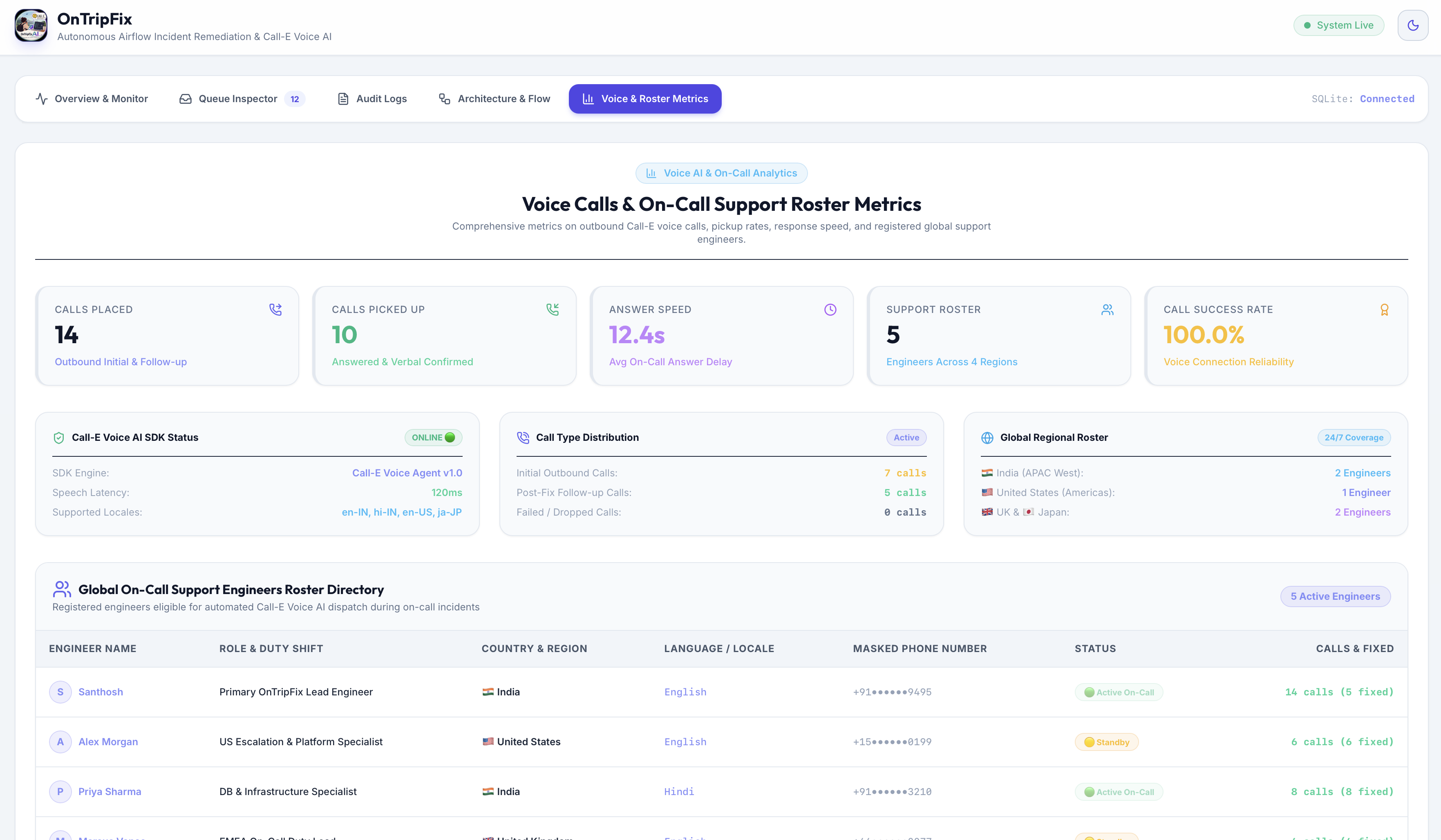
- Real-time Telemetry Dashboard: A React frontend providing live queue inspection (
Error Queue,Resolution Queue), incident audits, and active on-call roster management.
How we built it
- Voice AI Agent: Integrated the Call-E Python SDK / REST API (
api.heycall-e.com/v1/calls) with strict E.164 phone formatting, result schemas for structured decision extraction, and regional/multilingual localization (supporting US English, India English, Hindi, and Tamil). - Remediation Engine: Built with LangGraph StateGraph and Google Gemini (Gemini 2.5 Flash) tool binding to parse spoken instructions, apply deterministic SQLite patches, trigger Airflow retries, and validate database consistency.
- Workflow & Webhook Server: Developed using FastAPI with background threading queues (
Error Queueconsumer andResolution Queueworker) for resilient, non-blocking telemetry enrichment and dispatch. - Observability & Ticketing: Implemented bi-directional Atlassian Jira REST API integrations (comment logging, transition updates) and Confluence runbook matching with local fallback safety layers.
- Frontend Dashboard: Built with React and Vite, featuring glassmorphism aesthetics, live queue inspection, audio call logs, and incident telemetry.
- Pipeline Simulation: Engineered an Apache Airflow DAG (
retail_inventory_etl) and end-to-end Python simulation harness (simulate_e2e_incident.py) reproducing production database crashes, automated triage, and verified recovery.
Challenges we ran into
- Deterministic Execution vs. LLM Non-Determinism: Voice instructions from an engineer must be translated into precise, syntactically correct SQL. We designed LangGraph nodes with strict tool-calling validation rather than allowing raw text generation directly against the production database.
- Security & Authentication over Voice: Preventing unauthorized voice approvals required embedding a mandatory User ID challenge step into the Call-E call task and enforcing
user_id_validated: Truein theresult_schemabefore any remediation node could trigger. - Public Privacy & Telephony Standards: Balancing live Call-E testing with open-source reference repository rules required sanitizing personal numbers, implementing phone masking (
mask_phone_number()), isolating credentials into gitignored sample templates (*.json.example), and ensuring default dry-run mock paths work offline without live telecom costs.
Accomplishments that we're proud of
- True Hands-Free Resolution: Complete end-to-end incident handling from Airflow crash to verified database repair in under 60 seconds without typing a single terminal command.
- Security-Gated Human-in-the-Loop: Autonomous remediation without blind agent actions—every state change requires authenticated human voice authorization.
- Production-Grade Architecture: Decoupled async queues, automatic fallback mechanisms (graceful degradation if Jira or Confluence APIs are unreachable), and localized multi-language on-call roster configurations.
- Seamless Developer Experience: Runs with one command (
python apps/python/ontripfix/simulate_e2e_incident.py) and passes a 10-test automated verification suite (pytest apps/python/ontripfix/tests/test_flow.py).
What we learned
- Structured Voice Extraction is Transformative: Call-E's server-side
result_schemavalidation removes the need for secondary prompt chains—spoken confirmations naturally translate into typed, reliable data models. - Progressive Fallbacks are Essential for Reliability: In on-call systems, external dependencies (calendars, ticketing systems) can fail simultaneously with pipelines. Building deterministic local fallback layers ensures the system stays operational under severe outages.
- Voice is the Ultimate Low-Latency Mobile Interface: For urgent operational approvals, a direct telephone call provides vastly higher responsiveness than Slack pings or email alerts.
What's next for OnTripFix
- Multi-Cloud Data Warehouse Support: Extending LangGraph database patch tools to support Snowflake, Google BigQuery, and Amazon Redshift.
- Smart Escalation Ladders: Automatically cascading to secondary and tertiary on-call leads if the primary engineer does not answer or declines the fix within a designated timeout window.
- Interactive Multi-Turn Voice Runbooks: Enabling engineers on the call to ask Call-E questions (e.g., "What was the error log from task 3?" or "Have we seen this error in the last 30 days?") before granting remediation approval.


Log in or sign up for Devpost to join the conversation.