-
-
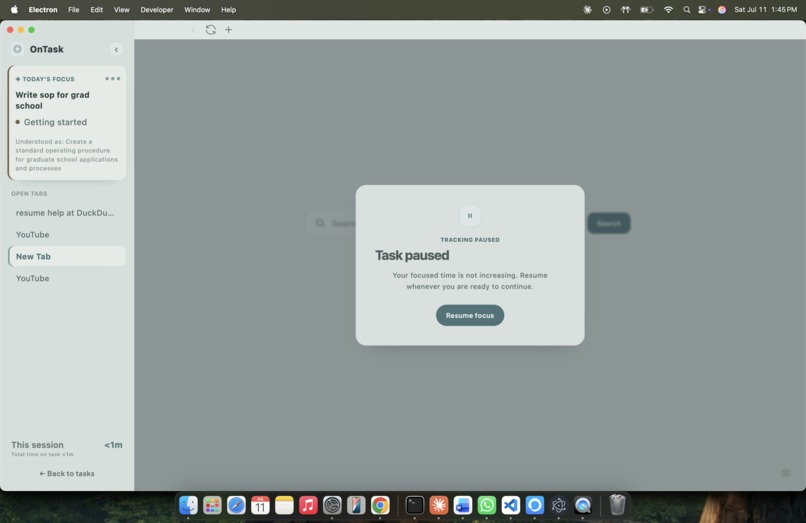
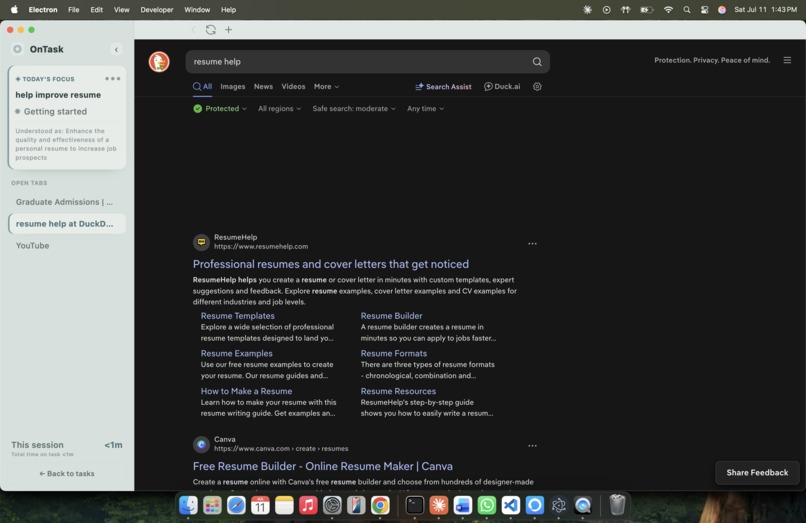
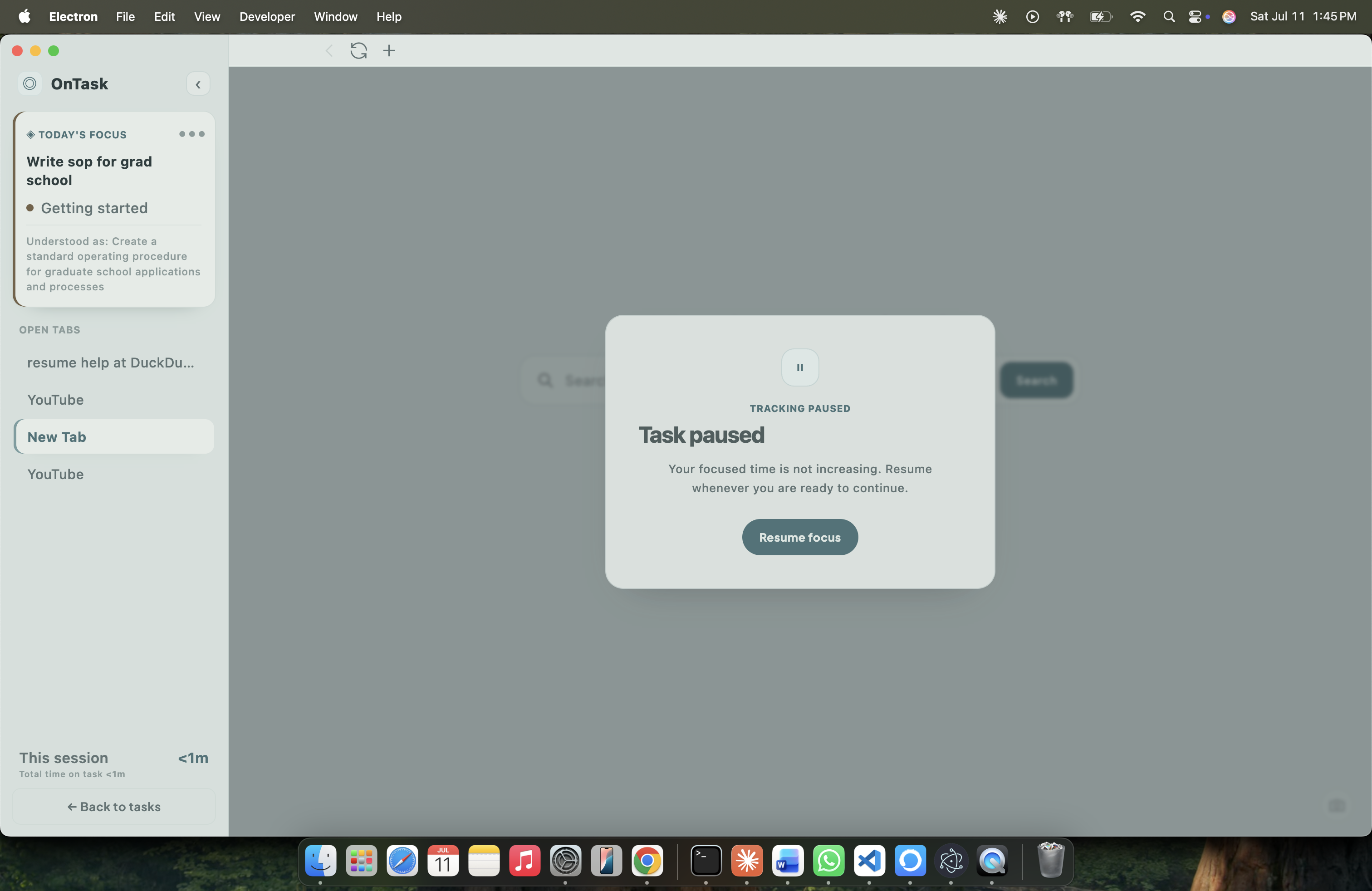
Focus timer paused. Tracks time spent on tasks in each session and total
-
-
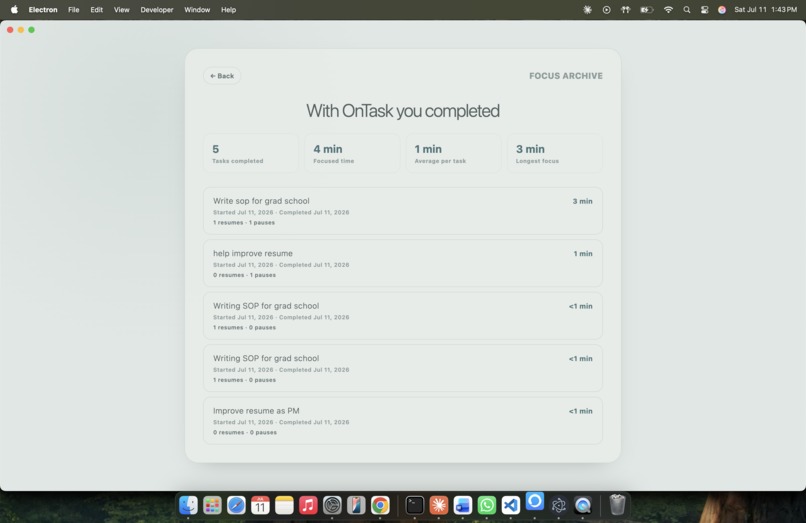
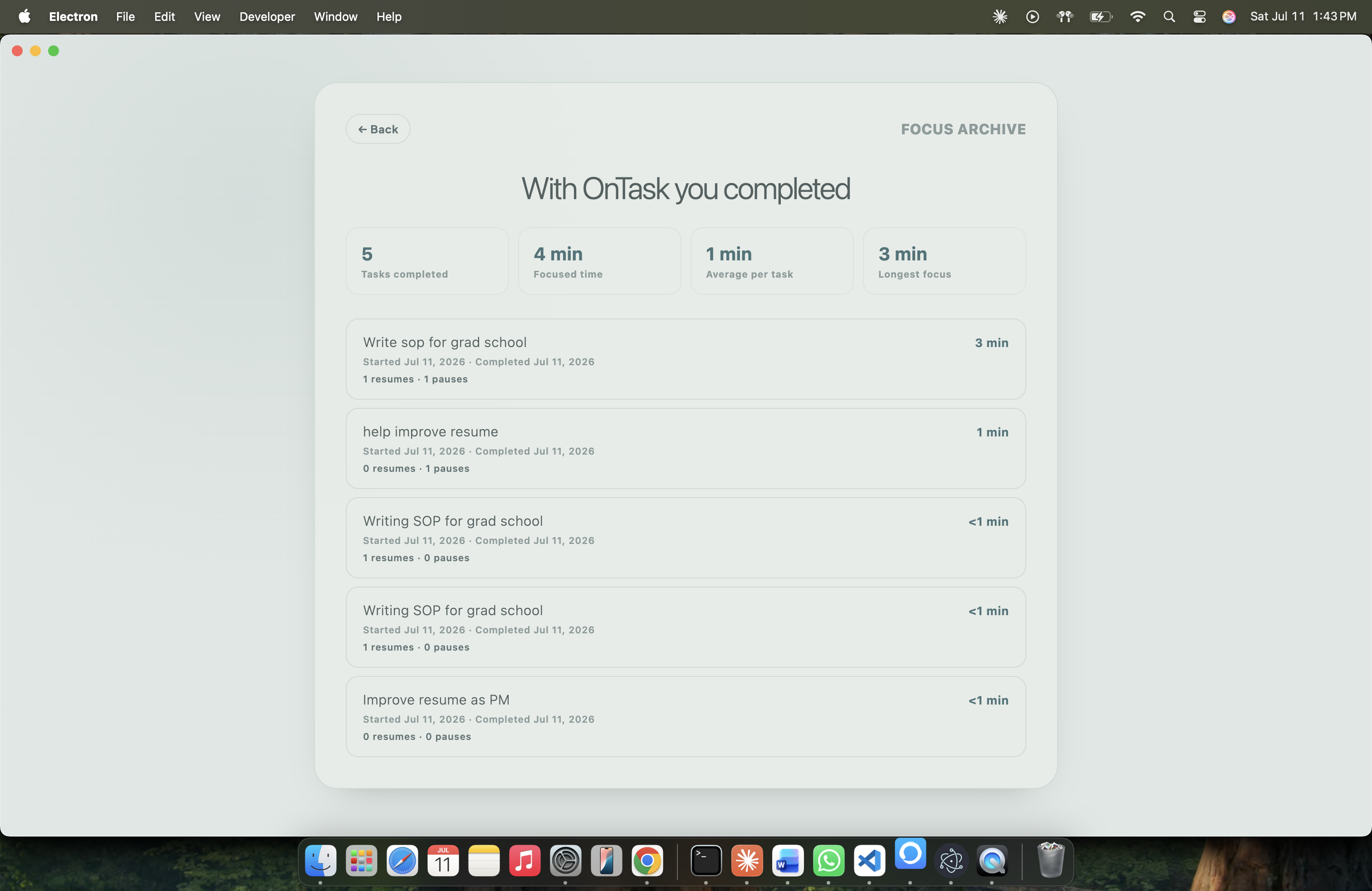
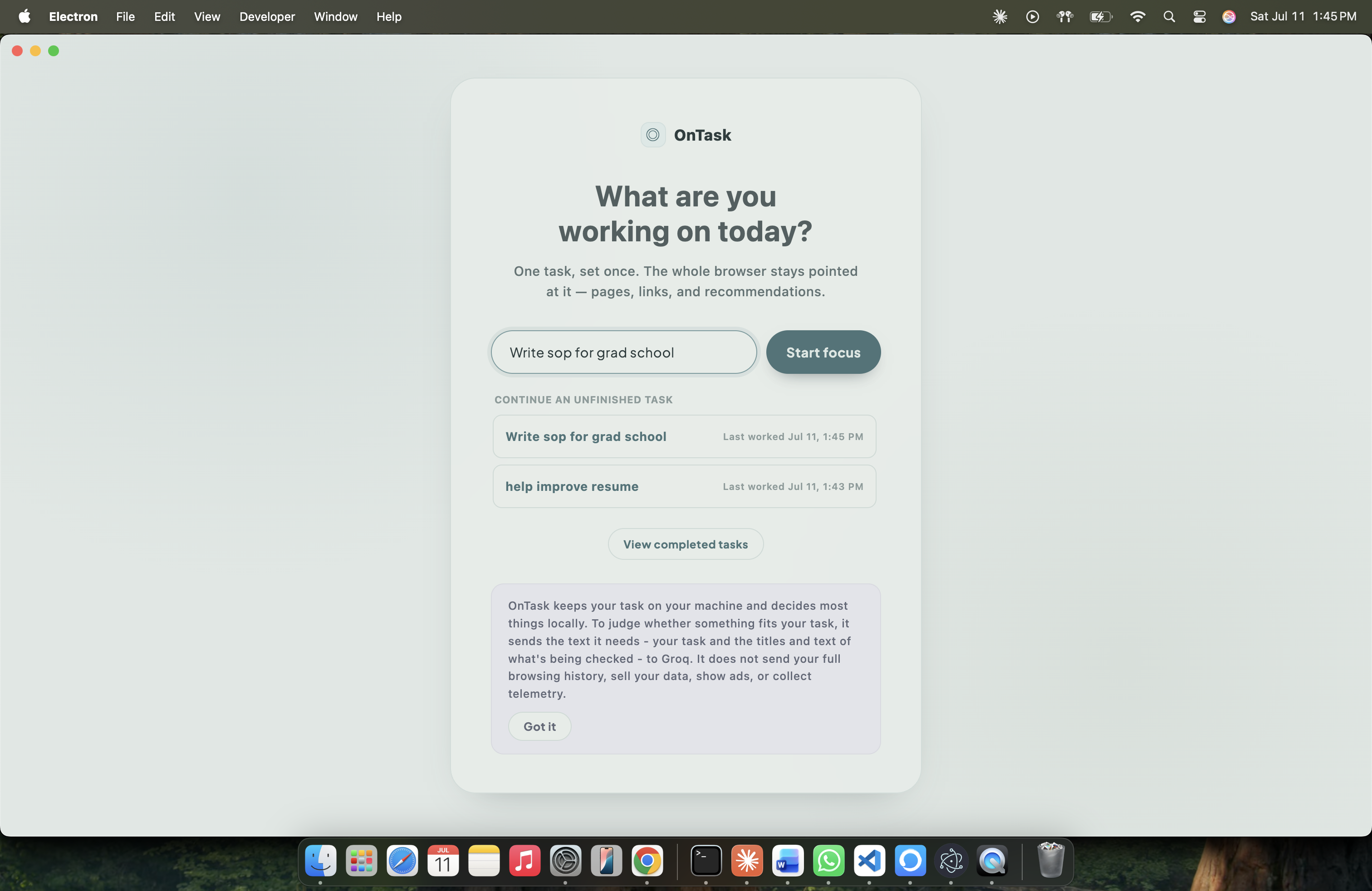
Review completed tasks
-
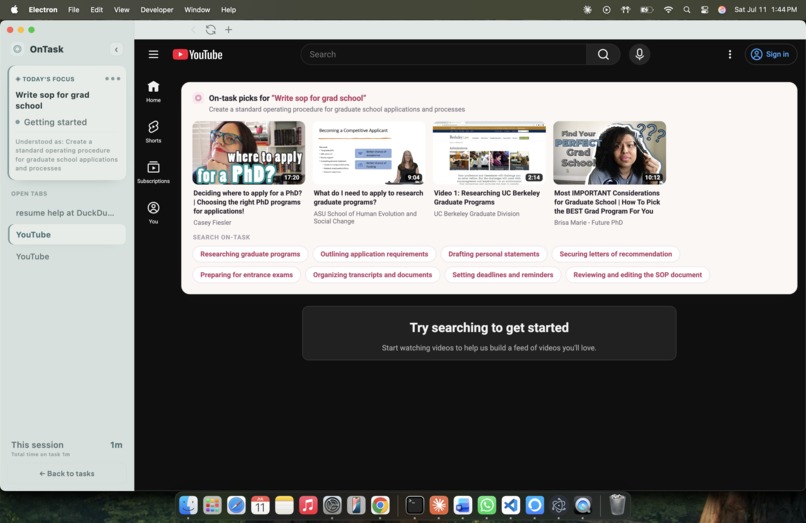
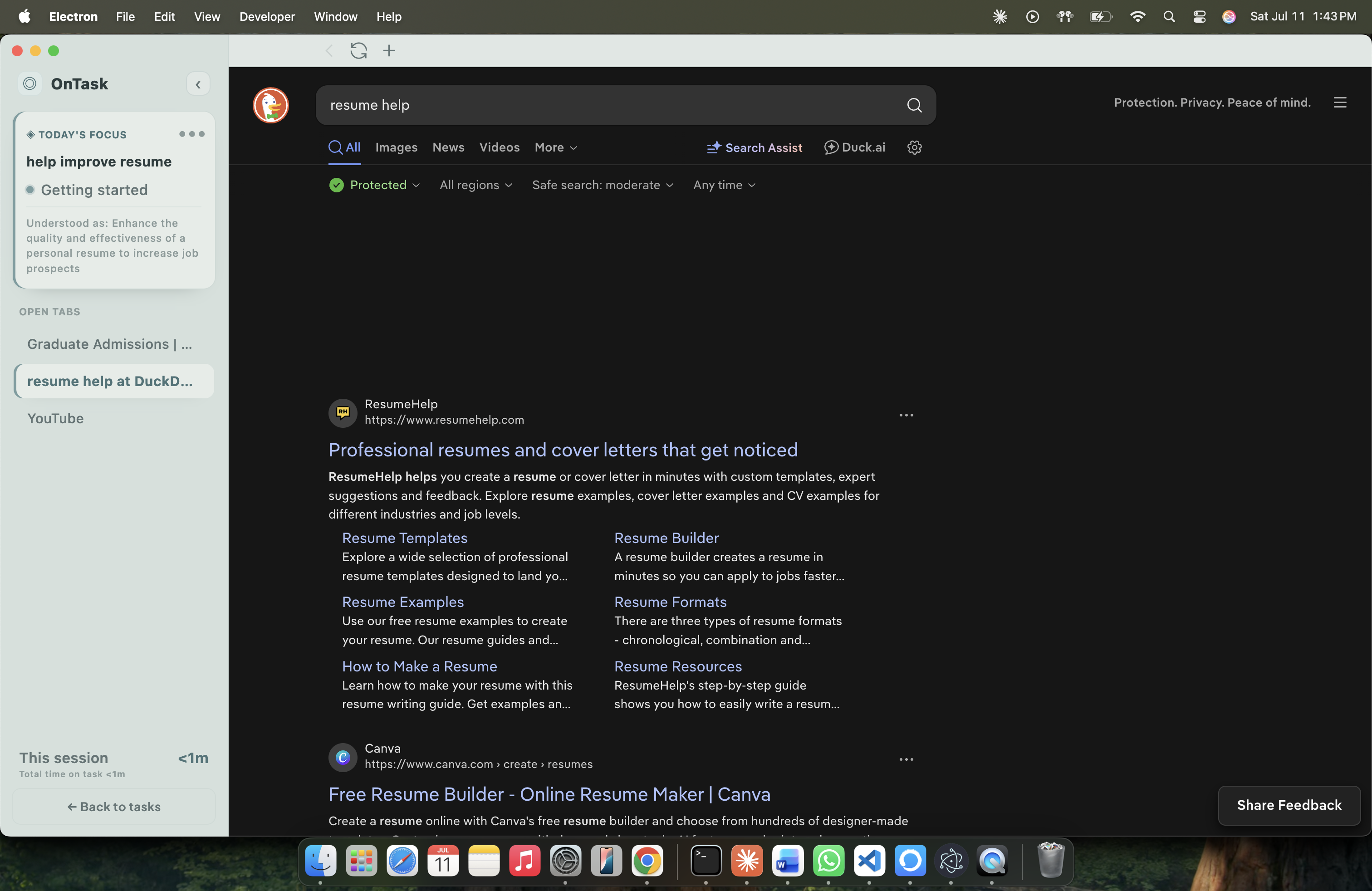
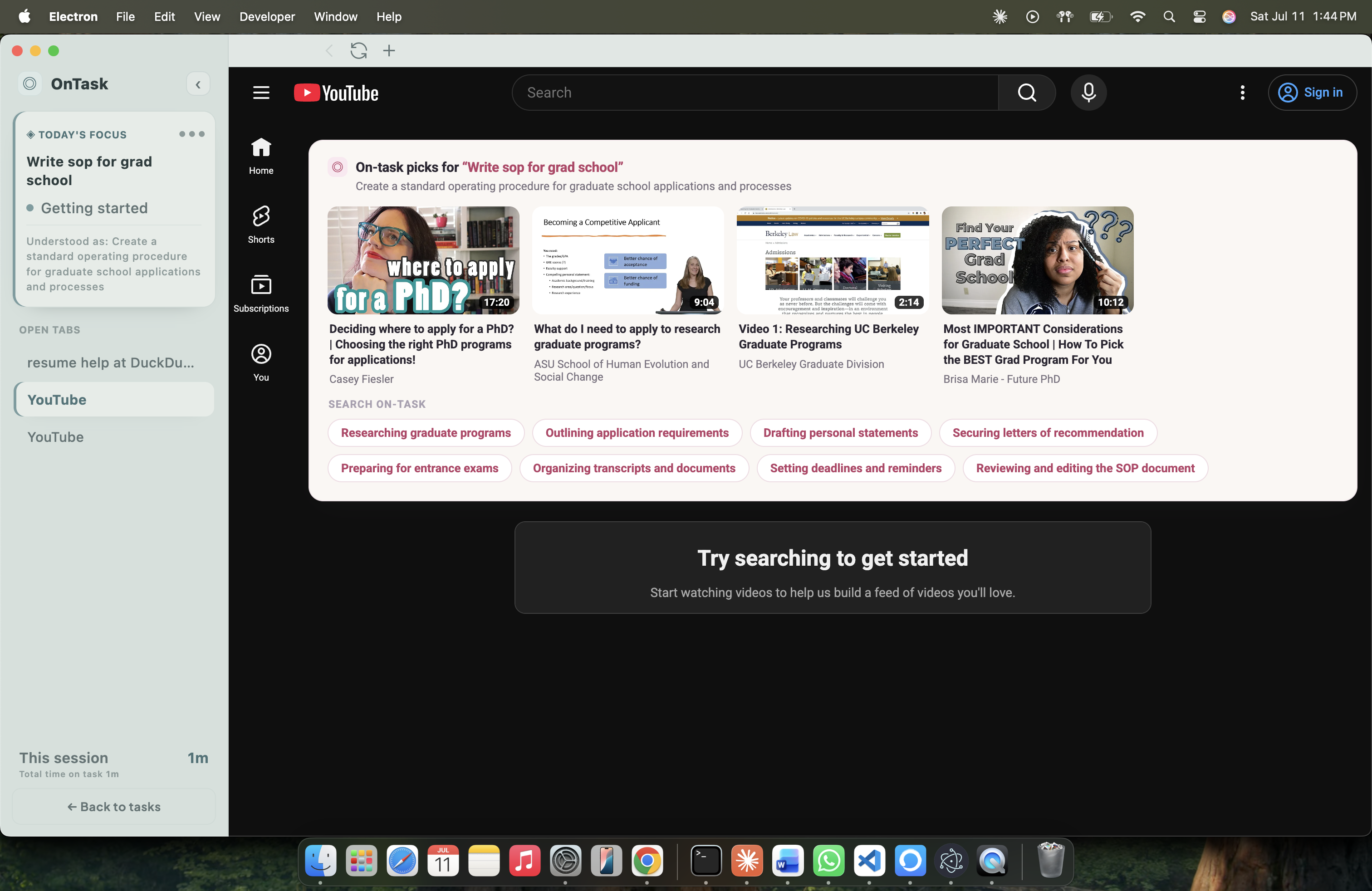
Curated recommendations on otherwise messy pages
-
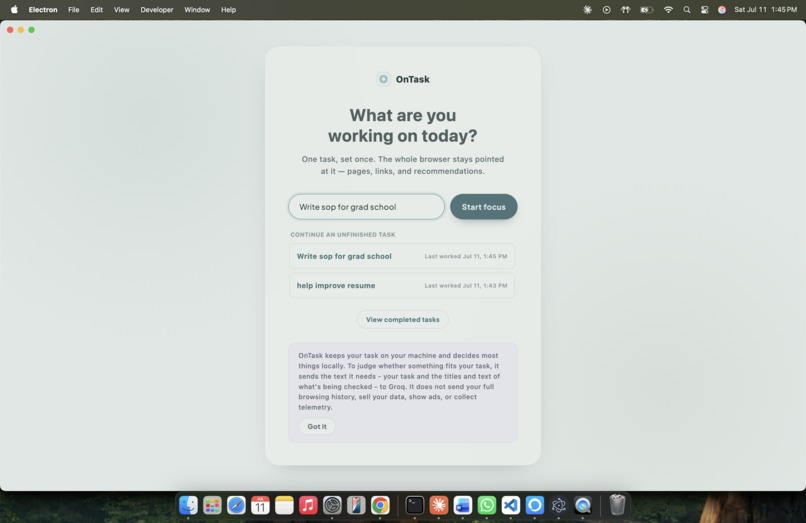
Landing page to track tasks and start new
Inspiration
Staying focused online is harder than ever. Traditional website blockers are too rigid. They block entire websites even when parts of them are genuinely useful. For many people, especially those who struggle with attention and procrastination, the problem isn't the website itself, it's the irrelevant content and endless recommendations that pull them away from their goal into unproductive rabbit holes.
We wanted to build a browser that understands what you're trying to accomplish, not just which websites you're visiting. The inspiration came from one of our team members, who is neurodivergent.
Kavanam is a Tamil word that means "directing your focus." Tamil is spoken in Tamil Nadu and widely used in Singapore, Sri Lanka, and Malaysia. A closely related word, Kavanah, is also a Hebrew term meaning "sacred focus" or "direction of the heart." Since this project was built from a personal experience, it is especially close to our hearts.
What it does
OnTask is an AI-powered browser that helps users stay focused on a single task.
The user enters a goal, such as "Learn React" or "Research climate change." OnTask analyzes the objective and filters distracting content while keeping relevant resources available.
Instead of blocking YouTube entirely, OnTask allows tutorials related to the task while hiding unrelated recommendations, Shorts, and entertainment videos. The same approach applies to search results and recommendations across supported sites.
The browser also provides a calming, focus-friendly interface with motivational prompts to support users through long or repetitive work sessions.
To see features and download the browser Click here: linkl
How we built it
We built OnTask using Claude Code to rapidly prototype the browser experience and the AI-powered relevance engine.
The system:
- accepts a user-defined task
- analyzes page content and metadata
- compares page relevance to the current objective
- hides irrelevant recommendations while preserving useful resources
- updates the browsing experience in real time
Challenges we ran into
The biggest challenge was relevance.
Tasks are often vague, making it difficult to determine whether content is genuinely helpful or merely related to the topic. We had to balance removing distractions while minimizing false positives, so users would not lose access to useful resources.
Another challenge was making the browser feel helpful rather than restrictive, because overly restrictive applications often struggle with retention.
Accomplishments that we're proud of
- Building a browser experience that understands user intent instead of relying on simple website blocklists.
- Creating a clean, distraction-free interface.
- Developing an AI relevance system capable of filtering individual recommendations instead of entire websites.
- Demonstrating that AI can encourage healthier browsing habits without sacrificing useful information.
What we learned
We learned how modern browsers are structured, how recommendation systems influence attention, and how difficult semantic relevance is in real-world browsing.
We also learned that building a great focus tool is as much a UX challenge as it is an AI challenge.
What's next for OnTask
Our long-term vision is to build a truly task-aware browser.
Future work includes:
- support for more websites and applications
- Break down tasks into subtask and track progress (Neurodivergence friendly)
- White noise track addition while using browser
- personalized relevance models that learn from user feedback
- task progress tracking
- rabbit-hole detection before users lose focus
- integration with productivity tools like Notion, Google Docs, and GitHub

Log in or sign up for Devpost to join the conversation.