-
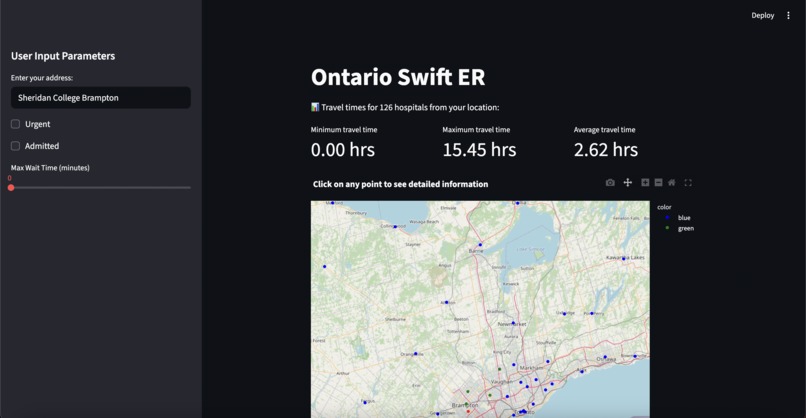
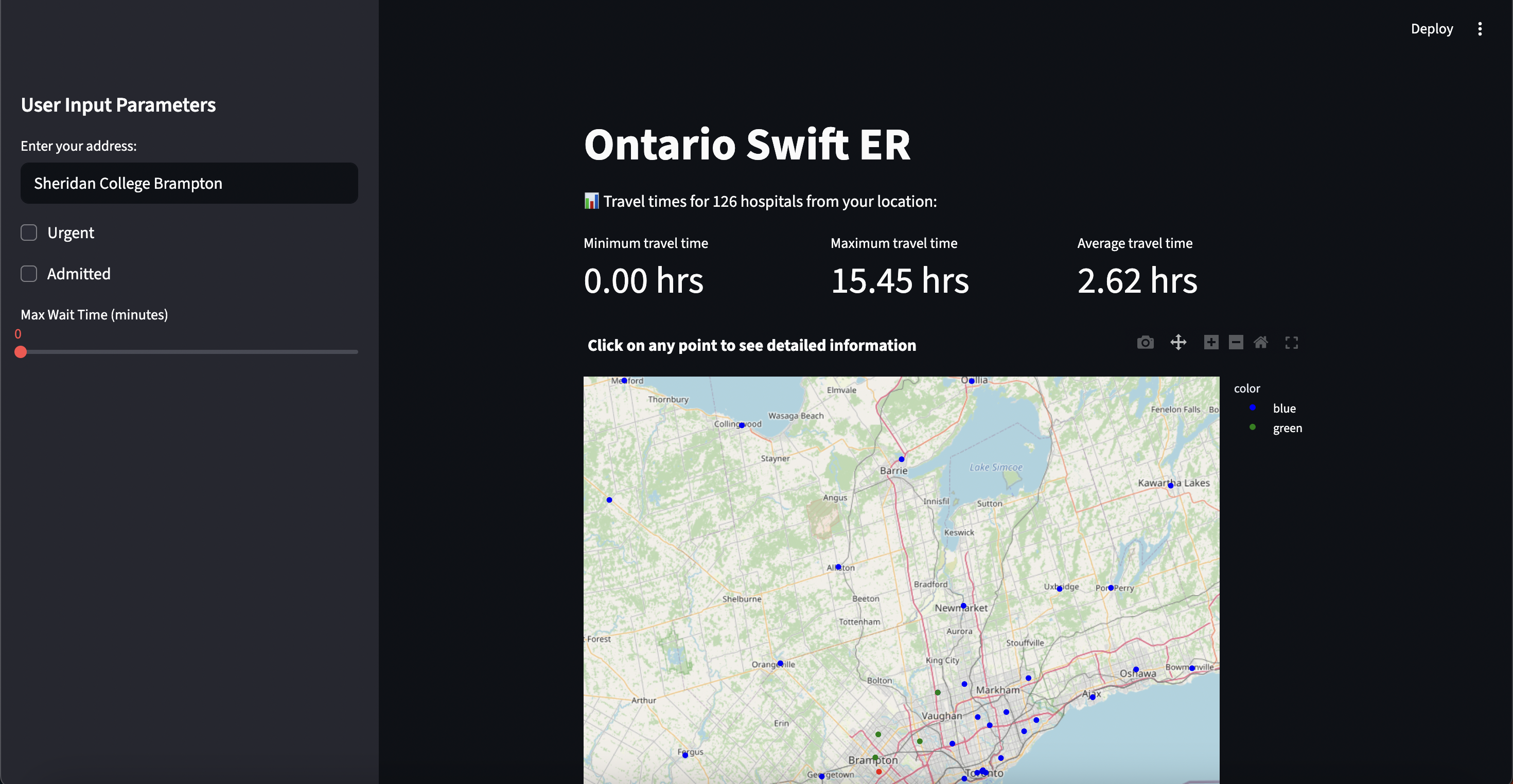
Overview of the app
-
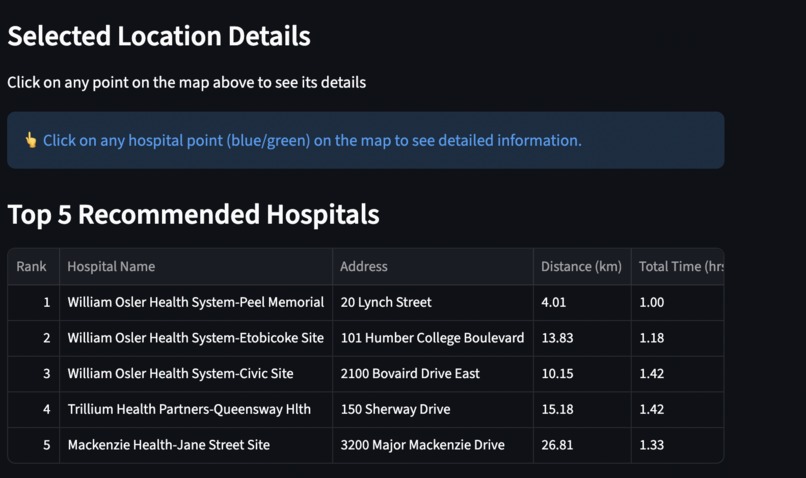
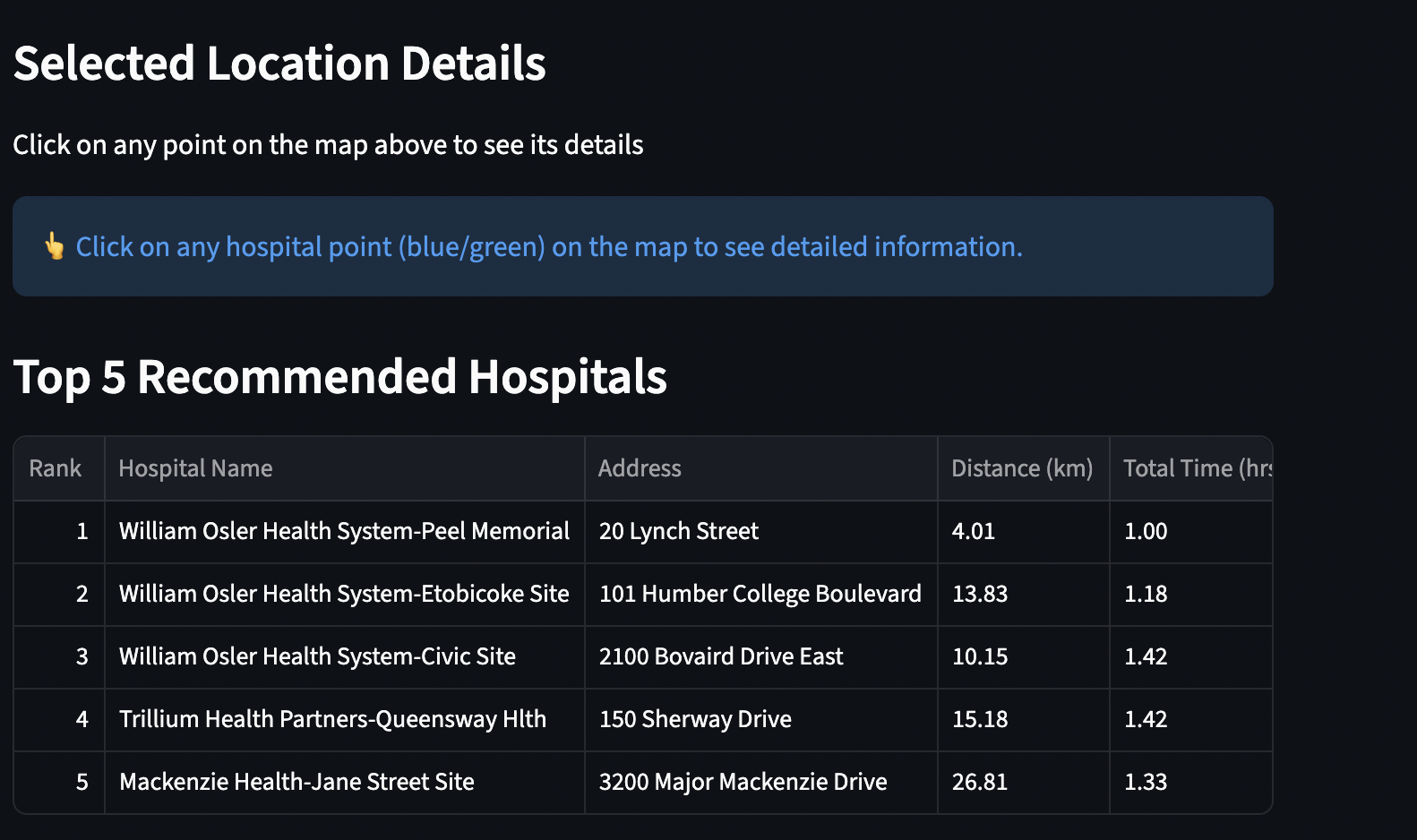
Top Hospitals according to User
-
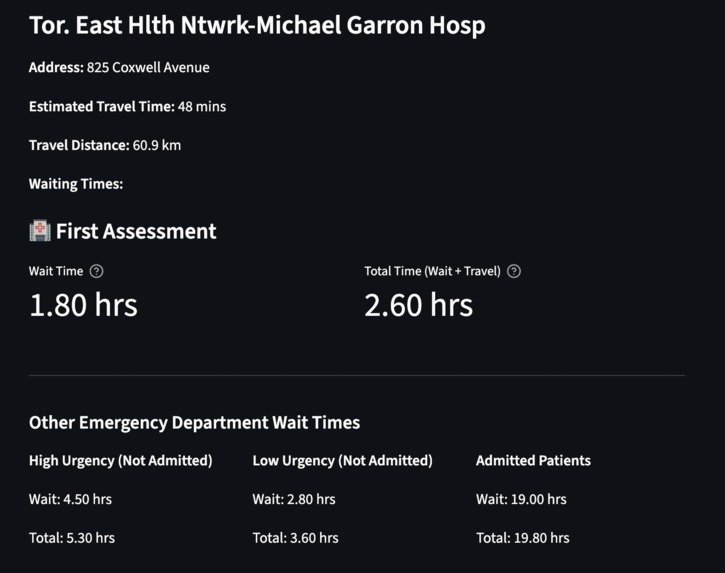
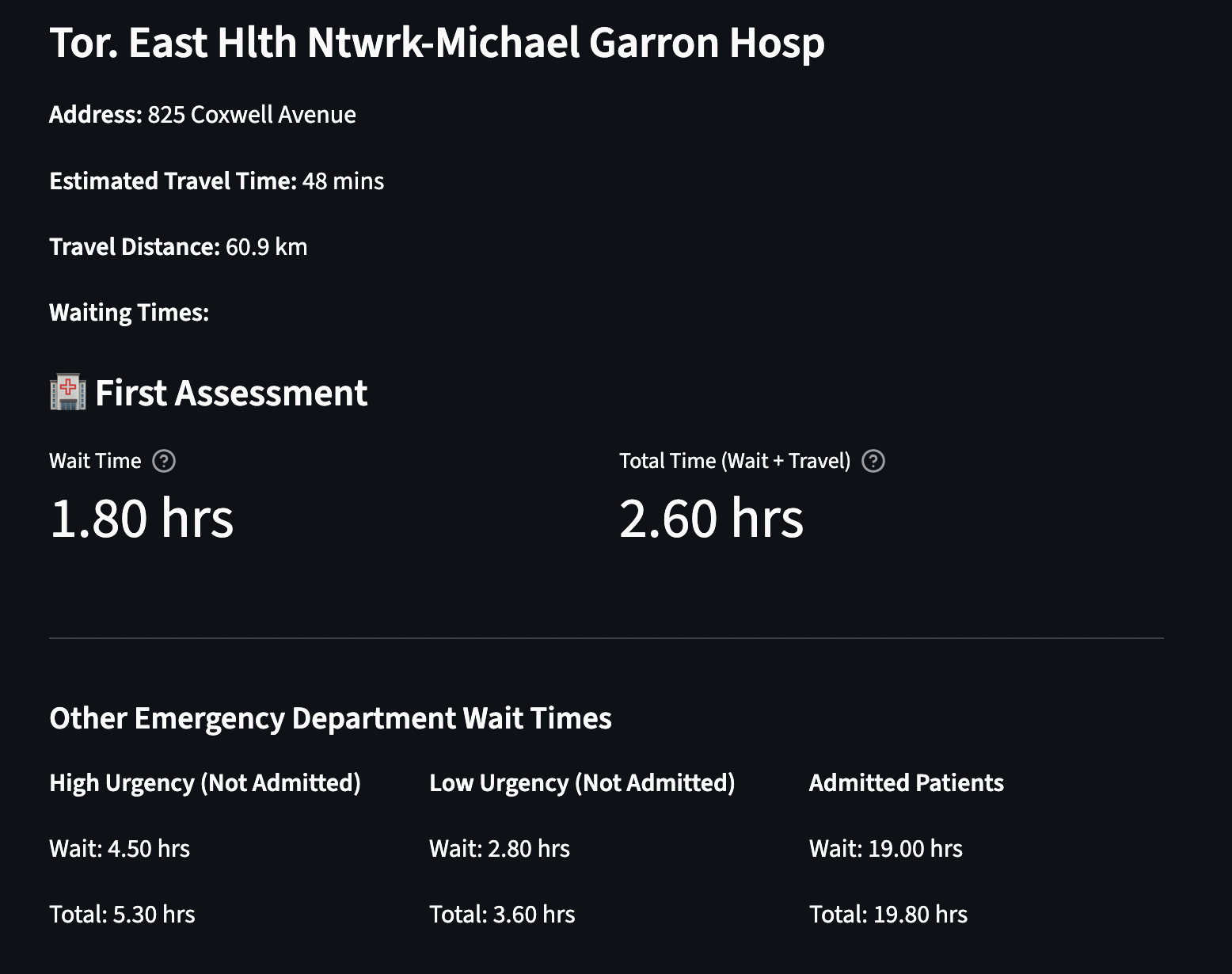
Information about Waiting time
-
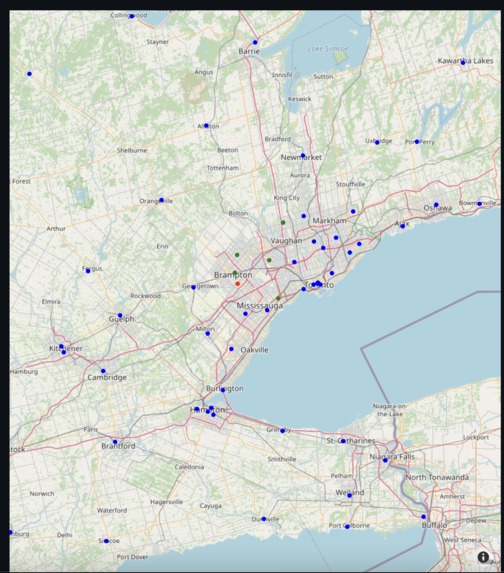
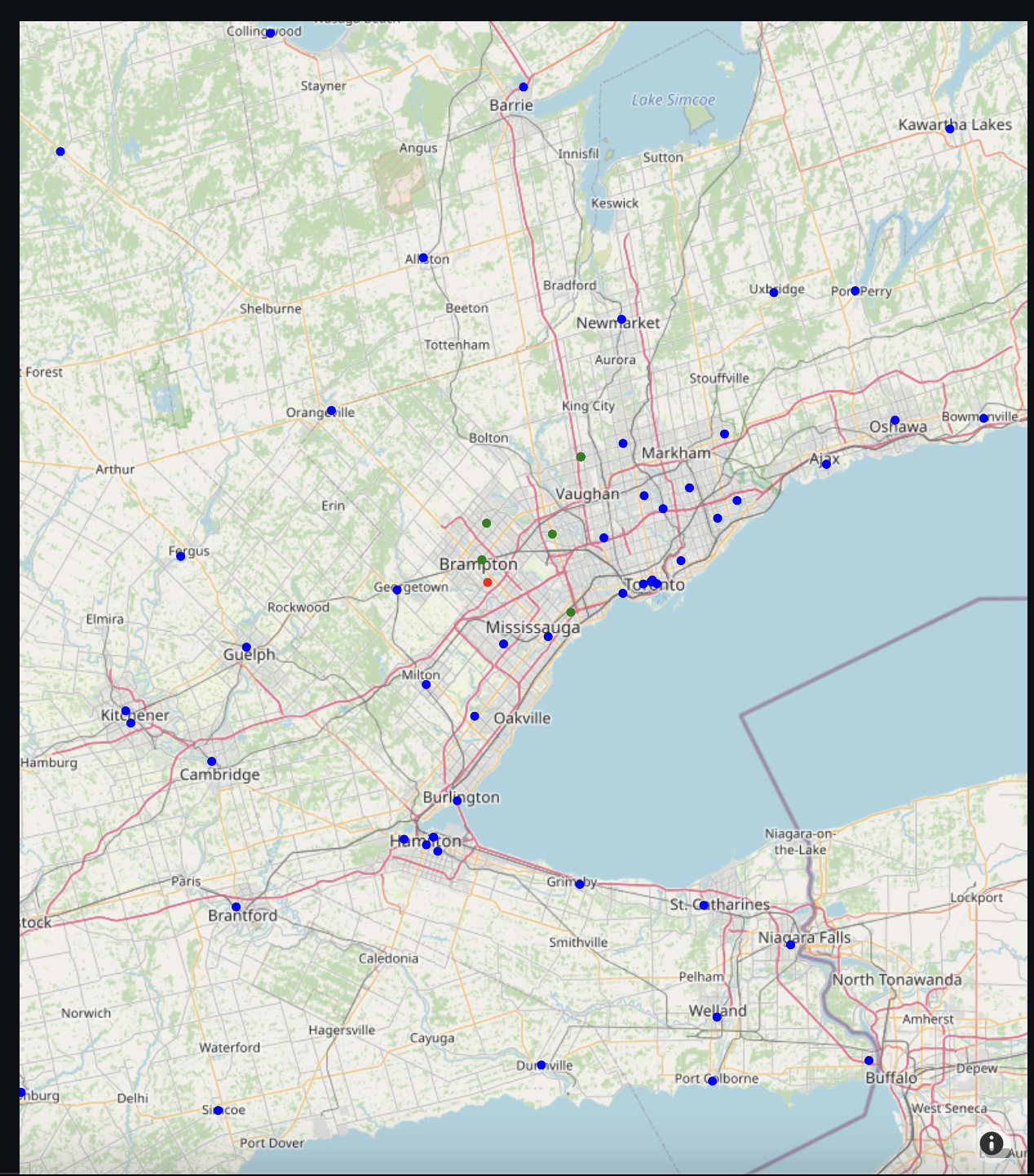
Map with all hospitals
Inspiration
Standard 911 dispatch protocols prioritize geographic proximity, not clinical availability. This leads to ER overcrowding in nearby hospitals, forcing patients with serious conditions to wait hours, which has been directly linked to higher mortality rates.. Moreover, people hate long waiting times; they don't know if there is any other hospital that can help reduce the waiting time, regardless of its proximity.
What it does
Not only does Ontario Swift ER find the closest hospital, but it also displays real-time waiting times and travel times when users select any hospital in Ontario.
How we built it
Using Streamlit which is a UI framework, we integrate all aspects of Data Science: Data Extraction, Data Preprocessing, to Deploying ML Model to find the top hospitals that are convenient in terms of proximity and waiting time. We also use Google API, such as geocoding and distance matrix APIs
Challenges we ran into
Firstly, we didn't have a comprehensive dataset, so we just worked on what we had, including Data Scraping the Ontario website. Moreover, some hospital lacks waiting time due to missing data, so we have to make sure that the Machine Learning model works for NaN values.
Accomplishments that we're proud of
We had a good ideation to begin with; moreover, we used real-life information instead of a synthetic dataset, which makes the app more authentic and applicable
What we learned
How to deal with a situation where we can't find a good dataset. Always started with a good idea and built everything on that. Technically, we know more about the good KNN Model and other APIs for Google Maps that help the app run better. Since both of us are Data Analytics students, it helps a lot to preprocess and mine good-quality data.
What's next for Ontario Swift ER
Using a real-time dataset provided by real hospitals can help the app be more applicable and up-to-date, and help people keep track of their time
Built With
- google-maps
- ml
- python
- selenium
- sklearn
- streamlit


Log in or sign up for Devpost to join the conversation.