Inspiration
We realized that price alone is a lagging indicator—by the time the "odds" change on a prediction market, the opportunity for a viral campaign is already gone. We looked at how high-frequency traders use Volume Velocity to spot institutional movement and realized we could apply the same logic to culture. OnlyGen was built to find the "Quiet Confidence"—the moments where trading volume surges before the narrative breaks.
What it does
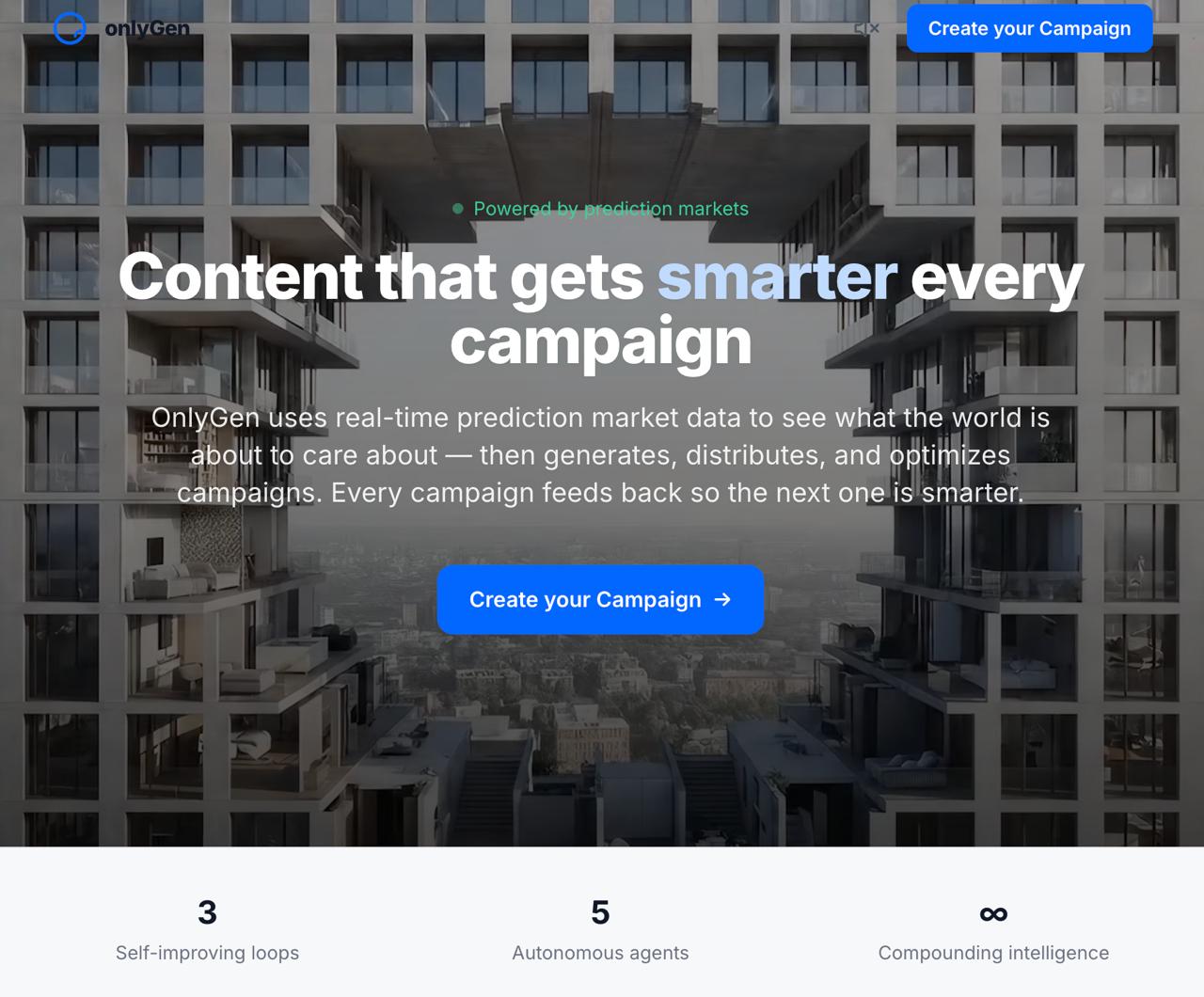
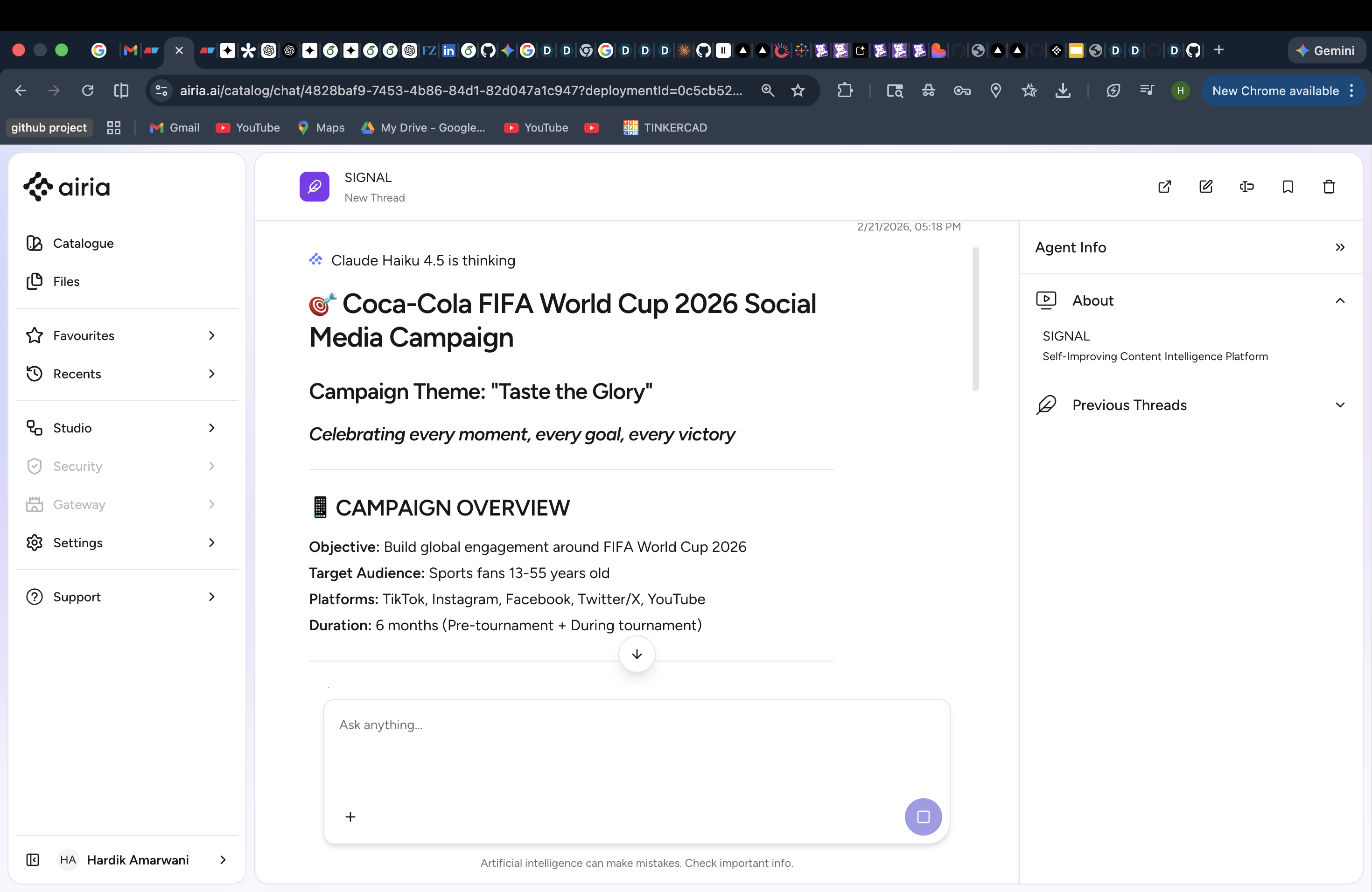
OnlyGen uses real-time prediction market data to see what the world is about to care about — then generates, distributes, and optimizes campaigns. Every campaign feeds back, so the next one is smarter. OnlyGen is an autonomous, self-correcting marketing engine. It starts by absorbing your "DNA" through a Brand Intake Agent, even capturing the founder’s literal "vibe" via the Voice Brief Agent. Once it knows who you are, it watches the world through the Polymarket Trend Agent, calculating "Probability Momentum" to find gaps in the cultural market. It doesn't just post; it scores signals, generates creative variants via Flora, clears them through a Brand Safety Gate, and distributes them through a Channel Router. The best part? It remembers. Every post feeds back into Braintrust, making the agents smarter for the next cycle.
How we built it
We built a modular "War Room" using the Model Context Protocol (MCP) to let specialized agents live where they work best:
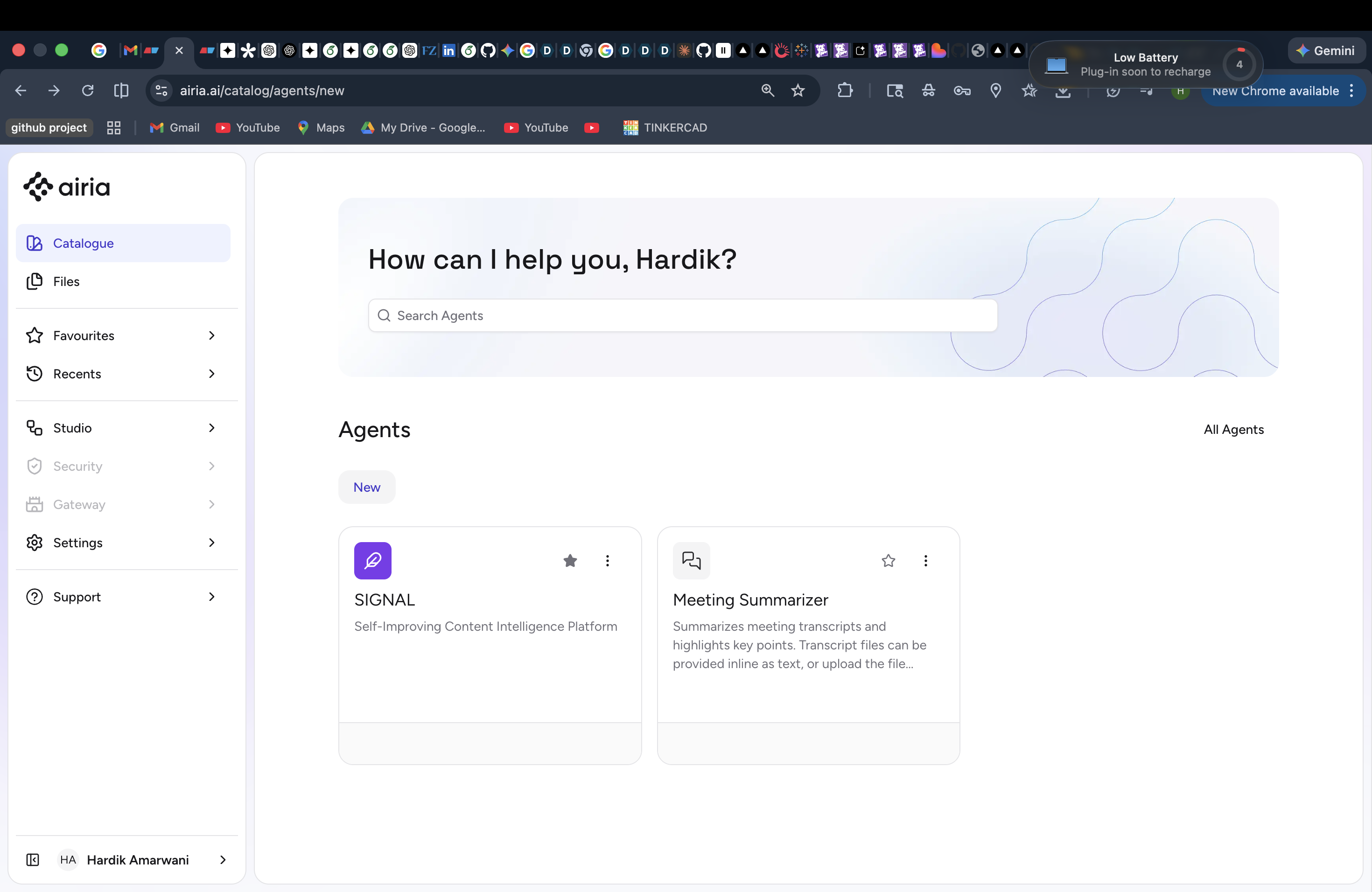
Airia & Gemini: Form the "Pre-Frontal Cortex" for onboarding and publishing.
Modulate: Provides the "Emotional Intelligence" to ensure we don't sound like a generic LLM.
Polymarket Gamma: Our real-time "Central Nervous System" for global events.
Braintrust & Lightdash: Our "Long-term Memory" and "Executive Dashboard," turning raw engagement data into a narrative of improvement.
Flora: (Creative Visuals) Our node-based creative engine that lets the agents generate consistent, high-fidelity brand assets on an infinite canvas.
Challenges we ran into
The biggest hurdle was the "Tone Tug-of-War." Early on, the Signal Scoring Agent would get too excited about a high-velocity market (like a celebrity scandal) and try to force the Campaign Generator to post about it for a B2B Law Firm. We solved this by building the Brand Safety & Tone Gate, which acts as a "Vibe Check" filter. If a campaign is "Too Spicy for LinkedIn," the agent doesn't just stop; it routes the risk to a human in Airia, essentially saying, "I think this is a winner, but I don't want us to get fired."
Accomplishments that we're proud of
This adds the "mechanical" soul to the pitch. It shows that OnlyGen isn't just a wrapper—it's a decentralized department store of specialized intelligence.
What we learned
We learned that "Delta-Probability" is the best creative brief in existence. When the odds of an event shift rapidly, that’s where human attention is. We also learned that by giving agents specific "Constraints" (like the Voice Brief’s "skeptical humor"), you actually get more creative output than by giving them total freedom. Constraints aren't cages; they're launchpads.
What's next for onlyGen
We’re moving toward "The Synthetic Simulation Harness." Before a single post goes live, we’ll run it through a "Sim Mode" where a thousand "Synthetic Personas" react to it. The Publisher Agent will choose the version that wins the simulation. We’re also integrating deeper into Lightdash to provide "What-If" forecasting; telling you not just what happened, but what would have happened if the Polymarket trend had gone the other way.
Sponsors Used:
- Google DeepMind - ElevenLabs
- Datadog -Braintrust -Modulate
- Airia
- Lightdash
Built With
- airia
- gemini
- modulate.ai
- polymarket


Log in or sign up for Devpost to join the conversation.