Inspiration
With the rise of e-commerce and digital payments, financial fraud has become increasingly sophisticated, costing businesses and individuals millions every year. Inspired by the need for smarter security in fintech, we set out to build a machine learning model that can proactively detect fraudulent transactions—before the damage is done. Our goal: to create a solution that empowers payment platforms with intelligent, data-driven fraud detection.
What it does
Our project uses supervised machine learning algorithms to analyze transaction data and classify whether a given transaction is legitimate or fraudulent. It handles extreme class imbalance (as fraud is rare) and provides clear performance metrics like precision, recall, and AUC to assess reliability. The model can be integrated into payment gateways or financial dashboards to provide real-time alerts and decision support.
How we built it
We followed an end-to-end machine learning pipeline: Data Preprocessing: Cleaned and standardized the dataset, handled missing values, and addressed class imbalance using SMOTE. Exploratory Data Analysis (EDA): Uncovered patterns in transaction behavior using visualizations. Model Training: Evaluated several classifiers including Logistic Regression, Random Forest, and XGBoost. Evaluation: Compared models based on accuracy, F1-score, confusion matrix, and ROC-AUC. Model Selection & Tuning: Used grid search and cross-validation for hyperparameter optimization.
Challenges we ran into
Class Imbalance: Fraudulent transactions made up a tiny fraction of the dataset, requiring careful resampling and metric selection to avoid misleading results. False Positives: Balancing precision and recall to minimize false alarms while catching real frauds was a persistent challenge. Feature Engineering: Identifying the most informative features and avoiding overfitting took iterative refinement. Model Interpretability: Making the model explainable for stakeholders without technical backgrounds.
Accomplishments that we're proud of
Developed a high-performing fraud detection model with strong recall and precision scores. Successfully handled data imbalance without sacrificing accuracy. Built a modular, extensible codebase suitable for real-world fintech integration. Gained a deeper understanding of how AI can safeguard digital payments and financial data.
What we learned
The importance of selecting the right evaluation metrics (like precision-recall) over accuracy in fraud detection. How to effectively handle imbalanced datasets using techniques like SMOTE and under-sampling. Fine-tuning machine learning models and validating them with cross-validation. The role of explainable AI (XAI) in high-stakes domains like finance.
What's next for online payment fraud detection
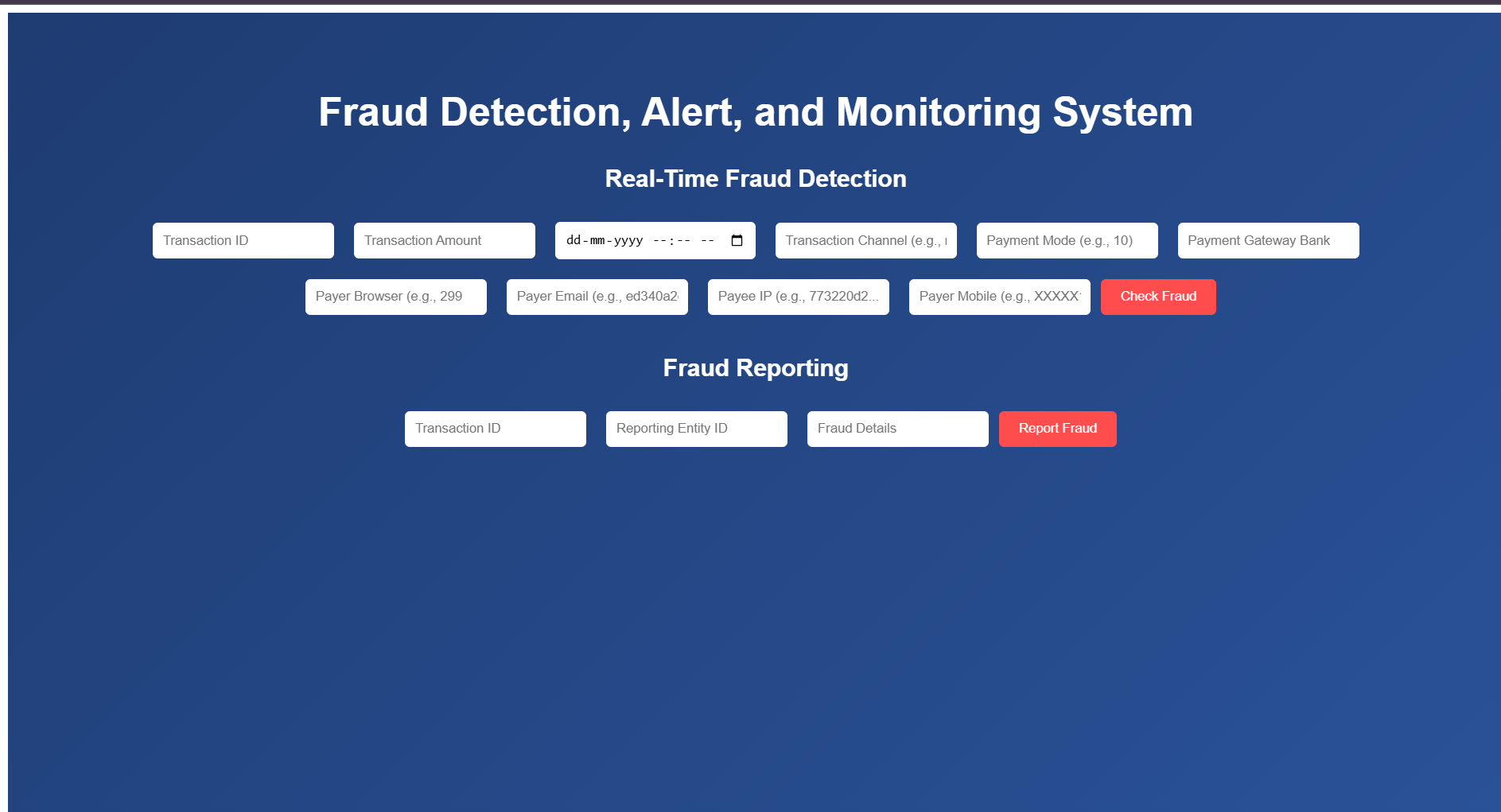
Real-Time Deployment: Convert the model into an API and integrate with payment gateways. Deep Learning Models: Explore LSTM and autoencoders for sequential transaction analysis and anomaly detection. Model Explainability: Implement SHAP or LIME to help users understand predictions. Live Dashboard: Build a front-end interface to visualize alerts, fraud trends, and model decisions. Continuous Learning: Enable the system to retrain with new data to stay adaptive to emerging fraud patterns.
Built With
- joblib
- matplotlib
- numpy
- pandas
- python
- scikit-learn
- seaborn


Log in or sign up for Devpost to join the conversation.