Inspiration
We got the inspiration for this program's development and finalization from classroom sessions of "Kahoot" and "Quizzizz." Teachers used these interactive sessions to decide which students would earn extra credits on upcoming quizzes or examinations. When we asked about the purpose of these interactive sessions, the teacher said that they were designed to create a fun and competitive environment. These sessions were used to determine which students had prepared for the quizzes or tests and which had not, as well as to assess how much knowledge had been remembered and how well the students knew the subject.
What it does
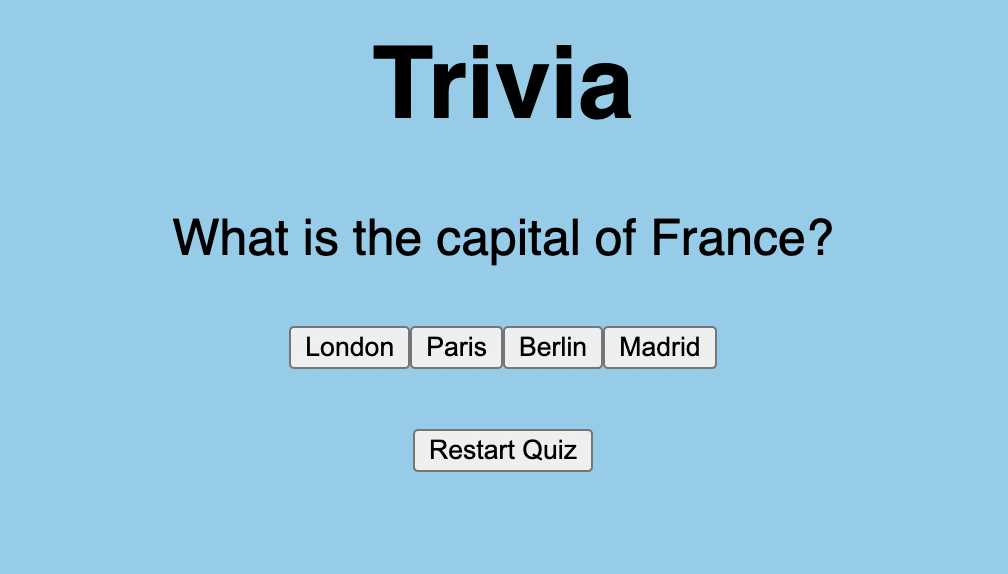
The program presents a multiple-choice question and prompts the user to select one of the four provided answers. Upon choosing an answer, the program determines whether it is correct and proceeds to the next question. This cycle repeats for a total of 20 questions. Once the last question is answered, the program reveals the user's score, indicating the number of correct answers out of 20.
How we built it
During the creation of this program, we used Visual Studio Code (VSC) as our major tool. VSC provided us with an extensive and efficient platform in which to organize and create our code, eventually molding it into the final product that we are currently presenting.
Challenges we ran into
Since this was our first hackathon, we didn't particularly know what to do and what to be expected. As a student, we are programmed into overthinking and making sure everything is perfect which led to some confrontation about what programs to make. Additionally, we encountered the challenge of deploying our program on a website, as this was unfamiliar territory for us.
Accomplishments that we're proud of
One notable achievement that we were proud of, is successfully getting the program to function as intended. This milestone served as a crucial turning point in our program's development and solidified our progress in finalizing it.
What we learned
Throughout the course of our project, we learned how to use Flask, a Python web framework, and effectively integrate it into our code. With this newfound understanding, we were able to improve the functionality and interaction of our programs. Since this is our first Hackathon, we especially learned more about JavaScript and how the three languages of CSS, HTML, and JavaScript can make a functioning and interactive website.
What's Next for Online Trivia
In the future, we can enhance the functionality of "Online Trivia" by introducing a visual effect on the screen when the user answers a question correctly or incorrectly. Additionally, we can implement a question randomizer to shuffle the questions, thereby offering the user a fresh challenge with a variety of new questions.

Log in or sign up for Devpost to join the conversation.