-
-
ONLINE CONNECTION PLATFORM
Inspiration
Covid-19 epidemic crisis has already become a social medical situation with devastating repercussions at a European and world level, especially in Italy, one of the most affected countries (189.973 people positive for Covid-19). This outlines significant risks’ prospectives in the most immediate future of severe psychological damage for those directly affected, as well as for the entire population. Covid-19 constitutes a strong biological risk, especially for seniors citizens, who seem to be potentially the most susceptible demographic group to negative consequences of the virus. This element is particularly relevant for Italy, which has reached more than 14 million people over 65 (of which about 7 million over 75). This pandemic crisis poses significant challenges to the entire Italian population, but in particular to those older adults in a condition of loneliness (47,3% of Italians over 65 are alone), having to stay at home, giving up social relationships, not being able to carry out leisure or physical activities or forced to refrain from direct contact with their loved ones, depriving themselves of affective key-factors that usually enrich relationships. Our goal is to collect and respond to the needs of these people trying to compensate for the lack of activities that used to promote their psycho-physical balance. Since this problematic emergency involves several interconnected dimensions (personal, relational, social, etc.), our solution wants to be a resolutive response impacting on all these dimensions. In particular, on a social level, our idea is to start proposing this solution starting from a small social group dimension, i.e. that of the neighborhood or small town, and then extending it to a wider territory. One reason for our focus on restricted city's areas is that the contribution provided by volunteers to seniors, could not be limited to just the emergency itself, but both sides could be able to cultivate the perspective of getting to know each other, thus giving a dimension of future planning to the aid. Our intention is, therefore, to unite supply and demand already present in these areas, providing support to those concrete needs of seniors in difficulty, as well as for psychological, social, and higher-level needs. To better identify users’demands, focus groups or telephone interviews will be conducted allowing our project equips to understand the most relevant needs of those who ask for help. We will also include psychological assessments, screenings, and training plans for those who want to contribute as volunteer helpers. Psychological screening has a twofold purpose: to assess the level of severity of the user's condition and to assess the suitability of the volunteers so that volunteer-user couples can be functionally constituted. Instead, the training of volunteers is planned to promote tools and skills useful to enable them to listen to the problems expressed and, if necessary, to enable volunteers to report the most vulnerable to health professionals.
What it does
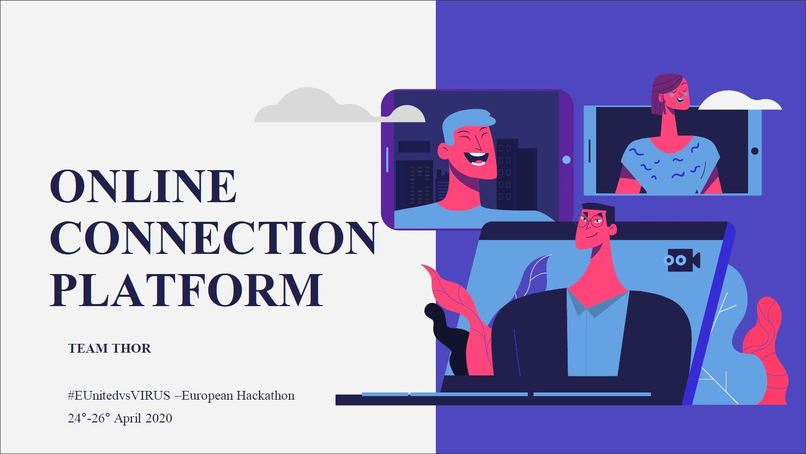
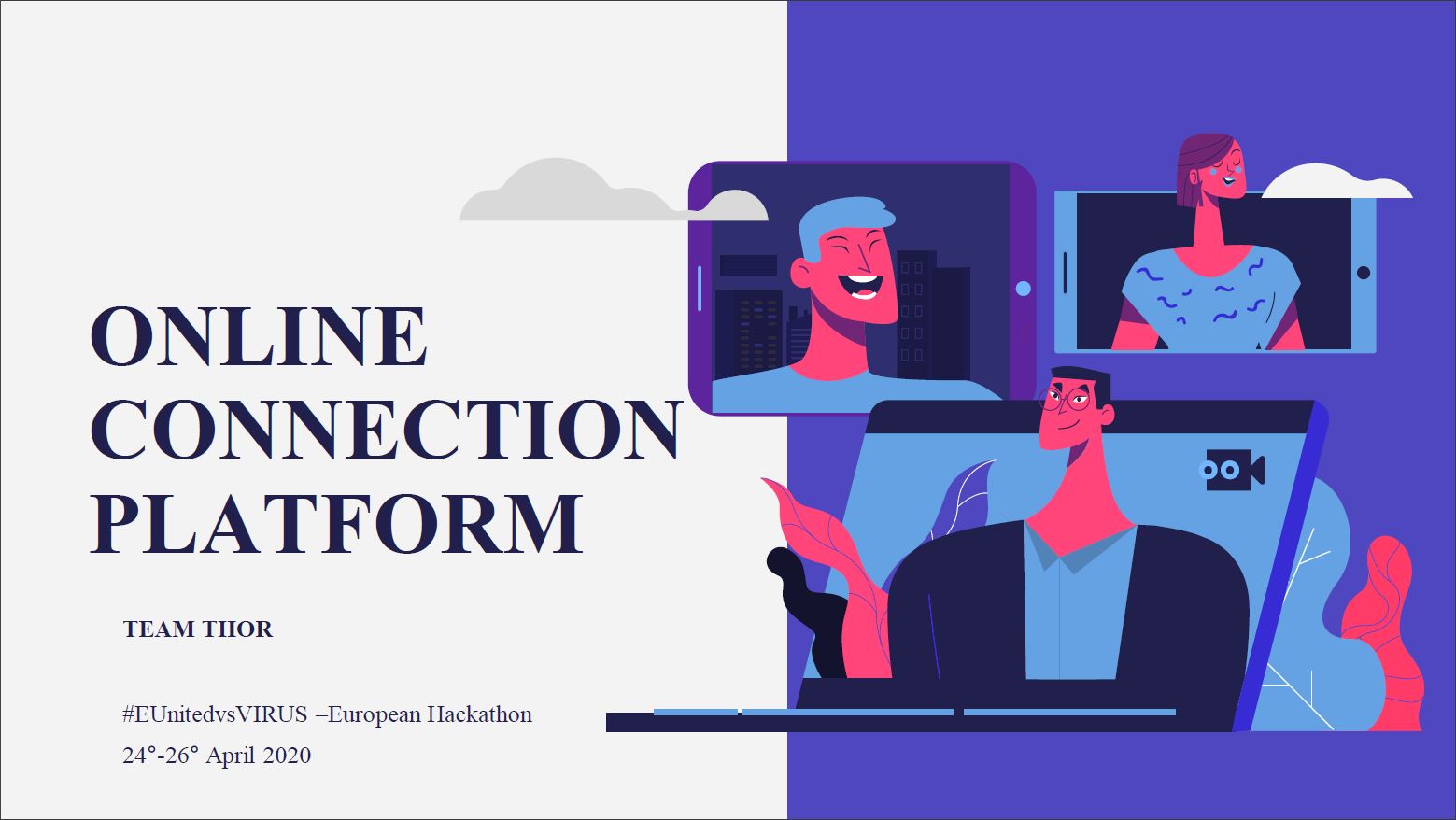
From simple ideas come great solutions. What’s a city if not the sum of its citizens and their small social communities? In this dramatic COVID-19 epidemic crisis it’s essential to understand what the needs of each person are, especially of those older adults isolated and at risk, but also what the pre-existing communities' resources are. We aim to build an online connection platform to reduce the burden and solitude of the older adult population. With approximately more than 70% of the older adult population now connected to the internet, technology is already a part of their daily lives to stay informed, connect to friends and family, shop, make travel plans, and make reservations for travel and transportation. The mHealth system will provide a bridge between client users' demands(older adults who feel lonely or alone) and volunteers supply (people who may be willing to share some time, on the phone, talking to an older adult who feels alone or lonely). With a development specifically designed to facilitate seniors citizens, the online connection platform will: 1- Give access to every single user, dividing people into a two-folded database by volunteers and client users classification. 2- Provide and record the psychological profiles and needs of both clients and volunteers, thanks to the most updated psychological questionnaire and psychometric analysis. 3- Provide online training to volunteers users, to efficiently acknowledge the social needs of every client, who may be re-addressed to the proper service, when needed. 4- Redirect and connect senior users to the best service(i.e. doctors, psychologists, pharmacists, and, volunteers) already active in the near neighborhood. Once completed, implemented and tested in local communities of Milan, Italy, our online connection platform will be able to exploit the resources already listed in people social networks, providing: general or specific help to all older adults in everyday-tasks, calls and chat to fight loneliness or improve well-being and direct connections for receiving psychological or medical assistance.
How I built it
Although not built yet, our ONLINE CONNECTION PLATFORM will bee developed through an integrated process involving Tech-Experts, Web Developers/Designers and Clinical Psychologists.
Challenges I ran into
The COVID-19 pandemic is impacting the global population in drastic ways. In particular, the experience of social isolation and the losses of both relatives, friends and routines could lead to psychological distress, symptom of anxiety and/or depression. If we pay a specific attention to the elderly, they need of safe access to nutritious food, basic supplies, money, medicine to support their physical health, psychological support and social care. Moreover, the dissemination of accurate information is critical to ensuring that older people have clear messages and resources on how to stay physically and mentally healthy during the pandemic and what to do if they should fall ill. Indeed, learning that over 95% of the deaths occurred in those older than 60 years as well as that more than 50% of all fatalities involved people aged 80 years or older could be upset. It is widely known that a lack of social connection for older adults has negative impacts on them. On the other hand, there is increasing evidence that intergenerational programming, where older adults are spending quality and quantity time with younger generations, is significantly improving the well-being of all generations. What are we waiting to connect them? All you need is a smartphone! We aim to create a “protective hub” in which elderly people can find an answer to their problems with the help of specially trained young volunteers. We think it could be also important to give them the opportunity to virtually meet, share stories, experiences and confront each other so that they don’t feel alone. Physical distancing doesn’t have to mean social isolation.
Accomplishments that I'm proud of
In the “true spirit” of the Hackathon, we answered the call with nothing more than open-minds and willingness to share our competences, starting from scratch. We have then been able to form a team of young and skilled professionals to better address one COVID-19 challenge. With an important connection with the Department of Psychology at the Università del Sacro Cuore of Milan, Italy, we can count on a significant network to better reach our goal, and of course, the people. Thanks to mentors and other professionals from around the globe that have been reaching us in the last couple of days, we could finally transform our simple solution into a promising proposal.
What I learned
Create something from scratch is not easy, especially when dealing with the integration of technology into mental health.
The psychological empowerment of older adults has received increased emphasis in this COVID-19 pandemic. Psychological interventions have been recognized as being both clinically successful and cost-effective in the promotion of seniors' well-being and mental health. What appears to be still partially unexplored, however, is the potential of integrating new technologies into psychological initiatives for individuals in their later life.
Advanced technology innovation within the framework of senior care could be a possible solution.
What's next for Online connection platform
We want to developed our idea and start testing it on small communities in Milan as soon as possible. 1)Develop a Beta of ONLINE CONNECTION PLATFORM 2)Get pilot users 3)Analyze the data and share insight with research communities all around the globe.
Physical distancing doesn’t have to mean social isolation
Built With
- connect
- phone
- psy
- social
- web


Log in or sign up for Devpost to join the conversation.