-
-

LOGO
-
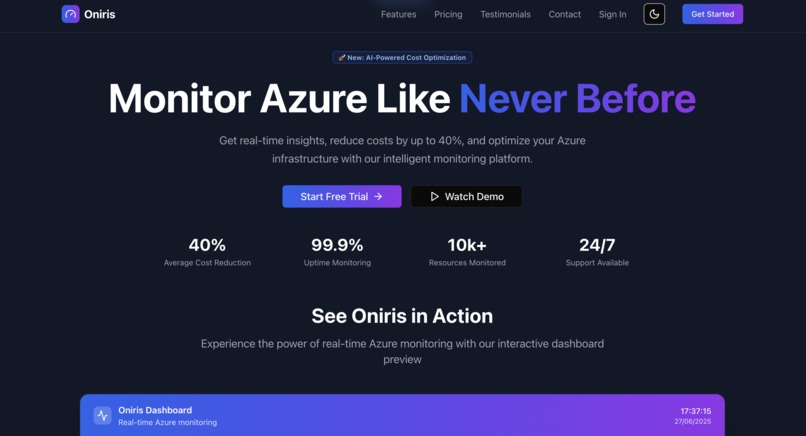
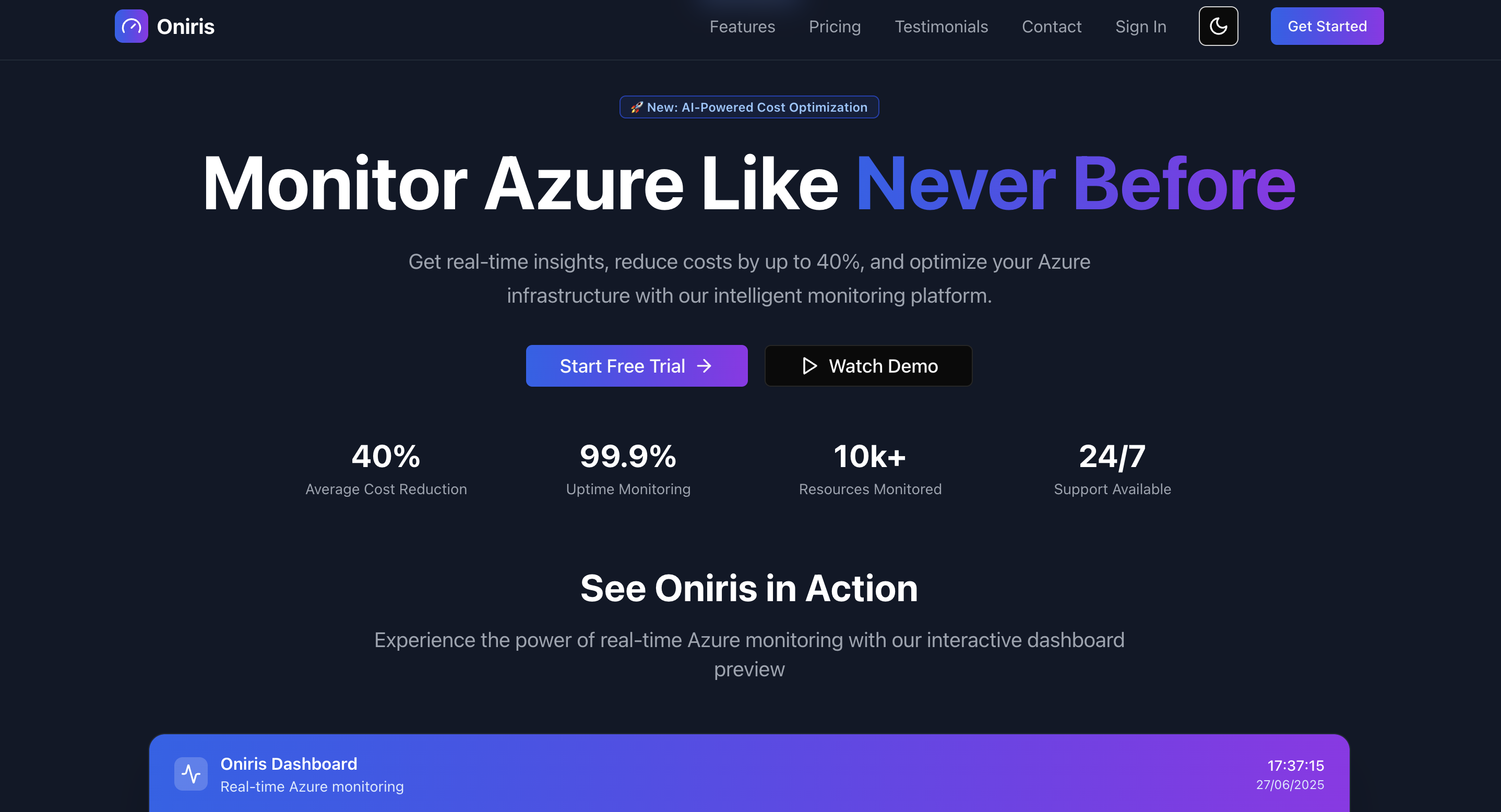
LANDING (DARK MODE)
-
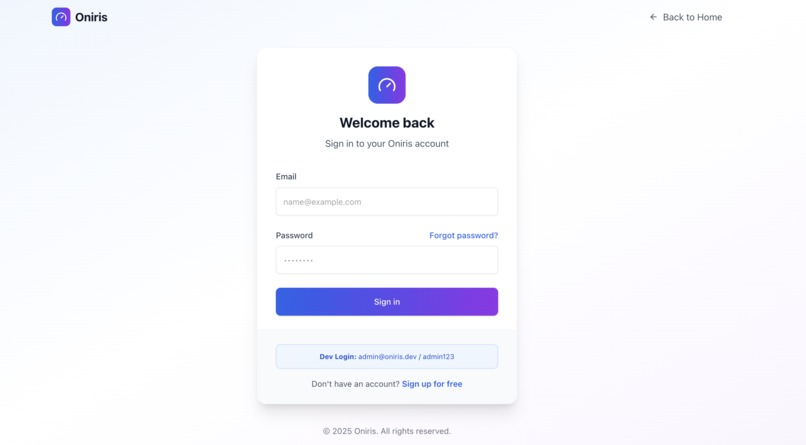
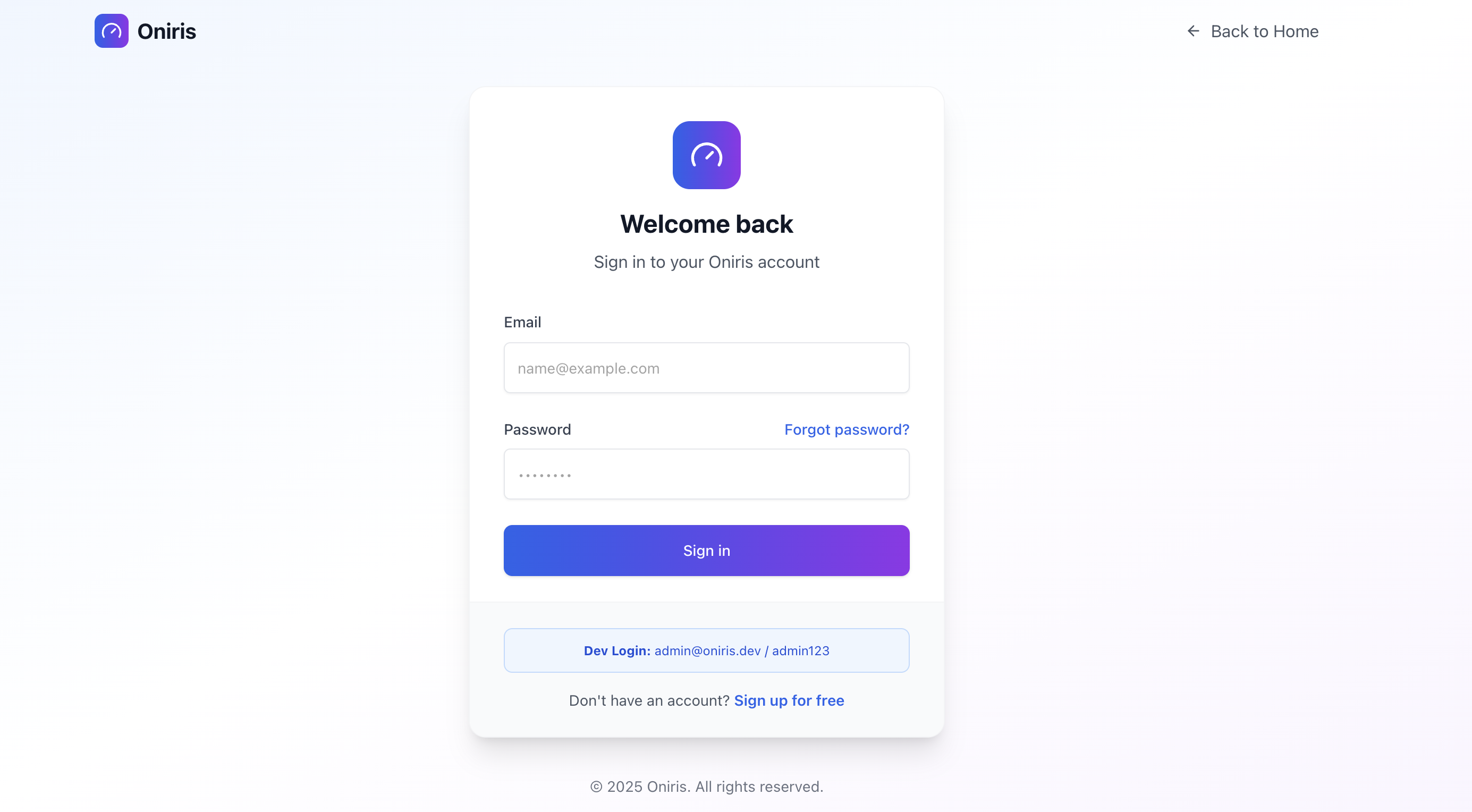
LOGIN (LIGHT MODE)
-
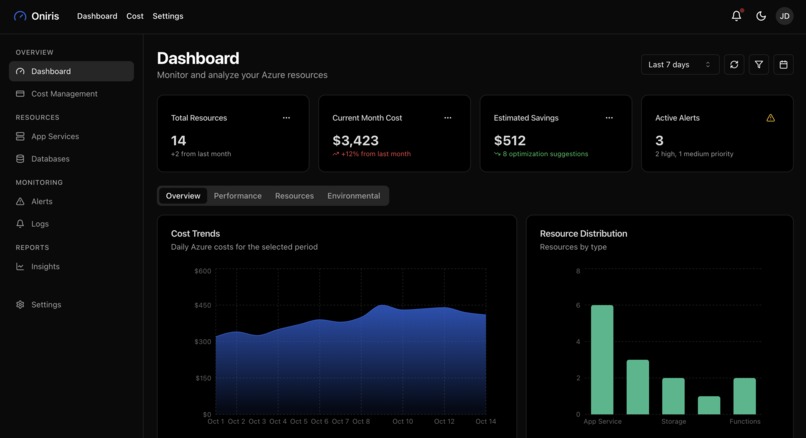
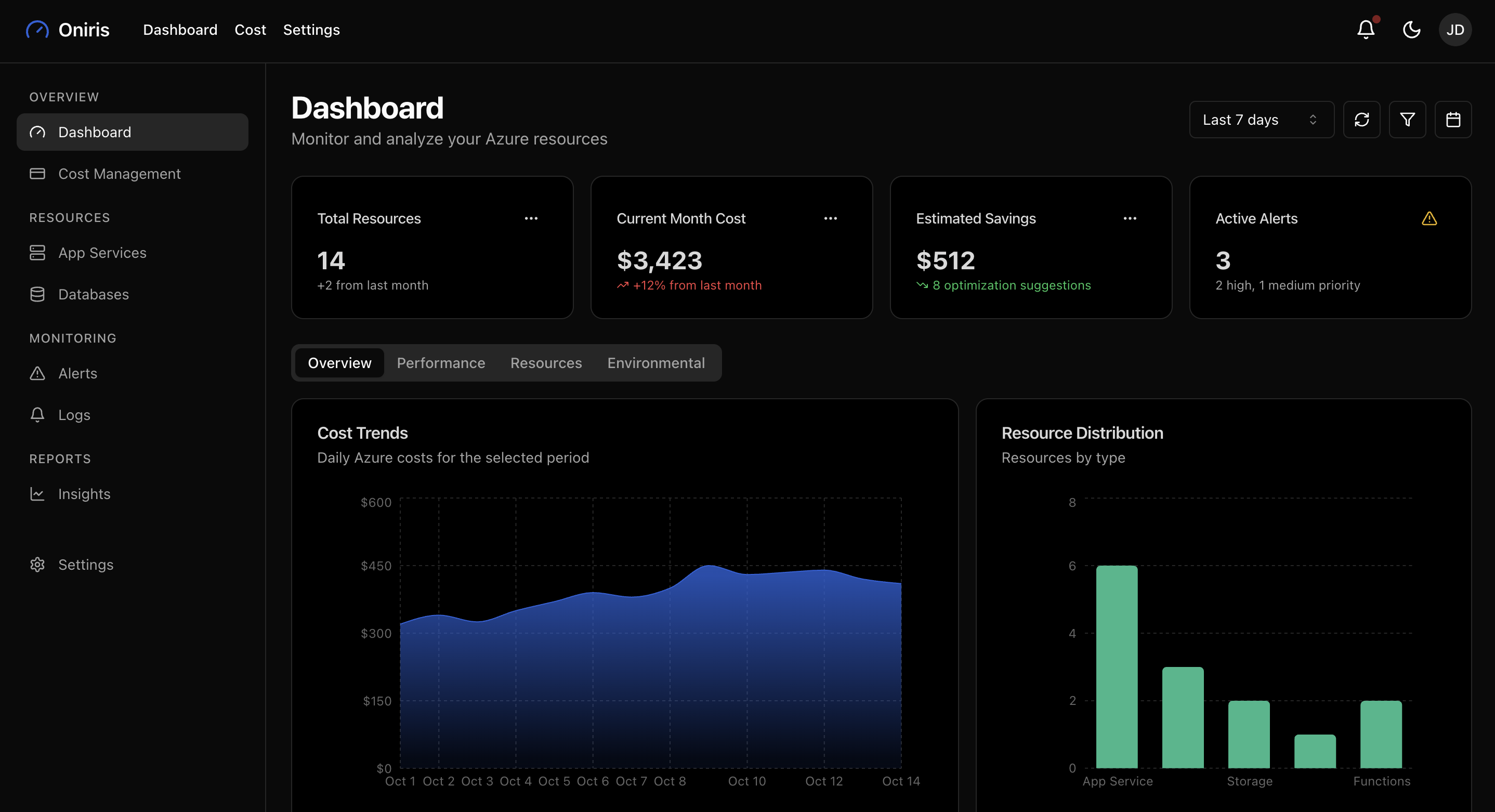
DASHBOARD - GENERAL OVERVIEW (DARK MODE)
-
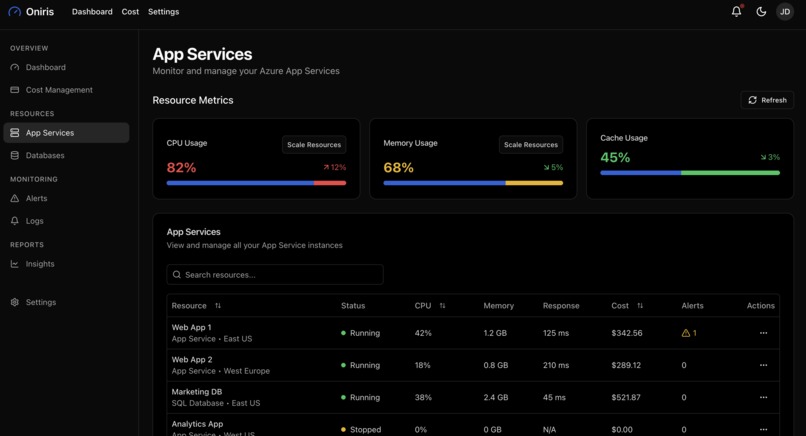
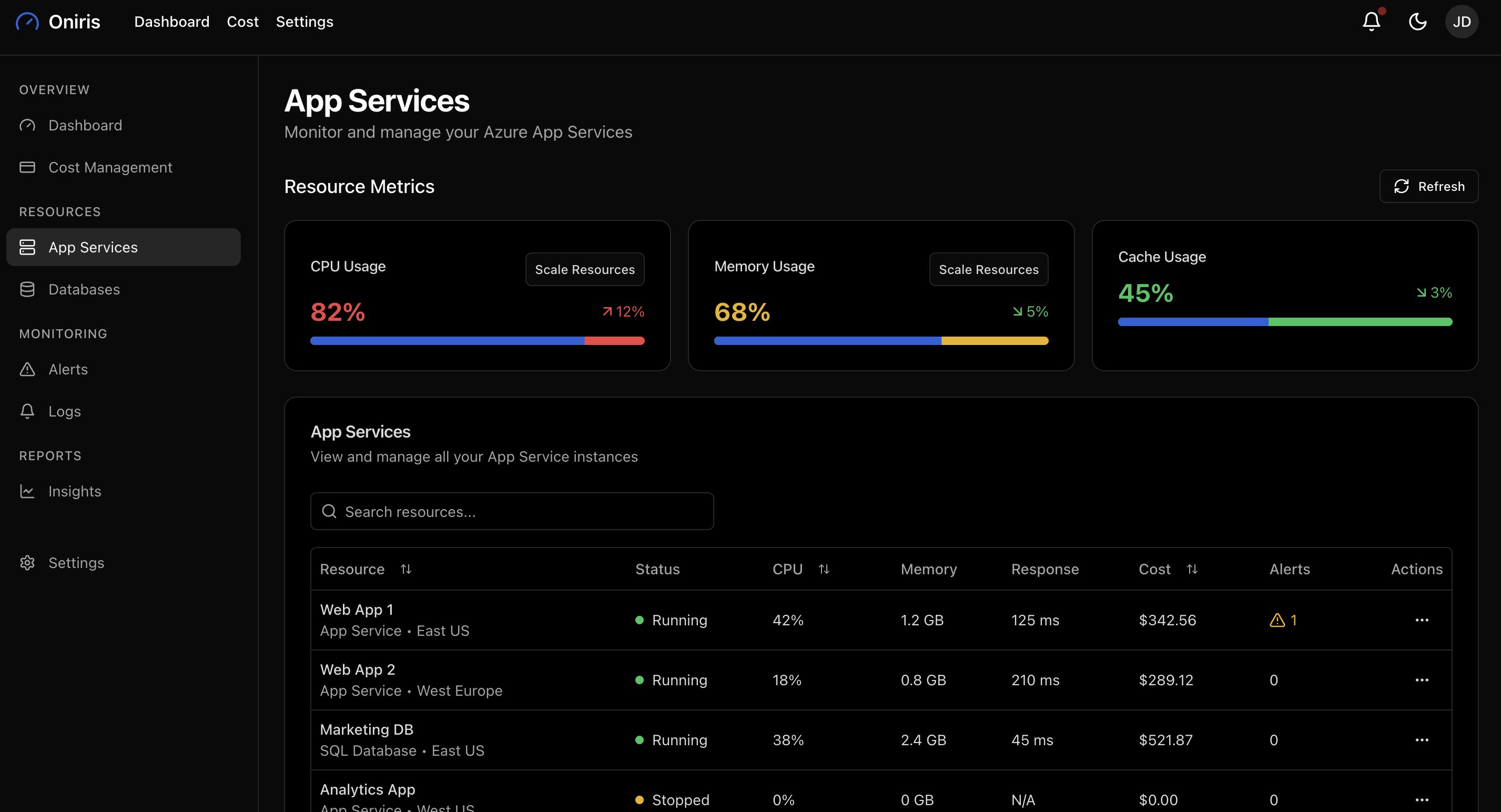
DASH - APP SERVICES (DARK MODE)
-
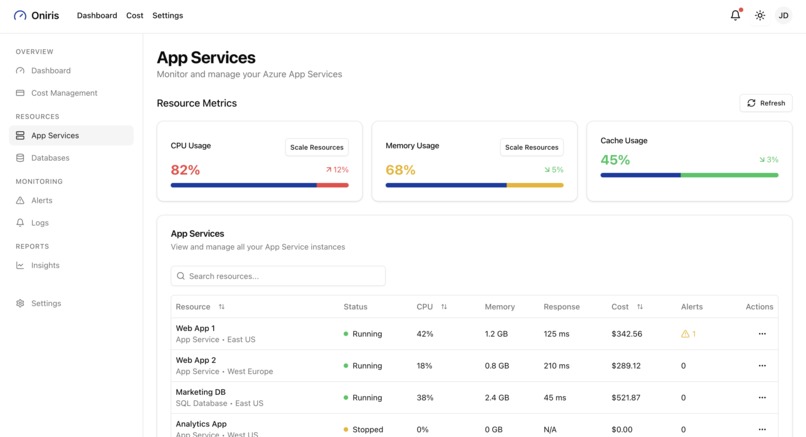
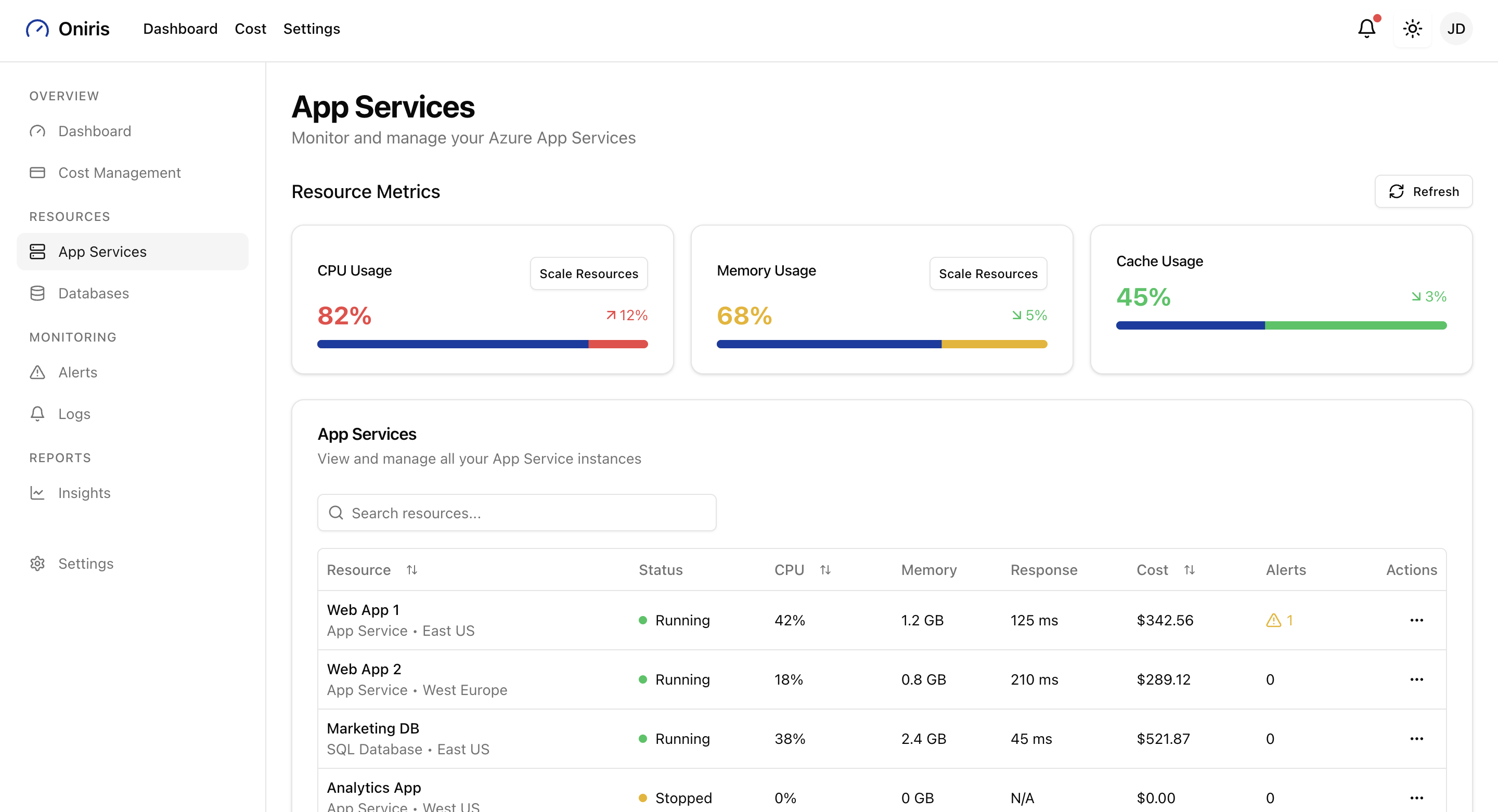
DASH - APP SERVICES (LIGHT MODE)

Inspiration
Cloud spending is skyrocketing, but few companies truly understand where their money goes. In speaking with CTOs, CFOs, and cloud engineers in Switzerland, we noticed a recurring pain: billing dashboards are too technical, alerts come too late, and cross-team alignment is missing. Oniris was born out of the desire to make cloud costs transparent, actionable, and accessible—not just for engineers, but for every decision-maker.
Working in consulting for global banking players, I’ve witnessed first-hand how cloud spending is often out of control—with significant amounts wasted on underutilized or misconfigured services. These inefficiencies not only hurt the bottom line, but also lead to unnecessary environmental impact through excessive energy consumption. Oniris was created to address both: reduce costs and promote sustainable, data-driven infrastructure.
What it does
ONIRIS is a cloud cost observability platform focused on Azure. It helps teams:
Monitor and visualize real-time cloud spend
Get plain-English summaries powered by AI
Receive alerts on cost anomalies and budget risks
Automate cross-team reporting via Slack, Email, and Webhooks
Set dynamic thresholds and track usage over time
In short: it translates raw billing data into strategic decisions.
How we built it
We focused on modularity and transparency from the start.
Frontend: Built with Vite, React, and TailwindCSS for fast, clean UI
Backend: Supabase for auth, data storage, and role control
Monitoring: Azure Cost Management APIs, with Grafana dashboards deployed via Ansible
AI Layer: LLM-powered agents summarize usage patterns and recommend optimizations
Deployment: Containerized setup, ready for cloud or on-premise hosting
Payment: Stripe as this is most common for SaaS products.
What it does
ONIRIS is a cloud cost observability platform focused on Azure. It helps teams:
Monitor and visualize real-time cloud spend
Get plain-English summaries powered by AI
Receive alerts on cost anomalies and budget risks
Automate cross-team reporting via Slack, Email, and Webhooks
Set dynamic thresholds and track usage over time
In short: it translates raw billing data into strategic decisions.
Challenges we ran into
Azure permissions and billing APIs are not friendly to new developers
Reducing noise in time-series data while keeping meaningful insights
Designing visualizations that don't overwhelm users
Balancing automation with accuracy in AI-generated alerts
Ensuring security and role-based access for sensitive cost data
Stripe connectors not working properly with Supabase/Netflify. Had to find a work around in bash on mac terminal by downloading packages with brew to make it work.
Accomplishments that we're proud of
Deployed a full-stack MVP with real-time Azure integration
Build a full product with Dashboard and real time analysis which can be customized by clients later on
Created a usable AI layer that explains spend in natural language
Built a working Stripe integration
Added CO₂ impact monitoring to support sustainable IT
Interest from SMEs in Switzerland for early pilot runs
Flexible architecture that can expand to multi-cloud (AWS/GCP)
What we learned
Engineers and CFOs see cloud costs differently — we can bridge that gap
Natural language explanations improve decision-making across teams
The best dashboards are often the simplest
Building a “FinOps copilot” is more about clarity than complexity
What's next for ONIRIS
Rolling out with Swiss enterprise pilot partners
Expanding support to AWS and GCP
Training our AI agent on industry-specific usage patterns
Integrating with productivity tools like Notion, Excel, and Linear
Built With
- ansible
- azure
- bash
- database
- grafana
- react
- supabase
- tailwind
- typescript


Log in or sign up for Devpost to join the conversation.