-
-
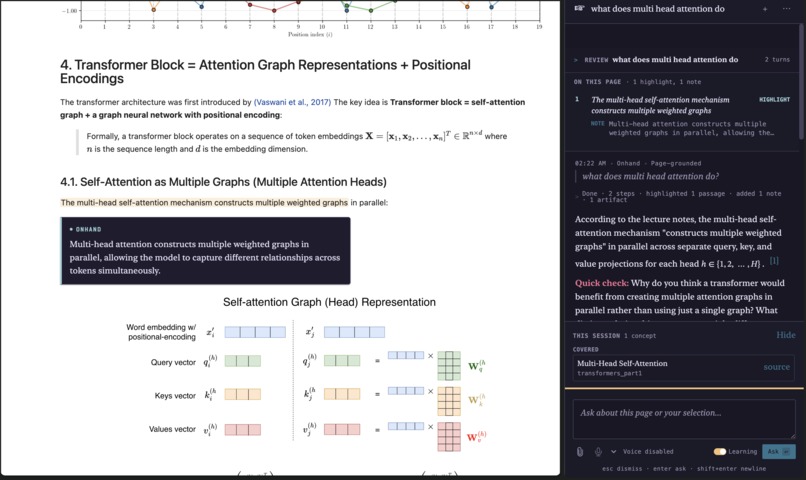
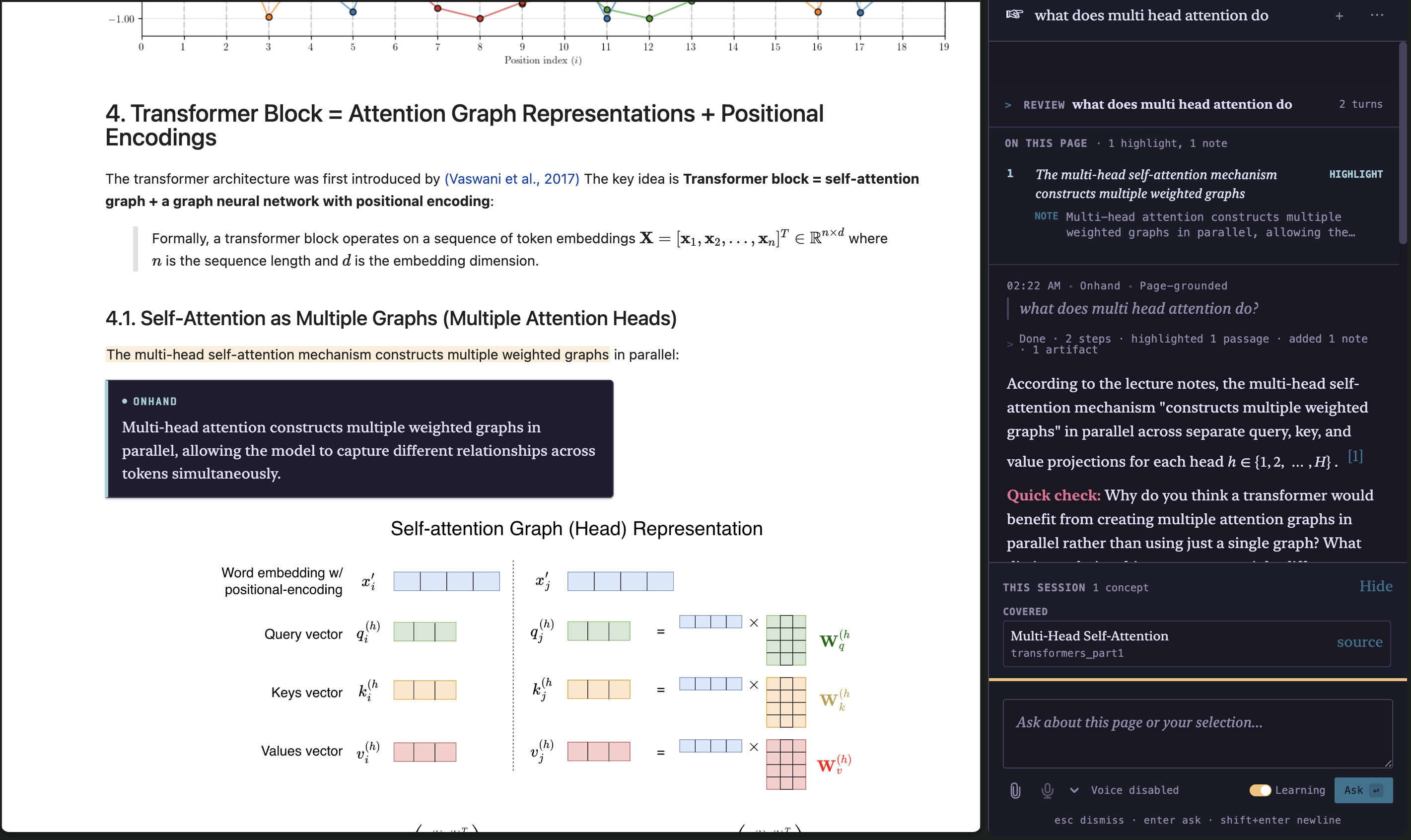
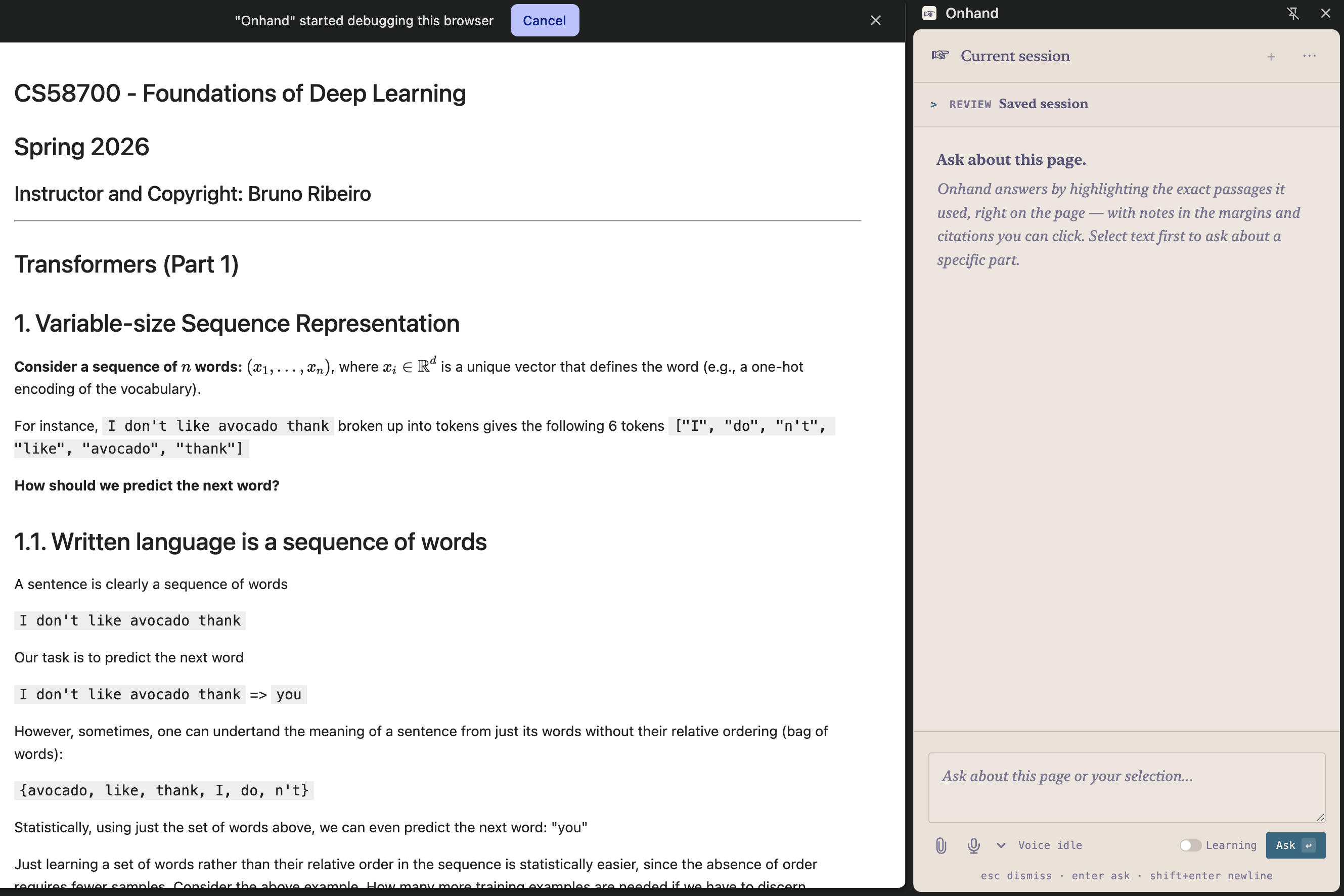
The tutor teaches from the page and checks your understanding
-
-
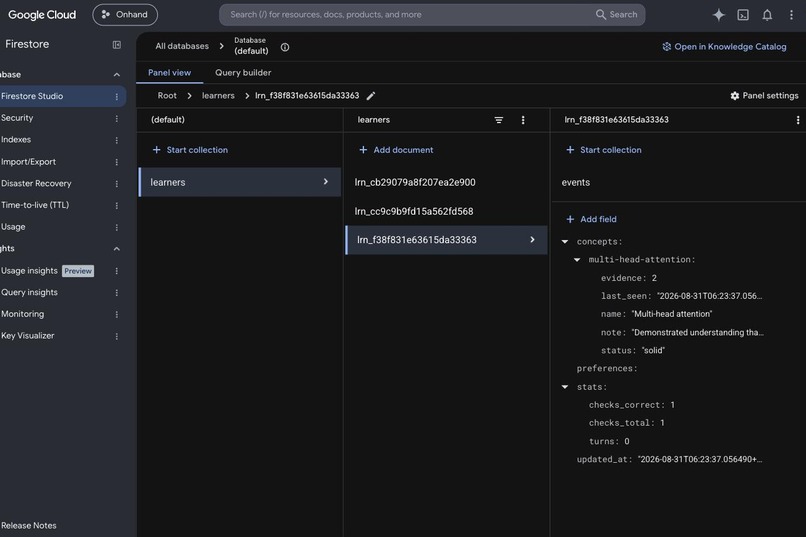
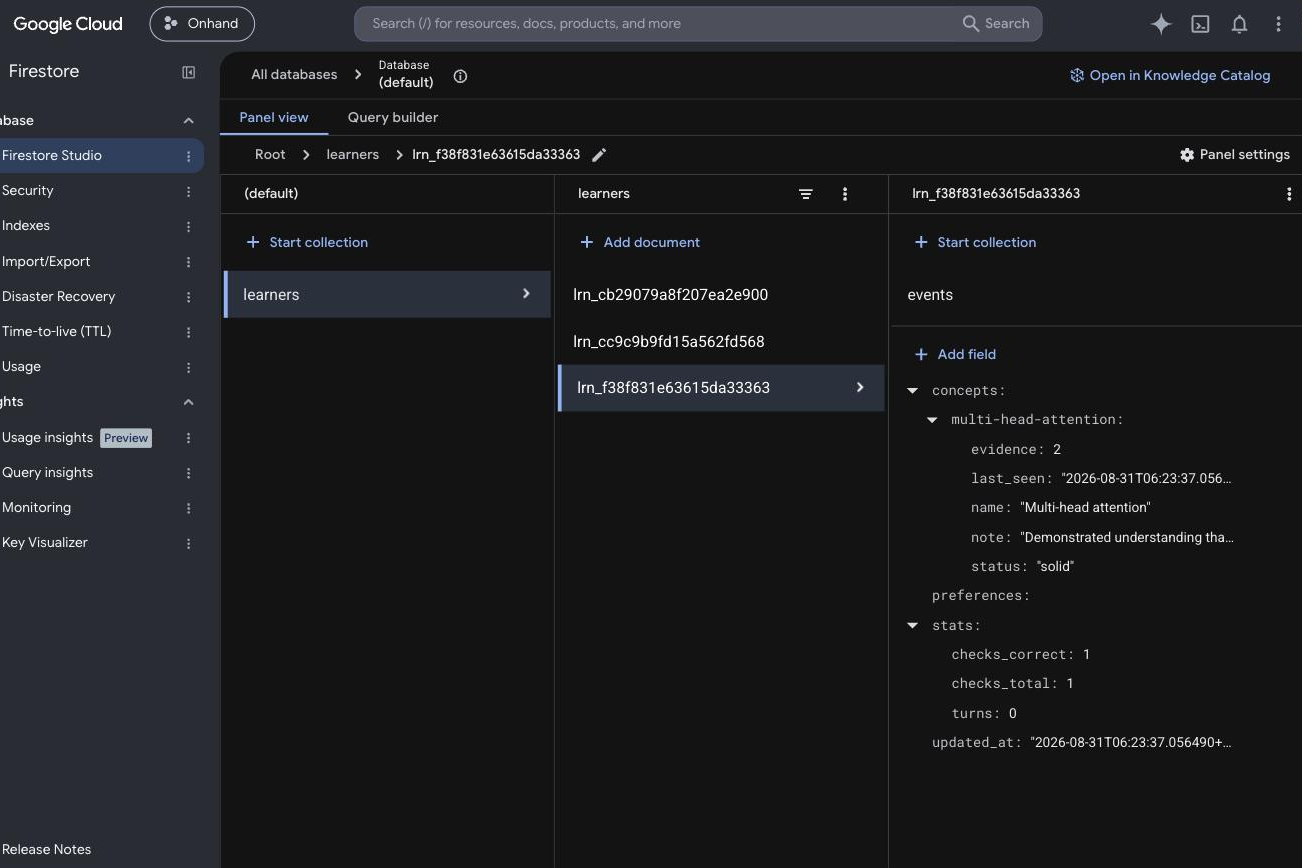
What it remembers about you, in Firestore
-
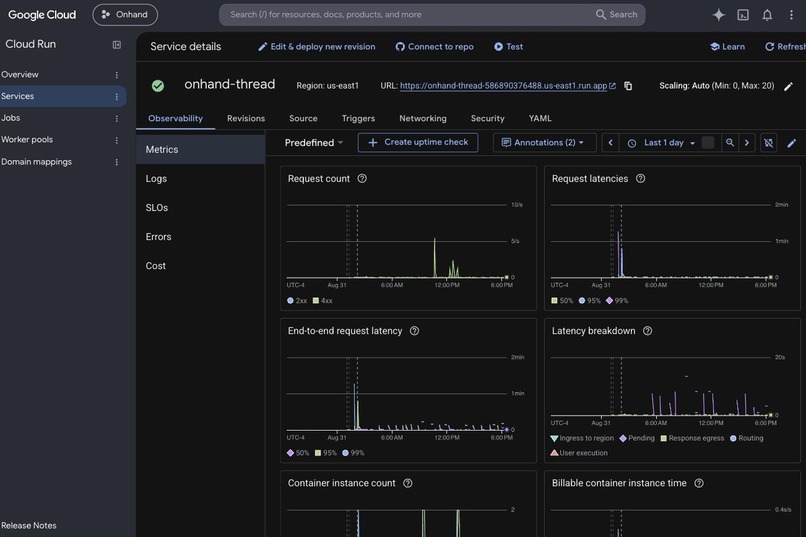
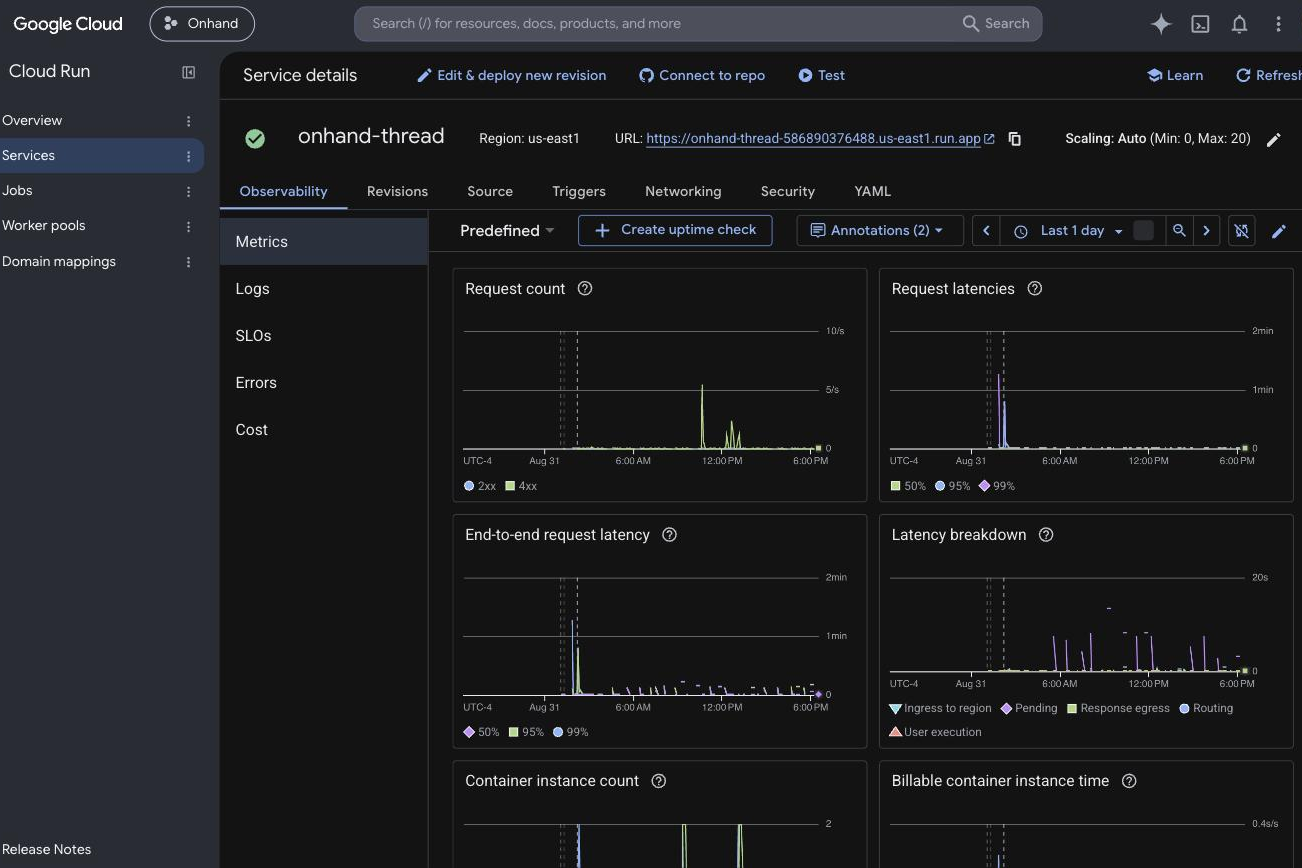
Live on Cloud Run
-
Inspiration
Every AI tutor has amnesia. You can spend an evening working through TCP congestion control with an assistant, reveal exactly which idea you're confused about — and tomorrow it re-explains everything from zero, including the parts you had mastered. Human tutors are valuable precisely because they remember you: what you've seen, what you got wrong, and how you like things explained.
What it does
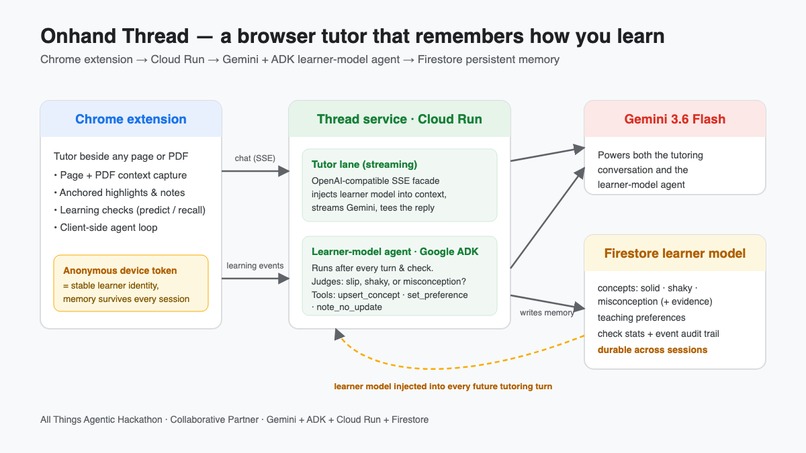
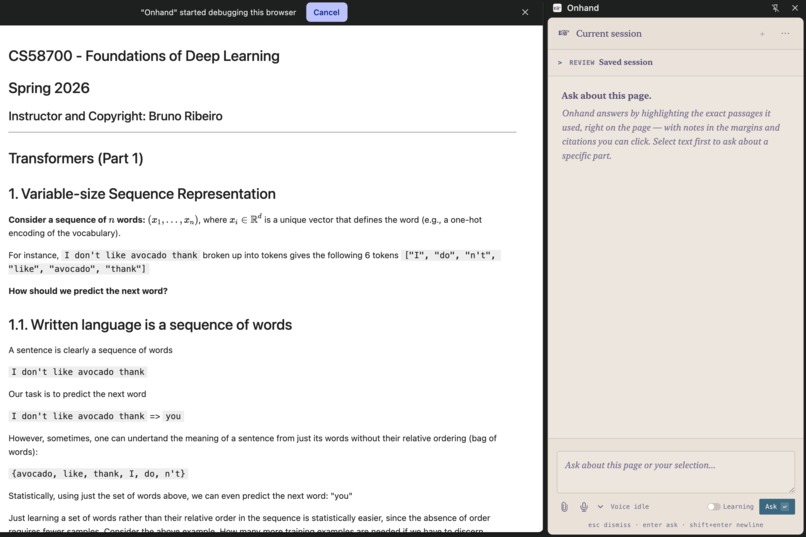
Onhand Thread is a Chrome extension tutor that lives beside any webpage or PDF. As you study, it explains, anchors answers to the source with highlights, and opens learning checks (prediction/retrieval questions). Every exchange and every check result flows to a learner-model agent (Google ADK + Gemini) that decides what the moment revealed about you — a misconception, a solidified concept, a teaching preference — and writes that judgment into a persistent Firestore learner model.
The next time you open the tutor — new tab, new day, new topic — Gemini teaches with that model in context. Ask for a refresher on TCP and it opens with "the NIC bitrate does not change," because yesterday you thought slow start was a physical rate limit.
How we built it
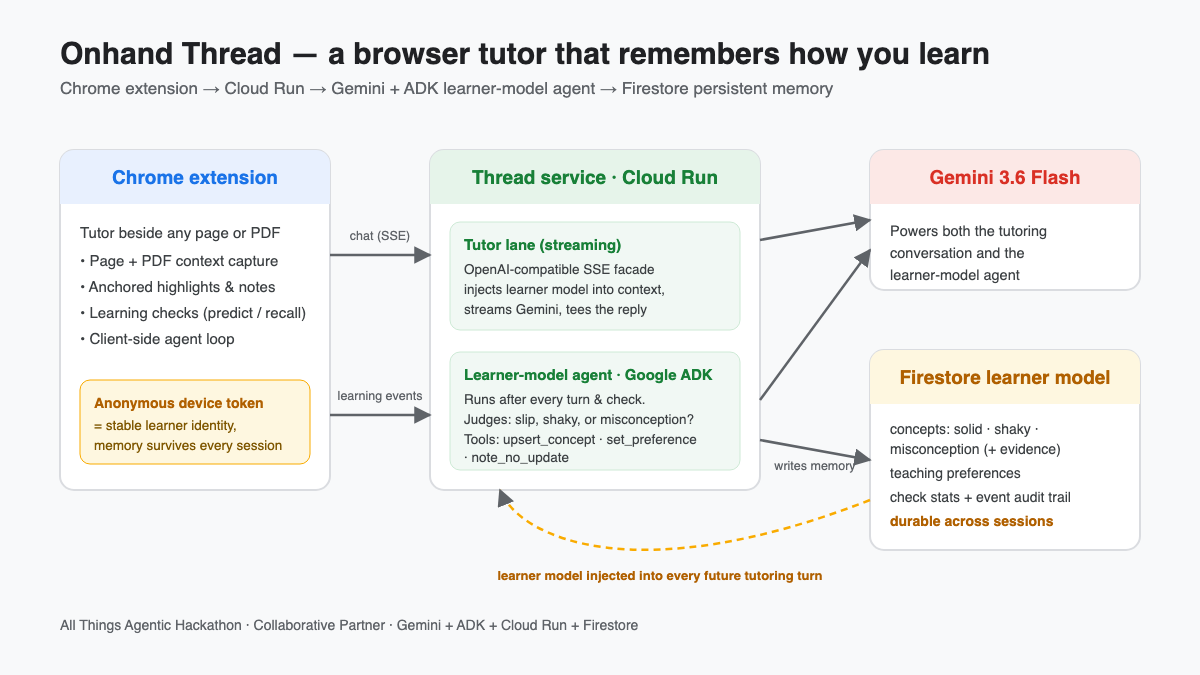
- Chrome extension (derived from the open-source Onhand project, disclosed below): page/PDF context capture, anchored highlights, Learning Mode checks, client-side agent loop.
- Thread service on Cloud Run (FastAPI): an OpenAI-compatible facade the extension already speaks. It injects the learner model into every tutoring request, streams Gemini 3.6 Flash (via Vertex AI) responses back, and tees each completed turn to the learner-model agent. A global Application Load Balancer (serverless NEG + Google-managed TLS) fronts the service.
- Learner-model agent (Google ADK): an LLM agent with tools (
upsert_concept,set_preference,note_no_update) that runs after each turn and each resolved check. It is deliberately an agent, not a heuristic — deciding whether a wrong answer is a slip, a shaky concept, or a genuine misconception is a judgment call. - Firestore: the persistent learner model — concepts with status (encountered/solid/shaky/misconception), evidence counts, teaching preferences, check statistics, and a full event audit trail — keyed by an anonymous device token, durable across sessions and devices.
How it differs from upstream Onhand
Upstream Onhand records learning events; Thread adds an agent that interprets them. Base Onhand logs concepts and graded checks into per-session browser state. Thread's ADK agent runs after each turn as an independent judge: it distinguishes slips from misconceptions, accumulates evidence across phrasings, captures beliefs embedded in how a question was asked (no check required), and can decline to write at all. The result is a longitudinal model of the learner — not the session — injected server-side into every future model call, so a brand-new conversation on a new device still knows you.
Challenges we ran into
- Gemini 3.6 thought signatures: replayed tool calls must carry the
thought_signatureGemini emitted, but OpenAI-compatible clients drop it. The service caches signatures per tool-call id and re-attaches them transparently. - Strict OpenAI-compat validation: Gemini 400s on any unknown request field (e.g.
store), so the facade forwards an allowlist. - A platform bug: our fresh project's
*.run.appURLs 404'd at Google's edge despite Ready=True and correct IAM — we fronted Cloud Run with a global ALB + serverless NEG, which both fixed routing and upgraded the architecture. - Distillation timing: an agent turn spans several model calls (tool rounds produce no text), so the service consumes a turn only when a call actually yields tutoring text.
What we learned
Memory is a judgment problem, not a storage problem — the interesting design work was deciding what deserves to be remembered, which is exactly why the memory-writer is an ADK agent with tools rather than a database write. We also learned more than we expected about Gemini's OpenAI-compat surface, thought signatures, and Cloud Run networking.
What's next
Spaced-repetition review driven by the learner model, a learner-facing "what Thread believes about me" dashboard with corrections (feedback the agent must honor), and multi-subject concept graphs.
Pre-existing work disclosure
The extension derives from Onhand (Apache-2.0), base commit 7a4078e. Built new during the submission period: the entire Thread service (Gemini facade, ADK learner-model agent, Firestore memory, Cloud Run + load-balancer deployment) and the extension's Thread provider + learning-event sync.
Built With
- artifact-registry
- chrome
- cloud-build
- cloud-load-balancing
- cloud-run
- esbuild
- fastapi
- firestore
- gemini
- google-adk
- node.js
- python
- secret-manager
- typescript
- vertex-ai

Log in or sign up for Devpost to join the conversation.