Inspiration
I just graduated from college, and I felt that chatbots didn't properly aid me in my learning. I wanted a tool that could answer my questions without taking me from my source material. That's why I built Onhand.
What it does
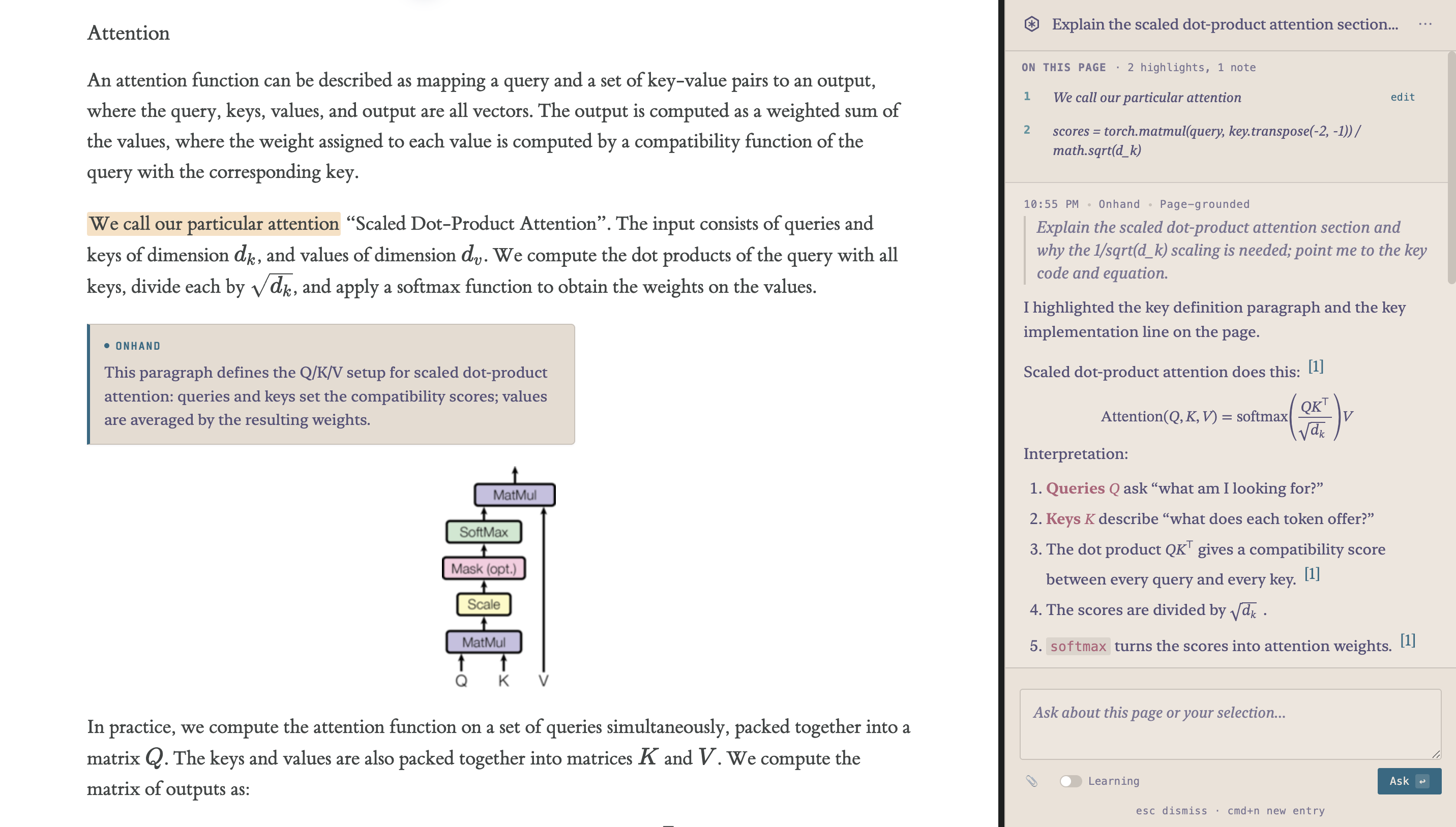
Onhand reads the current page you have open and highlights any parts of it that are relevant to answering your question. It also adds notes to the page that explain the highlights. Onhand's executive summary on the sidebar synthesizes the answer, and it has Wikipedia-style citation buttons that take you to the highlights/notes it's referencing.
How we built it
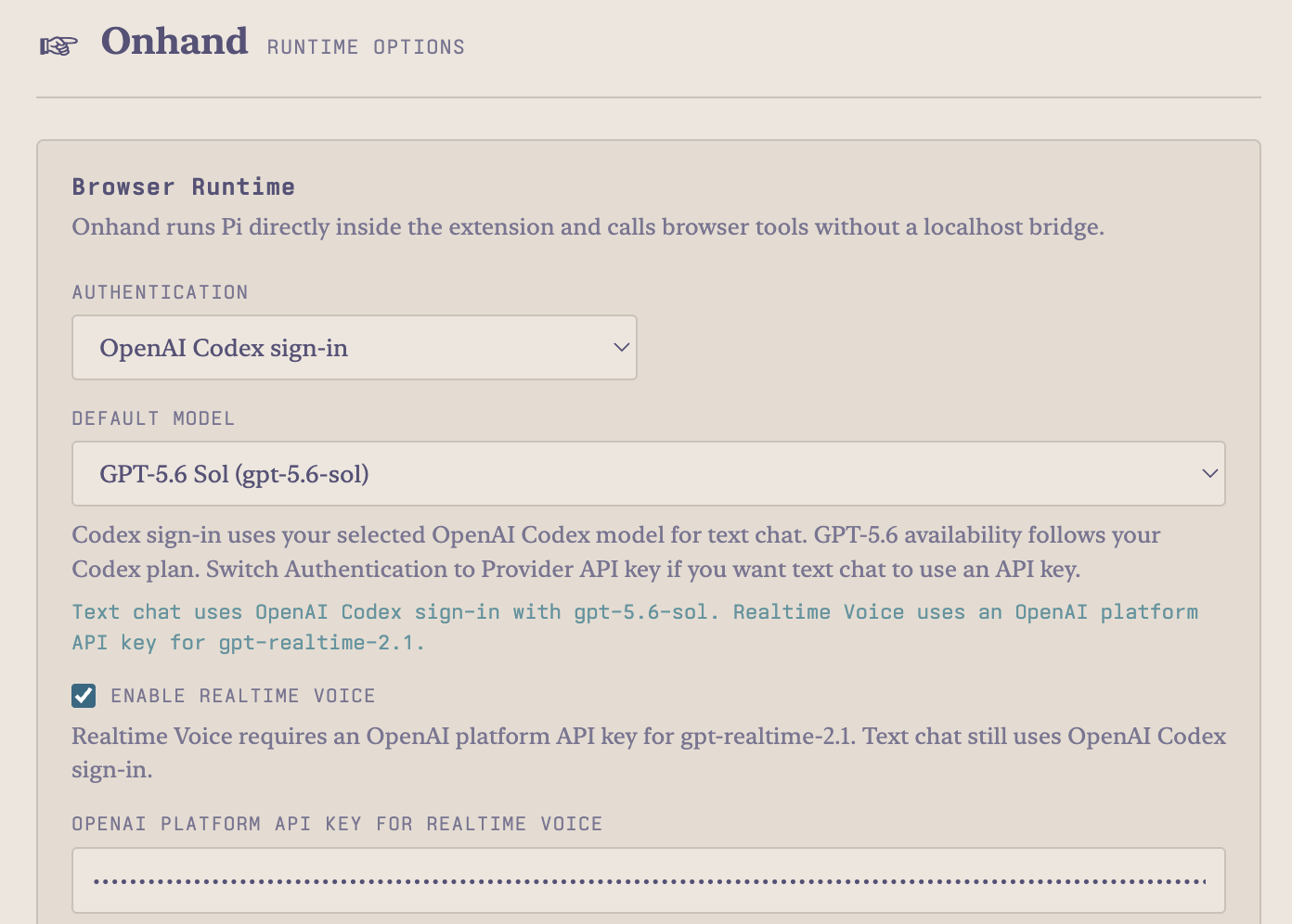
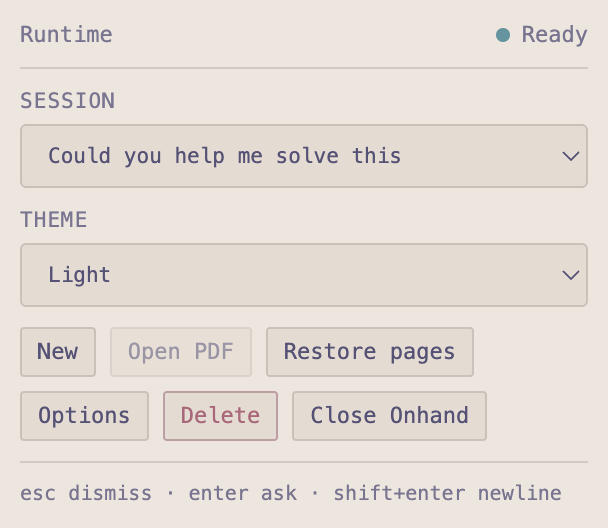
I built Onhand as a Chrome extension, running on the Pi agentic framework directly in the browser. Sessions are stored locally, and it can be powered by API key or by Codex oAuth.
Challenges we ran into
Learning Mode was very hard to get right, as I wanted to make sure the model would properly guide users to getting the answer on their own. I used the principles of pedagogy to build it and created a CONSTITUTION.md for Onhand to follow.
Accomplishments that we're proud of
Onhand has over 100 downloads on the Chrome store, and its launch video has over 30,000 views on X. A lot of people tell me they find use in it, which I'm proud of.
What we learned
I have learned a lot about how to build production-ready applications. I've also learned how to use coding agents in a way to aid me in my development and actually create more robust applications with proper testing.
What's next for Onhand
I'm super excited to flesh out Onhand's audio mode with GPT-Live-1 once it comes out on API. I want to get Onhand in the hands of more students, because it's really useful for me.
Built With
- codex
- education
- javascript
- pi

Log in or sign up for Devpost to join the conversation.